
Water Cycle p H and Acid Deposition Part
- Slides: 24
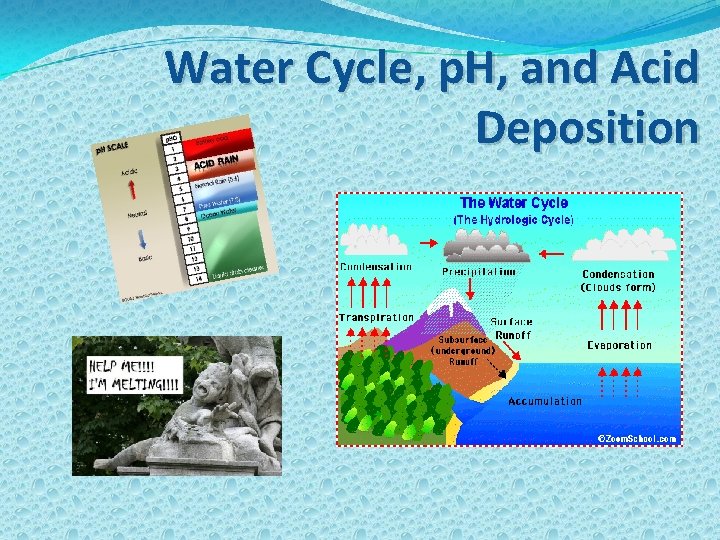
Water Cycle, p. H, and Acid Deposition
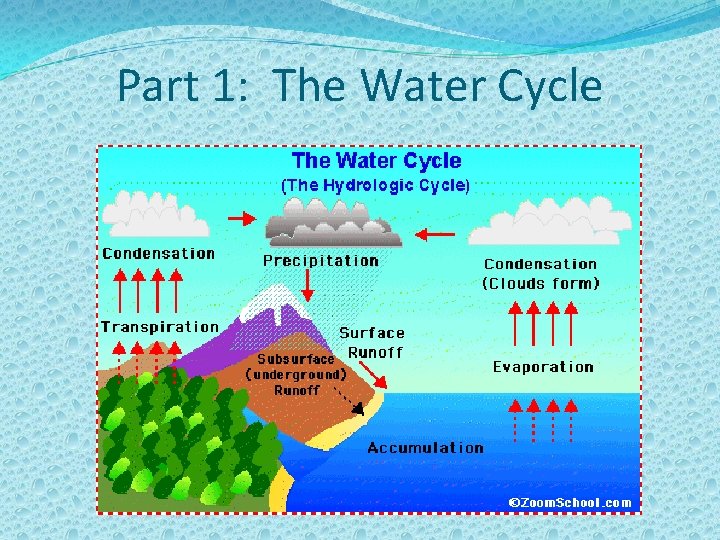
Part 1: The Water Cycle
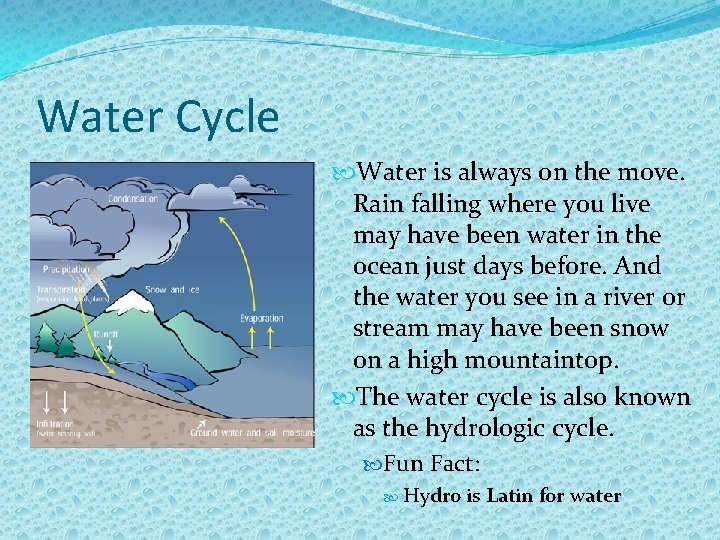
Water Cycle Water is always on the move. Rain falling where you live may have been water in the ocean just days before. And the water you see in a river or stream may have been snow on a high mountaintop. The water cycle is also known as the hydrologic cycle. Fun Fact: Hydro is Latin for water
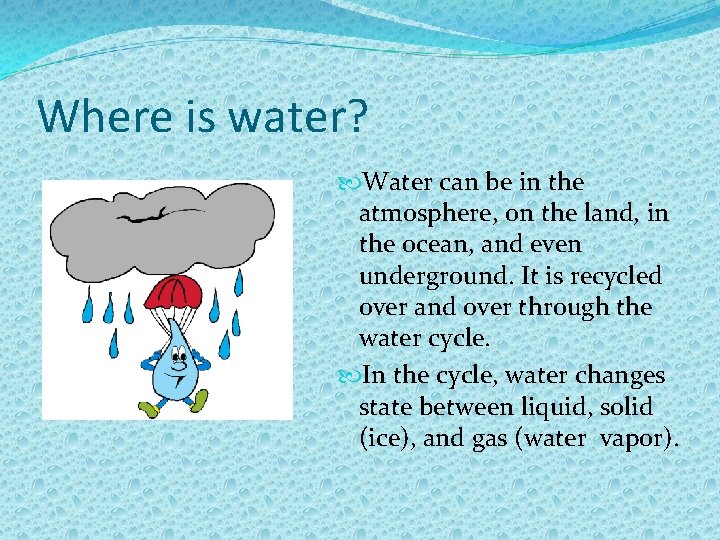
Where is water? Water can be in the atmosphere, on the land, in the ocean, and even underground. It is recycled over and over through the water cycle. In the cycle, water changes state between liquid, solid (ice), and gas (water vapor).
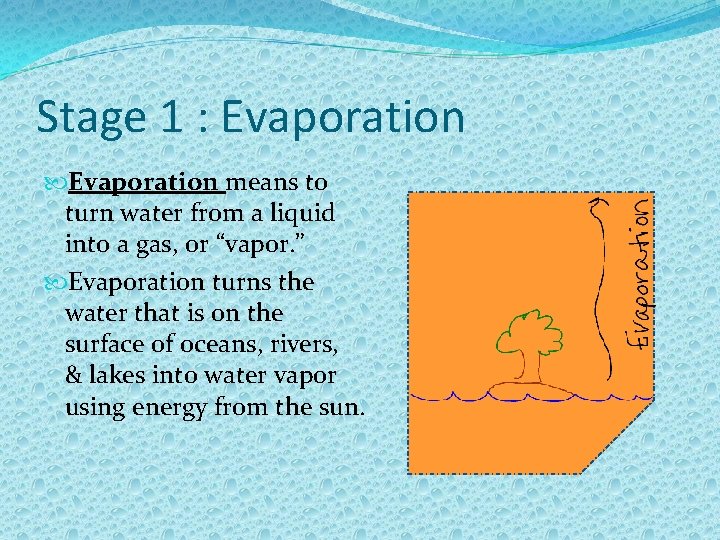
Stage 1 : Evaporation means to turn water from a liquid into a gas, or “vapor. ” Evaporation turns the water that is on the surface of oceans, rivers, & lakes into water vapor using energy from the sun.
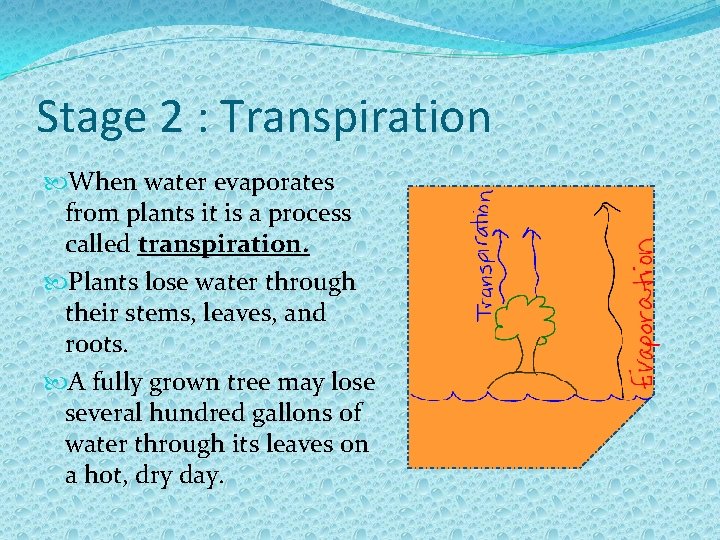
Stage 2 : Transpiration When water evaporates from plants it is a process called transpiration. Plants lose water through their stems, leaves, and roots. A fully grown tree may lose several hundred gallons of water through its leaves on a hot, dry day.
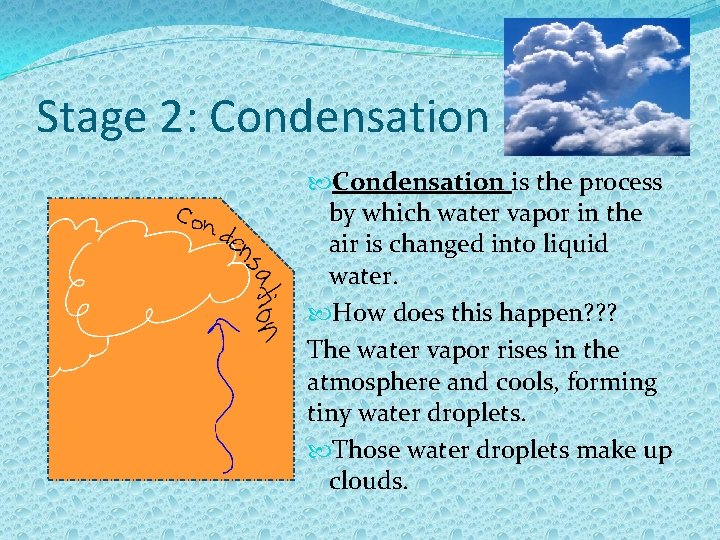
Stage 2: Condensation is the process by which water vapor in the air is changed into liquid water. How does this happen? ? ? The water vapor rises in the atmosphere and cools, forming tiny water droplets. Those water droplets make up clouds.
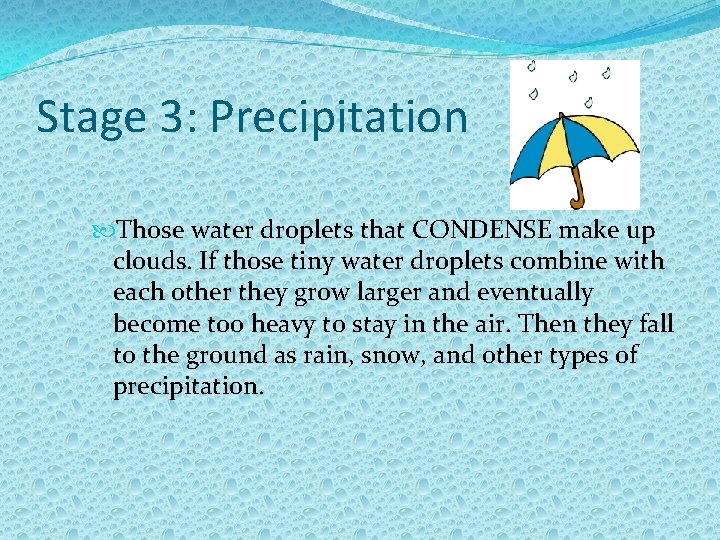
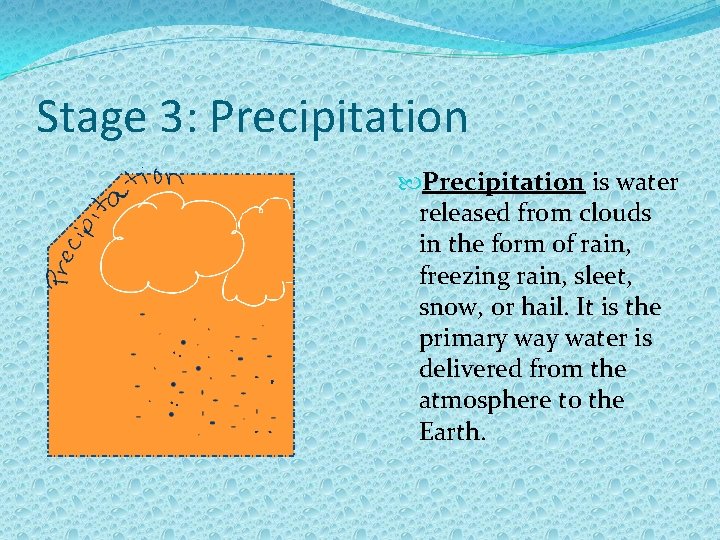
Stage 3: Precipitation Those water droplets that CONDENSE make up clouds. If those tiny water droplets combine with each other they grow larger and eventually become too heavy to stay in the air. Then they fall to the ground as rain, snow, and other types of precipitation.
Stage 3: Precipitation is water released from clouds in the form of rain, freezing rain, sleet, snow, or hail. It is the primary water is delivered from the atmosphere to the Earth.
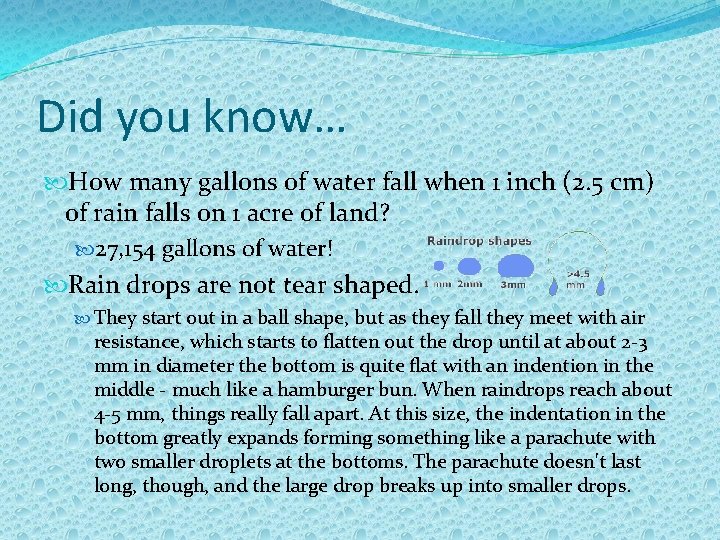
Did you know… How many gallons of water fall when 1 inch (2. 5 cm) of rain falls on 1 acre of land? 27, 154 gallons of water! Rain drops are not tear shaped. They start out in a ball shape, but as they fall they meet with air resistance, which starts to flatten out the drop until at about 2 -3 mm in diameter the bottom is quite flat with an indention in the middle - much like a hamburger bun. When raindrops reach about 4 -5 mm, things really fall apart. At this size, the indentation in the bottom greatly expands forming something like a parachute with two smaller droplets at the bottoms. The parachute doesn't last long, though, and the large drop breaks up into smaller drops.
Wow! That is amazing! The world's record for average-annual rainfall belongs to Mt. Waialeale, Hawaii, where it averages about 450 inches (38 ft) per year. The world’s recorded for least amount of rain goes to Antofagasta Region, Atacama Desert, Chile at zero in one year! It takes 6 gallons of water to grow the potatoes for your order of fries! For your hamburger it takes 1300 gallons of water to produce everything needed!
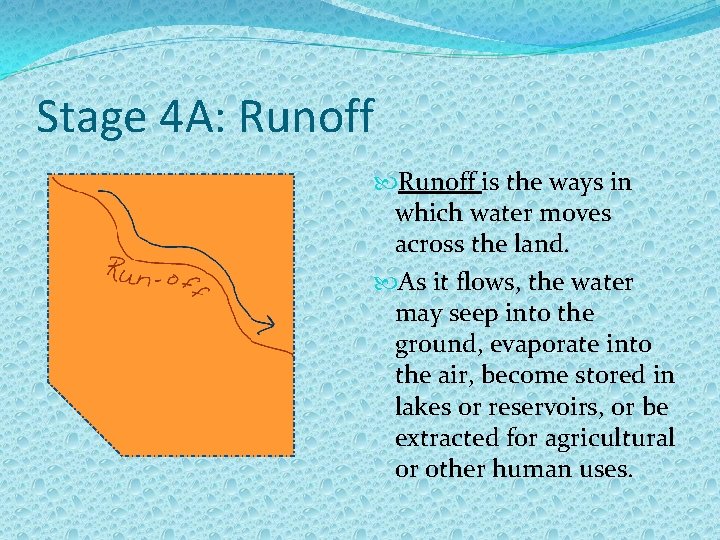
Stage 4 A: Runoff is the ways in which water moves across the land. As it flows, the water may seep into the ground, evaporate into the air, become stored in lakes or reservoirs, or be extracted for agricultural or other human uses.
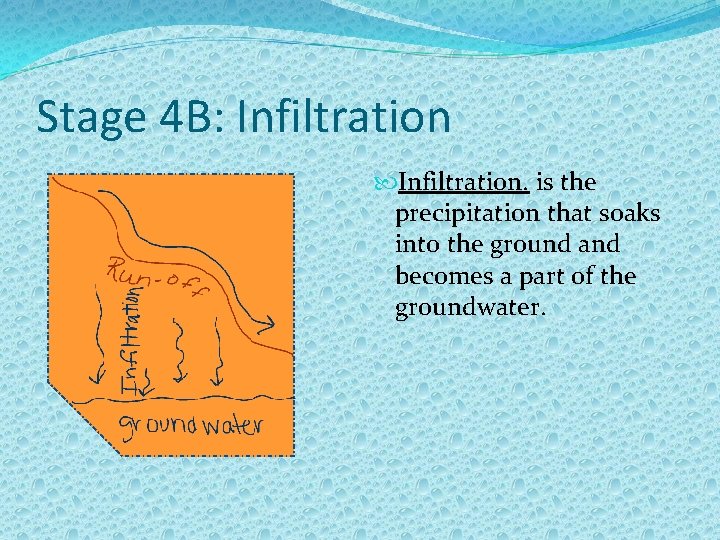
Stage 4 B: Infiltration. is the precipitation that soaks into the ground and becomes a part of the groundwater.
Where Does Water Go When it Rains? (Video) https: //www. youtube. com/watch? v=7 zj. Pq. A 2 FIns
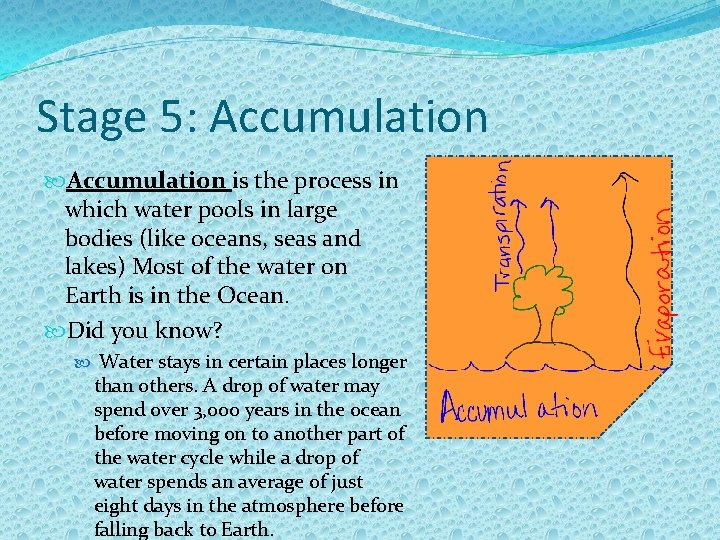
Stage 5: Accumulation is the process in which water pools in large bodies (like oceans, seas and lakes) Most of the water on Earth is in the Ocean. Did you know? Water stays in certain places longer than others. A drop of water may spend over 3, 000 years in the ocean before moving on to another part of the water cycle while a drop of water spends an average of just eight days in the atmosphere before falling back to Earth.
Water Cycle Video and Rap! https: //www. youtube. com/watch? v=Zz. Y 5 -NZSz. Vw https: //www. youtube. com/watch? v=i 3 Ne. MVBc. XXU
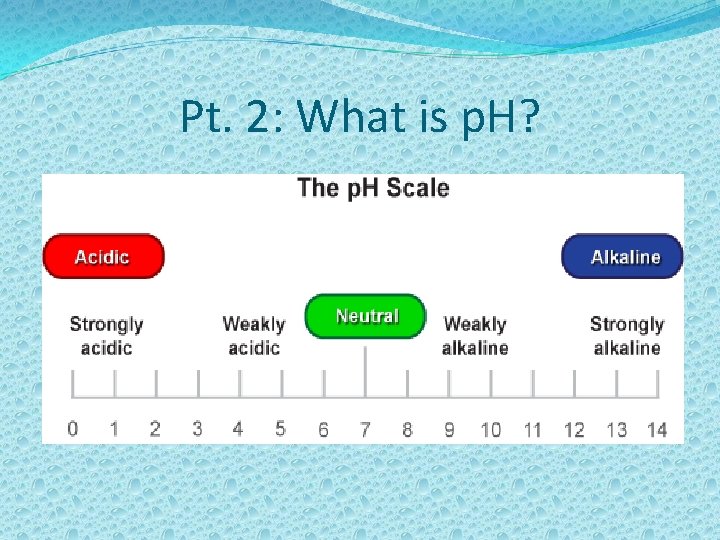
Pt. 2: What is p. H?
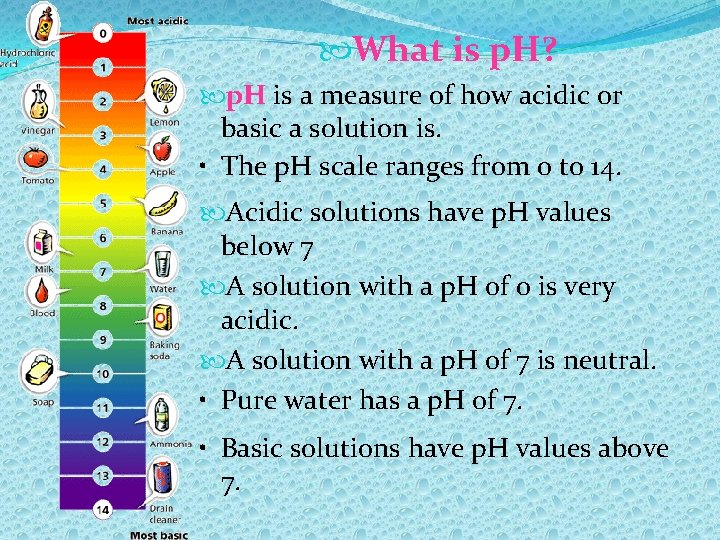
What is p. H? p. H is a measure of how acidic or basic a solution is. • The p. H scale ranges from 0 to 14. Acidic solutions have p. H values below 7 A solution with a p. H of 0 is very acidic. A solution with a p. H of 7 is neutral. • Pure water has a p. H of 7. • Basic solutions have p. H values above 7.
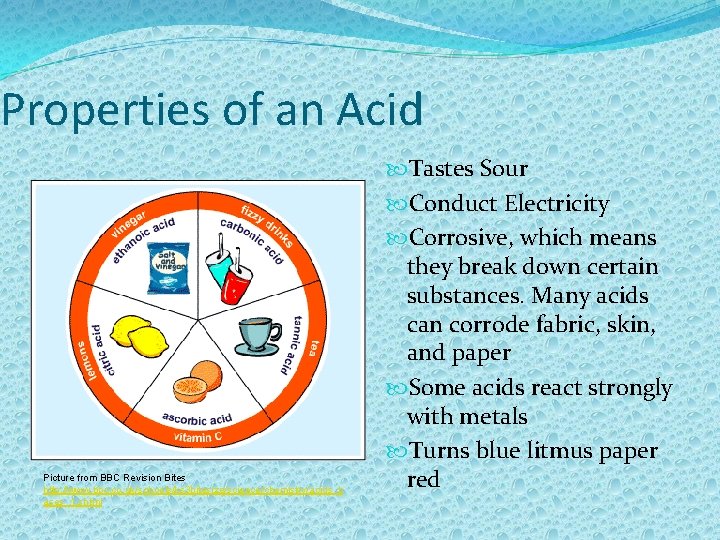
Properties of an Acid Picture from BBC Revision Bites http: //www. bbc. co. uk/schools/ks 3 bitesize/science/chemistry/acids_b ases_1. shtml Tastes Sour Conduct Electricity Corrosive, which means they break down certain substances. Many acids can corrode fabric, skin, and paper Some acids react strongly with metals Turns blue litmus paper red
Pt. 3: Acid Rain
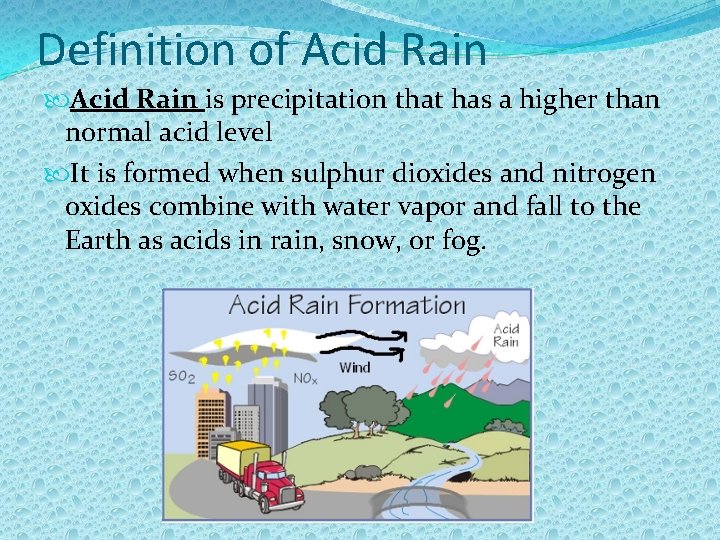
Definition of Acid Rain is precipitation that has a higher than normal acid level It is formed when sulphur dioxides and nitrogen oxides combine with water vapor and fall to the Earth as acids in rain, snow, or fog.
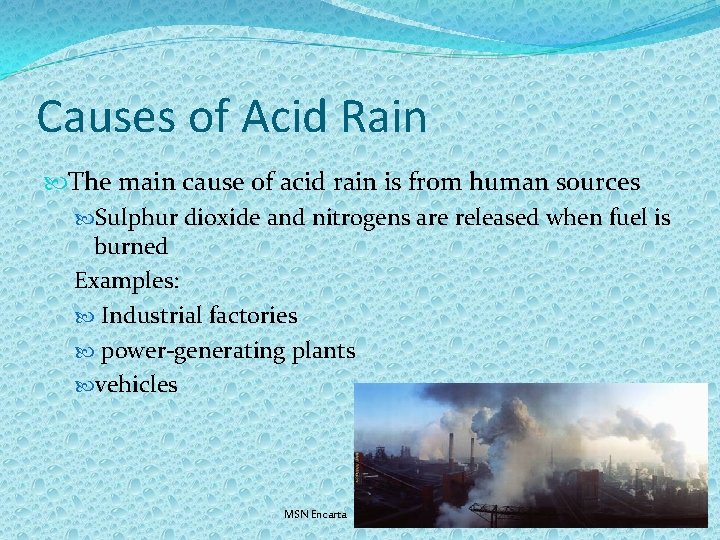
Causes of Acid Rain The main cause of acid rain is from human sources Sulphur dioxide and nitrogens are released when fuel is burned Examples: Industrial factories power-generating plants vehicles MSN Encarta
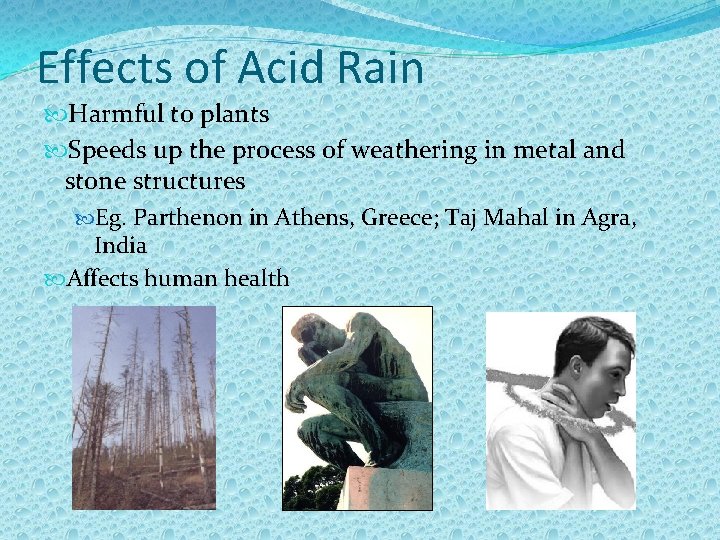
Effects of Acid Rain Harmful to plants Speeds up the process of weathering in metal and stone structures Eg. Parthenon in Athens, Greece; Taj Mahal in Agra, India Affects human health
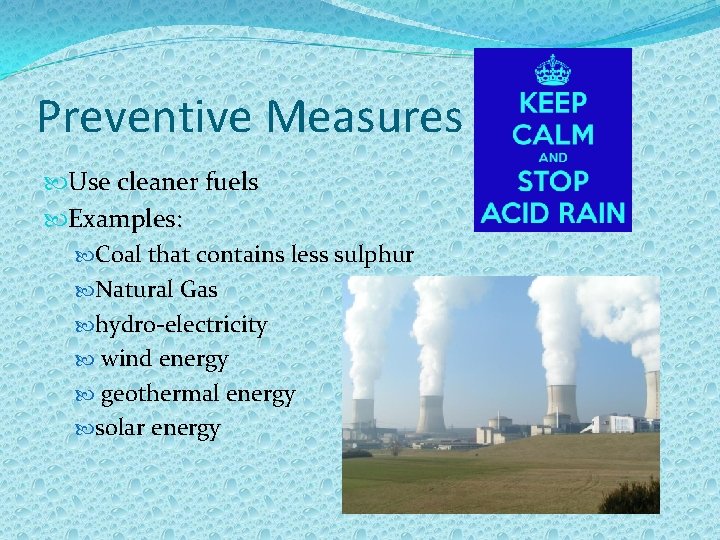
Preventive Measures Use cleaner fuels Examples: Coal that contains less sulphur Natural Gas hydro-electricity wind energy geothermal energy solar energy