
WATER CYCLE GRADE 4 Chapter 7 Lesson 2
- Slides: 7
WATER CYCLE GRADE 4
Chapter 7: Lesson 2: The Water Cycle Water cycle: is a process where water moves from the Earth’s surface to the atmosphere and back again. Notes (to study and copy on your copybook) The Earth’s atmosphere is made up of different gases such as: oxygen, nitrogen, carbon dioxide and water vapor. When the water or ice crystals in the cloud become too heavy , gravity pulls them down. Precipitation occurs. The temperature of the air determines if it rains or snows.
Please listen to the audio below then play the video Explanation https: //youtu. be/g. Y 9 HG 8 z. Ug. OE
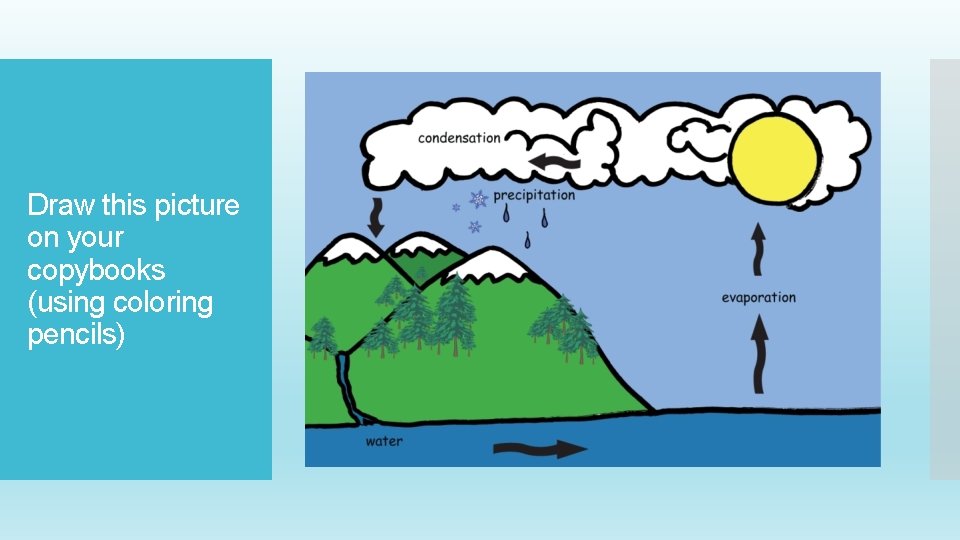
Draw this picture on your copybooks (using coloring pencils)
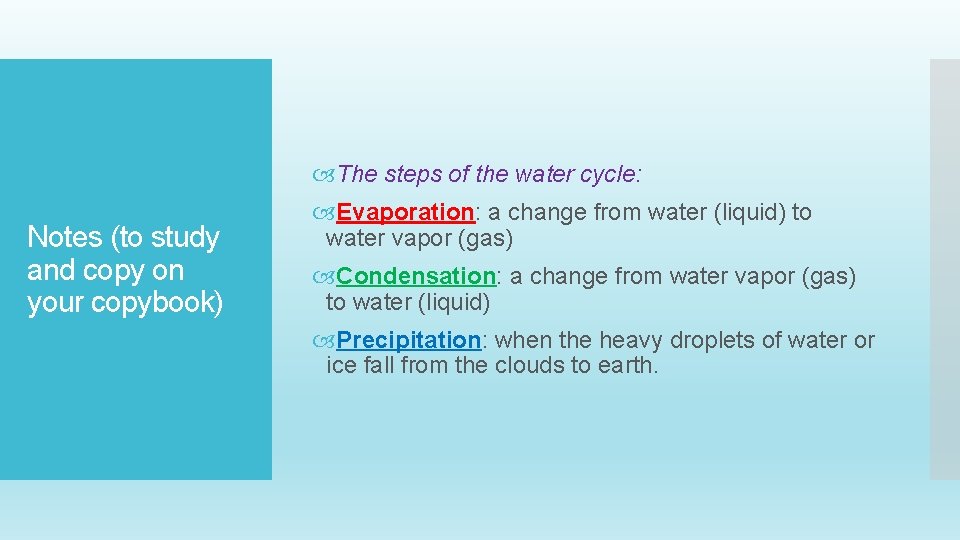
The steps of the water cycle: Notes (to study and copy on your copybook) Evaporation: a change from water (liquid) to water vapor (gas) Condensation: a change from water vapor (gas) to water (liquid) Precipitation: when the heavy droplets of water or ice fall from the clouds to earth.
Explanation Please listen to the audios below
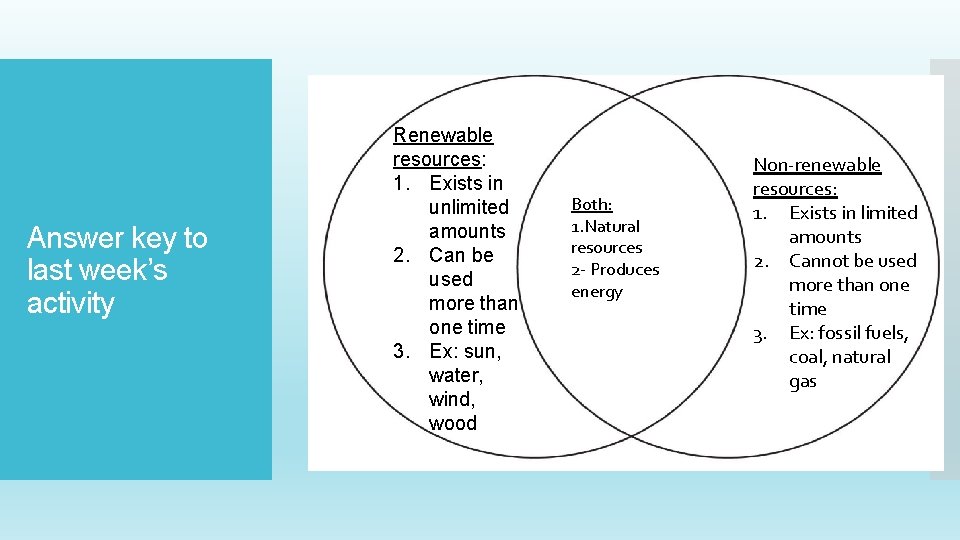
Answer key to last week’s activity Renewable resources: 1. Exists in unlimited amounts 2. Can be used more than one time 3. Ex: sun, water, wind, wood Both: 1. Natural resources 2 - Produces energy Non-renewable resources: 1. Exists in limited amounts 2. Cannot be used more than one time 3. Ex: fossil fuels, coal, natural gas