
Water Cycle and Precipitation Be sure to click
Water Cycle and Precipitation ØBe sure to click more then once in any slide.
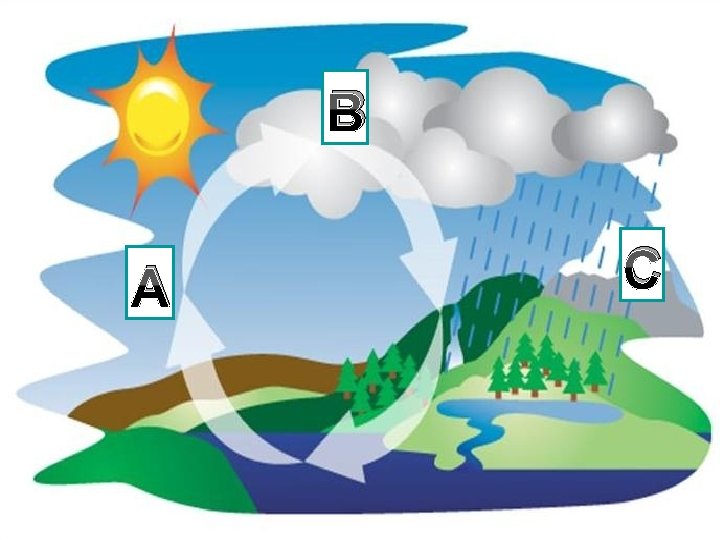
B A C
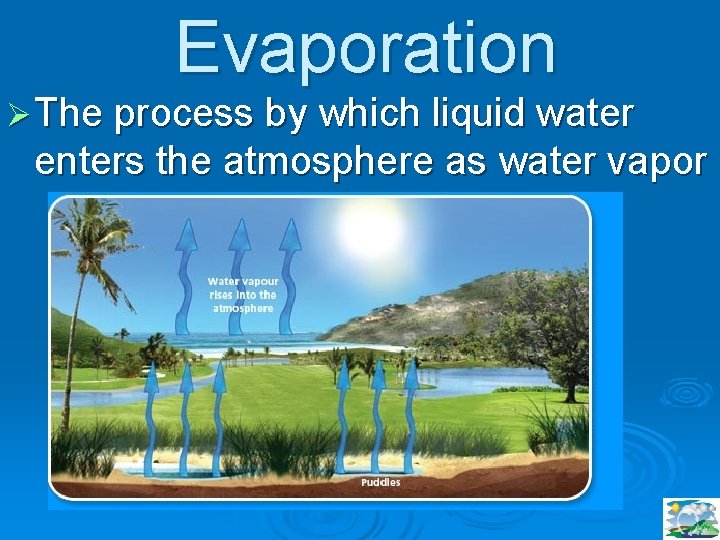
Evaporation Ø The process by which liquid water enters the atmosphere as water vapor
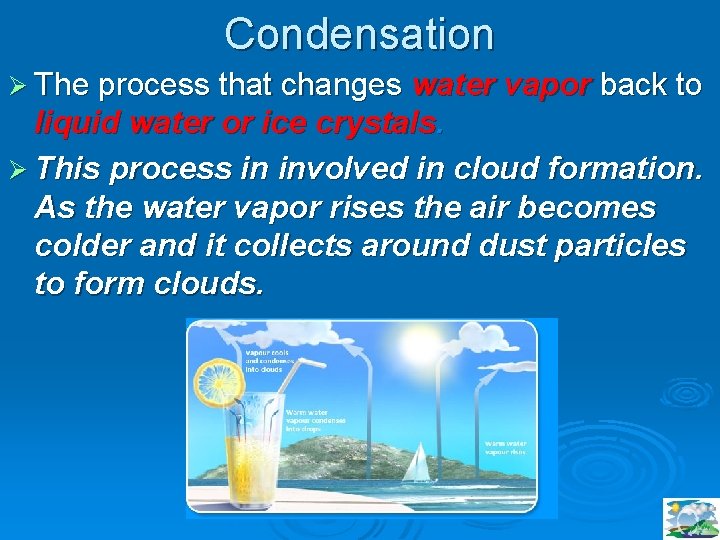
Condensation Ø The process that changes water vapor back to liquid water or ice crystals. Ø This process in involved in cloud formation. As the water vapor rises the air becomes colder and it collects around dust particles to form clouds.
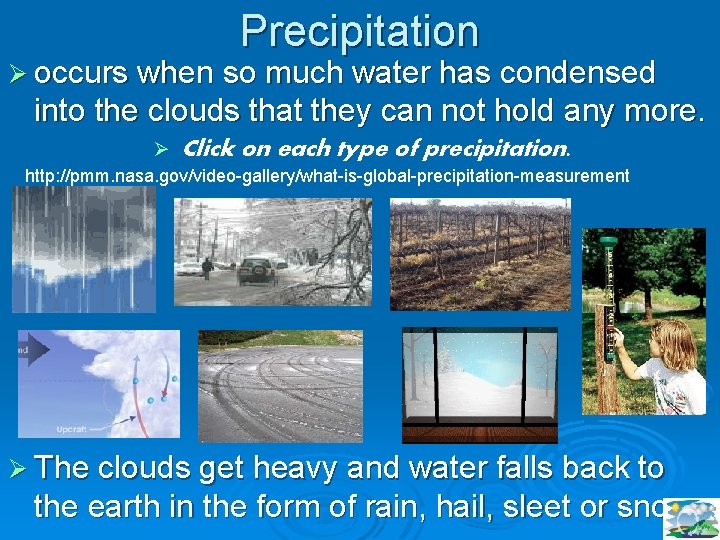
Precipitation Ø occurs when so much water has condensed into the clouds that they can not hold any more. Ø Click on each type of precipitation. http: //pmm. nasa. gov/video-gallery/what-is-global-precipitation-measurement Ø The clouds get heavy and water falls back to the earth in the form of rain, hail, sleet or snow.
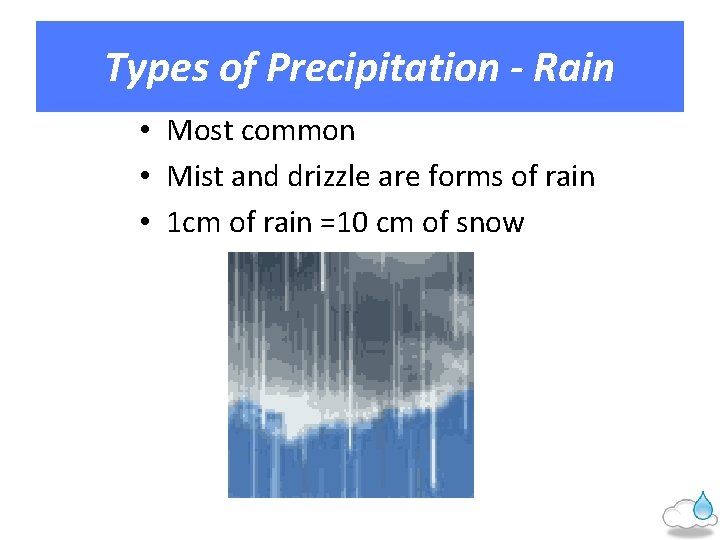
Types of Precipitation - Rain • Most common • Mist and drizzle are forms of rain • 1 cm of rain =10 cm of snow
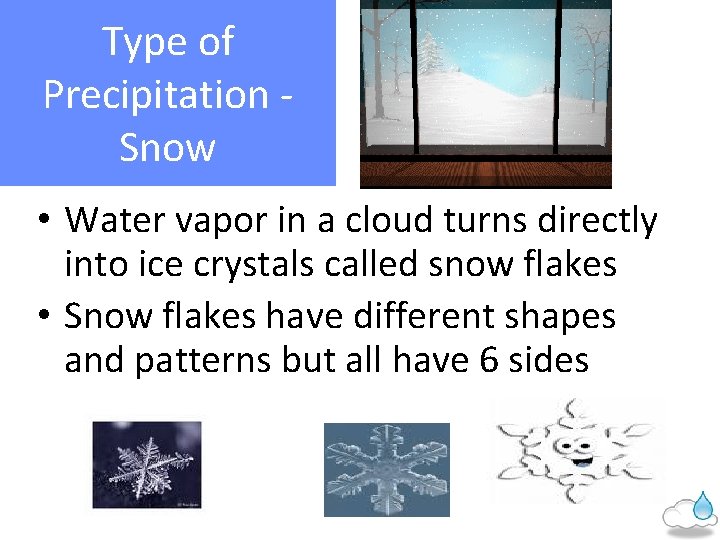
Type of Precipitation Snow • Water vapor in a cloud turns directly into ice crystals called snow flakes • Snow flakes have different shapes and patterns but all have 6 sides
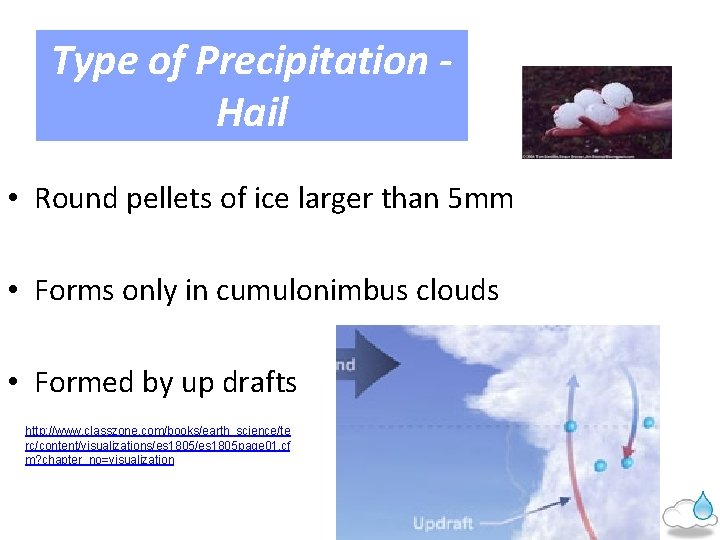
Type of Precipitation Hail • Round pellets of ice larger than 5 mm • Forms only in cumulonimbus clouds • Formed by up drafts http: //www. classzone. com/books/earth_science/te rc/content/visualizations/es 1805 page 01. cf m? chapter_no=visualization
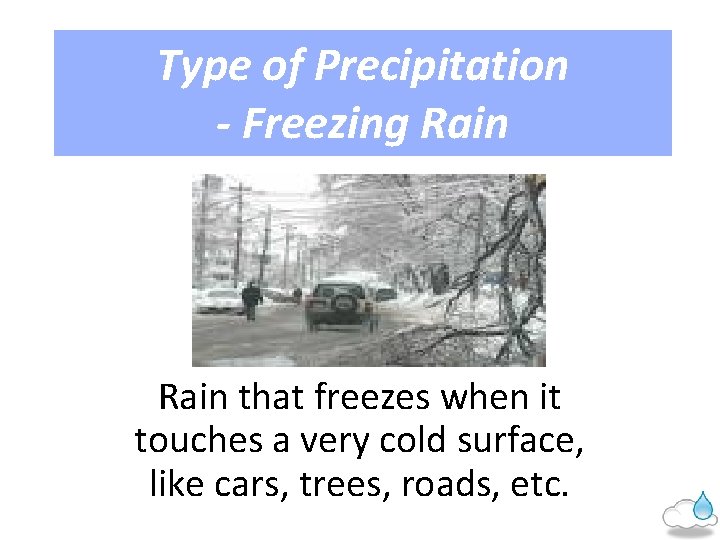
Type of Precipitation - Freezing Rain that freezes when it touches a very cold surface, like cars, trees, roads, etc.
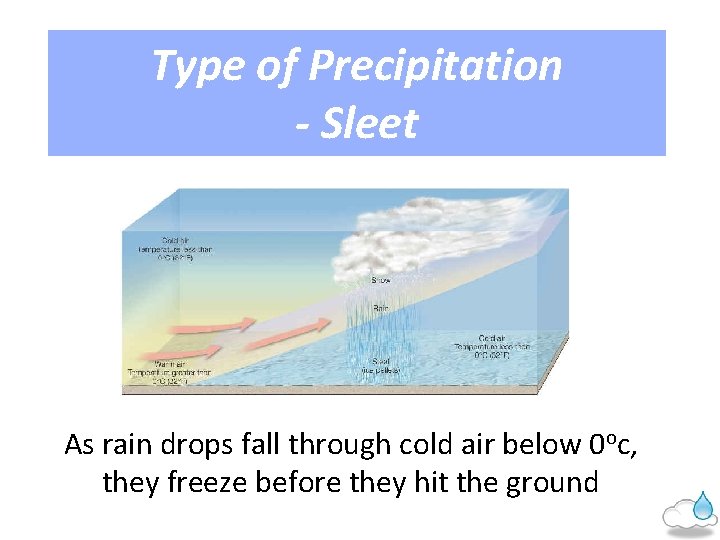
Type of Precipitation - Sleet As rain drops fall through cold air below 0 oc, they freeze before they hit the ground
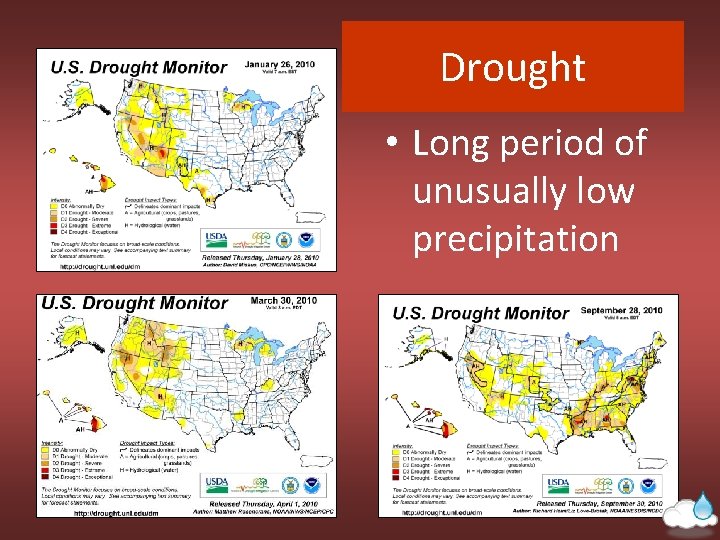
Drought • Long period of unusually low precipitation
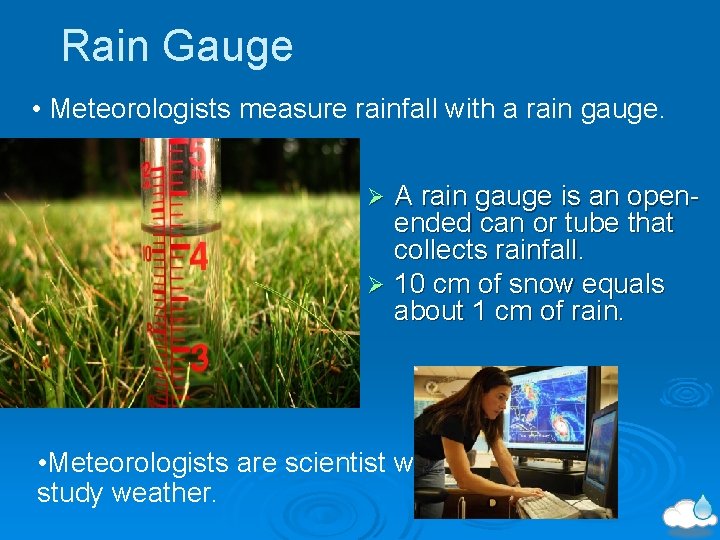
Rain Gauge • Meteorologists measure rainfall with a rain gauge. A rain gauge is an openended can or tube that collects rainfall. Ø 10 cm of snow equals about 1 cm of rain. Ø • Meteorologists are scientist who study weather.
- Slides: 12