
WATER CLIMATE Large bodies of water influence climate
WATER & CLIMATE
• Large bodies of water influence climate in 3 main ways #1: Prevent extremes #2: Alter precipitation #3: Currents
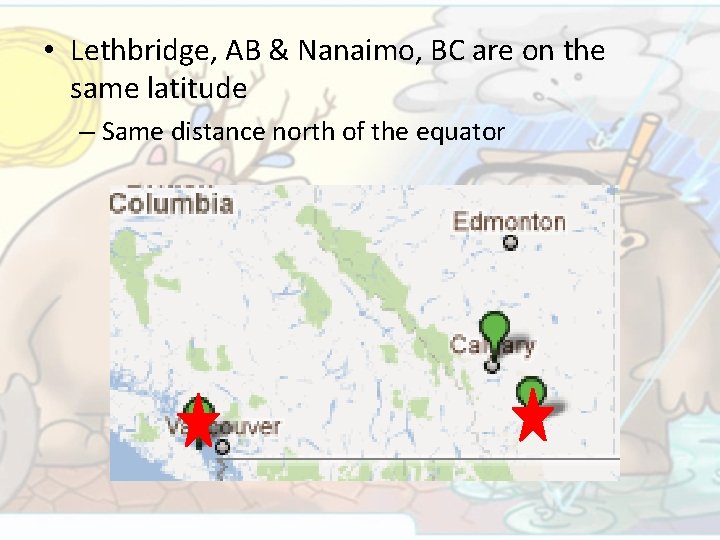
• Lethbridge, AB & Nanaimo, BC are on the same latitude – Same distance north of the equator
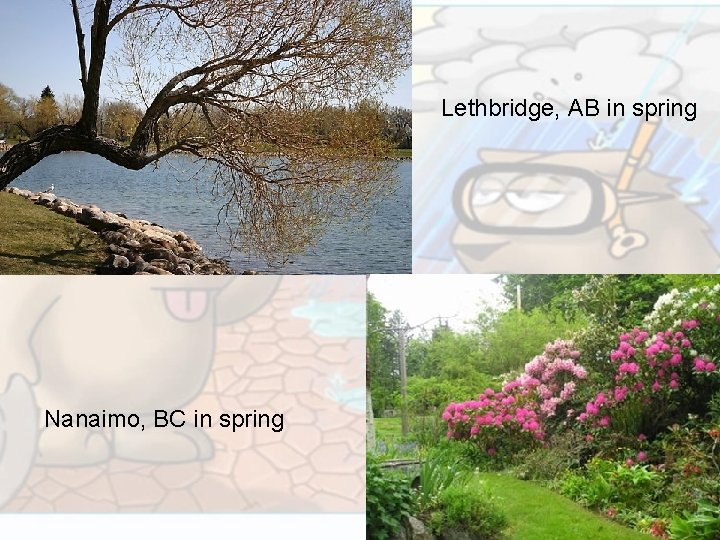
Lethbridge, AB in spring Nanaimo, BC in spring
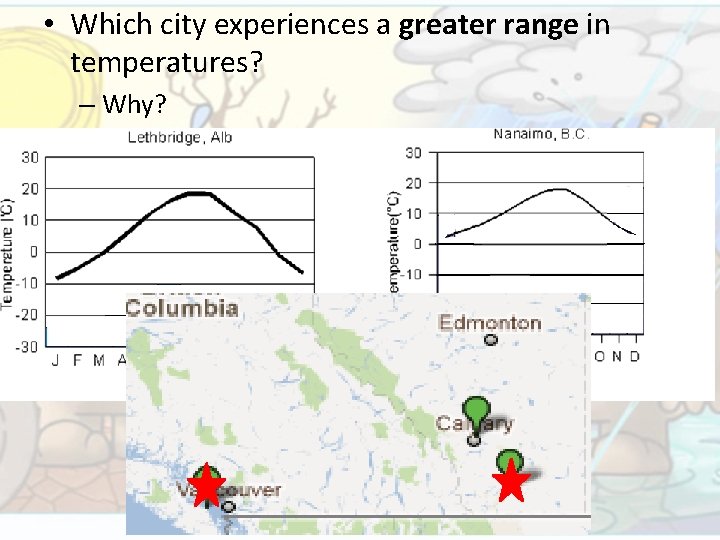
• Which city experiences a greater range in temperatures? – Why?
• #1: Large bodies of water prevent extreme fluctuations in temperatures – Water has a high heat capacity • 4. 18 J per g °C – Takes 4. 18 J (packages) of energy to heat 1 g of water by 1°C – Takes a long time to heat up down large bodies of water » Once water is warm, it holds the heat » Takes a long time to cool down • Compare to air @ 1. 0 J per g °C – Takes a short time to warm air, but it cools down quickly
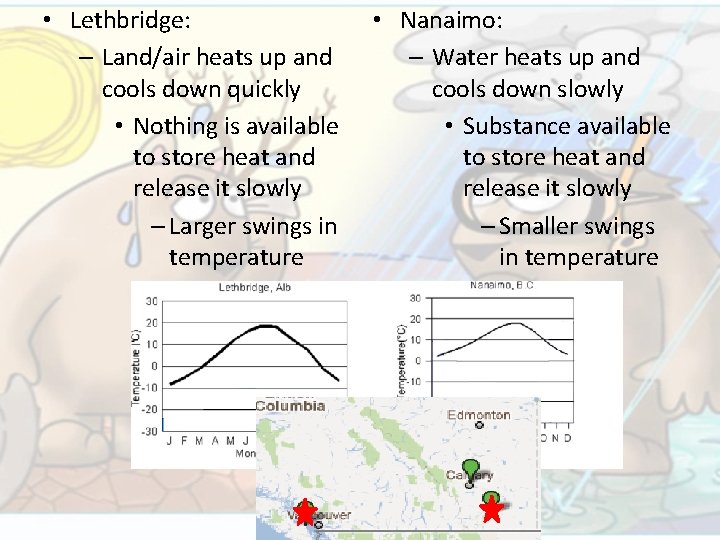
• Lethbridge: – Land/air heats up and cools down quickly • Nothing is available to store heat and release it slowly – Larger swings in temperature • Nanaimo: – Water heats up and cools down slowly • Substance available to store heat and release it slowly – Smaller swings in temperature
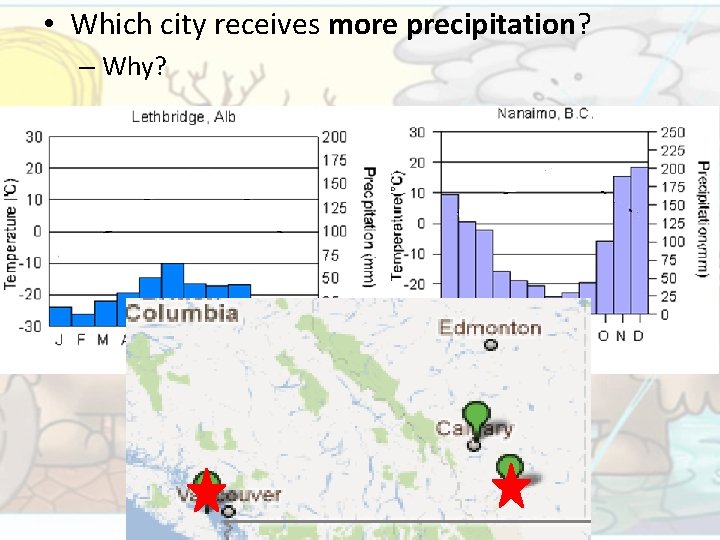
• Which city receives more precipitation? – Why?
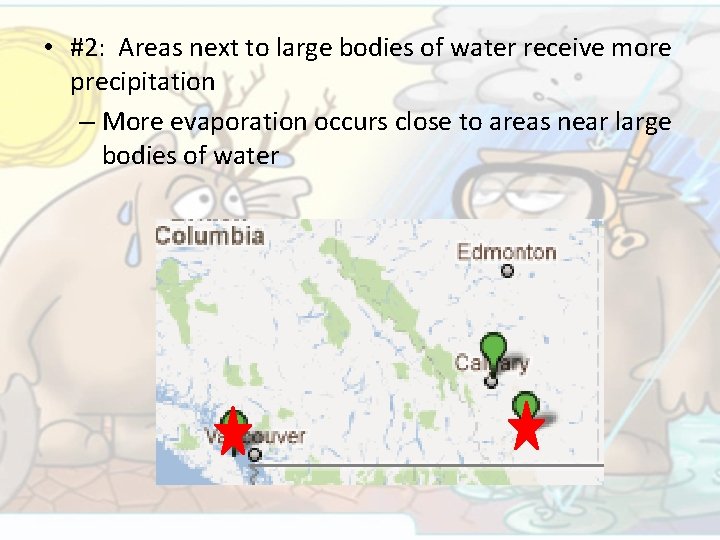
• #2: Areas next to large bodies of water receive more precipitation – More evaporation occurs close to areas near large bodies of water
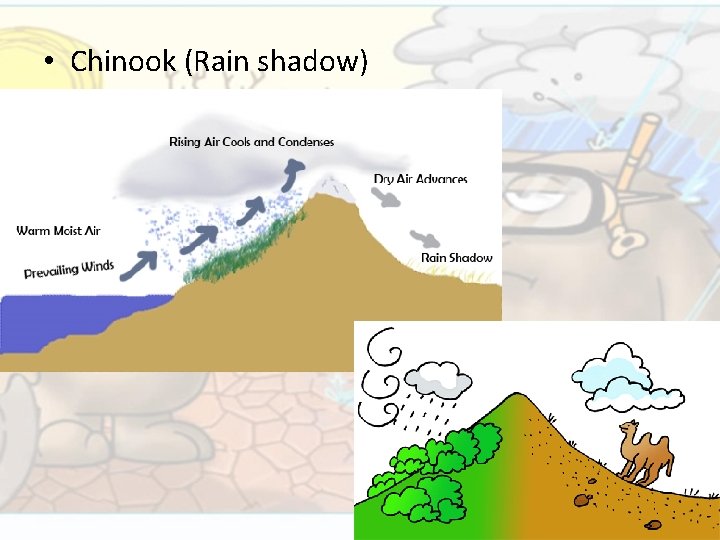
• Chinook (Rain shadow)
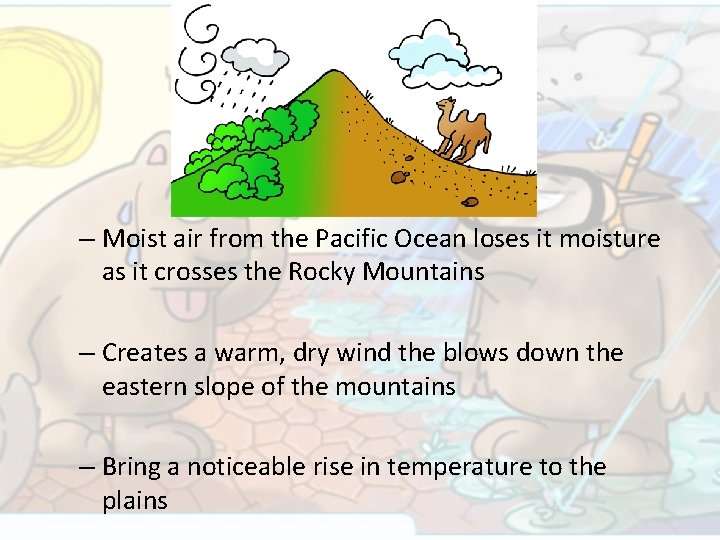
– Moist air from the Pacific Ocean loses it moisture as it crosses the Rocky Mountains – Creates a warm, dry wind the blows down the eastern slope of the mountains – Bring a noticeable rise in temperature to the plains
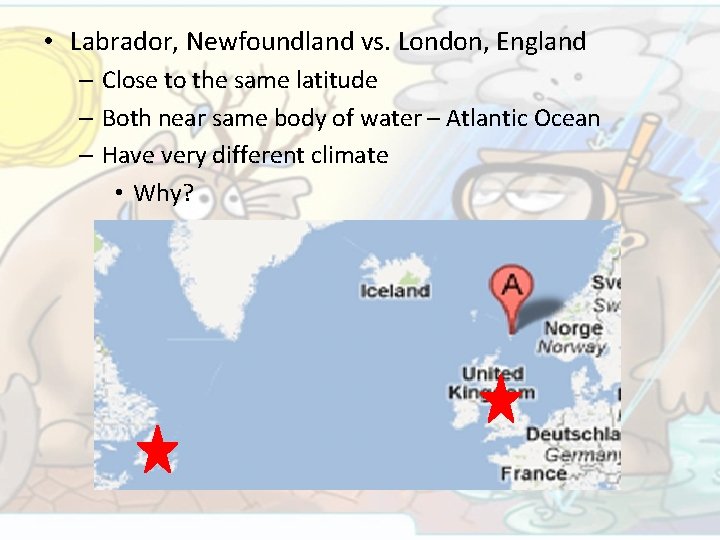
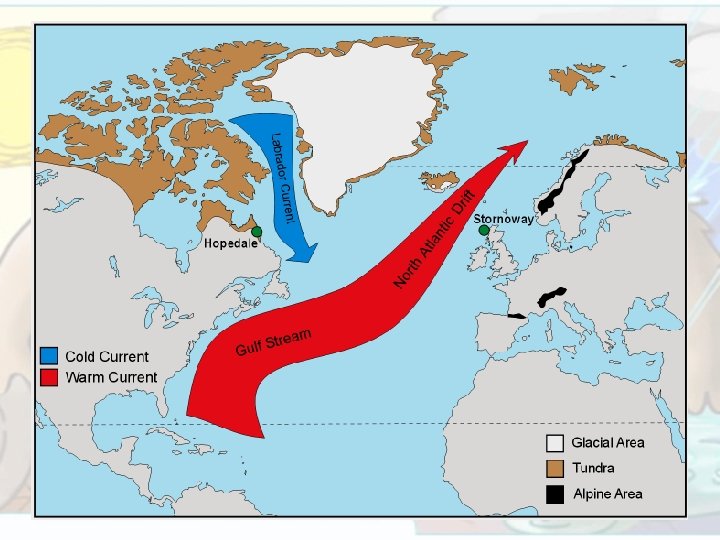
• Labrador, Newfoundland vs. London, England – Close to the same latitude – Both near same body of water – Atlantic Ocean – Have very different climate • Why?
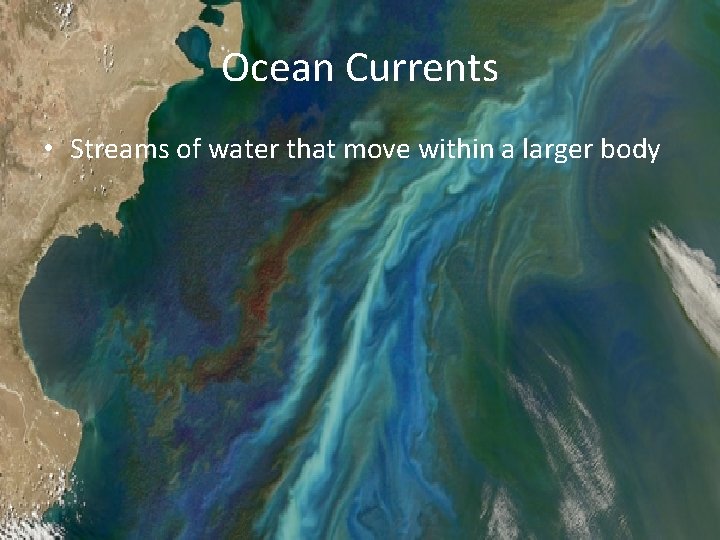
Ocean Currents • Streams of water that move within a larger body
• Create your own current – Set your box so that it is sitting at an angle • You can use a book to elevate one end – Add 800 ml of cool tap water – Sketch your box and the water inside – Add 200 ml of colored saltwater to the box by pouring it slowly down the elevated side of the box • Observe & record where it goes – Add 200 ml of colored cold water to the box by pouring it slowly down the elevated side of the box • Observe & record where it goes – Add 200 ml of colored hot water to the box by pouring it slowly down the elevated side of the box • Observe & record where it goes
• Caused by – Temperature differences • Convection currents – Salinity differences • Fresh water floats on top of salt water – Earth’s rotation – Wind
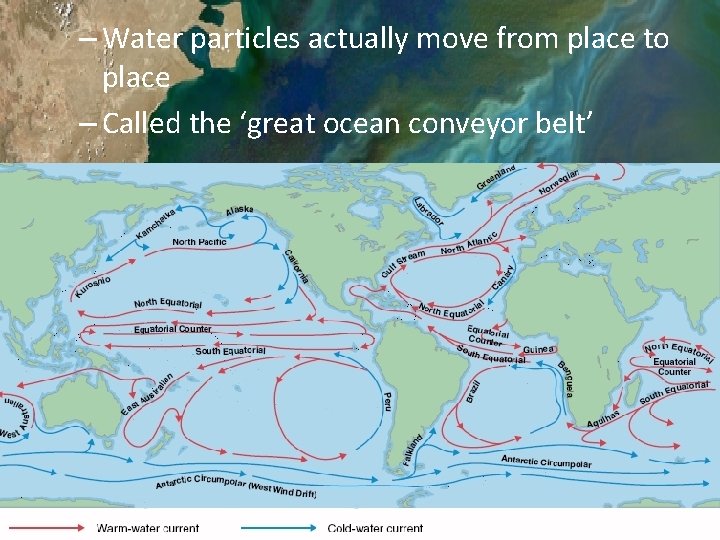
– Water particles actually move from place to place – Called the ‘great ocean conveyor belt’
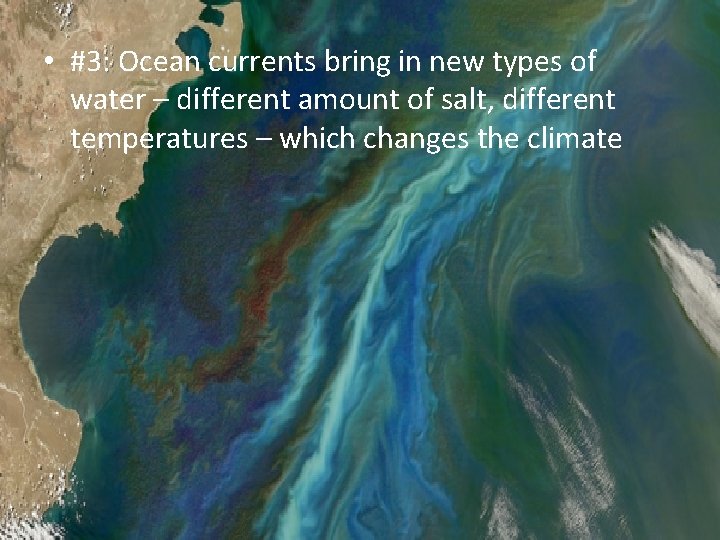
• #3: Ocean currents bring in new types of water – different amount of salt, different temperatures – which changes the climate
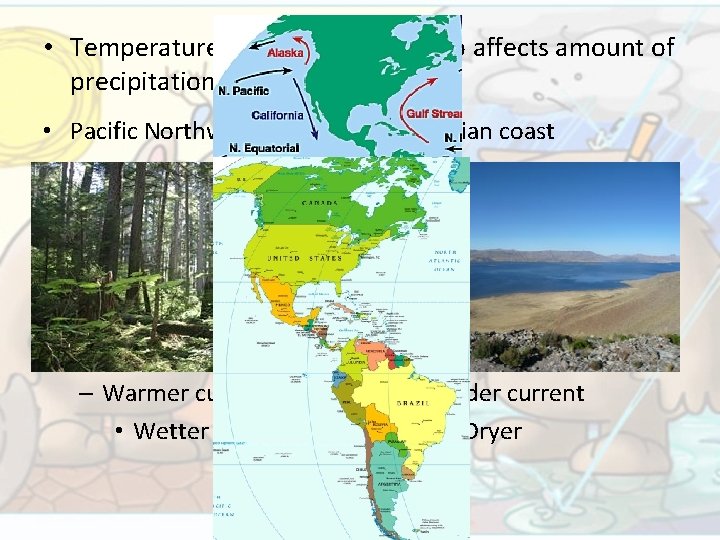
• Temperature of ocean current also affects amount of precipitation • Pacific Northwest – Warmer current • Wetter • Peruvian coast – Colder current • Dryer
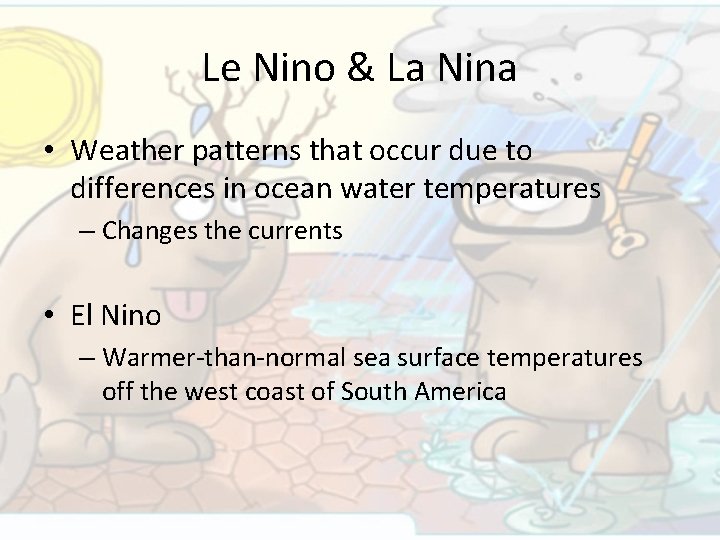
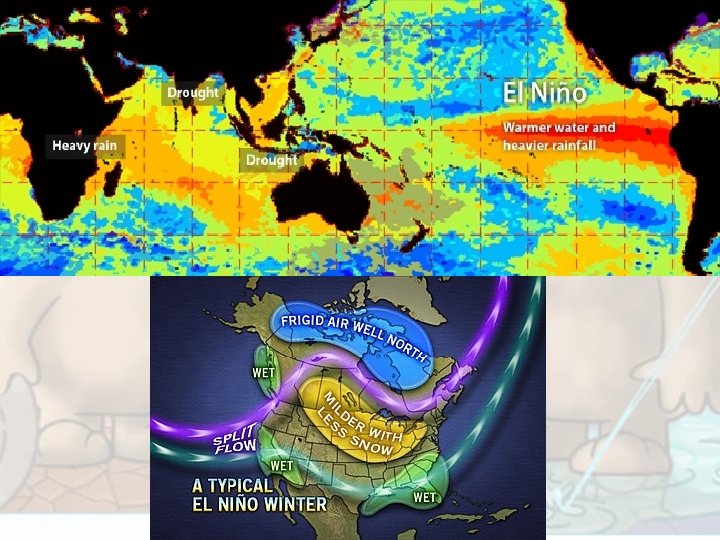
Le Nino & La Nina • Weather patterns that occur due to differences in ocean water temperatures – Changes the currents • El Nino – Warmer-than-normal sea surface temperatures off the west coast of South America
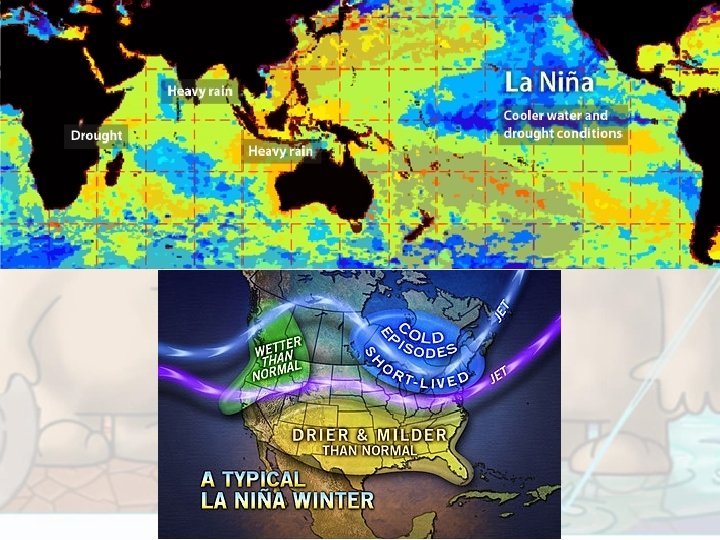
• La Nina – Cooler-than-normal sea surface temperatures off the west coast of South America
- Slides: 23