
Water and wind Potential and kinetic energy Water
- Slides: 16
Water and wind Potential and kinetic energy
Water cycle How many ways can water go up? • Sun adds heat to surface water and it evaporates. • Sun heats the leaves of plants and sucks up huge columns of water which Transpire into the air. • Plants and animals slowly burn stored energy from food and Respire water into the air. • Forest fires and burning of fossil fuels combusts water into the air.
Moving water up creates potential energy • The sun is responsible, it is the driving force of the water cycle. Is it direct or indirect? • Evaporation • Direct • Transpiration • Direct • Respiration • Indirect • Combustion • Indirect
When rain Falls Kinetic Energy • • When rain falls And runoff and infiltration occur The water does work (It moves things) E. g. Erosion Weathering Energy in motion is Kinetic energy
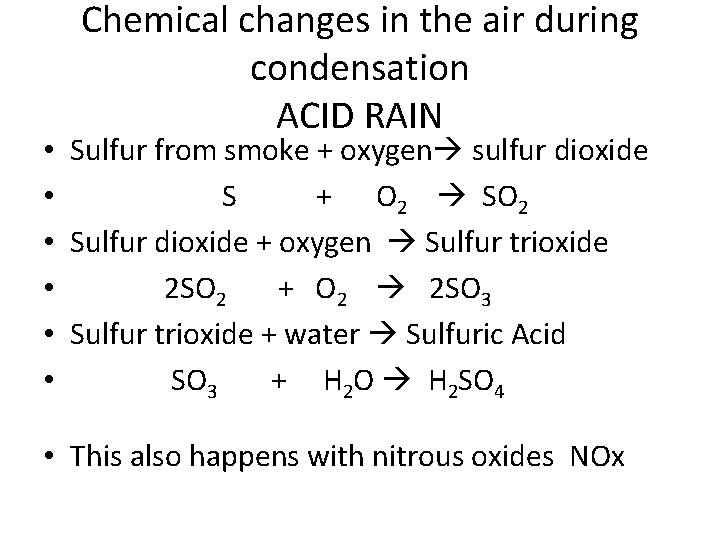
Chemical changes in the air during condensation ACID RAIN • Sulfur from smoke + oxygen sulfur dioxide • S + O 2 SO 2 • Sulfur dioxide + oxygen Sulfur trioxide • 2 SO 2 + O 2 2 SO 3 • Sulfur trioxide + water Sulfuric Acid • SO 3 + H 2 O H 2 SO 4 • This also happens with nitrous oxides NOx
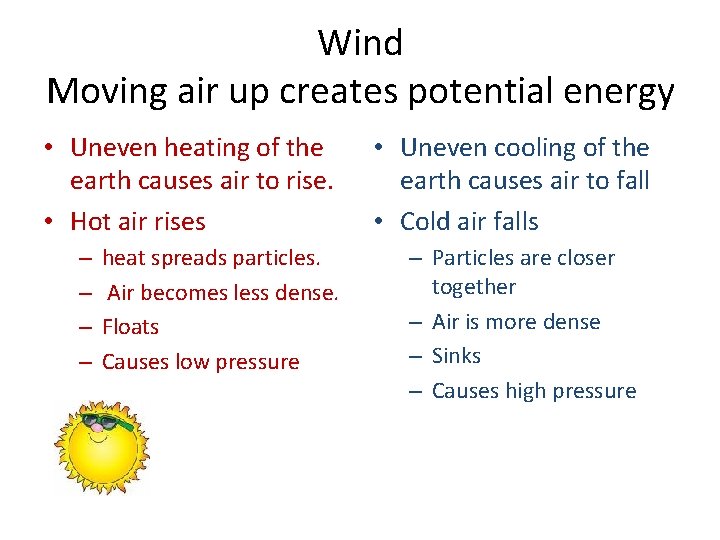
Wind Moving air up creates potential energy • Uneven heating of the earth causes air to rise. • Hot air rises – – heat spreads particles. Air becomes less dense. Floats Causes low pressure • Uneven cooling of the earth causes air to fall • Cold air falls – Particles are closer together – Air is more dense – Sinks – Causes high pressure
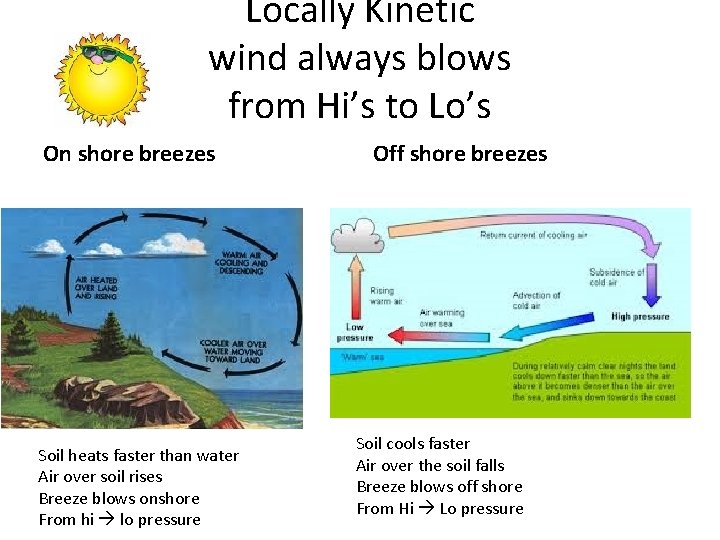
Locally Kinetic wind always blows from Hi’s to Lo’s On shore breezes Soil heats faster than water Air over soil rises Breeze blows onshore From hi lo pressure Off shore breezes Soil cools faster Air over the soil falls Breeze blows off shore From Hi Lo pressure
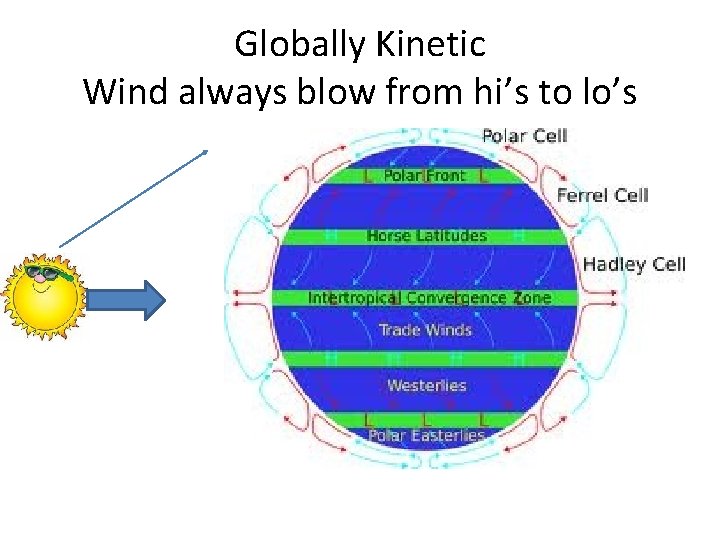
Globally Kinetic Wind always blow from hi’s to lo’s
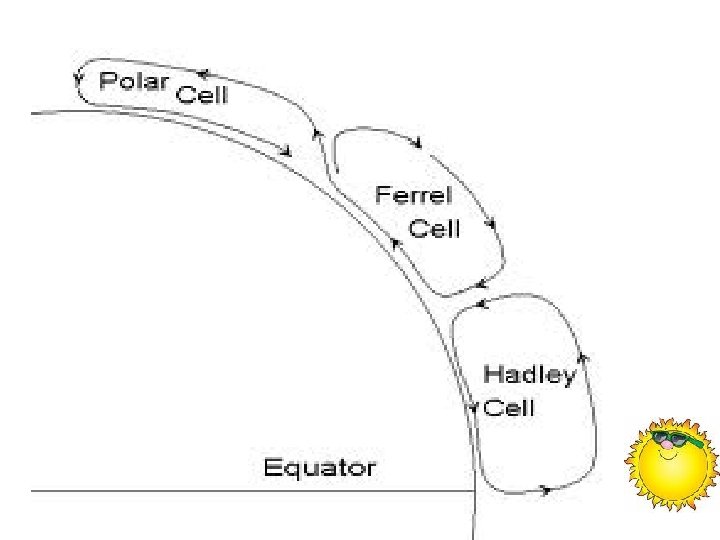
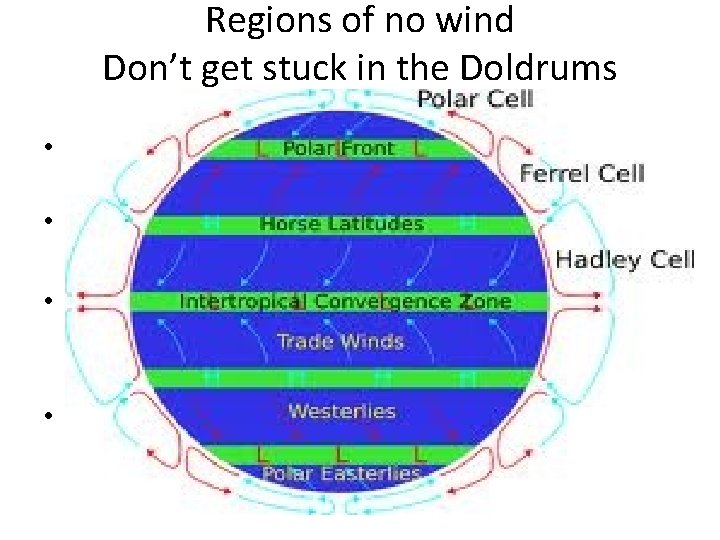
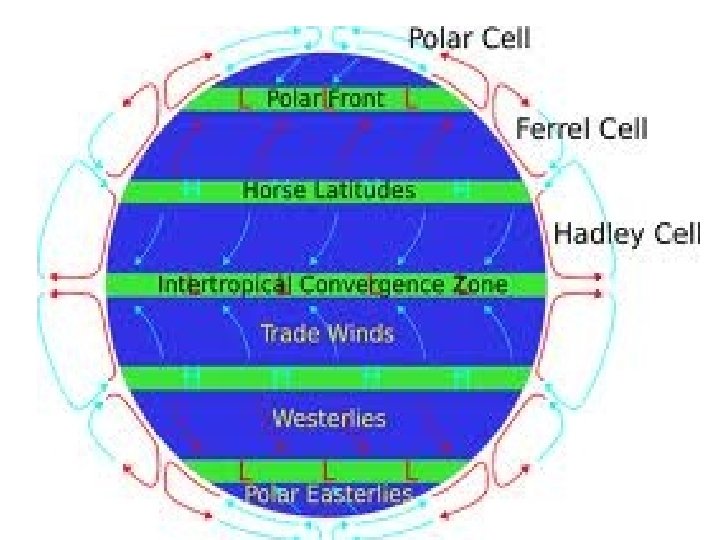
Six convection cells • • • Sun shines at right angles at the equator Hot air rises Sun shines at a steep angle at the poles Cold air sinks This causes convection cells
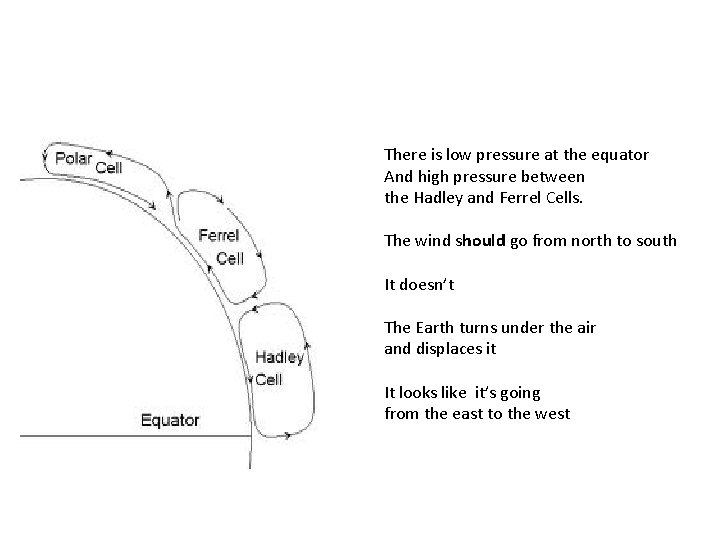
There is low pressure at the equator And high pressure between the Hadley and Ferrel Cells. The wind should go from north to south It doesn’t The Earth turns under the air and displaces it It looks like it’s going from the east to the west
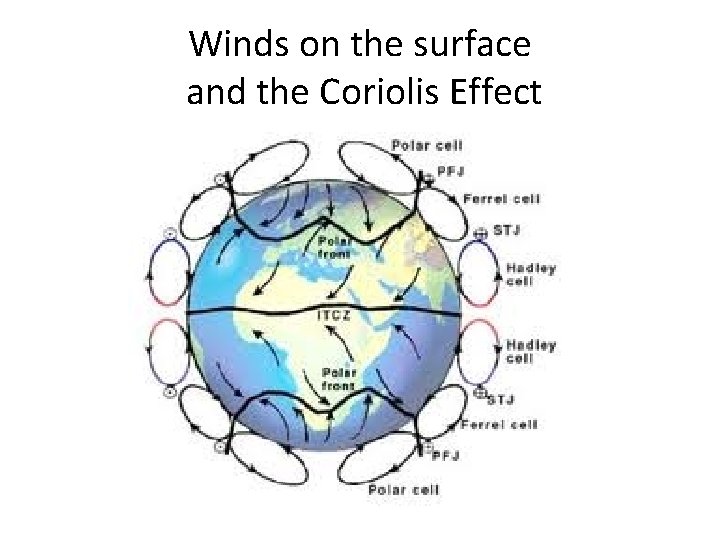
Winds on the surface and the Coriolis Effect
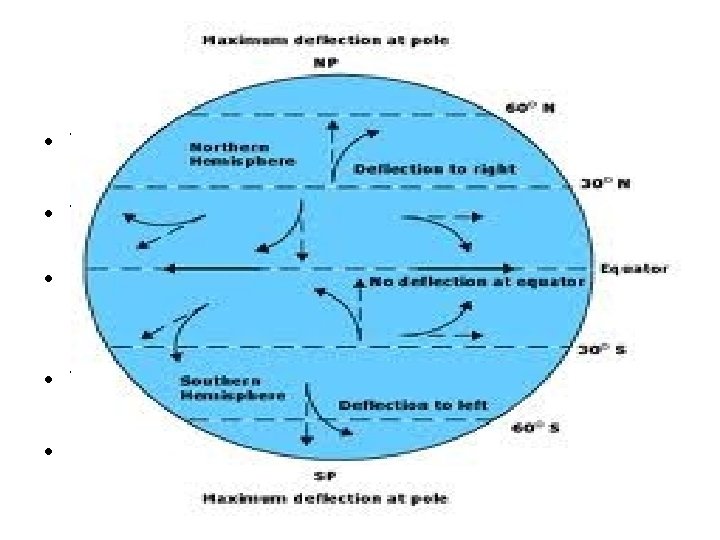
Coriolis affect Kinetic energy • The earth is turning towards the East. • There isn’t a lot of friction so earth slips past the wind • It appears like the wind bends clockwise in the Northern hemisphere. • This is called the Coriolis Effect • It creates prevailing winds
Wind direction. • Winds are named from whence they came. • A North wind comes from the North “The North wind doth blow and we shall have snow And what will poor Robin do then, poor thing. He’ll sit in the barn and keep himself warm And hide his head under his wing, poor thing And hide his head under his wing
Regions of no wind Don’t get stuck in the Doldrums where air sinks or rises 0 • 0 North latitude Equator • 300 North latitude Tropic of Cancer • 600 North latitude Arctic circle • No wind, Intertropical • convergence zone • No wind, the horse latitudes • No wind, Polar front • 900 North latitude North pole • No Wind
Prevailing winds • Between the equator and the horse latitudes • Between the horse latitudes and the arctic circle( our temperate zone) • Between the arctic circle and the north pole • Easterly Trade winds • Sailors sailed east to N. A. To Trade their goods. • Prevailing westerlies • The Gulf stream goes this way too this is how goods were sailed back to England • Polar Easterlies • Nobody sails up here if they can help it.
• Read Pages 332 - 339 in text • Answer Check point questions • P 333 1 -5 • P 339 1 -7