
WATER AND HYDROGEN Properties of Water Polar molecule
- Slides: 25
WATER AND HYDROGEN
Properties of Water • Polar molecule • Cohesion and adhesion • High specific heat • Density – greatest at 4 o. C • Universal solvent of life
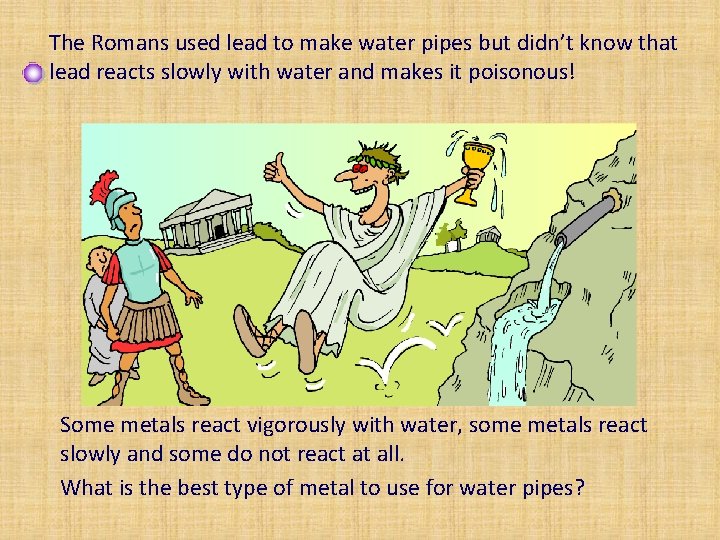
The Romans used lead to make water pipes but didn’t know that lead reacts slowly with water and makes it poisonous! Some metals react vigorously with water, some metals react slowly and some do not react at all. What is the best type of metal to use for water pipes?
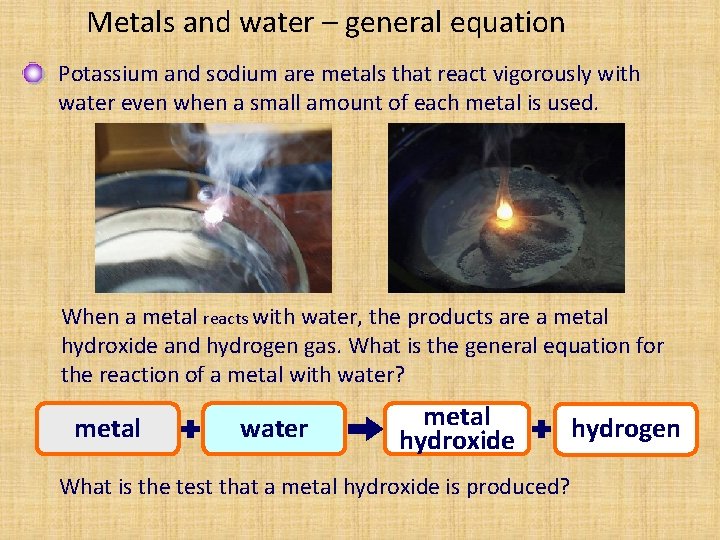
Metals and water – general equation Potassium and sodium are metals that react vigorously with water even when a small amount of each metal is used. When a metal reacts with water, the products are a metal hydroxide and hydrogen gas. What is the general equation for the reaction of a metal with water? metal water metal hydroxide What is the test that a metal hydroxide is produced? hydrogen
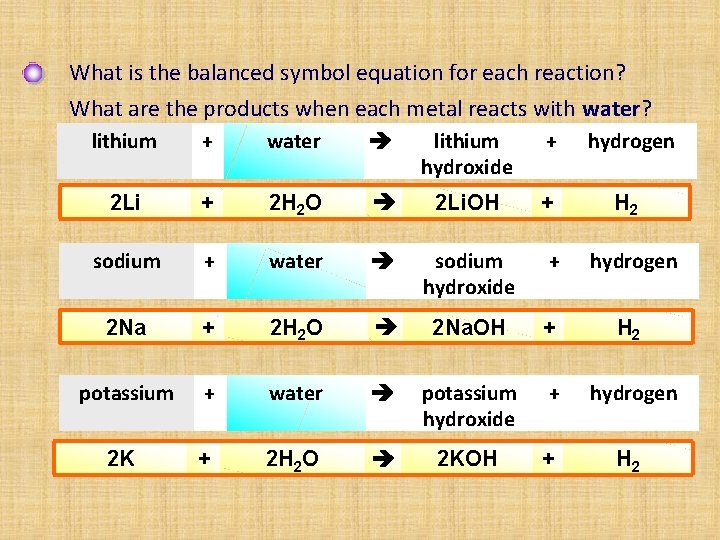
What is the balanced symbol equation for each reaction? What are the products when each metal reacts with water? lithium + water lithium hydroxide + hydrogen 2 Li + 2 H 2 O 2 Li. OH + H 2 sodium + water sodium hydroxide + hydrogen 2 Na + 2 H 2 O 2 Na. OH + H 2 potassium + water potassium hydroxide + hydrogen 2 K + 2 H 2 O 2 KOH + H 2
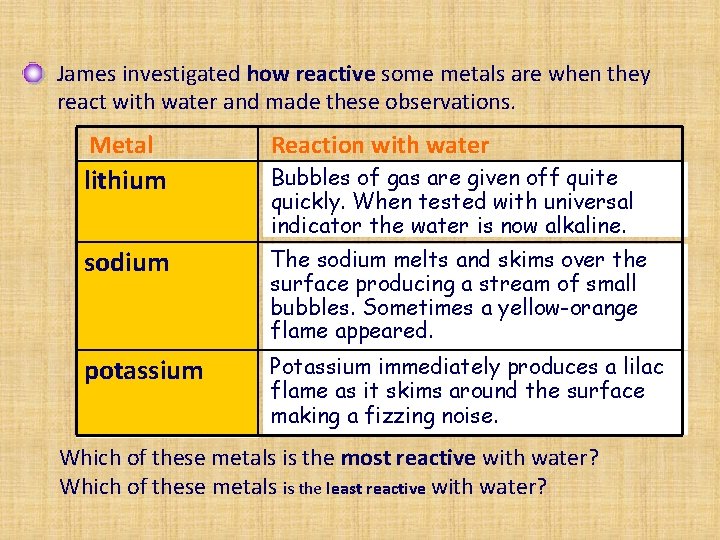
James investigated how reactive some metals are when they react with water and made these observations. Metal Reaction with water lithium Bubbles of gas are given off quite quickly. When tested with universal indicator the water is now alkaline. sodium The sodium melts and skims over the surface producing a stream of small bubbles. Sometimes a yellow-orange flame appeared. potassium Potassium immediately produces a lilac flame as it skims around the surface making a fizzing noise. Which of these metals is the most reactive with water? Which of these metals is the least reactive with water?
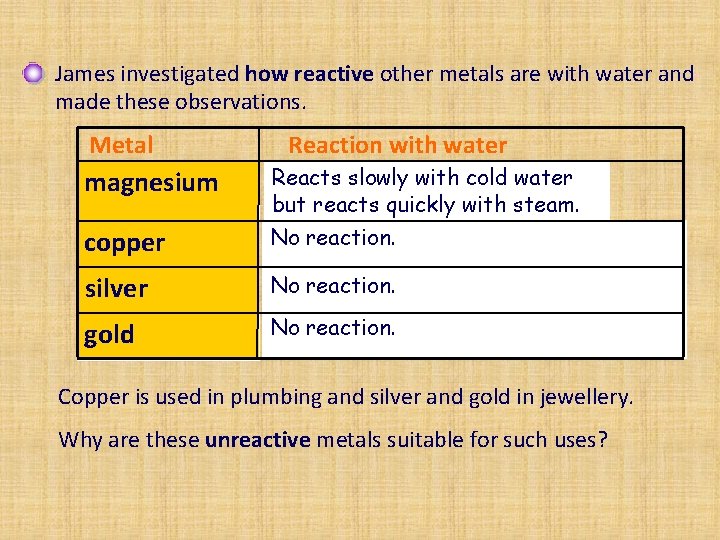
James investigated how reactive other metals are with water and made these observations. Metal Reaction with water magnesium Reacts slowly with cold water but reacts quickly with steam. copper No reaction. silver No reaction. gold No reaction. Copper is used in plumbing and silver and gold in jewellery. Why are these unreactive metals suitable for such uses?
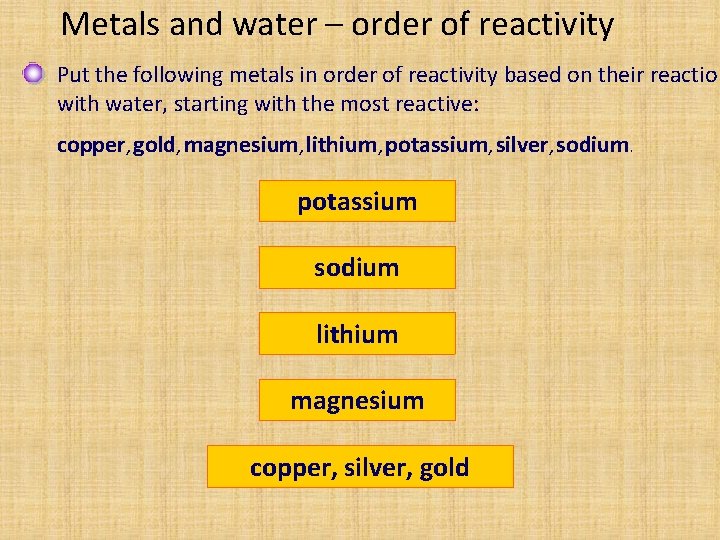
Metals and water – order of reactivity Put the following metals in order of reactivity based on their reaction with water, starting with the most reactive: copper, gold, magnesium, lithium, potassium, silver, sodium. potassium sodium lithium magnesium copper, silver, gold
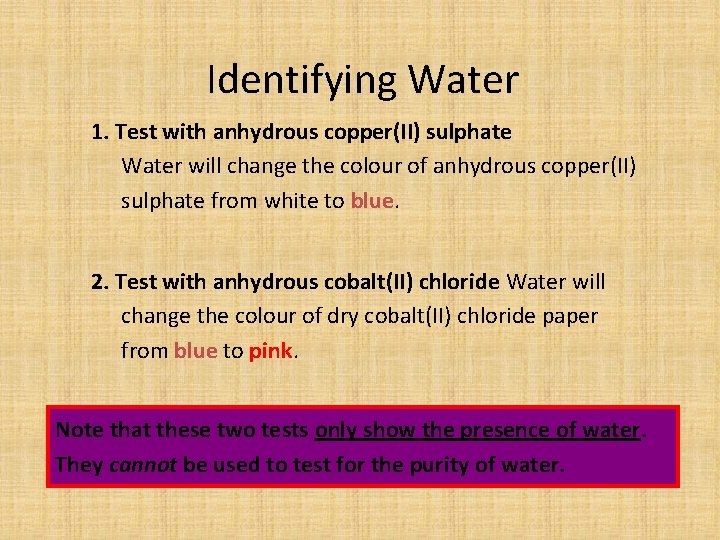
Identifying Water 1. Test with anhydrous copper(II) sulphate Water will change the colour of anhydrous copper(II) sulphate from white to blue. 2. Test with anhydrous cobalt(II) chloride Water will change the colour of dry cobalt(II) chloride paper from blue to pink. Note that these two tests only show the presence of water. They cannot be used to test for the purity of water.
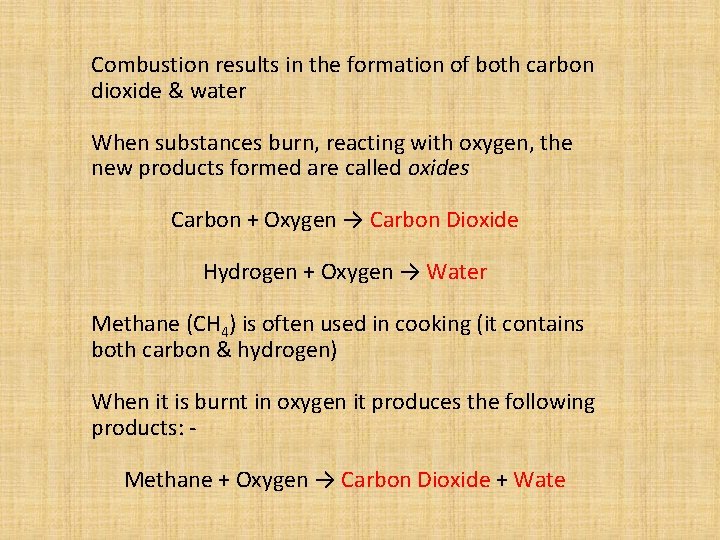
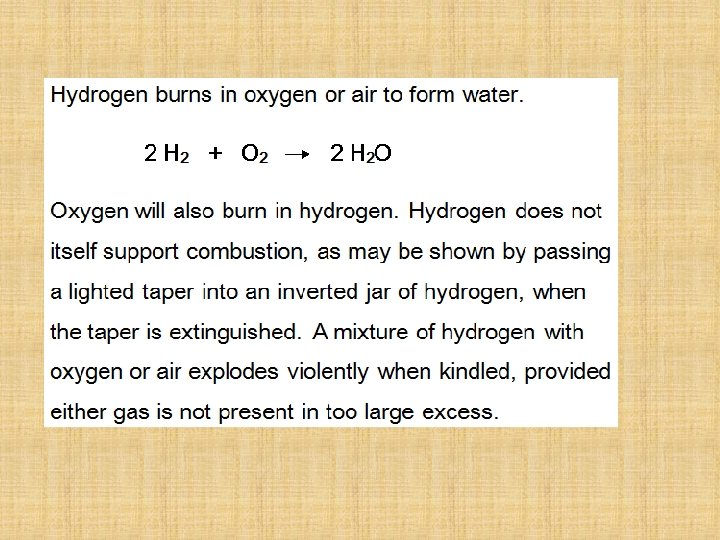
Combustion results in the formation of both carbon dioxide & water When substances burn, reacting with oxygen, the new products formed are called oxides Carbon + Oxygen → Carbon Dioxide Hydrogen + Oxygen → Water Methane (CH 4) is often used in cooking (it contains both carbon & hydrogen) When it is burnt in oxygen it produces the following products: Methane + Oxygen → Carbon Dioxide + Wate
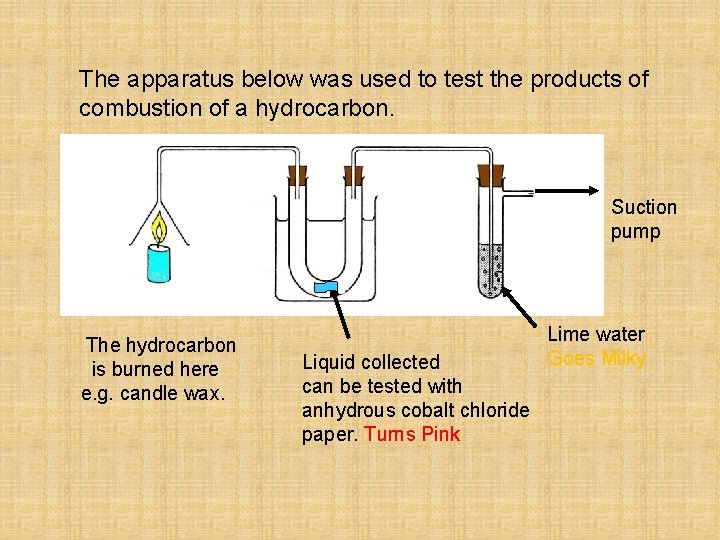
The apparatus below was used to test the products of combustion of a hydrocarbon. Suction pump icewater The hydrocarbon is burned here e. g. candle wax. Liquid collected can be tested with anhydrous cobalt chloride paper. Turns Pink Lime water Goes Milky
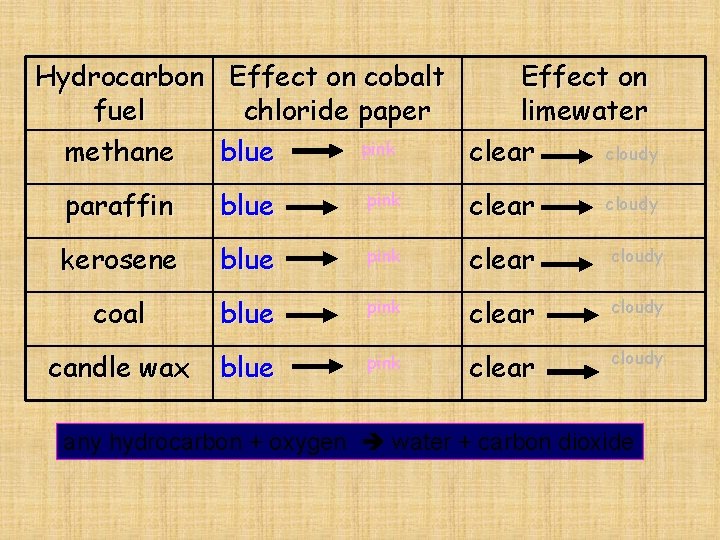
Hydrocarbon Effect on cobalt Effect on fuel chloride paper limewater pink cloudy methane blue clear paraffin blue pink clear kerosene blue pink clear cloudy coal blue pink clear cloudy candle wax blue pink clear cloudy any hydrocarbon + oxygen water + carbon dioxide
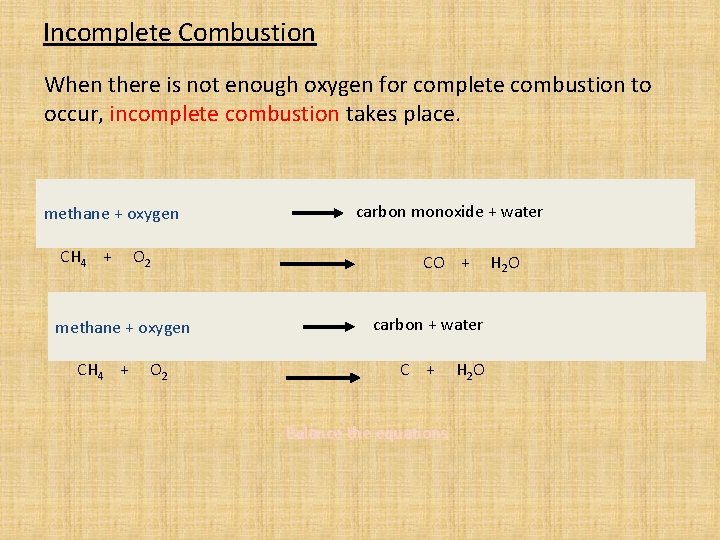
Incomplete Combustion When there is not enough oxygen for complete combustion to occur, incomplete combustion takes place. methane + oxygen CH 4 + O 2 carbon monoxide + water CO + carbon + water C + Balance the equations H 2 O
HYDROGEN Laboratory Preparation of Hydrogen
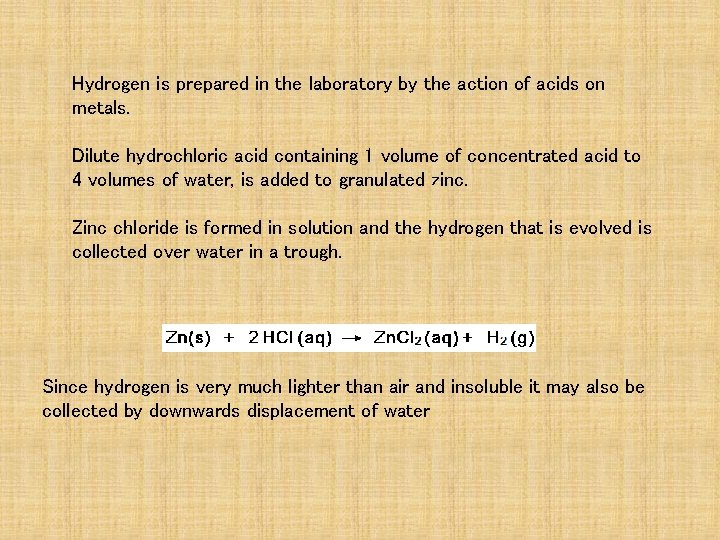
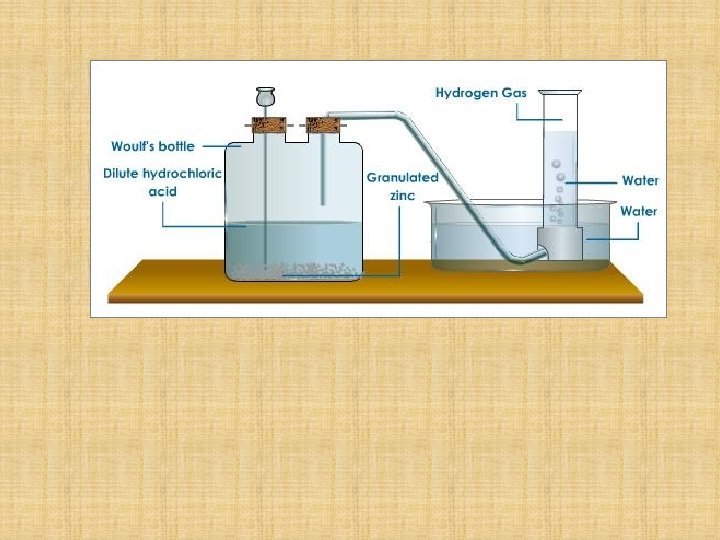
Hydrogen is prepared in the laboratory by the action of acids on metals. Dilute hydrochloric acid containing 1 volume of concentrated acid to 4 volumes of water, is added to granulated zinc. Zinc chloride is formed in solution and the hydrogen that is evolved is collected over water in a trough. Since hydrogen is very much lighter than air and insoluble it may also be collected by downwards displacement of water
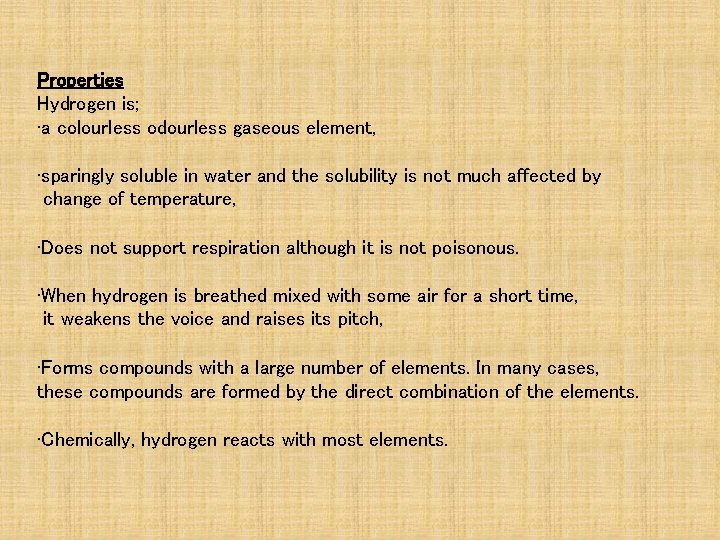
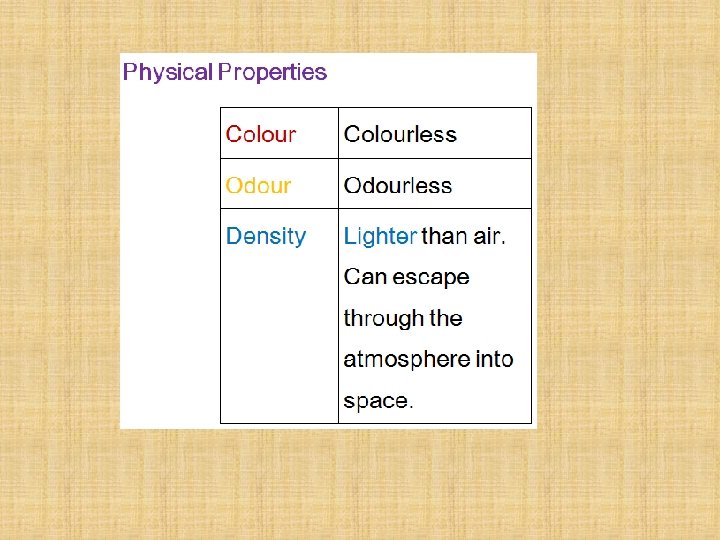
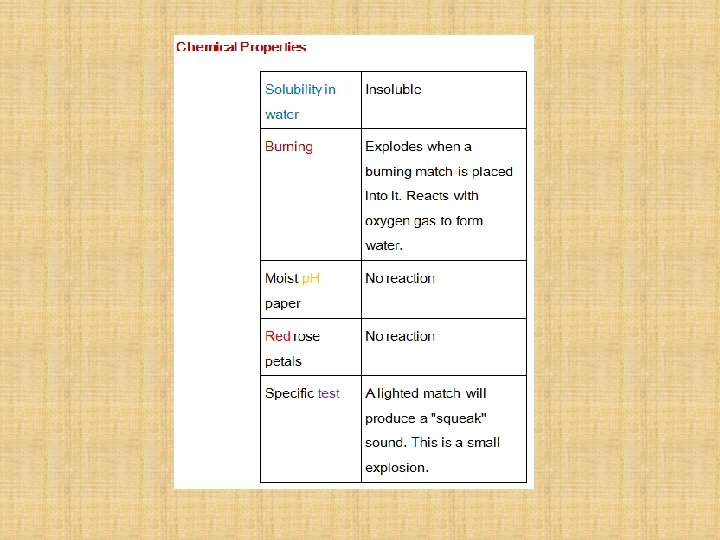
Properties Hydrogen is; • a colourless odourless gaseous element, • sparingly soluble in water and the solubility is not much affected by change of temperature, • Does not support respiration although it is not poisonous. • When hydrogen is breathed mixed with some air for a short time, it weakens the voice and raises its pitch, • Forms compounds with a large number of elements. In many cases, these compounds are formed by the direct combination of the elements. • Chemically, hydrogen reacts with most elements.