
Water 1 Processes Water Celebrated Throughout History When
Water 1: Processes
Water: Celebrated Throughout History "When the well is dry, you know the value of water. ” Benjamin Franklin Water, water, everywhere, And all the boards did shrink. Water, water everywhere, Nor any drop to drink. -Samuel Taylor Coleridge (1772 -1834), "The Rime of the Ancient Mariner" 1798 "Whiskey is for drinking; water is for fighting over. " - Attributed to Mark Twain
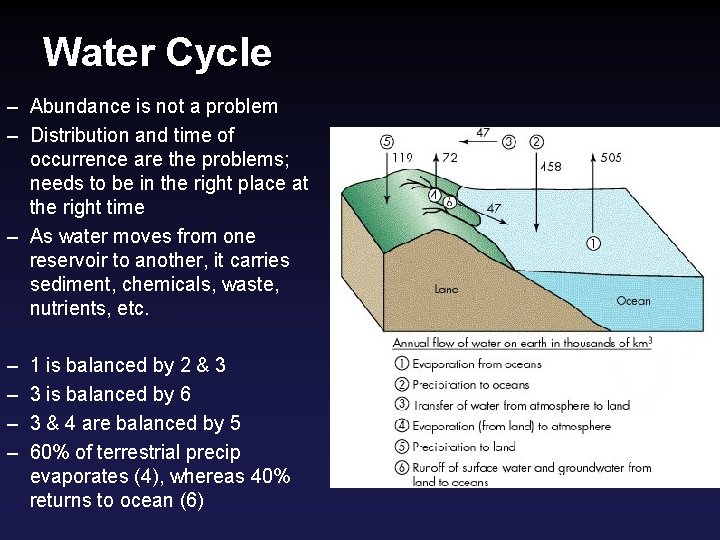
Water Cycle – Abundance is not a problem – Distribution and time of occurrence are the problems; needs to be in the right place at the right time – As water moves from one reservoir to another, it carries sediment, chemicals, waste, nutrients, etc. – – 1 is balanced by 2 & 3 3 is balanced by 6 3 & 4 are balanced by 5 60% of terrestrial precip evaporates (4), whereas 40% returns to ocean (6)
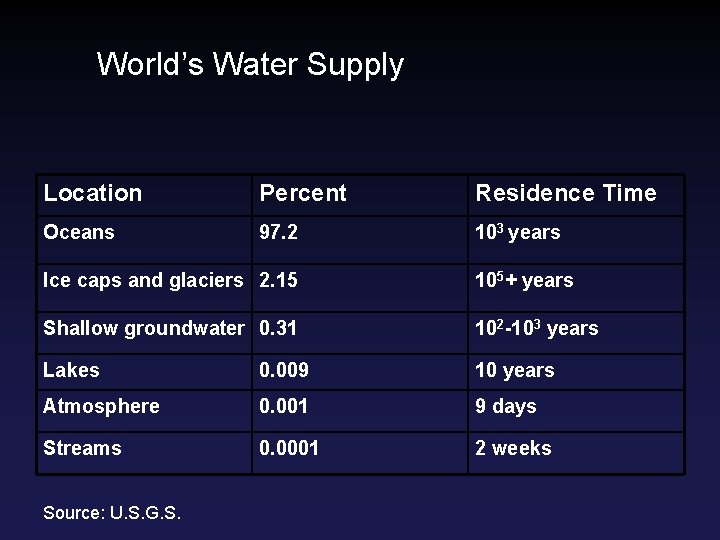
World’s Water Supply Location Percent Residence Time Oceans 97. 2 103 years Ice caps and glaciers 2. 15 105+ years Shallow groundwater 0. 31 102 -103 years Lakes 0. 009 10 years Atmosphere 0. 001 9 days Streams 0. 0001 2 weeks Source: U. S. G. S.
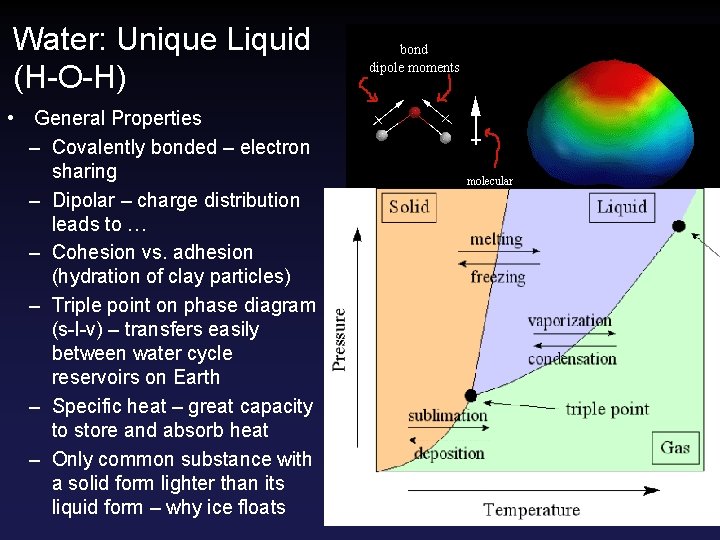
Water: Unique Liquid (H-O-H) • General Properties – Covalently bonded – electron sharing – Dipolar – charge distribution leads to … – Cohesion vs. adhesion (hydration of clay particles) – Triple point on phase diagram (s-l-v) – transfers easily between water cycle reservoirs on Earth – Specific heat – great capacity to store and absorb heat – Only common substance with a solid form lighter than its liquid form – why ice floats
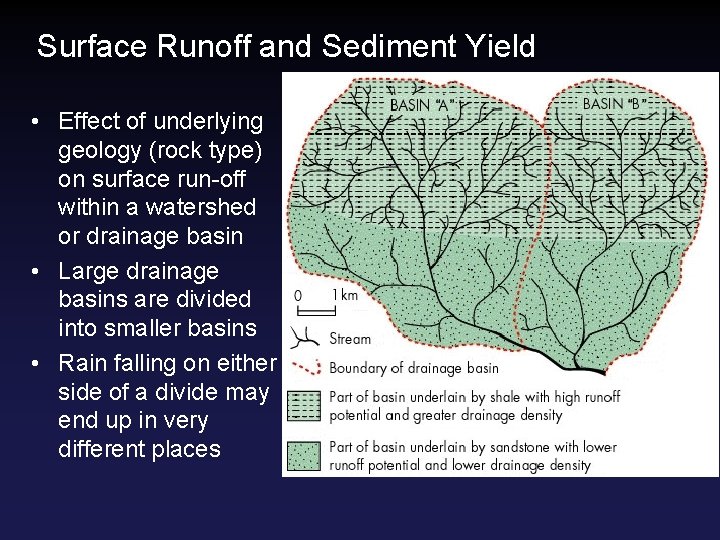
Surface Runoff and Sediment Yield • Effect of underlying geology (rock type) on surface run-off within a watershed or drainage basin • Large drainage basins are divided into smaller basins • Rain falling on either side of a divide may end up in very different places
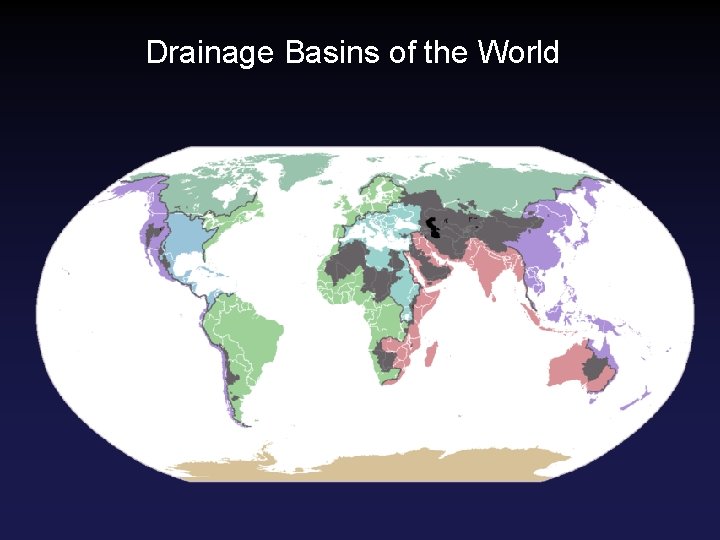
Drainage Basins of the World
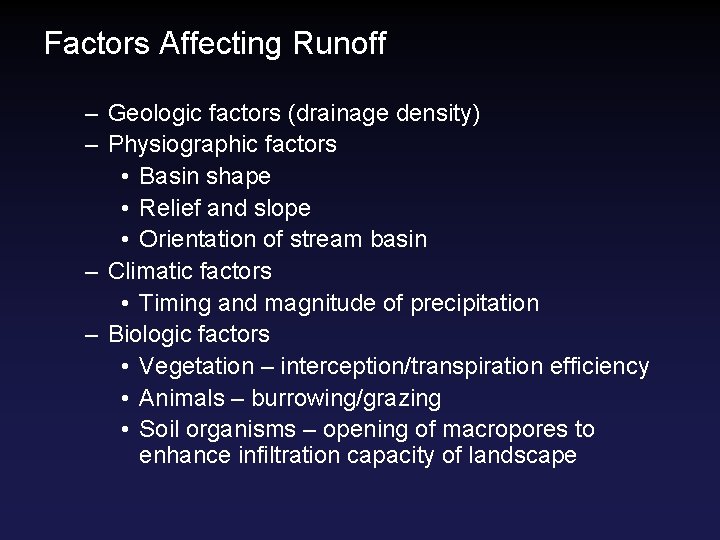
Factors Affecting Runoff – Geologic factors (drainage density) – Physiographic factors • Basin shape • Relief and slope • Orientation of stream basin – Climatic factors • Timing and magnitude of precipitation – Biologic factors • Vegetation – interception/transpiration efficiency • Animals – burrowing/grazing • Soil organisms – opening of macropores to enhance infiltration capacity of landscape
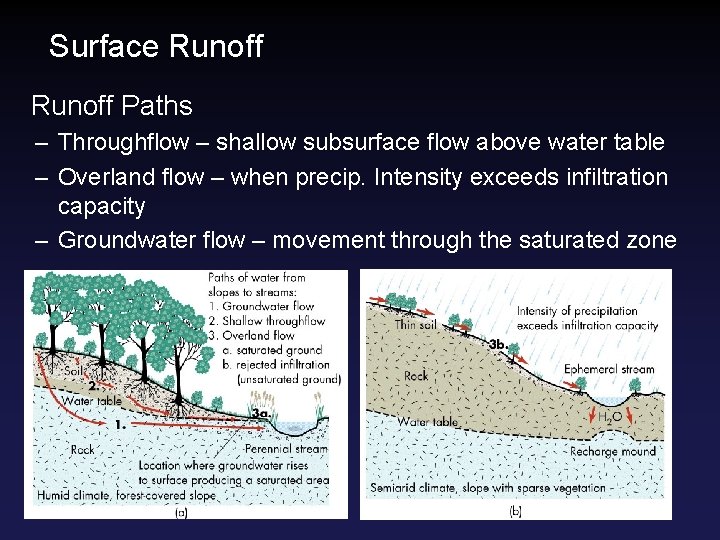
Surface Runoff Paths – Throughflow – shallow subsurface flow above water table – Overland flow – when precip. Intensity exceeds infiltration capacity – Groundwater flow – movement through the saturated zone
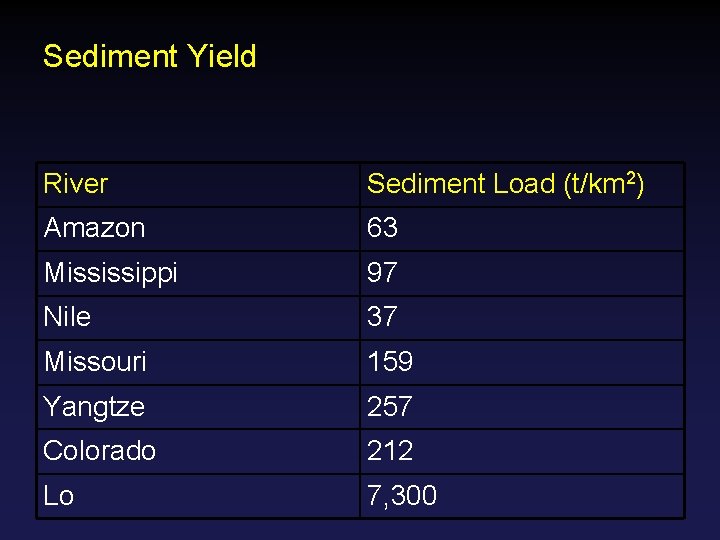
Sediment Yield River Sediment Load (t/km 2) Amazon 63 Mississippi 97 Nile 37 Missouri 159 Yangtze 257 Colorado 212 Lo 7, 300
- Slides: 10