
WATCHMAN Left Atrial Appendage Closure Device www watchmandevice

- Slides: 43
WATCHMAN™ Left Atrial Appendage Closure Device www. watchmandevice. com SH-230609 -AH MAR 2018
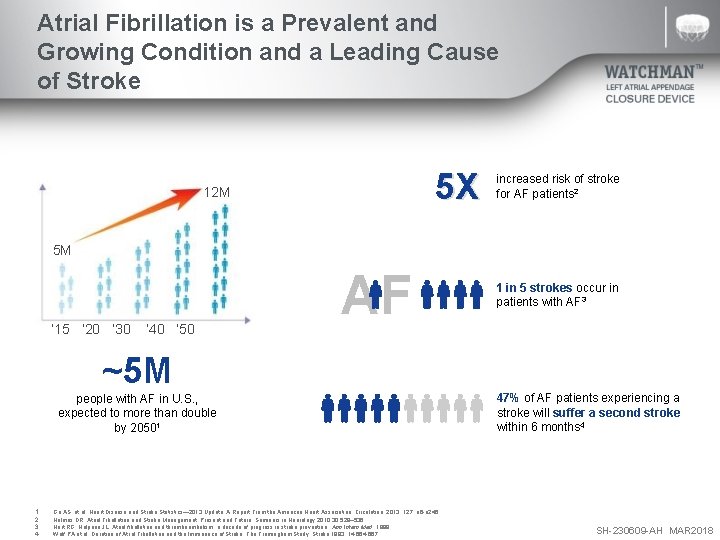
Atrial Fibrillation is a Prevalent and Growing Condition and a Leading Cause of Stroke 5 X 12 M increased risk of stroke for AF patients 2 5 M ‘ 15 ‘ 20 ‘ 30 ’ 40 ‘ 50 AF 1 in 5 strokes occur in patients with AF 3 ~5 M people with AF in U. S. , expected to more than double by 20501 1. 2. 3. 4. Go AS. et al, Heart Disease and Stroke Statistics— 2013 Update: A Report From the American Heart Association. Circulation. 2013; 127: e 6 -e 245. Holmes DR, Atrial Fibrillation and Stroke Management: Present and Future, Seminars in Neurology 2010; 30: 528– 536 Hart RG, Halperin JL. Atrial fibrillation and thromboembolism: a decade of progress in stroke prevention. Ann Intern Med. 1999. Wolf PA et al, Duration of Atrial Fibrillation and the Imminence of Stroke: The Framingham Study, Stroke 1983; 14: 664 -667 47% of AF patients experiencing a stroke will suffer a second stroke within 6 months 4 SH-230609 -AH MAR 2018
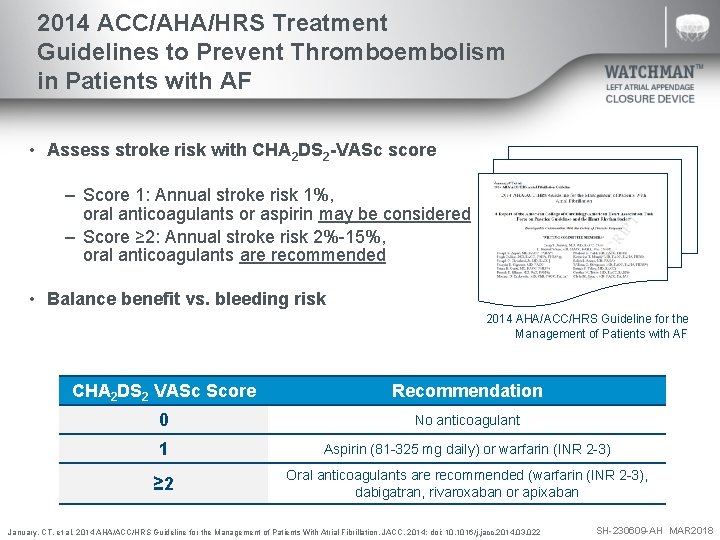
2014 ACC/AHA/HRS Treatment Guidelines to Prevent Thromboembolism in Patients with AF • Assess stroke risk with CHA 2 DS 2 -VASc score – Score 1: Annual stroke risk 1%, oral anticoagulants or aspirin may be considered – Score ≥ 2: Annual stroke risk 2%-15%, oral anticoagulants are recommended • Balance benefit vs. bleeding risk 2014 AHA/ACC/HRS Guideline for the Management of Patients with AF CHA 2 DS 2 VASc Score Recommendation 0 No anticoagulant 1 Aspirin (81 -325 mg daily) or warfarin (INR 2 -3) ≥ 2 Oral anticoagulants are recommended (warfarin (INR 2 -3), dabigatran, rivaroxaban or apixaban January, CT. et al. 2014 AHA/ACC/HRS Guideline for the Management of Patients With Atrial Fibrillation. JACC. 2014; doi: 10. 1016/j. jacc. 2014. 03. 022 SH-230609 -AH MAR 2018
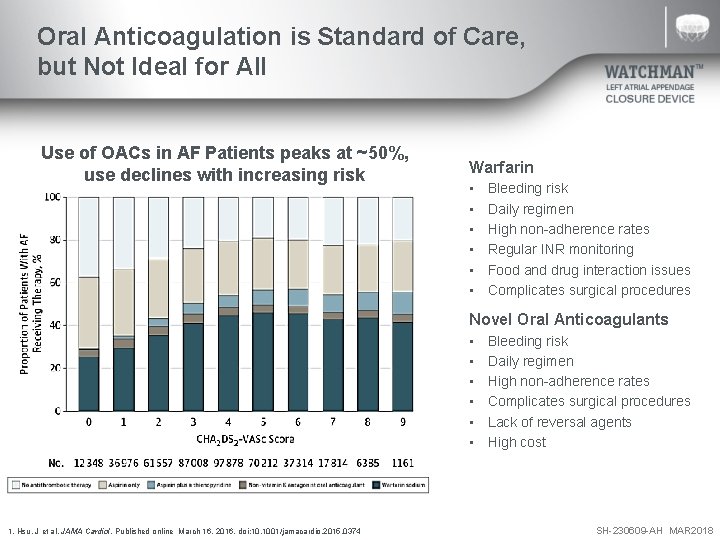
Oral Anticoagulation is Standard of Care, but Not Ideal for All Use of OACs in AF Patients peaks at ~50%, use declines with increasing risk Warfarin • • • Bleeding risk Daily regimen High non-adherence rates Regular INR monitoring Food and drug interaction issues Complicates surgical procedures Novel Oral Anticoagulants • • • 1. Hsu, J et al. JAMA Cardiol. Published online March 16, 2016. doi: 10. 1001/jamacardio. 2015. 0374 Bleeding risk Daily regimen High non-adherence rates Complicates surgical procedures Lack of reversal agents High cost SH-230609 -AH MAR 2018
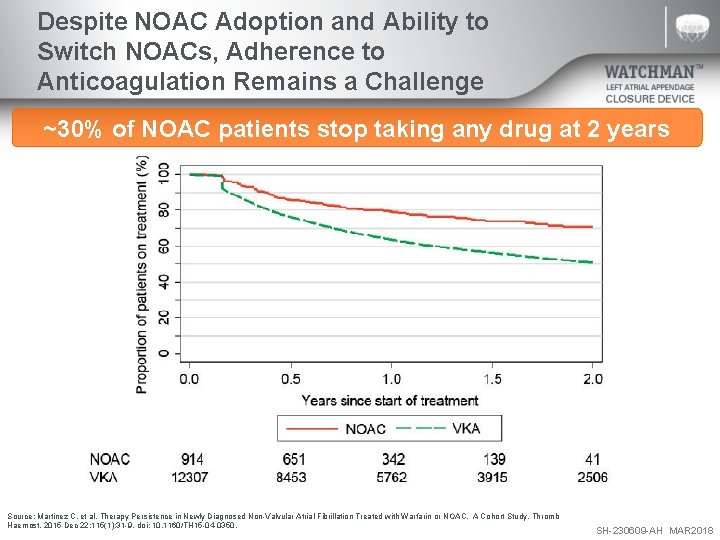
Despite NOAC Adoption and Ability to Switch NOACs, Adherence to Anticoagulation Remains a Challenge ~30% of NOAC patients stop taking any drug at 2 years Source: Martinez C, et al. Therapy Persistence in Newly Diagnosed Non-Valvular Atrial Fibrillation Treated with Warfarin or NOAC. A Cohort Study. Thromb Haemost. 2015 Dec 22; 115(1): 31 -9. doi: 10. 1160/TH 15 -04 -0350. SH-230609 -AH MAR 2018
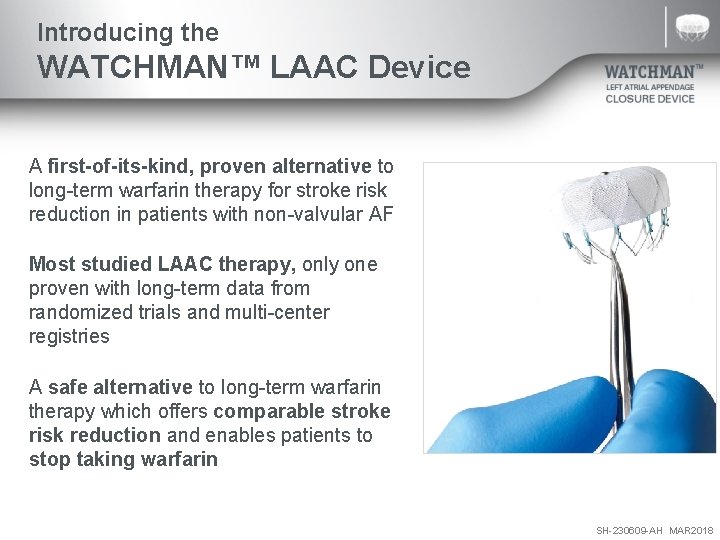
Introducing the WATCHMAN™ LAAC Device A first-of-its-kind, proven alternative to long-term warfarin therapy for stroke risk reduction in patients with non-valvular AF Most studied LAAC therapy, only one proven with long-term data from randomized trials and multi-center registries A safe alternative to long-term warfarin therapy which offers comparable stroke risk reduction and enables patients to stop taking warfarin 1. Reddy, V et al. JAMA 2014; Vol. 312, No. 19. 2. Reddy, V et al. Watchman I: First Report of the 5 -Year PROTECT-AF and Extended PREVAIL Results. TCT 2014. SH-230609 -AH MAR 2018
WATCHMAN Therapy Indications for Use The WATCHMAN™ Device is indicated to reduce the risk of thromboembolism from the left atrial appendage in patients with non-valvular atrial fibrillation who: – Are at increased risk for stroke and systemic embolism based on CHADS 2 or CHA 2 DS 2 -VASc scores and are recommended for anticoagulation therapy; – Are deemed by their physicians to be suitable for warfarin; and – Have an appropriate rationale to seek a non-pharmacologic alternative to warfarin, taking into account the safety and effectiveness of the device compared to warfarin. SH-230609 -AH MAR 2018
WATCHMAN Therapy National Coverage Determination Effective Feb. 8, 2016 Documented in medical record CMS will cover percutaneous LAAC implants when specific criteria are met: – Eligible patients must have a CHADS 2 score ≥ 2 or a CHA 2 DS 2 -VASc score ≥ 3 – Patients must be suitable for short-term warfarin, but deemed unable to take long-term oral anticoagulation – Documented evidence of a formal shared decision interaction between the patient and an independent non-interventional physician using an OAC evidence-based decision tool – LAA Registry: Patients must be enrolled in a prospective national registry – Operator requirements: IC or EP or cardiovascular surgeon must have performed at least 25 transseptal punctures (TSP) through intact septum • Must maintain at least 25 TSP over a two year period (at least 12 are LAAC) – Facility Requirements: The procedure must be furnished in a hospital with an established structural heart disease (SHD) and/or electrophysiology (EP) program SH-230609 -AH MAR 2018
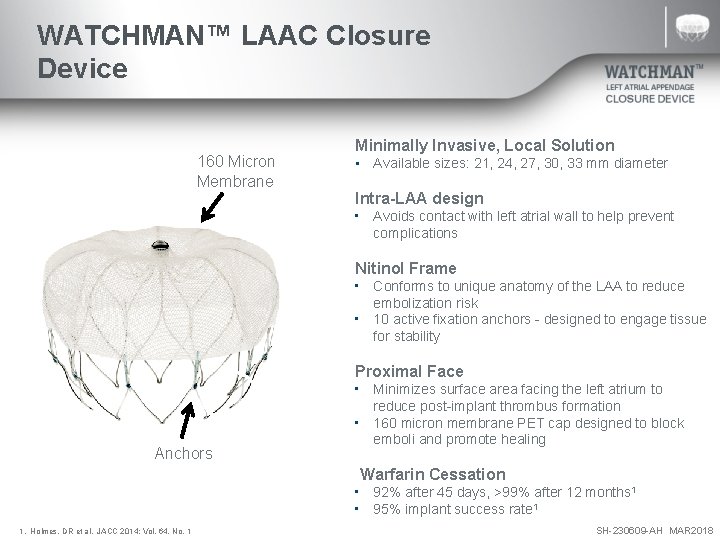
WATCHMAN™ LAAC Closure Device 160 Micron Membrane Minimally Invasive, Local Solution • Available sizes: 21, 24, 27, 30, 33 mm diameter Intra-LAA design • Avoids contact with left atrial wall to help prevent complications Nitinol Frame • Conforms to unique anatomy of the LAA to reduce embolization risk • 10 active fixation anchors - designed to engage tissue for stability Proximal Face Anchors • Minimizes surface area facing the left atrium to reduce post-implant thrombus formation • 160 micron membrane PET cap designed to block emboli and promote healing Warfarin Cessation • 92% after 45 days, >99% after 12 months 1 • 95% implant success rate 1 1. Holmes, DR et al. JACC 2014; Vol. 64, No. 1 SH-230609 -AH MAR 2018
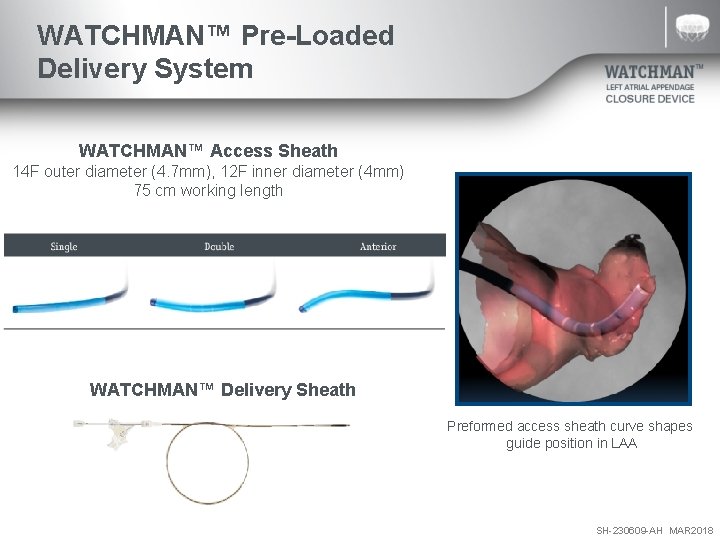
WATCHMAN™ Pre-Loaded Delivery System WATCHMAN™ Access Sheath 14 F outer diameter (4. 7 mm), 12 F inner diameter (4 mm) 75 cm working length WATCHMAN™ Delivery Sheath Preformed access sheath curve shapes guide position in LAA SH-230609 -AH MAR 2018
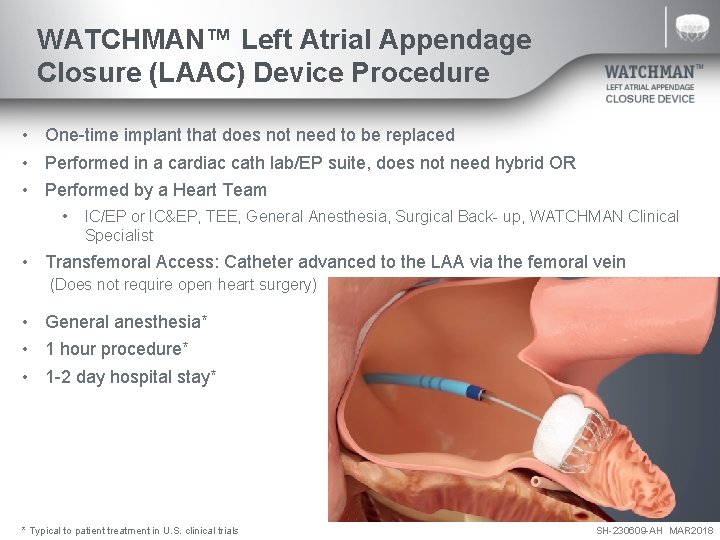
WATCHMAN™ Left Atrial Appendage Closure (LAAC) Device Procedure • One-time implant that does not need to be replaced • Performed in a cardiac cath lab/EP suite, does not need hybrid OR • Performed by a Heart Team • IC/EP or IC&EP, TEE, General Anesthesia, Surgical Back- up, WATCHMAN Clinical Specialist • Transfemoral Access: Catheter advanced to the LAA via the femoral vein (Does not require open heart surgery) • General anesthesia* • 1 hour procedure* • 1 -2 day hospital stay* * Typical to patient treatment in U. S. clinical trials SH-230609 -AH MAR 2018
WATCHMAN™ LAAC Procedure Implant Video SH-230609 -AH MAR 2018
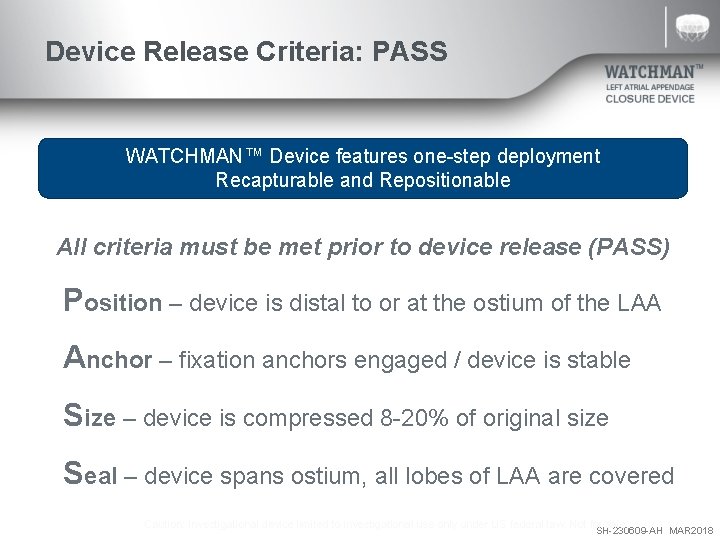
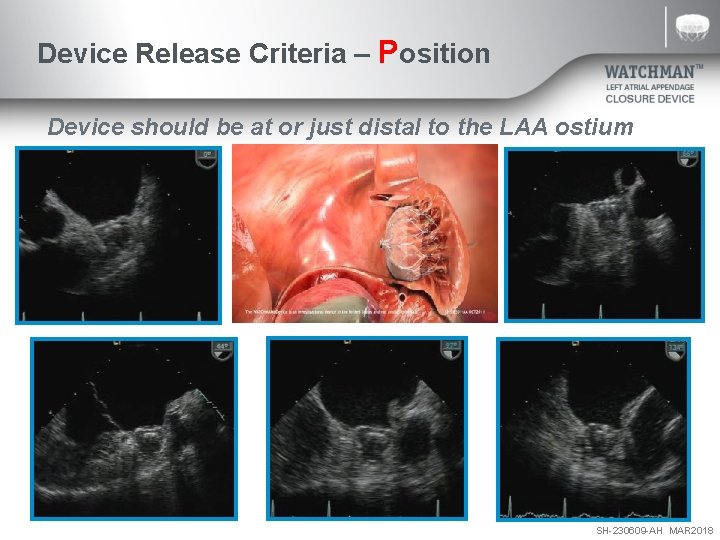
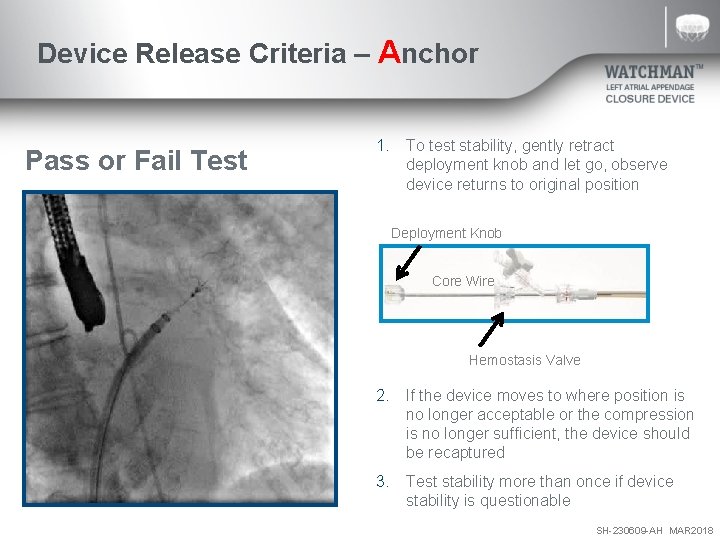
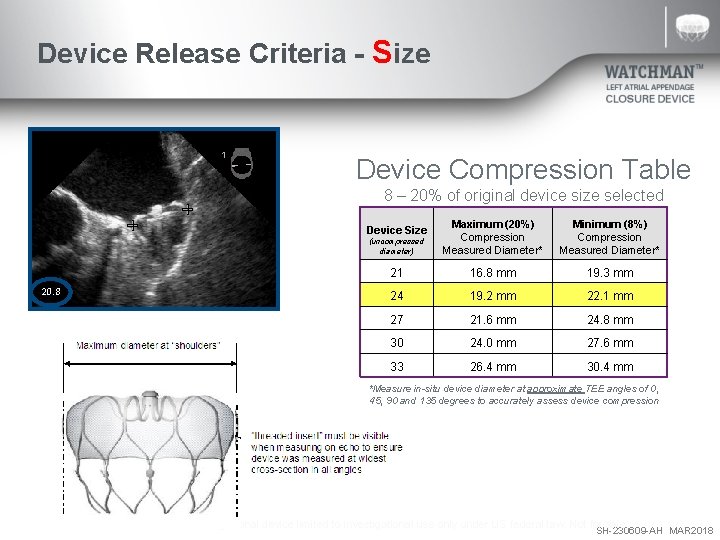
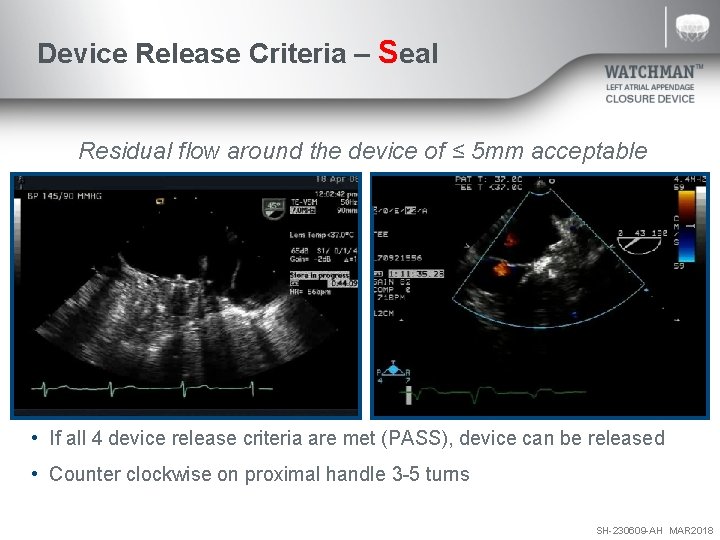
Device Release Criteria: PASS WATCHMAN™ Device features one-step deployment Recapturable and Repositionable All criteria must be met prior to device release (PASS) Position – device is distal to or at the ostium of the LAA Anchor – fixation anchors engaged / device is stable Size – device is compressed 8 -20% of original size Seal – device spans ostium, all lobes of LAA are covered Caution: Investigational device limited to investigational use only under US federal law. Not for sale. SH-230609 -AH MAR 2018
Device Release Criteria – Position Device should be at or just distal to the LAA ostium SH-230609 -AH MAR 2018
Device Release Criteria – Anchor Pass or Fail Test 1. To test stability, gently retract deployment knob and let go, observe device returns to original position Deployment Knob Core Wire Hemostasis Valve 2. If the device moves to where position is no longer acceptable or the compression is no longer sufficient, the device should be recaptured 3. Test stability more than once if device stability is questionable SH-230609 -AH MAR 2018
Device Release Criteria - Size Device Compression Table 8 – 20% of original device size selected (uncompressed diameter) Maximum (20%) Compression Measured Diameter* Minimum (8%) Compression Measured Diameter* 21 16. 8 mm 19. 3 mm 24 19. 2 mm 22. 1 mm 27 21. 6 mm 24. 8 mm 30 24. 0 mm 27. 6 mm 33 26. 4 mm 30. 4 mm Device Size 20. 8 *Measure in-situ device diameter at approximate TEE angles of 0, 45, 90 and 135 degrees to accurately assess device compression Caution: Investigational device limited to investigational use only under US federal law. Not for sale. SH-230609 -AH MAR 2018
Device Release Criteria – Seal Residual flow around the device of ≤ 5 mm acceptable • If all 4 device release criteria are met (PASS), device can be released • Counter clockwise on proximal handle 3 -5 turns SH-230609 -AH MAR 2018
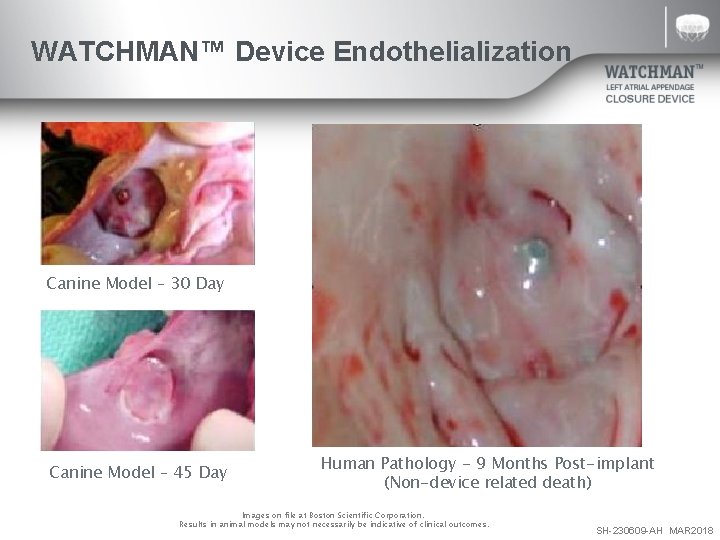
WATCHMAN™ Device Endothelialization Canine Model – 30 Day Canine Model – 45 Day Human Pathology - 9 Months Post-implant (Non-device related death) Images on file at Boston Scientific Corporation. Results in animal models may not necessarily be indicative of clinical outcomes. SH-230609 -AH MAR 2018
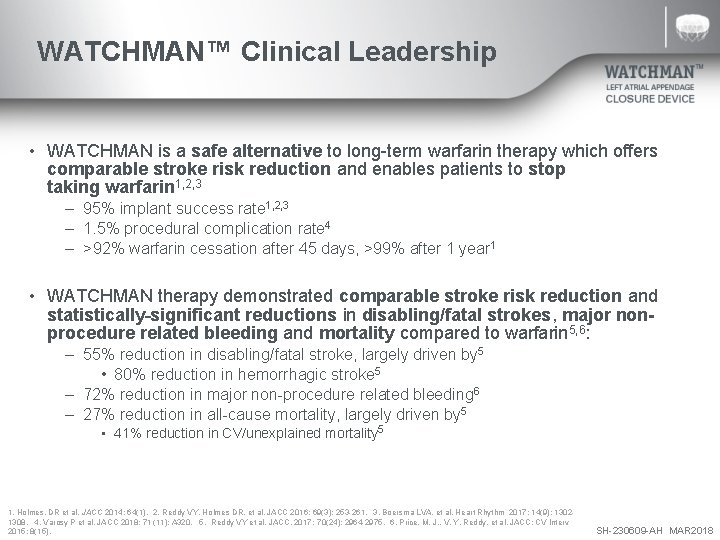
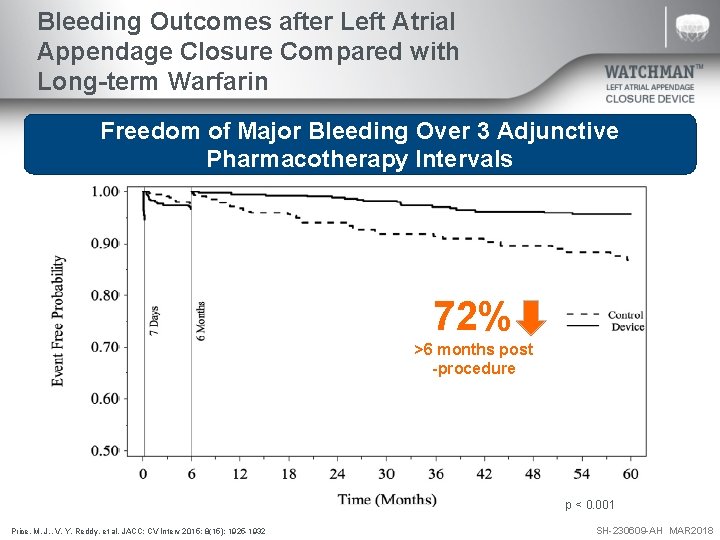
WATCHMAN™ Clinical Leadership • WATCHMAN is a safe alternative to long-term warfarin therapy which offers comparable stroke risk reduction and enables patients to stop taking warfarin 1, 2, 3 – 95% implant success rate 1, 2, 3 – 1. 5% procedural complication rate 4 – >92% warfarin cessation after 45 days, >99% after 1 year 1 • WATCHMAN therapy demonstrated comparable stroke risk reduction and statistically significant reductions in disabling/fatal strokes, major nonprocedure related bleeding and mortality compared to warfarin 5, 6: – 55% reduction in disabling/fatal stroke, largely driven by 5 • 80% reduction in hemorrhagic stroke 5 – 72% reduction in major non-procedure related bleeding 6 – 27% reduction in all-cause mortality, largely driven by 5 • 41% reduction in CV/unexplained mortality 5 1. Holmes, DR et al. JACC 2014; 64(1). 2. Reddy VY, Holmes DR, et al. JACC 2016; 69(3): 253 -261. 3. Boersma LVA, et al. Heart Rhythm 2017; 14(9): 13021308. 4. Varosy P et al. JACC 2018; 71 (11): A 320. 5. Reddy VY et al. JACC. 2017; 70(24): 2964 -2975. 6. Price, M. J. , V. Y. Reddy, et al. JACC: CV Interv 2015; 8(15). SH-230609 -AH MAR 2018
WATCHMAN Clinical Data Procedural Success and Safety SH-230609 -AH MAR 2018
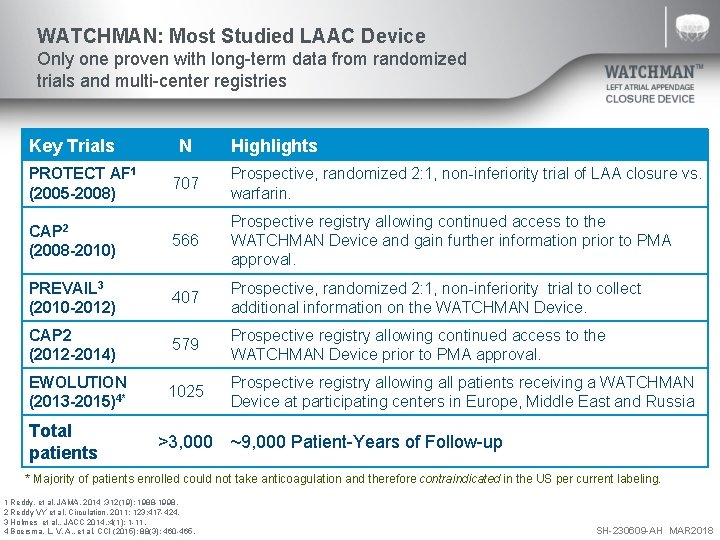
WATCHMAN: Most Studied LAAC Device Only one proven with long-term data from randomized trials and multi-center registries Key Trials PROTECT AF 1 (2005 -2008) N Highlights 707 Prospective, randomized 2: 1, non-inferiority trial of LAA closure vs. warfarin. CAP 2 (2008 -2010) 566 Prospective registry allowing continued access to the WATCHMAN Device and gain further information prior to PMA approval. PREVAIL 3 (2010 -2012) 407 Prospective, randomized 2: 1, non-inferiority trial to collect additional information on the WATCHMAN Device. CAP 2 (2012 -2014) 579 Prospective registry allowing continued access to the WATCHMAN Device prior to PMA approval. EWOLUTION (2013 -2015)4* 1025 Prospective registry allowing all patients receiving a WATCHMAN Device at participating centers in Europe, Middle East and Russia Total patients >3, 000 ~9, 000 Patient-Years of Follow-up * Majority of patients enrolled could not take anticoagulation and therefore contraindicated in the US per current labeling. 1 Reddy, et al. JAMA. 2014 ; 312(19): 1988 -1998. 2 Reddy VY et al. Circulation. 2011; 123: 417 -424. 3 Holmes et al. , JACC 2014, ; 4(1): 1 -11. 4 Boersma, L. V. A. , et al. CCI (2015); 88(3): 460 -465. SH-230609 -AH MAR 2018
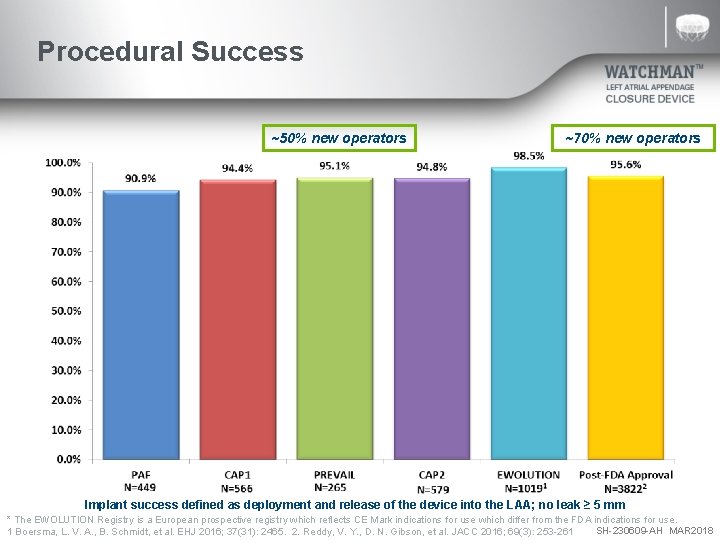
Procedural Success ~50% new operators ~70% new operators Implant success defined as deployment and release of the device into the LAA; no leak ≥ 5 mm * The EWOLUTION Registry is a European prospective registry which reflects CE Mark indications for use which differ from the FDA indications for use. SH-230609 -AH MAR 2018 1 Boersma, L. V. A. , B. Schmidt, et al. EHJ 2016; 37(31): 2465. 2. Reddy, V. Y. , D. N. Gibson, et al. JACC 2016; 69(3): 253 -261
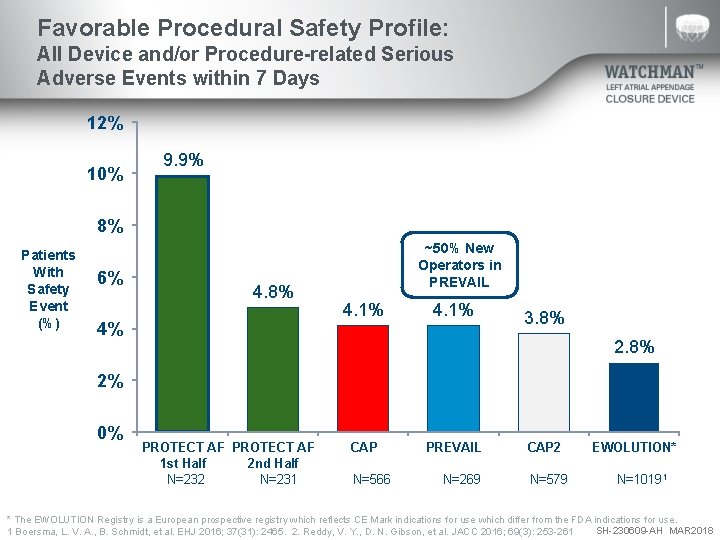
Favorable Procedural Safety Profile: All Device and/or Procedure-related Serious Adverse Events within 7 Days 12% 10% 9. 9% 8% Patients With Safety Event (%) 6% 4. 8% 4% ~50% New Operators in PREVAIL 4. 1% 3. 8% 2% 0% PROTECT AF 1 st Half 2 nd Half N=232 N=231 CAP N=566 PREVAIL N=269 CAP 2 N=579 EWOLUTION* N=10191 * The EWOLUTION Registry is a European prospective registry which reflects CE Mark indications for use which differ from the FDA indications for use. SH-230609 -AH MAR 2018 1 Boersma, L. V. A. , B. Schmidt, et al. EHJ 2016; 37(31): 2465. 2. Reddy, V. Y. , D. N. Gibson, et al. JACC 2016; 69(3): 253 -261
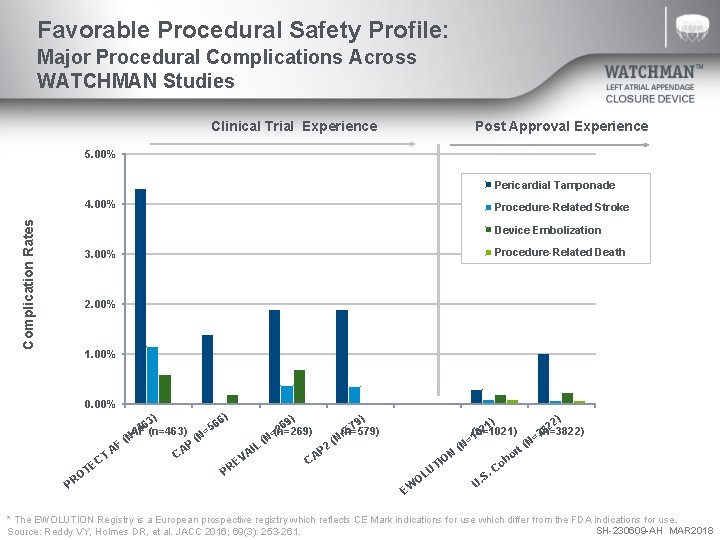
Favorable Procedural Safety Profile: Major Procedural Complications Across WATCHMAN Studies Clinical Trial Experience Post Approval Experience 5. 00% Pericardial Tamponade Complication Rates 4. 00% Procedure-Related Stroke Device Embolization 3. 00% Procedure-Related Death 2. 00% 1. 00% 0. 00% PROTECT CAP (n=566) PREVAIL CAP 2 ) ) 6) 3) 6 6 69 79 5 4 2 5 AF (n=463) (n=269) (n=579) = = (N (N P F 2 L I A CA AP T VA C C E E PR OT PR EWOLUTION US Cohort ) 1) 22 2 8 (n=1021) (n=3822) 0 3 =1 N= ( (N rt ON ho I o UT. C. S OL U EW * The EWOLUTION Registry is a European prospective registry which reflects CE Mark indications for use which differ from the FDA indications for use. SH-230609 -AH MAR 2018 Source: Reddy VY, Holmes DR, et al. JACC 2016; 69(3): 253 -261.
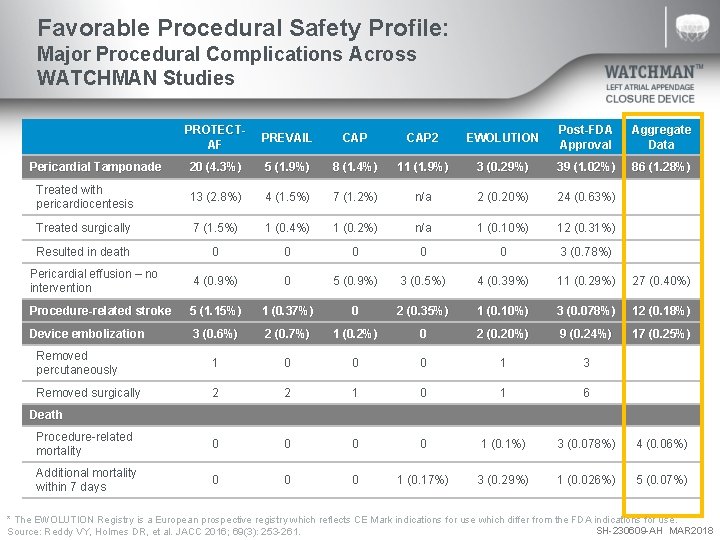
Favorable Procedural Safety Profile: Major Procedural Complications Across WATCHMAN Studies PROTECTAF PREVAIL CAP 2 EWOLUTION Post-FDA Approval Aggregate Data Pericardial Tamponade 20 (4. 3%) 5 (1. 9%) 8 (1. 4%) 11 (1. 9%) 3 (0. 29%) 39 (1. 02%) 86 (1. 28%) Treated with pericardiocentesis 13 (2. 8%) 4 (1. 5%) 7 (1. 2%) n/a 2 (0. 20%) 24 (0. 63%) Treated surgically 7 (1. 5%) 1 (0. 4%) 1 (0. 2%) n/a 1 (0. 10%) 12 (0. 31%) Resulted in death 0 0 0 3 (0. 78%) Pericardial effusion – no intervention 4 (0. 9%) 0 5 (0. 9%) 3 (0. 5%) 4 (0. 39%) 11 (0. 29%) 27 (0. 40%) Procedure-related stroke 5 (1. 15%) 1 (0. 37%) 0 2 (0. 35%) 1 (0. 10%) 3 (0. 078%) 12 (0. 18%) Device embolization 3 (0. 6%) 2 (0. 7%) 1 (0. 2%) 0 2 (0. 20%) 9 (0. 24%) 17 (0. 25%) Removed percutaneously 1 0 0 0 1 3 Removed surgically 2 2 1 0 1 6 Procedure-related mortality 0 0 1 (0. 1%) 3 (0. 078%) 4 (0. 06%) Additional mortality within 7 days 0 0 0 1 (0. 17%) 3 (0. 29%) 1 (0. 026%) 5 (0. 07%) Death * The EWOLUTION Registry is a European prospective registry which reflects CE Mark indications for use which differ from the FDA indications for use. SH-230609 -AH MAR 2018 Source: Reddy VY, Holmes DR, et al. JACC 2016; 69(3): 253 -261.
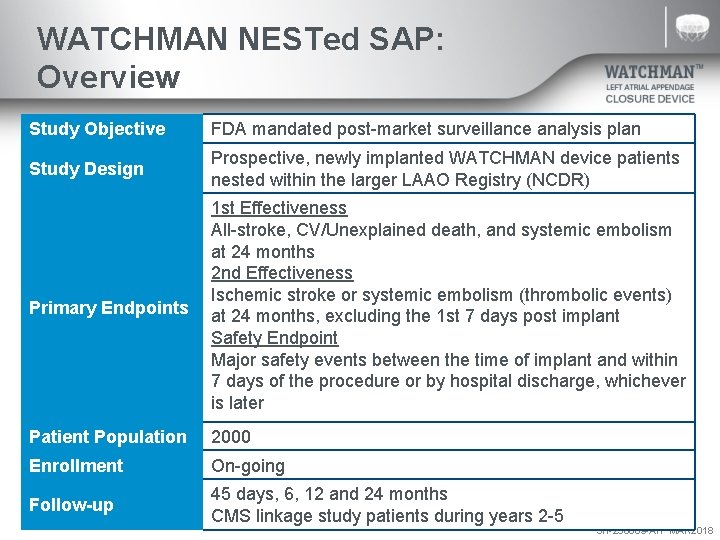
WATCHMAN NESTed SAP: Overview Study Objective FDA mandated post-market surveillance analysis plan Study Design Prospective, newly implanted WATCHMAN device patients nested within the larger LAAO Registry (NCDR) Primary Endpoints 1 st Effectiveness All-stroke, CV/Unexplained death, and systemic embolism at 24 months 2 nd Effectiveness Ischemic stroke or systemic embolism (thrombolic events) at 24 months, excluding the 1 st 7 days post implant Safety Endpoint Major safety events between the time of implant and within 7 days of the procedure or by hospital discharge, whichever is later Patient Population 2000 Enrollment On-going Follow-up 45 days, 6, 12 and 24 months CMS linkage study patients during years 2 -5 SH-230609 -AH MAR 2018
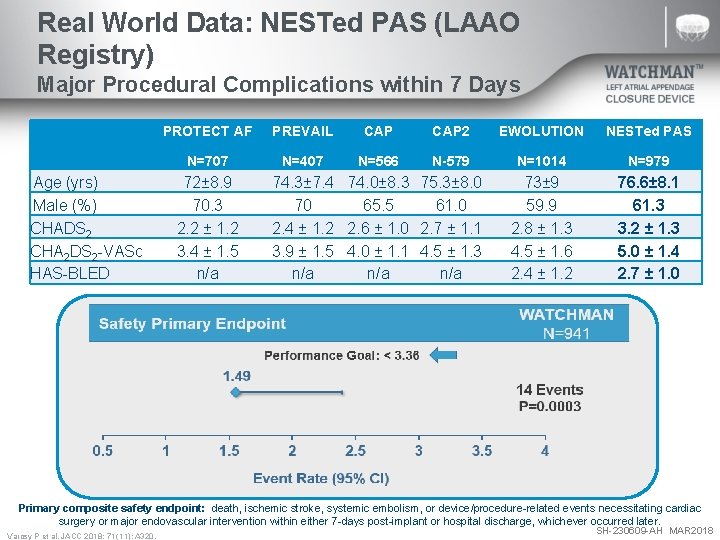
Real World Data: NESTed PAS (LAAO Registry) Major Procedural Complications within 7 Days Age (yrs) Male (%) CHADS 2 CHA 2 DS 2 -VASc HAS-BLED PROTECT AF PREVAIL CAP 2 EWOLUTION NESTed PAS N=707 N=407 N=566 N-579 N=1014 N=979 73± 9 59. 9 2. 8 ± 1. 3 4. 5 ± 1. 6 2. 4 ± 1. 2 76. 6± 8. 1 61. 3 3. 2 ± 1. 3 5. 0 ± 1. 4 2. 7 ± 1. 0 72± 8. 9 70. 3 2. 2 ± 1. 2 3. 4 ± 1. 5 n/a 74. 3± 7. 4 74. 0± 8. 3 75. 3± 8. 0 70 65. 5 61. 0 2. 4 ± 1. 2 2. 6 ± 1. 0 2. 7 ± 1. 1 3. 9 ± 1. 5 4. 0 ± 1. 1 4. 5 ± 1. 3 n/a n/a Primary composite safety endpoint: death, ischemic stroke, systemic embolism, or device/procedure-related events necessitating cardiac surgery or major endovascular intervention within either 7 -days post-implant or hospital discharge, whichever occurred later. Varosy P et al. JACC 2018; 71 (11): A 320. SH-230609 -AH MAR 2018
WATCHMAN Clinical Data Stroke Risk and Bleeding Reduction SH-230609 -AH MAR 2018
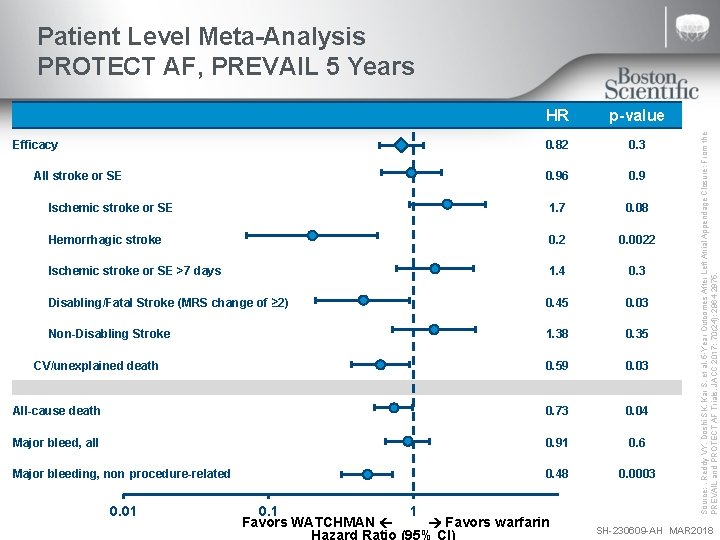
HR p-value 0. 82 0. 3 0. 96 0. 9 Ischemic stroke or SE 1. 7 0. 08 Hemorrhagic stroke 0. 2 0. 0022 Ischemic stroke or SE >7 days 1. 4 0. 3 Disabling/Fatal Stroke (MRS change of ≥ 2) 0. 45 0. 03 Non-Disabling Stroke 1. 38 0. 35 0. 59 0. 03 All-cause death 0. 73 0. 04 Major bleed, all 0. 91 0. 6 Major bleeding, non procedure-related 0. 48 0. 0003 Efficacy All stroke or SE CV/unexplained death 0. 01 0. 1 Favors WATCHMAN 1 Favors warfarin Source: . Reddy VY, Doshi SK, Kar S, et al. 5 -Year Outcomes After Left Atrial Appendage Closure: From the PREVAIL and PROTECT AF Trials. JACC 2017; 70(24): 2964 -2975. Patient Level Meta-Analysis PROTECT AF, PREVAIL 5 Years SH-230609 -AH MAR 2018
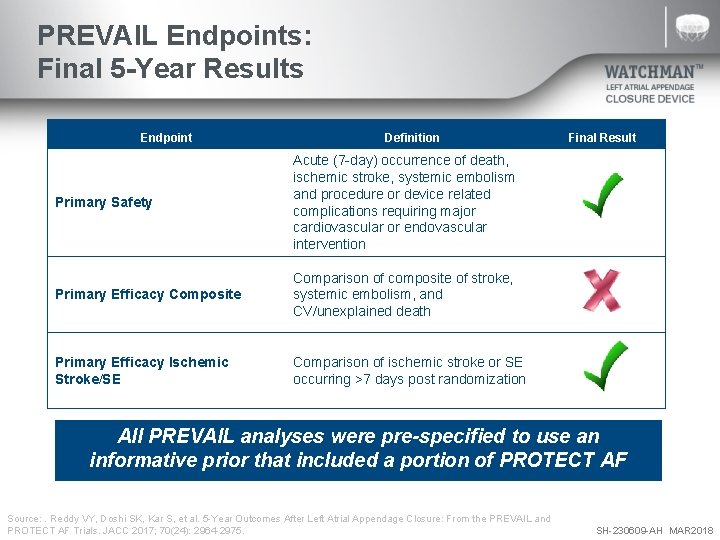
PREVAIL Endpoints: Final 5 -Year Results Endpoint Definition Primary Safety Acute (7 -day) occurrence of death, ischemic stroke, systemic embolism and procedure or device related complications requiring major cardiovascular or endovascular intervention Primary Efficacy Composite Comparison of composite of stroke, systemic embolism, and CV/unexplained death Primary Efficacy Ischemic Stroke/SE Comparison of ischemic stroke or SE occurring >7 days post randomization Final Result All PREVAIL analyses were pre-specified to use an informative prior that included a portion of PROTECT AF Source: . Reddy VY, Doshi SK, Kar S, et al. 5 -Year Outcomes After Left Atrial Appendage Closure: From the PREVAIL and PROTECT AF Trials. JACC 2017; 70(24): 2964 -2975. SH-230609 -AH MAR 2018
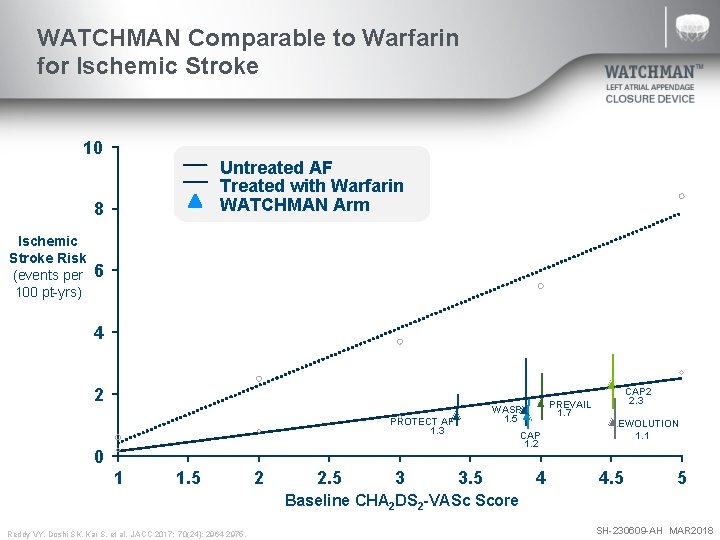
WATCHMAN Comparable to Warfarin for Ischemic Stroke 10 Untreated AF Treated with Warfarin WATCHMAN Arm 8 Ischemic Stroke Risk (events per 100 pt-yrs) 6 4 2 CAP 2 1. 7 1. 5 PROTECT AF 1. 3 2. 3 PREVAIL WASP EWOLUTION 1. 1 CAP 1. 2 0 1 1. 5 2 2. 5 3 3. 5 4 4. 5 5 Baseline CHA 2 DS 2 -VASc Score Reddy VY, Doshi SK, Kar S, et al. JACC 2017; 70(24): 2964 -2975. SH-230609 -AH MAR 2018
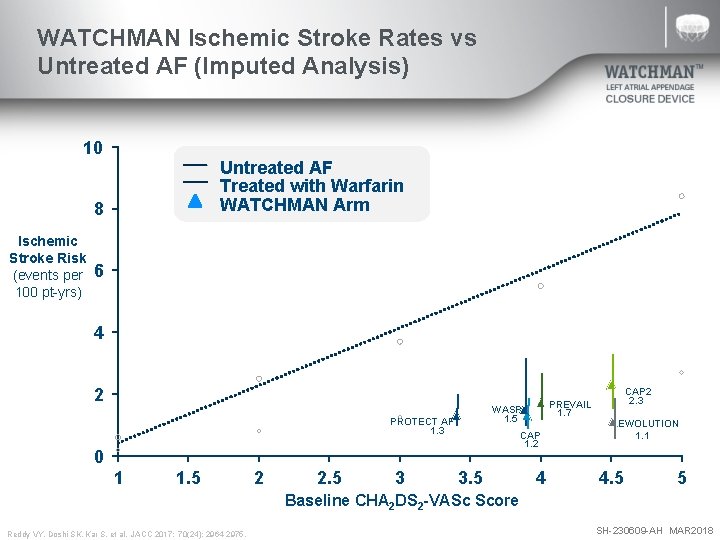
WATCHMAN Ischemic Stroke Rates vs Untreated AF (Imputed Analysis) 10 Untreated AF Treated with Warfarin WATCHMAN Arm 8 Ischemic Stroke Risk (events per 100 pt-yrs) 6 4 2 CAP 2 1. 7 1. 5 PROTECT AF 1. 3 2. 3 PREVAIL WASP EWOLUTION 1. 1 CAP 1. 2 0 1 1. 5 2 2. 5 3 3. 5 4 4. 5 5 Baseline CHA 2 DS 2 -VASc Score Reddy VY, Doshi SK, Kar S, et al. JACC 2017; 70(24): 2964 -2975. SH-230609 -AH MAR 2018
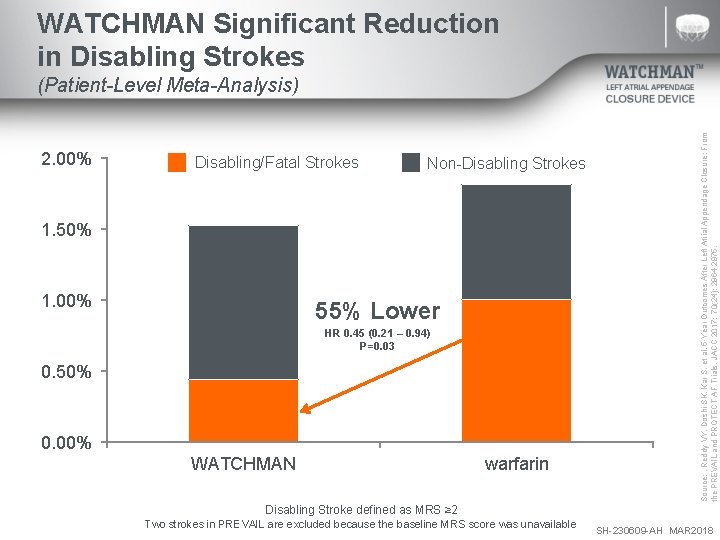
WATCHMAN Significant Reduction in Disabling Strokes 2. 00% Disabling/Fatal Strokes Non-Disabling Strokes 1. 50% 1. 00% 55% Lower HR 0. 45 (0. 21 – 0. 94) P=0. 03 0. 50% 0. 00% WATCHMAN warfarin Source: . Reddy VY, Doshi SK, Kar S, et al. 5 -Year Outcomes After Left Atrial Appendage Closure: From the PREVAIL and PROTECT AF Trials. JACC 2017; 70(24): 2964 -2975. (Patient-Level Meta-Analysis) Disabling Stroke defined as MRS ≥ 2 Two strokes in PREVAIL are excluded because the baseline MRS score was unavailable SH-230609 -AH MAR 2018
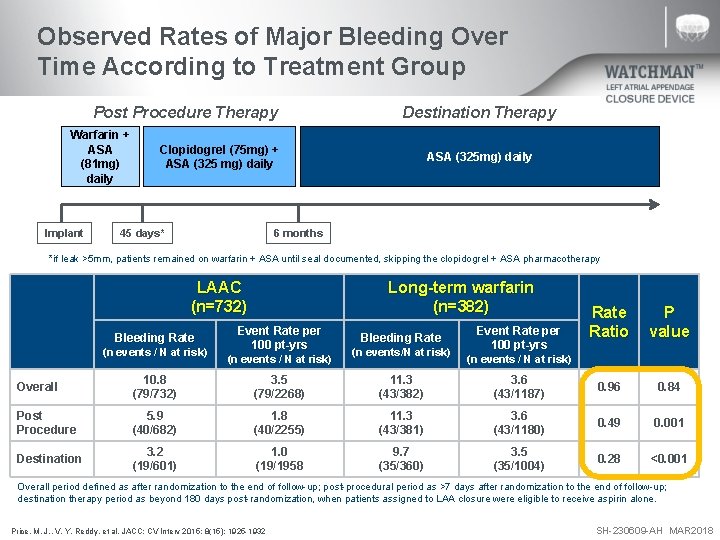
Observed Rates of Major Bleeding Over Time According to Treatment Group Post Procedure Therapy Warfarin + ASA (81 mg) daily Implant Destination Therapy Clopidogrel (75 mg) + ASA (325 mg) daily 45 days* ASA (325 mg) daily 6 months *if leak >5 mm, patients remained on warfarin + ASA until seal documented, skipping the clopidogrel + ASA pharmacotherapy LAAC (n=732) Bleeding Rate (n events / N at risk) Long-term warfarin (n=382) Event Rate per 100 pt-yrs (n events / N at risk) Bleeding Rate (n events/N at risk) Event Rate per 100 pt-yrs Rate Ratio P value (n events / N at risk) Overall 10. 8 (79/732) 3. 5 (79/2268) 11. 3 (43/382) 3. 6 (43/1187) 0. 96 0. 84 Post Procedure 5. 9 (40/682) 1. 8 (40/2255) 11. 3 (43/381) 3. 6 (43/1180) 0. 49 0. 001 Destination 3. 2 (19/601) 1. 0 (19/1958 9. 7 (35/360) 3. 5 (35/1004) 0. 28 <0. 001 Overall period defined as after randomization to the end of follow-up; post-procedural period as >7 days after randomization to the end of follow-up; destination therapy period as beyond 180 days post-randomization, when patients assigned to LAA closure were eligible to receive aspirin alone. Price, M. J. , V. Y. Reddy, et al. JACC: CV Interv 2015; 8(15): 1925 -1932 SH-230609 -AH MAR 2018
Bleeding Outcomes after Left Atrial Appendage Closure Compared with Long-term Warfarin Freedom of Major Bleeding Over 3 Adjunctive Pharmacotherapy Intervals 72% >6 months post -procedure p < 0. 001 Price, M. J. , V. Y. Reddy, et al. JACC: CV Interv 2015; 8(15): 1925 -1932 SH-230609 -AH MAR 2018
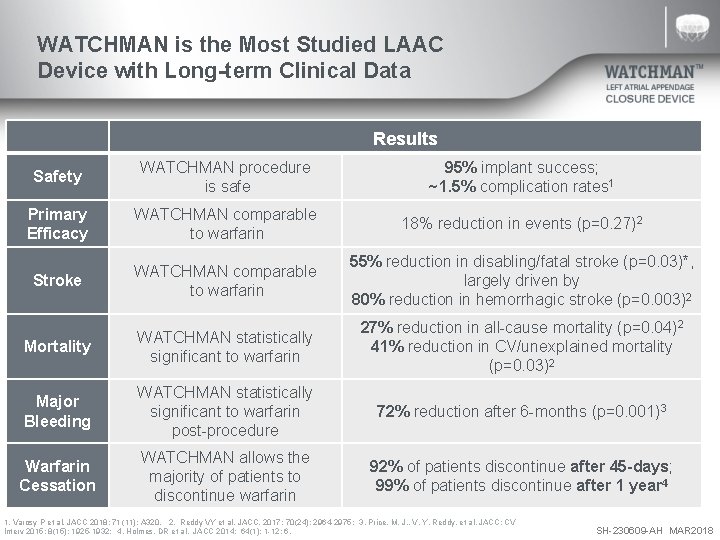
WATCHMAN is the Most Studied LAAC Device with Long-term Clinical Data Results Safety WATCHMAN procedure is safe 95% implant success; ~1. 5% complication rates 1 Primary Efficacy WATCHMAN comparable to warfarin 18% reduction in events (p=0. 27)2 Stroke WATCHMAN comparable to warfarin 55% reduction in disabling/fatal stroke (p=0. 03)*, largely driven by 80% reduction in hemorrhagic stroke (p=0. 003)2 Mortality WATCHMAN statistically significant to warfarin 27% reduction in all-cause mortality (p=0. 04)2 41% reduction in CV/unexplained mortality (p=0. 03)2 Major Bleeding WATCHMAN statistically significant to warfarin post-procedure 72% reduction after 6 -months (p=0. 001)3 Warfarin Cessation WATCHMAN allows the majority of patients to discontinue warfarin 92% of patients discontinue after 45 -days; 99% of patients discontinue after 1 year 4 1. Varosy P et al. JACC 2018; 71 (11): A 320. 2. Reddy VY et al. JACC. 2017; 70(24): 2964 -2975; 3. Price, M. J. , V. Y. Reddy, et al. JACC: CV Interv 2015; 8(15): 1925 -1932; 4. Holmes, DR et al. JACC 2014; 64(1): 1 -12; 6. SH-230609 -AH MAR 2018
Questions? SH-230609 -AH MAR 2018
WATCHMAN Clinical Data Future Patient Populations* and Device and Delivery System Generations * Data presented is in patients primarily contraindicated for LAAC with WATCHMAN in the United States. SH-230609 -AH MAR 2018
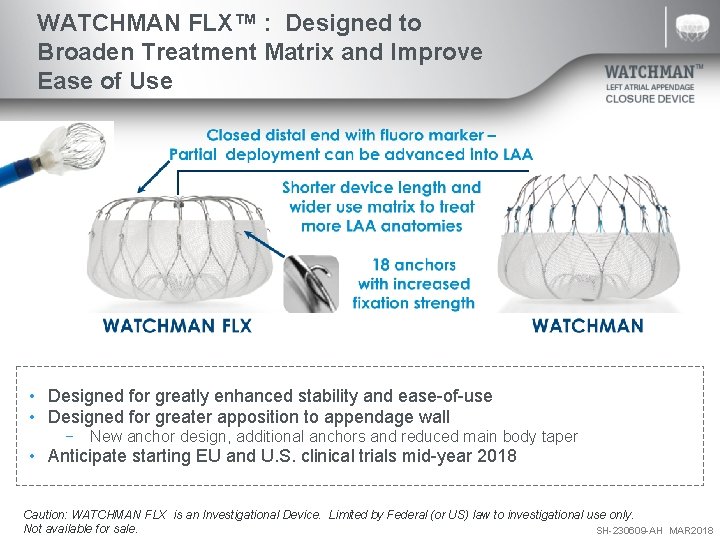
WATCHMAN FLX™ : Designed to Broaden Treatment Matrix and Improve Ease of Use • Designed for greatly enhanced stability and ease-of-use • Designed for greater apposition to appendage wall − New anchor design, additional anchors and reduced main body taper • Anticipate starting EU and U. S. clinical trials mid-year 2018 Caution: WATCHMAN FLX is an Investigational Device. Limited by Federal (or US) law to investigational use only. Not available for sale. SH-230609 -AH MAR 2018
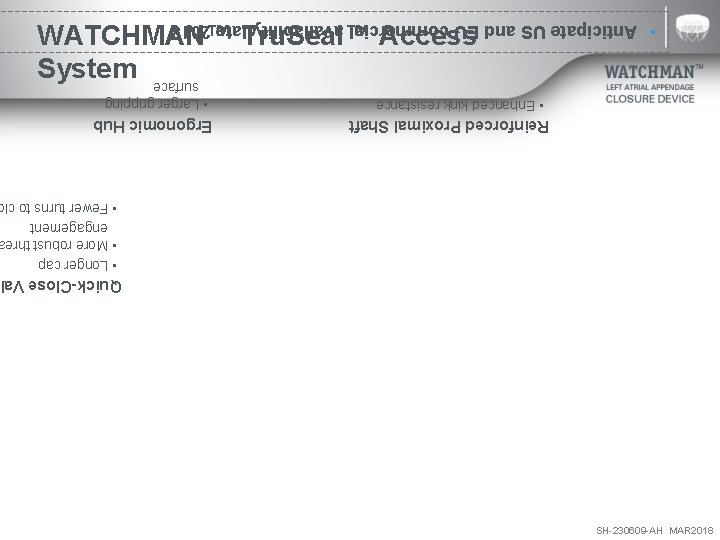
SH-230609 -AH MAR 2018 Quick-Close Val • Longer cap • More robust thre engagement • Fewer turns to cl Reinforced Proximal Shaft • Enhanced kink resistance Ergonomic Hub • Larger gripping surface WATCHMAN™ Tru. Seal™ Access System • Anticipate US and EU commercial availability late 2018
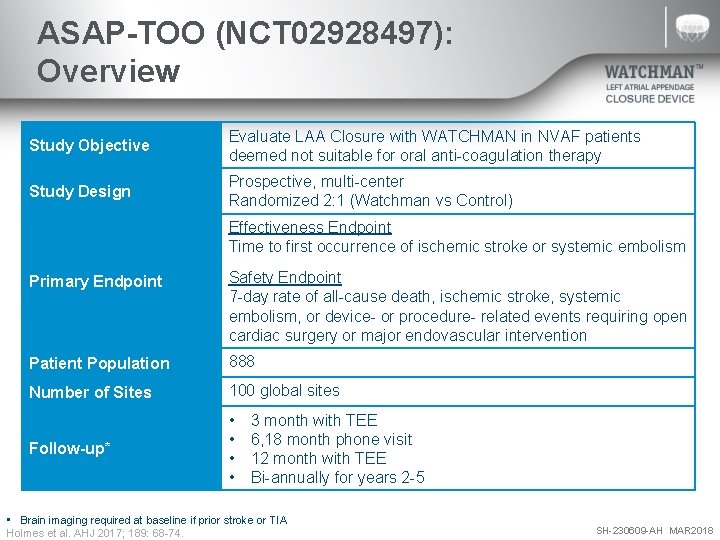
ASAP-TOO (NCT 02928497): Overview Study Objective Evaluate LAA Closure with WATCHMAN in NVAF patients deemed not suitable for oral anti-coagulation therapy Study Design Prospective, multi-center Randomized 2: 1 (Watchman vs Control) Effectiveness Endpoint Time to first occurrence of ischemic stroke or systemic embolism Primary Endpoint Safety Endpoint 7 -day rate of all-cause death, ischemic stroke, systemic embolism, or device- or procedure- related events requiring open cardiac surgery or major endovascular intervention Patient Population 888 Number of Sites 100 global sites Follow-up* • • 3 month with TEE 6, 18 month phone visit 12 month with TEE Bi-annually for years 2 -5 • Brain imaging required at baseline if prior stroke or TIA Holmes et al. AHJ 2017; 189: 68 -74. SH-230609 -AH MAR 2018
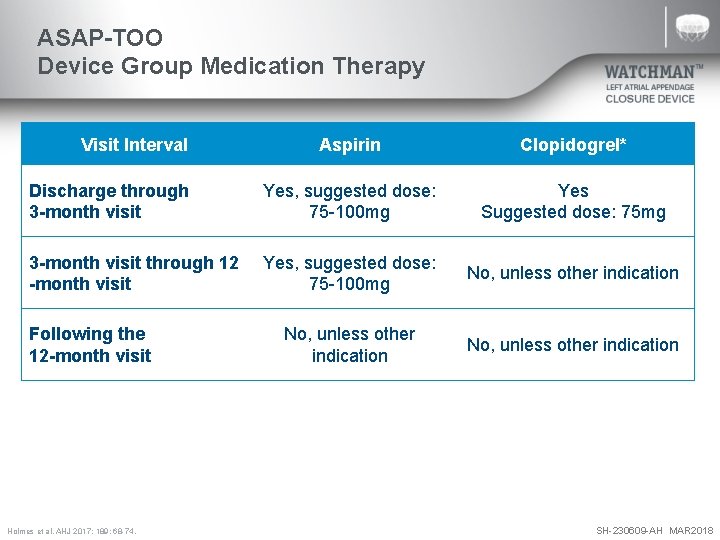
ASAP-TOO Device Group Medication Therapy Visit Interval Aspirin Clopidogrel* Discharge through 3 -month visit Yes, suggested dose: 75 -100 mg Yes Suggested dose: 75 mg 3 -month visit through 12 -month visit Yes, suggested dose: 75 -100 mg No, unless other indication Following the 12 -month visit *Clopidogrel may be substituted with ticagrelor or prasugrel if the subject requires the medication for other indications (e. g. acute coronary syndromes treated with drug eluting stents) or if the subject has a known resistance to clopidogrel. **Patients are allowed to be on dual antiplatelet therapy (outside of the protocol required 3 months period) if indicated due to a condition other than WATCHMAN implantation. Holmes et al. AHJ 2017; 189: 68 -74. SH-230609 -AH MAR 2018
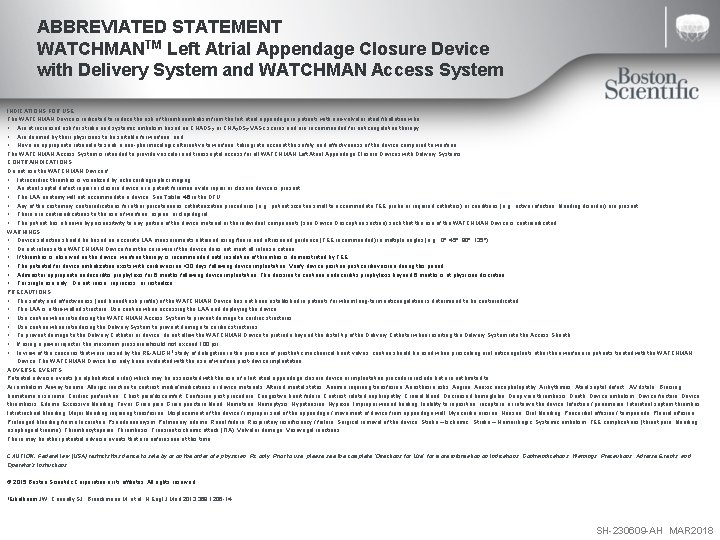
ABBREVIATED STATEMENT WATCHMANTM Left Atrial Appendage Closure Device with Delivery System and WATCHMAN Access System INDICATIONS FOR USE The WATCHMAN Device is indicated to reduce the risk of thromboembolism from the left atrial appendage in patients with non-valvular atrial fibrillation who: • Are at increased risk for stroke and systemic embolism based on CHADS 2 or CHA 2 DS 2 -VASc scores and are recommended for anticoagulation therapy; • Are deemed by their physicians to be suitable for warfarin; and • Have an appropriate rationale to seek a non-pharmacologic alternative to warfarin, taking into account the safety and effectiveness of the device compared to warfarin. The WATCHMAN Access System is intended to provide vascular and transseptal access for all WATCHMAN Left Atrial Appendage Closure Devices with Delivery Systems. CONTRAINDICATIONS Do not use the WATCHMAN Device if: • Intracardiac thrombus is visualized by echocardiographic imaging. • An atrial septal defect repair or closure device or a patent foramen ovale repair or closure device is present. • The LAA anatomy will not accommodate a device. See Table 46 in the DFU. • Any of the customary contraindications for other percutaneous catheterization procedures (e. g. , patient size too small to accommodate TEE probe or required catheters) or conditions (e. g. , active infection, bleeding disorder) are present. • There are contraindications to the use of warfarin, aspirin, or clopidogrel. • The patient has a known hypersensitivity to any portion of the device material or the individual components (see Device Description section) such that the use of the WATCHMAN Device is contraindicated. WARNINGS • Device selection should be based on accurate LAA measurements obtained using fluoro and ultrasound guidance (TEE recommended) in multiple angles (e. g. , 0º, 45º, 90º, 135º). • Do not release the WATCHMAN Device from the core wire if the device does not meet all release criteria. • If thrombus is observed on the device, warfarin therapy is recommended until resolution of thrombus is demonstrated by TEE. • The potential for device embolization exists with cardioversion <30 days following device implantation. Verify device position post-cardioversion during this period. • Administer appropriate endocarditis prophylaxis for 6 months following device implantation. The decision to continue endocarditis prophylaxis beyond 6 months is at physician discretion. • For single use only. Do not reuse, reprocess, or resterilize. PRECAUTIONS • The safety and effectiveness (and benefit-risk profile) of the WATCHMAN Device has not been established in patients for whom long-term anticoagulation is determined to be contraindicated. • The LAA is a thin-walled structure. Use caution when accessing the LAA and deploying the device. • Use caution when introducing the WATCHMAN Access System to prevent damage to cardiac structures. • Use caution when introducing the Delivery System to prevent damage to cardiac structures. • To prevent damage to the Delivery Catheter or device, do not allow the WATCHMAN Device to protrude beyond the distal tip of the Delivery Catheter when inserting the Delivery System into the Access Sheath. • If using a power injector, the maximum pressure should not exceed 100 psi. • In view of the concerns that were raised by the RE-ALIGN 1 study of dabigatran in the presence of prosthetic mechanical heart valves, caution should be used when prescribing oral anticoagulants other than warfarin in patients treated with the WATCHMAN Device. The WATCHMAN Device has only been evaluated with the use of warfarin post-device implantation. ADVERSE EVENTS Potential adverse events (in alphabetical order) which may be associated with the use of a left atrial appendage closure device or implantation procedure include but are not limited to: Air embolism, Airway trauma, Allergic reaction to contrast media/medications or device materials, Altered mental status, Anemia requiring transfusion, Anesthesia risks, Angina, Anoxic encephalopathy, Arrhythmias, Atrial septal defect , AV fistula , Bruising, hematoma or seroma, Cardiac perforation , Chest pain/discomfort, Confusion post procedure, Congestive heart failure, Contrast related nephropathy, Cranial bleed, Decreased hemoglobin, Deep vein thrombosis, Death, Device embolism, Device fracture, Device thrombosis, Edema, Excessive bleeding, Fever, Groin pain, Groin puncture bleed, Hematuria, Hemoptysis, Hypotension, Hypoxia, Improper wound healing, Inability to reposition, recapture, or retrieve the device, Infection / pneumonia, Interatrial septum thrombus, Intratracheal bleeding, Major bleeding requiring transfusion, Misplacement of the device / improper seal of the appendage / movement of device from appendage wall, Myocardia erosion, Nausea, Oral bleeding, Pericardial effusion / tamponade, Pleural effusion, Prolonged bleeding from a laceration, Pseudoaneurysm, Pulmonary edema, Renal failure, Respiratory insufficiency / failure, Surgical removal of the device, Stroke – Ischemic , Stroke – Hemorrhagic, Systemic embolism, TEE complications (throat pain, bleeding, esophageal trauma), Thrombocytopenia, Thrombosis, Transient ischemic attack (TIA), Valvular damage, Vasovagal reactions There may be other potential adverse events that are unforeseen at this time. CAUTION: Federal law (USA) restricts this device to sale by or on the order of a physician. Rx only. Prior to use, please see the complete “Directions for Use” for more information on Indications, Contraindications, Warnings, Precautions, Adverse Events, and Operator’s Instructions. © 2015 Boston Scientific Corporation or its affiliates. All rights reserved. 1 Eikelboom JW, Connolly SJ, Brueckmann M, et al. N Engl J Med 2013; 369: 1206 -14. SH-230609 -AH MAR 2018