
Watch the BBC Teach Big Schools Winterwatch Live
Watch the BBC Teach Big Schools Winterwatch Live Lesson
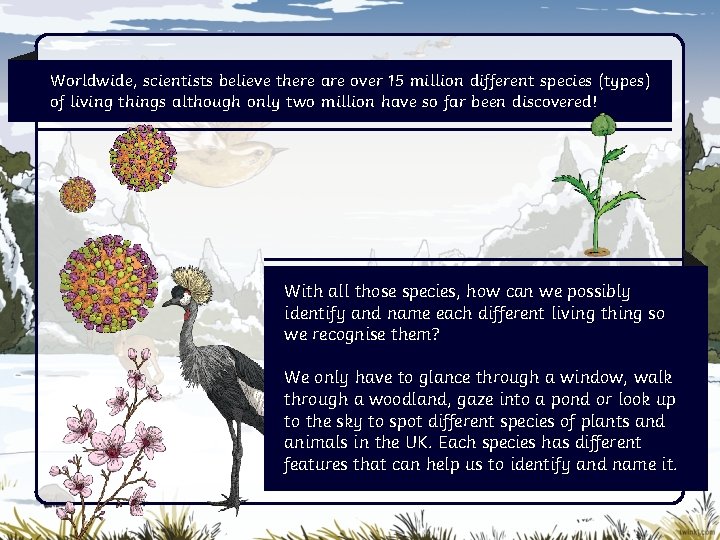
Worldwide, scientists believe there are over 15 million different species (types) of living things although only two million have so far been discovered! With all those species, how can we possibly identify and name each different living thing so we recognise them? We only have to glance through a window, walk through a woodland, gaze into a pond or look up to the sky to spot different species of plants and animals in the UK. Each species has different features that can help us to identify and name it.
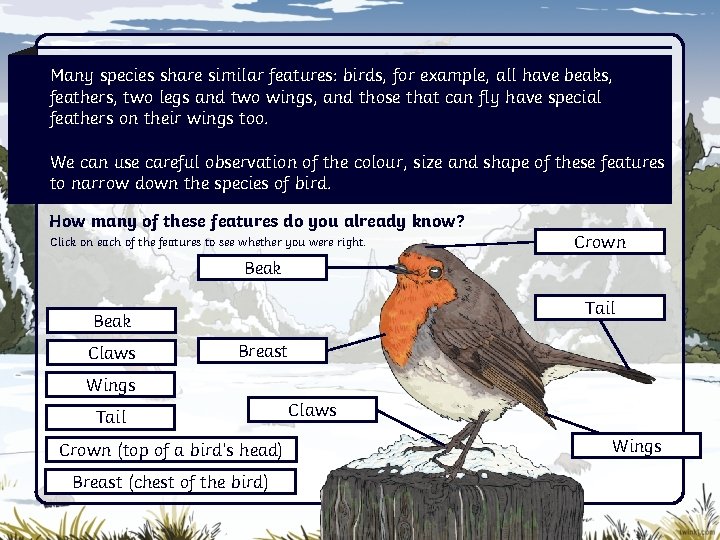
Many species share similar features: birds, for example, all have beaks, feathers, two legs and two wings, and those that can fly have special feathers on their wings too. We can use careful observation of the colour, size and shape of these features to narrow down the species of bird. How many of these features do you already know? Click on each of the features to see whether you were right. Crown Beak Tail Beak Claws Breast Wings Tail Crown (top of a bird’s head) Breast (chest of the bird) Claws Wings
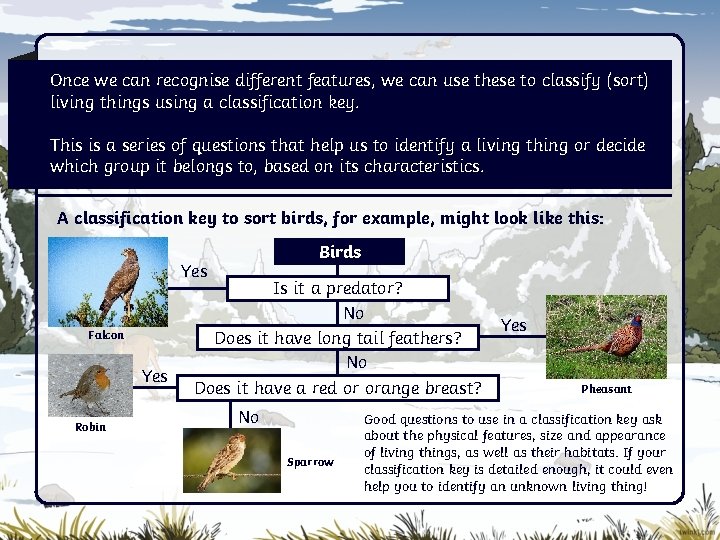
Once we can recognise different features, we can use these to classify (sort) living things using a classification key. This is a series of questions that help us to identify a living thing or decide which group it belongs to, based on its characteristics. A classification key to sort birds, for example, might look like this: Birds Yes Falcon Yes Robin Is it a predator? No Does it have long tail feathers? No Does it have a red or orange breast? No Sparrow Yes Pheasant Good questions to use in a classification key ask about the physical features, size and appearance of living things, as well as their habitats. If your classification key is detailed enough, it could even help you to identify an unknown living thing!
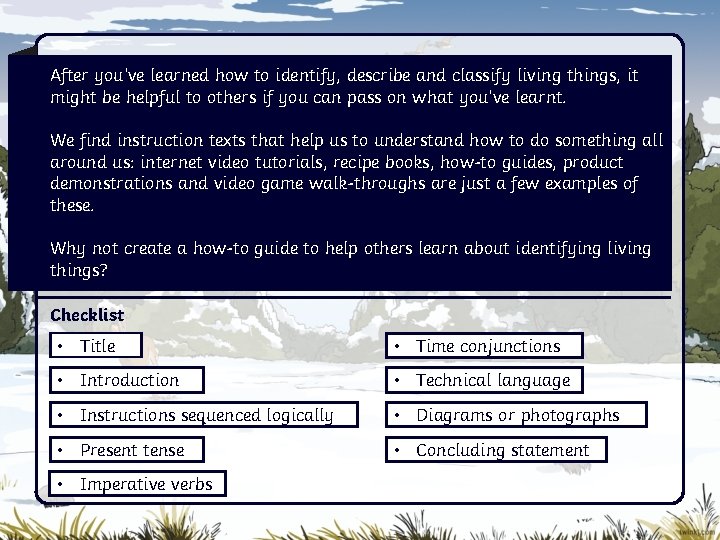
After you’ve learned how to identify, describe and classify living things, it might be helpful to others if you can pass on what you’ve learnt. We find instruction texts that help us to understand how to do something all around us: internet video tutorials, recipe books, how-to guides, product demonstrations and video game walk-throughs are just a few examples of these. Why not create a how-to guide to help others learn about identifying living things? Checklist • Title • Time conjunctions • Introduction • Technical language • Instructions sequenced logically • Diagrams or photographs • Present tense • Concluding statement • Imperative verbs
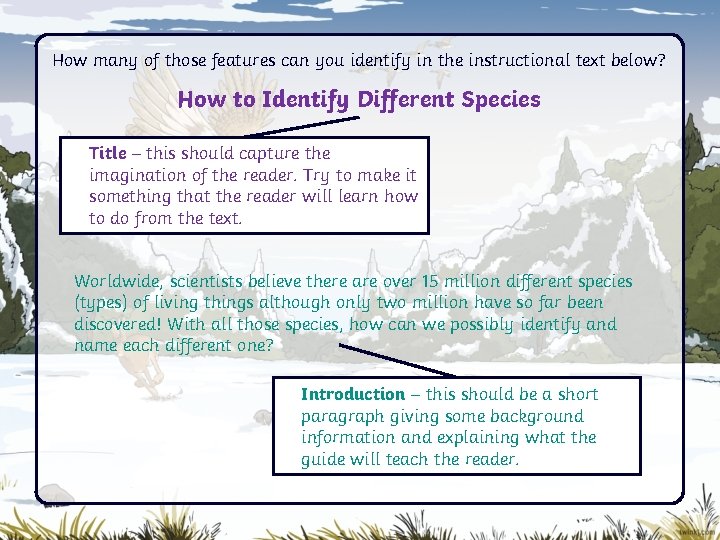
How many of those features can you identify in the instructional text below? How to Identify Different Species Title – this should capture the imagination of the reader. Try to make it something that the reader will learn how to do from the text. Worldwide, scientists believe there are over 15 million different species (types) of living things although only two million have so far been discovered! With all those species, how can we possibly identify and name each different one? Introduction – this should be a short paragraph giving some background information and explaining what the guide will teach the reader.
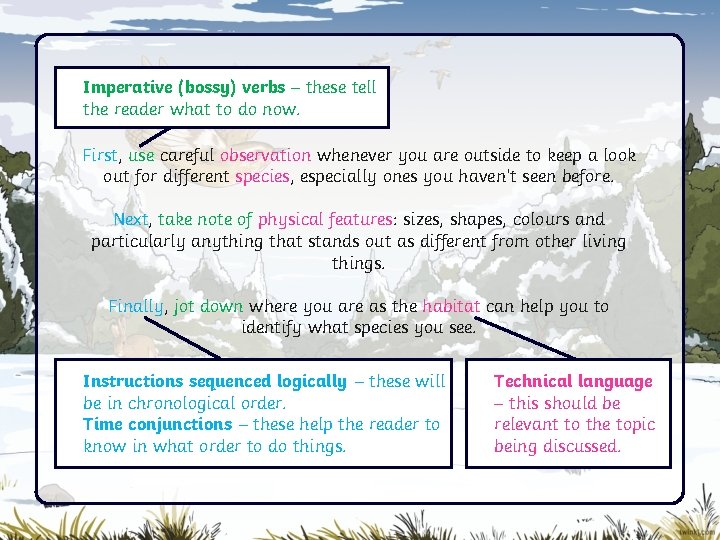
Imperative (bossy) verbs – these tell the reader what to do now. First, use careful observation whenever you are outside to keep a look out for different species, especially ones you haven’t seen before. Next, take note of physical features: sizes, shapes, colours and particularly anything that stands out as different from other living things. Finally, jot down where you are as the habitat can help you to identify what species you see. Instructions sequenced logically – these will be in chronological order. Time conjunctions – these help the reader to know in what order to do things. Technical language – this should be relevant to the topic being discussed.
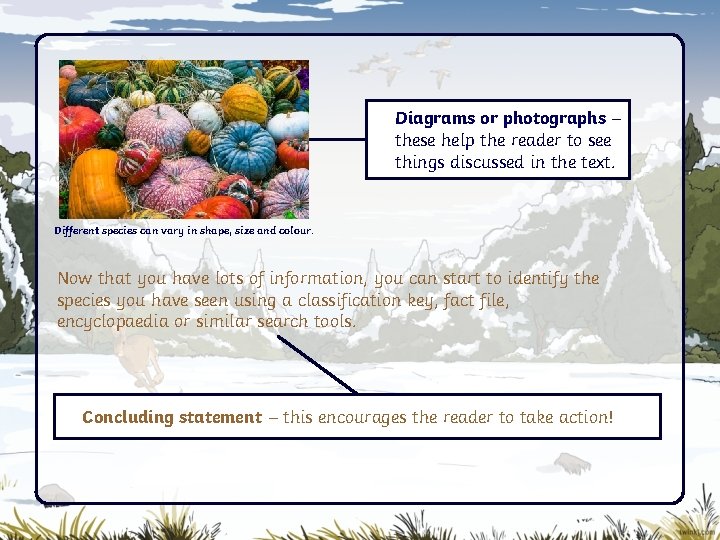
Diagrams or photographs – these help the reader to see things discussed in the text. Different species can vary in shape, size and colour. Now that you have lots of information, you can start to identify the species you have seen using a classification key, fact file, encyclopaedia or similar search tools. Concluding statement – this encourages the reader to take action!
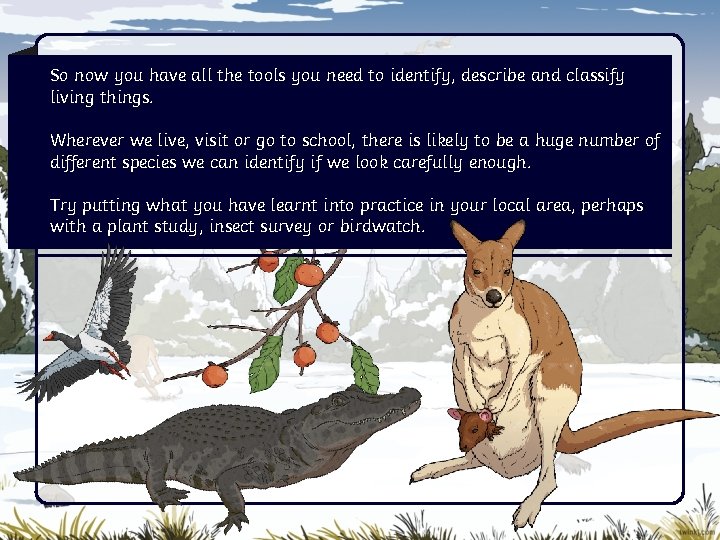
So now you have all the tools you need to identify, describe and classify living things. Wherever we live, visit or go to school, there is likely to be a huge number of different species we can identify if we look carefully enough. Try putting what you have learnt into practice in your local area, perhaps with a plant study, insect survey or birdwatch.
- Slides: 10