
Watch in slide show mode to observe modest
Watch in slide show mode to observe (modest) animation. comments questions: dan. kahan@yale. edu papers, etc: www. culturalcognition. net
www. culturalcognition. net Climate Science Communication and the Disentanglement Principle Dan M. Kahan Yale University & many others
What can the science of science communication do for climate communicators?
What can the science of science communication do for climate communicators? Everything I know about climate science communication:
What can the science of science communication do for climate communicators? Everything I know about climate science communication: What ordinary members of the public “believe” about climate change doesn’t reflect what they know; it expresses who they are.
What can the science of science communication do for climate communicators? Everything I know about climate science communication: What ordinary members of the public “believe” about climate change doesn’t reflect what they know; it expresses who they are.
What can the science of science communication do for climate communicators? Everything I know about climate science communication: What ordinary members of the public “believe” about climate change doesn’t reflect what they know; it expresses who they are.
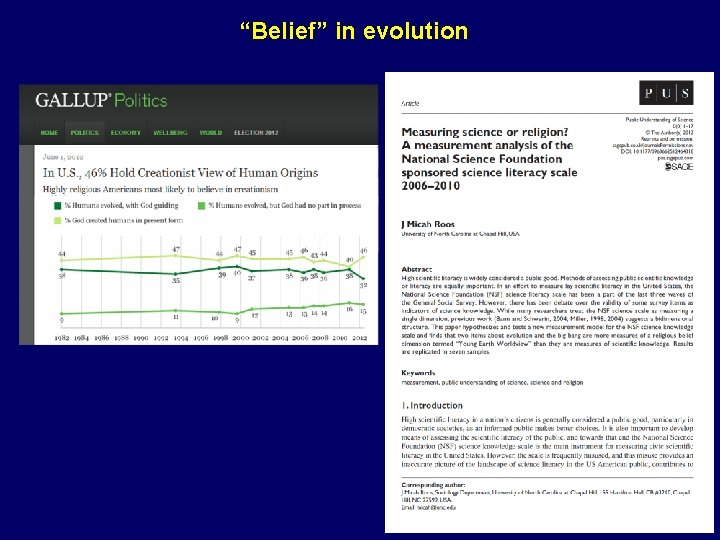
“Belief” in evolution
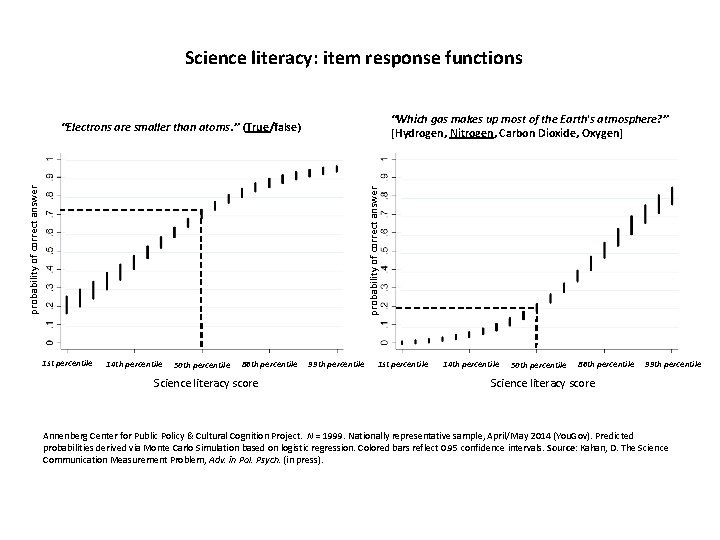
Science literacy: item response functions “Which gas makes up most of the Earth's atmosphere? ” [Hydrogen, Nitrogen, Carbon Dioxide, Oxygen] probability of correct answer “Electrons are smaller than atoms. ” (True/false) 1 st percentile 14 th percentile 50 th percentile 86 th percentile Science literacy score 99 th percentile 1 st percentile 14 th percentile 50 th percentile 86 th percentile 99 th percentile Science literacy score Annenberg Center for Public Policy & Cultural Cognition Project. N = 1999. Nationally representative sample, April/May 2014 (You. Gov). Predicted probabilities derived via Monte Carlo Simulation based on logistic regression. Colored bars reflect 0. 95 confidence intervals. Source: Kahan, D. The Science Communication Measurement Problem, Adv. in Pol. Psych. (in press).
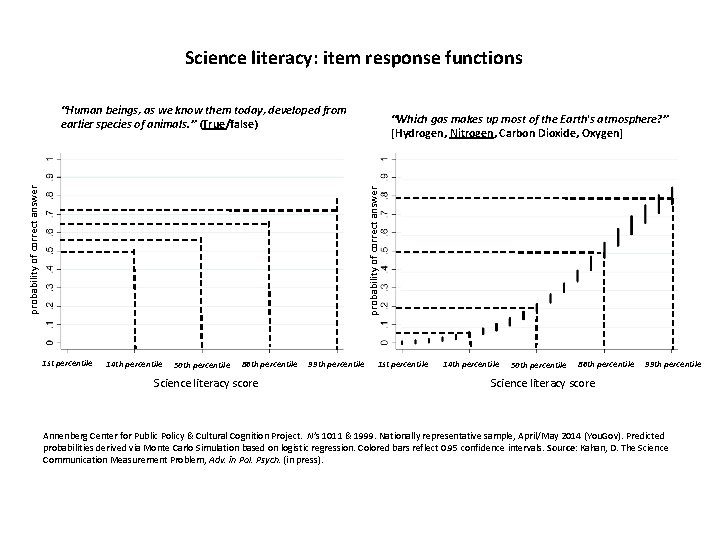
Science literacy: item response functions “Which gas makes up most of the Earth's atmosphere? ” [Hydrogen, Nitrogen, Carbon Dioxide, Oxygen] probability of correct answer “Human beings, as we know them today, developed from earlier species of animals. ” (True/false) 1 st percentile 14 th percentile 50 th percentile 86 th percentile Science literacy score 99 th percentile 1 st percentile 14 th percentile 50 th percentile 86 th percentile 99 th percentile Science literacy score Annenberg Center for Public Policy & Cultural Cognition Project. N’s 1011 & 1999. Nationally representative sample, April/May 2014 (You. Gov). Predicted probabilities derived via Monte Carlo Simulation based on logistic regression. Colored bars reflect 0. 95 confidence intervals. Source: Kahan, D. The Science Communication Measurement Problem, Adv. in Pol. Psych. (in press).
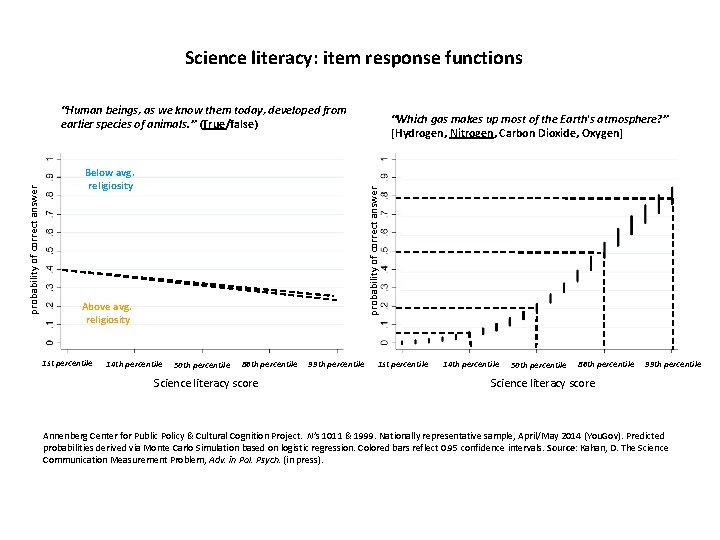
Science literacy: item response functions Below avg. religiosity Above avg. religiosity 1 st percentile “Which gas makes up most of the Earth's atmosphere? ” [Hydrogen, Nitrogen, Carbon Dioxide, Oxygen] probability of correct answer “Human beings, as we know them today, developed from earlier species of animals. ” (True/false) 14 th percentile 50 th percentile 86 th percentile Science literacy score 99 th percentile 1 st percentile 14 th percentile 50 th percentile 86 th percentile 99 th percentile Science literacy score Annenberg Center for Public Policy & Cultural Cognition Project. N’s 1011 & 1999. Nationally representative sample, April/May 2014 (You. Gov). Predicted probabilities derived via Monte Carlo Simulation based on logistic regression. Colored bars reflect 0. 95 confidence intervals. Source: Kahan, D. The Science Communication Measurement Problem, Adv. in Pol. Psych. (in press).
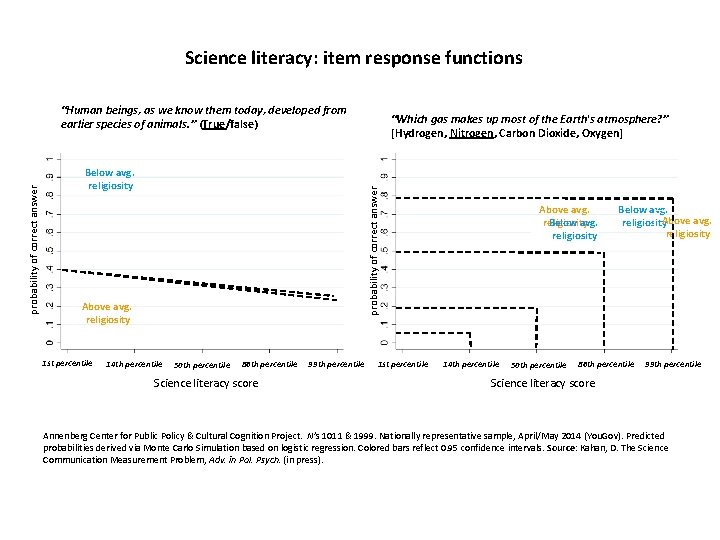
Science literacy: item response functions Below avg. religiosity Above avg. religiosity 1 st percentile “Which gas makes up most of the Earth's atmosphere? ” [Hydrogen, Nitrogen, Carbon Dioxide, Oxygen] probability of correct answer “Human beings, as we know them today, developed from earlier species of animals. ” (True/false) 14 th percentile 50 th percentile 86 th percentile Science literacy score 99 th percentile 1 st percentile Above avg. Below avg. religiosity 14 th percentile 50 th percentile Below avg. religiosity. Above avg. religiosity 86 th percentile 99 th percentile Science literacy score Annenberg Center for Public Policy & Cultural Cognition Project. N’s 1011 & 1999. Nationally representative sample, April/May 2014 (You. Gov). Predicted probabilities derived via Monte Carlo Simulation based on logistic regression. Colored bars reflect 0. 95 confidence intervals. Source: Kahan, D. The Science Communication Measurement Problem, Adv. in Pol. Psych. (in press).
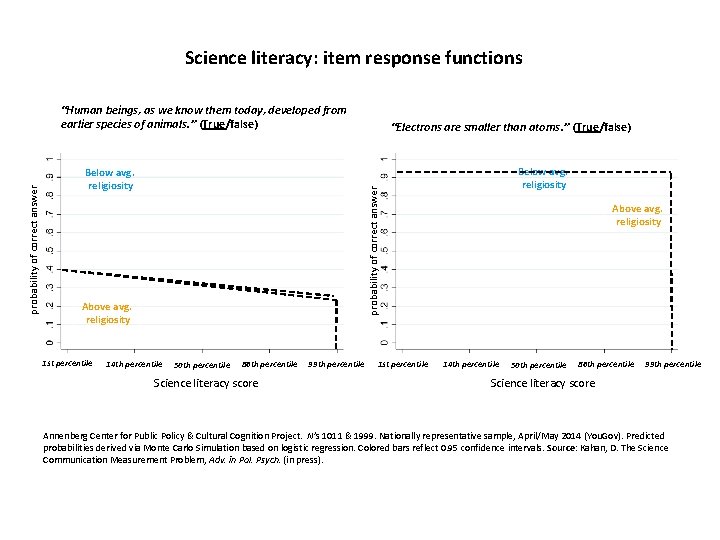
Science literacy: item response functions Below avg. religiosity Above avg. religiosity 1 st percentile “Electrons are smaller than atoms. ” (True/false) Below avg. religiosity probability of correct answer “Human beings, as we know them today, developed from earlier species of animals. ” (True/false) 14 th percentile 50 th percentile 86 th percentile Science literacy score 99 th percentile 1 st percentile Above avg. religiosity 14 th percentile 50 th percentile 86 th percentile 99 th percentile Science literacy score Annenberg Center for Public Policy & Cultural Cognition Project. N’s 1011 & 1999. Nationally representative sample, April/May 2014 (You. Gov). Predicted probabilities derived via Monte Carlo Simulation based on logistic regression. Colored bars reflect 0. 95 confidence intervals. Source: Kahan, D. The Science Communication Measurement Problem, Adv. in Pol. Psych. (in press).
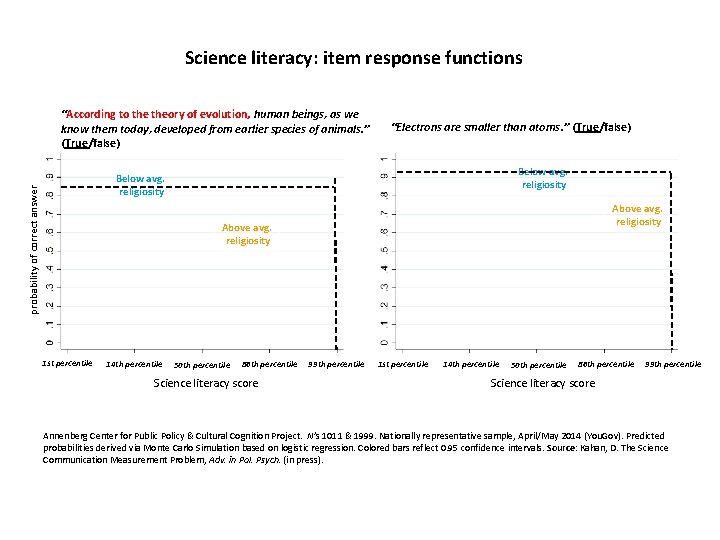
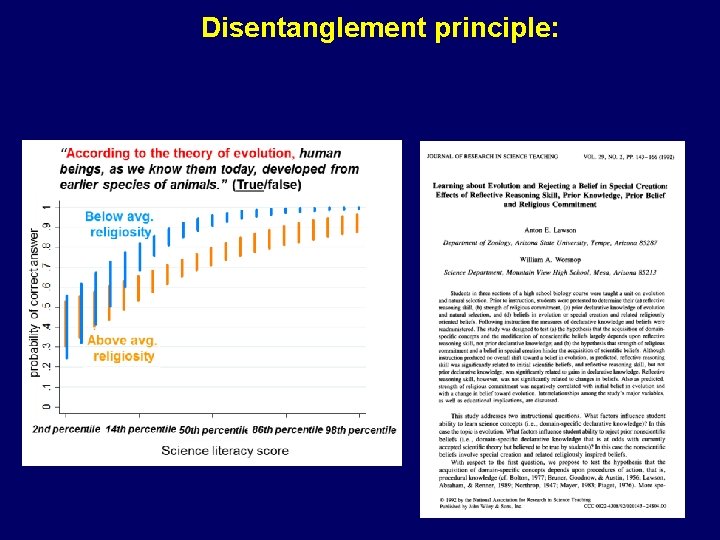
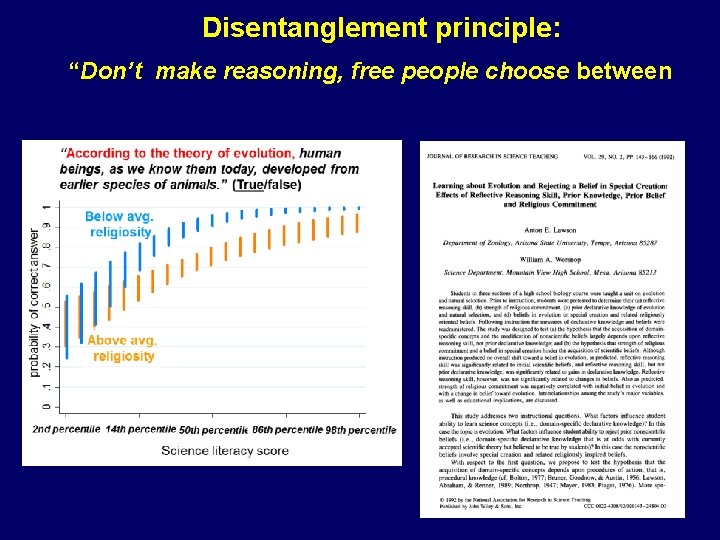
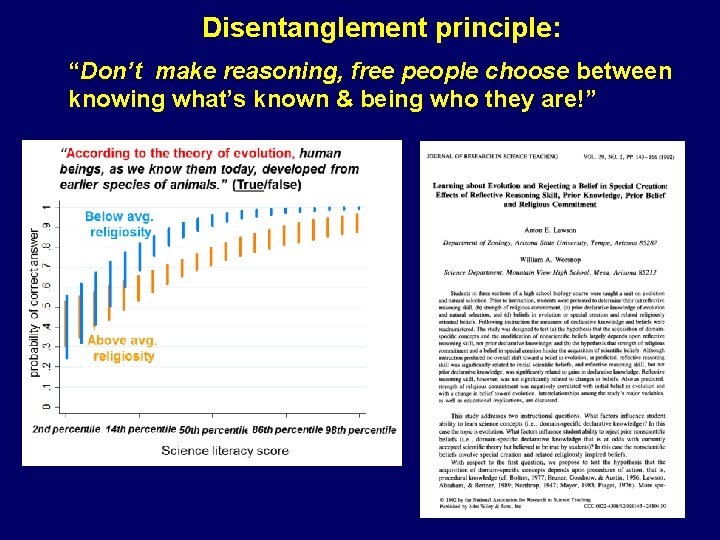
Science literacy: item response functions “According to theory of evolution, human beings, as we know them today, developed from earlier species of animals. ” (True/false) “Electrons are smaller than atoms. ” (True/false) Below avg. religiosity probability of correct answer Below avg. religiosity Above avg. religiosity 1 st percentile 14 th percentile 50 th percentile 86 th percentile Science literacy score 99 th percentile 1 st percentile 14 th percentile 50 th percentile 86 th percentile 99 th percentile Science literacy score Annenberg Center for Public Policy & Cultural Cognition Project. N’s 1011 & 1999. Nationally representative sample, April/May 2014 (You. Gov). Predicted probabilities derived via Monte Carlo Simulation based on logistic regression. Colored bars reflect 0. 95 confidence intervals. Source: Kahan, D. The Science Communication Measurement Problem, Adv. in Pol. Psych. (in press).
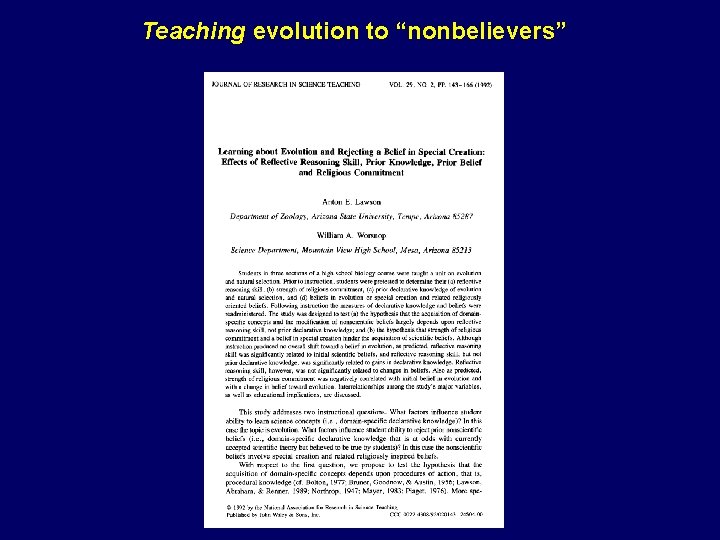
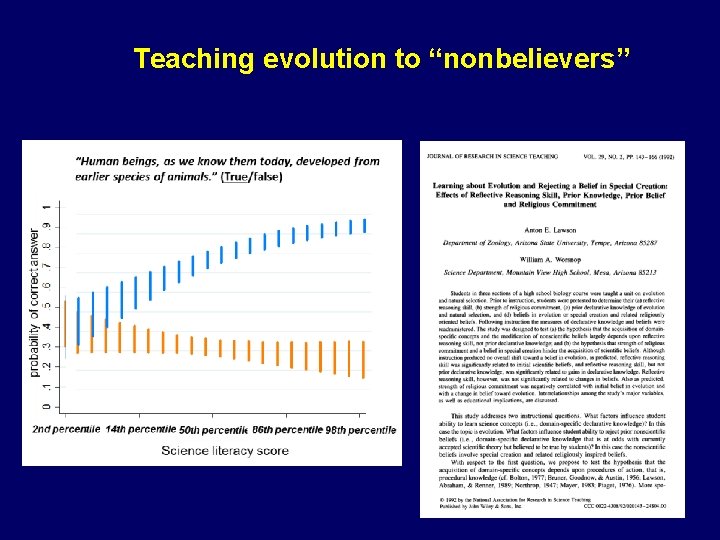
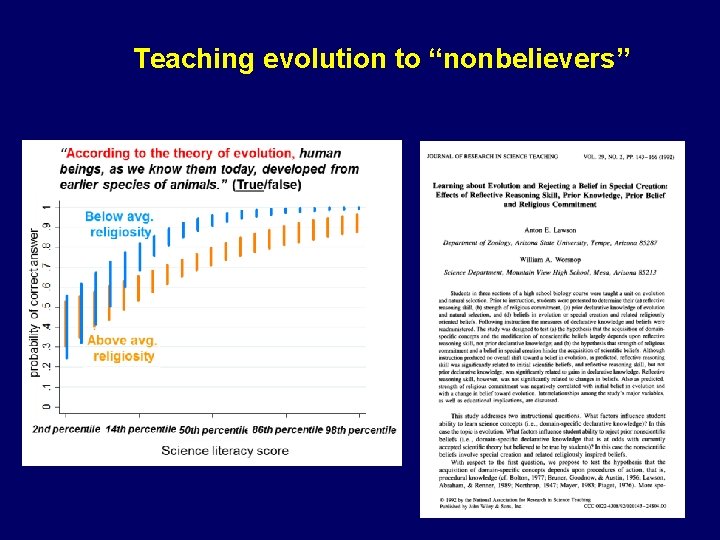
Teaching evolution to “nonbelievers”
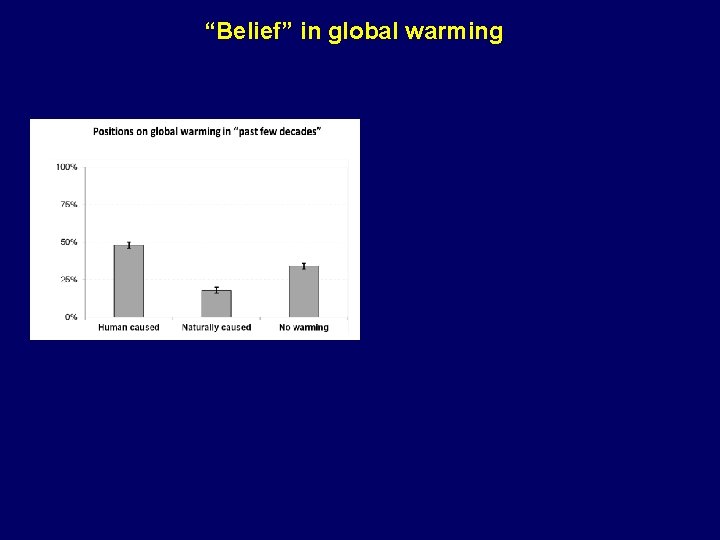
“Belief” in global warming
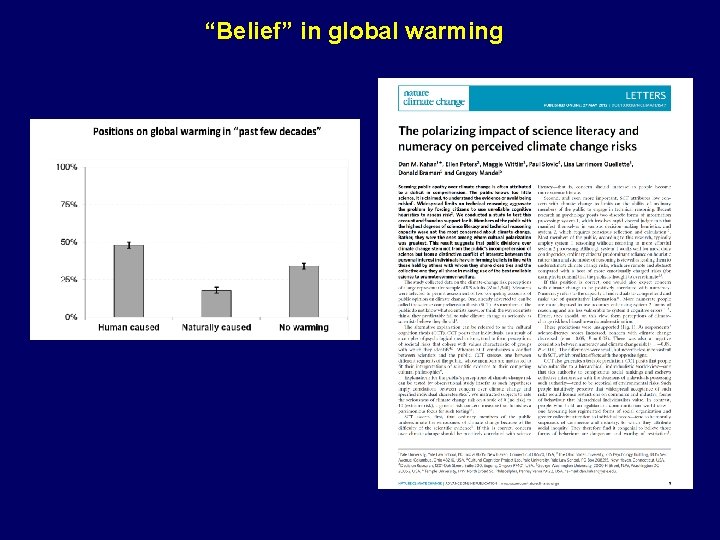
“Belief” in global warming
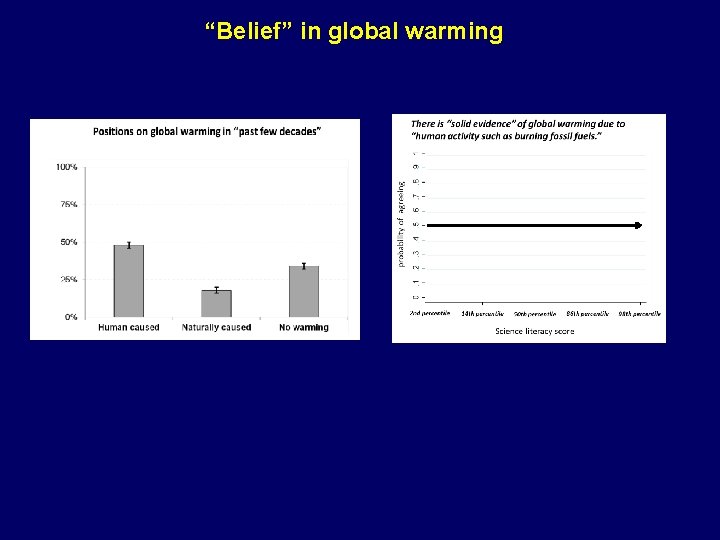
global warming risk “Belief” in global warming
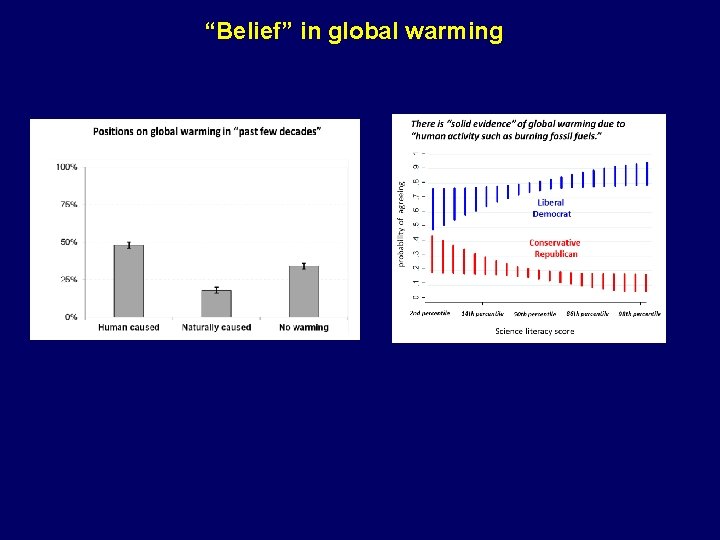
global warming risk “Belief” in global warming
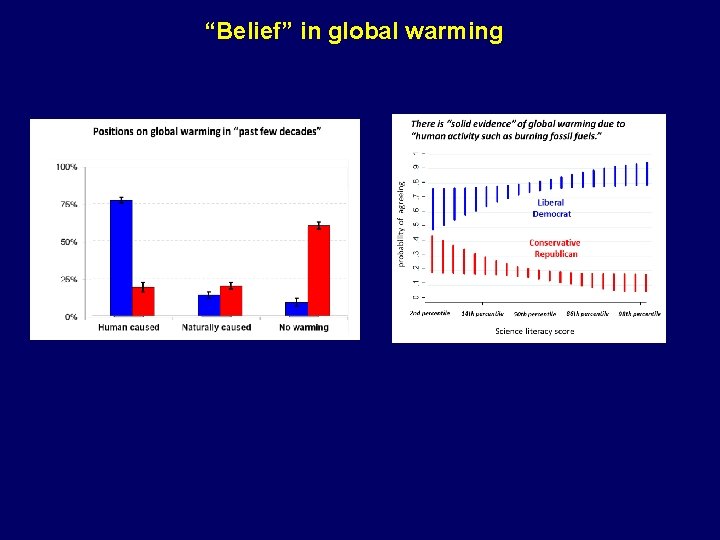
global warming risk “Belief” in global warming
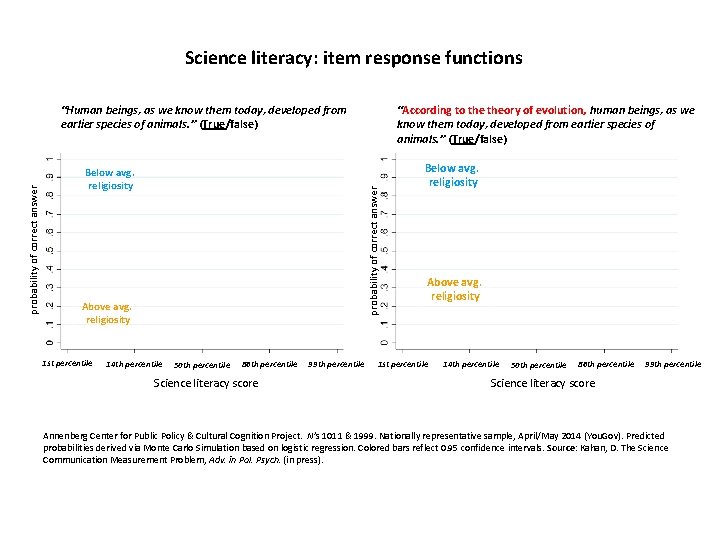
Science literacy: item response functions Below avg. religiosity Above avg. religiosity 1 st percentile “According to theory of evolution, human beings, as we know them today, developed from earlier species of animals. ” (True/false) probability of correct answer “Human beings, as we know them today, developed from earlier species of animals. ” (True/false) 14 th percentile 50 th percentile 86 th percentile Science literacy score 99 th percentile Below avg. religiosity Above avg. religiosity 1 st percentile 14 th percentile 50 th percentile 86 th percentile 99 th percentile Science literacy score Annenberg Center for Public Policy & Cultural Cognition Project. N’s 1011 & 1999. Nationally representative sample, April/May 2014 (You. Gov). Predicted probabilities derived via Monte Carlo Simulation based on logistic regression. Colored bars reflect 0. 95 confidence intervals. Source: Kahan, D. The Science Communication Measurement Problem, Adv. in Pol. Psych. (in press).
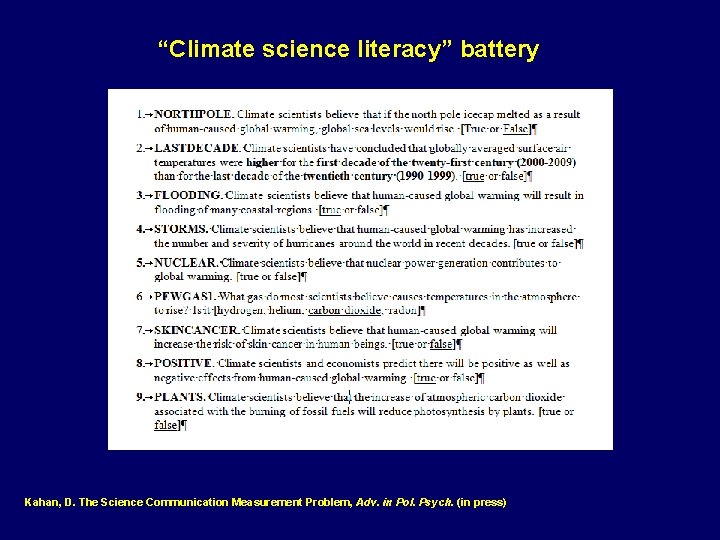
“Climate science literacy” battery Kahan, D. The Science Communication Measurement Problem, Adv. in Pol. Psych. (in press)

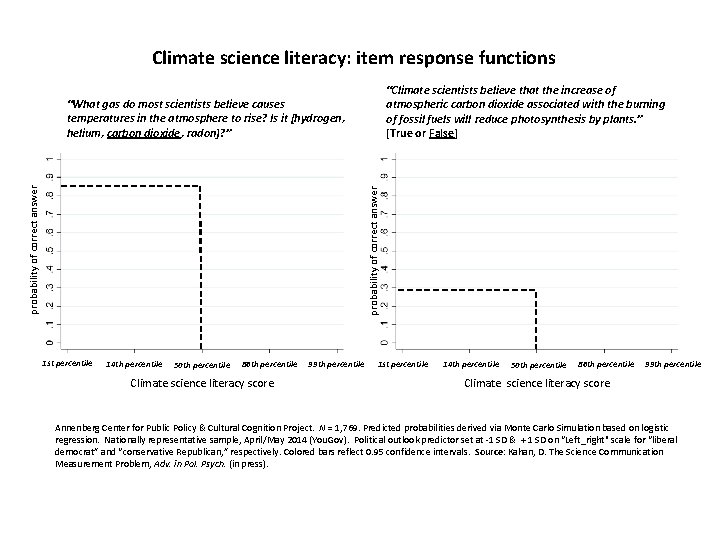
Climate science literacy: item response functions “Climate scientists believe that the increase of atmospheric carbon dioxide associated with the burning of fossil fuels will reduce photosynthesis by plants. ” [True or False] probability of correct answer “What gas do most scientists believe causes temperatures in the atmosphere to rise? Is it [hydrogen, helium, carbon dioxide, radon]? ” 1 st percentile 14 th percentile 50 th percentile 86 th percentile Climate science literacy score 99 th percentile 1 st percentile 14 th percentile 50 th percentile 86 th percentile 99 th percentile Climate science literacy score Annenberg Center for Public Policy & Cultural Cognition Project. N = 1, 769. Predicted probabilities derived via Monte Carlo Simulation based on logistic regression. Nationally representative sample, April/May 2014 (You. Gov). Political outlook predictor set at -1 SD & + 1 SD on “Left_right" scale for “liberal democrat” and “conservative Republican, ” respectively. Colored bars reflect 0. 95 confidence intervals. Source: Kahan, D. The Science Communication Measurement Problem, Adv. in Pol. Psych. (in press).
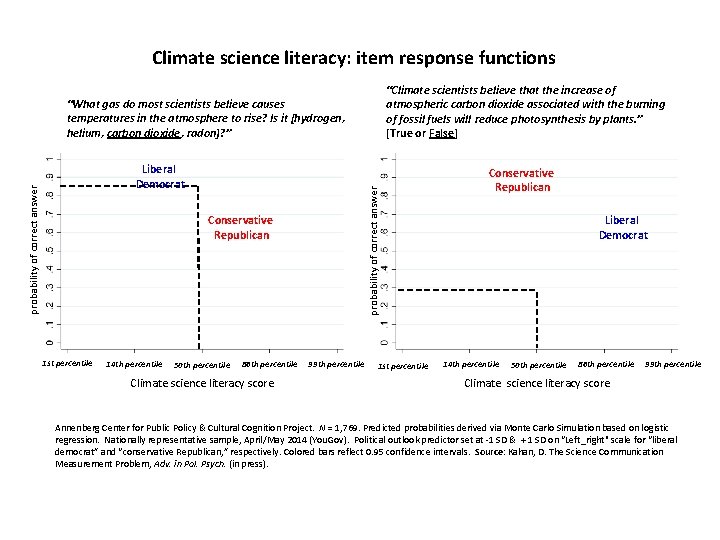
Climate science literacy: item response functions “Climate scientists believe that the increase of atmospheric carbon dioxide associated with the burning of fossil fuels will reduce photosynthesis by plants. ” [True or False] “What gas do most scientists believe causes temperatures in the atmosphere to rise? Is it [hydrogen, helium, carbon dioxide, radon]? ” probability of correct answer Liberal Democrat Conservative Republican 1 st percentile 14 th percentile 50 th percentile 86 th percentile Climate science literacy score 99 th percentile 1 st percentile Conservative Republican Liberal Democrat 14 th percentile 50 th percentile 86 th percentile 99 th percentile Climate science literacy score Annenberg Center for Public Policy & Cultural Cognition Project. N = 1, 769. Predicted probabilities derived via Monte Carlo Simulation based on logistic regression. Nationally representative sample, April/May 2014 (You. Gov). Political outlook predictor set at -1 SD & + 1 SD on “Left_right" scale for “liberal democrat” and “conservative Republican, ” respectively. Colored bars reflect 0. 95 confidence intervals. Source: Kahan, D. The Science Communication Measurement Problem, Adv. in Pol. Psych. (in press).
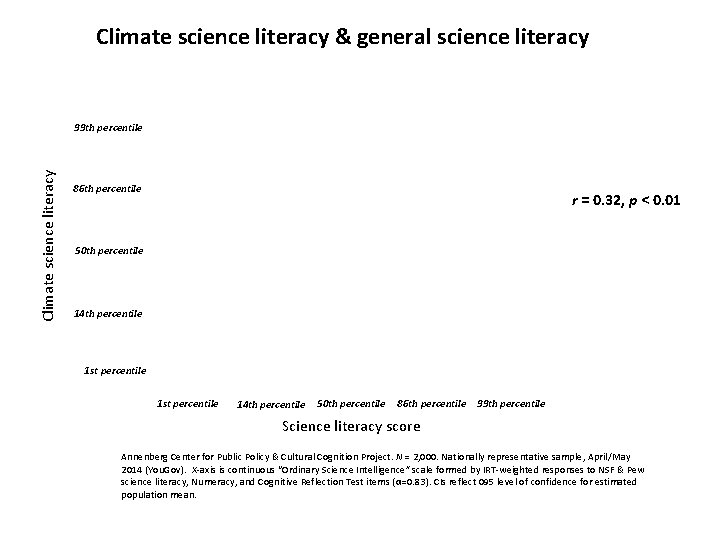
Climate science literacy & general science literacy Climate science literacy 99 th percentile 86 th percentile r = 0. 32, p < 0. 01 50 th percentile 14 th percentile 1 st percentile 14 th percentile 50 th percentile 86 th percentile 99 th percentile Science literacy score Annenberg Center for Public Policy & Cultural Cognition Project. N = 2, 000. Nationally representative sample, April/May 2014 (You. Gov). X-axis is continuous “Ordinary Science Intelligence” scale formed by IRT-weighted responses to NSF & Pew science literacy, Numeracy, and Cognitive Reflection Test items (α=0. 83). CIs reflect 095 level of confidence for estimated population mean.
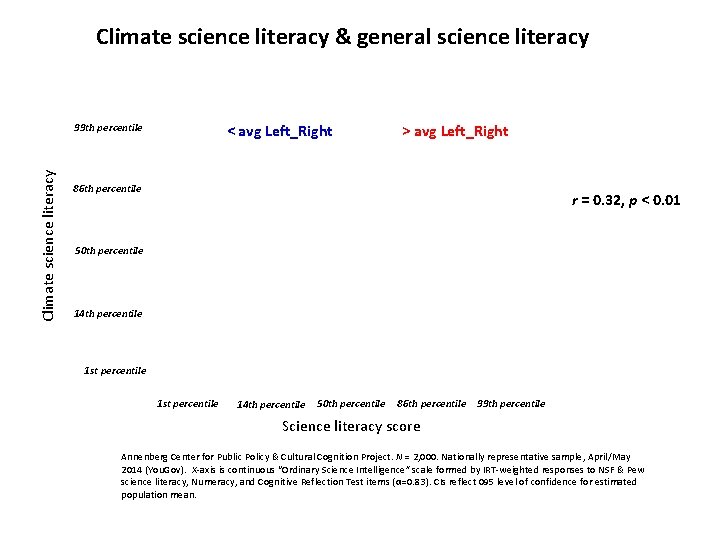
Climate science literacy & general science literacy Climate science literacy 99 th percentile < avg Left_Right > avg Left_Right 86 th percentile r = 0. 32, p < 0. 01 50 th percentile 14 th percentile 1 st percentile 14 th percentile 50 th percentile 86 th percentile 99 th percentile Science literacy score Annenberg Center for Public Policy & Cultural Cognition Project. N = 2, 000. Nationally representative sample, April/May 2014 (You. Gov). X-axis is continuous “Ordinary Science Intelligence” scale formed by IRT-weighted responses to NSF & Pew science literacy, Numeracy, and Cognitive Reflection Test items (α=0. 83). CIs reflect 095 level of confidence for estimated population mean.
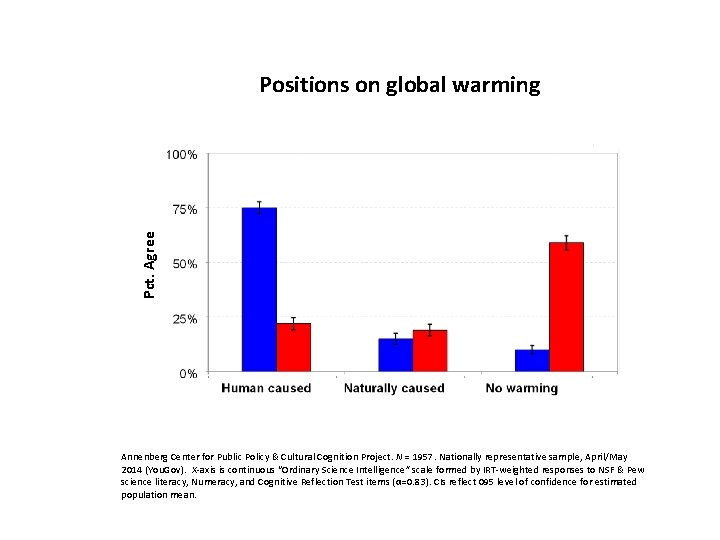
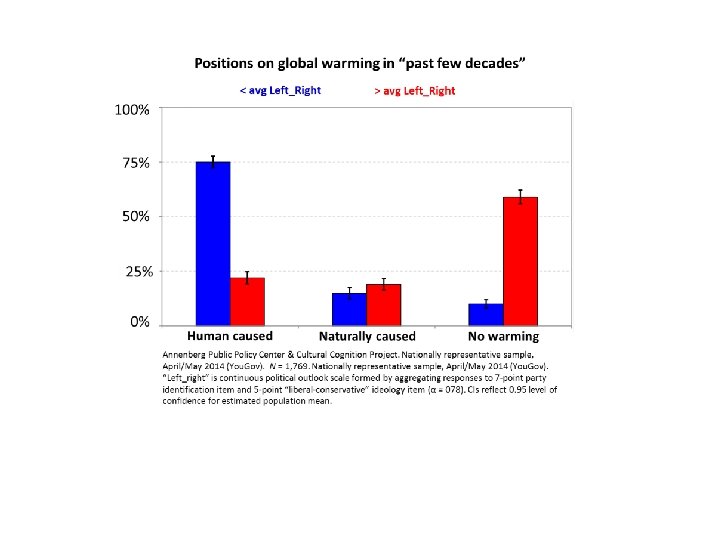
Pct. Agree Positions on global warming Human caused Naturally caused No warming Annenberg Center for Public Policy & Cultural Cognition Project. N = 1957. Nationally representative sample, April/May 2014 (You. Gov). X-axis is continuous “Ordinary Science Intelligence” scale formed by IRT-weighted responses to NSF & Pew science literacy, Numeracy, and Cognitive Reflection Test items (α=0. 83). CIs reflect 095 level of confidence for estimated population mean.
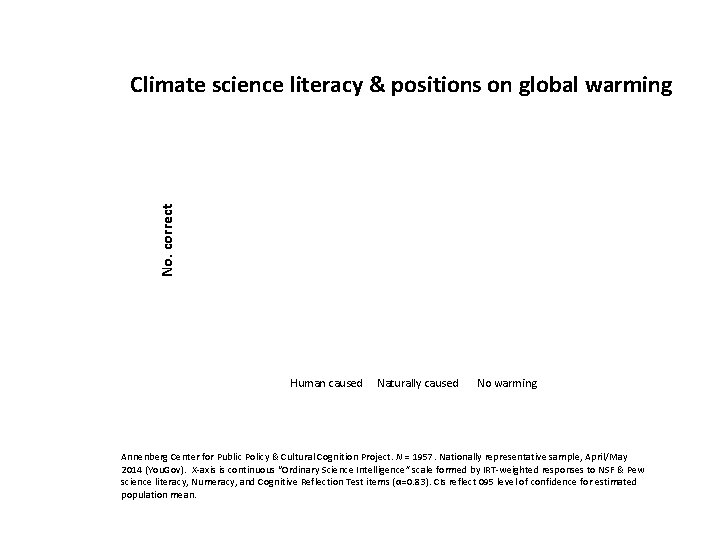
No. correct Climate science literacy & positions on global warming Human caused Naturally caused No warming Annenberg Center for Public Policy & Cultural Cognition Project. N = 1957. Nationally representative sample, April/May 2014 (You. Gov). X-axis is continuous “Ordinary Science Intelligence” scale formed by IRT-weighted responses to NSF & Pew science literacy, Numeracy, and Cognitive Reflection Test items (α=0. 83). CIs reflect 095 level of confidence for estimated population mean.
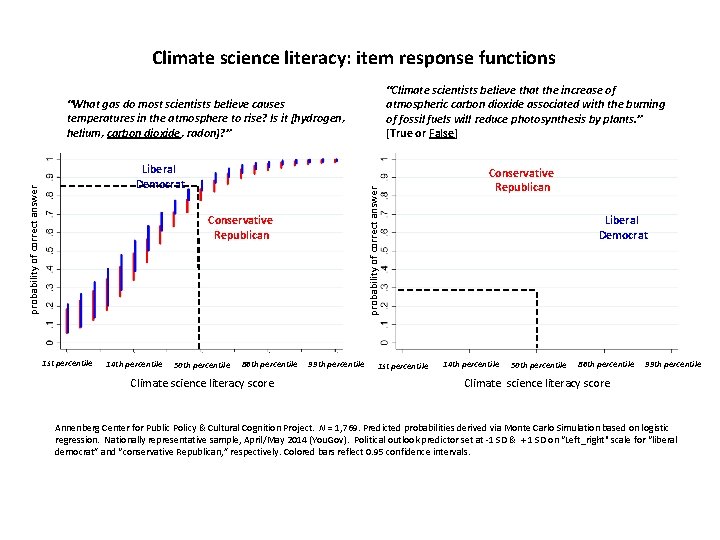
Climate science literacy: item response functions “Climate scientists believe that the increase of atmospheric carbon dioxide associated with the burning of fossil fuels will reduce photosynthesis by plants. ” [True or False] “What gas do most scientists believe causes temperatures in the atmosphere to rise? Is it [hydrogen, helium, carbon dioxide, radon]? ” probability of correct answer Liberal Democrat Conservative Republican 1 st percentile 14 th percentile 50 th percentile 86 th percentile Climate science literacy score 99 th percentile 1 st percentile Conservative Republican Liberal Democrat 14 th percentile 50 th percentile 86 th percentile 99 th percentile Climate science literacy score Annenberg Center for Public Policy & Cultural Cognition Project. N = 1, 769. Predicted probabilities derived via Monte Carlo Simulation based on logistic regression. Nationally representative sample, April/May 2014 (You. Gov). Political outlook predictor set at -1 SD & + 1 SD on “Left_right" scale for “liberal democrat” and “conservative Republican, ” respectively. Colored bars reflect 0. 95 confidence intervals.
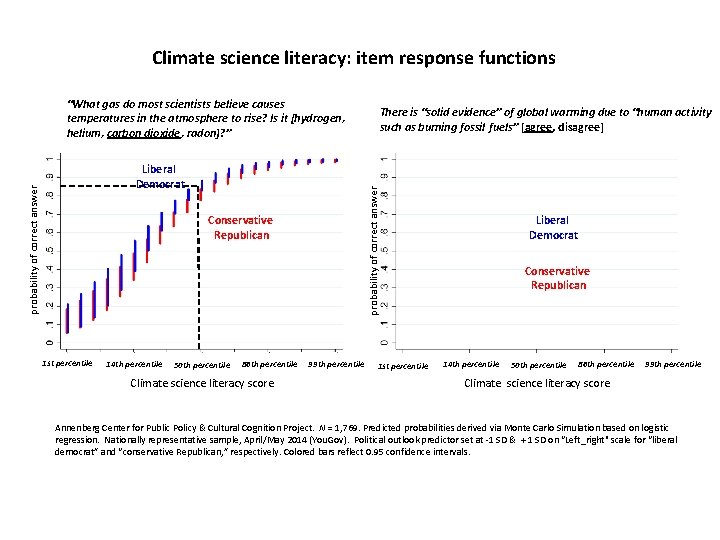
Climate science literacy: item response functions “What gas do most scientists believe causes temperatures in the atmosphere to rise? Is it [hydrogen, helium, carbon dioxide, radon]? ” probability of correct answer Liberal Democrat Conservative Republican 1 st percentile 14 th percentile 50 th percentile 86 th percentile Climate science literacy score There is “solid evidence” of global warming due to “human activity such as burning fossil fuels” [agree, disagree] 99 th percentile 1 st percentile Liberal Democrat Conservative Republican 14 th percentile 50 th percentile 86 th percentile 99 th percentile Climate science literacy score Annenberg Center for Public Policy & Cultural Cognition Project. N = 1, 769. Predicted probabilities derived via Monte Carlo Simulation based on logistic regression. Nationally representative sample, April/May 2014 (You. Gov). Political outlook predictor set at -1 SD & + 1 SD on “Left_right" scale for “liberal democrat” and “conservative Republican, ” respectively. Colored bars reflect 0. 95 confidence intervals.
Teaching evolution to “nonbelievers”
Teaching evolution to “nonbelievers”
“ 97% consesnsus” social marketing campaign
Disentanglement principle:
Disentanglement principle: “Don’t make reasoning, free people choose between
Disentanglement principle: “Don’t make reasoning, free people choose between knowing what’s known & being who they are!”
Disentanglement principle: Soute “Don’t make reasoning, free people choose between knowing what’s known & being who they are!”
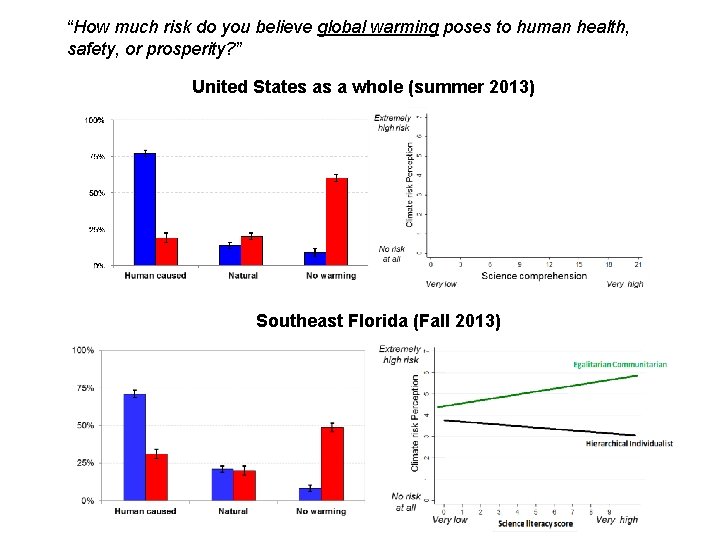
“How much risk do you believe global warming poses to human health, safety, or prosperity? ” United States as a whole (summer 2013) Southeast Florida (Fall 2013)
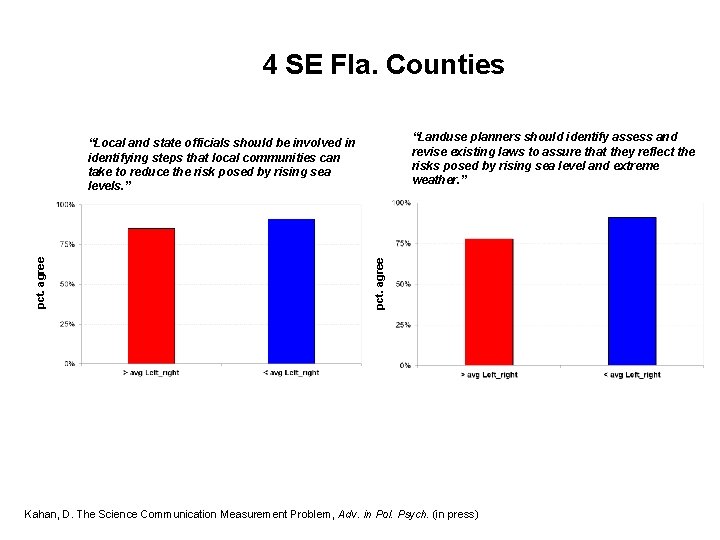
4 SE Fla. Counties “Landuse planners should identify assess and revise existing laws to assure that they reflect the risks posed by rising sea level and extreme weather. ” “Local and state officials should be involved in identifying steps that local communities can take to reduce the risk posed by rising sea levels. ” pct. agree > avg. Left_right 78% agree Kahan, D. The Science Communication Measurement Problem, Adv. in Pol. Psych. (in press)
Disentanglement principle: Soute “Don’t make reasoning, free people choose between knowing what’s known & being who they are!”
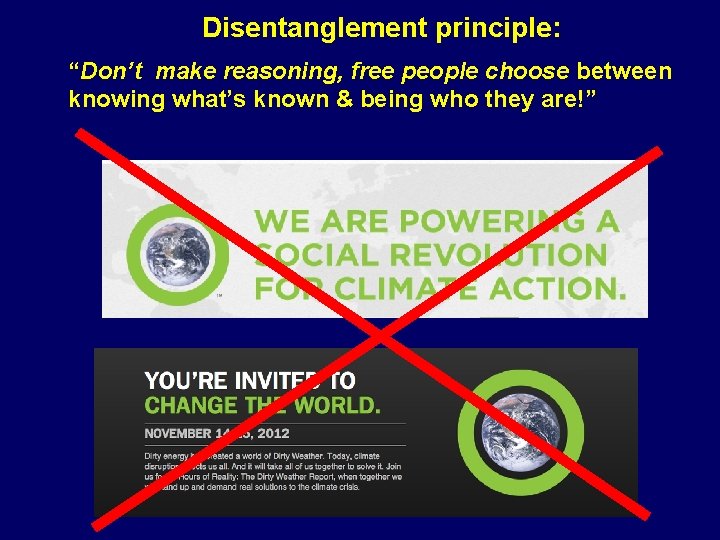
Disentanglement principle: “Don’t make reasoning, free people choose between knowing what’s known & being who they are!”
Disentanglement principle: “Don’t make reasoning, free people choose between knowing what’s known & being who they are!”
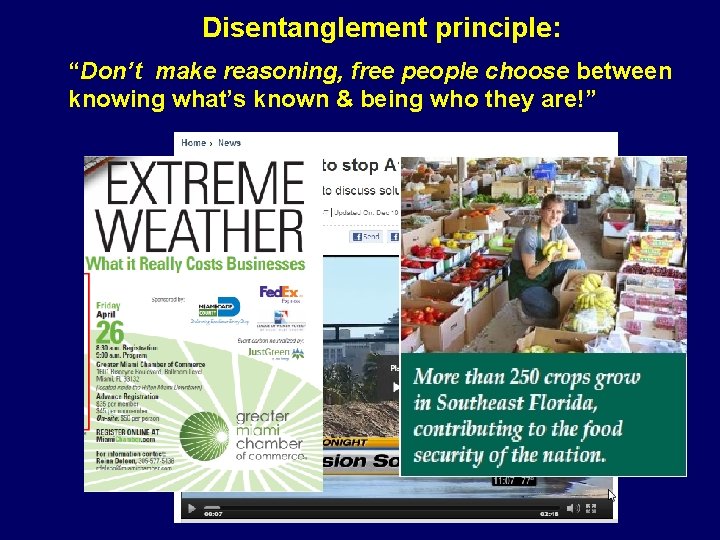
Disentanglement principle: “Don’t make reasoning, free people choose between knowing what’s known & being who they are!”
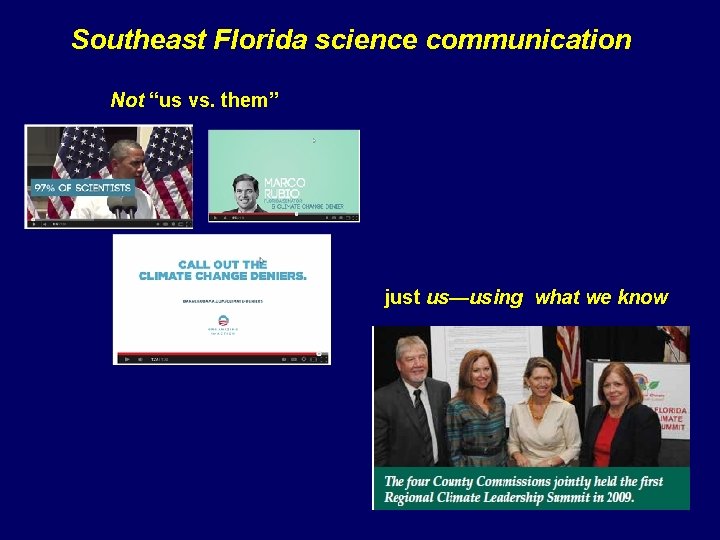
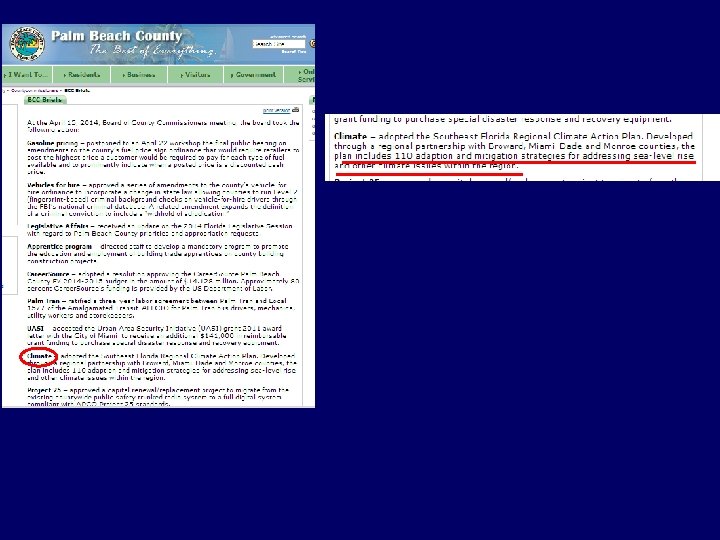
Southeast Florida science communication Not “us vs. them” just us—using what we know
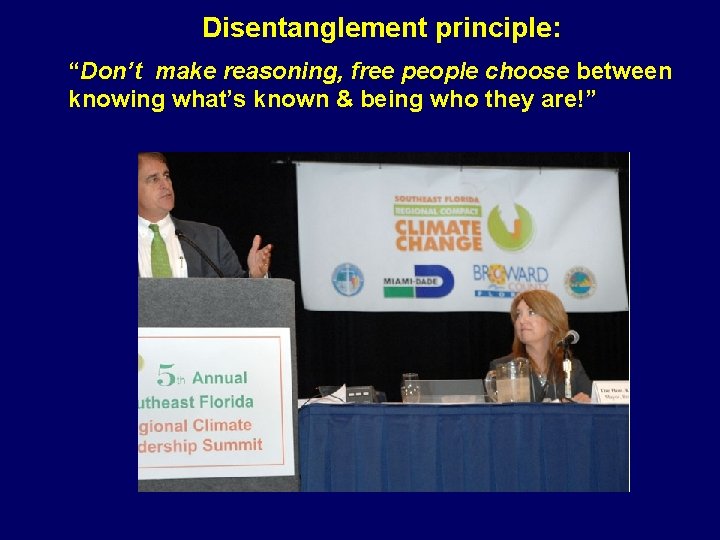
Disentanglement principle: “Don’t make reasoning, free people choose between knowing what’s known & being who they are!”
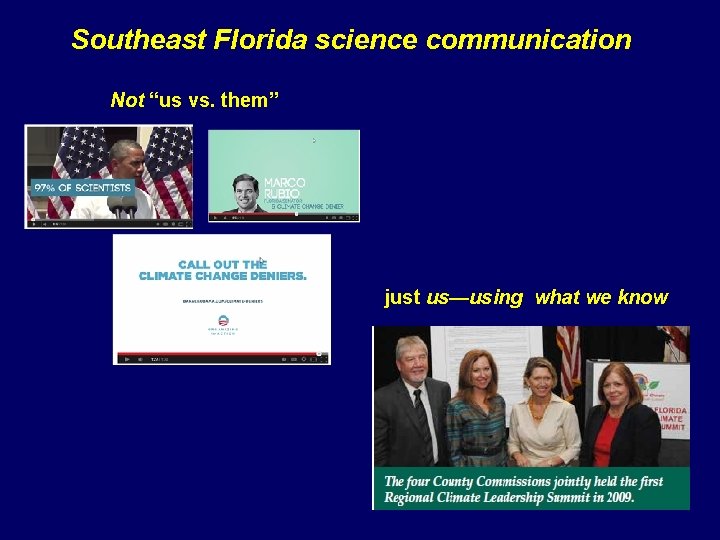
Southeast Florida science communication Not “us vs. them” just us—using what we know
What can the science of science communication do for climate communicators? Everything I know about climate science communication: What ordinary members of the public “believe” about climate change doesn’t reflect what they know; it expresses who they are.
What can the science of science communication do for climate communicators? Everything I know about climate science communication: What ordinary members of the public “believe” about climate change doesn’t reflect what they know; it expresses who they are. So you tell me!
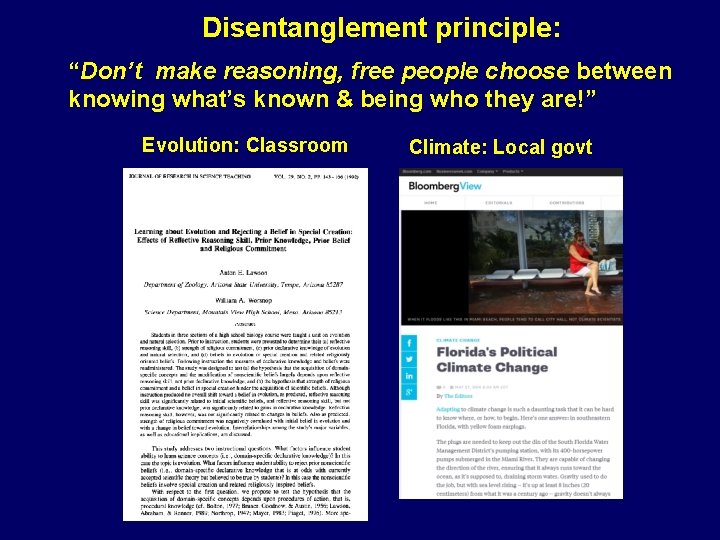
Disentanglement principle: “Don’t make reasoning, free people choose between knowing what’s known & being who they are!” Evolution: Classroom Climate: Local govt
Disentanglement principle: “Don’t make reasoning, free people choose between knowing what’s known & being who they are!”
What can the science of science communication do for climate communicators? Everything I know about climate science communication: What ordinary members of the public “believe” about climate change doesn’t reflect what they know; it expresses who they are. So you tell me! Great! I’ll measure!!
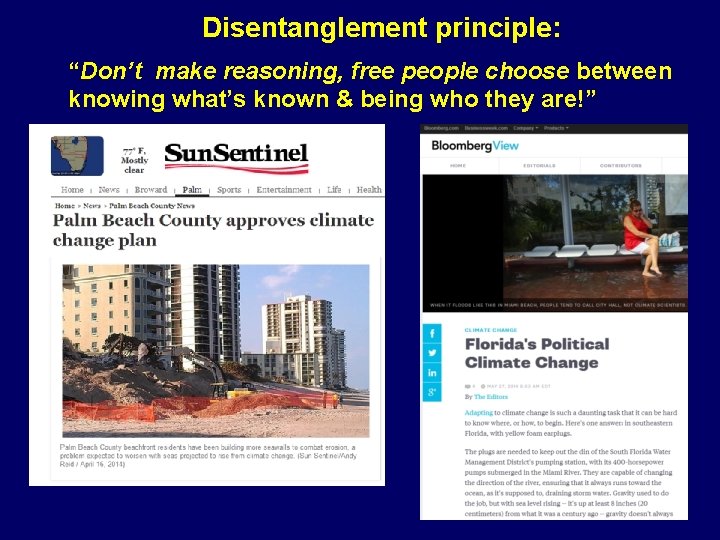
Disentanglement principle: “Don’t make reasoning, free people choose between knowing what’s known & being who they are!”
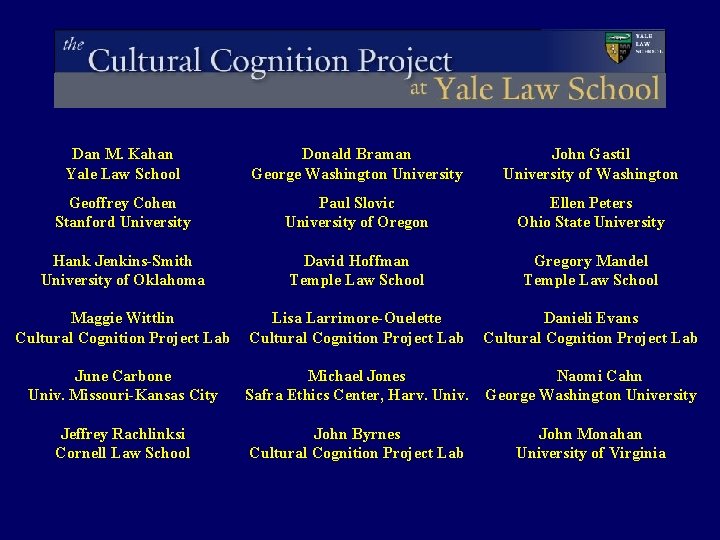
Dan M. Kahan Yale Law School Donald Braman George Washington University John Gastil University of Washington Geoffrey Cohen Stanford University Paul Slovic University of Oregon Ellen Peters Ohio State University Hank Jenkins-Smith University of Oklahoma David Hoffman Temple Law School Gregory Mandel Temple Law School Maggie Wittlin Cultural Cognition Project Lab Lisa Larrimore-Ouelette Cultural Cognition Project Lab Danieli Evans Cultural Cognition Project Lab June Carbone Univ. Missouri-Kansas City Michael Jones Safra Ethics Center, Harv. Univ. Naomi Cahn George Washington University Jeffrey Rachlinksi Cornell Law School John Byrnes Cultural Cognition Project Lab John Monahan University of Virginia
www. culturalcognition. net “I am you!”
- Slides: 59