
Waste Strategy for England 2007 Waste Strategy 1

- Slides: 22
Waste Strategy for England 2007 Waste Strategy 1½ Years On Daniel Instone Waste Management Finance Forum 22 January 2009 1
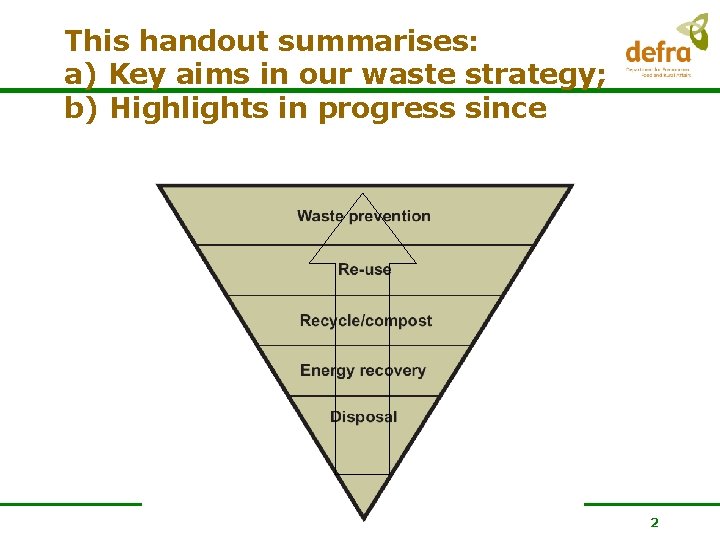
This handout summarises: a) Key aims in our waste strategy; b) Highlights in progress since 2
Waste Strategy: Rationale for action • Reducing greenhouse gases - notably methane from landfill sites (but also saving energy through re-use and recycling) • Improving resource efficiency – saving energy/carbon, scarce materials, renewable energy recovery • Protecting public health through safe management of hazardous substances • Protecting ecosystems (soils, groundwater, emissions to air) • Safeguarding social amenity – by ensuring household waste is collected, reducing flytipping by households and businesses, and limiting local nuisances from waste facilities 3
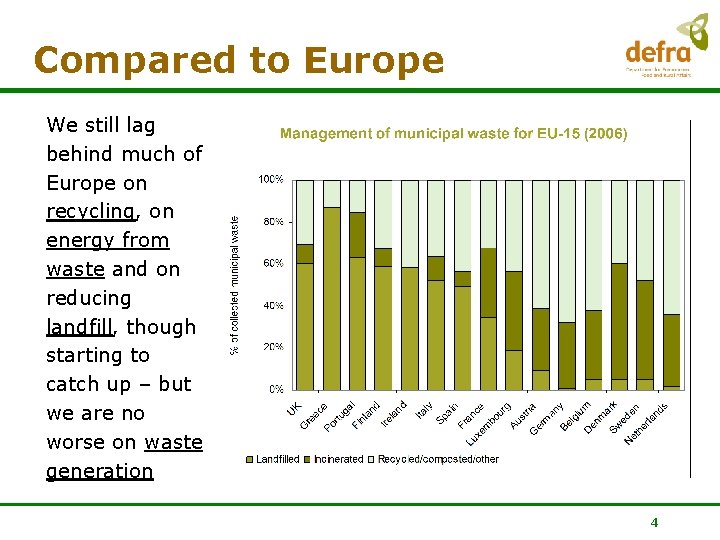
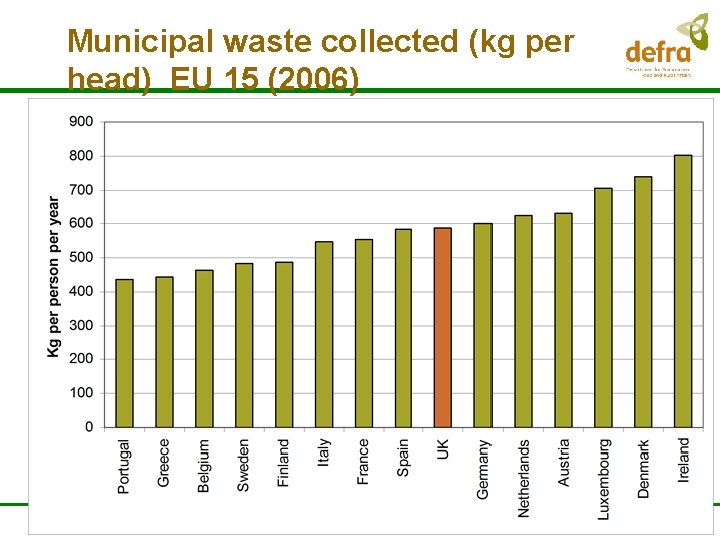
Compared to Europe We still lag behind much of Europe on recycling, on energy from waste and on reducing landfill, though starting to catch up – but we are no worse on waste generation 4
Municipal waste collected (kg per head) EU 15 (2006) 5
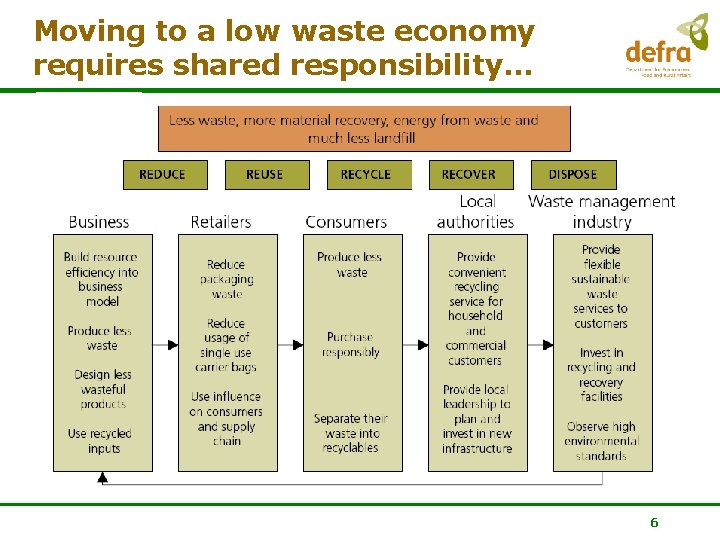
Moving to a low waste economy requires shared responsibility… 6
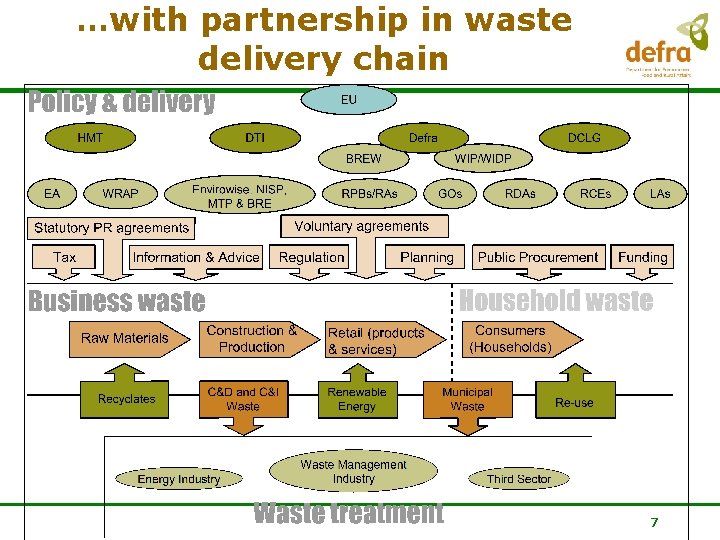
…with partnership in waste delivery chain 7
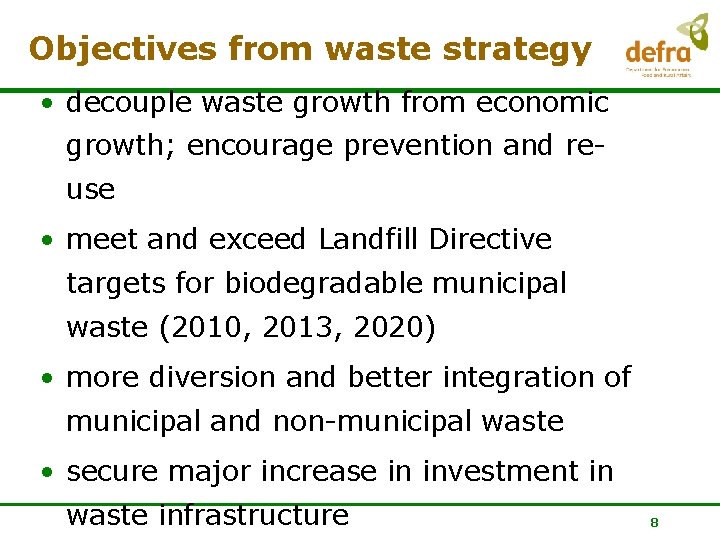
Objectives from waste strategy • decouple waste growth from economic growth; encourage prevention and reuse • meet and exceed Landfill Directive targets for biodegradable municipal waste (2010, 2013, 2020) • more diversion and better integration of municipal and non-municipal waste • secure major increase in investment in waste infrastructure 8
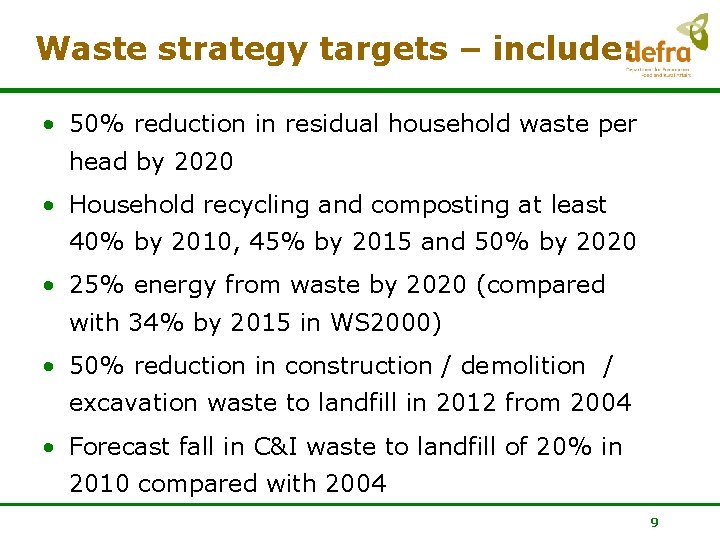
Waste strategy targets – include: • 50% reduction in residual household waste per head by 2020 • Household recycling and composting at least 40% by 2010, 45% by 2015 and 50% by 2020 • 25% energy from waste by 2020 (compared with 34% by 2015 in WS 2000) • 50% reduction in construction / demolition / excavation waste to landfill in 2012 from 2004 • Forecast fall in C&I waste to landfill of 20% in 2010 compared with 2004 9
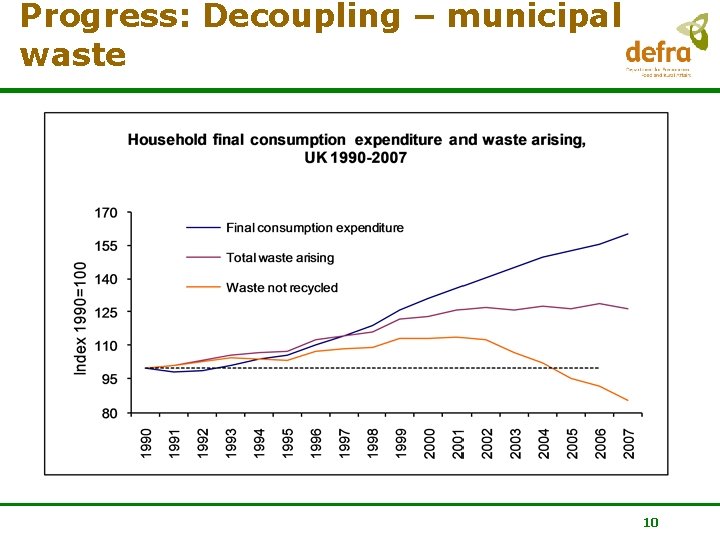
Progress: Decoupling – municipal waste 10
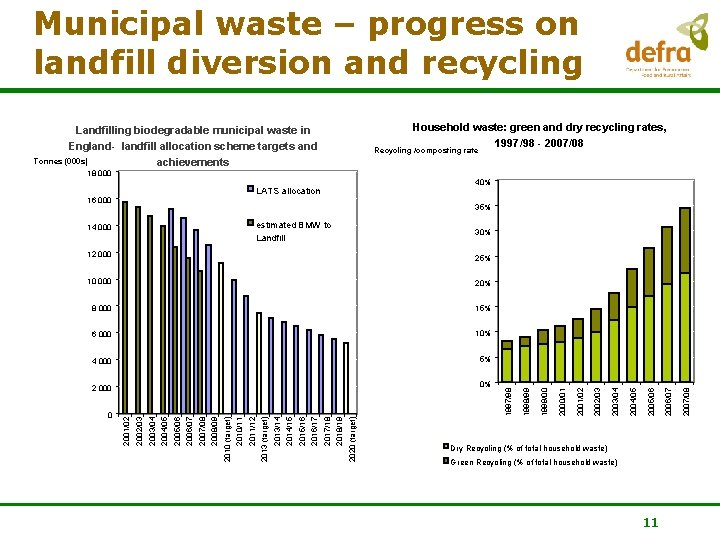
Municipal waste – progress on landfill diversion and recycling Household waste: green and dry recycling rates, 1997/98 - 2007/08 Landfilling biodegradable municipal waste in England- landfill allocation scheme targets and Tonnes (000 s) achievements Recycling /composting rate 18 000 40% LATS allocation 16 000 35% estimated BMW to Landfill 14 000 30% 12 000 2018/19 2020 (target) 2017/18 2016/17 2015/16 2014/15 2013/14 2013 (target) 2010/11 2011/12 2010 (target) 2007/08 2008/09 2006/07 2005/06 2004/05 2003/04 2002/03 2001/02 Dry Recycling (% of total household waste) Green Recycling (% of total household waste) 11 2007/08 0 2006/07 0% 2 000 2005/06 5% 2004/05 4 000 2003/04 10% 2002/03 6 000 2001/02 15% 2000/01 8 000 1999/00 20% 1998/99 10 000 1997/98 25%
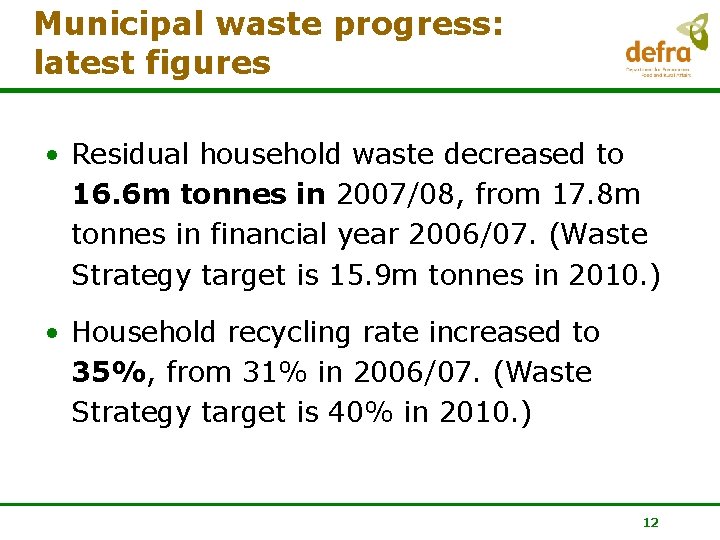
Municipal waste progress: latest figures • Residual household waste decreased to 16. 6 m tonnes in 2007/08, from 17. 8 m tonnes in financial year 2006/07. (Waste Strategy target is 15. 9 m tonnes in 2010. ) • Household recycling rate increased to 35%, from 31% in 2006/07. (Waste Strategy target is 40% in 2010. ) 12
Achievement of biodegradable municipal waste landfill diversion targets depends on. . . • Waste growth assumptions; • Local authorities’ collection policies; • Local authorities obtaining timely (i) financing and (ii) planning approval for waste disposal infrastructure. 13
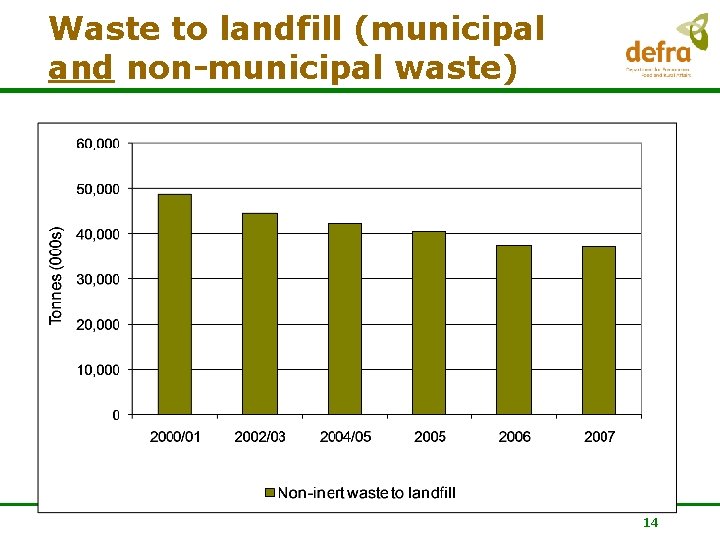
Waste to landfill (municipal and non-municipal waste) 14
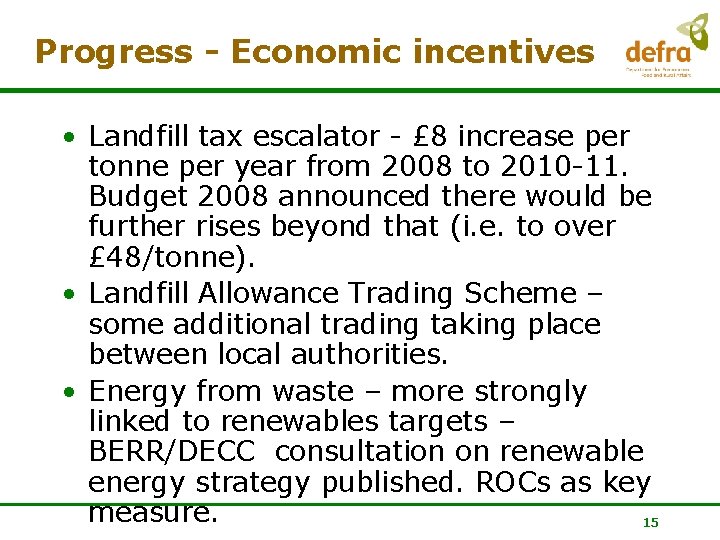
Progress - Economic incentives • Landfill tax escalator - £ 8 increase per tonne per year from 2008 to 2010 -11. Budget 2008 announced there would be further rises beyond that (i. e. to over £ 48/tonne). • Landfill Allowance Trading Scheme – some additional trading taking place between local authorities. • Energy from waste – more strongly linked to renewables targets – BERR/DECC consultation on renewable energy strategy published. ROCs as key measure. 15
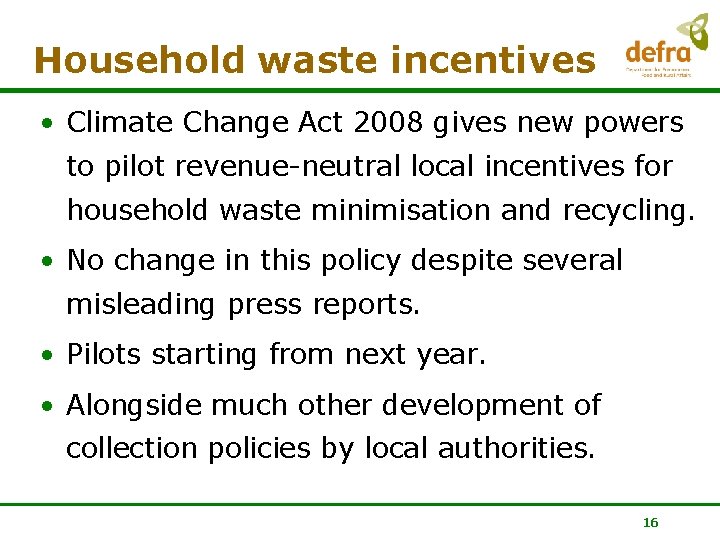
Household waste incentives • Climate Change Act 2008 gives new powers to pilot revenue-neutral local incentives for household waste minimisation and recycling. • No change in this policy despite several misleading press reports. • Pilots starting from next year. • Alongside much other development of collection policies by local authorities. 16
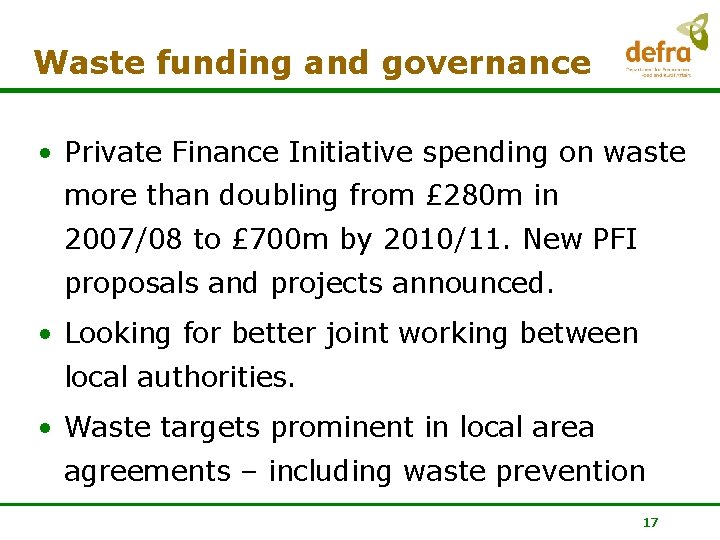
Waste funding and governance • Private Finance Initiative spending on waste more than doubling from £ 280 m in 2007/08 to £ 700 m by 2010/11. New PFI proposals and projects announced. • Looking for better joint working between local authorities. • Waste targets prominent in local area agreements – including waste prevention 17
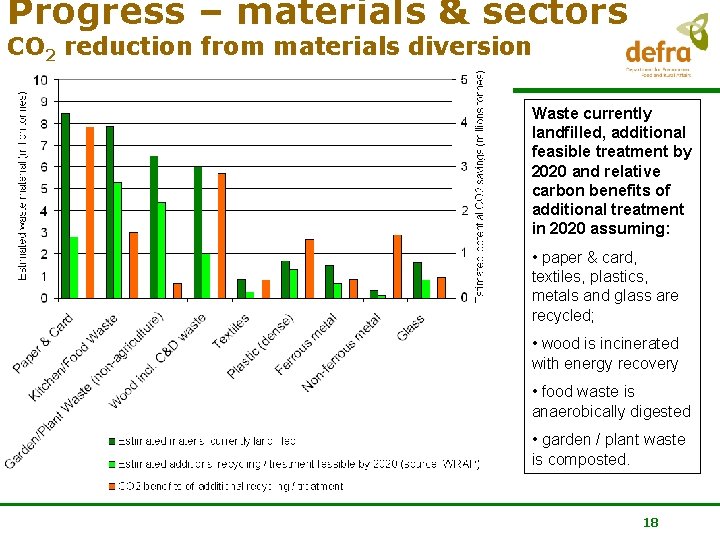
Progress – materials & sectors CO 2 reduction from materials diversion Waste currently landfilled, additional feasible treatment by 2020 and relative carbon benefits of additional treatment in 2020 assuming: • paper & card, textiles, plastics, metals and glass are recycled; • wood is incinerated with energy recovery • food waste is anaerobically digested • garden / plant waste is composted. 18
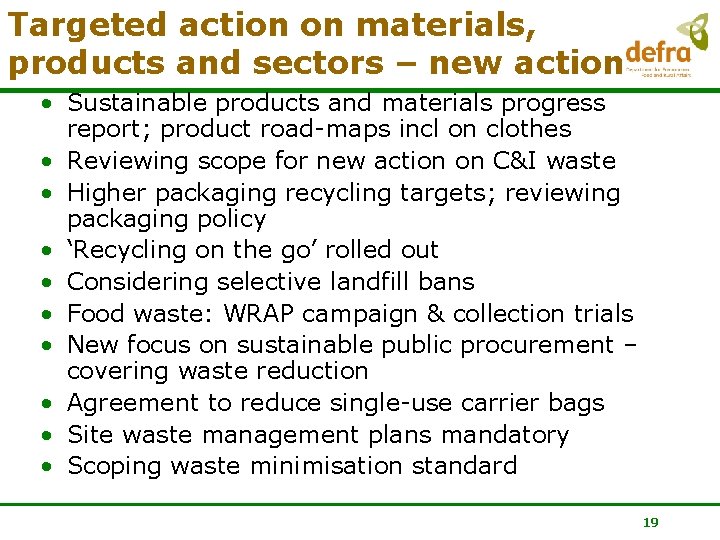
Targeted action on materials, products and sectors – new action • Sustainable products and materials progress report; product road-maps incl on clothes • Reviewing scope for new action on C&I waste • Higher packaging recycling targets; reviewing packaging policy • ‘Recycling on the go’ rolled out • Considering selective landfill bans • Food waste: WRAP campaign & collection trials • New focus on sustainable public procurement – covering waste reduction • Agreement to reduce single-use carrier bags • Site waste management plans mandatory • Scoping waste minimisation standard 19
Economic downturn – implications for waste • Fall in demand for recyclable materials • Infrastructure financing issues • Impact on local authority budgets • Shifts in public appetite for communications messages towards money-saving advice (e. g. on waste prevention)
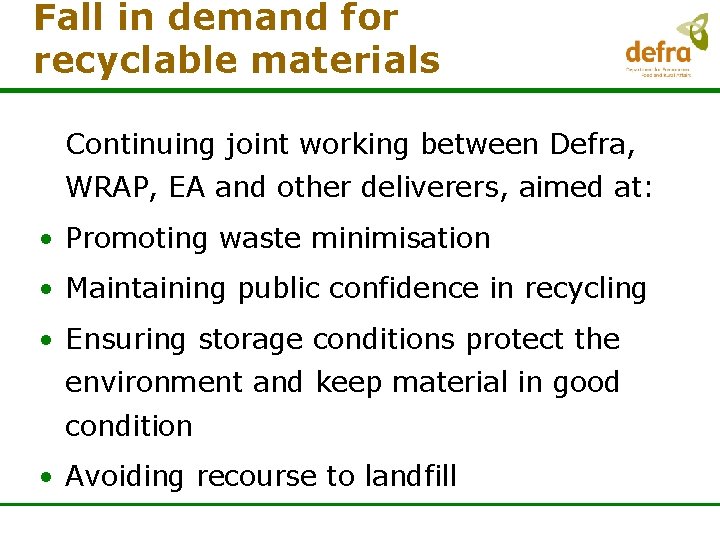
Fall in demand for recyclable materials Continuing joint working between Defra, WRAP, EA and other deliverers, aimed at: • Promoting waste minimisation • Maintaining public confidence in recycling • Ensuring storage conditions protect the environment and keep material in good condition • Avoiding recourse to landfill
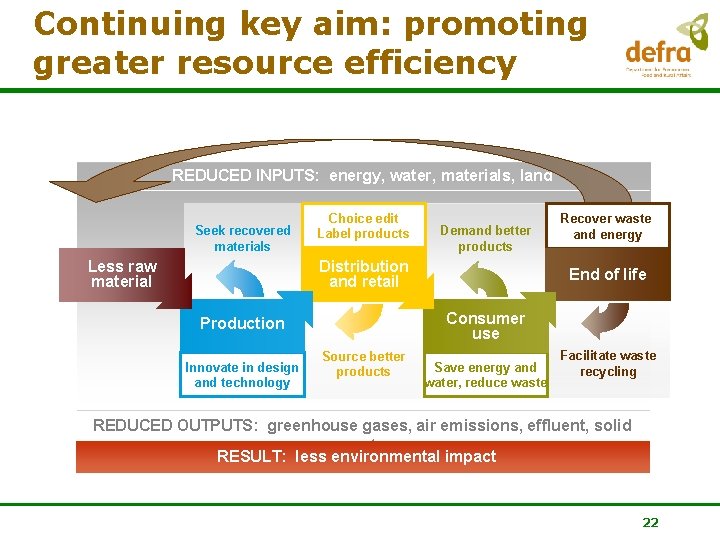
Continuing key aim: promoting greater resource efficiency REDUCED INPUTS: energy, water, materials, land Seek recovered materials Choice edit Label products Demand better products Distribution and retail Less raw material End of life Consumer use Production Innovate in design and technology Recover waste and energy Source better products Save energy and water, reduce waste Facilitate waste recycling REDUCED OUTPUTS: greenhouse gases, air emissions, effluent, solid waste RESULT: less environmental impact 22