
WASTE DISPOSAL Types of Waste Inert wastes no
- Slides: 34
WASTE DISPOSAL
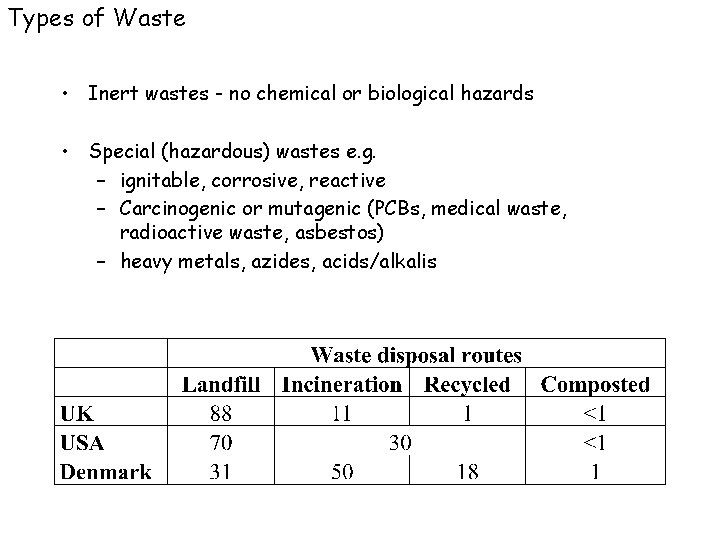
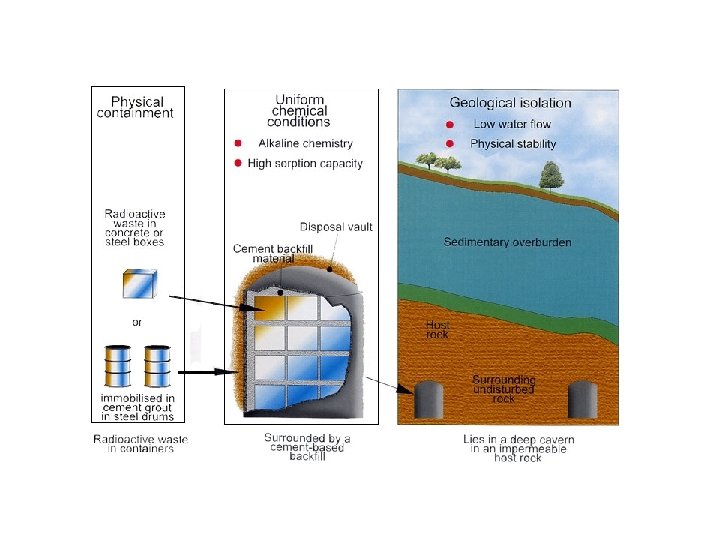
Types of Waste • Inert wastes - no chemical or biological hazards • Special (hazardous) wastes e. g. – ignitable, corrosive, reactive – Carcinogenic or mutagenic (PCBs, medical waste, radioactive waste, asbestos) – heavy metals, azides, acids/alkalis
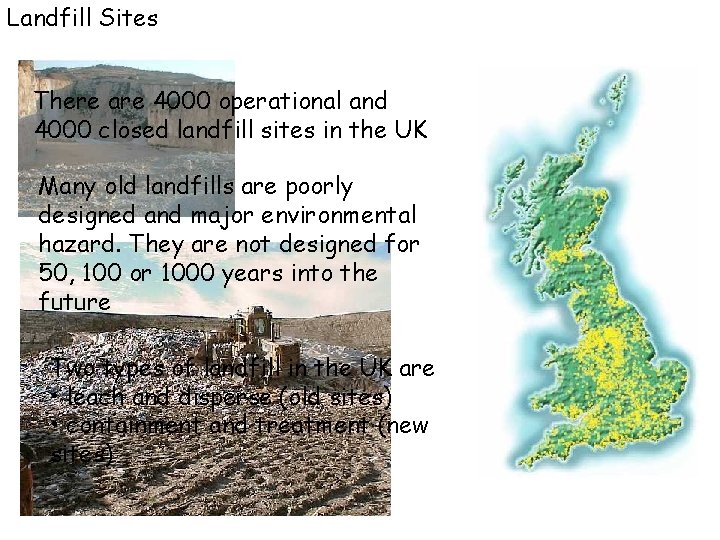
Landfill Sites There are 4000 operational and 4000 closed landfill sites in the UK Many old landfills are poorly designed and major environmental hazard. They are not designed for 50, 100 or 1000 years into the future Two types of landfill in the UK are • leach and disperse (old sites) • containment and treatment (new sites)
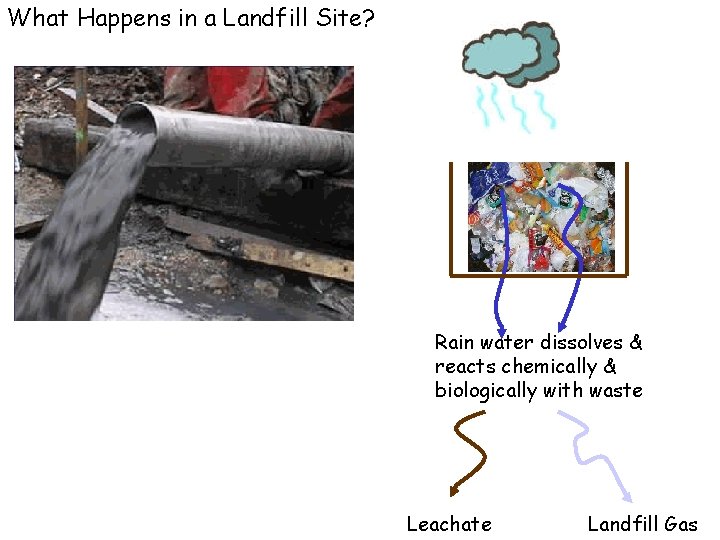
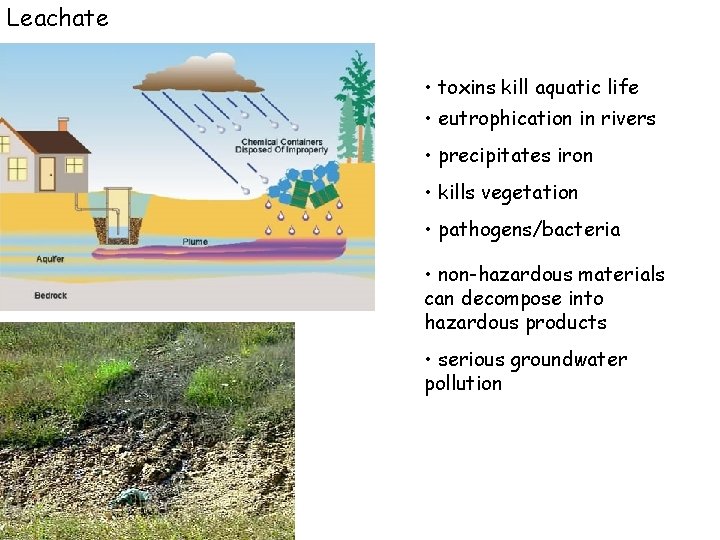
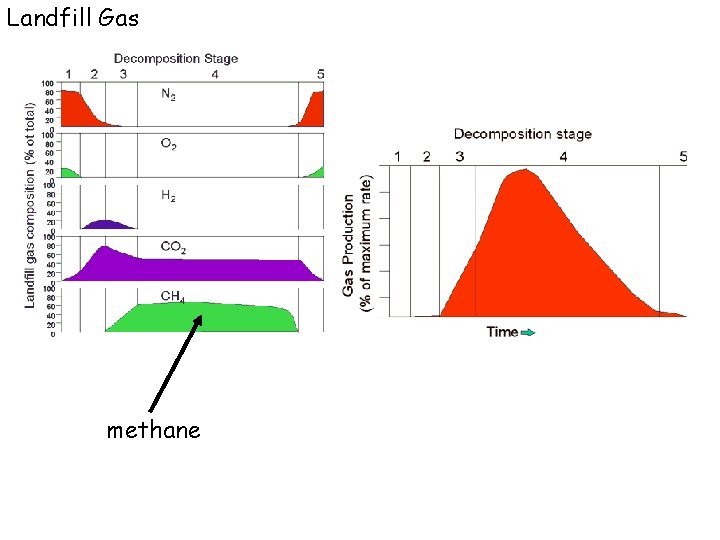
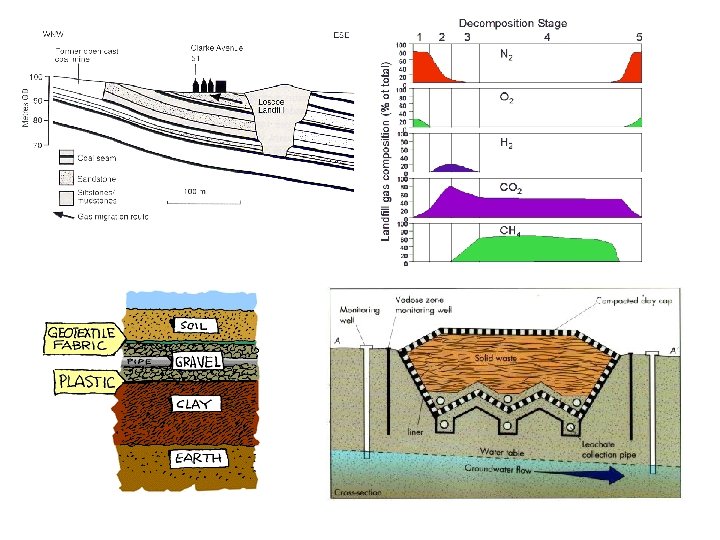
What Happens in a Landfill Site? Rain water dissolves & reacts chemically & biologically with waste Leachate Landfill Gas
Leachate • toxins kill aquatic life • eutrophication in rivers • precipitates iron • kills vegetation • pathogens/bacteria • non-hazardous materials can decompose into hazardous products • serious groundwater pollution
Landfill Gas methane
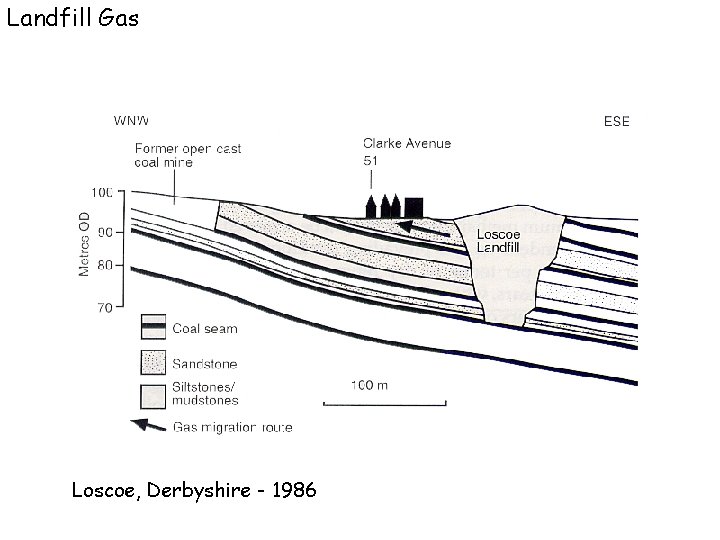
Landfill Gas Loscoe, Derbyshire - 1986
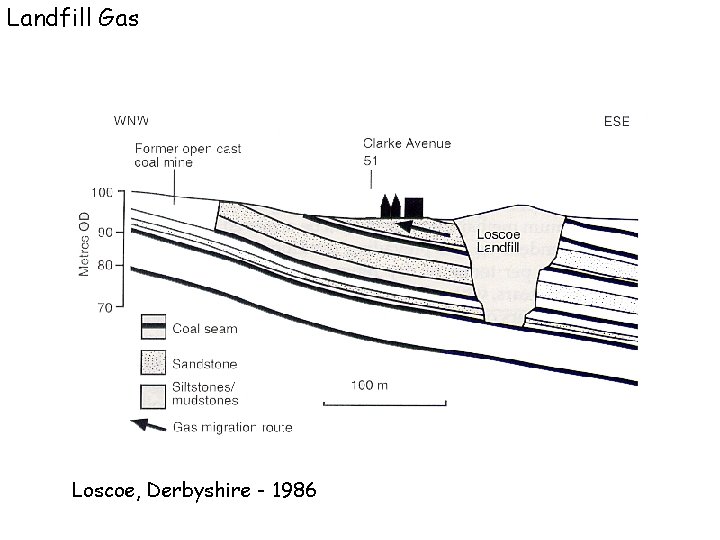
Landfill Gas Loscoe, Derbyshire - 1986
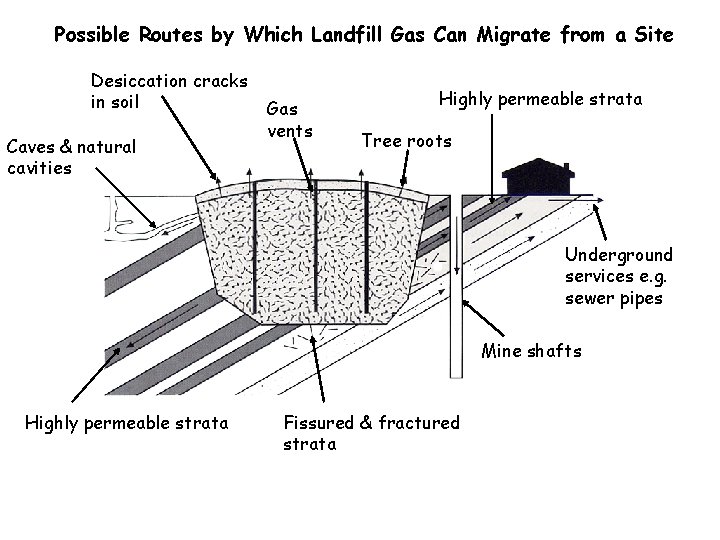
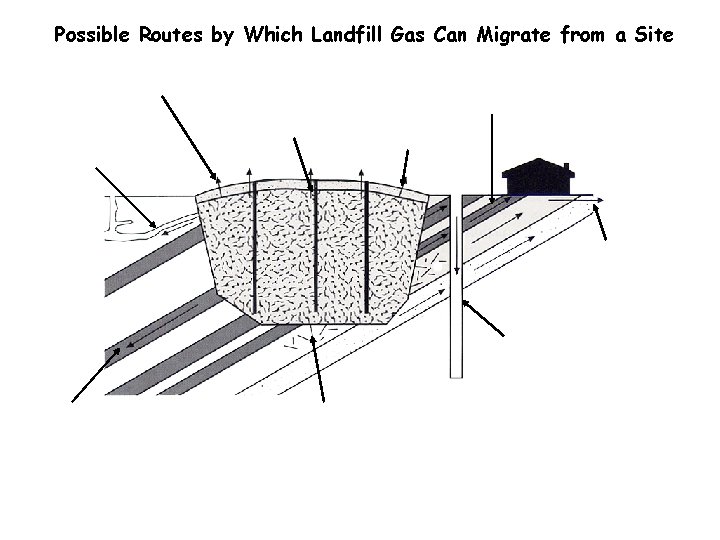
Possible Routes by Which Landfill Gas Can Migrate from a Site Desiccation cracks in soil Caves & natural cavities Gas vents Highly permeable strata Tree roots Underground services e. g. sewer pipes Mine shafts Highly permeable strata Fissured & fractured strata
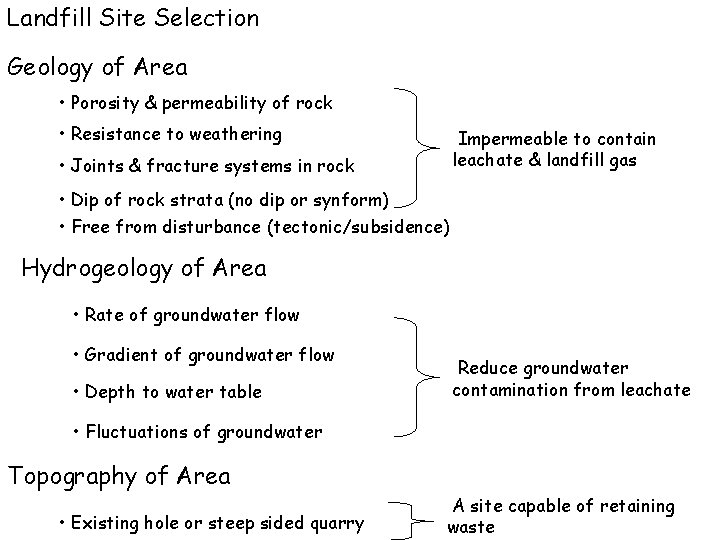
Landfill Site Selection Geology of Area • Porosity & permeability of rock • Resistance to weathering Impermeable to contain leachate & landfill gas • Joints & fracture systems in rock • Dip of rock strata (no dip or synform) • Free from disturbance (tectonic/subsidence) Hydrogeology of Area • Rate of groundwater flow • Gradient of groundwater flow • Depth to water table Reduce groundwater contamination from leachate • Fluctuations of groundwater Topography of Area • Existing hole or steep sided quarry A site capable of retaining waste
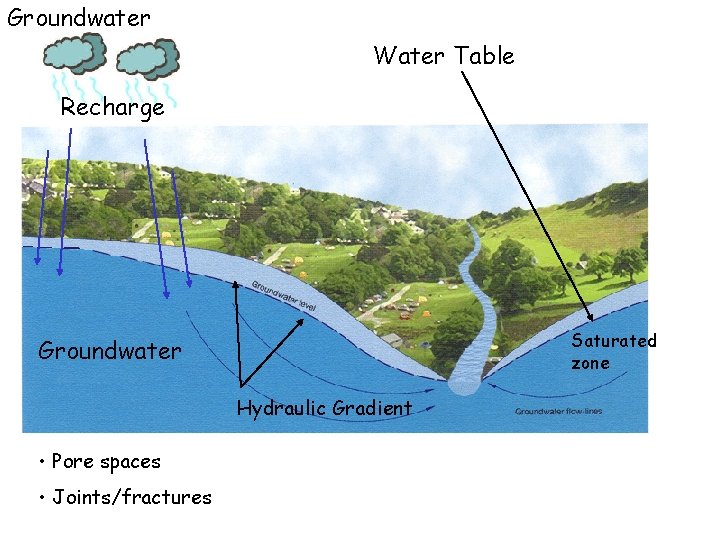
Groundwater Water Table Recharge Saturated zone Groundwater Hydraulic Gradient • Pore spaces • Joints/fractures
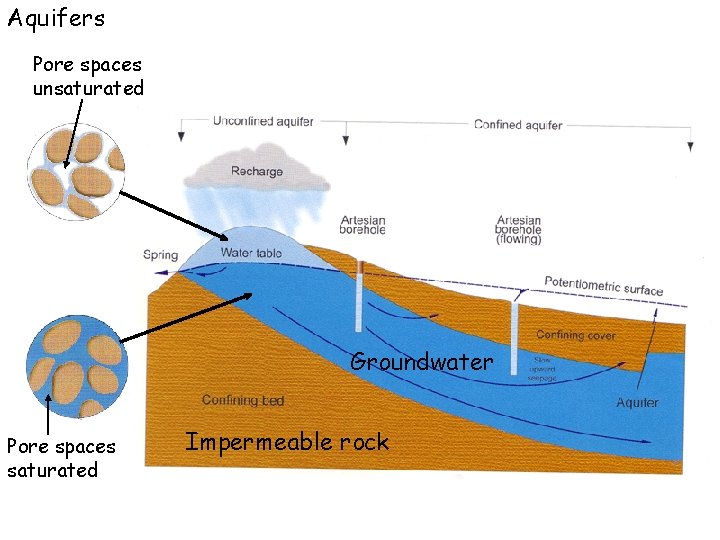
Aquifers Pore spaces unsaturated Groundwater Pore spaces saturated Impermeable rock
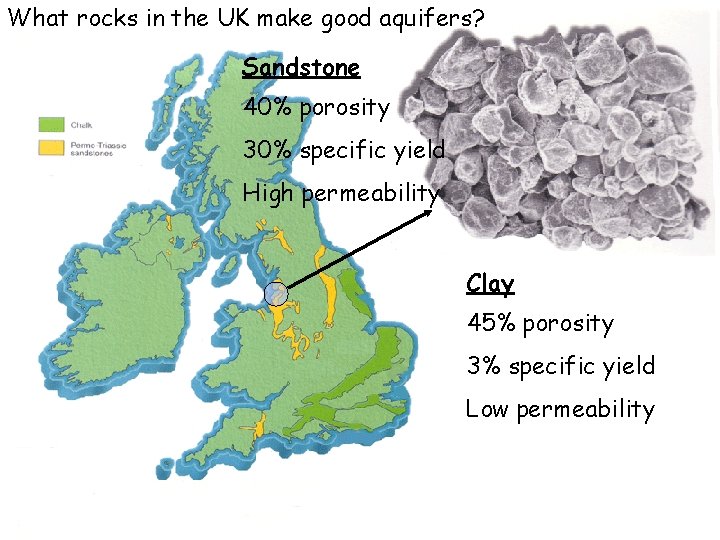
What rocks in the UK make good aquifers? Sandstone 40% porosity 30% specific yield High permeability Clay 45% porosity 3% specific yield Low permeability
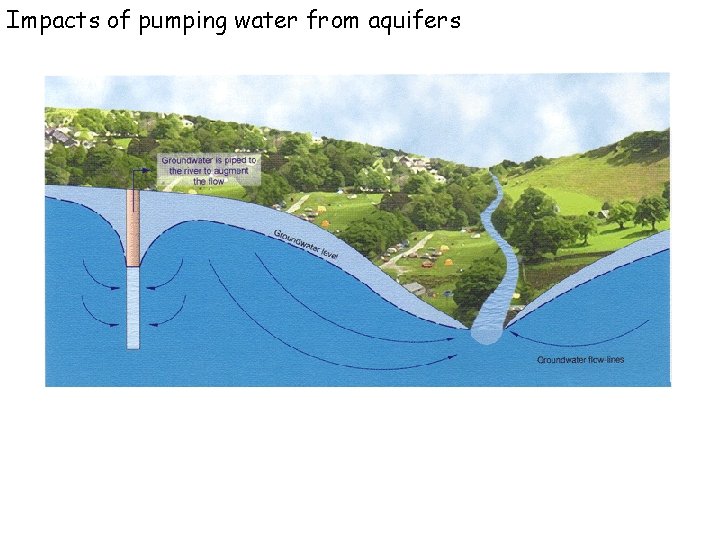
Impacts of pumping water from aquifers
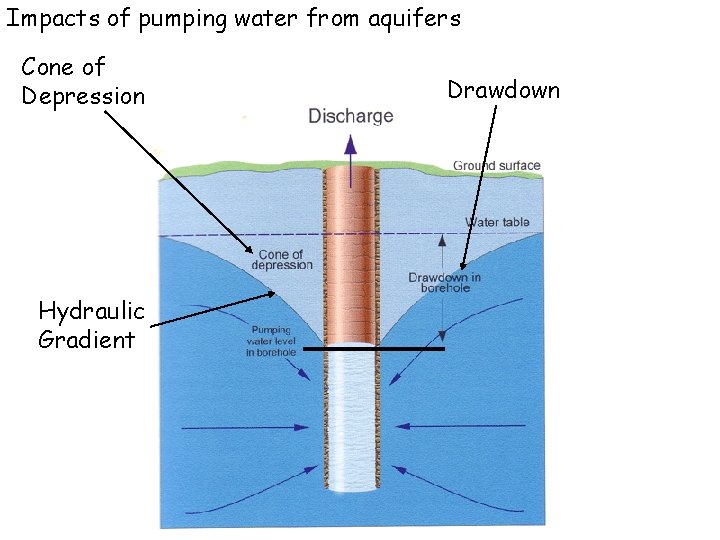
Impacts of pumping water from aquifers Cone of Depression Hydraulic Gradient Drawdown
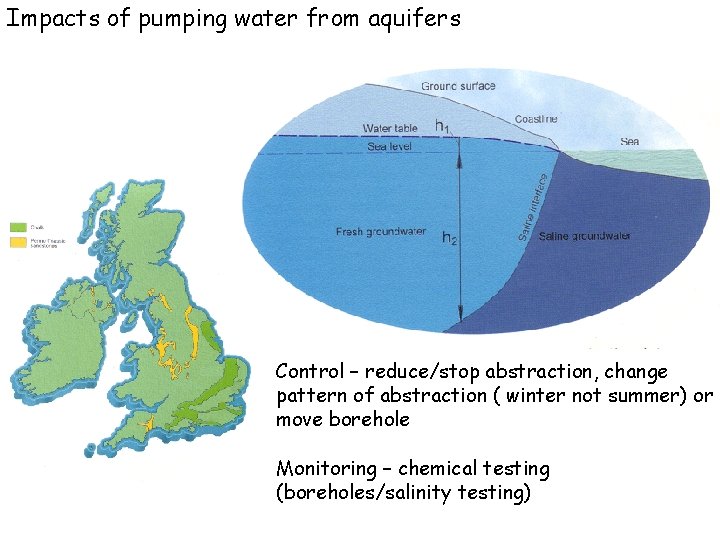
Impacts of pumping water from aquifers Saline wedge Control – reduce/stop abstraction, change pattern of abstraction ( winter not summer) or move borehole Monitoring – chemical testing (boreholes/salinity testing)
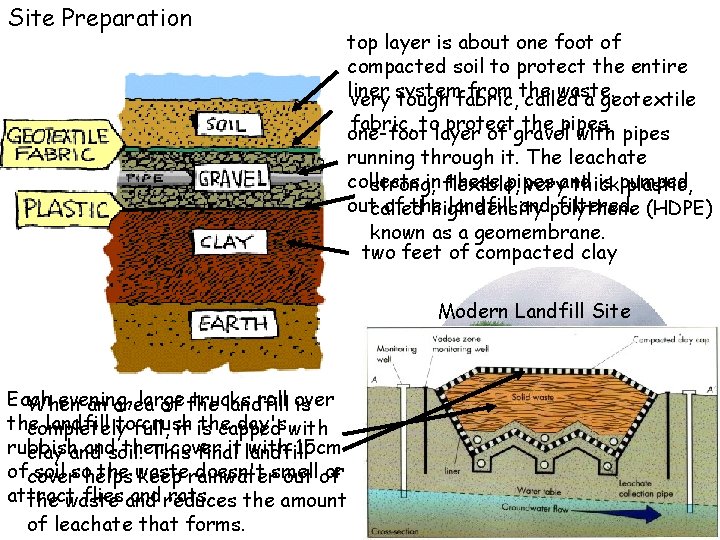
Site Preparation top layer is about one foot of compacted soil to protect the entire liner from the waste. very system tough fabric, called a geotextile fabric, to protect the pipes. one-foot layer of gravel with pipes running through it. The leachate collects inflexible, these pipes is pumped strong, veryand thick plastic, outcalled of the landfill andpolythene filtered. (HDPE) high density known as a geomembrane. two feet of compacted clay Modern Landfill Site Each evening, large trucks roll over When an area of the landfill is the landfill tofull, crush the day's with completely it is capped rubbish andsoil. then cover it landfill with 15 cm clay and This final ofcover soil sohelps the waste doesn't smell or keep rainwater out of attract flies and reduces rats. the waste the amount of leachate that forms.
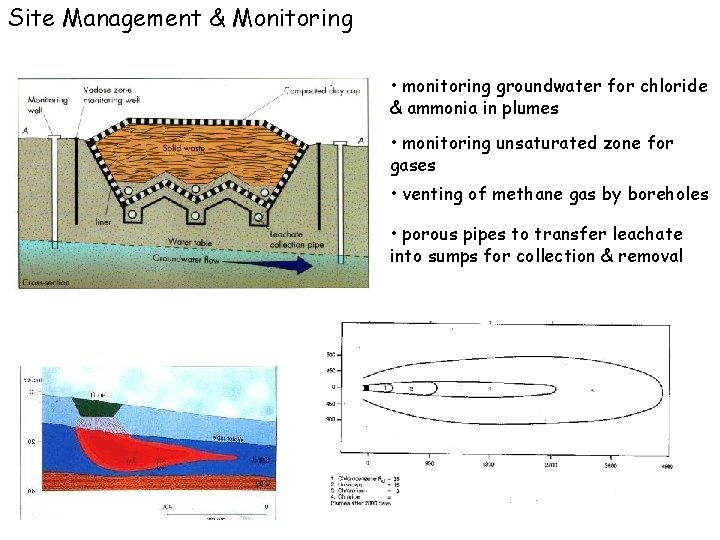
Site Management & Monitoring • monitoring groundwater for chloride & ammonia in plumes • monitoring unsaturated zone for gases • venting of methane gas by boreholes • porous pipes to transfer leachate into sumps for collection & removal
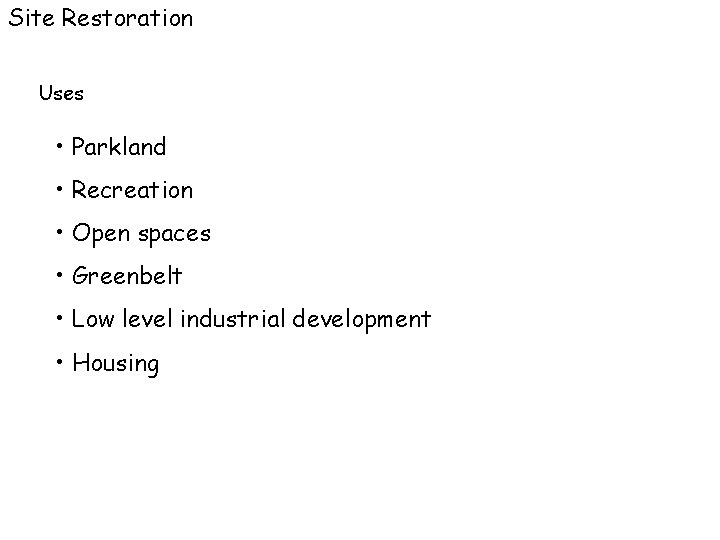
Site Restoration Uses • Parkland • Recreation • Open spaces • Greenbelt • Low level industrial development • Housing
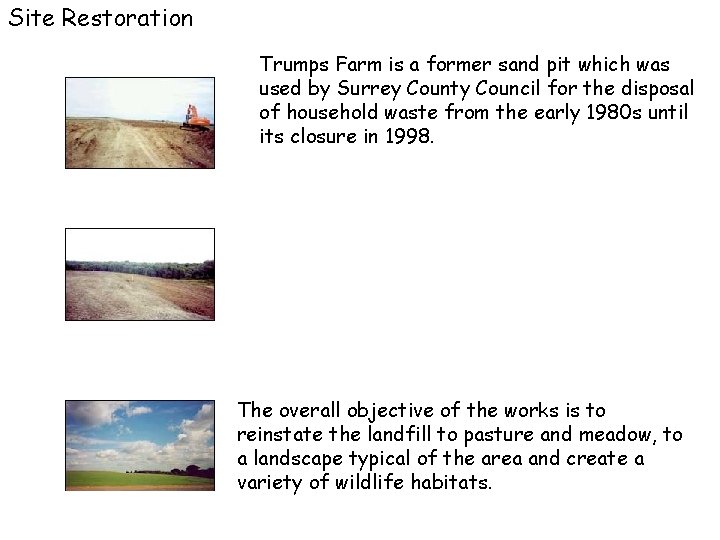
Site Restoration Trumps Farm is a former sand pit which was used by Surrey County Council for the disposal of household waste from the early 1980 s until its closure in 1998. The overall objective of the works is to reinstate the landfill to pasture and meadow, to a landscape typical of the area and create a variety of wildlife habitats.
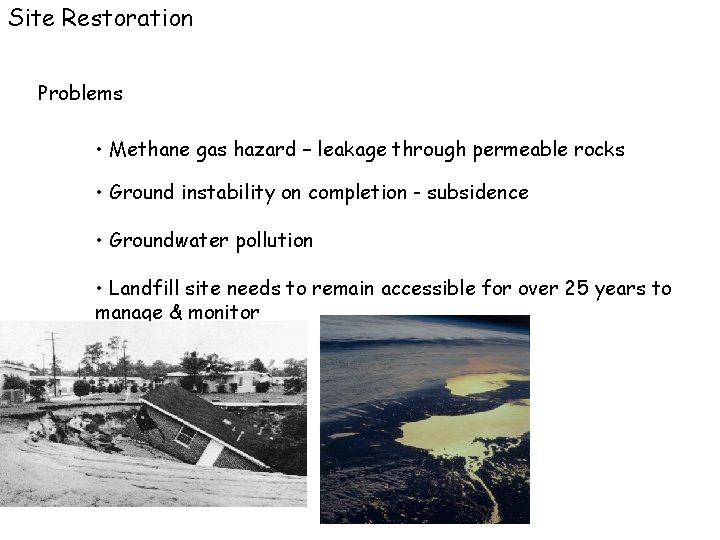
Site Restoration Problems • Methane gas hazard – leakage through permeable rocks • Ground instability on completion - subsidence • Groundwater pollution • Landfill site needs to remain accessible for over 25 years to manage & monitor
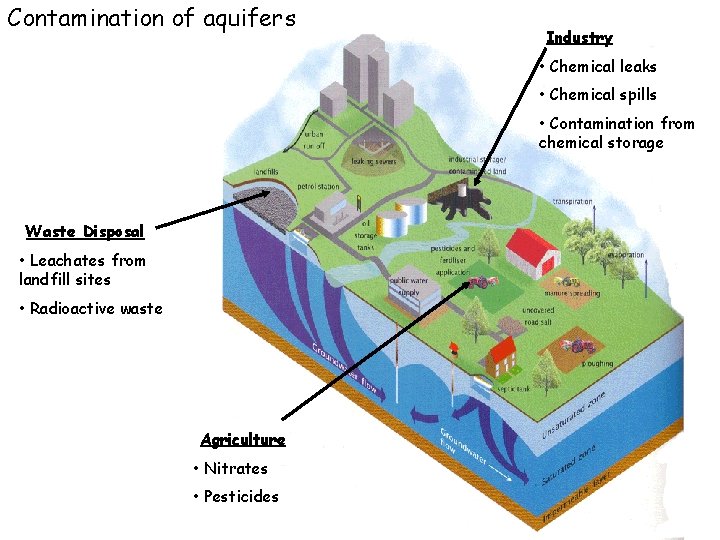
Contamination of aquifers Industry • Chemical leaks • Chemical spills • Contamination from chemical storage Waste Disposal • Leachates from landfill sites • Radioactive waste Agriculture • Nitrates • Pesticides
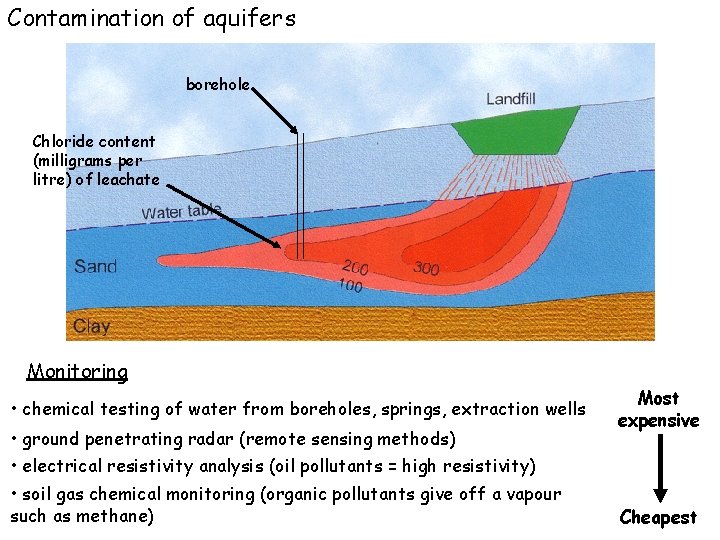
Contamination of aquifers borehole Chloride content (milligrams per litre) of leachate Monitoring • chemical testing of water from boreholes, springs, extraction wells • ground penetrating radar (remote sensing methods) • electrical resistivity analysis (oil pollutants = high resistivity) • soil gas chemical monitoring (organic pollutants give off a vapour such as methane) Most expensive Cheapest
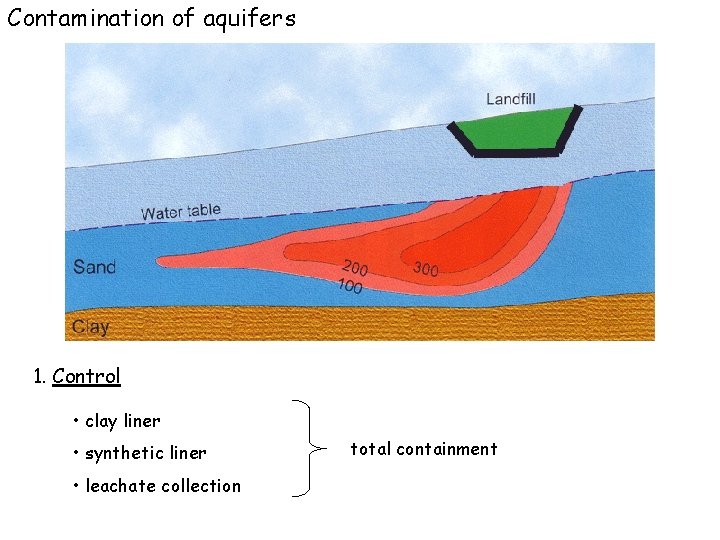
Contamination of aquifers 1. Control • clay liner • synthetic liner • leachate collection total containment
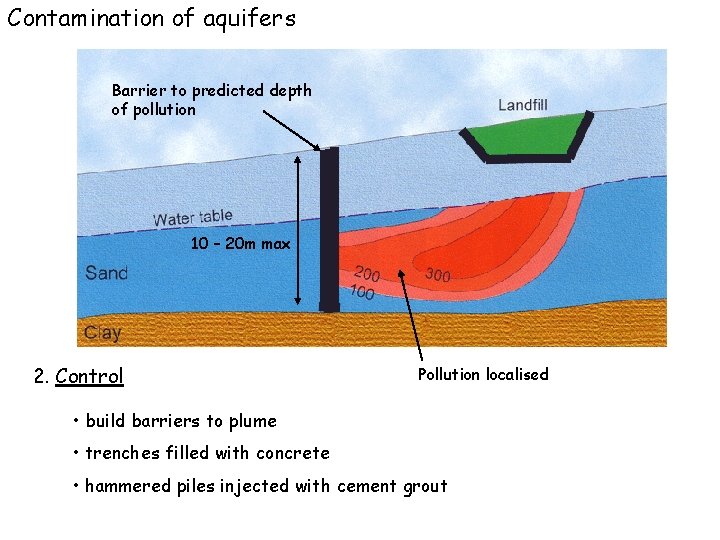
Contamination of aquifers Barrier to predicted depth of pollution 10 – 20 m max 2. Control Pollution localised • build barriers to plume • trenches filled with concrete • hammered piles injected with cement grout
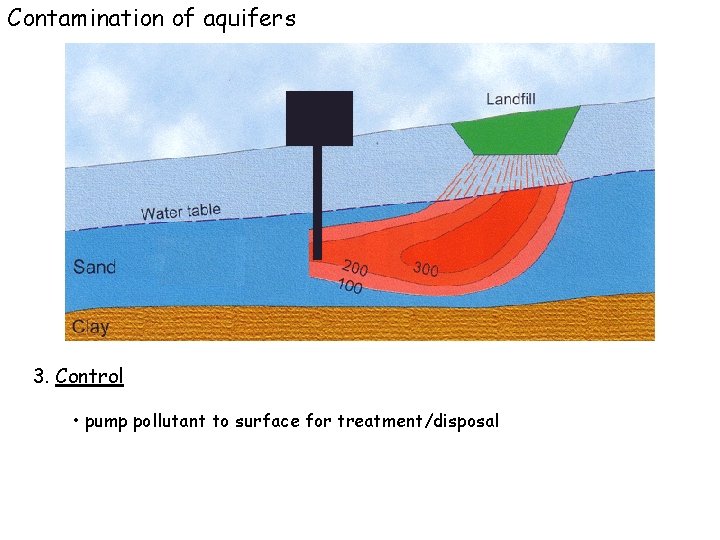
Contamination of aquifers 3. Control • pump pollutant to surface for treatment/disposal
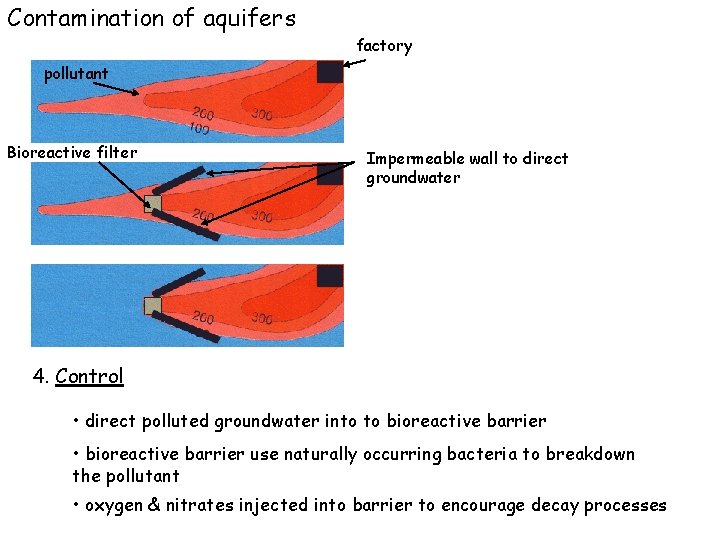
Contamination of aquifers factory pollutant Bioreactive filter Impermeable wall to direct groundwater 4. Control • direct polluted groundwater into to bioreactive barrier • bioreactive barrier use naturally occurring bacteria to breakdown the pollutant • oxygen & nitrates injected into barrier to encourage decay processes
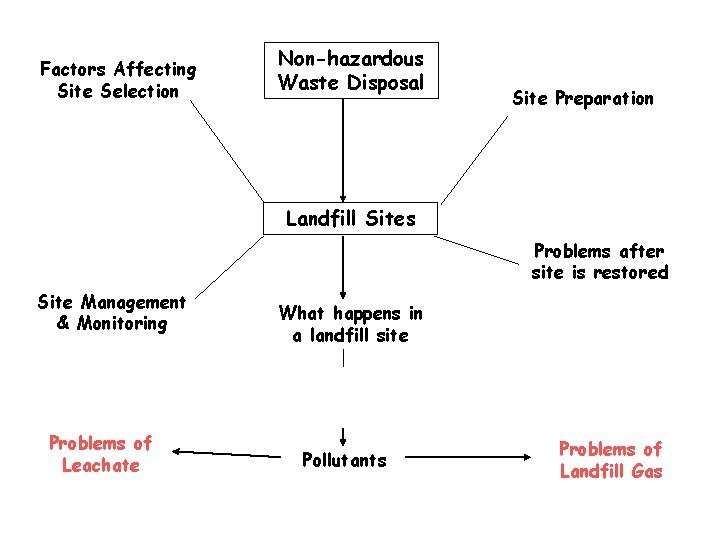
Factors Affecting Site Selection Non-hazardous Waste Disposal Site Preparation Landfill Sites Problems after site is restored Site Management & Monitoring Problems of Leachate What happens in a landfill site Pollutants Problems of Landfill Gas
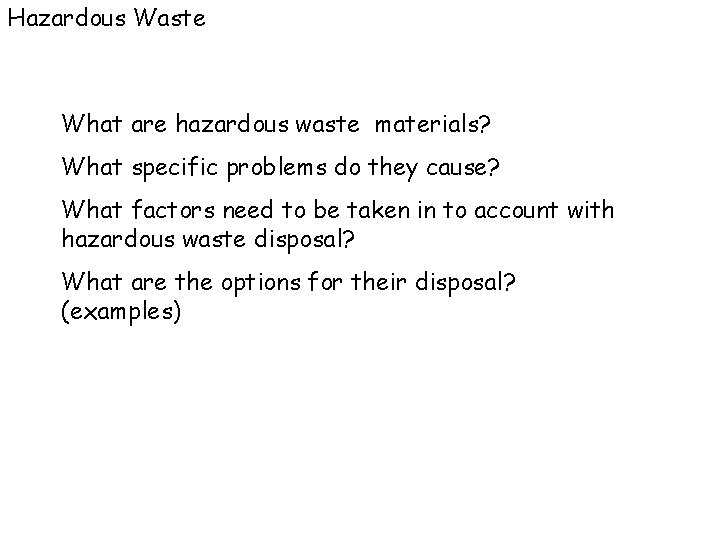
Hazardous Waste What are hazardous waste materials? What specific problems do they cause? What factors need to be taken in to account with hazardous waste disposal? What are the options for their disposal? (examples)
Possible Routes by Which Landfill Gas Can Migrate from a Site