
Waste Characterization 2 1 Introduction 2 2 Waste



- Slides: 31
Waste Characterization 2. 1 Introduction 2. 2 Waste Generation Rates 2. 3 Waste Composition 2. 4 Waste Trends
Waste Characterization Main elements of waste characterization: • Waste sources and types • Waste generation rate • Waste composition
2 - Waste Characterization Important of waste characterization: It is necessary to monitor and control existing waste management systems and to make regulatory, financial, and institutional decisions.
Waste characterization • The first step in many engineering problems is to quantify the problem, i. e. how much and what is the composition To classify waste as hazardous or non-hazardous waste according to national regulation, which will determine the legal framework for the handling of the waste • To provide data on waste quantities and composition for use in local, regional or national waste statistics as a basis for policy setting on recycling • To document adherence to specified quality criteria for recycled materials, for example, according to metal scrap categories set by the metal scrap industry
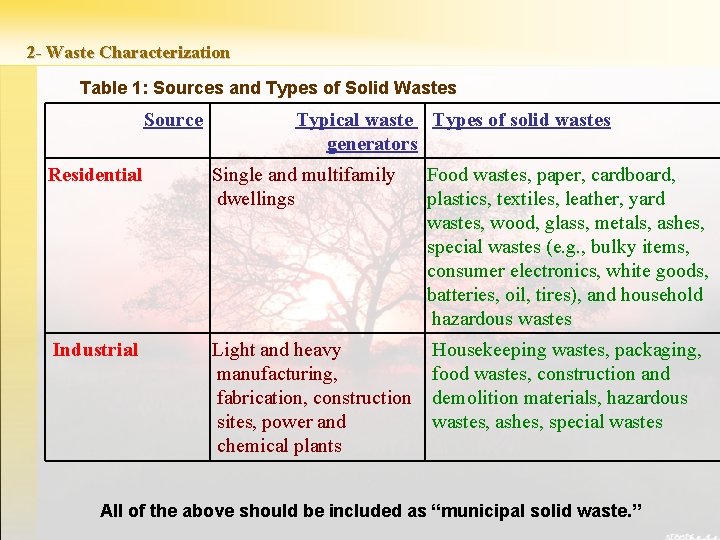
Waste Characterization 2. 1 Waste sources and types There are eight major classifications of solid waste generators based on waste source: Residential, Industrial, Commercial, Institutional, construction and Demolition, Municipal services, Process, and Agricultural.
Municipal Solid Waste (MSW): The term municipal solid waste (MSW) is generally used to describe most of the non -hazardous solid waste from a city, town or village that requires routine collection and transport to a processing or disposal site, Sources of MSW include private homes, commercial establishments and institutions, as well as industrial facilities. However, MSW does not include wastes from industrial processes, construction and demolition debris, sewage sludge, mining waste or agricultural wastes. MSW is also called as trash or garbage. In general, domestic waste and MSW are used as synonyms.
Hazardous wastes are those that can cause harm to human and the environment. Characteristics of Hazardous Wastes: Wastes are classified as hazardous if they exhibit any of four primary characterises based on physical or chemical properties of toxicity, reactivity ignitability and corrosively. 1. Toxic wastes: Toxic wastes are those that are poisonous in small or trace amounts. Some may have acute or immediate effect on human or animals. Carcinogenic or mutagenic causing biological changes in the children of exposed people and animals. Examples: pesticides, heavy metals.
2. Reactive wastes: Reactive wastes are those that have a tendency to react vigorously with air or water are unstable to shock or heat, generate toxic gases or explode during routine management. Examples: Gun powder, nitro glycerin. 3. Ignitable waste: Are those that burn at relatively low temperatures (< 60 °C) and are capable of spontaneous combustion during storage transport or disposal. Examples: Gasoline, paint thinners and alcohol. 4. Corrosive wastes: Are those that destroy materials and living tissues by chemical reactions? Examples: acids and base. 5. Infectious wastes: Included human tissue from surgery, used bandages and hypoderm needles hospital wastes.
Sources of Hazardous Wastes: Chemical manufacturing companies, petroleum refineries, paper mills, smelters and other industries. Plastic industries thousand of chemicals are used in industries every year. When used incorrectly or inappropriately they can become health hazards. PCBs (Polychlorinated biphenyls) are resistant to fire and do not conduct electricity very well, which makes them excellent materials for several industrial purposes. Rainwater can wash PCBs out of disposal areas in dumps and landfills thus contaminating the water. PCBs do not break open very rapidly in the environment and thus retain their toxic characteristics. They cause long-term exposure problems to both human and wildlife. Many household chemicals can be quite toxic to humans as well as wildlife. Most of the dangerous substances in our homes are found in various kinds of clearness, solvents and products used in automotive care. When these products are used incorrectly they have the potential to be harmful.
Effects of Hazardous Wastes: As most of the hazardous wastes are disposed off or in land, the most serious environmental effect is contaminated ground water. Once ground water is polluted with hazardous wastes, it is very often not possible to reverse the damage. Pesticides form residues in the soil that are washed into streams which then carry them forward. The residues may persist in PCBs (poly chlorinated biphenyls) are concentrated in the kidneys and liver and cause damage; they cause reproductive failure in birds and mammals. The soil or in the bottom of lakes and rivers. Exposure can occur through ingestion, inhalation and skin contact, resulting acute or chronic poisoning. Lead, mercury and arsenic are hazardous substances which can often refer to as heavy metals. Most of the lead absorbed by people is stored in the bones.
Lead can affect red blood cells by reducing their ability to carry oxygen and shortening their life span. Lead may also damage nervous tissue, resulting in brain disease. Mercury is used in production of chlorine and as a catalyst in the production of some plastics. Mercury build up in body over long period of time is known to cause brain damage. Minamata disease occurs due to mercury poisoning. Vinyl chloride is a chemical that is widely used in plastic manufacture. A long continuous exposure in humans it can cause deafness, vision problem circulation disorders and bone deformities
c. Industrial Wastes: These contain more of toxic and require special treatment. Source of Industrial Wastes: Food processing industries, metallurgical chemical and pharmaceutical unit’s breweries, sugar mills, paper and pulp industries, fertilizer and pesticide industries are major ones which discharge toxic wastes. During processing, scrap materials, tailings, acids etc. Effects of Industrial Wastes: Most common observation is that the health of the people living in the neighbourhood of dumping sites is severely affected. The exposure may cause disorders of nervous system, genetic defects, skin diseases and even caner. The liquid effluents discharged by the industries contain inorganic and organic pollutants and they enter into water bodies causing destruction of fish, formation of sediments, and pollution of ground water and release of foul odours.
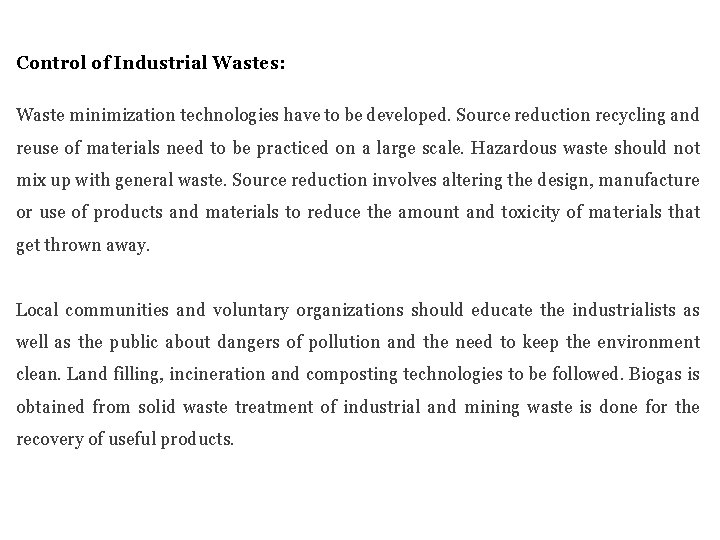
Control of Industrial Wastes: Waste minimization technologies have to be developed. Source reduction recycling and reuse of materials need to be practiced on a large scale. Hazardous waste should not mix up with general waste. Source reduction involves altering the design, manufacture or use of products and materials to reduce the amount and toxicity of materials that get thrown away. Local communities and voluntary organizations should educate the industrialists as well as the public about dangers of pollution and the need to keep the environment clean. Land filling, incineration and composting technologies to be followed. Biogas is obtained from solid waste treatment of industrial and mining waste is done for the recovery of useful products.
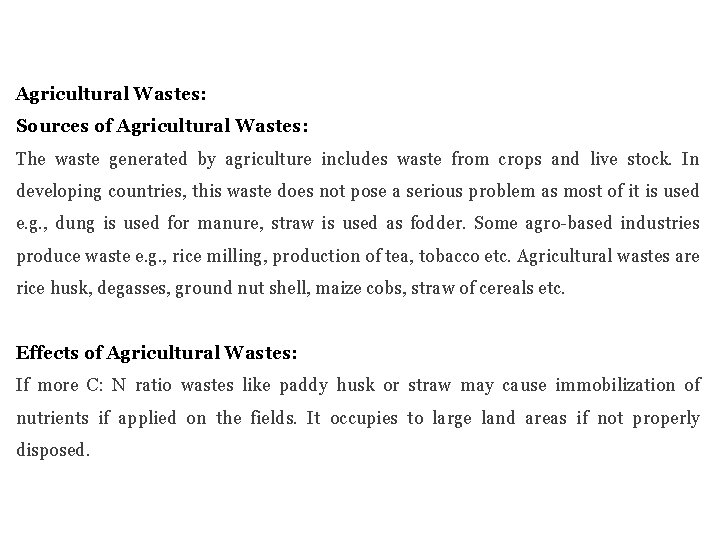
Agricultural Wastes: Sources of Agricultural Wastes: The waste generated by agriculture includes waste from crops and live stock. In developing countries, this waste does not pose a serious problem as most of it is used e. g. , dung is used for manure, straw is used as fodder. Some agro-based industries produce waste e. g. , rice milling, production of tea, tobacco etc. Agricultural wastes are rice husk, degasses, ground nut shell, maize cobs, straw of cereals etc. Effects of Agricultural Wastes: If more C: N ratio wastes like paddy husk or straw may cause immobilization of nutrients if applied on the fields. It occupies to large land areas if not properly disposed.
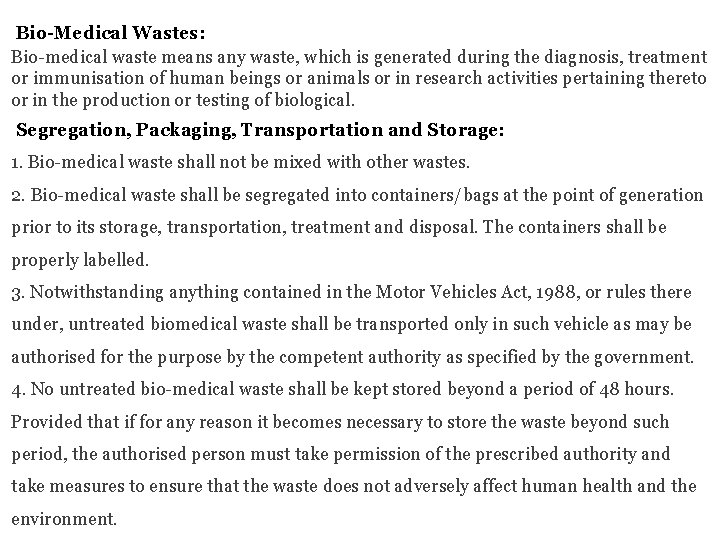
Bio-Medical Wastes: Bio-medical waste means any waste, which is generated during the diagnosis, treatment or immunisation of human beings or animals or in research activities pertaining thereto or in the production or testing of biological. Segregation, Packaging, Transportation and Storage: 1. Bio-medical waste shall not be mixed with other wastes. 2. Bio-medical waste shall be segregated into containers/bags at the point of generation prior to its storage, transportation, treatment and disposal. The containers shall be properly labelled. 3. Notwithstanding anything contained in the Motor Vehicles Act, 1988, or rules there under, untreated biomedical waste shall be transported only in such vehicle as may be authorised for the purpose by the competent authority as specified by the government. 4. No untreated bio-medical waste shall be kept stored beyond a period of 48 hours. Provided that if for any reason it becomes necessary to store the waste beyond such period, the authorised person must take permission of the prescribed authority and take measures to ensure that the waste does not adversely affect human health and the environment.
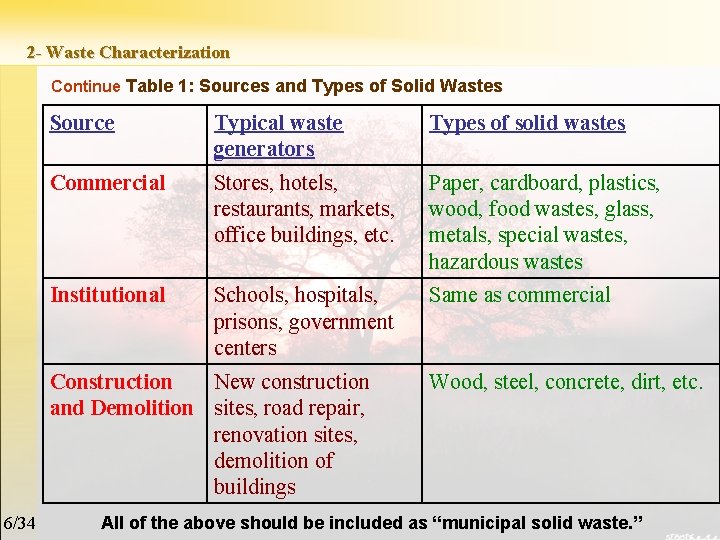
2 - Waste Characterization Table 1: Sources and Types of Solid Wastes Source Typical waste Types of solid wastes generators Residential Single and multifamily dwellings Food wastes, paper, cardboard, plastics, textiles, leather, yard wastes, wood, glass, metals, ashes, special wastes (e. g. , bulky items, consumer electronics, white goods, batteries, oil, tires), and household hazardous wastes Industrial Light and heavy manufacturing, fabrication, construction sites, power and chemical plants Housekeeping wastes, packaging, food wastes, construction and demolition materials, hazardous wastes, ashes, special wastes All of the above should be included as “municipal solid waste. ”
2 - Waste Characterization Continue Table 1: Sources and Types of Solid Wastes Source Typical waste generators Types of solid wastes Commercial Stores, hotels, restaurants, markets, office buildings, etc. Paper, cardboard, plastics, wood, food wastes, glass, metals, special wastes, hazardous wastes Institutional Schools, hospitals, prisons, government centers Same as commercial Construction New construction and Demolition sites, road repair, renovation sites, demolition of buildings 6/34 Wood, steel, concrete, dirt, etc. All of the above should be included as “municipal solid waste. ”
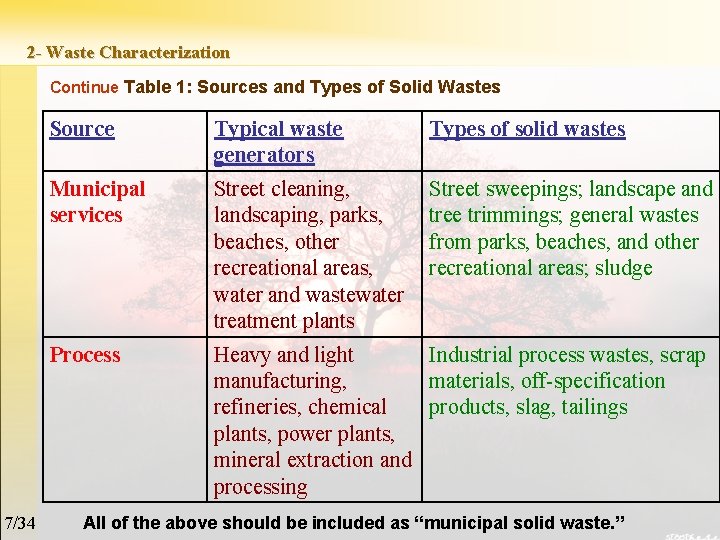
2 - Waste Characterization Continue Table 1: Sources and Types of Solid Wastes 7/34 Source Typical waste generators Types of solid wastes Municipal services Street cleaning, landscaping, parks, beaches, other recreational areas, water and wastewater treatment plants Street sweepings; landscape and tree trimmings; general wastes from parks, beaches, and other recreational areas; sludge Process Heavy and light Industrial process wastes, scrap manufacturing, materials, off-specification refineries, chemical products, slag, tailings plants, power plants, mineral extraction and processing All of the above should be included as “municipal solid waste. ”
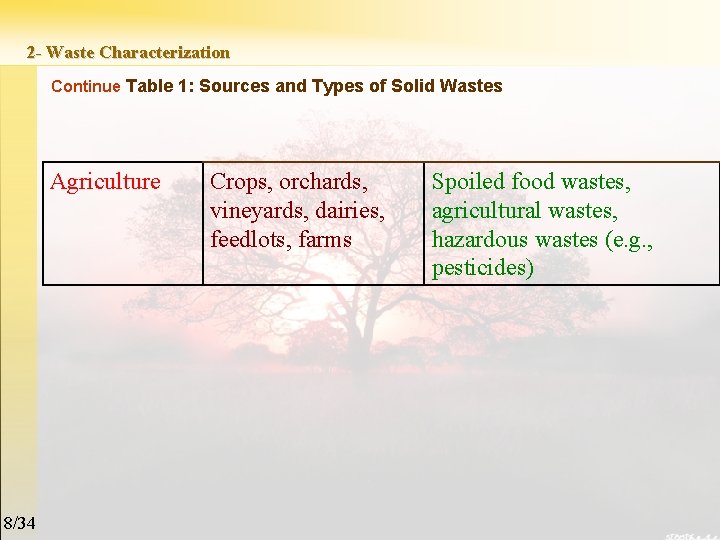
2 - Waste Characterization Continue Table 1: Sources and Types of Solid Wastes Agriculture 8/34 Crops, orchards, vineyards, dairies, feedlots, farms Spoiled food wastes, agricultural wastes, hazardous wastes (e. g. , pesticides)
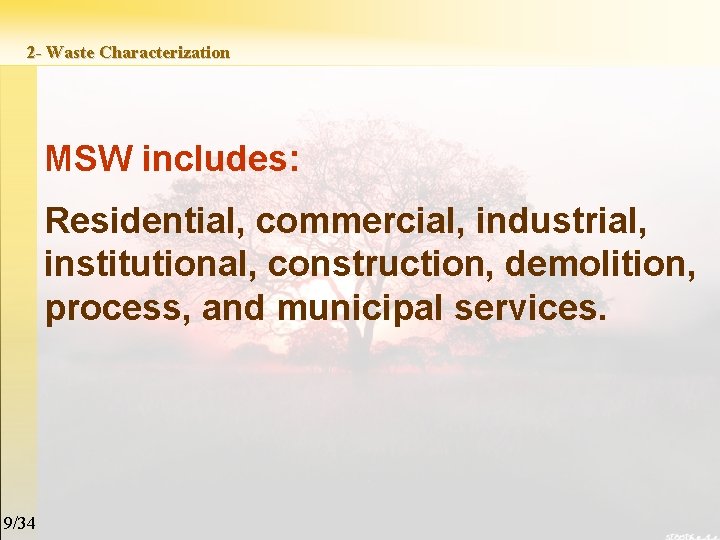
2 - Waste Characterization MSW includes: Residential, commercial, industrial, institutional, construction, demolition, process, and municipal services. 9/34
2 - Waste Characterization • Some sources are commonly excluded, such as industrial, construction and demolition, and municipal services. • In high income countries, only 25 percent to 35 percent of the overall waste stream is from residential sources. 10/34
2 - Waste Characterization • If municipal waste stream includes construction and demolition waste, the quantity of waste is doubled. 11/34
2 - Waste Characterization 2. 2 Waste Generation Rates Factors Influence Waste Generation Rates: • Socioeconomic development, • Degree of industrialization, • Climate. 12/34
2 - Waste Characterization • Greater the economic wealth and the higher percentage of urban population, the greater the amount of solid waste produced • Low income countries have the lowest percentage of urban populations and the lowest waste generation rates, 13/34
2 - Waste Characterization • As GNP increases toward the middle income range, the per capita waste generation rates also increase, 14/34
2 - Waste Characterization 2. 3 Waste Composition • Factors Influence Waste Composition: • Geographical location, • Standard of living, • Energy source, and • Weather 16/34
2 - Waste Characterization Percentages based on a weighted average of the compositions for individual countries Compositions for municipal solid waste based on wet weight Different definitions and methodologies for determining composition 17/34
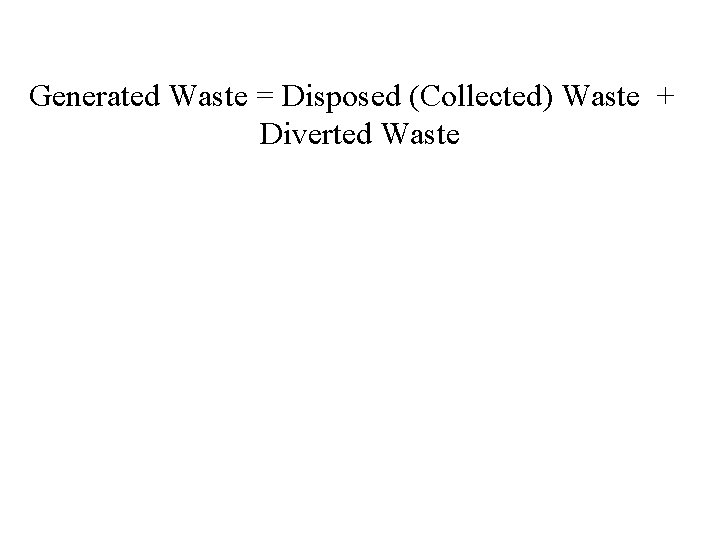
Generated Waste = Disposed (Collected) Waste + Diverted Waste