
WASSILY KANDINSKY Focusing on the Abstract Wassily Kandinsky

WASSILY KANDINSKY Focusing on the Abstract
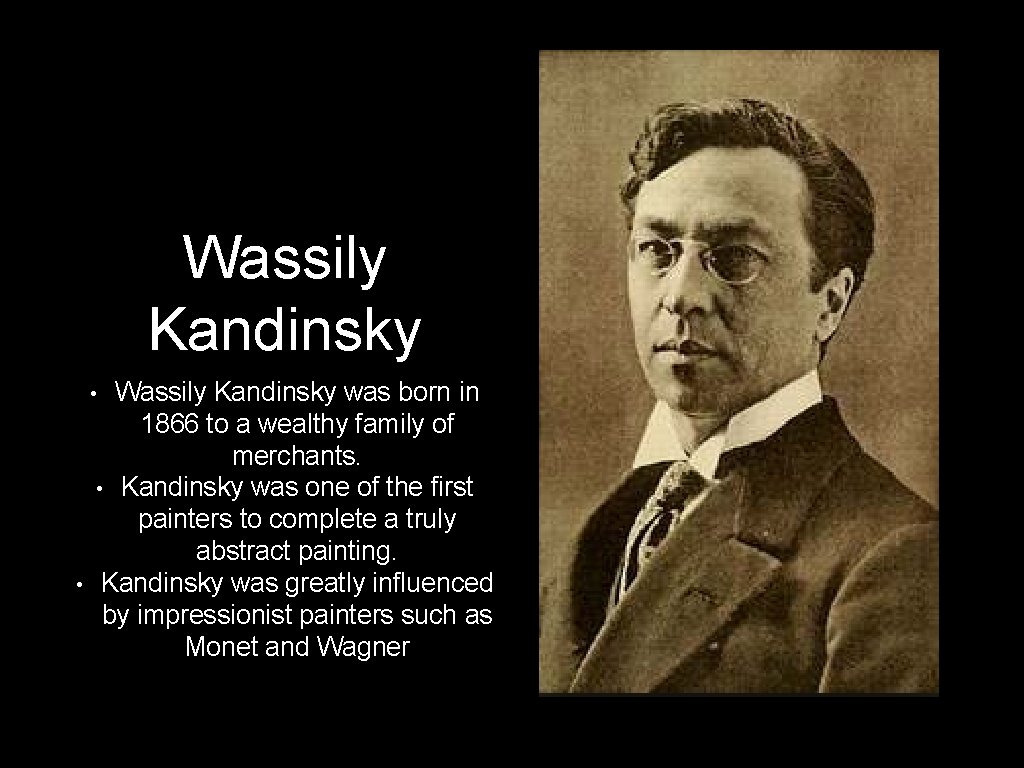
Wassily Kandinsky was born in 1866 to a wealthy family of merchants. • Kandinsky was one of the first painters to complete a truly abstract painting. Kandinsky was greatly influenced by impressionist painters such as Monet and Wagner • •
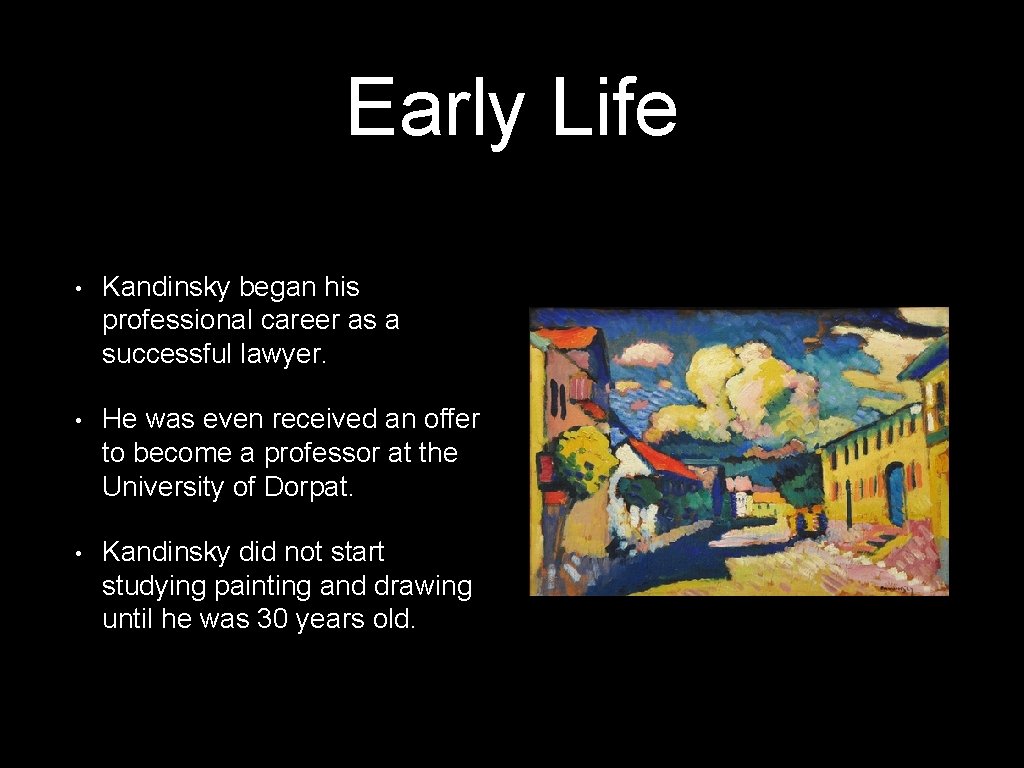
Early Life • Kandinsky began his professional career as a successful lawyer. • He was even received an offer to become a professor at the University of Dorpat. • Kandinsky did not start studying painting and drawing until he was 30 years old.
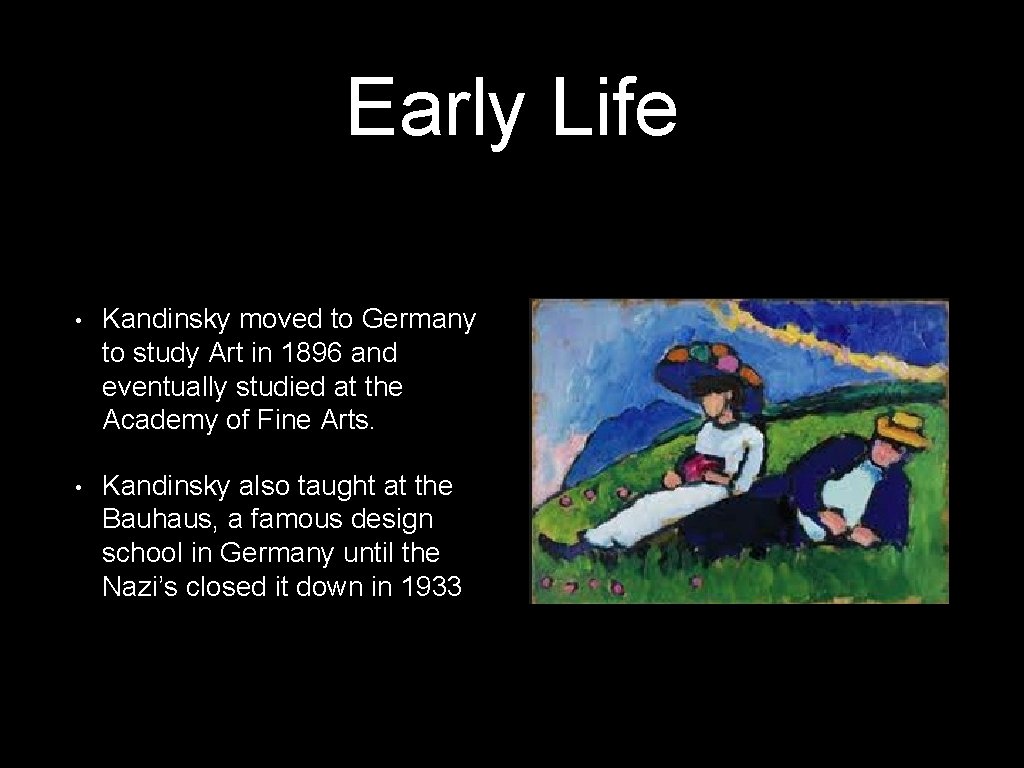
Early Life • Kandinsky moved to Germany to study Art in 1896 and eventually studied at the Academy of Fine Arts. • Kandinsky also taught at the Bauhaus, a famous design school in Germany until the Nazi’s closed it down in 1933
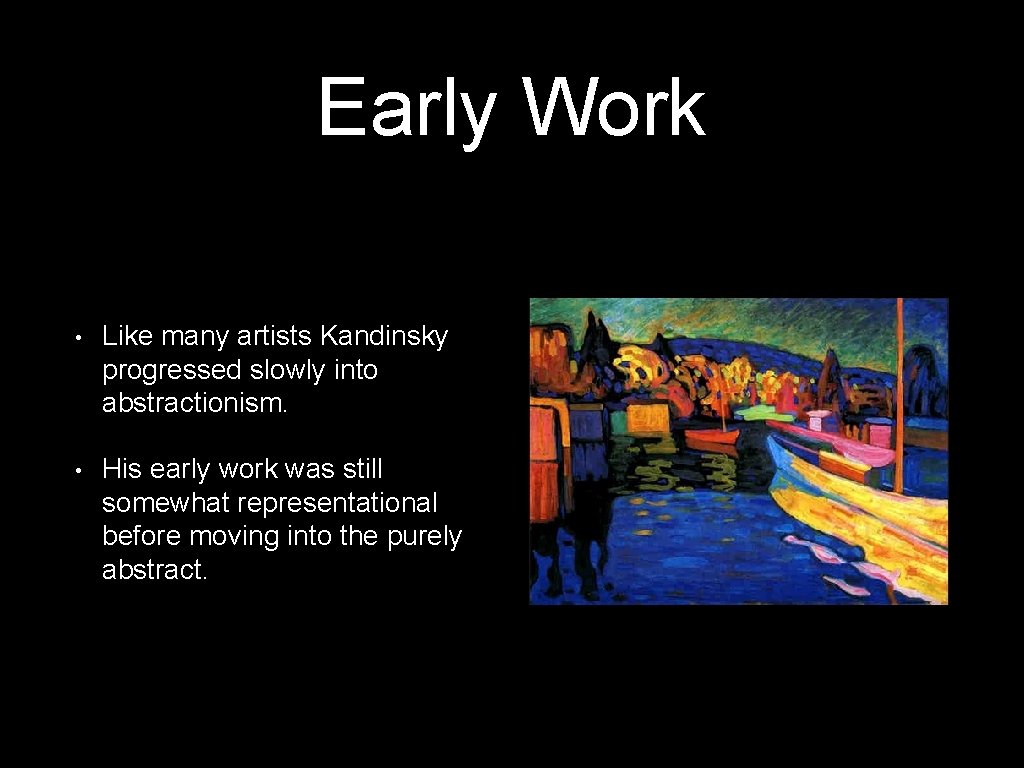
Early Work • Like many artists Kandinsky progressed slowly into abstractionism. • His early work was still somewhat representational before moving into the purely abstract.
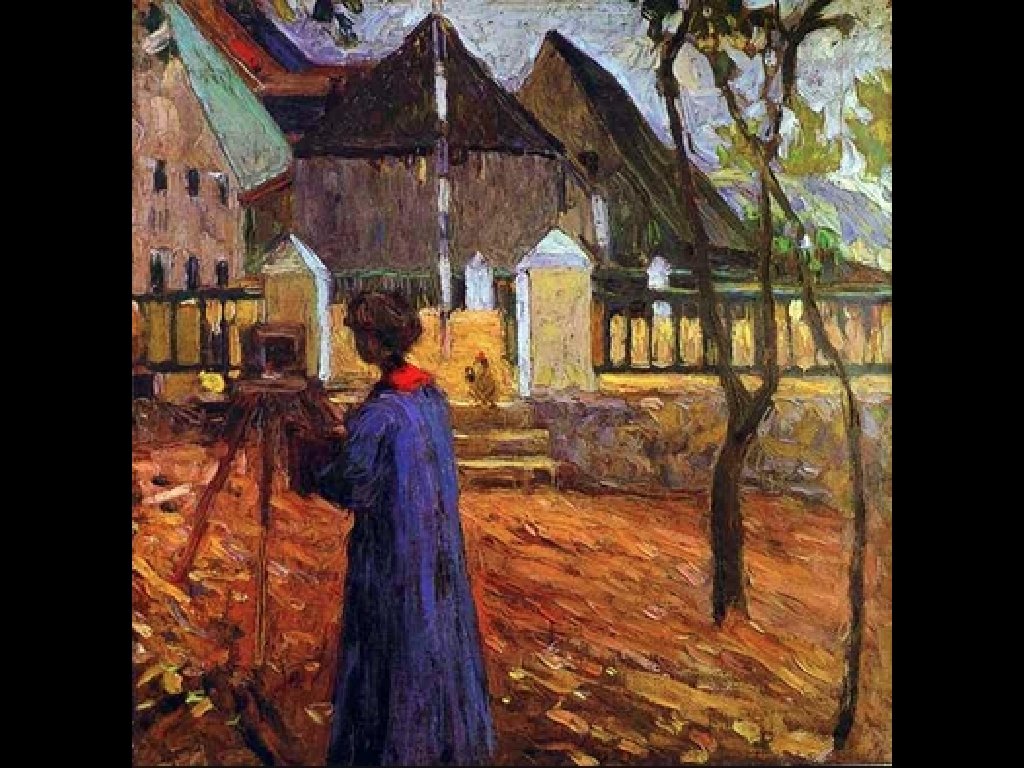
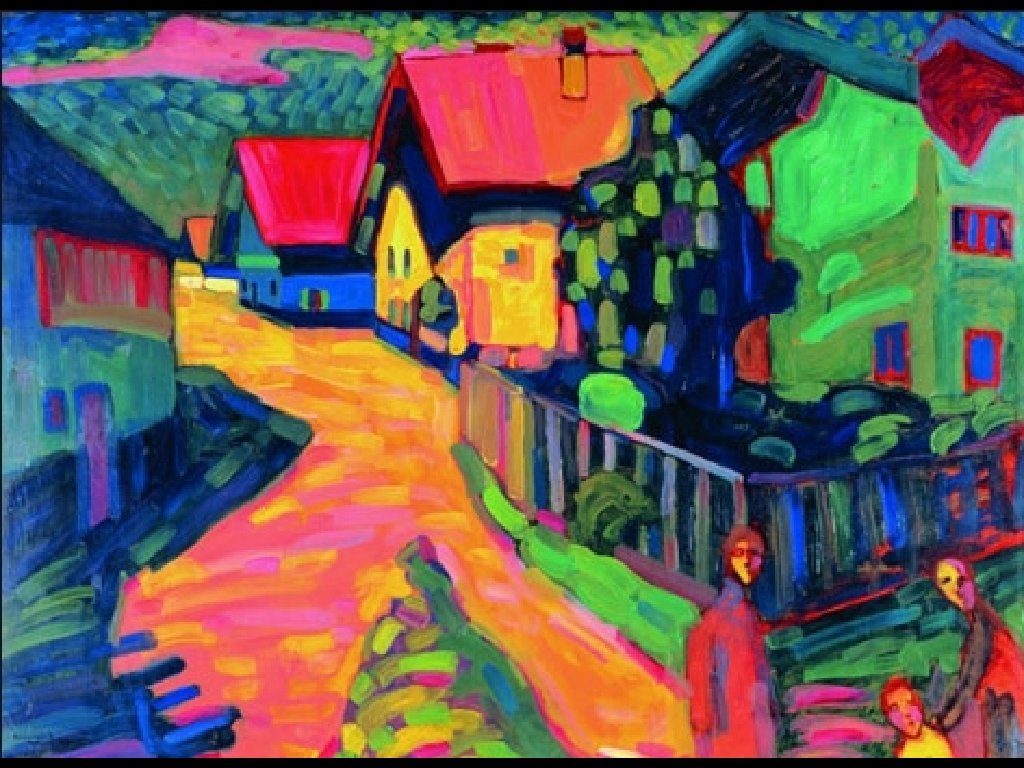
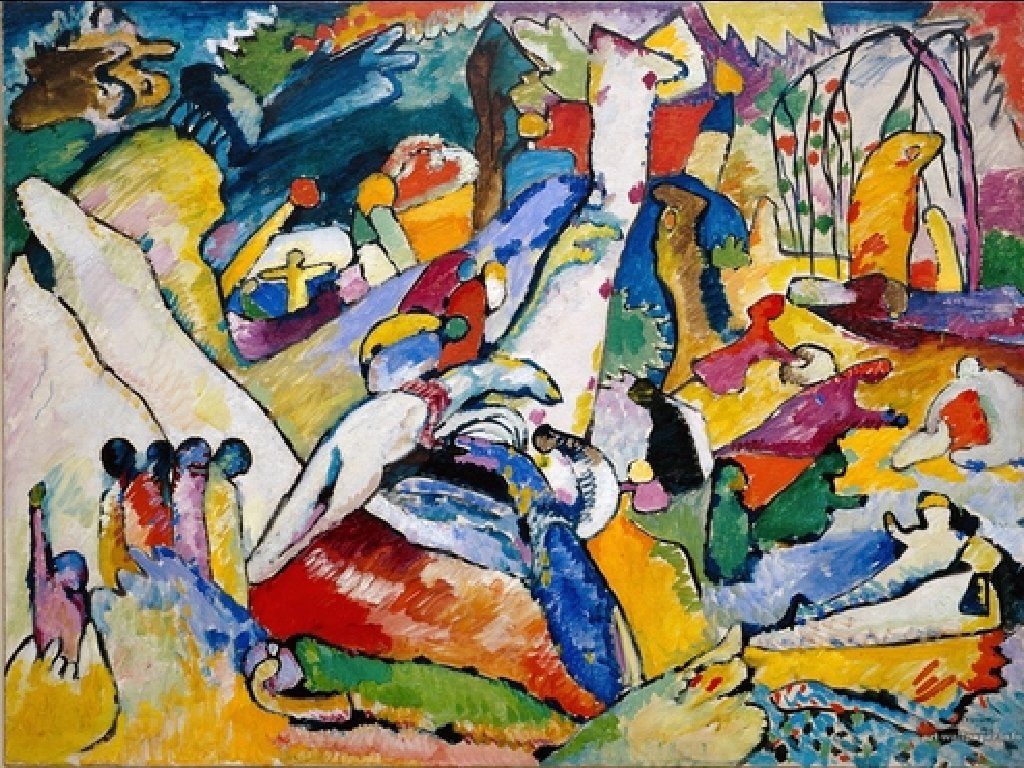
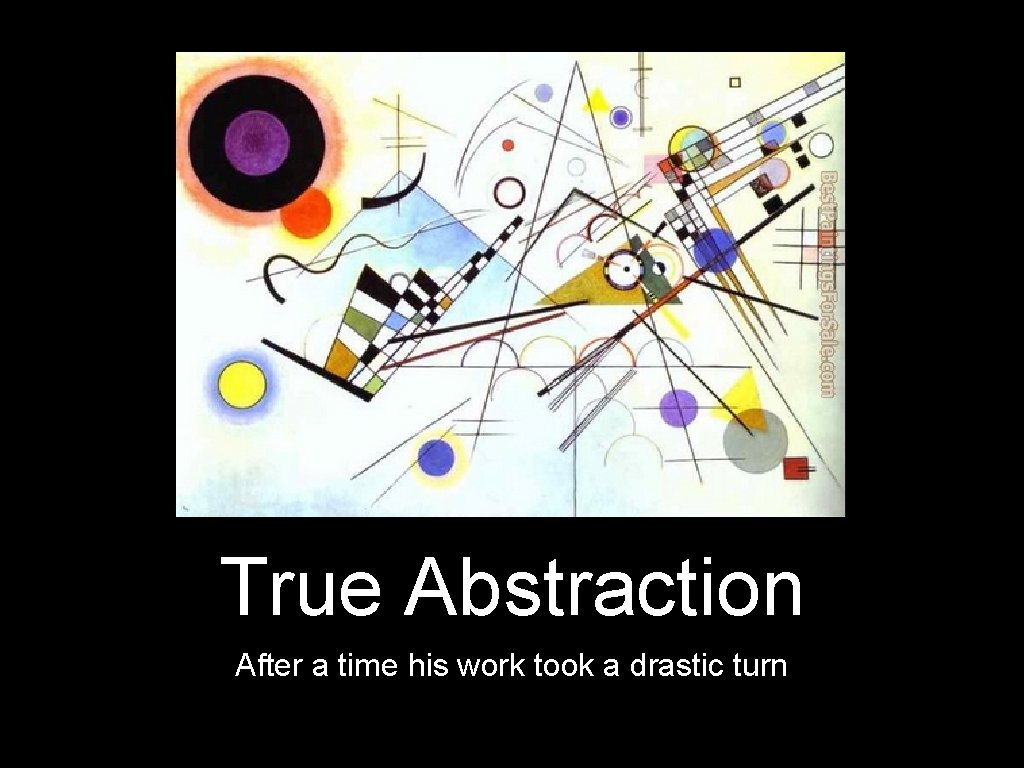
True Abstraction After a time his work took a drastic turn
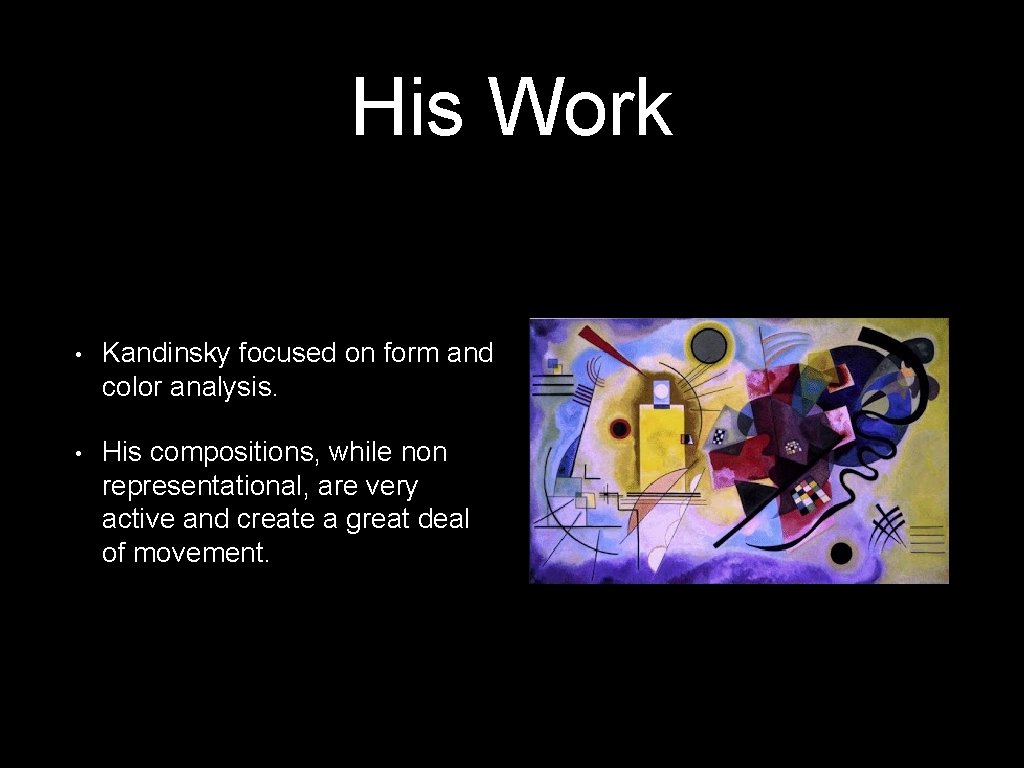
His Work • Kandinsky focused on form and color analysis. • His compositions, while non representational, are very active and create a great deal of movement.



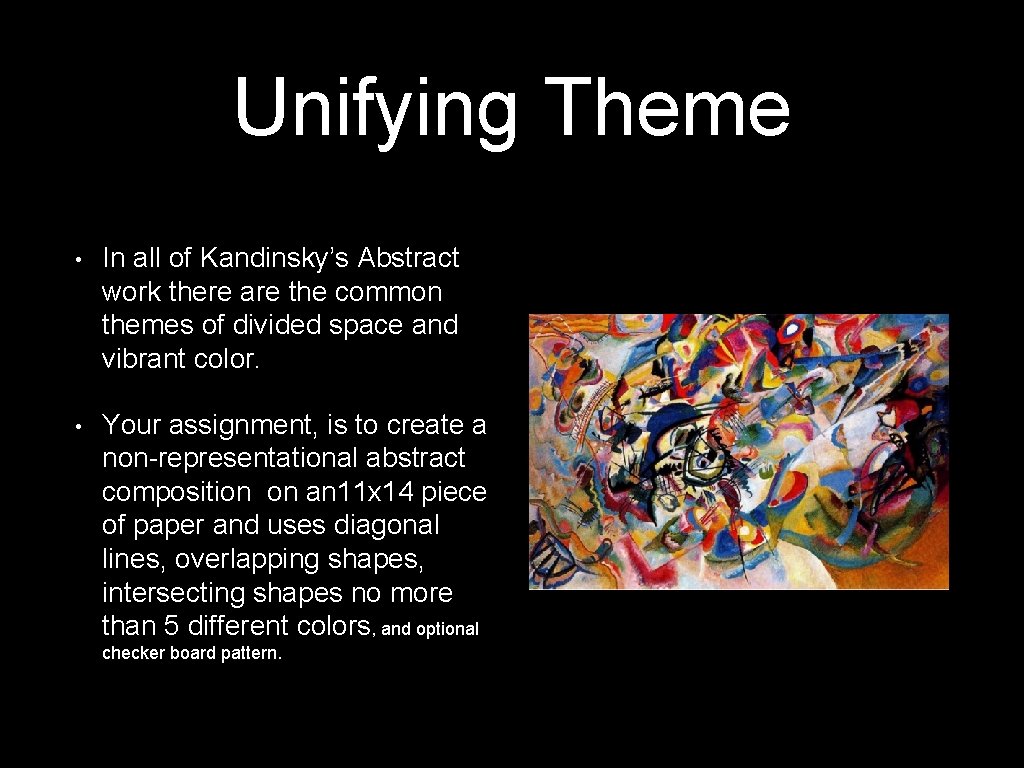
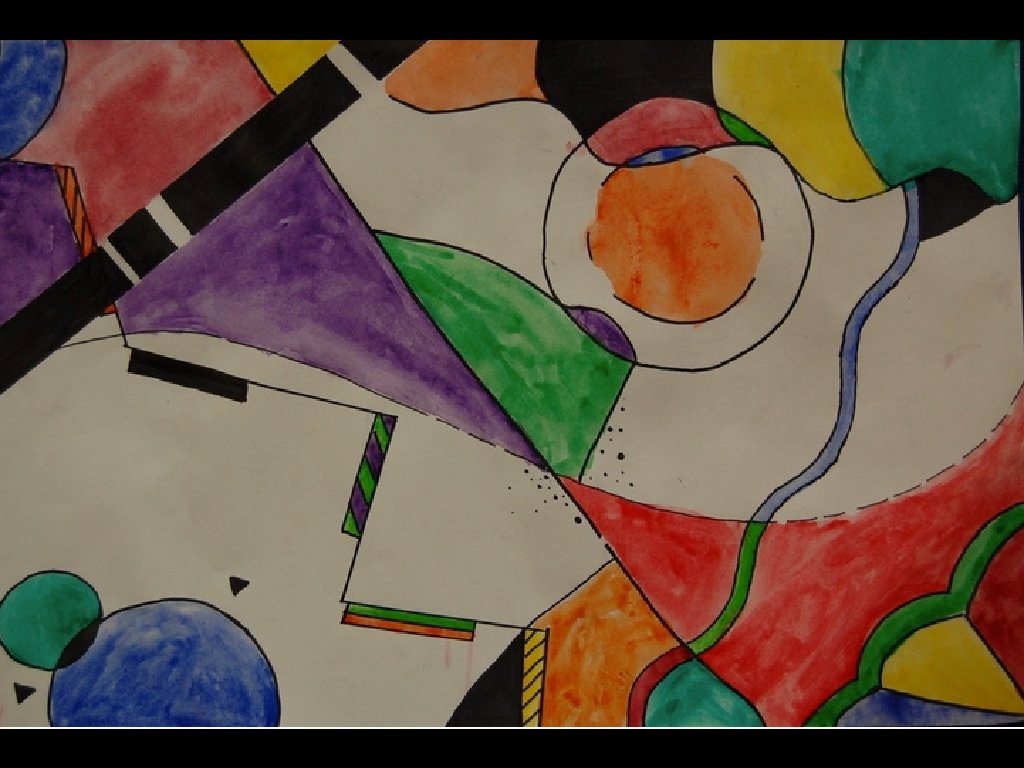
Unifying Theme • In all of Kandinsky’s Abstract work there are the common themes of divided space and vibrant color. • Your assignment, is to create a non-representational abstract composition on an 11 x 14 piece of paper and uses diagonal lines, overlapping shapes, intersecting shapes no more than 5 different colors, and optional checker board pattern.


https: //www. youtube. com/watch? v= Us-Uup. N 7 w. HI https: //www. youtube. com/watch? v= _-H 42 ho. R 0 -s
§ Plan out your design in your sketchbook § Your design should include a variety of : § lines (curved, diagonal, straight, intersecting) § Shapes (overlapping, intersecting or by themselves) § Checkerboard patterns are optional § Choose bright colors and use no more than 5 § See your teacher for final approval of sketch and to get watercolor paper. § Use stencils and rulers to create as much of your design as possible
- Slides: 18