
Washington State Department of Ecology Spill Prevention Preparedness
- Slides: 25
Washington State Department of Ecology Spill Prevention, Preparedness, and Response Program Howard Zorzi, Regional Supervisor 2/10/2022 1
Program Goals n Prevent oil spills from vessels and oil-handling facilities. n Prepare for oil spill response through planning and drills. n Respond to and clean-up oil and hazardous material spills. n Restore environmental damage caused by oil spills. n Improve external communication and service delivery. 2/10/2022 2
Program Mission The mission of the Spills Program is to protect Washington’s Environment, public health, and safety through comprehensive spill prevention, preparedness, and response program. The Spills Program focuses on preventing oil spills to Washington waters and land ensuring effective response to oil and hazardous substances spills whenever they occur. 2/10/2022 3
Environmental Threats n Over 20 billion gallons of oil and hazardous materials are transported through Washington State each year, by ship, barge, pipeline, rail, and road. Accidents, equipment failure, and human error can all lead to unintended and potentially disastrous consequences. 2/10/2022 4
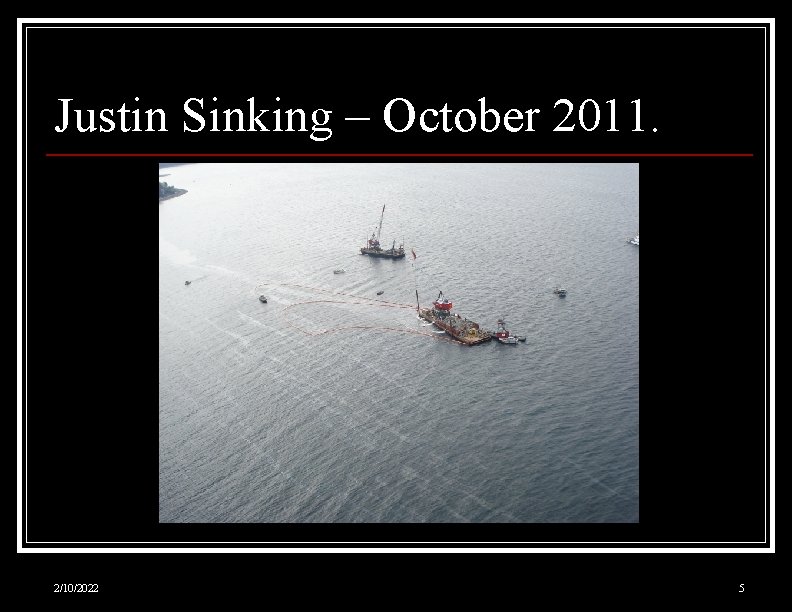
Justin Sinking – October 2011. 2/10/2022 5
Justin Sinking n Landing Craft Justin Sinking on October 14, 2011. ERTS 629767 – Landing Craft owned by Waterfront Construction sank off Alki beach at 7 am with 400 gallons of diesel, oil and hydraulic fluid on it. 320 gallons spilled and 240 gallons were recovered. Ecology, Coast Guard, Waterfront Construction, Global Diving and Salvage, Ballard Diving, and NRCES all worked together and formed a full Unified Command at USCG Station Sector Seattle for multiple days. 2/10/2022 6
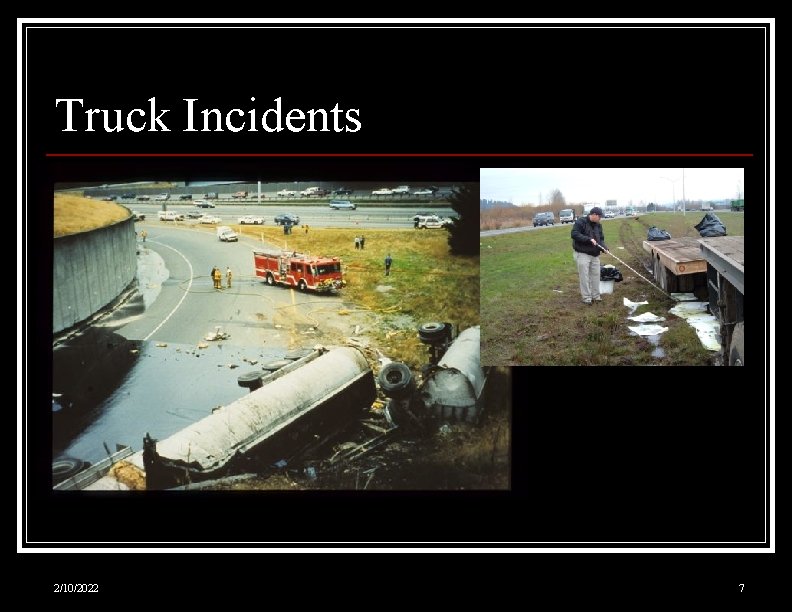
Truck Incidents 2/10/2022 7
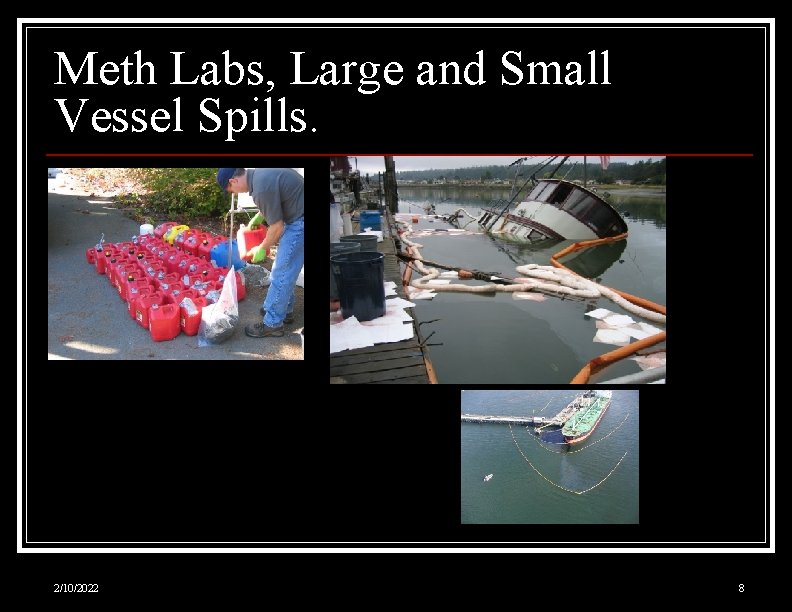
Meth Labs, Large and Small Vessel Spills. 2/10/2022 8
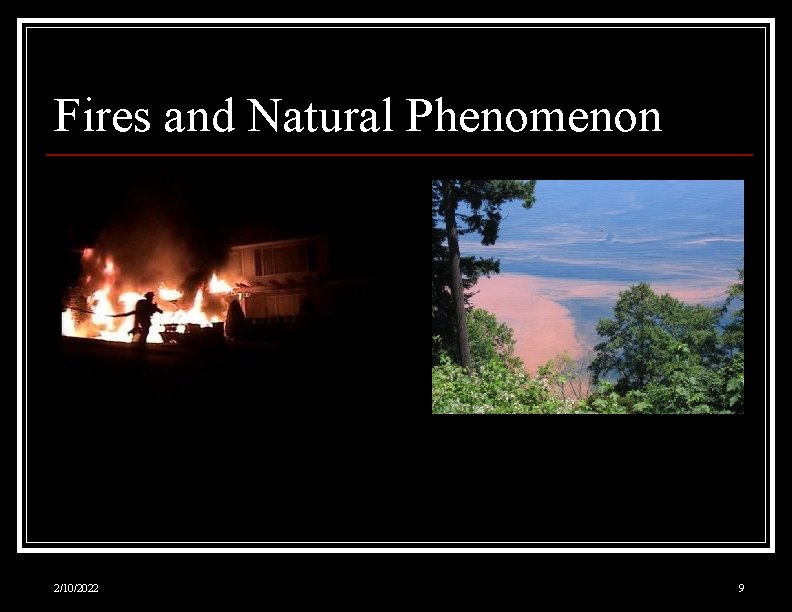
Fires and Natural Phenomenon 2/10/2022 9
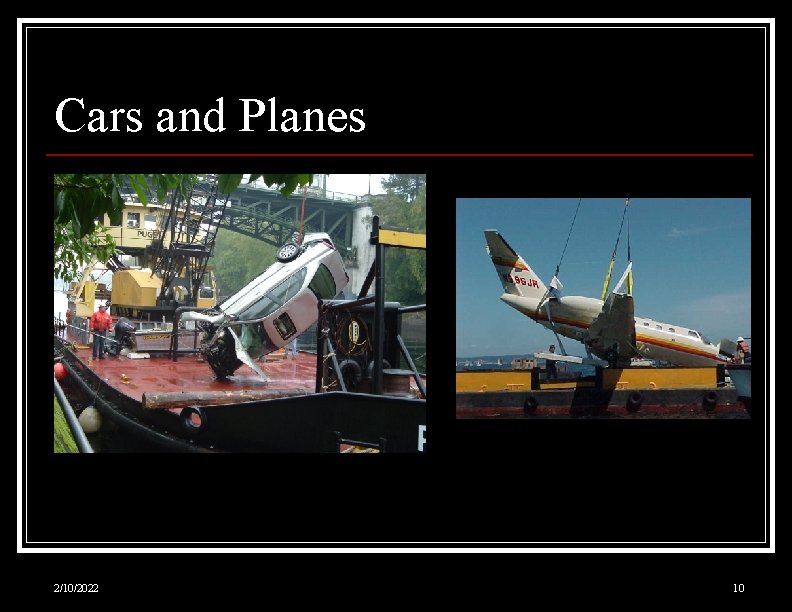
Cars and Planes 2/10/2022 10
Authorizing Laws n n n Chapter 90. 56 RCW, Oil and Hazardous Substance Spill Prevention and Response Chapter 88. 46 RCW, Vessel Oil Spill Prevention and Response Chapter 90. 48 RCW, Water Pollution Control Chapter 88. 40, Transportation of Petroleum Products – Financial Responsibility Chapter 70. 105 RCW, Hazardous Waste Management Act Chapter 70. 105 D RCW, Model Toxics Control Act 2/10/2022 11
Constituents/Interested Parties n n n Federal, state, local , and tribal governments, including the U. S. Coast Guard, U. S. Environmental Protection Agency, and local emergency management agencies. Governments of Canada, British Columbia, Oregon, and Idaho. Commercial vessels owners and operators worldwide, marine transportation trade associations, public ports, and maritime trade unions. Oil Refineries, marine oil terminals, oil pipelines, and oil trucking companies. Spill response cooperatives and contractors. Environmental organizations and the general public. 2/10/2022 12
2/10/2022 13
Prevention Section Prevent oil spills from vessels and oil handling facilities 2/10/2022 14
Preparedness Section Prepare for oil spill response through planning and drills 2/10/2022 15
Natural Resource Damage Assessment Unit Restore environmental damage caused by oil spills 2/10/2022 16
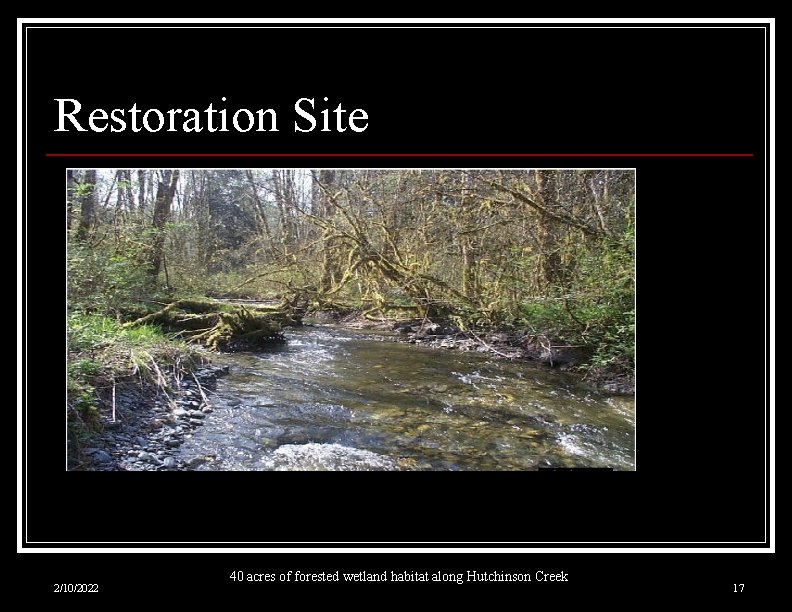
Restoration Site 2/10/2022 40 acres of forested wetland habitat along Hutchinson Creek 17
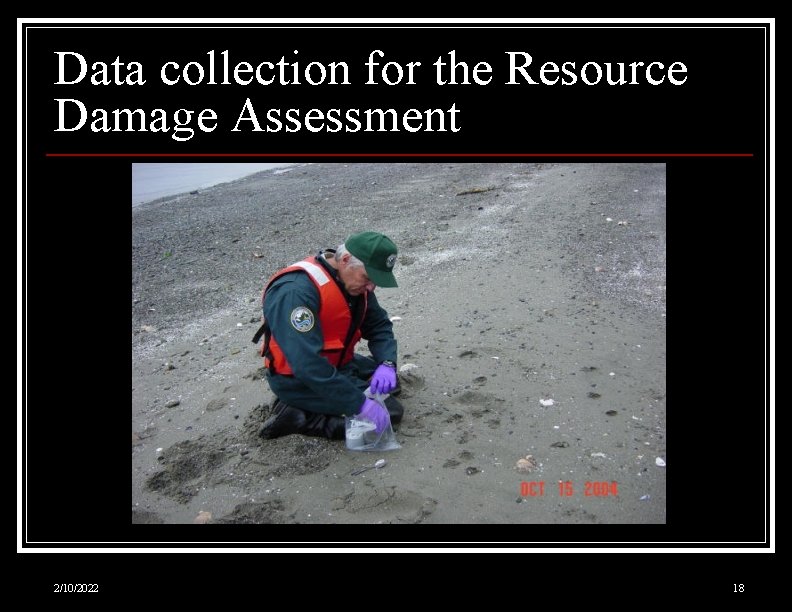
Data collection for the Resource Damage Assessment 2/10/2022 18
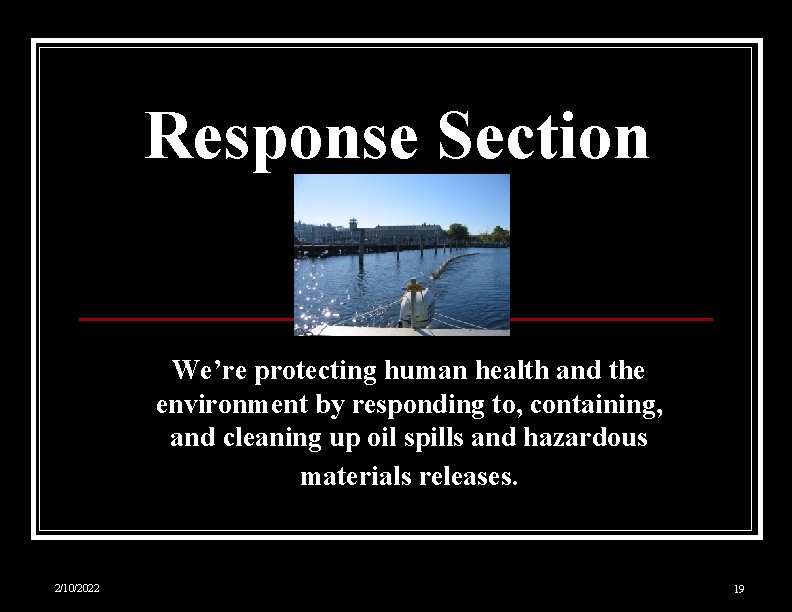
Response Section We’re protecting human health and the environment by responding to, containing, and cleaning up oil spills and hazardous materials releases. 2/10/2022 19
Mission Statement The mission of the Spills Program is to protect Washington’s Environment, public health, and safety through comprehensive spill prevention, preparedness, and response program. The Spills Program focuses on preventing oil spills to Washington waters and land ensuring effective response to oil and hazardous substances spills whenever they occur. 2/10/2022 20
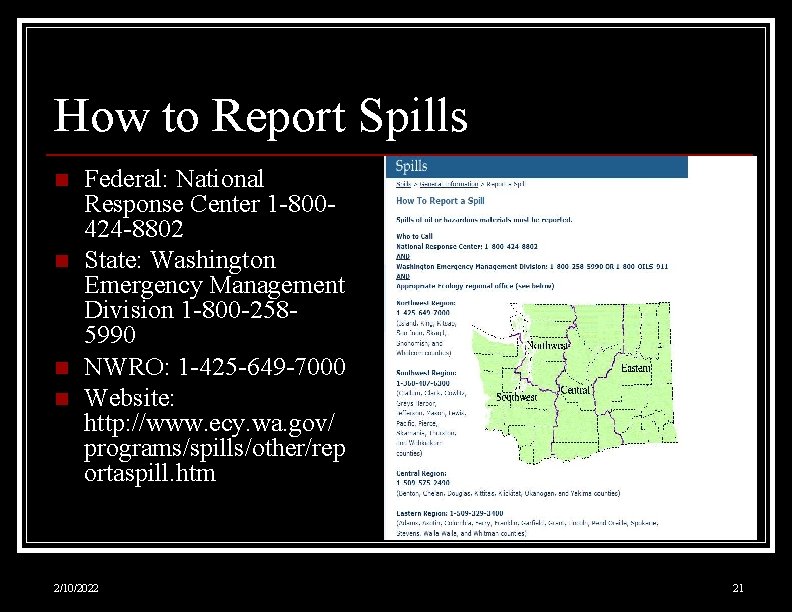
How to Report Spills n n Federal: National Response Center 1 -800424 -8802 State: Washington Emergency Management Division 1 -800 -2585990 NWRO: 1 -425 -649 -7000 Website: http: //www. ecy. wa. gov/ programs/spills/other/rep ortaspill. htm 2/10/2022 21
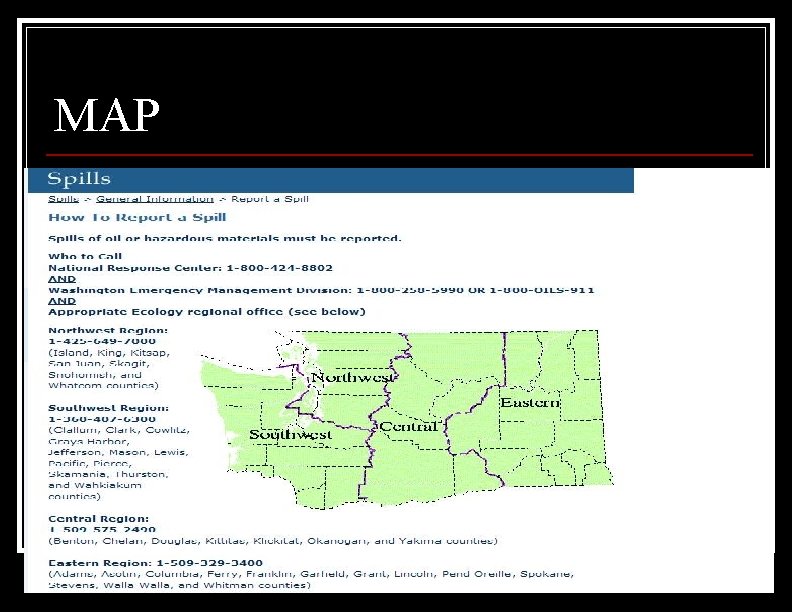
MAP 2/10/2022 22
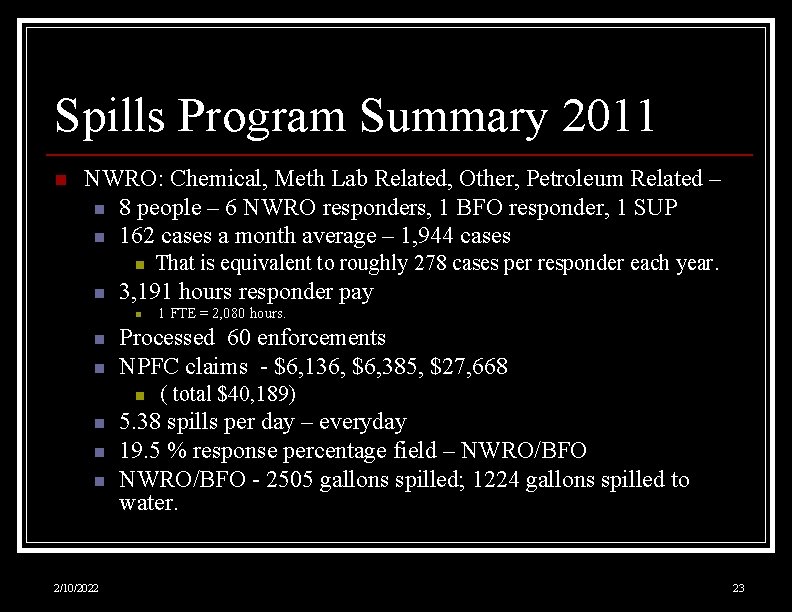
Spills Program Summary 2011 n NWRO: Chemical, Meth Lab Related, Other, Petroleum Related – n 8 people – 6 NWRO responders, 1 BFO responder, 1 SUP n 162 cases a month average – 1, 944 cases n n 3, 191 hours responder pay n n n 2/10/2022 1 FTE = 2, 080 hours. Processed 60 enforcements NPFC claims - $6, 136, $6, 385, $27, 668 n n That is equivalent to roughly 278 cases per responder each year. ( total $40, 189) 5. 38 spills per day – everyday 19. 5 % response percentage field – NWRO/BFO - 2505 gallons spilled; 1224 gallons spilled to water. 23
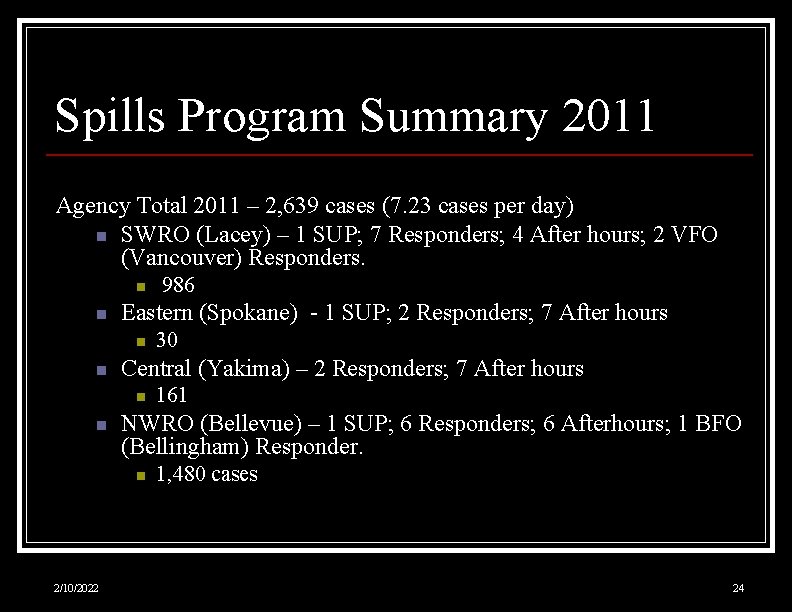
Spills Program Summary 2011 Agency Total 2011 – 2, 639 cases (7. 23 cases per day) n SWRO (Lacey) – 1 SUP; 7 Responders; 4 After hours; 2 VFO (Vancouver) Responders. n n Eastern (Spokane) - 1 SUP; 2 Responders; 7 After hours n n 161 NWRO (Bellevue) – 1 SUP; 6 Responders; 6 Afterhours; 1 BFO (Bellingham) Responder. n 2/10/2022 30 Central (Yakima) – 2 Responders; 7 After hours n n 986 1, 480 cases 24
Thank You Questions? 2/10/2022 25