
Washington County Community Guided Planning Zoning Summer Fall


- Slides: 30
Washington County Community Guided Planning & Zoning Summer - Fall 2016 2 nd Round – Public Outreach Meetings
What is CGP&Z all about?
Community Guided Plg & Zng • Planning for where development will locate • Where suitable given natural resources constraints & supporting infrastructure • LURC formed 1971 – 10 million acres • Zoning was based on existing development • Wash County UT: 800, 000 acres • 2/3 rds in General Management – see maps • LURC Reform Commission 2012 • Changed the name: LUPC • Directive: Decentralize decision making
Agenda • What is Community Guided Plg & Zng? • Introductions – who is here? • Meeting Goals, Background & Timeline • Current Zoning and New Tools • GIS Mapping – Suitability Analyses • Questions, Concerns and Next Steps
Summer 2016 Public Meetings Purpose Planning Committee/LUPC: • Understand each community’s vision for future development – your balance between growth and conservation Community Participants: • Understand what exists & the types of zoning tools available • To be heard & to participate in a meaningful way
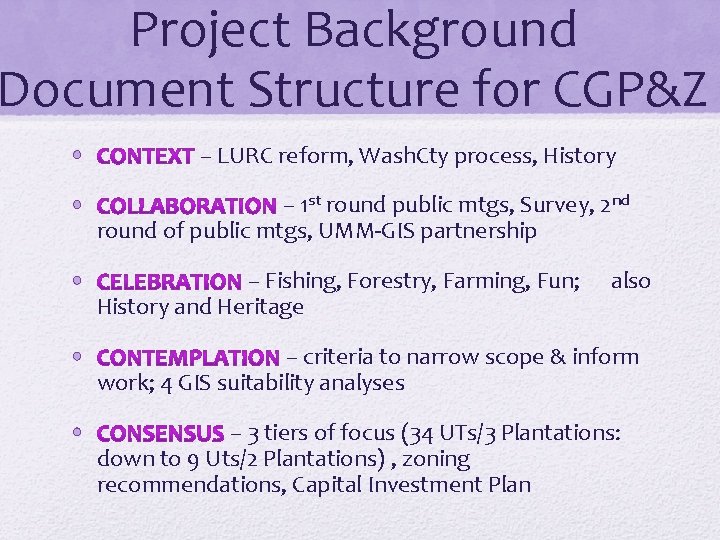
Project Background Document Structure for CGP&Z • – LURC reform, Wash. Cty process, History • – 1 st round public mtgs, Survey, 2 nd round of public mtgs, UMM-GIS partnership • – Fishing, Forestry, Farming, Fun; History and Heritage • – criteria to narrow scope & inform work; 4 GIS suitability analyses • – 3 tiers of focus (34 UTs/3 Plantations: down to 9 Uts/2 Plantations) , zoning recommendations, Capital Investment Plan also
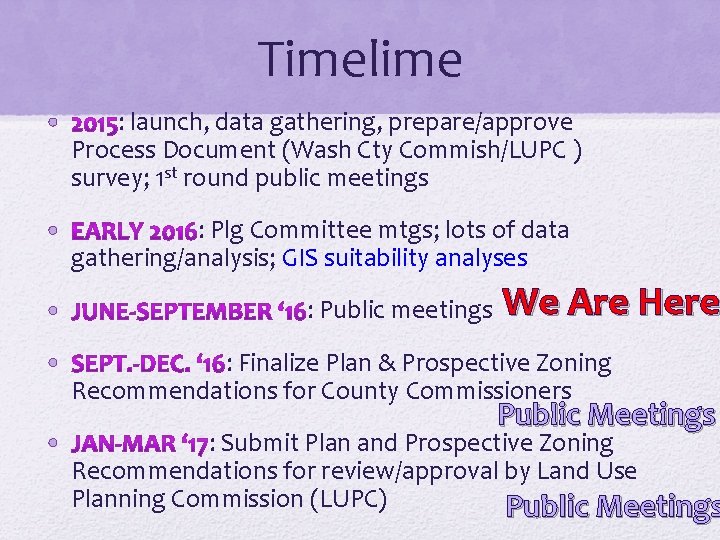
Timelime • : launch, data gathering, prepare/approve Process Document (Wash Cty Commish/LUPC ) survey; 1 st round public meetings • : Plg Committee mtgs; lots of data gathering/analysis; GIS suitability analyses • • • : Public meetings We Are Here : Finalize Plan & Prospective Zoning Recommendations for County Commissioners Public Meetings : Submit Plan and Prospective Zoning Recommendations for review/approval by Land Use Planning Commission (LUPC) Public Meetings
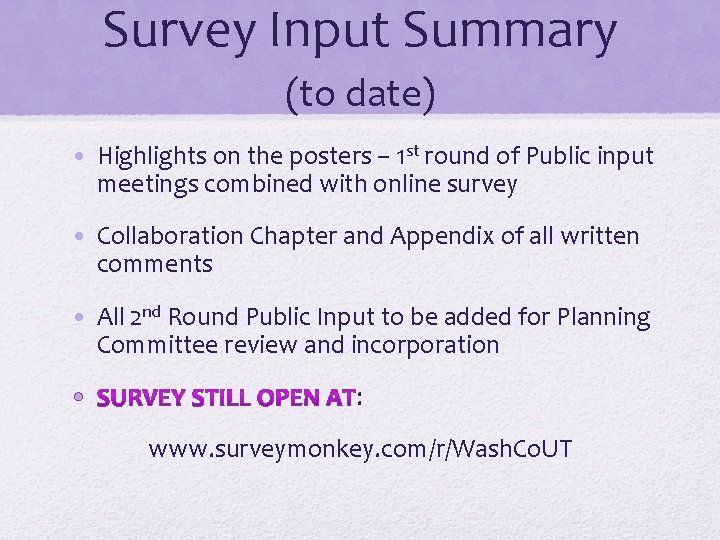
Survey Input Summary (to date) • Highlights on the posters – 1 st round of Public input meetings combined with online survey • Collaboration Chapter and Appendix of all written comments • All 2 nd Round Public Input to be added for Planning Committee review and incorporation • : www. surveymonkey. com/r/Wash. Co. UT
Current Zoning in the UT & Plantations See Blue and White Handout and Poster for Reference • 3 types of LUPC Zones (Subdistricts): • Management (67% of Wash Cty UTs & Plantations) • Development • Protection (can overlay Management Subdistricts) • 5 Prospective Development Zones (Subdistricts) • • • Commercial Industrial General Development Maritime Development Planned Development Residential Development M-… D-… P-…
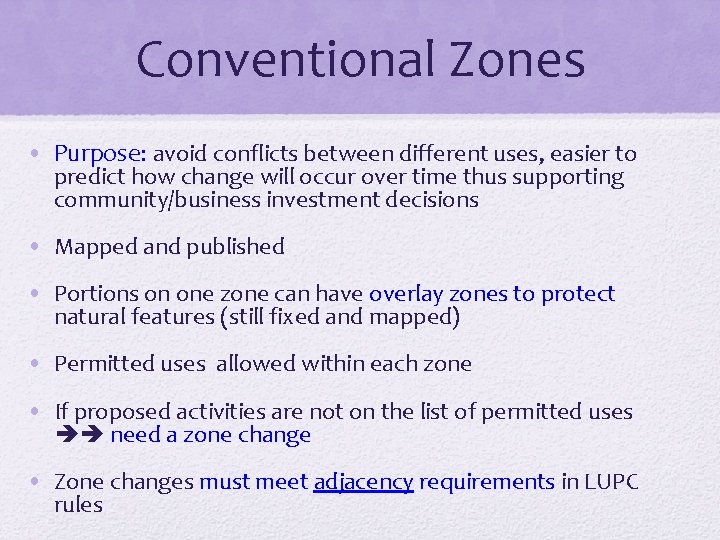
Conventional Zones • Purpose: avoid conflicts between different uses, easier to predict how change will occur over time thus supporting community/business investment decisions • Mapped and published • Portions on one zone can have overlay zones to protect natural features (still fixed and mapped) • Permitted uses allowed within each zone • If proposed activities are not on the list of permitted uses need a zone change • Zone changes must meet adjacency requirements in LUPC rules
Adjacency? • Remember – 10 million acres zoned in 1971 based on existing development • Jurisdiction too big to do CGP&Z until regional efforts now • Meantime (for 40 yrs) adjacency principle is a tool that assumes locating most development (within 1 mile) of existing public services and other development preserves existing communities and is cheaper for the taxpayer • Hard or impossible hurdle - often leads to denial of permit • Getting a permit is a 2 step process: zone change and permit (time consuming)……. . therefore…. . CGP&Z to bring future growth decisions to regional/local level, encourage economic growth, reduce time to get a permit
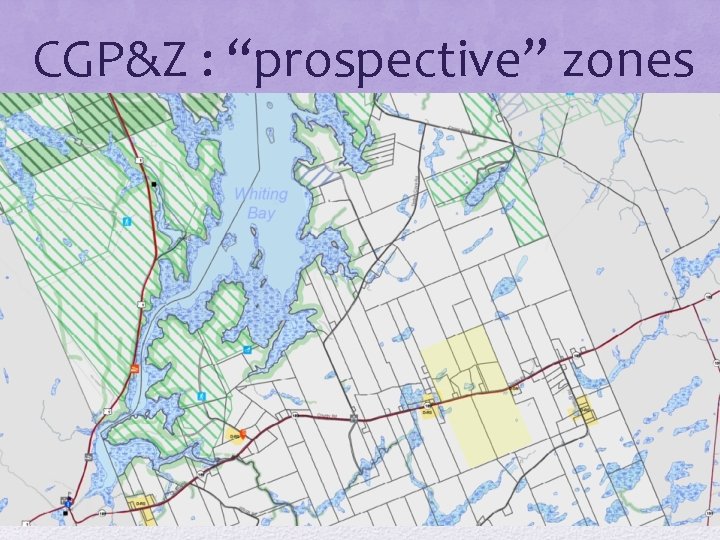
CGP&Z : “prospective” zones
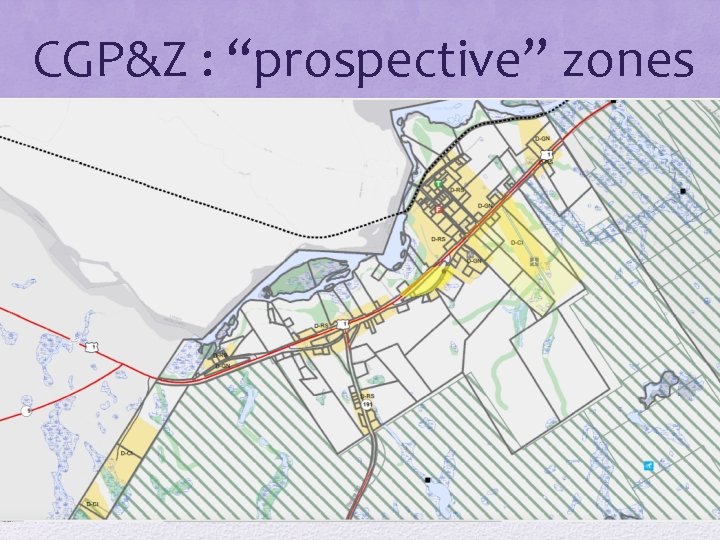
CGP&Z : “prospective” zones
Change is hard • Discord: Existing landowners don’t want change • Uncertainty: Planning Committees/Processes can’t anticipate future business/development needs • Alternative is parcel-by-parcel zone changes • Frowned on by the courts, called “spot zoning” • Responsive and a benefit to the landowner not necessarily the community • Push – Pull of interests between landowner/developer and the community (natural and tax impacts) is at the heart of all planning & land use controversy
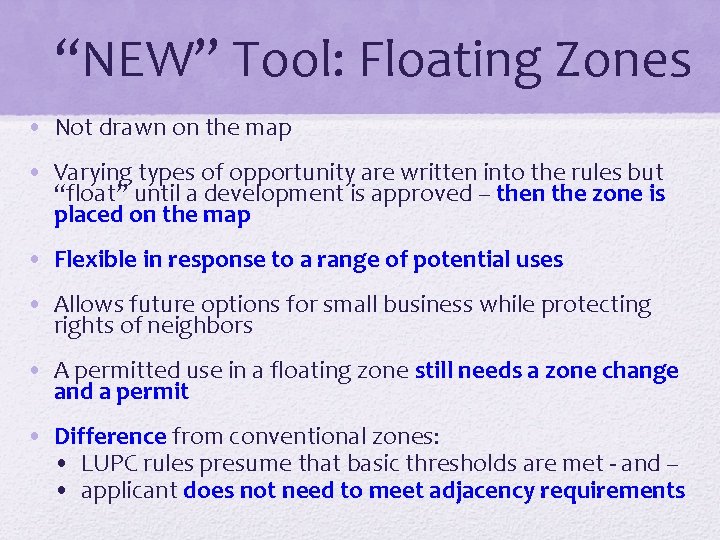
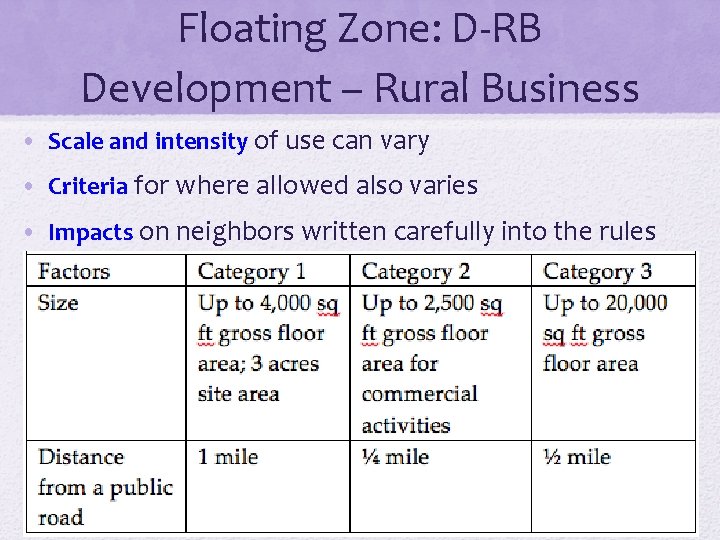
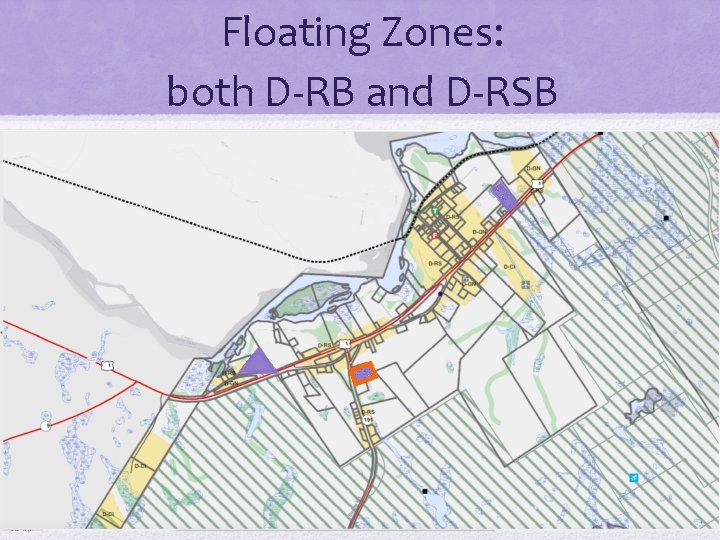
“NEW” Tool: Floating Zones • Not drawn on the map • Varying types of opportunity are written into the rules but “float” until a development is approved – then the zone is placed on the map • Flexible in response to a range of potential uses • Allows future options for small business while protecting rights of neighbors • A permitted use in a floating zone still needs a zone change and a permit • Difference from conventional zones: • LUPC rules presume that basic thresholds are met - and – • applicant does not need to meet adjacency requirements
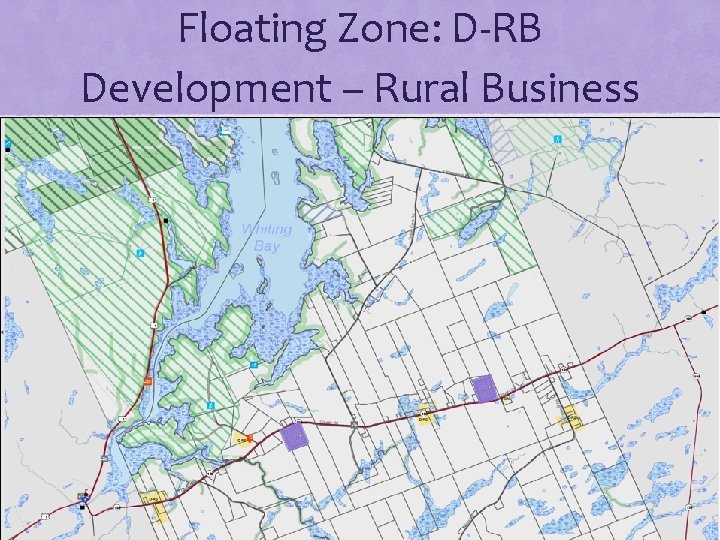
Floating Zone: D-RB Development – Rural Business
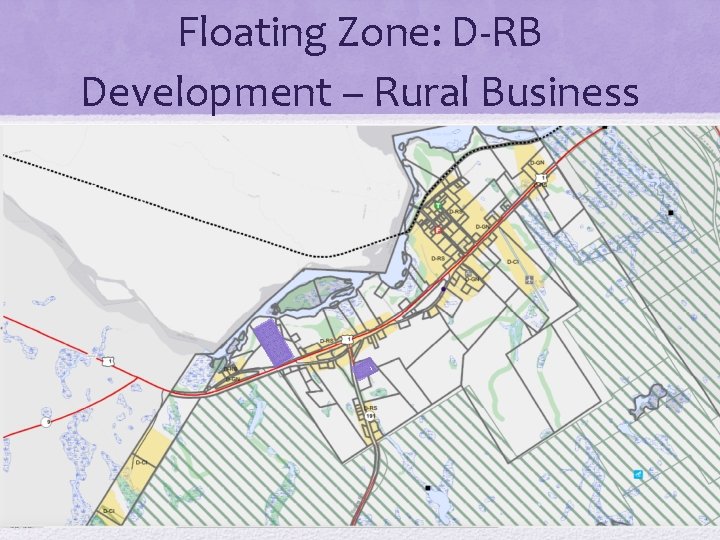
Floating Zone: D-RB Development – Rural Business
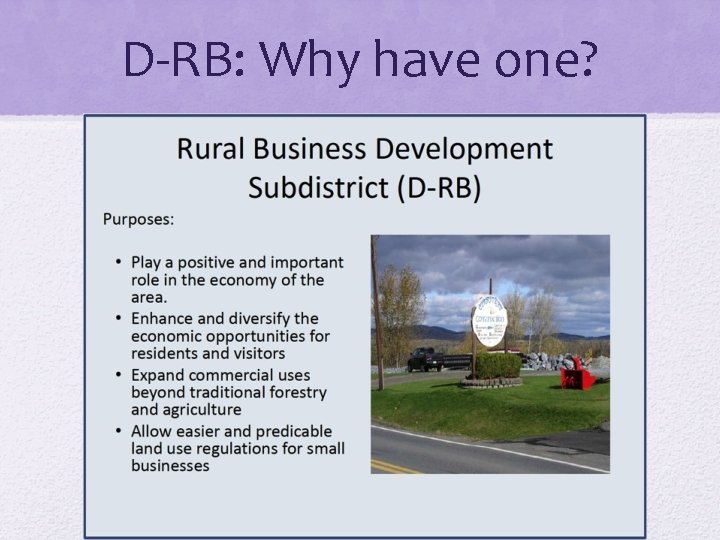
D-RB: Why have one?
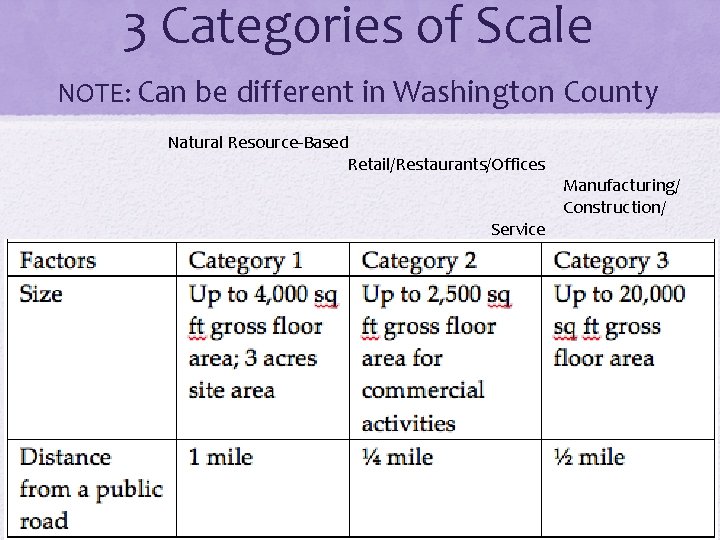
Floating Zone: D-RB Development – Rural Business • Scale and intensity of use can vary • Criteria for where allowed also varies • Impacts on neighbors written carefully into the rules
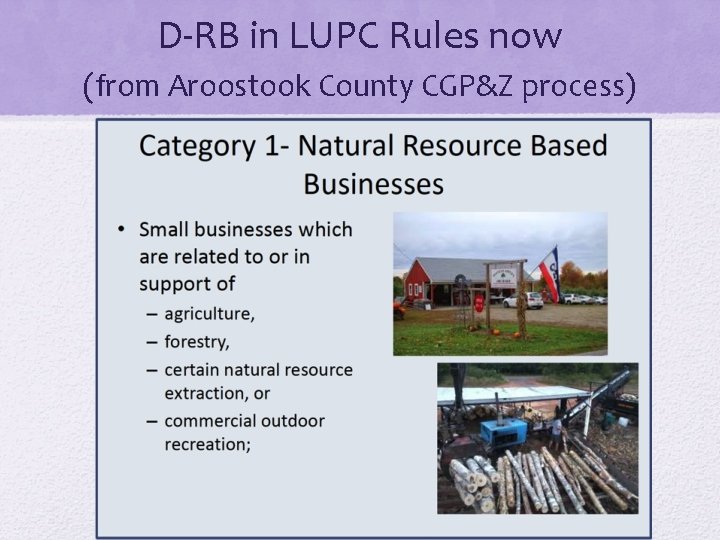
D-RB in LUPC Rules now (from Aroostook County CGP&Z process)
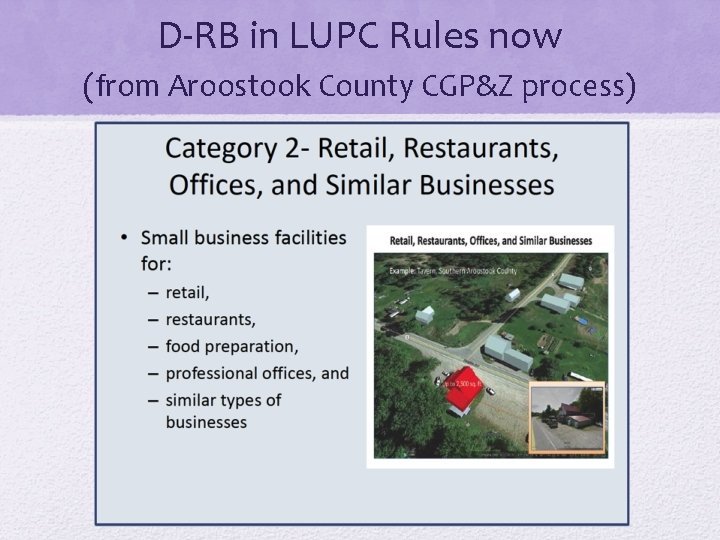
D-RB in LUPC Rules now (from Aroostook County CGP&Z process)
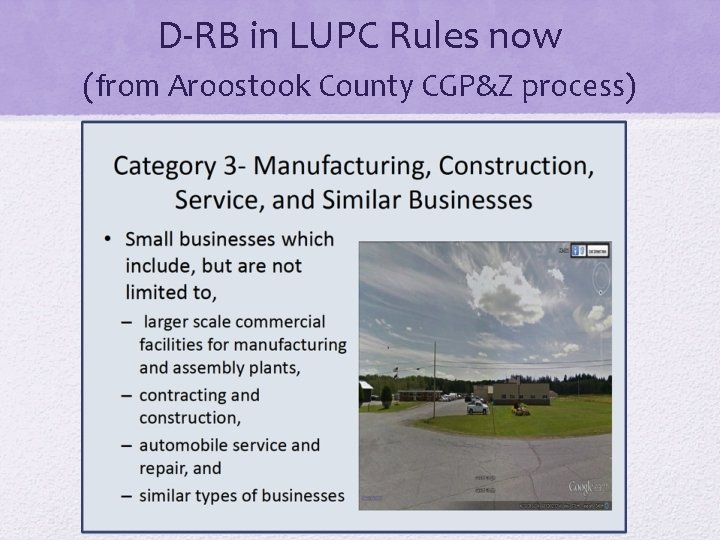
D-RB in LUPC Rules now (from Aroostook County CGP&Z process)
3 Categories of Scale NOTE: Can be different in Washington County Natural Resource-Based Retail/Restaurants/Offices Service Manufacturing/ Construction/
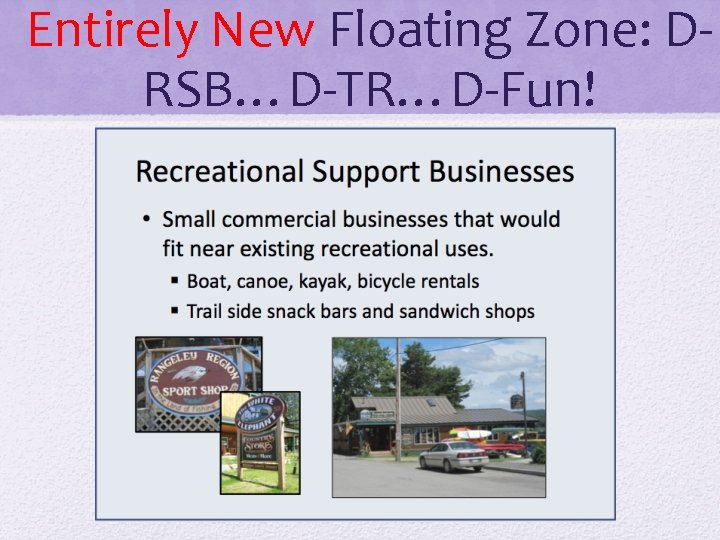
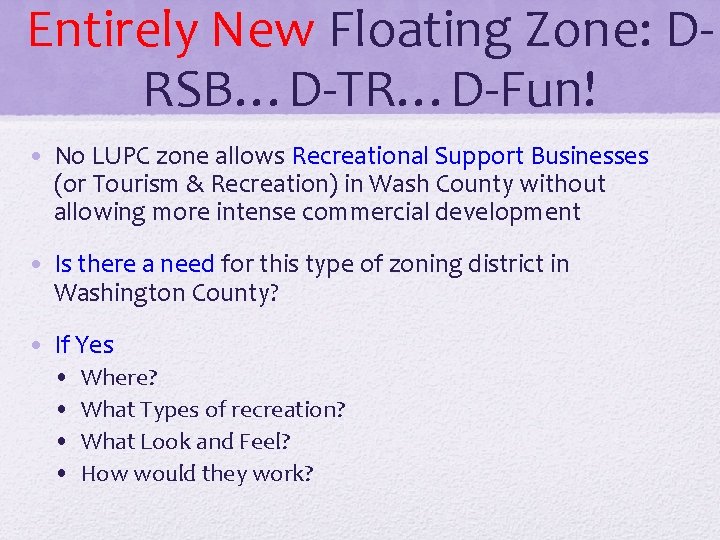
Entirely New Floating Zone: DRSB…D-TR…D-Fun!
Entirely New Floating Zone: DRSB…D-TR…D-Fun! • No LUPC zone allows Recreational Support Businesses (or Tourism & Recreation) in Wash County without allowing more intense commercial development • Is there a need for this type of zoning district in Washington County? • If Yes • • Where? What Types of recreation? What Look and Feel? How would they work?
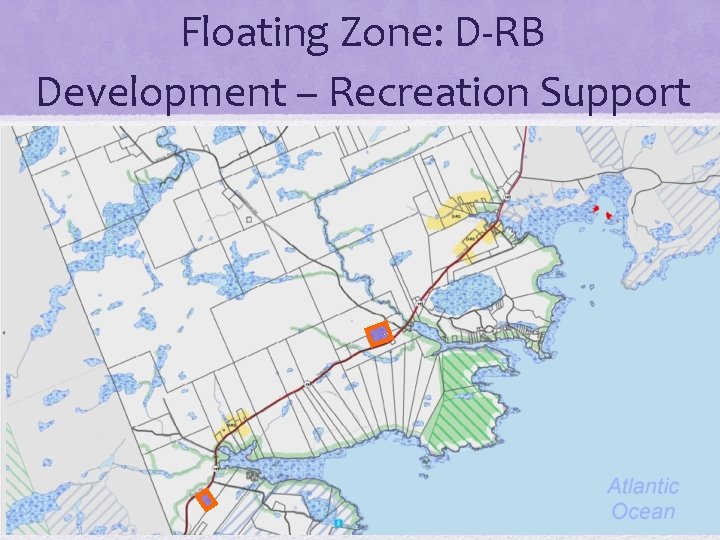
Floating Zone: D-RB Development – Recreation Support
Floating Zones: both D-RB and D-RSB
Floating Zones: What do you think? What benefits could be created by the floating zone idea? Are there criteria that make you nervous (location, size, uses)? Can we articulate criteria to address your concerns?
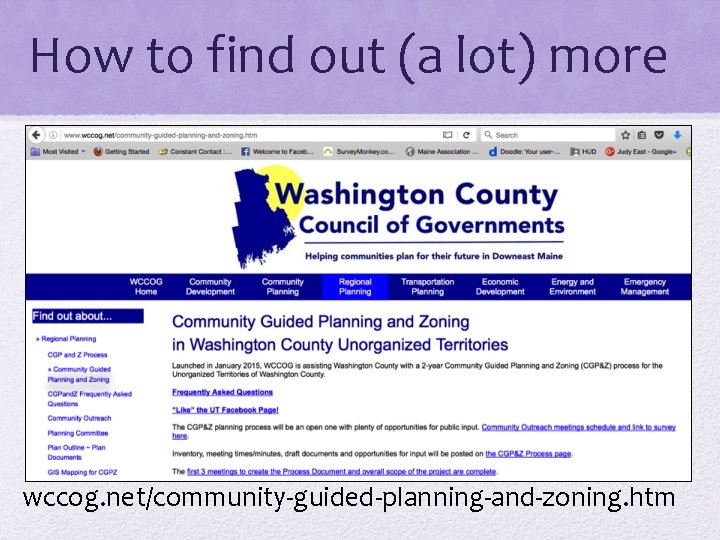
How to find out (a lot) more wccog. net/community-guided-planning-and-zoning. htm
Thank You for Coming! Next Steps for Planning Committee: • Integrate community input with regulatory and resource suitability information • Develop recommendations for County Commissioners and LUPC Any final comments/insights? Please “haunt” the web site GIS Suitability Analyses Demonstration to Follow