
WARNING This material has been reproduced and communicated
WARNING This material has been reproduced and communicated to you by or on behalf of Charles Sturt University in accordance with section 113 P of the Copyright Act 1968 (Act). The material in this communication may be subject to copyright under the Act. Any further reproduction or communication of this material by you may be the subject of copyright protection under the Act. Do not remove this notice. 1
Detecting contract cheating DR WARWICK BAINES

Contract cheating: the BJBS story so far Cath Ellis key note at 2018 L&T symposium Working groups at 2018 L&T Symposium = ideas for prevention resources Prevention resources finalised, made available via the wiki Prevention resources embedded in key subjects from 201930 Detecting contract cheating 3

Next steps…know the signs 3. References 4. Quality 2. Formatting 1. ‘Feel’ Individual Document 5. Properties Acknowledgment: Associate Professor Cath Ellis (UNSW)

1. General Feel Not quite right! Explanation • Not the voice or ability of the student • Not connected to the content of the course or task • Not what you’ve asked for • Not done by the student • Done by someone out of the classroom and the country • Instructions from you will have gone to the writer Acknowledgment: Associate Professor Cath Ellis (UNSW)

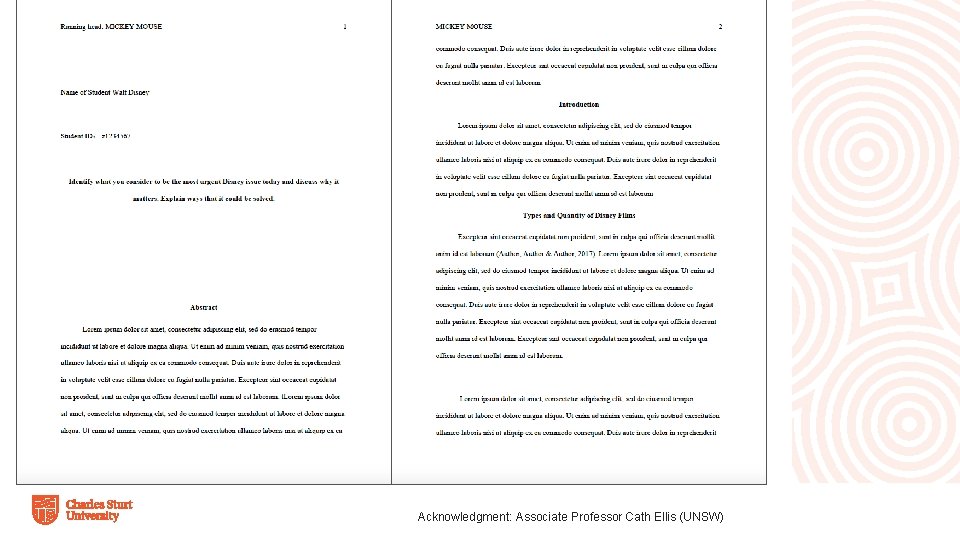
2. Formatting Heading or Multiple headings Sub-headings throughout the document Abstract Sub-sections Contents page Executive summary Separate cover page and/or lots of information on the front page Information in the header and/or footer Student name Student number Course code Tutor name Institution name Class time “RUNNING HEAD: TITLE” Student’s surname Lots of white space Bibliography starting on a new page Last item of the bibliography on a new page Acknowledgment: Associate Professor Cath Ellis (UNSW)
Acknowledgment: Associate Professor Cath Ellis (UNSW)
2. Formatting: Explanation Companies: § sell the work by the page length not the word count § require their writers to use templates § fine writers formatting mistakes § keep the identity of the student client from the writer and vice versa. The completed orders have generic spaces for students to enter their details prior to submission on the front page and/or the header but… Acknowledgment: Associate Professor Cath Ellis (UNSW)
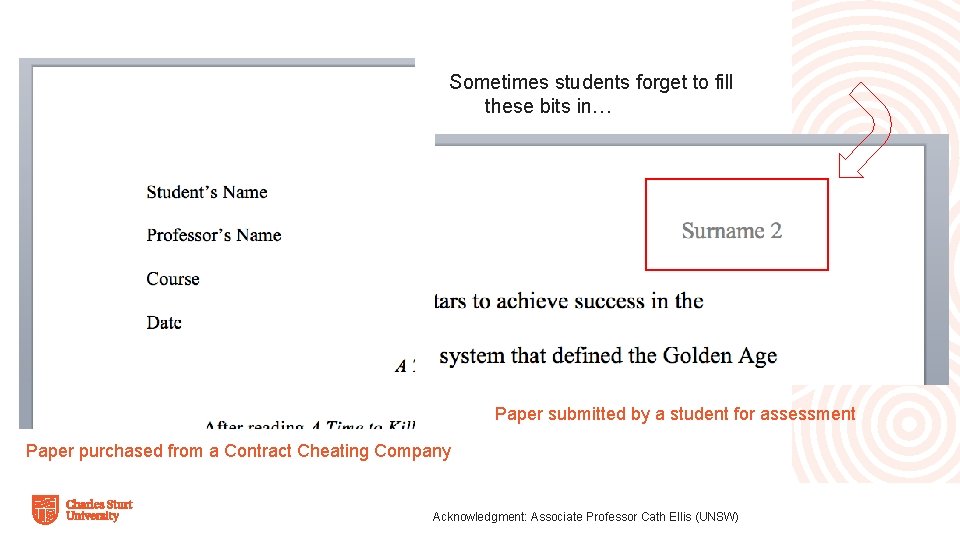
Sometimes students forget to fill these bits in… Paper submitted by a student for assessment Paper purchased from a Contract Cheating Company Acknowledgment: Associate Professor Cath Ellis (UNSW)

3. References • Truckloads! Particularly if you’ve not stipulated a number • Resources that aren’t available in our library • Bibliographic forensics: markers that identify library of origin of resources • References that don’t relate to the topic • Few or no direct quotes and citations without page numbers • Mostly open access or Google Books • Bibliographic management tools (e. g. Zotero) used Acknowledgment: Associate Professor Cath Ellis (UNSW)
3. References: Explanation • Writers are often relying on student IDs from other institutions to get hold of scholarly resources • Writers try to keep the unoriginal match % low to avoid attention • Order form requires students to stipulate the number of references required. If you’ve not given a number they think that more is better • Writers often use bibliographic management tools for efficiency Acknowledgment: Associate Professor Cath Ellis (UNSW) Not evidence that it has been contract cheated, but if in interview a student is unaware that a bibliographic tool has been used: balance of probability
4. Quality • Varies considerably: pretty good to dreadful • Imbalance between the ‘polish’ of the formatting with the content • Polished but empty • Lots of padding • Highly formulaic • Odd turns of phrase Explanation • Churned out a lot of essays as quickly as they can • Bachelors degrees at best • Writers with English as a second language • May use translation engines Acknowledgment: Associate Professor Cath Ellis (UNSW) 12
5. Properties • Names in ‘author, ‘company’, ‘last saved by’ don’t match each other and/or the student • Date created and date last saved are close to each other and to the date of submission • Very few revisions and low total editing time Explanation • Students download the order and ‘save as’ to add in their name, tutor name etc. before submitting • The longer the ‘urgency’ time the cheaper the order so students tend to leave the ‘due date’ for their order close to the due date you have set • Writers stock pile work and generally work close to the deadlines students set them Acknowledgment: Associate Professor Cath Ellis (UNSW)
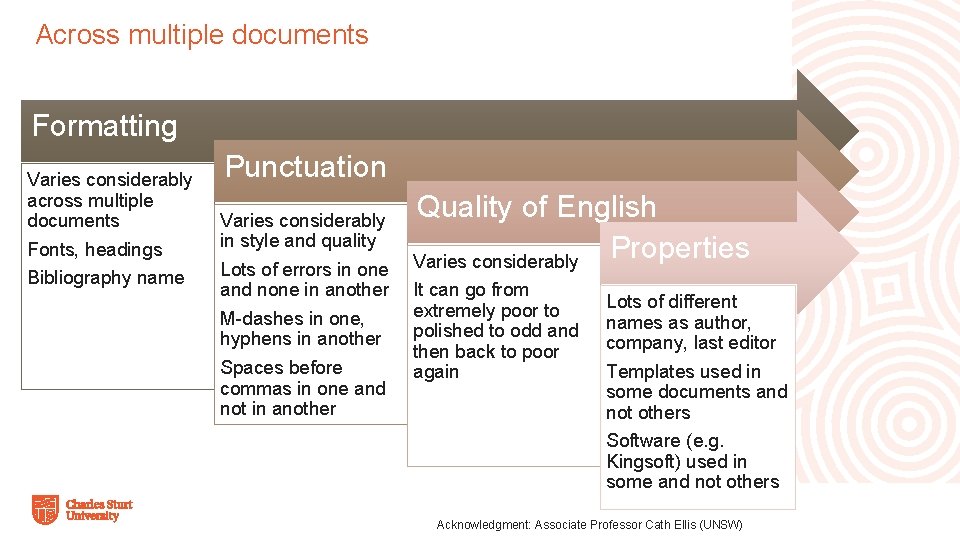
Across multiple documents Formatting Varies considerably across multiple documents Fonts, headings Bibliography name Punctuation Varies considerably in style and quality Lots of errors in one and none in another M-dashes in one, hyphens in another Spaces before commas in one and not in another Quality of English Properties Varies considerably It can go from extremely poor to polished to odd and then back to poor again Lots of different names as author, company, last editor Templates used in some documents and not others Software (e. g. Kingsoft) used in some and not others Acknowledgment: Associate Professor Cath Ellis (UNSW)
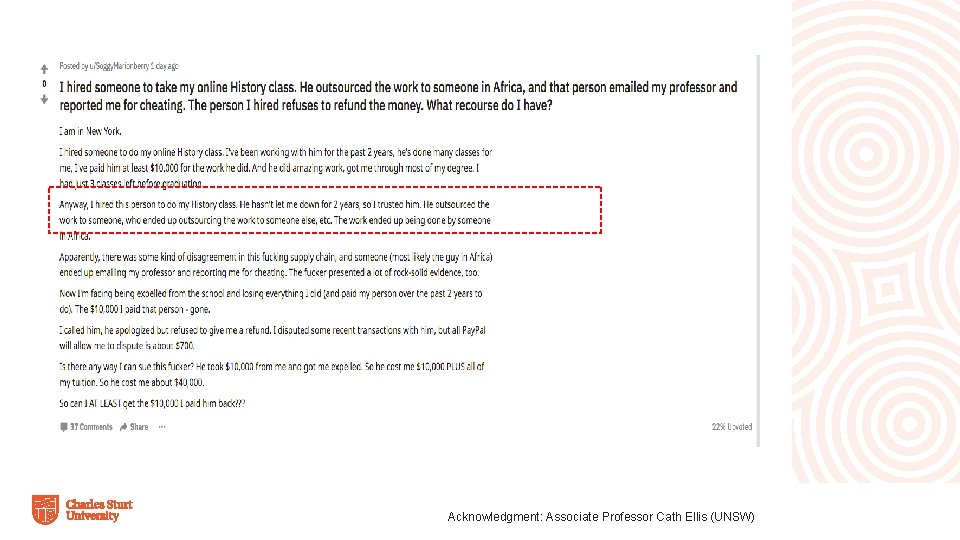
Explanation When students use these companies it is highly unlikely that they will get the same writer every time Even if they are using someone to do all their work, these writers also outsource their work to others Acknowledgment: Associate Professor Cath Ellis (UNSW)
Acknowledgment: Associate Professor Cath Ellis (UNSW)
Your turn… Required 1. Look at the paper you have been given: ü Does it feature any of the signs outlined in handout? If so which ones? ü Any other suspicious aspects not outlined in the handout? 2. Compare your papers with other papers on your table: ü What are the similarities and differences between the papers? ü Is it the same author? Why/Why not? 3. What are the major barriers to increased reporting?

Resources on wiki. csu. edu. au For further information Dr Warwick Baines wbaines@csu. edu. au 0407 971 114 02 6338 4438 19
- Slides: 19