
Warmup What is the primary driving force for
- Slides: 21
Warm-up What is the primary driving force for surface currents in the ocean? A. Density Layering B. Global Winds C. Water Temperature D. Salt Concentration Remember the lab we did with the water and trays? How did you get the water to move?
MYP Unit Question: How do we use water? Area of Interaction: Health and Social Education Learner Profile: Thinker and Balanced Standard: Recognize the significant role of water in the Earth’s processes. I’m learning about currents because they move water through the oceans. Learning Standard:
Opening: Currents video Work Session: Notes on Currents Closing: Partner Questions
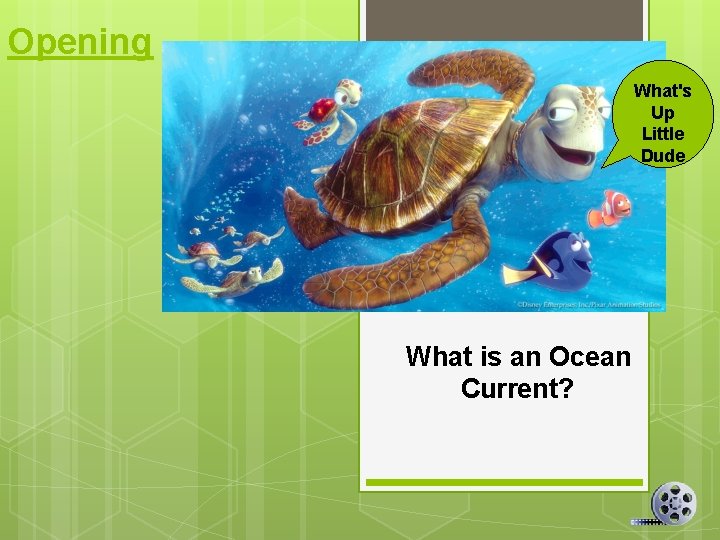
Opening What's Up Little Dude What is an Ocean Current?
Currents What are currents? stream-like movements of water If it’s written in BLUE, write it down.
There are two types of currents: Surface Currents (near the surface) Deep Currents (deep in the ocean) No, you DON’T have to write this, it’s not written in BLUE.
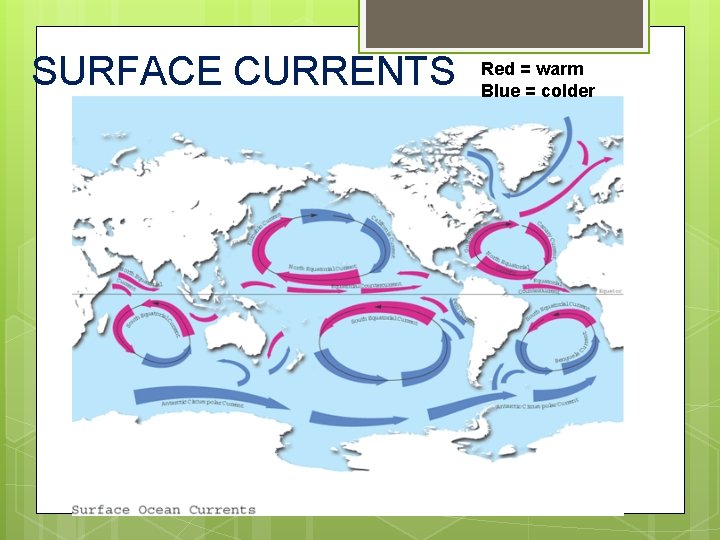
SURFACE CURRENTS Red = warm Blue = colder
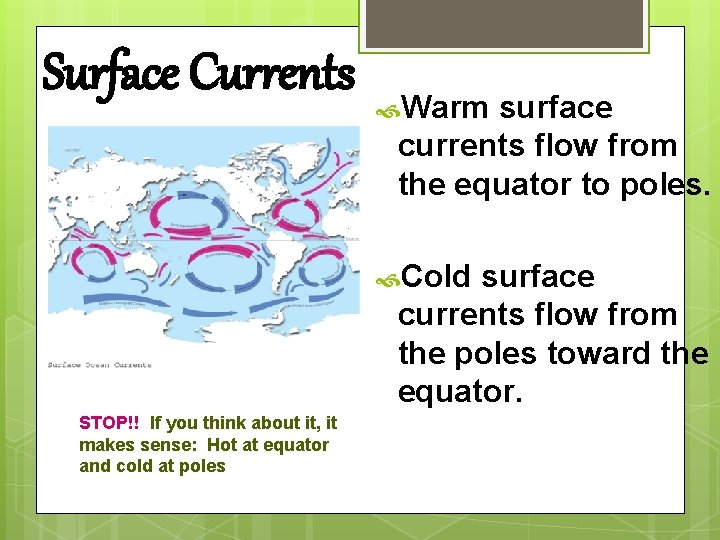
Surface Currents Warm surface currents flow from the equator to poles. Cold surface currents flow from the poles toward the equator. STOP!! If you think about it, it makes sense: Hot at equator and cold at poles
Surface Currents Controlled by three factors: 1. global winds 2. the Coriolis effect 3. location of the continents
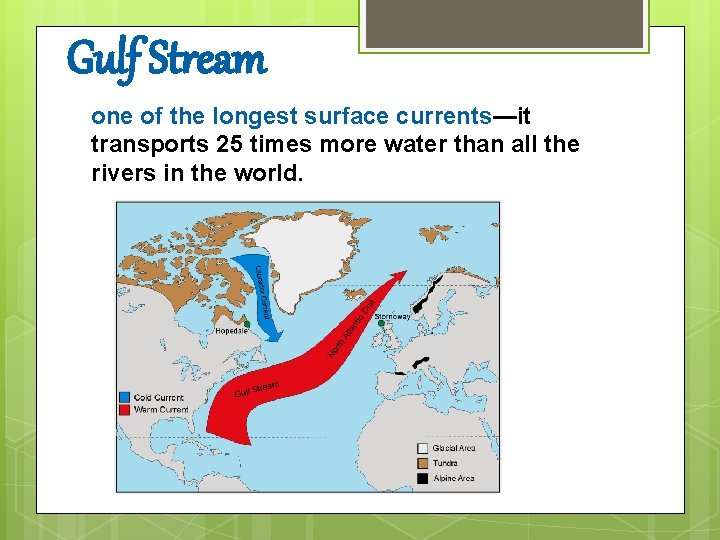
Gulf Stream one of the longest surface currents—it transports 25 times more water than all the rivers in the world.
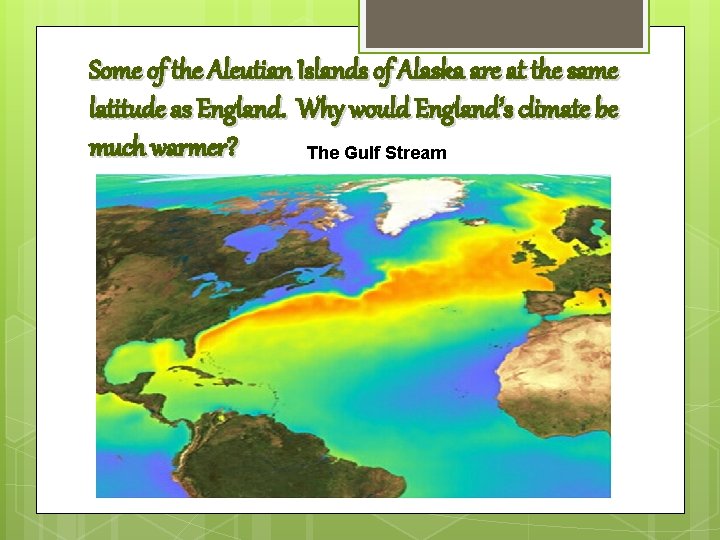
Some of the Aleutian Islands of Alaska are at the same latitude as England. Why would England’s climate be much warmer? The Gulf Stream
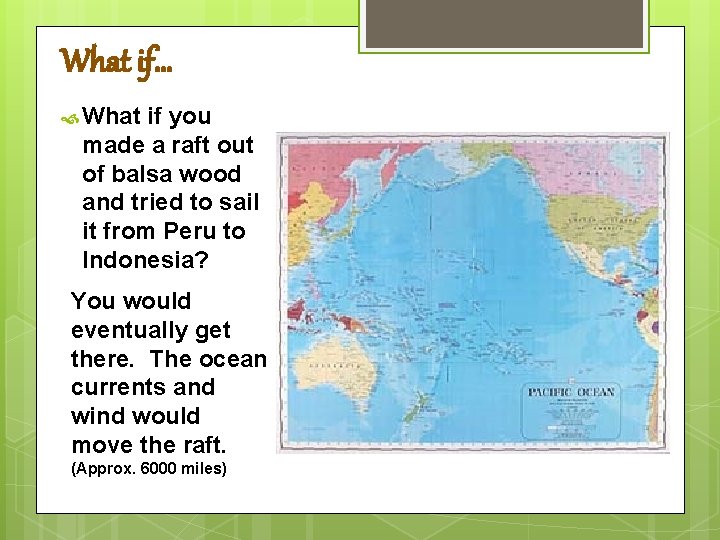
What if… What if you made a raft out of balsa wood and tried to sail it from Peru to Indonesia? You would eventually get there. The ocean currents and wind would move the raft. (Approx. 6000 miles)
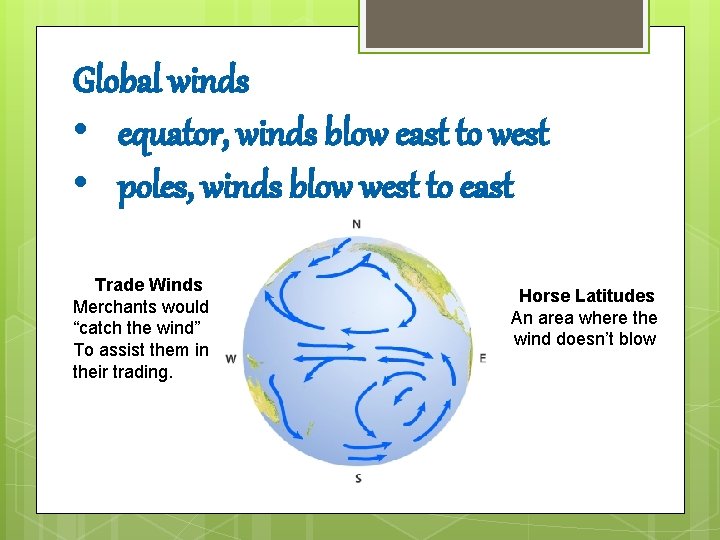
Global winds • equator, winds blow east to west • poles, winds blow west to east Trade Winds Merchants would “catch the wind” To assist them in their trading. Horse Latitudes An area where the wind doesn’t blow
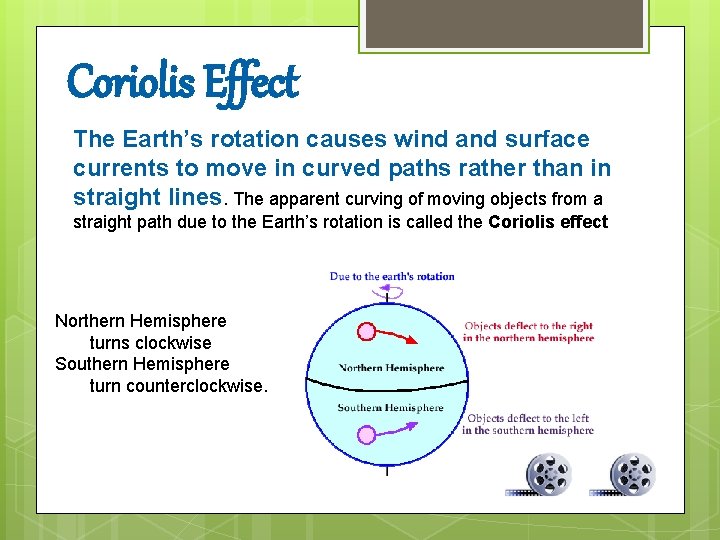
Coriolis Effect The Earth’s rotation causes wind and surface currents to move in curved paths rather than in straight lines. The apparent curving of moving objects from a straight path due to the Earth’s rotation is called the Coriolis effect Northern Hemisphere turns clockwise Southern Hemisphere turn counterclockwise.
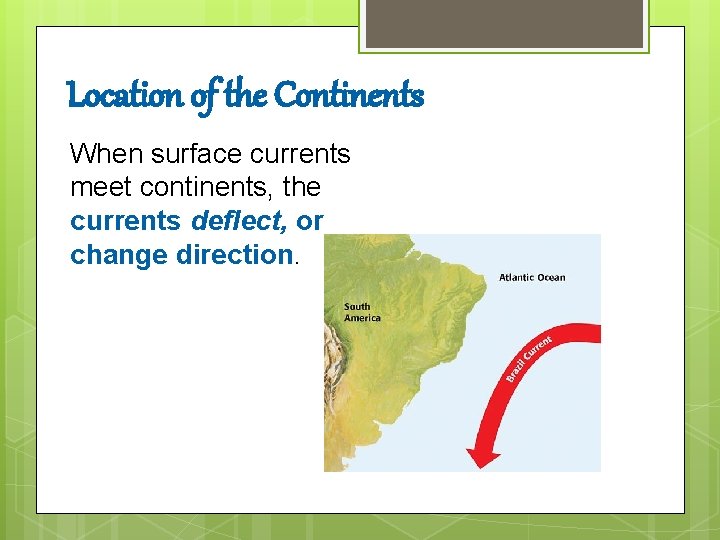
Location of the Continents When surface currents meet continents, the currents deflect, or change direction.
Deep-Ocean Currents • located far below the surface • Caused by difference in density • forms in denser ocean water (more salt) • density depends on temperature and salinity.
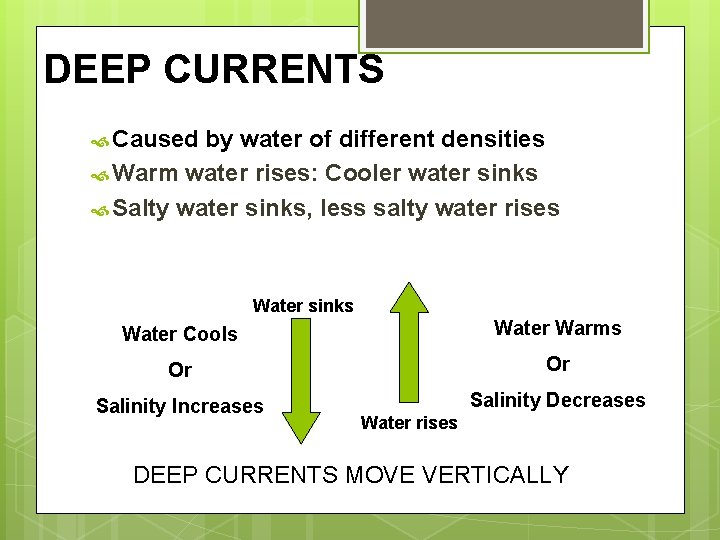
DEEP CURRENTS Caused by water of different densities Warm water rises: Cooler water sinks Salty water sinks, less salty water rises Water sinks Water Cools Water Warms Or Or Salinity Increases Salinity Decreases Water rises DEEP CURRENTS MOVE VERTICALLY
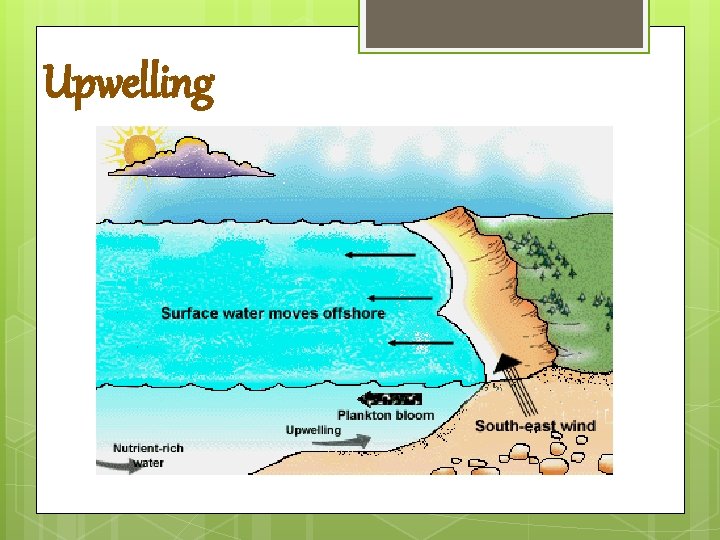
Upwelling The process in which cold nutrientrich water from the deep ocean rises to replace warm surface water. Very important to tiny organisms like plankton. Fish and birds feed on these organisms.
Upwelling
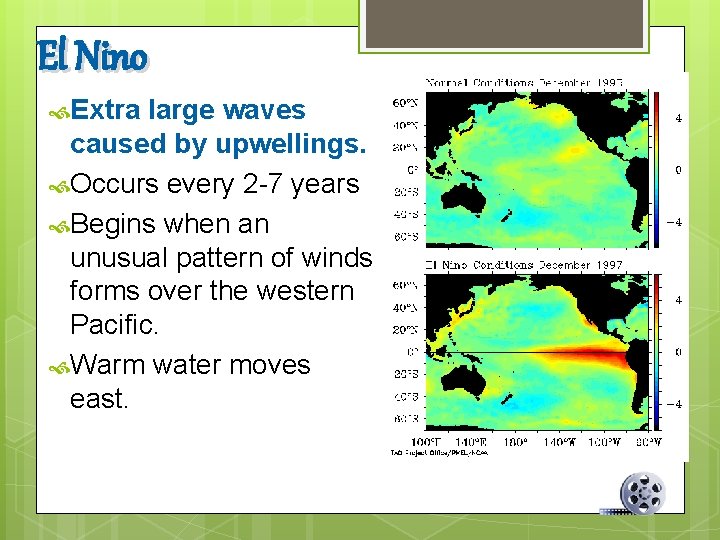
El Nino Extra large waves caused by upwellings. Occurs every 2 -7 years Begins when an unusual pattern of winds forms over the western Pacific. Warm water moves east.
Closing: Partner Questions Turn to the person on your right (or left if necessary) and ask them a question about something you learned today. Do they know the answer? ? If not, share the answer with them.