
Warmup What are the grain sizes and textures


- Slides: 12
Warm-up • What are the grain sizes and textures of extrusive and intrusive igneous rocks? Remember to write in complete sentences! • After you complete your warm-up get your graded work from your folder and begin working on the rock cycle activity from yesterday.
Chapter 5 Quiz Review
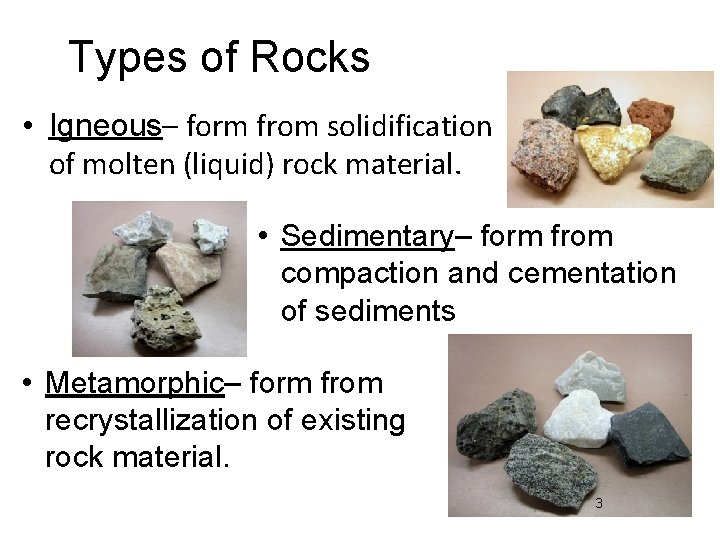
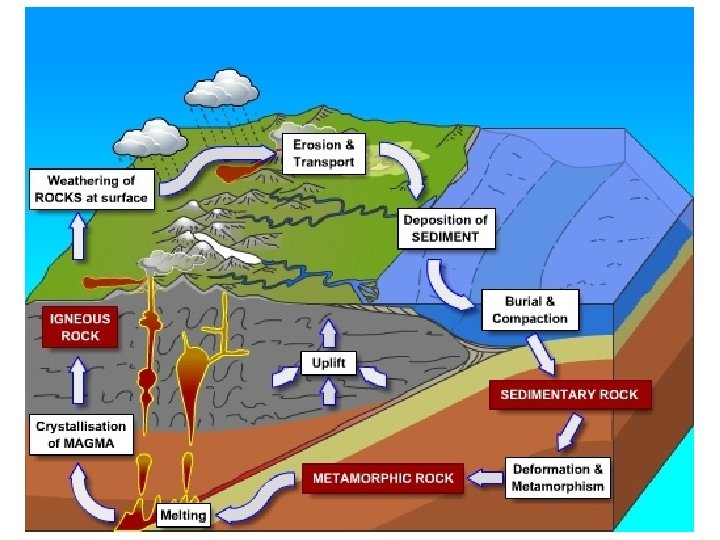
Types of Rocks • Igneous– form from solidification of molten (liquid) rock material. • Sedimentary– form from compaction and cementation of sediments • Metamorphic– form from recrystallization of existing rock material. 3
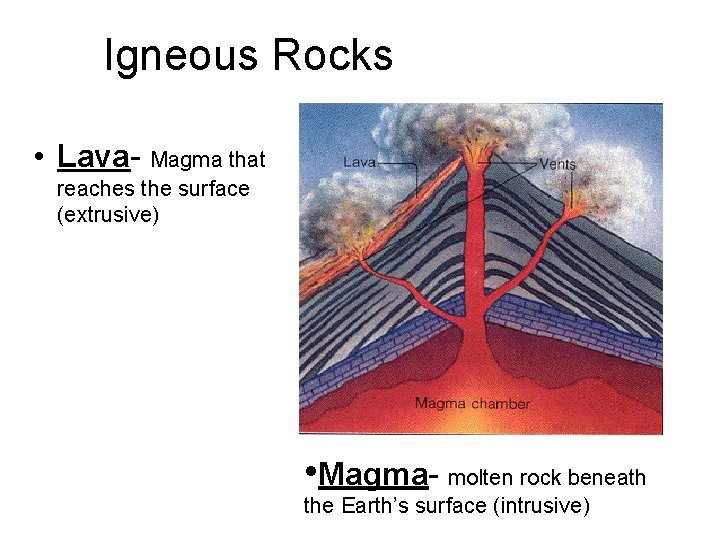
Igneous Rocks • Lava- Magma that reaches the surface (extrusive) • Magma- molten rock beneath the Earth’s surface (intrusive)
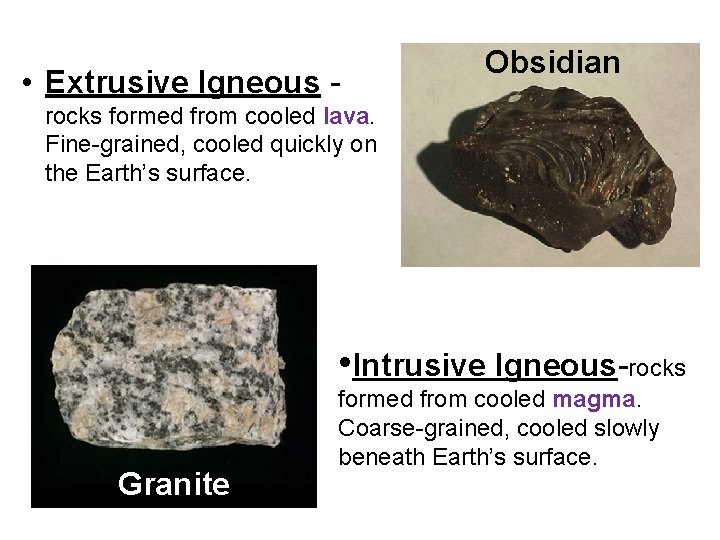
• Extrusive Igneous - Obsidian rocks formed from cooled lava. Fine-grained, cooled quickly on the Earth’s surface. • Intrusive Igneous-rocks Granite formed from cooled magma. Coarse-grained, cooled slowly beneath Earth’s surface.
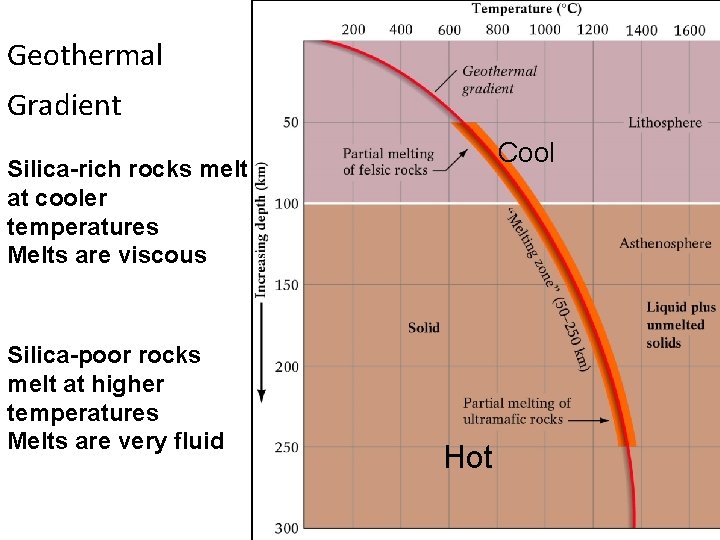
Geothermal Gradient Cool Silica-rich rocks melt at cooler temperatures Melts are viscous Silica-poor rocks melt at higher temperatures Melts are very fluid Hot
Magma • Role of pressure – An increase in confining pressure causes an increase in a rock’s melting temperature or conversely, reducing the pressure lowers the melting temperature
Characteristics of magma • Crystallization of magma • Texture in igneous rocks is determined by the size and arrangement of mineral grains • Igneous rocks are typically classified by both: – Texture – Mineral composition
Igneous textures • Factors affecting crystal size • Rate of cooling • Fast rate forms many small crystals (extrusive) – Very fast rate forms glass • Slow rate forms large crystals (intrusive) • Amount of silica (Si. O 2) present • Amount of dissolved gases
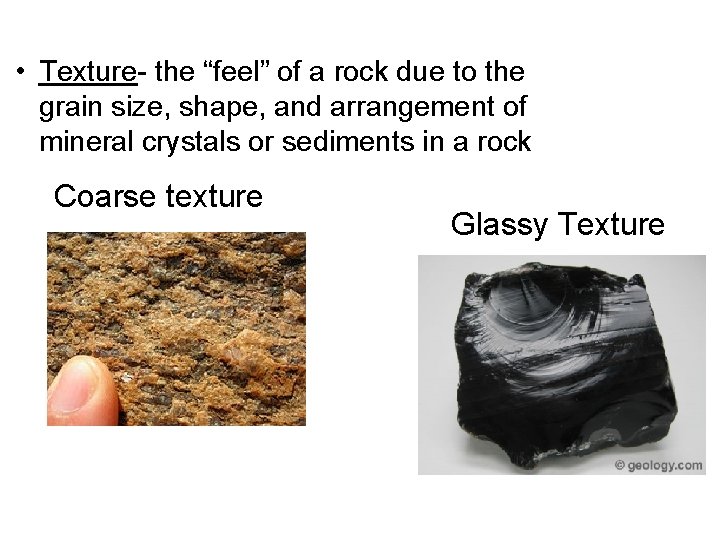
• Texture- the “feel” of a rock due to the grain size, shape, and arrangement of mineral crystals or sediments in a rock Coarse texture Glassy Texture
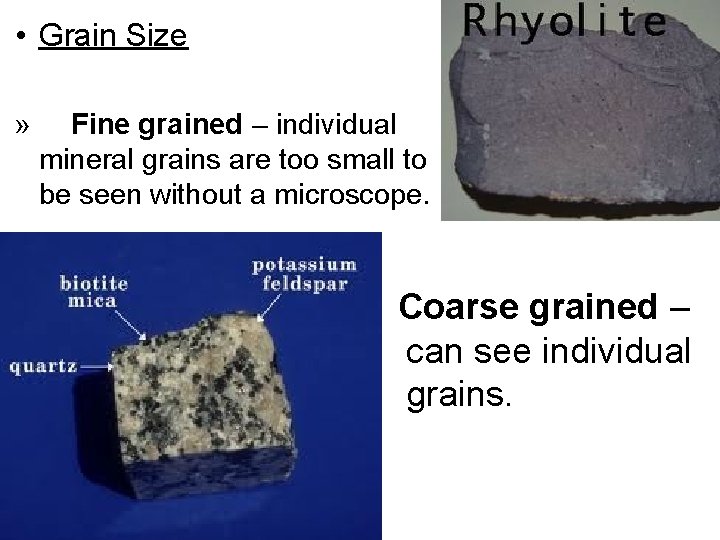
• Grain Size » Fine grained – individual mineral grains are too small to be seen without a microscope. Coarse grained – can see individual grains.