
Warmup Using the equation a b c Solve
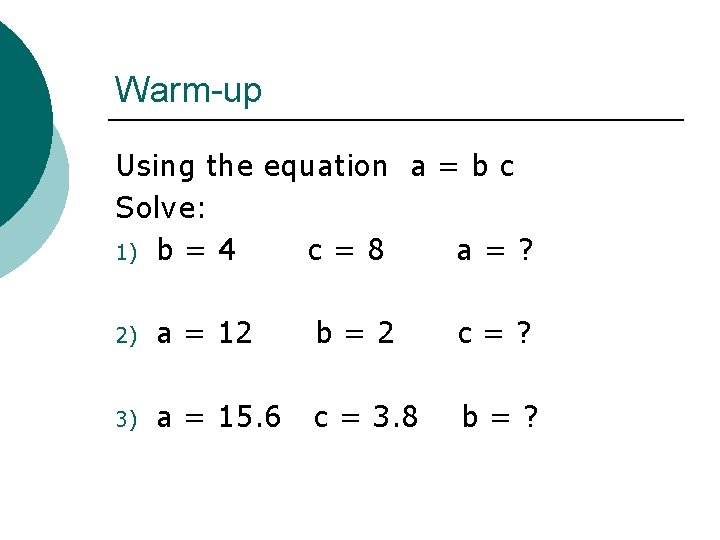
Warm-up Using the equation a = b c Solve: 1) b = 4 c=8 a=? 2) a = 12 b=2 c=? 3) a = 15. 6 c = 3. 8 b=?
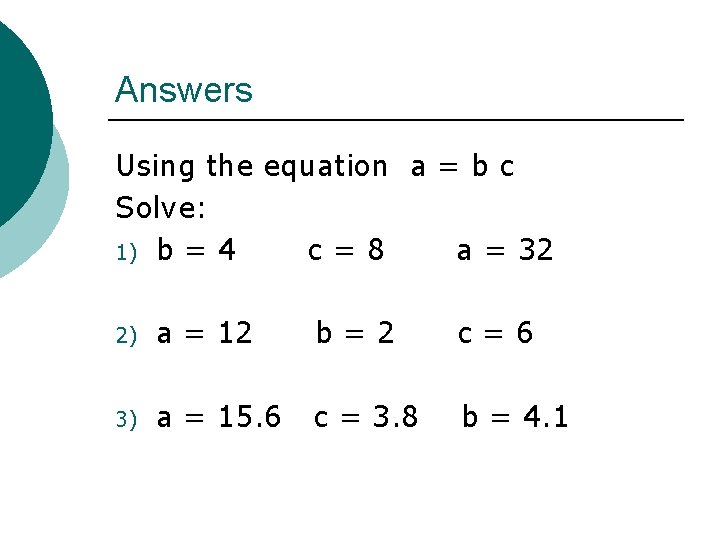
Answers Using the equation a = b c Solve: 1) b = 4 c=8 a = 32 2) a = 12 b=2 c=6 3) a = 15. 6 c = 3. 8 b = 4. 1
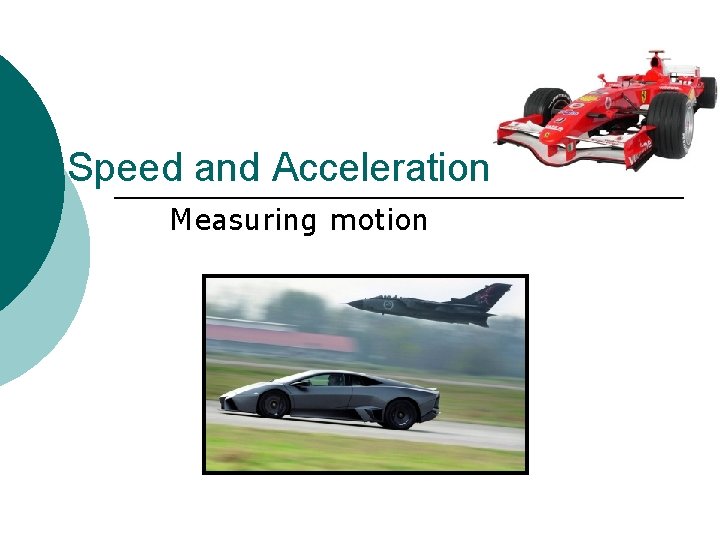
Speed and Acceleration Measuring motion
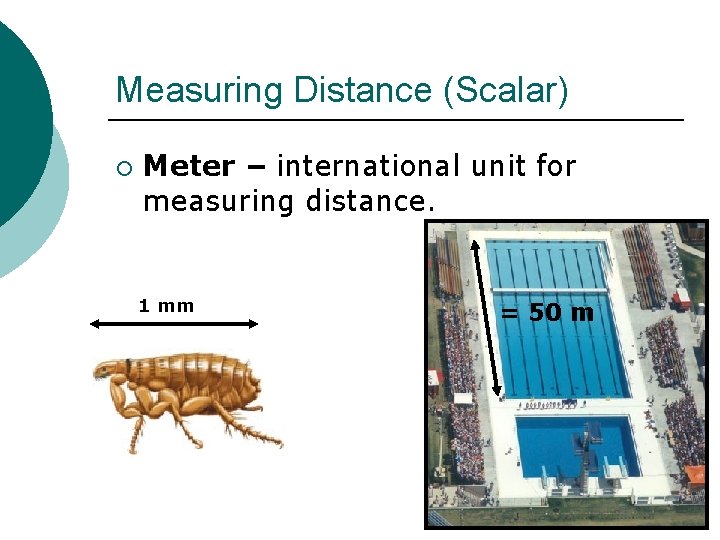
Measuring Distance (Scalar) ¡ Meter – international unit for measuring distance. 1 mm = 50 m
Displacement A Vector quantity. ¡ A vector indicates magnitude (size) and direction. ¡ ¡ ¡ Displacement is distance with direction. Example: 20 m West
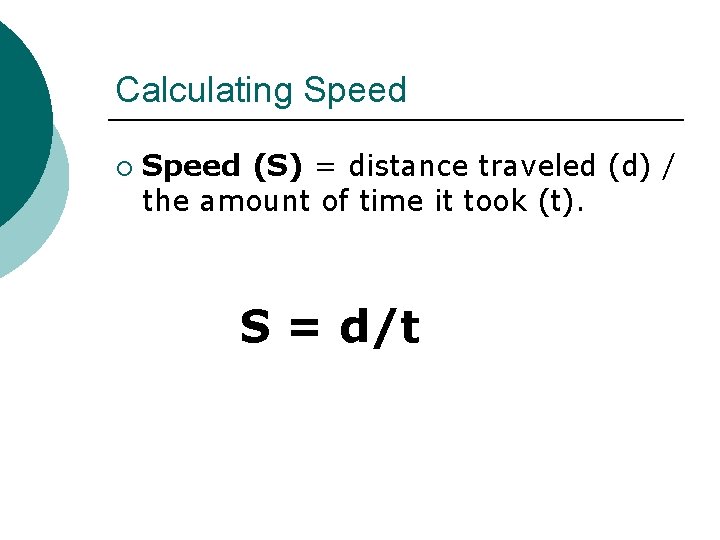
Calculating Speed ¡ Speed (S) = distance traveled (d) / the amount of time it took (t). S = d/t
Units for speed ¡ Depends, but will always be a distance unit / a time unit l l Ex. Cars: mi. /h Jets: km/h Snails: cm/s Falling objects: m/s
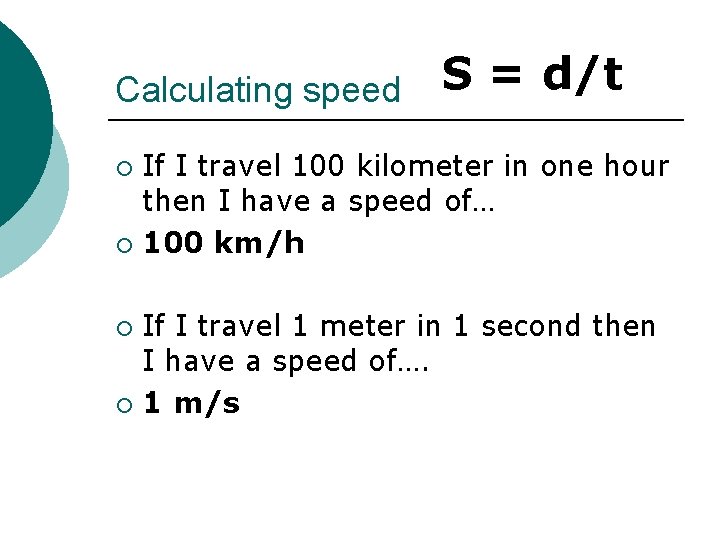
Calculating speed S = d/t If I travel 100 kilometer in one hour then I have a speed of… ¡ 100 km/h ¡ If I travel 1 meter in 1 second then I have a speed of…. ¡ 1 m/s ¡
Average speed ¡ Speed is usually NOT CONSTANT l l ¡ Ex. Cars stop and go regularly Runners go slower uphill than downhill Average speed = total distance traveled/total time it took.
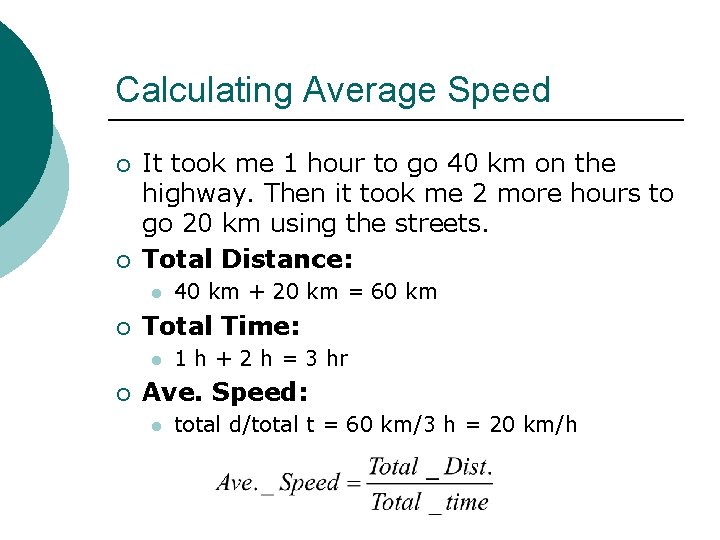
Calculating Average Speed ¡ ¡ It took me 1 hour to go 40 km on the highway. Then it took me 2 more hours to go 20 km using the streets. Total Distance: l ¡ Total Time: l ¡ 40 km + 20 km = 60 km 1 h + 2 h = 3 hr Ave. Speed: l total d/total t = 60 km/3 h = 20 km/h
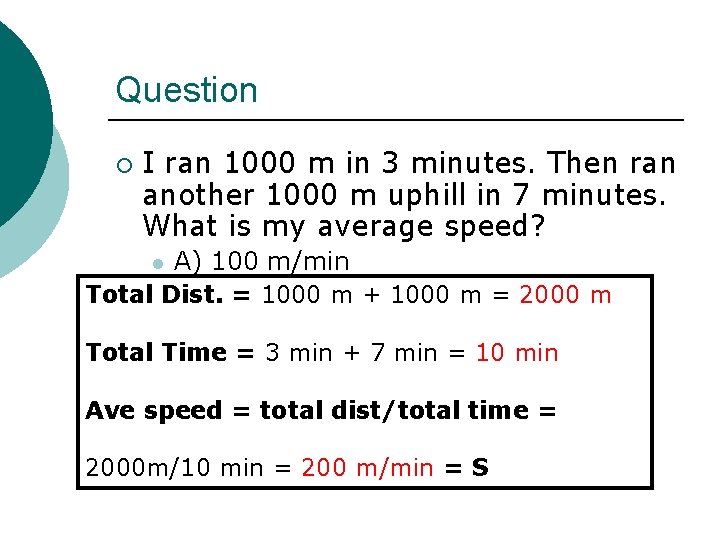
Question ¡ I ran 1000 m in 3 minutes. Then ran another 1000 m uphill in 7 minutes. What is my average speed? A) 100 m/min B) 2000 m/min Totall. Dist. = 1000 m + 1000 m = 2000 m l C) 10 m/min Totall. Time = 3 m/min + 7 min = 10 min D) 200 l E) 20 m/min Ave speed = total dist/total time = l 2000 m/10 min = 200 m/min = S
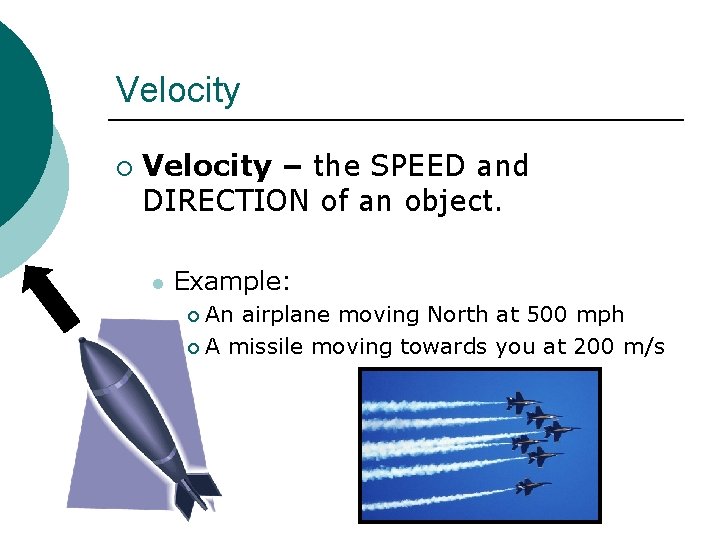
Velocity ¡ Velocity – the SPEED and DIRECTION of an object. l Example: An airplane moving North at 500 mph ¡ A missile moving towards you at 200 m/s ¡
Question ¡ ¡ What is the difference between speed and velocity? Speed is just distance/time. Velocity includes direction as well.
Acceleration ¡ ¡ Acceleration = changing speed Acceleration – the rate at which velocity changes l Can be an: Increase in speed ¡ Decrease in speed ¡ Change in direction ¡
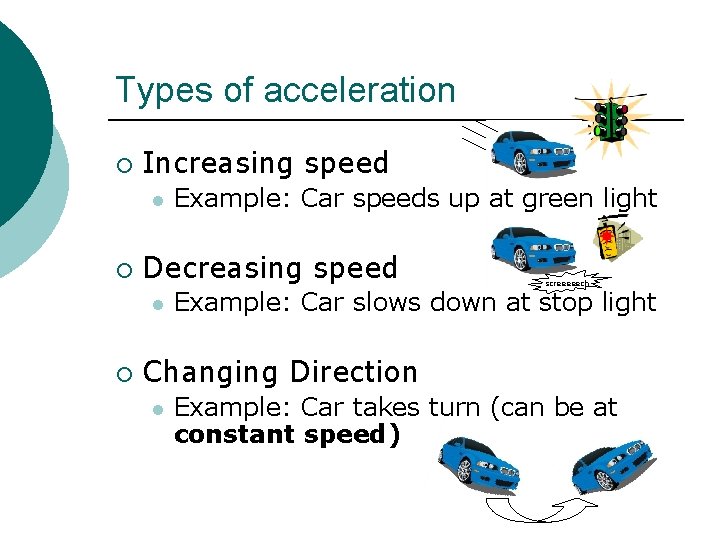
Types of acceleration ¡ Increasing speed l ¡ Decreasing speed l ¡ Example: Car speeds up at green light screeeeech Example: Car slows down at stop light Changing Direction l Example: Car takes turn (can be at constant speed)
Question ¡ ¡ How can a car be accelerating if its speed is a constant 65 km/h? If it is changing directions it is accelerating
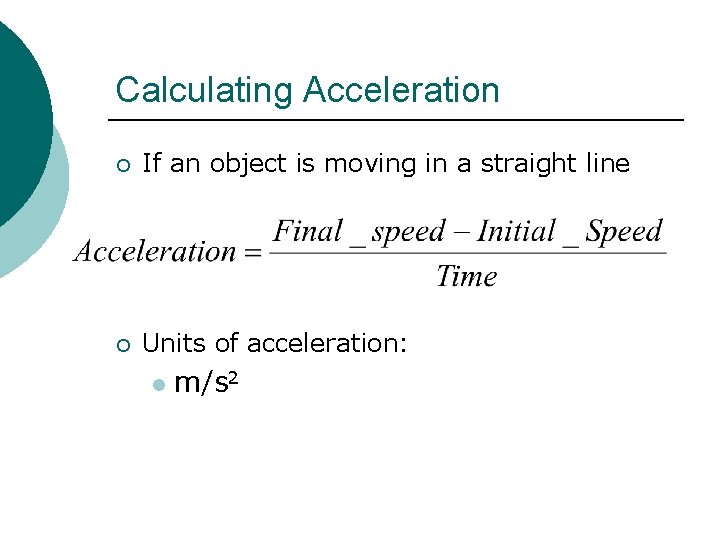
Calculating Acceleration ¡ If an object is moving in a straight line ¡ Units of acceleration: l m/s 2
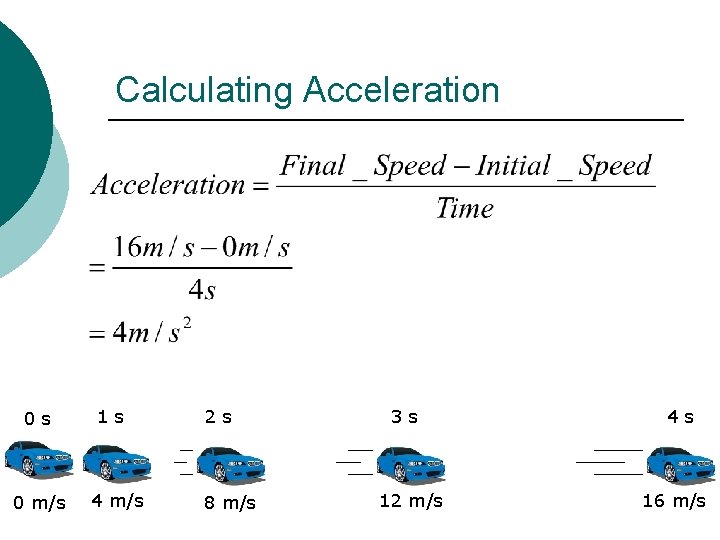
Calculating Acceleration 0 s 0 m/s 1 s 4 m/s 2 s 8 m/s 3 s 12 m/s 4 s 16 m/s
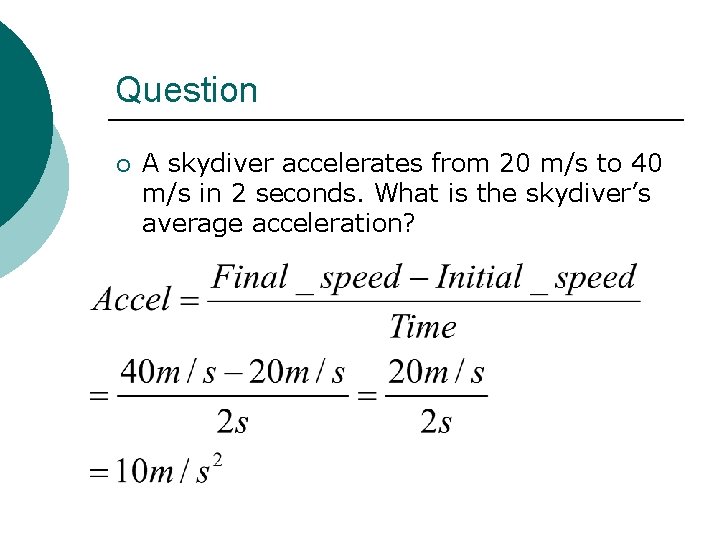
Question ¡ A skydiver accelerates from 20 m/s to 40 m/s in 2 seconds. What is the skydiver’s average acceleration?
Force ¡ So, how do we change something’s speed? ¡ We have to apply a Force. ¡ Forces are a push or a pull. ¡ Forces are measured in units called newtons, after Isaac Newton.
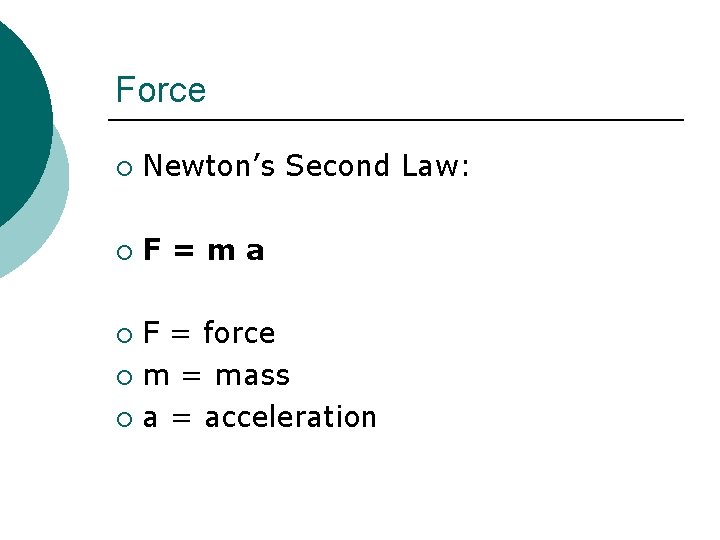
Force ¡ Newton’s Second Law: ¡ F=ma F = force ¡ m = mass ¡ a = acceleration ¡
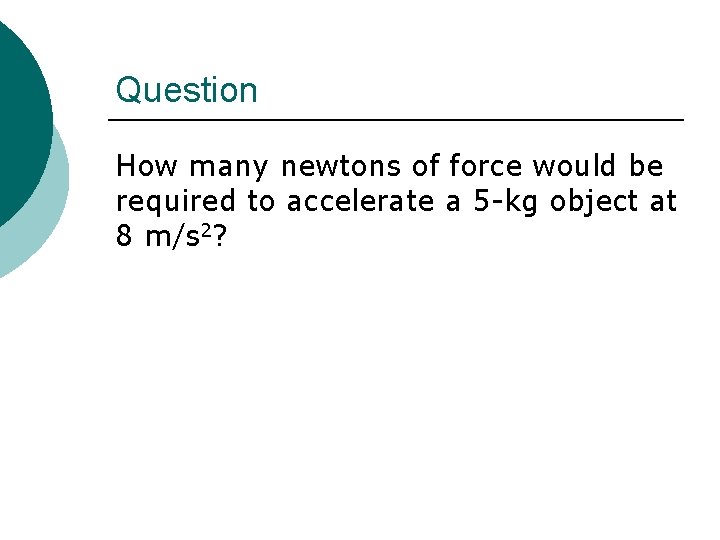
Question How many newtons of force would be required to accelerate a 5 -kg object at 8 m/s 2?
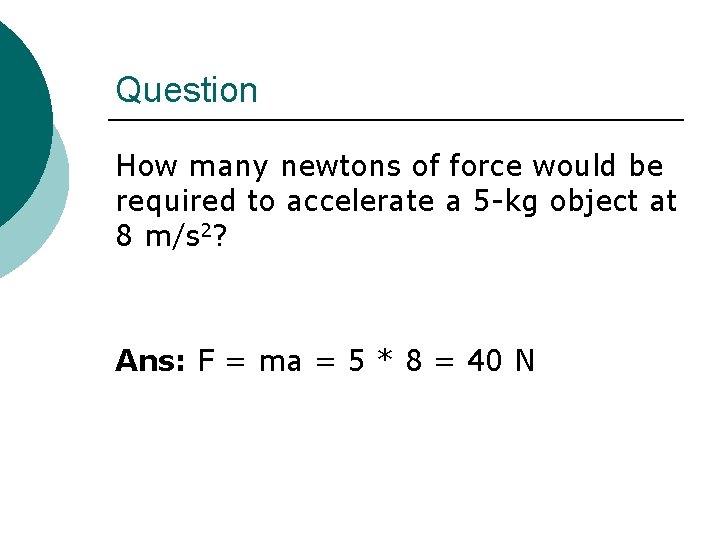
Question How many newtons of force would be required to accelerate a 5 -kg object at 8 m/s 2? Ans: F = ma = 5 * 8 = 40 N
- Slides: 23