
WarmUp u Whats the difference between erosion and

Warm–Up: u What’s the difference between erosion and weathering? u What are some ways that soil can be eroded? u What do you think can happen to areas who have to much erosion? What are some ways to identify a mineral?
homework u. What are some things that humans can do to not have another dust bowl? What can learn from the dust bowl and our soil at that time?
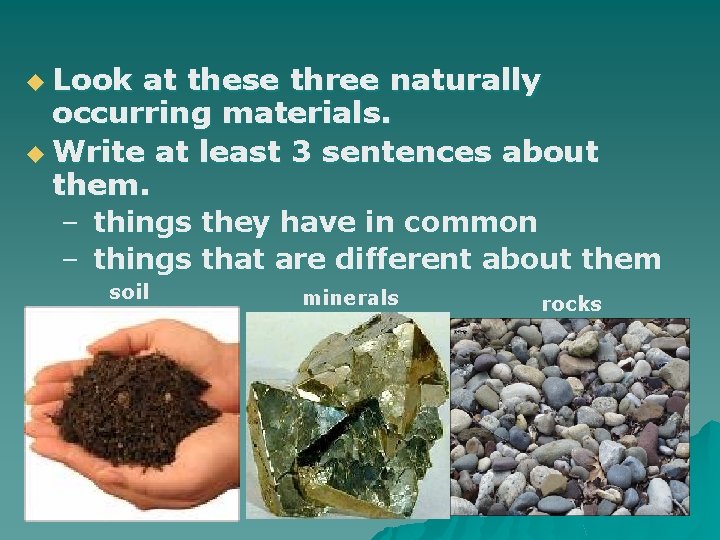
u Look at these three naturally occurring materials. u Write at least 3 sentences about them. – things they have in common – things that are different about them soil minerals rocks
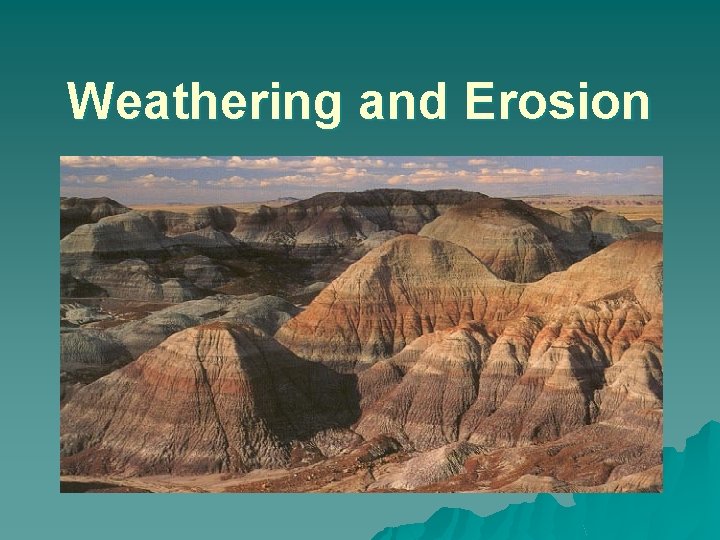
Weathering and Erosion
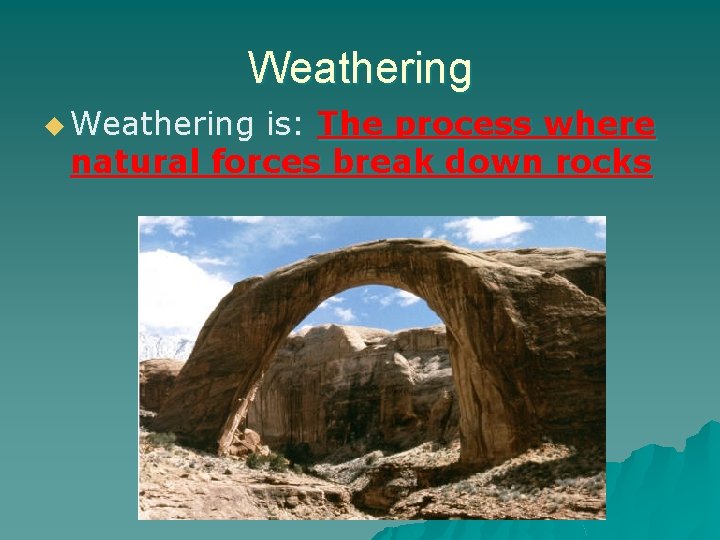
Weathering u Weathering is: The process where natural forces break down rocks

Type of Weathering: Frost Wedging Rocks split apart when water freezes and expands.
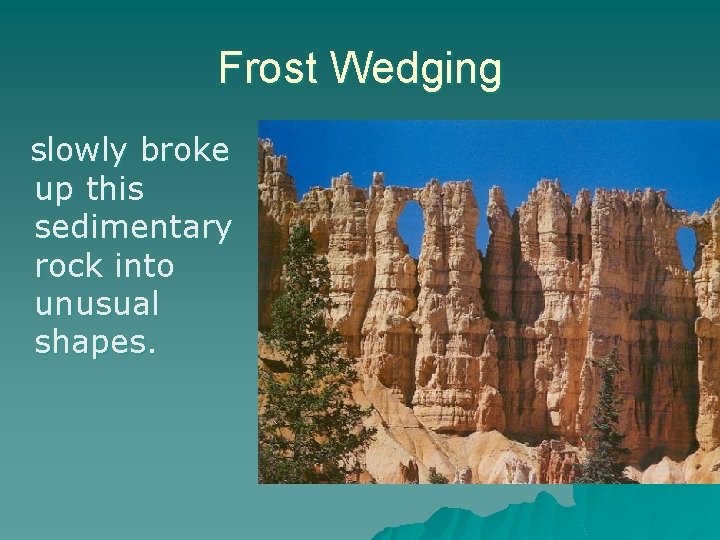
Frost Wedging slowly broke up this sedimentary rock into unusual shapes.
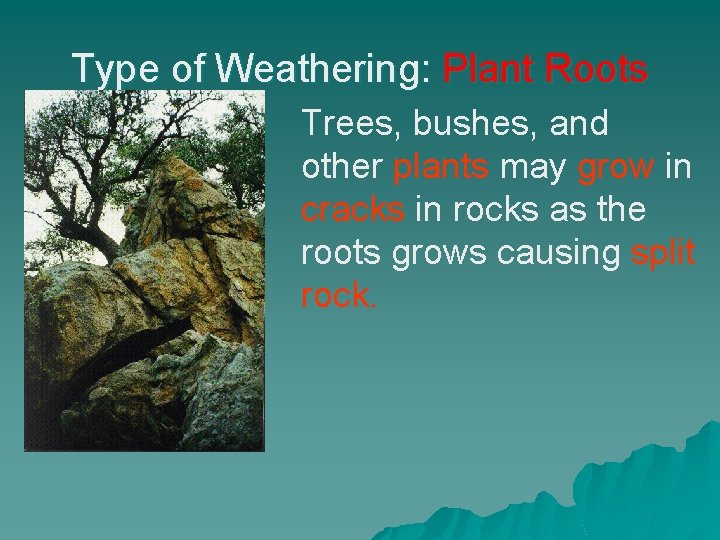
Type of Weathering: Plant Roots Trees, bushes, and other plants may grow in cracks in rocks as the roots grows causing split rock.
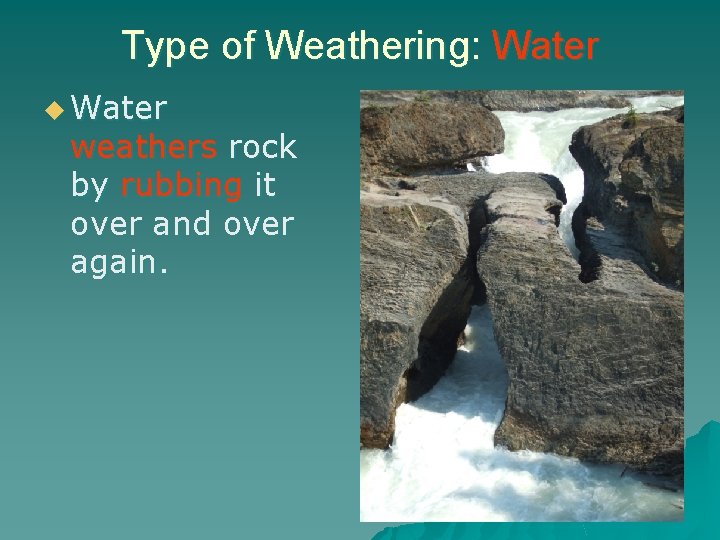
Type of Weathering: Water u Water weathers rock by rubbing it over and over again.
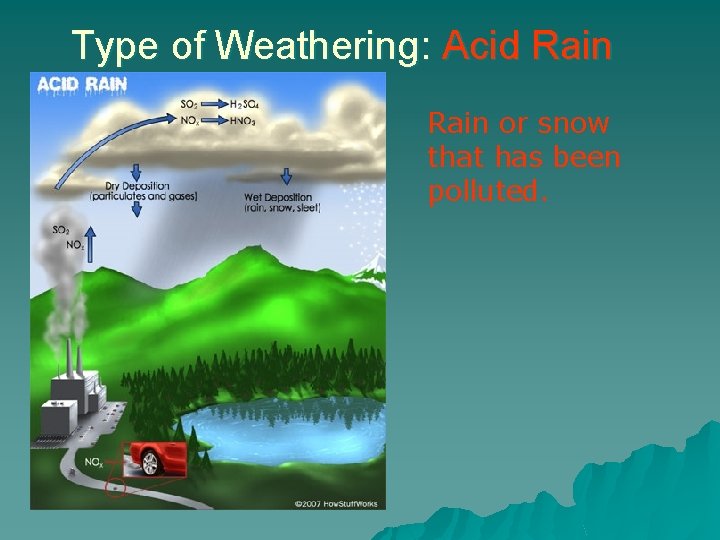
Type of Weathering: Acid Rain or snow that has been polluted.
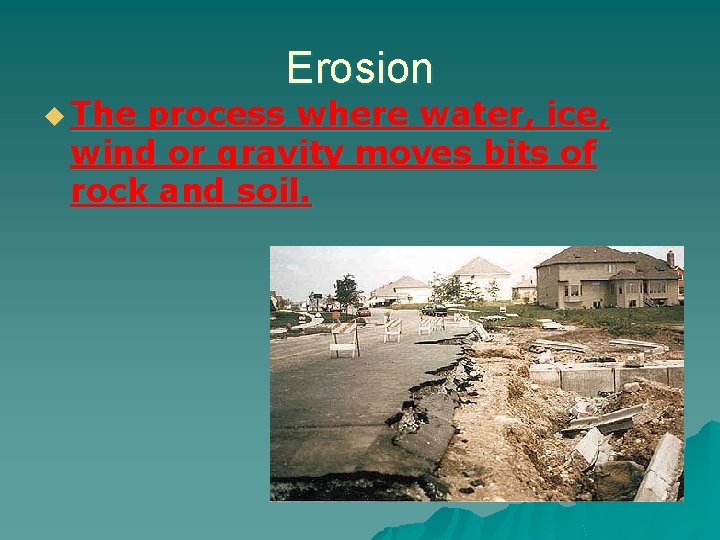
u The Erosion process where water, ice, wind or gravity moves bits of rock and soil.
What is the Difference Between Weathering and Erosion? ? u Weathering: Occurs when a particle is loosened but stays in one place. u Erosion: Occurs once the particle starts moving.
Deposition u Deposition: Sediment is placed in a new location. u Gravity: important part of erosion and deposition.
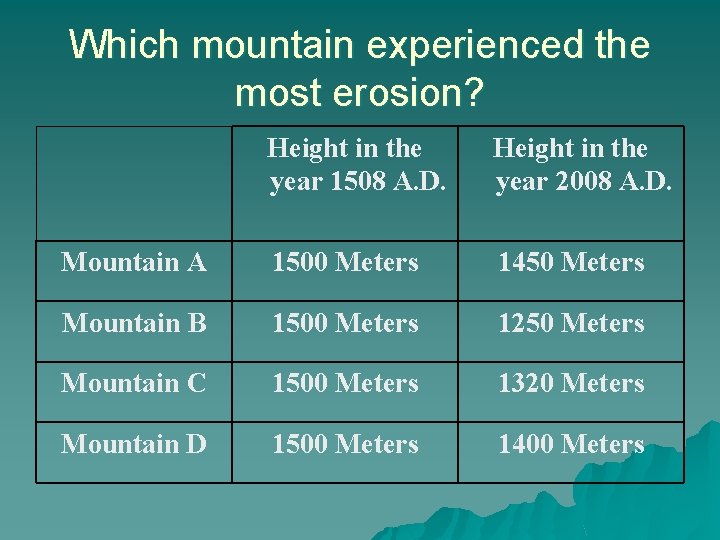
Which mountain experienced the most erosion? Height in the year 1508 A. D. Height in the year 2008 A. D. Mountain A 1500 Meters 1450 Meters Mountain B 1500 Meters 1250 Meters Mountain C 1500 Meters 1320 Meters Mountain D 1500 Meters 1400 Meters
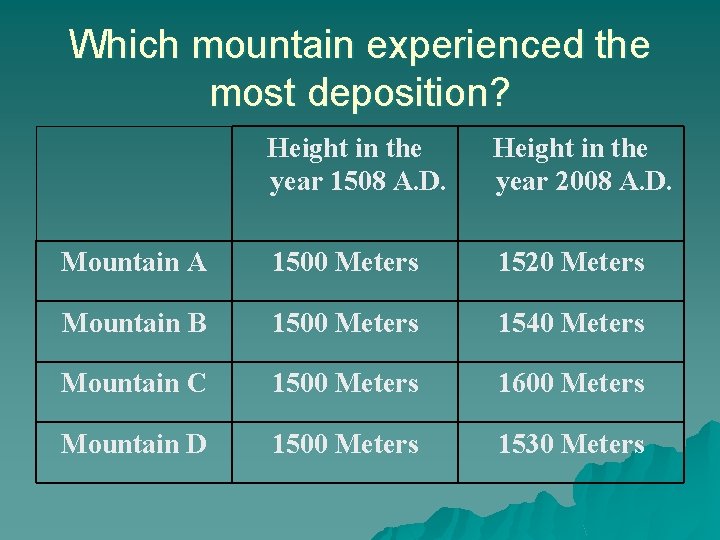
Which mountain experienced the most deposition? Height in the year 1508 A. D. Height in the year 2008 A. D. Mountain A 1500 Meters 1520 Meters Mountain B 1500 Meters 1540 Meters Mountain C 1500 Meters 1600 Meters Mountain D 1500 Meters 1530 Meters
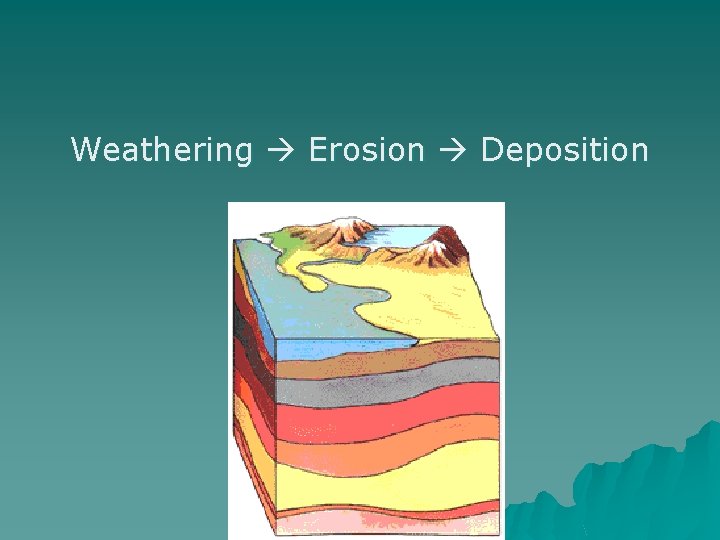
Weathering Erosion Deposition
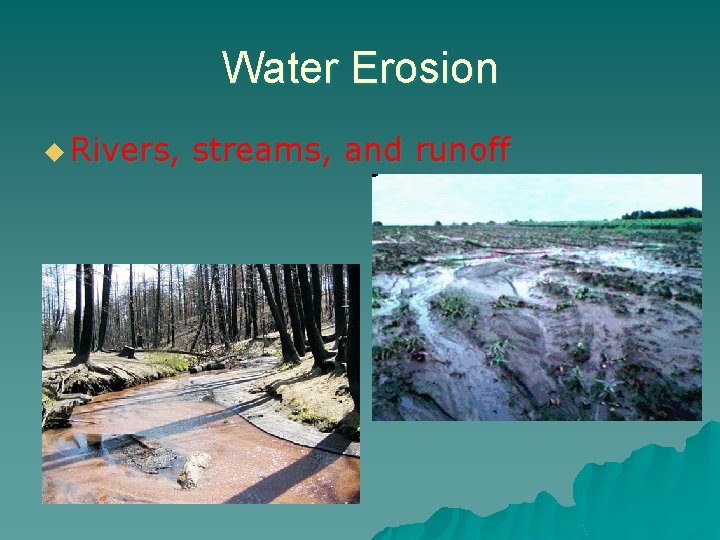
Water Erosion u Rivers, streams, and runoff
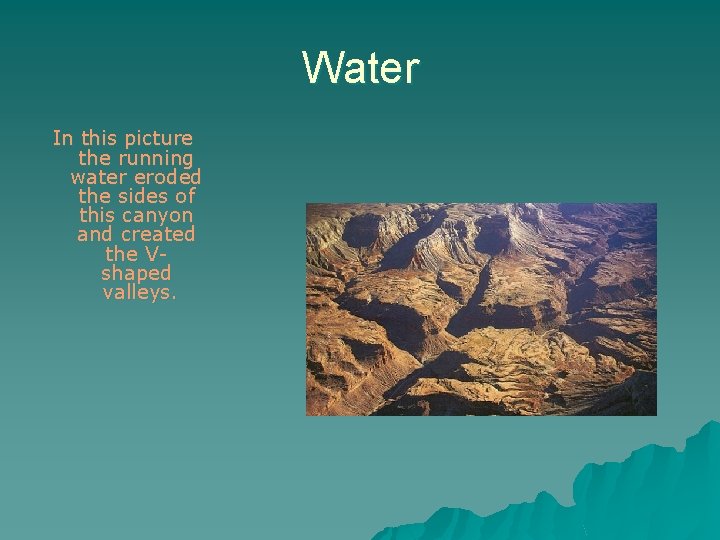
Water In this picture the running water eroded the sides of this canyon and created the Vshaped valleys.
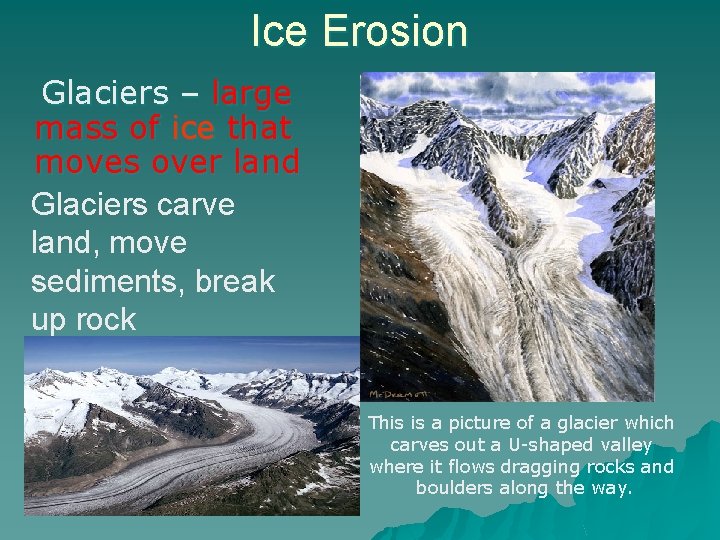
Ice Erosion Glaciers – large mass of ice that moves over land Glaciers carve land, move sediments, break up rock This is a picture of a glacier which carves out a U-shaped valley where it flows dragging rocks and boulders along the way.
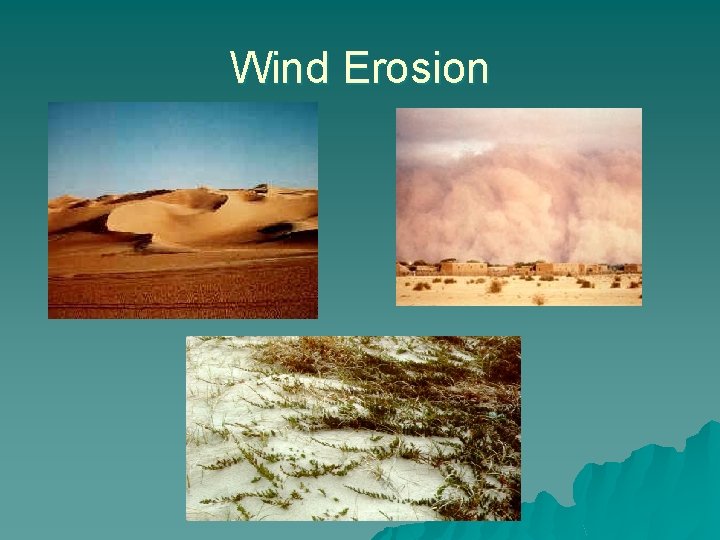
Wind Erosion
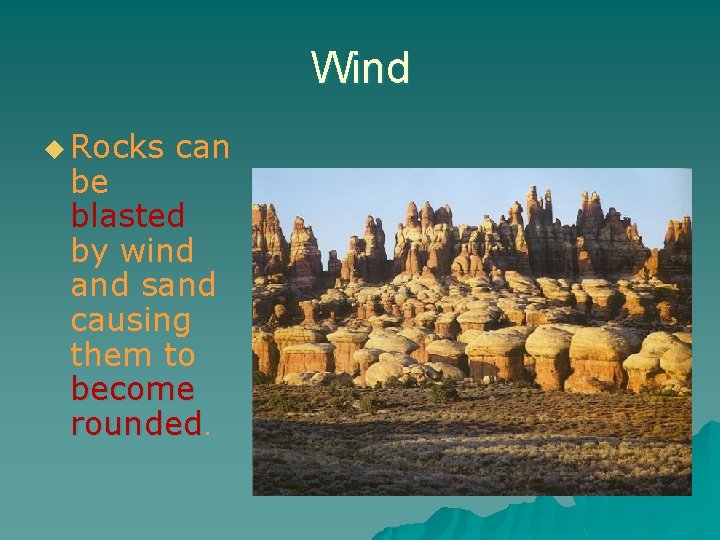
Wind u Rocks can be blasted by wind and sand causing them to become rounded.
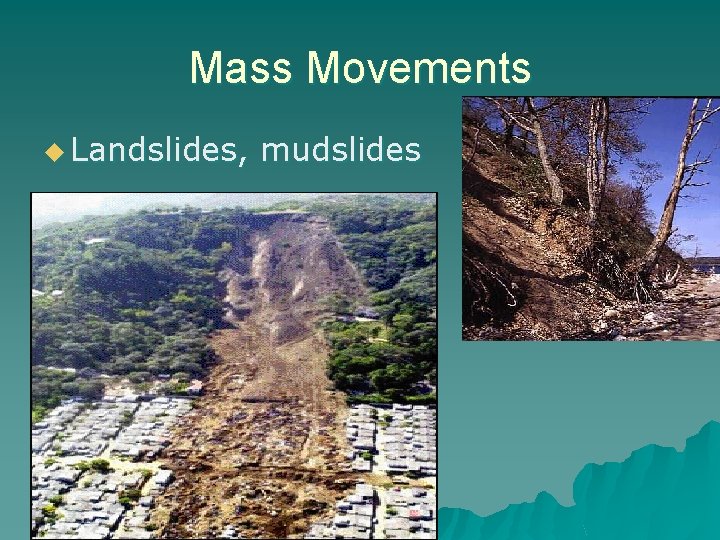
Mass Movements u Landslides, mudslides

Creep This is a diagram of creep. The hillside slowly slips over many years from temperature or water.
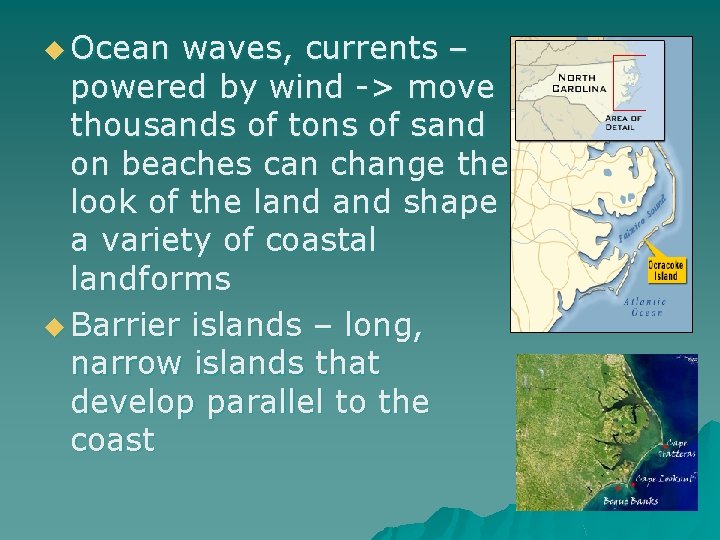
u Ocean waves, currents – powered by wind -> move thousands of tons of sand on beaches can change the look of the land shape a variety of coastal landforms u Barrier islands – long, narrow islands that develop parallel to the coast
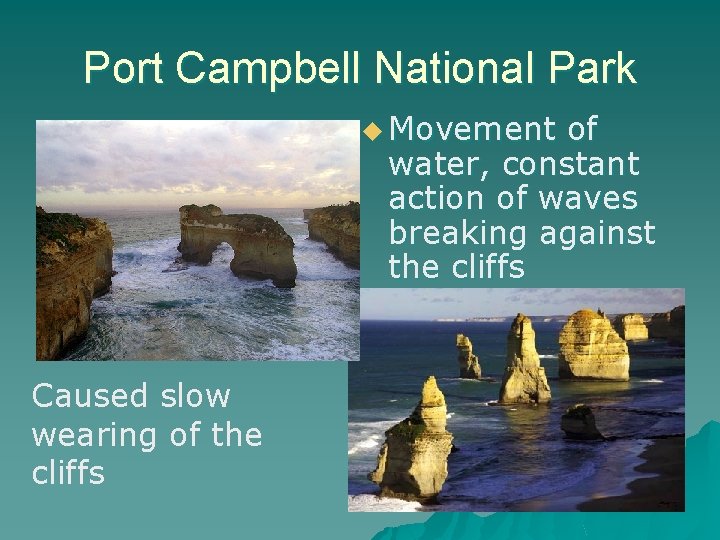
Port Campbell National Park u Movement of water, constant action of waves breaking against the cliffs Caused slow wearing of the cliffs
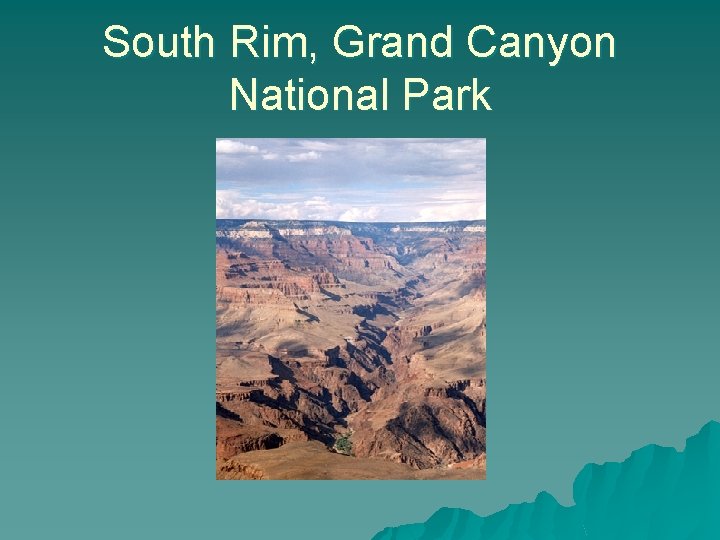
South Rim, Grand Canyon National Park
A Rock’s Story Tell the story of a rock’s life cycle. u Explain the rock cycle in your own words. u Describe all the ways a rock can change. u Explain how your rock Weathered, eroded or deposited somewhere etc. u. Your answer should include: –The 3 types of rocks –The way each type of rock is formed –How one type of rock can change into another. You may include pictures when you have finished your story u
- Slides: 27