
Warmup Spot the Differences Observation Warm up Get
Warm-up Ø Spot the Differences Observation Warm- up Ø Get out your ISN and turn to your warm up section- I know it’s been awhile but label the warm up with the date, title, etc. _ http: //ecology. com/tv/vidpages/biodaversity. php
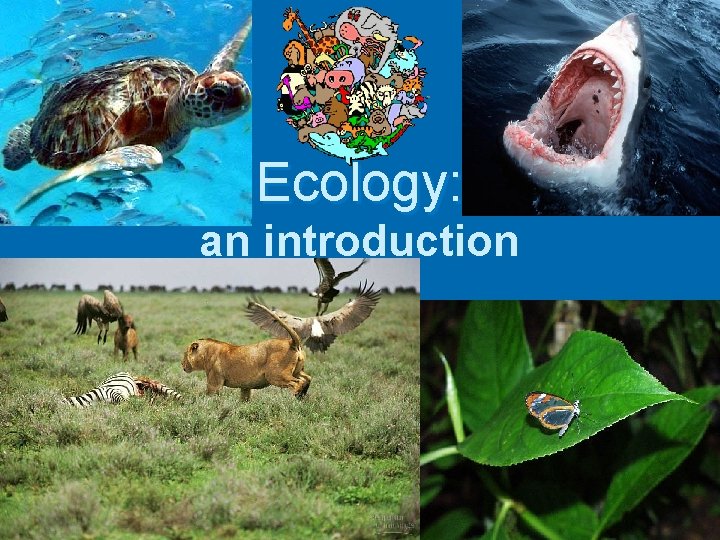
Ecology: an introduction
What is Ecology? ØThe study of living things and how they interact with their environment.
Ecosystem Ø All the organisms living in an area and how they interact with both living and non-living things. Ø Two Factors Organisms Interact With: Biotic – living l Abiotic – nonliving l
Identifying Biotic and Abiotic Factors of Your School Ecosystem BIOTIC (LIVING) Ø Examples Ø l l l _______________ ABIOTIC (NONLIVING) Ø Examples Ø l _______________ l List or Draw pictures l l l List or Draw Pictures
Pg 20: Ecology Tab Pg 21 -Outside wks Pg 222 Notes Ø Which factors are most important for an animals survival? ?
Biotic Ø Biotic – living things Plants l Animals l Single celled organisms (bacteria) l Fungi (example: Mushrooms) l
Abiotic Ø Abiotic – nonliving Water l Air l Soil l Temperature l Sunlight l
Warm-up Take out a sheet of paper and answer the following questions: Today’s warm-up will be collected! 1. Draw a diagram of an ecosystem where you live (the desert). Label all of the abiotic and biotic factors. 2. Give two examples of how plants and animals affect their environment. 3. Describe how temperature, light, and soil (all abiotic factors) affect an ecosystem. 4. Predict what will happen: Think of a forest ecosystem. Now imagine that a large volcanic eruption throws large amounts of dust and ash into their air; blocking out the sun. How might the forest ecosystem be affected if the sunlight is blocked for a day? Then predict if the sunlight were blocked for a year…. What would happen to the plants and animals of that ecosystem?
Warm-up Ø Get your ISN and turn to the page Ø Draw an ecosystem on a half sheet of paper: Ø Label three biotic factors Ø Label three abiotic factors Ø This will be graded!
Parts of an Ecosystem (From Smallest Level To Largest Level)
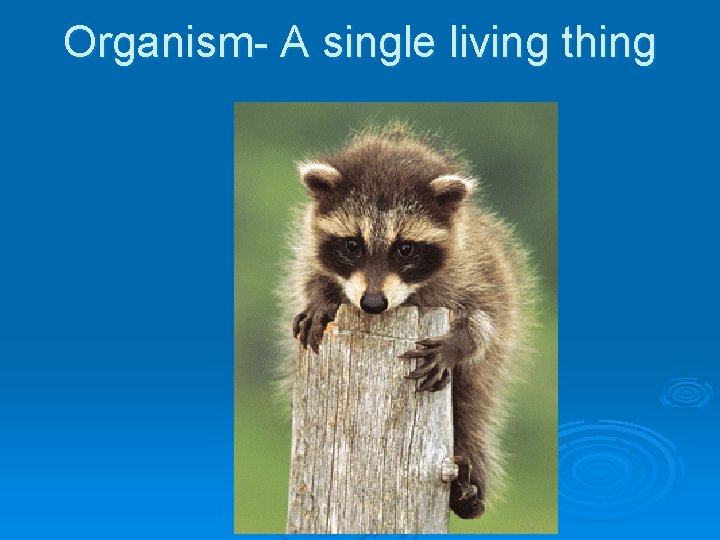
Organism- A single living thing
Population Ø All the organisms in an ecosystem that belong to the same species (biotic)
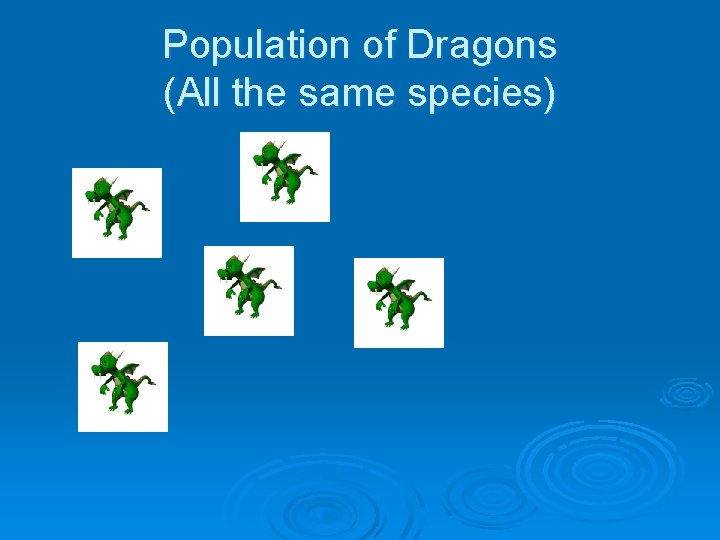
Population of Dragons (All the same species)
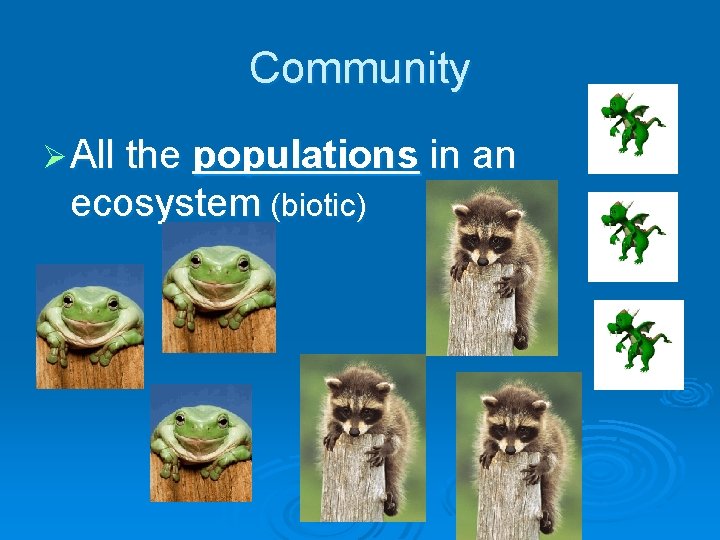
Community Ø All the populations in an ecosystem (biotic)
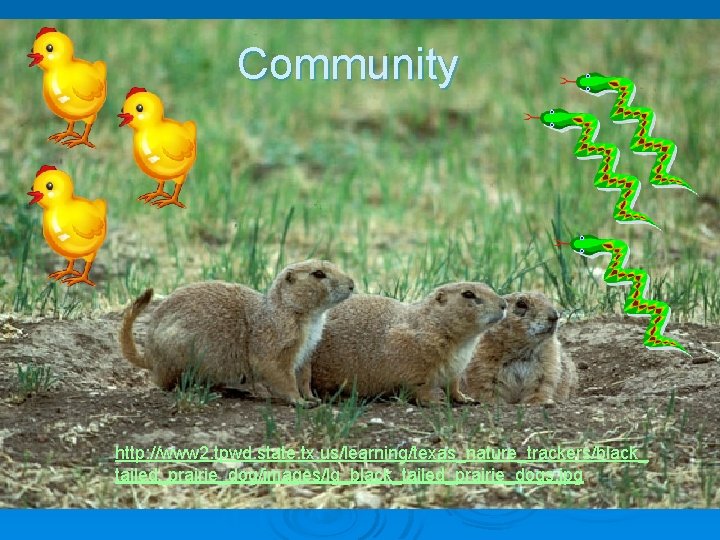
Community http: //www 2. tpwd. state. tx. us/learning/texas_nature_trackers/black_ tailed_prairie_dog/images/lg_black_tailed_prairie_dogs. jpg
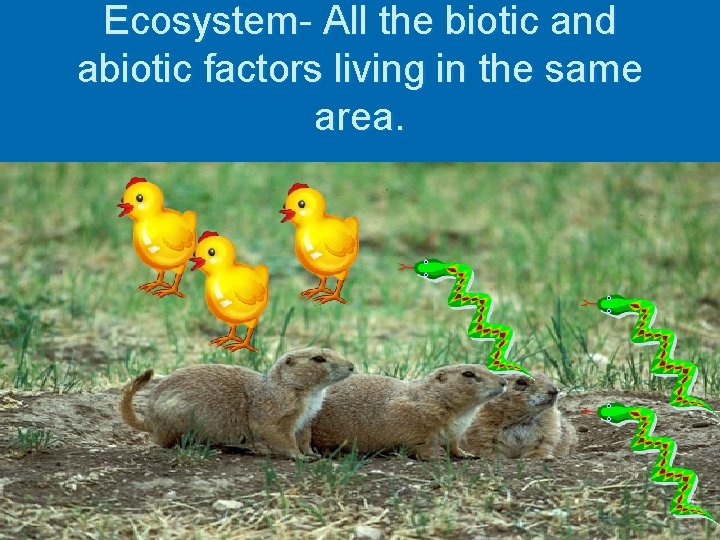
Ecosystem- All the biotic and abiotic factors living in the same area.
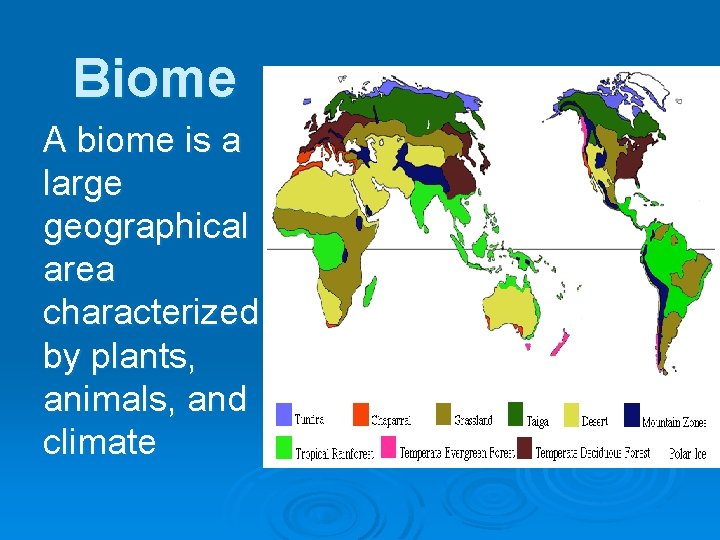
Biome A biome is a large geographical area characterized by plants, animals, and climate
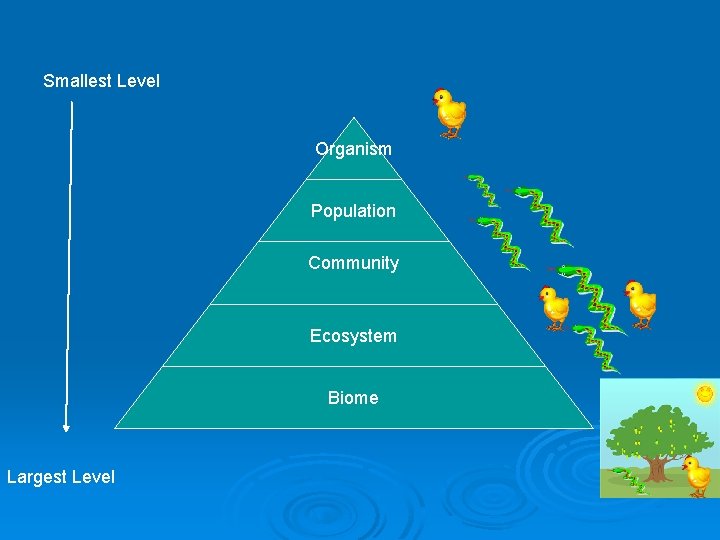
Smallest Level Organism Population Community Ecosystem Biome Largest Level
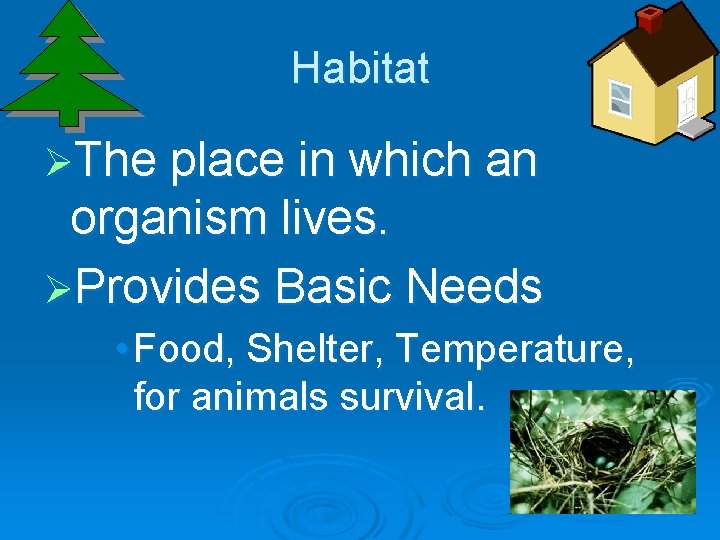
Habitat ØThe place in which an organism lives. ØProvides Basic Needs • Food, Shelter, Temperature, for animals survival.
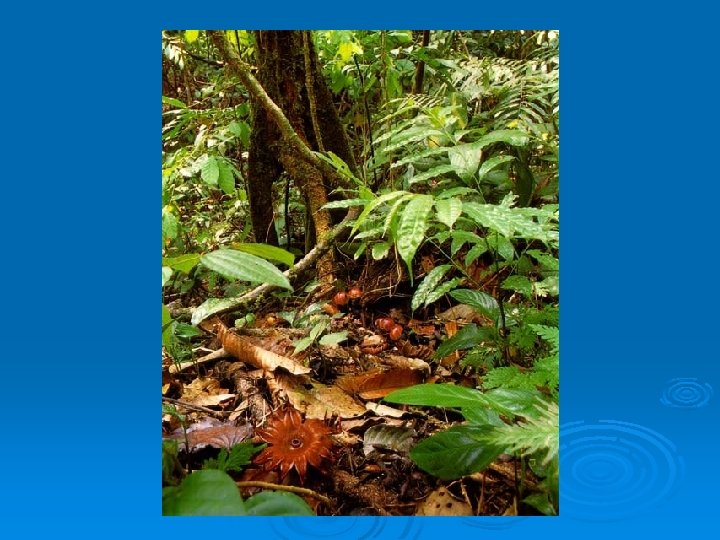
Energy Roles Within An Ecosystem ØAn organism’s energy role is determined by how it obtains energy & how it interacts with other living things. ØThe three energy roles are producer, consumer, & decomposer.
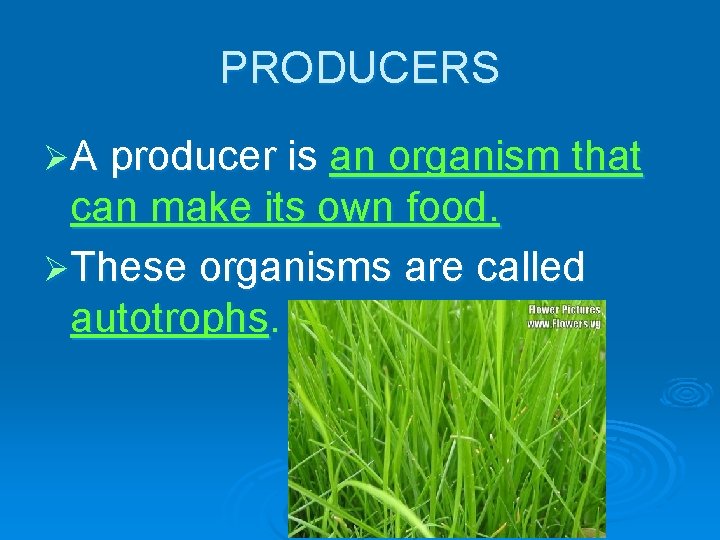
PRODUCERS ØA producer is an organism that can make its own food. ØThese organisms are called autotrophs.
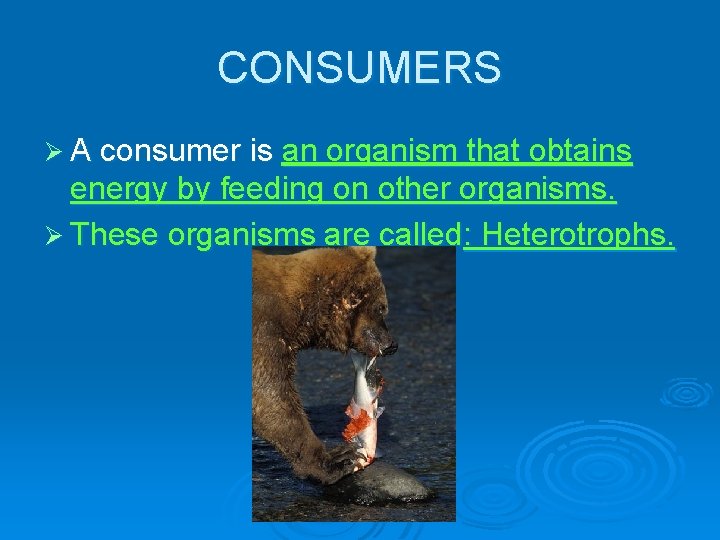
CONSUMERS Ø A consumer is an organism that obtains energy by feeding on other organisms. Ø These organisms are called: Heterotrophs.
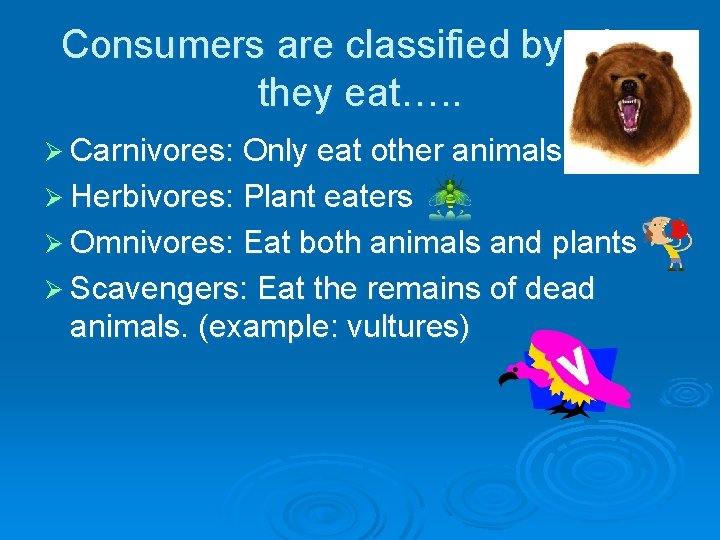
Consumers are classified by what they eat…. . Ø Carnivores: Only eat other animals Ø Herbivores: Plant eaters Ø Omnivores: Eat both animals and plants Ø Scavengers: Eat the remains of dead animals. (example: vultures)
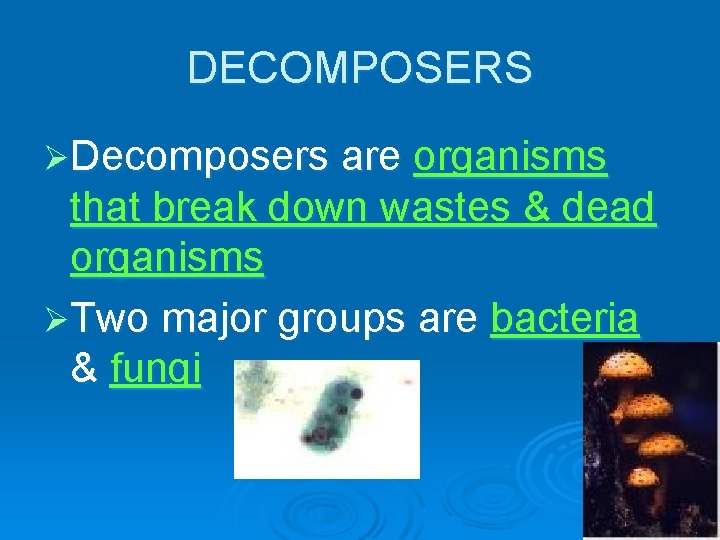
DECOMPOSERS ØDecomposers are organisms that break down wastes & dead organisms ØTwo major groups are bacteria & fungi
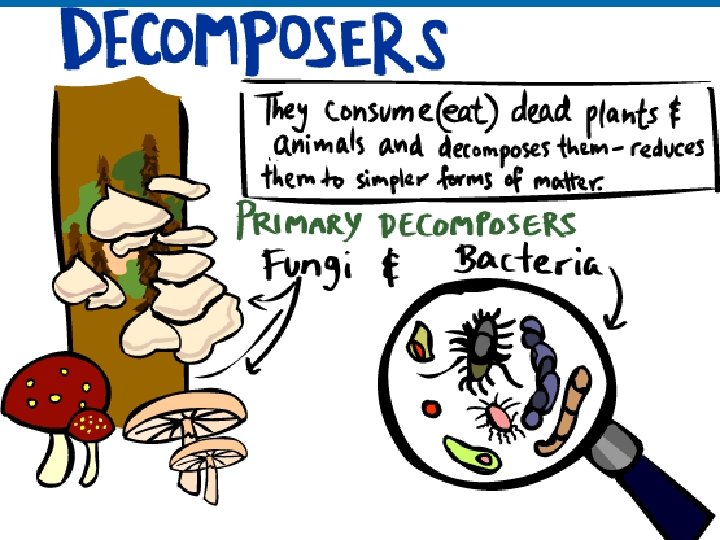
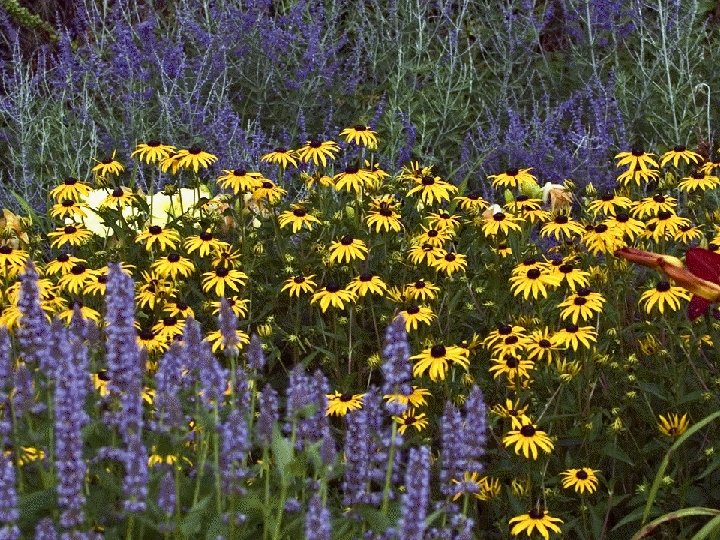
Identify the following pictures as…. ØProducers ØConsumers Or… ØDecomposers
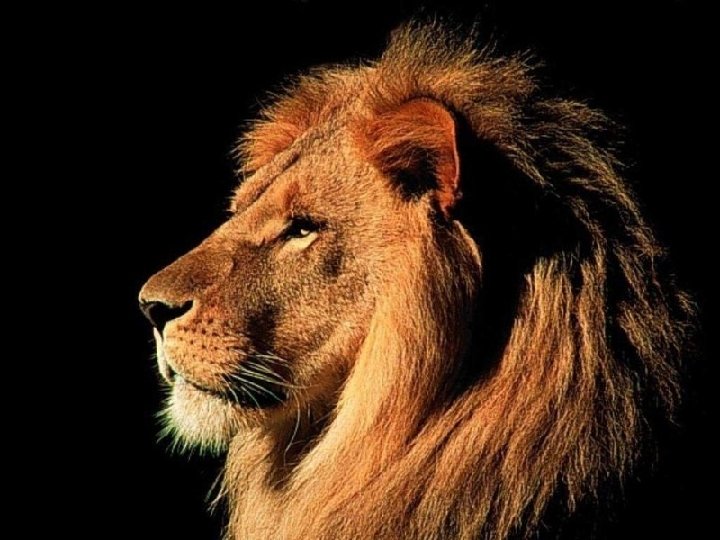
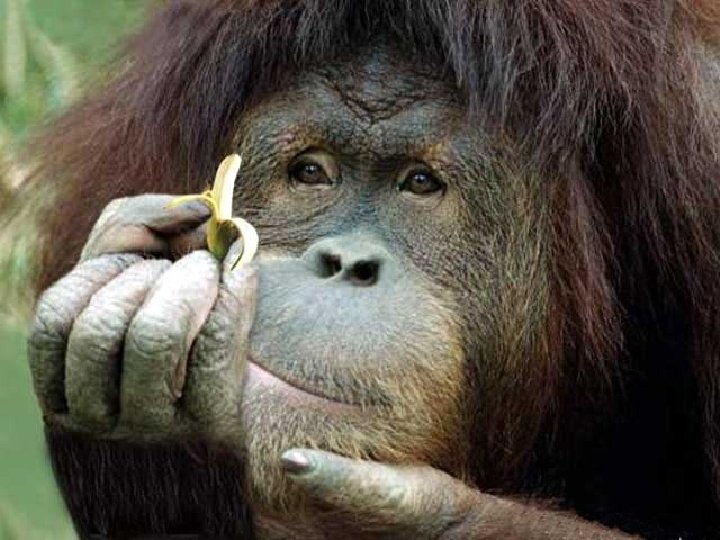
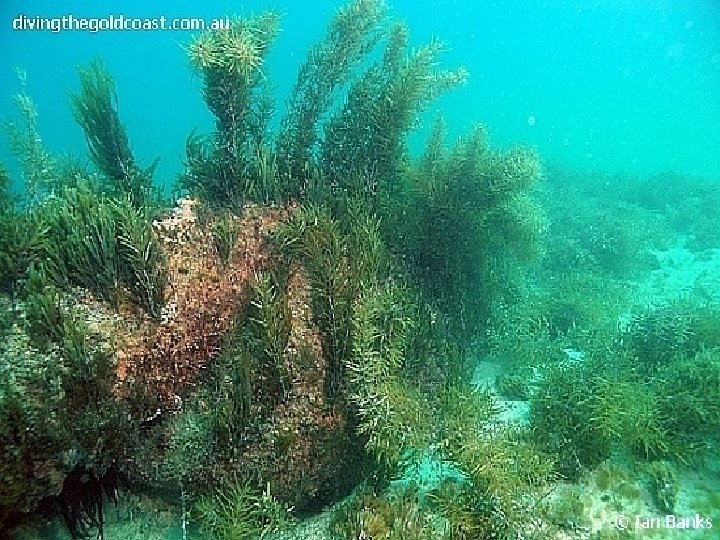
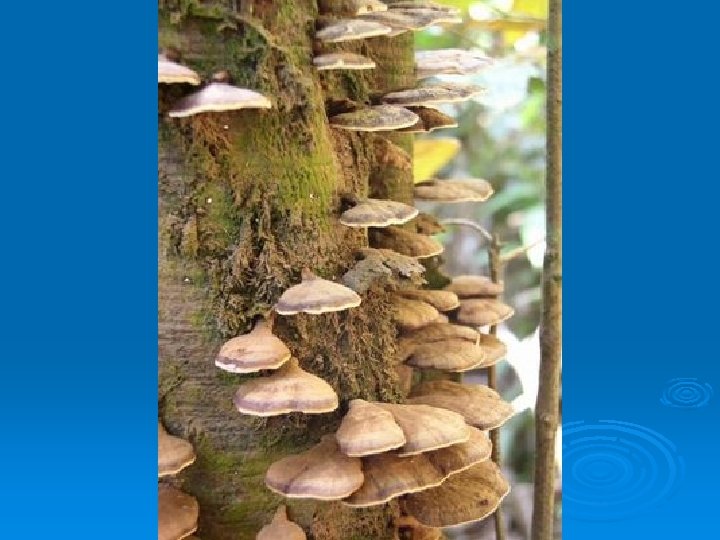
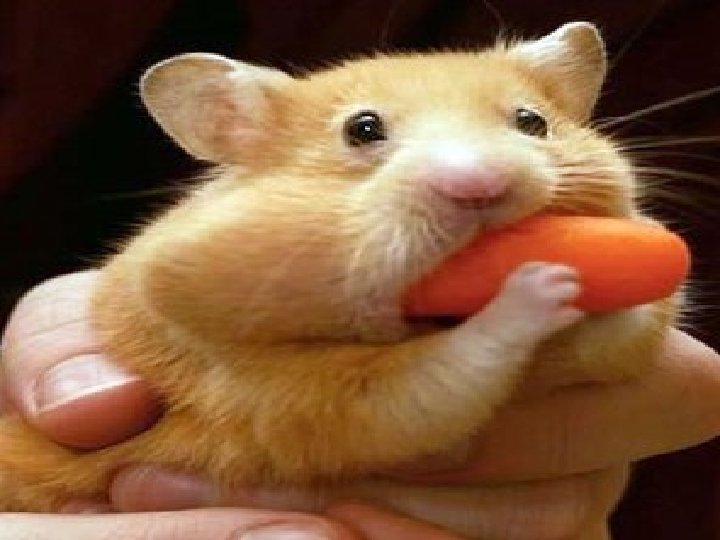
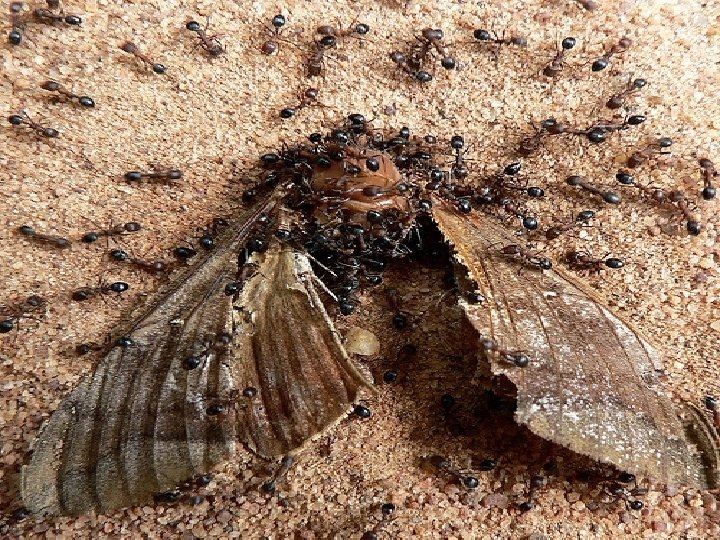
Now Identify the pictures as…. . ØCarnivores (only eat meat) ØHerbivores (only eat plants) ØOmnivores (eat both plants and animals) or…. ØScavengers (eat the remains of dead animals!)
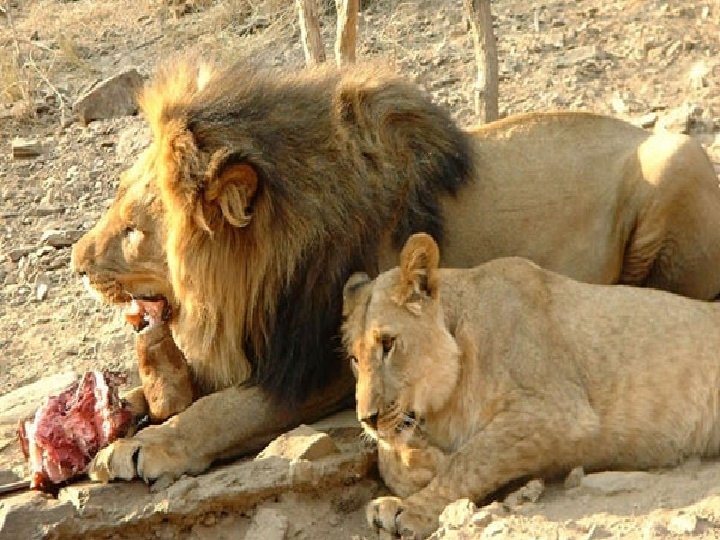
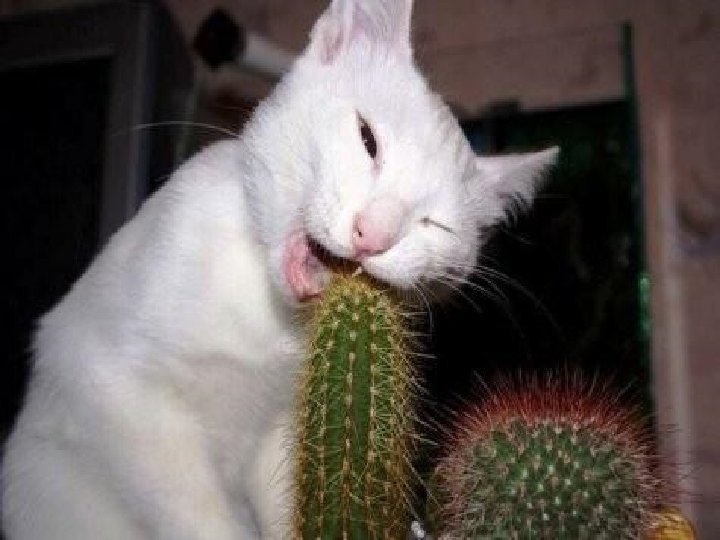

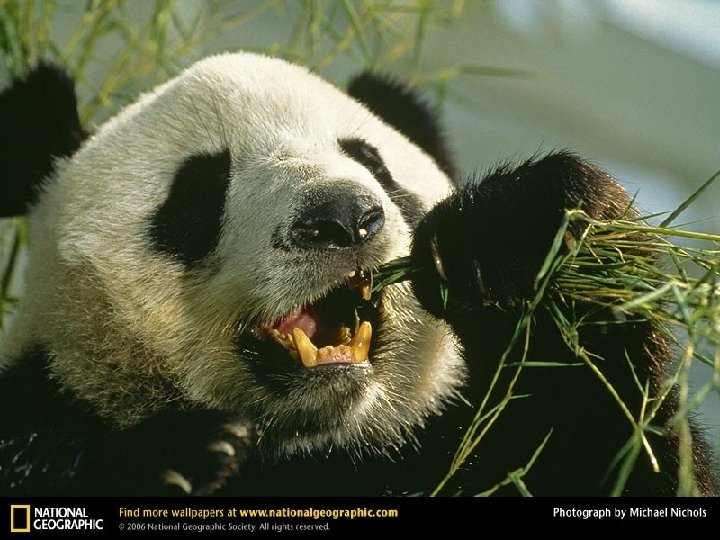
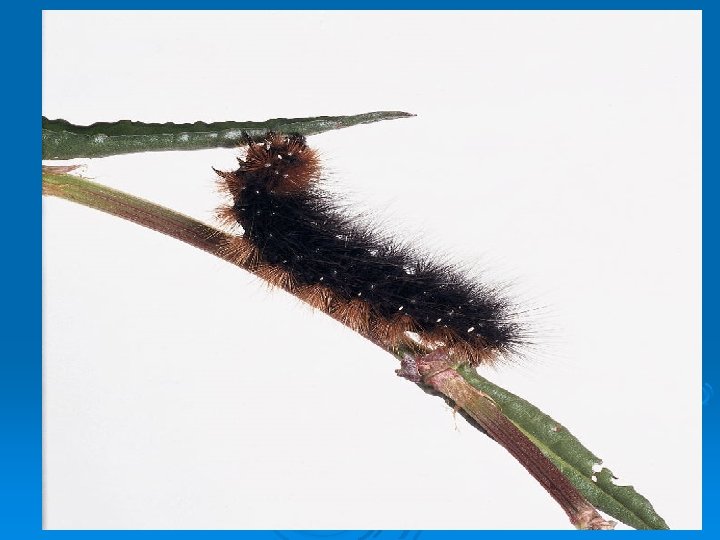

Warm-up Ø Complete the warm-upon your desk Ø We will grade this in class
Food Chains/Food Webs
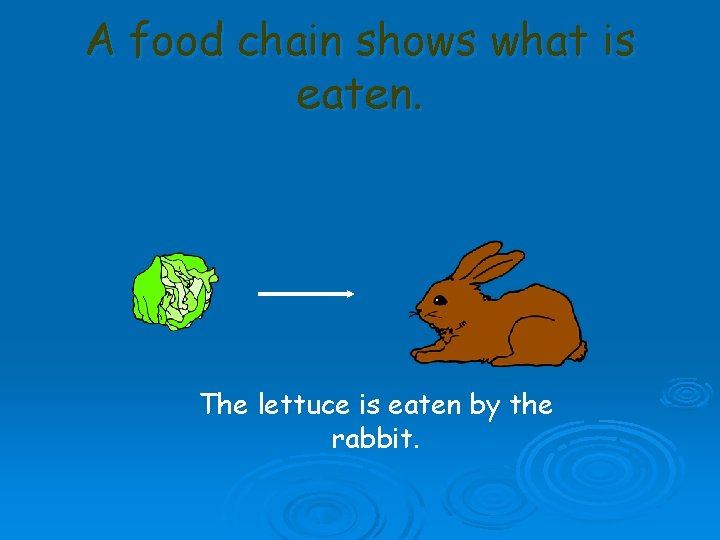
A food chain shows what is eaten. The lettuce is eaten by the rabbit.
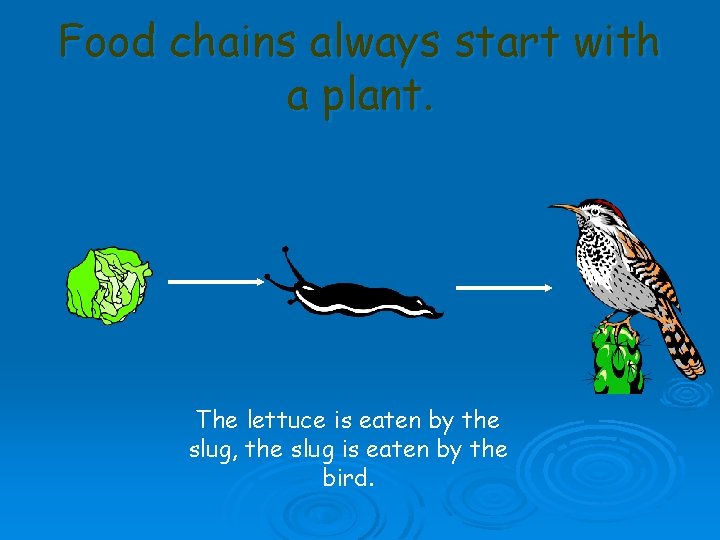
Food chains always start with a plant. The lettuce is eaten by the slug, the slug is eaten by the bird.
Food Chains… A reminder ØA food chain shows which animals eat other animals or plants. Ø Plants don’t eat things. Ø A food chain starts with what gets eaten and the arrows point towards what does the eating. Ø Food chains only go in one direction.
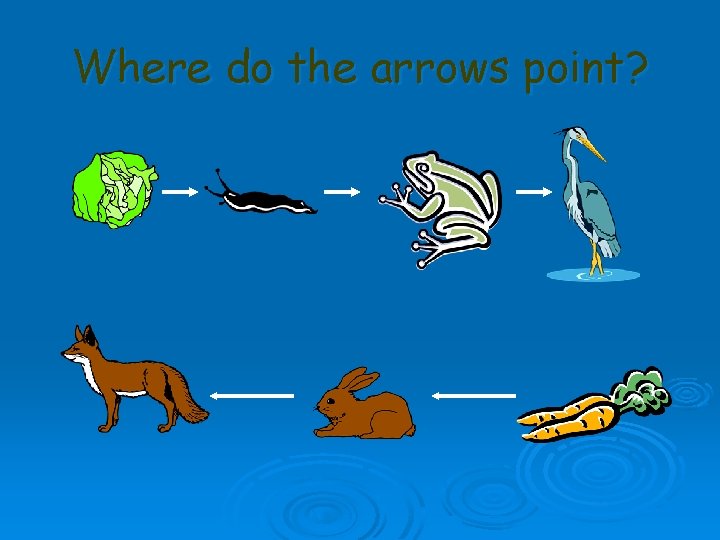
Where do the arrows point?
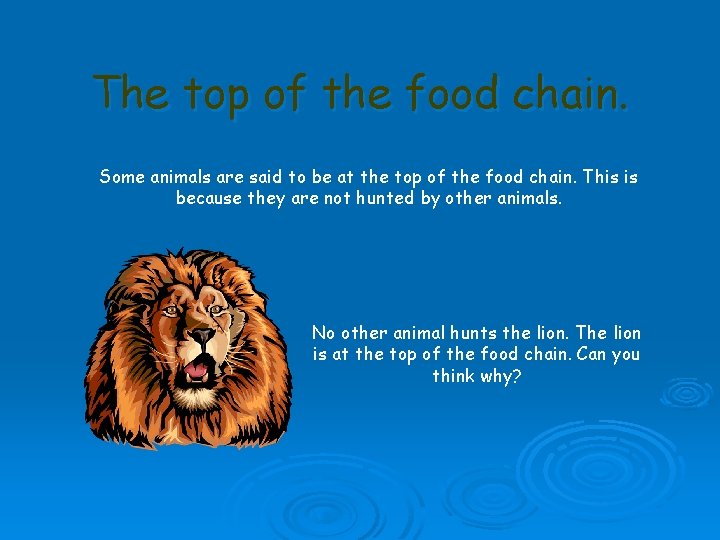
The top of the food chain. Some animals are said to be at the top of the food chain. This is because they are not hunted by other animals. No other animal hunts the lion. The lion is at the top of the food chain. Can you think why?
Food Webs Ø In the wild, animals may eat more than one thing, so they belong to more than one food chain. Ø To get the food they need, small herbivores may eat lots of different plants, and carnivores may eat many different animals.
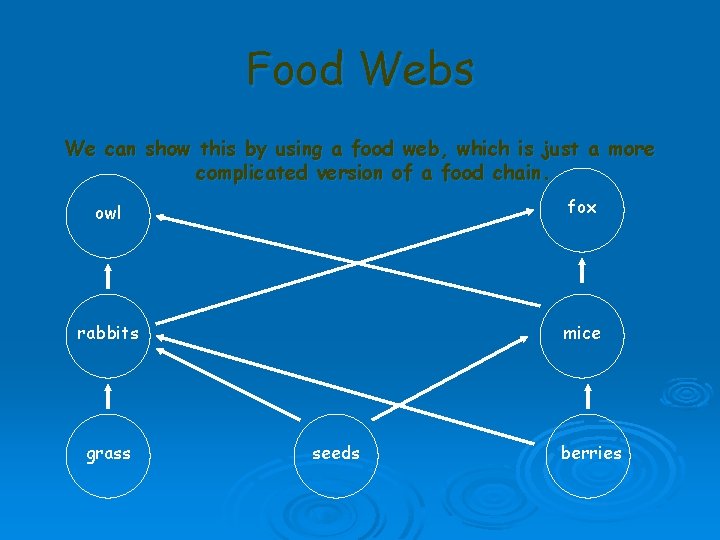
Food Webs We can show this by using a food web, which is just a more complicated version of a food chain. owl fox rabbits mice grass seeds berries
Breaking the Chain Ø Organisms living in a habitat depend on each other. Ø If one part of a food chain dies out or is greatly reduced, the consumers have to find alternative food, move away, or starve. Ø This then affects more consumers in the same way.
Your Assignment Ø Using Microsoft Word: you and your partner will create two food chains. You should have a least 5 steps in your chain. Ø Then take your two food chains and connect them into a food web Ø Put your name on your assignment, print a copy of your food chains and web staple it together and turn it into the bin.
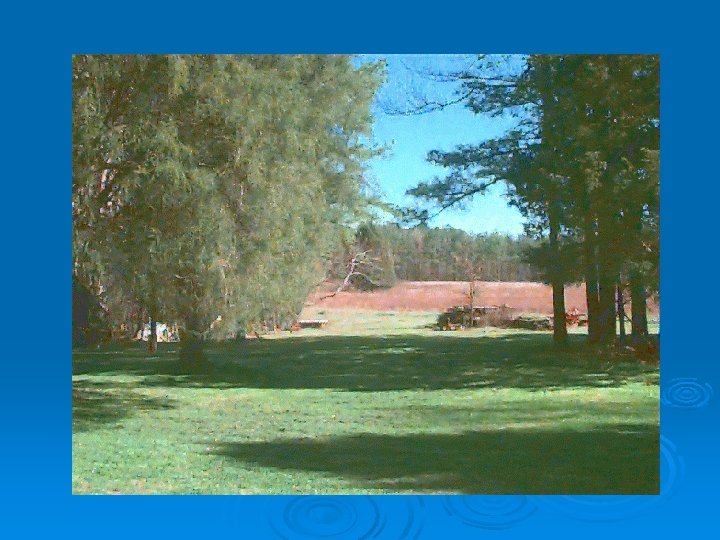
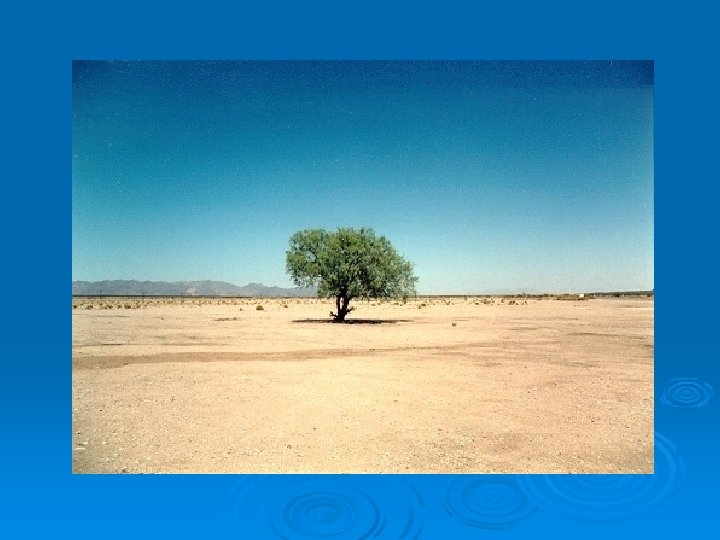
Carrying Capacity Ø The maximum number of individuals of any species that can be supported by a particular ecosystem on a long-term basis
- Slides: 55