
Warmup HSA Practice Book Pages 1 5 Agenda
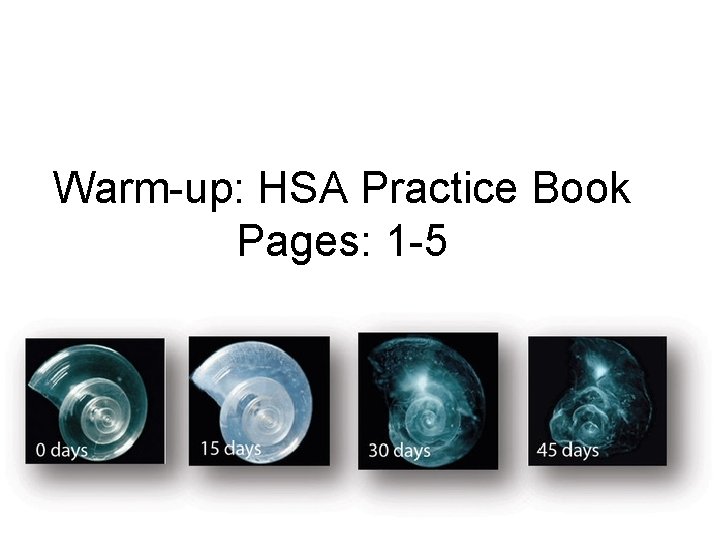
Warm-up: HSA Practice Book Pages: 1 -5
Agenda 1. Warm Up 2. Ocean Acidification Video Clip: https: //www. youtube. com/watch? v=Wo-b. Ht 1 b. Osw 3. Biogeochemical Cycle Diagrams using Textbook. 4. Cycles Video Review https: //youtu. be/Xh. R 1 IEb. Eops 5. Partner Work Practice Half Sheet 6. Closing 7. HSA Practice for Ecology or from Website
Biogeochemical Cycles • Carbon cycle • Nitrogen Cycle • Water Cycle
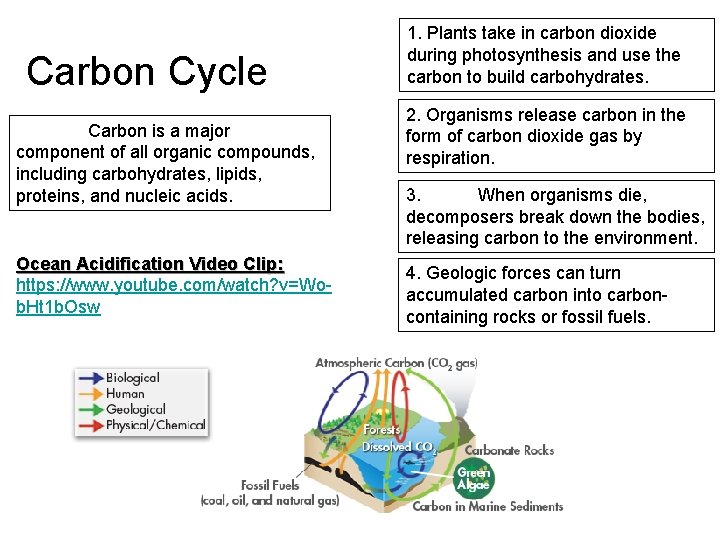
Carbon Cycle Carbon is a major component of all organic compounds, including carbohydrates, lipids, proteins, and nucleic acids. Ocean Acidification Video Clip: https: //www. youtube. com/watch? v=Wob. Ht 1 b. Osw 1. Plants take in carbon dioxide during photosynthesis and use the carbon to build carbohydrates. 2. Organisms release carbon in the form of carbon dioxide gas by respiration. 3. When organisms die, decomposers break down the bodies, releasing carbon to the environment. 4. Geologic forces can turn accumulated carbon into carboncontaining rocks or fossil fuels.
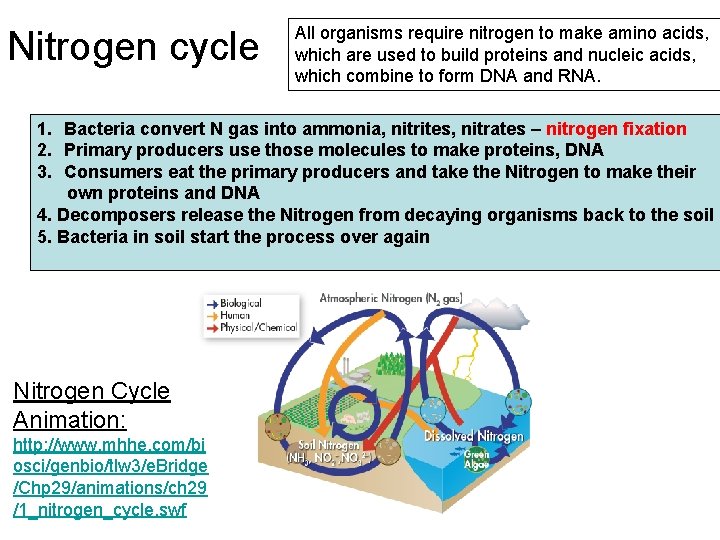
Nitrogen cycle All organisms require nitrogen to make amino acids, which are used to build proteins and nucleic acids, which combine to form DNA and RNA. 1. Bacteria convert N gas into ammonia, nitrites, nitrates – nitrogen fixation 2. Primary producers use those molecules to make proteins, DNA 3. Consumers eat the primary producers and take the Nitrogen to make their own proteins and DNA 4. Decomposers release the Nitrogen from decaying organisms back to the soil 5. Bacteria in soil start the process over again Nitrogen Cycle Animation: http: //www. mhhe. com/bi osci/genbio/tlw 3/e. Bridge /Chp 29/animations/ch 29 /1_nitrogen_cycle. swf
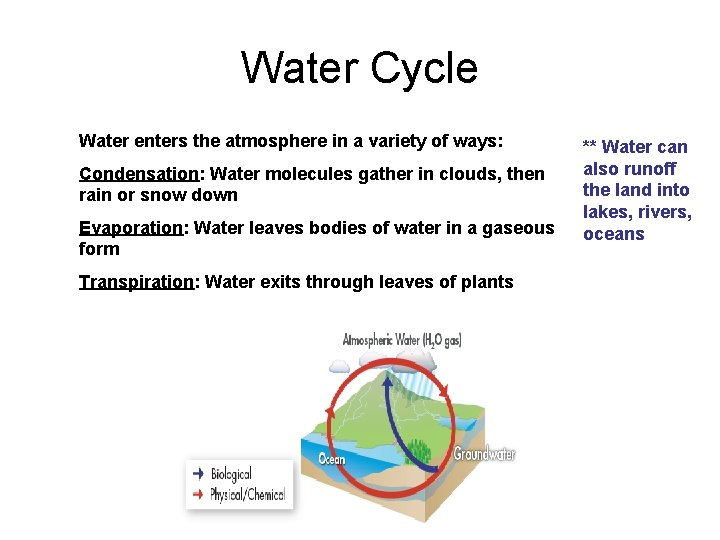
Water Cycle Water enters the atmosphere in a variety of ways: Condensation: Water molecules gather in clouds, then rain or snow down Evaporation: Water leaves bodies of water in a gaseous form Transpiration: Water exits through leaves of plants ** Water can also runoff the land into lakes, rivers, oceans
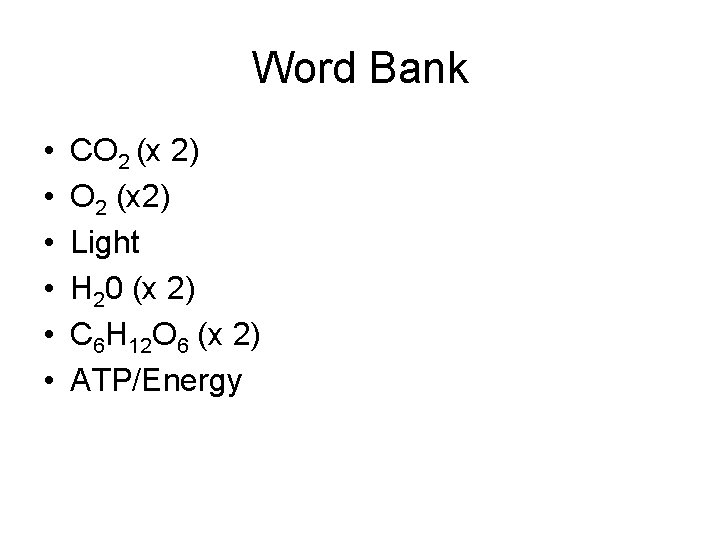
Word Bank • • • CO 2 (x 2) Light H 20 (x 2) C 6 H 12 O 6 (x 2) ATP/Energy
- Slides: 7