
WarmUp How are sedimentary rocks classified Sediment size
- Slides: 30
Warm-Up How are sedimentary rocks classified? Sediment size and formation
MYP Unit Question: What’s Area of Interaction: Learner Profile: a world without rocks? Human Ingenuity Thinker Students will investigate the scientific view of how the earth’s surface is formed. Standard: Learning Target: Today I am learning about sedimentary rocks because they help form the surface of the Earth.
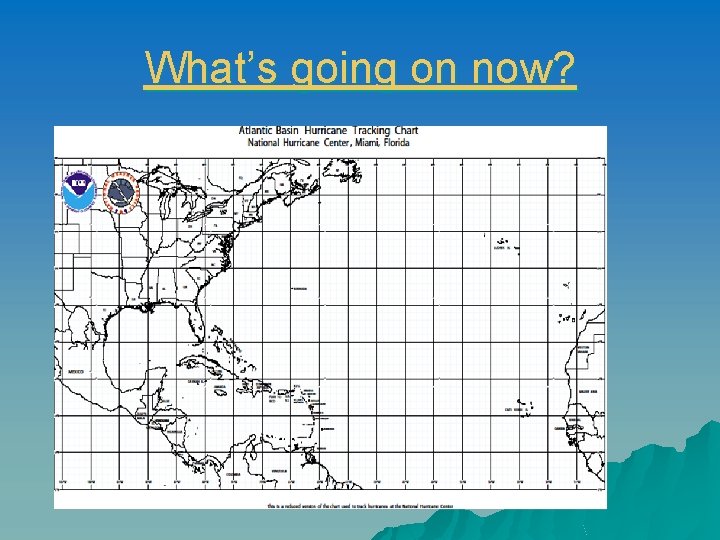
What’s going on now?
u Opening: u Work Sedimentary Rocks Session: – Finish notes over igneous rocks – Vocabulary Organizer (due tomorrow)
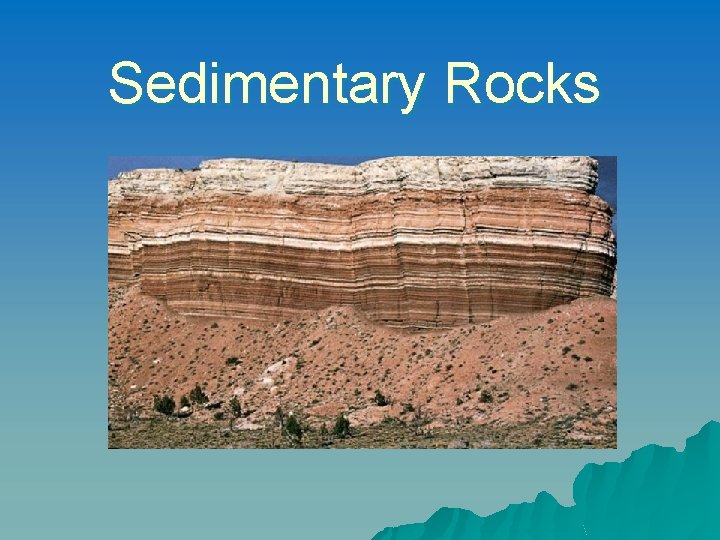
Sedimentary Rocks
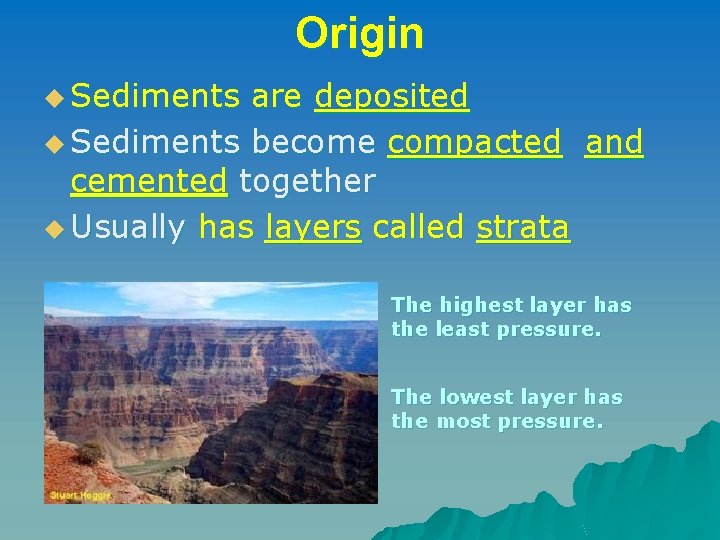
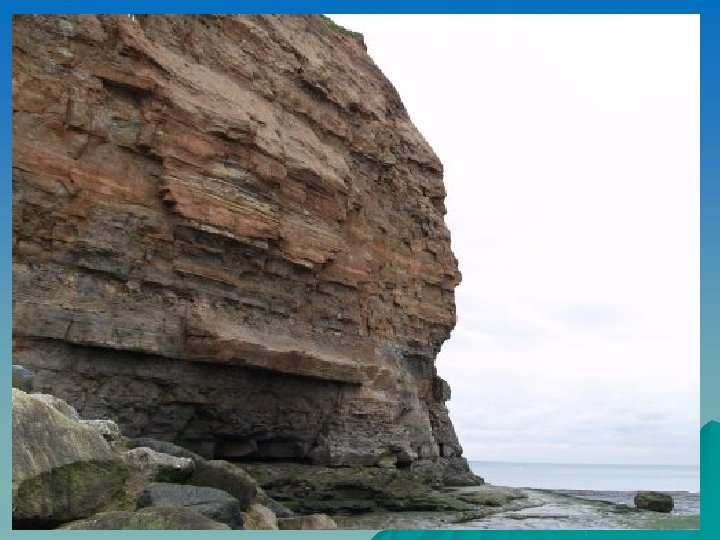
Origin u Sediments are deposited u Sediments become compacted and cemented together u Usually has layers called strata The highest layer has the least pressure. The lowest layer has the most pressure.
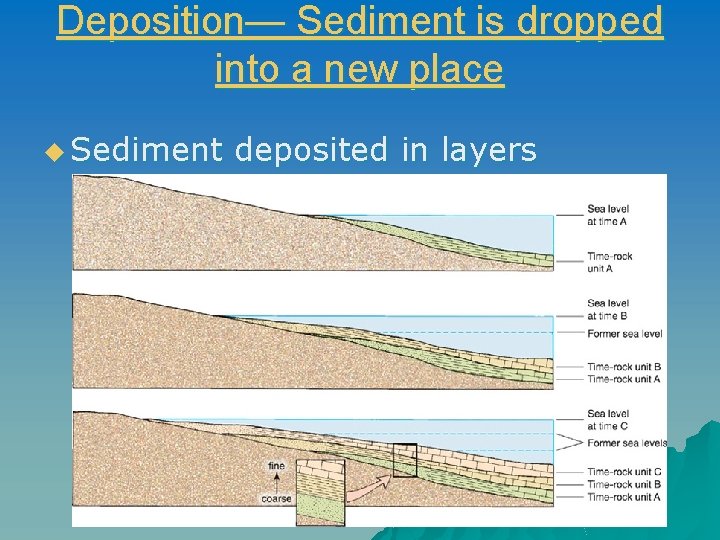
Deposition— Sediment is dropped into a new place u Sediment deposited in layers
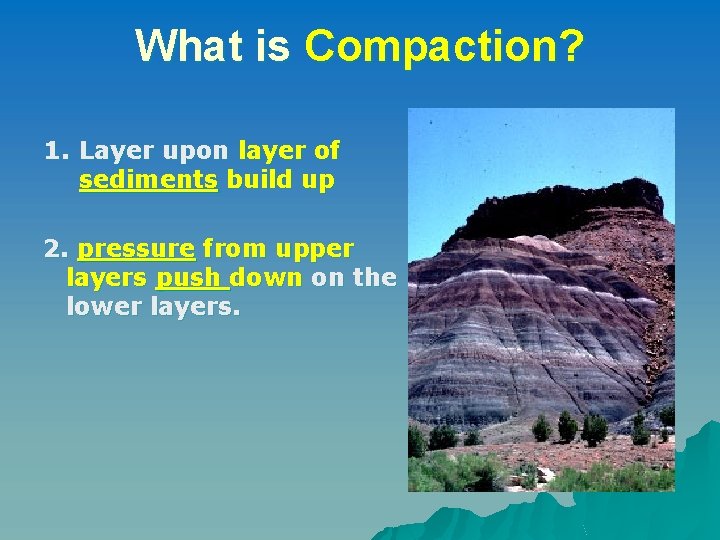
What is Compaction? 1. Layer upon layer of sediments build up 2. pressure from upper layers push down on the lower layers.
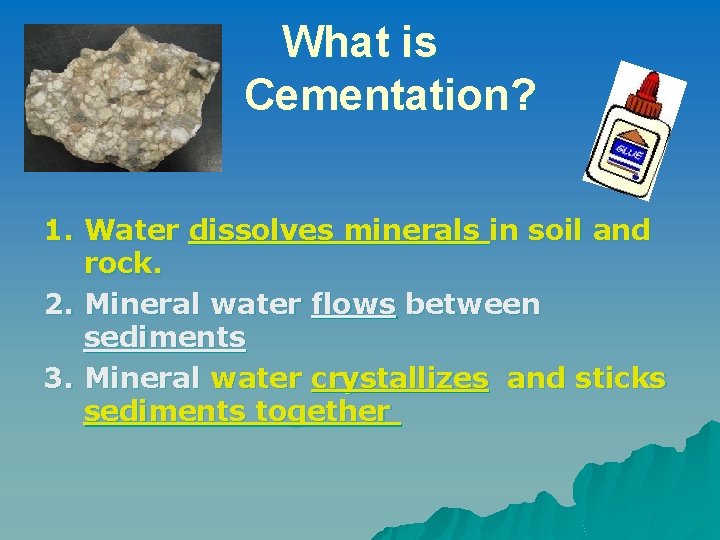
What is Cementation? 1. Water dissolves minerals in soil and rock. 2. Mineral water flows between sediments 3. Mineral water crystallizes and sticks sediments together
Luck of the Draw u Explain how sedimentary rocks are formed. Begin with the first step, weathering. Student sitting in seat 13.
Classification u Sedimentary rocks are classified into _____ types: 1. Clastic Sedimentary Rocks 2. Chemical Sedimentary Rocks 3. Organic Sedimentary Rocks How? By the way how are they classified? . Formation and texture
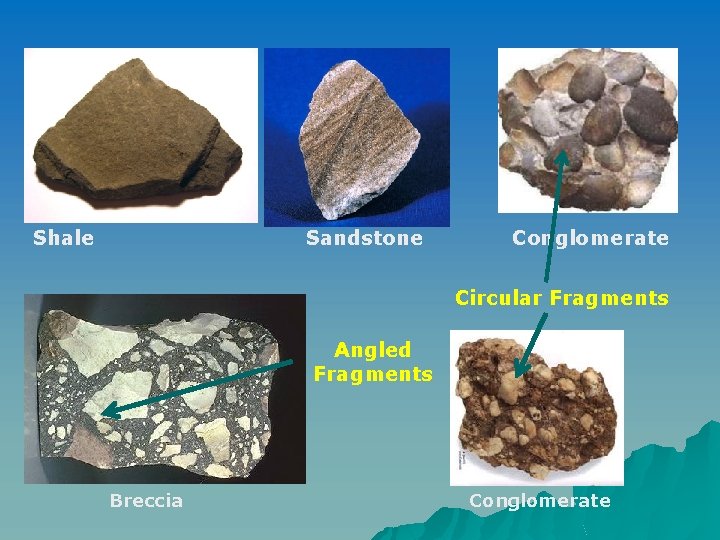
1. Clastic Sedimentary Rock u Made from broken fragments of other rocks. u Classified shape by grain size and
Shale Sandstone Conglomerate Circular Fragments Angled Fragments Breccia Conglomerate
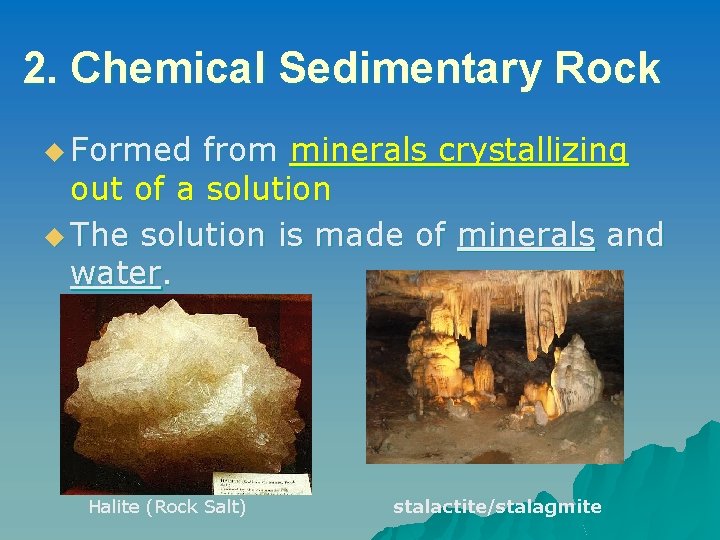
2. Chemical Sedimentary Rock u Formed from minerals crystallizing out of a solution u The solution is made of minerals and water. Halite (Rock Salt) stalactite/stalagmite
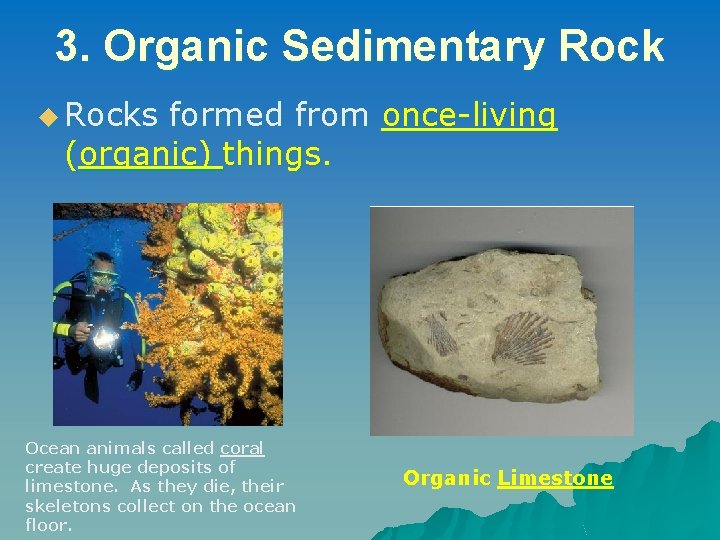
3. Organic Sedimentary Rock u Rocks formed from once-living (organic) things. Ocean animals called coral create huge deposits of limestone. As they die, their skeletons collect on the ocean floor. Organic Limestone
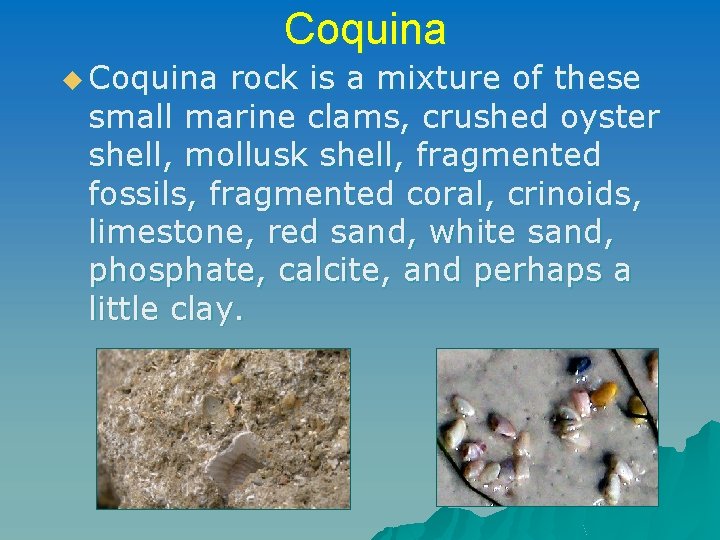
Coquina u Coquina rock is a mixture of these small marine clams, crushed oyster shell, mollusk shell, fragmented fossils, fragmented coral, crinoids, limestone, red sand, white sand, phosphate, calcite, and perhaps a little clay.
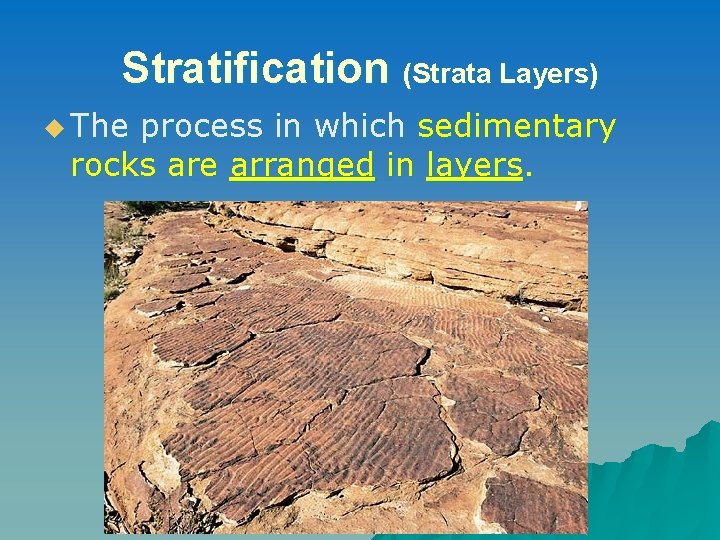
Stratification (Strata Layers) u The process in which sedimentary rocks are arranged in layers.
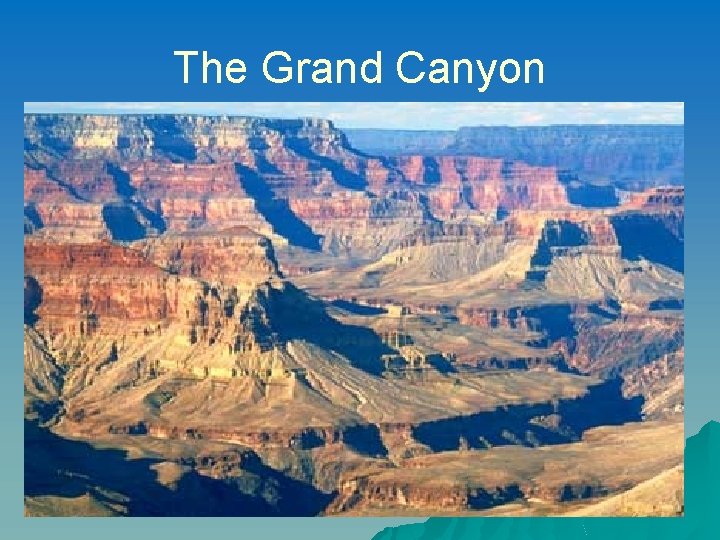
The Grand Canyon
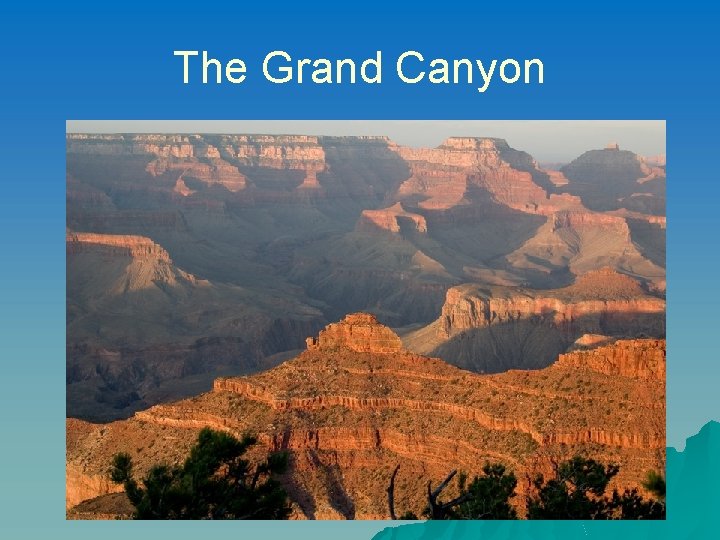
The Grand Canyon
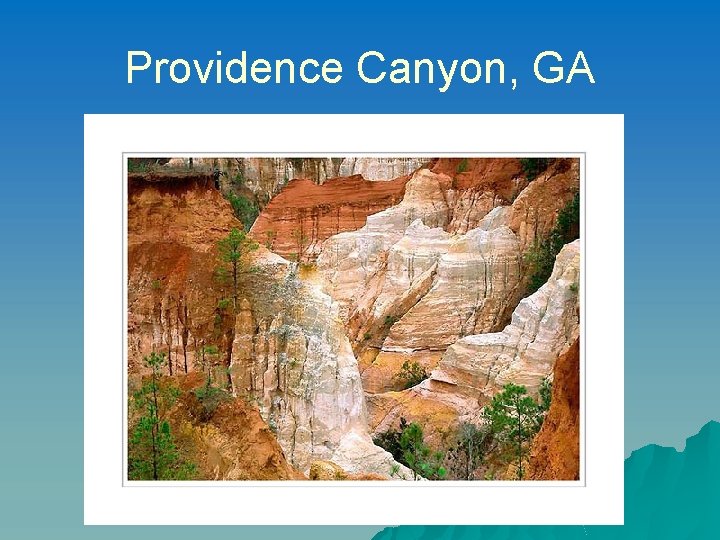
Providence Canyon, GA
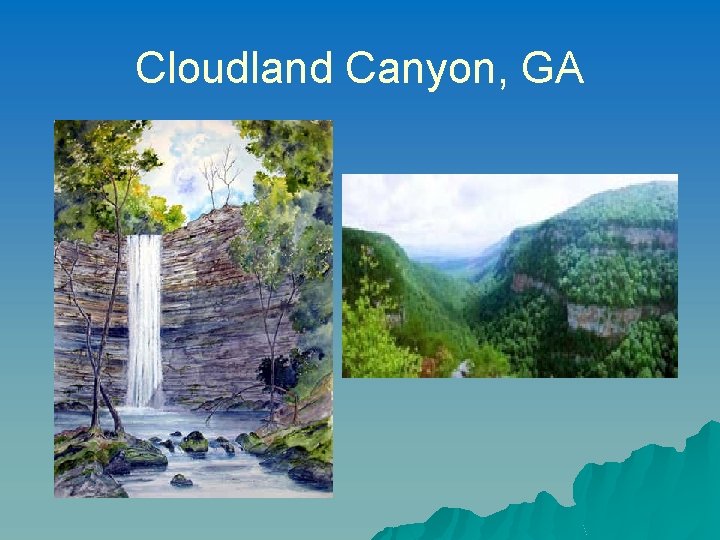
Cloudland Canyon, GA
Science Terms to Know Sedimentary & Metamorphic Rocks 1. Strata 2. Stratification 3. Sediment 4. Clastic sedimentary rock 5. Organic sedimentary rock 6. Chemical sedimentary rock
1. As a group, classify the sedimentary rocks on your table by how they were formed. 2. As a group, classify the sedimentary rocks on your table by grain size.
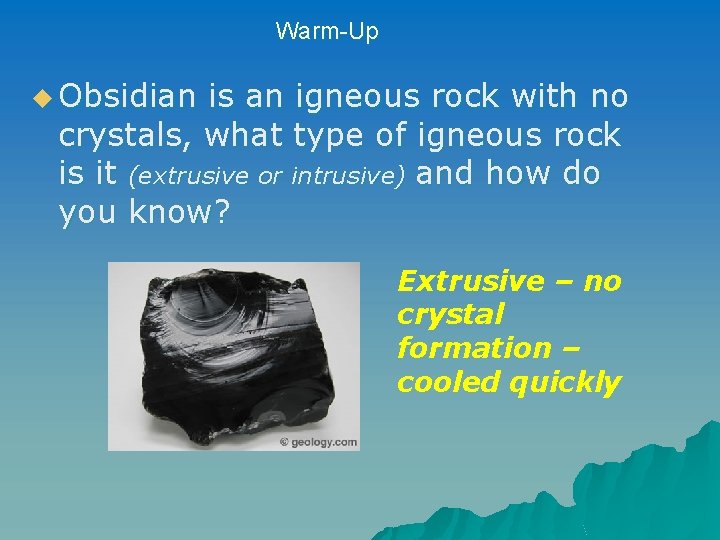
Warm-Up u Obsidian is an igneous rock with no crystals, what type of igneous rock is it (extrusive or intrusive) and how do you know? Extrusive – no crystal formation – cooled quickly
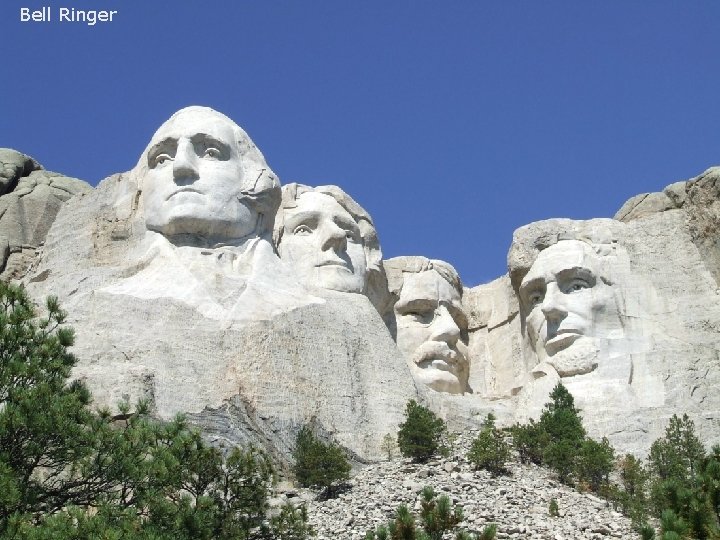
Bell Ringer
“The President’s Mountain’ is an iconic National Monument of the USA. The size of the four figures is awe inspiring. Each President's head is equal to the height of a 6 -story building! The sculptures were created by using dynamite to blast away tons of rocks. Jackhammers, wedges, drills, and other tools were used to finish the job. The rock of Mt. Rushmore consists of finegrained granite rock. This is one of the reasons it was chosen for the monument, because of granite’s relatively soft, grainy consistency. Also, granite is resistant to erosion. The Mount Rushmore National Memorial took 14 years to complete. It was completed in 1941 and cost nearly 990, 000 dollars to construct. ”
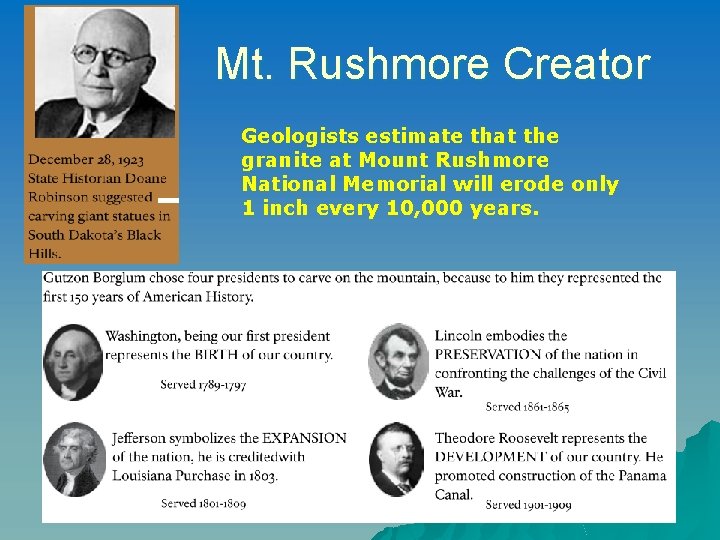
Mt. Rushmore Creator Geologists estimate that the granite at Mount Rushmore National Memorial will erode only 1 inch every 10, 000 years.
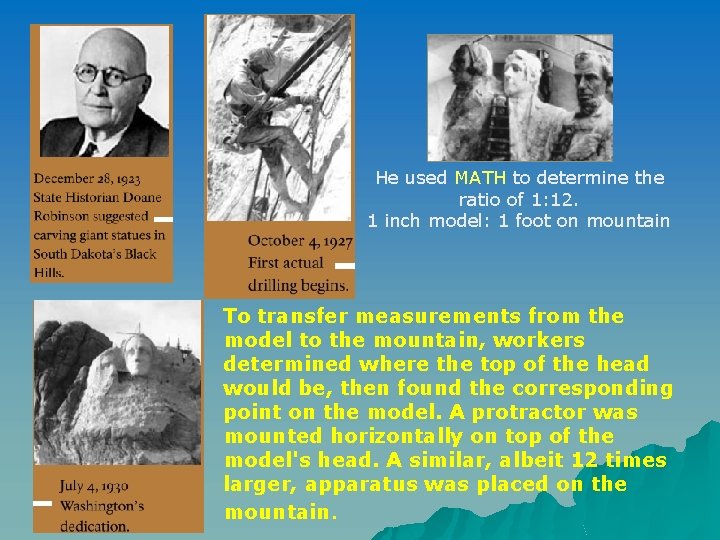
He used MATH to determine the ratio of 1: 12. 1 inch model: 1 foot on mountain To transfer measurements from the model to the mountain, workers determined where the top of the head would be, then found the corresponding point on the model. A protractor was mounted horizontally on top of the model's head. A similar, albeit 12 times larger, apparatus was placed on the mountain.