
Warmup Draw and label the feudal pyramid THE
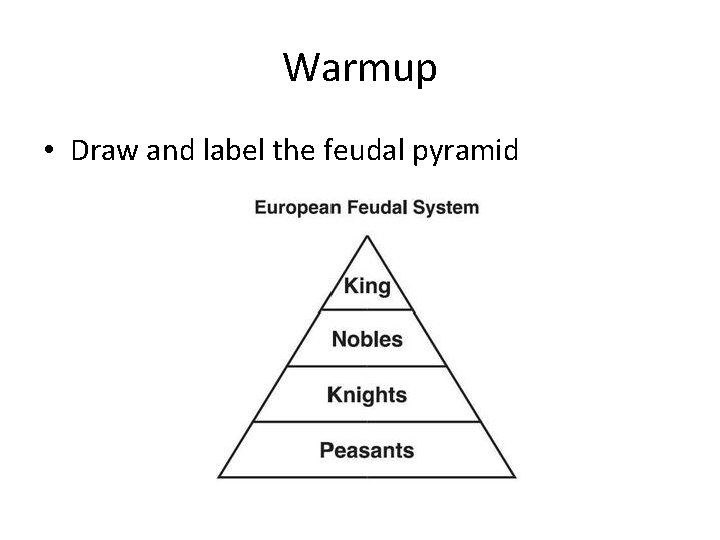
Warmup • Draw and label the feudal pyramid
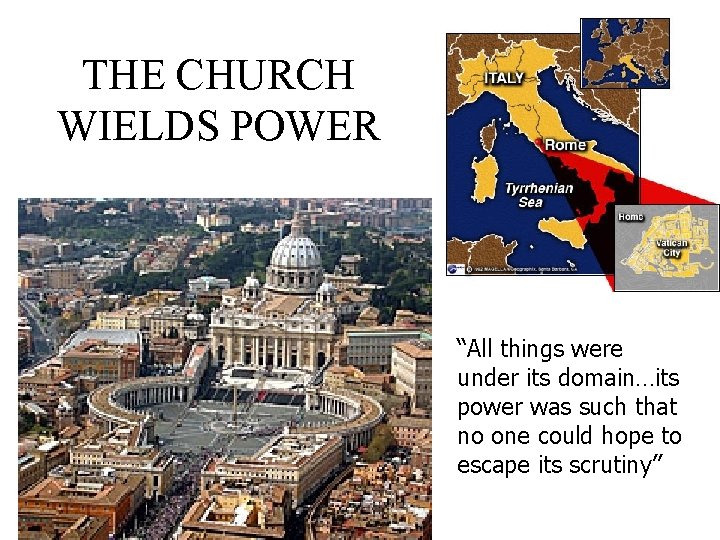
THE CHURCH WIELDS POWER “All things were under its domain…its power was such that no one could hope to escape its scrutiny”
Roman Catholic Church • During the Middle Ages the Roman Catholic Church provided the people with – A sense of stability – Unity – Order • Central Government had collapsed but the Church remained strong
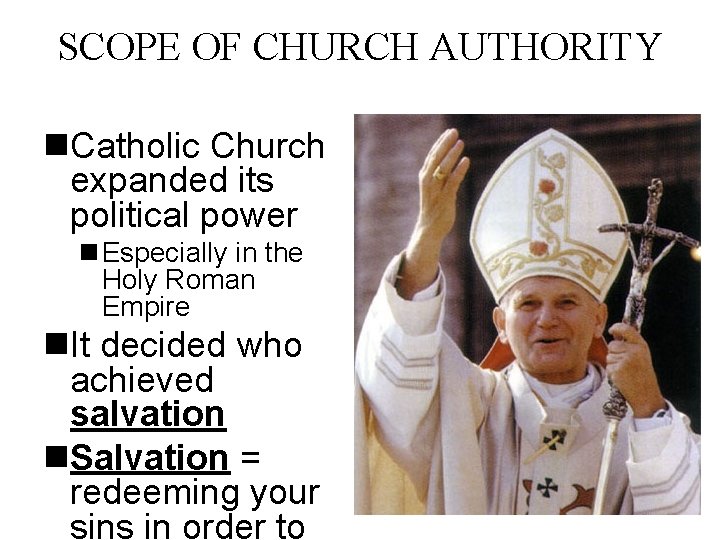
SCOPE OF CHURCH AUTHORITY n. Catholic Church expanded its political power n Especially in the Holy Roman Empire n. It decided who achieved salvation n. Salvation = redeeming your sins in order to
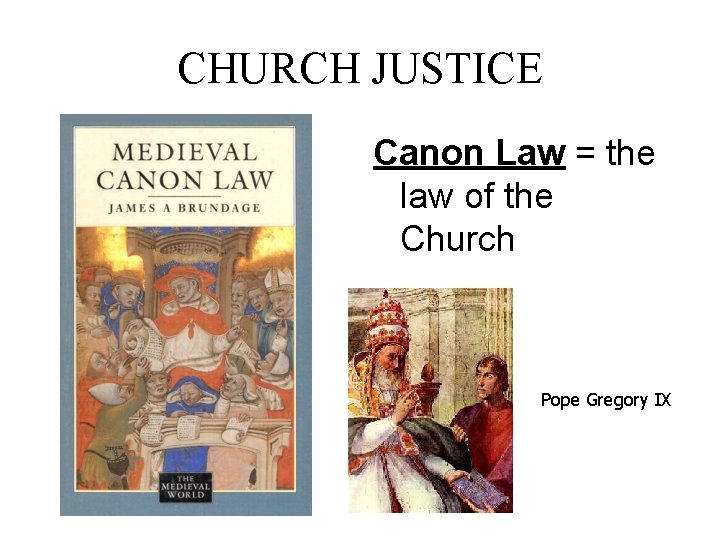
CHURCH JUSTICE Canon Law = the law of the Church Pope Gregory IX
Power Struggle between Kings and Popes • • Power Wealth Protecting their territory Who appoints officials?
Clash of Empires Holy Roman Empire: *800 -1100’s *Strongest in the world. The Pope & the Holy Roman emperor argued over Lay Investiture *who appointed church officials 1075 = Pope banned Lay Investiture
Church Problems 500 -1000 AD • Many priests could barely read or write • The Popes had questionable morals (greedy, power hungry, etc. ) • Many bishops acted as feudal lords (no vows of poverty) • Priests were married to women (not the Church) • Lay Investiture – Kings controlled the appointments of bishops • Simony – The sale of official Church positions
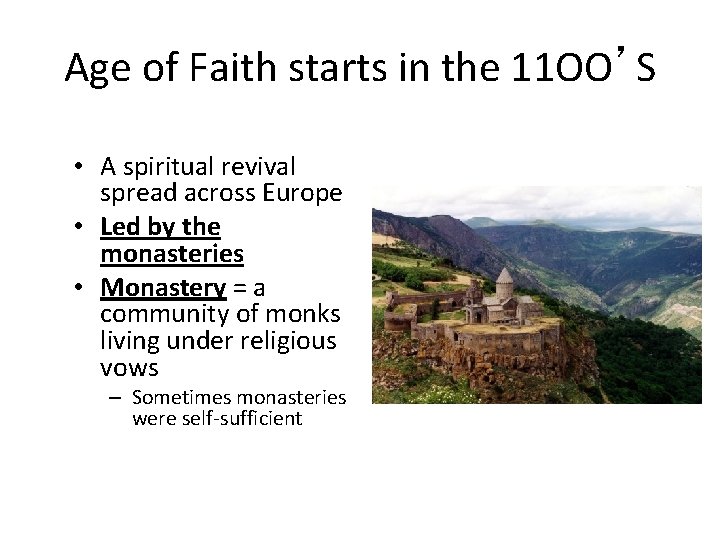
Age of Faith starts in the 11 OO’S • A spiritual revival spread across Europe • Led by the monasteries • Monastery = a community of monks living under religious vows – Sometimes monasteries were self-sufficient
Monastic Revival and Church Reform • Reformers wanted to return to the basic principles of the Christian religion • The Church restored and expanded its power and authority.
Problems with the Church • Reformers were distressed (upset) about 3 main problems: – Village priests were married and had families (against Church rulings) – Simony = positions in the church were being sold by bishops – Lay investiture = kings were in control of bishops • Pope Leo IX enforced Church laws against the 3 problems
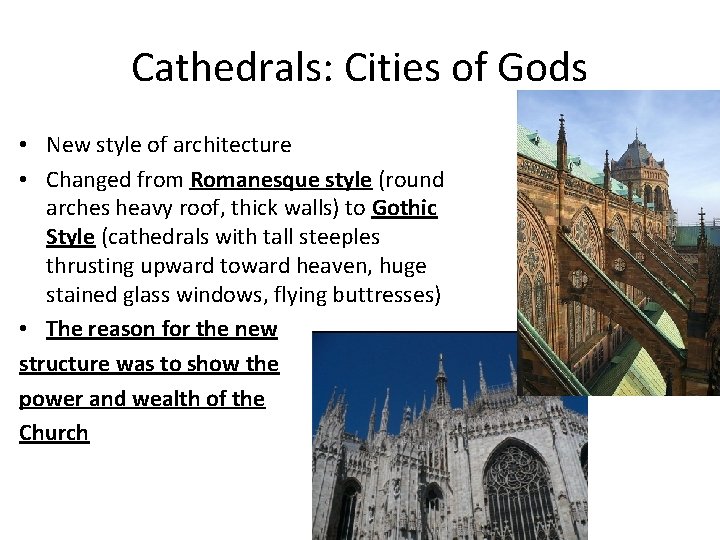
Cathedrals: Cities of Gods • New style of architecture • Changed from Romanesque style (round arches heavy roof, thick walls) to Gothic Style (cathedrals with tall steeples thrusting upward toward heaven, huge stained glass windows, flying buttresses) • The reason for the new structure was to show the power and wealth of the Church
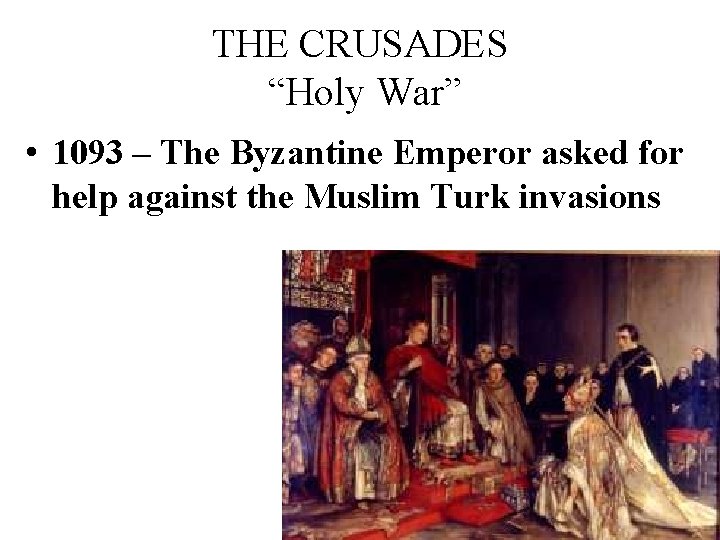
THE CRUSADES “Holy War” • 1093 – The Byzantine Emperor asked for help against the Muslim Turk invasions
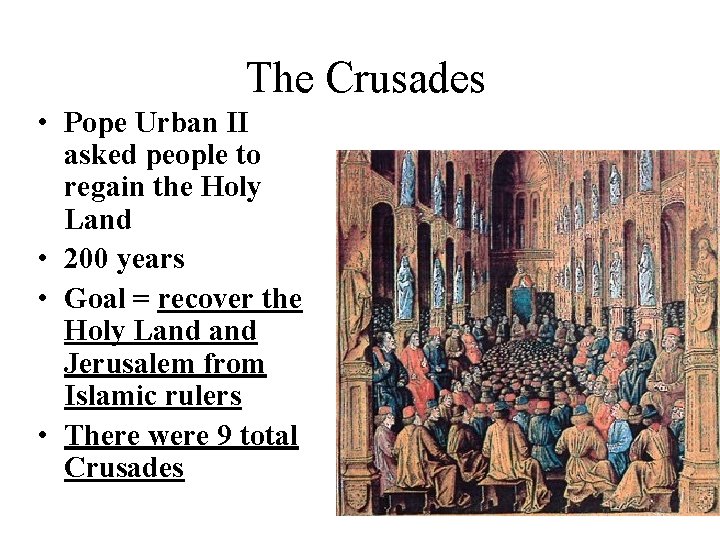
The Crusades • Pope Urban II asked people to regain the Holy Land • 200 years • Goal = recover the Holy Land Jerusalem from Islamic rulers • There were 9 total Crusades
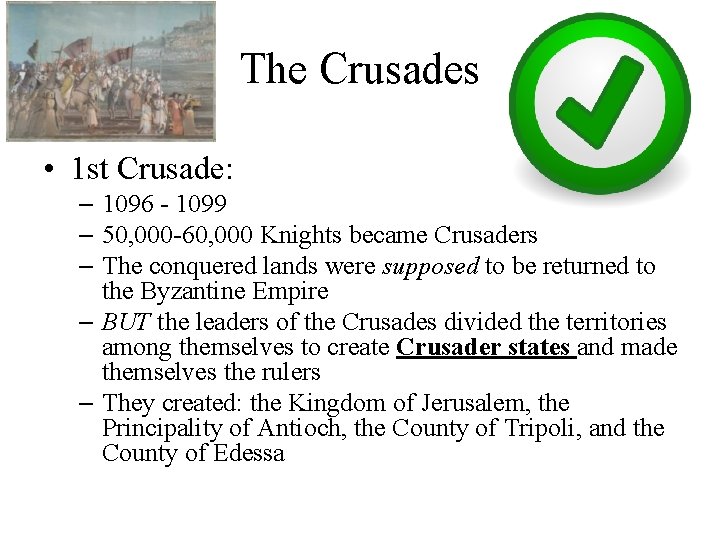
The Crusades • 1 st Crusade: – 1096 - 1099 – 50, 000 -60, 000 Knights became Crusaders – The conquered lands were supposed to be returned to the Byzantine Empire – BUT the leaders of the Crusades divided the territories among themselves to create Crusader states and made themselves the rulers – They created: the Kingdom of Jerusalem, the Principality of Antioch, the County of Tripoli, and the County of Edessa
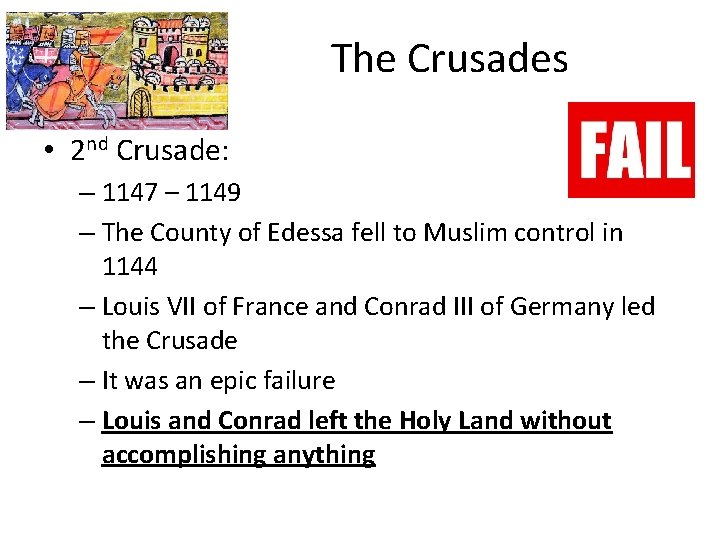
The Crusades • 2 nd Crusade: – 1147 – 1149 – The County of Edessa fell to Muslim control in 1144 – Louis VII of France and Conrad III of Germany led the Crusade – It was an epic failure – Louis and Conrad left the Holy Land without accomplishing anything
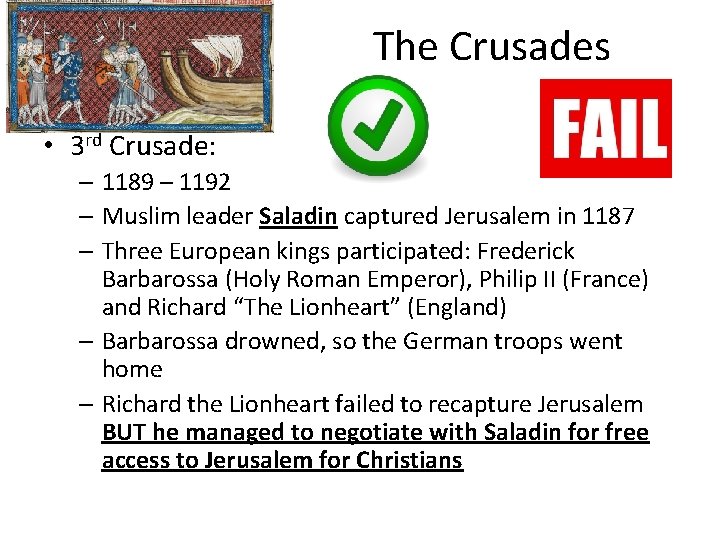
The Crusades • 3 rd Crusade: – 1189 – 1192 – Muslim leader Saladin captured Jerusalem in 1187 – Three European kings participated: Frederick Barbarossa (Holy Roman Emperor), Philip II (France) and Richard “The Lionheart” (England) – Barbarossa drowned, so the German troops went home – Richard the Lionheart failed to recapture Jerusalem BUT he managed to negotiate with Saladin for free access to Jerusalem for Christians
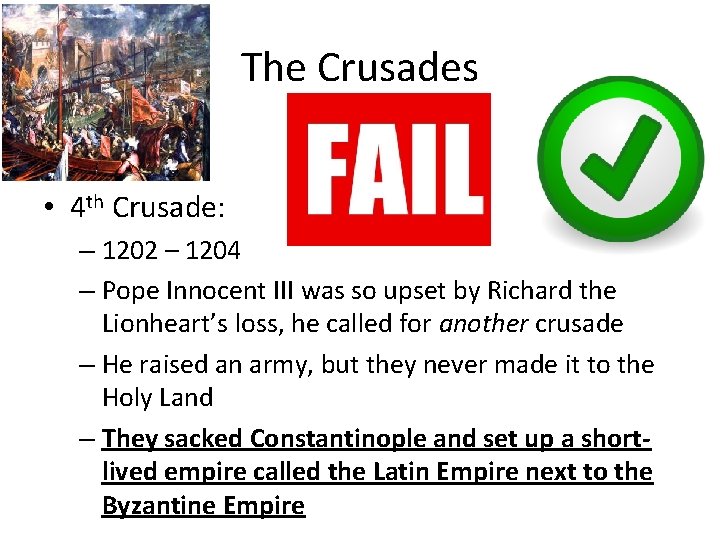
The Crusades • 4 th Crusade: – 1202 – 1204 – Pope Innocent III was so upset by Richard the Lionheart’s loss, he called for another crusade – He raised an army, but they never made it to the Holy Land – They sacked Constantinople and set up a shortlived empire called the Latin Empire next to the Byzantine Empire
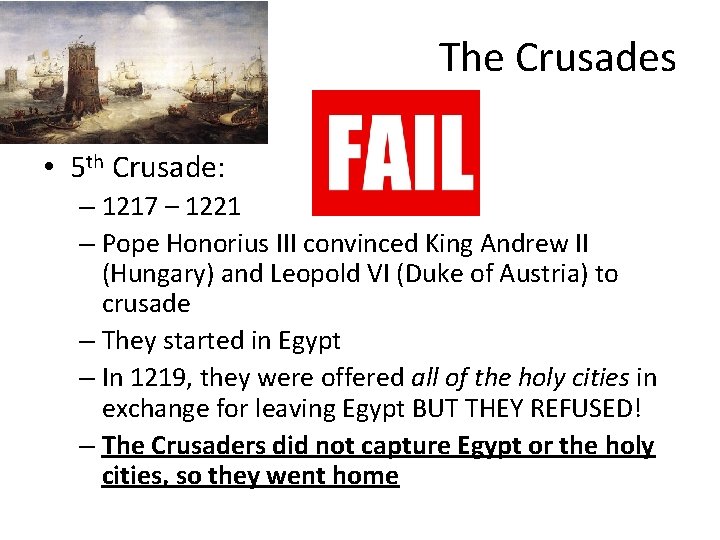
The Crusades • 5 th Crusade: – 1217 – 1221 – Pope Honorius III convinced King Andrew II (Hungary) and Leopold VI (Duke of Austria) to crusade – They started in Egypt – In 1219, they were offered all of the holy cities in exchange for leaving Egypt BUT THEY REFUSED! – The Crusaders did not capture Egypt or the holy cities, so they went home
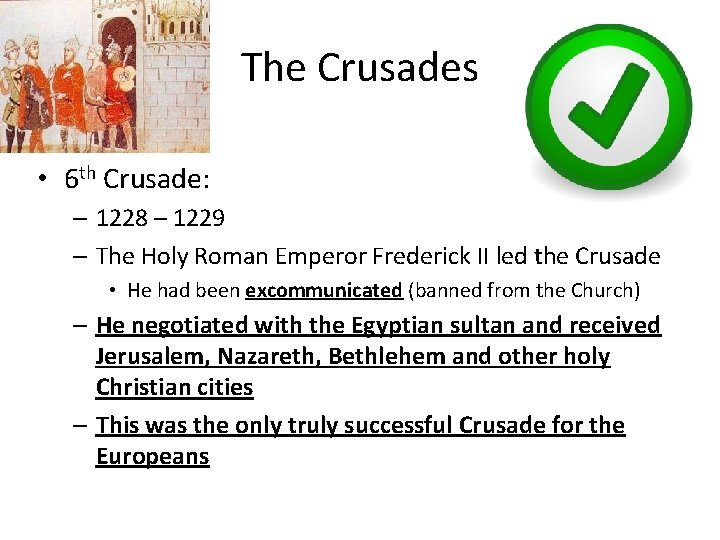
The Crusades • 6 th Crusade: – 1228 – 1229 – The Holy Roman Emperor Frederick II led the Crusade • He had been excommunicated (banned from the Church) – He negotiated with the Egyptian sultan and received Jerusalem, Nazareth, Bethlehem and other holy Christian cities – This was the only truly successful Crusade for the Europeans
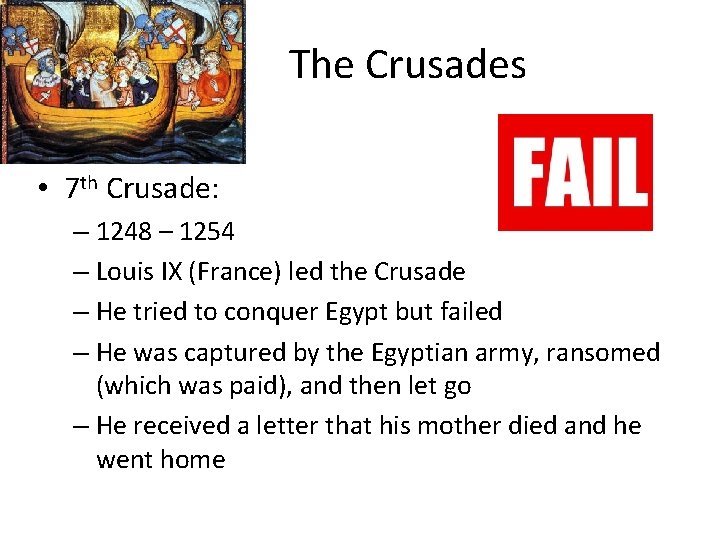
The Crusades • 7 th Crusade: – 1248 – 1254 – Louis IX (France) led the Crusade – He tried to conquer Egypt but failed – He was captured by the Egyptian army, ransomed (which was paid), and then let go – He received a letter that his mother died and he went home
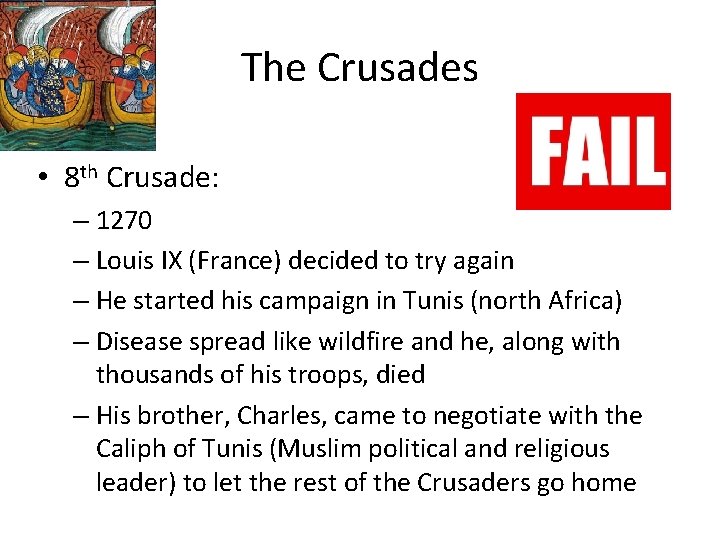
The Crusades • 8 th Crusade: – 1270 – Louis IX (France) decided to try again – He started his campaign in Tunis (north Africa) – Disease spread like wildfire and he, along with thousands of his troops, died – His brother, Charles, came to negotiate with the Caliph of Tunis (Muslim political and religious leader) to let the rest of the Crusaders go home
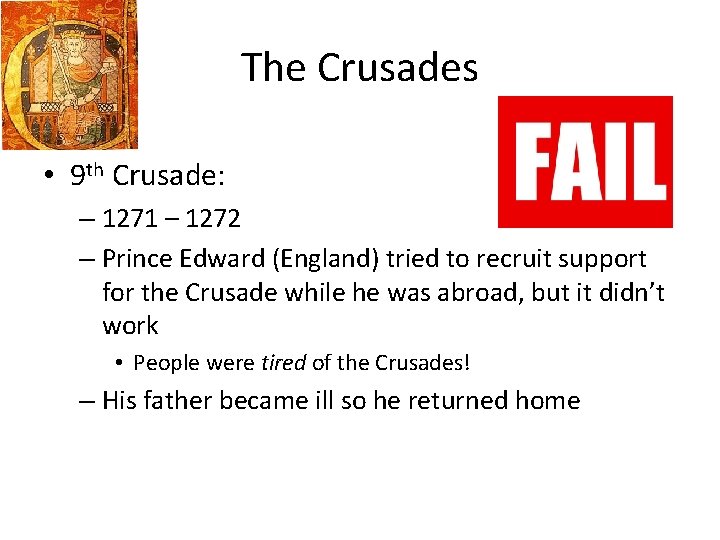
The Crusades • 9 th Crusade: – 1271 – 1272 – Prince Edward (England) tried to recruit support for the Crusade while he was abroad, but it didn’t work • People were tired of the Crusades! – His father became ill so he returned home
The Spanish Crusade § In Spain, Muslims had control of most of the country § The Christian effort to drive the Muslims out of Spain in the 1100 s was called the Spanish Reconquista “In 1469, Isabella of Castile married Ferdinand of Aragon. This marriage between the rulers of two powerful kingdoms opened the way for a united state. Using their combined forces, the two monarchs made a final push against the Muslim stronghold of Granada. In 1492, Granada fell…. ”
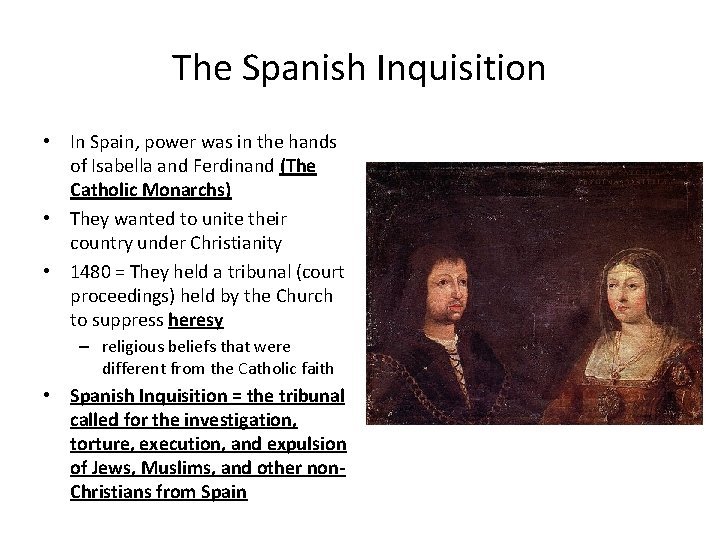
The Spanish Inquisition • In Spain, power was in the hands of Isabella and Ferdinand (The Catholic Monarchs) • They wanted to unite their country under Christianity • 1480 = They held a tribunal (court proceedings) held by the Church to suppress heresy – religious beliefs that were different from the Catholic faith • Spanish Inquisition = the tribunal called for the investigation, torture, execution, and expulsion of Jews, Muslims, and other non. Christians from Spain
Effects of the Crusades Power of the Pope declined Feudal nobility weakened Increased trade between Europe and Asia (Significant effect) Legacy of bitterness, tension and hate between the Muslims and the Christians (Long term effect/result) § Cultural diffusion throughout Western Europe (Important effect) § Contact with Muslim and Byzantine worlds brought new ideas to Western Europe (Direct Effect/Result) § §
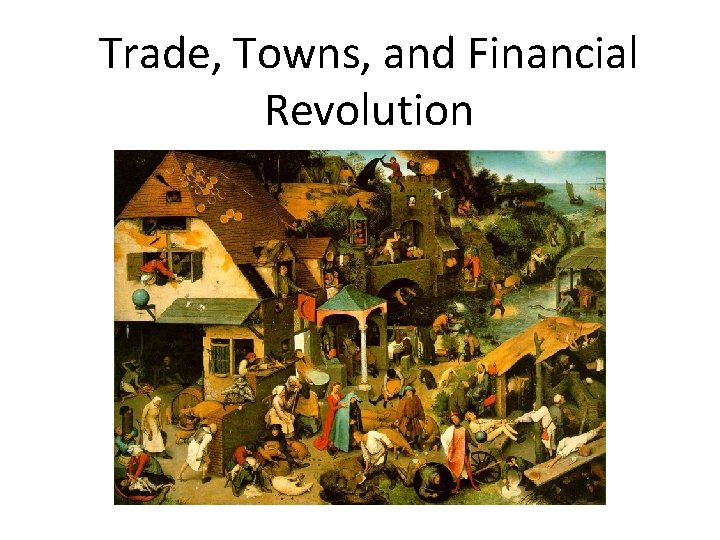
Trade, Towns, and Financial Revolution
Growing Food Supply • Using horsepower – Peasants had depended on oxen to pull plows, but they moved slowly. – Horses needed better food, but a team of horses could plow twice as fast as oxen • Oxen were replaced by horses • By rotating crops on three fields instead of two, food production increased. – When food production increases people eat better. – When people eat better they live longer – When people live longer, the population increases.
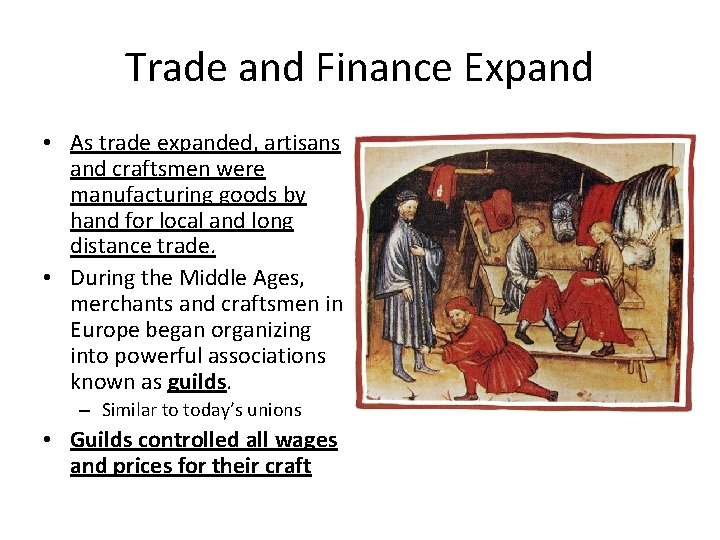
Trade and Finance Expand • As trade expanded, artisans and craftsmen were manufacturing goods by hand for local and long distance trade. • During the Middle Ages, merchants and craftsmen in Europe began organizing into powerful associations known as guilds. – Similar to today’s unions • Guilds controlled all wages and prices for their craft
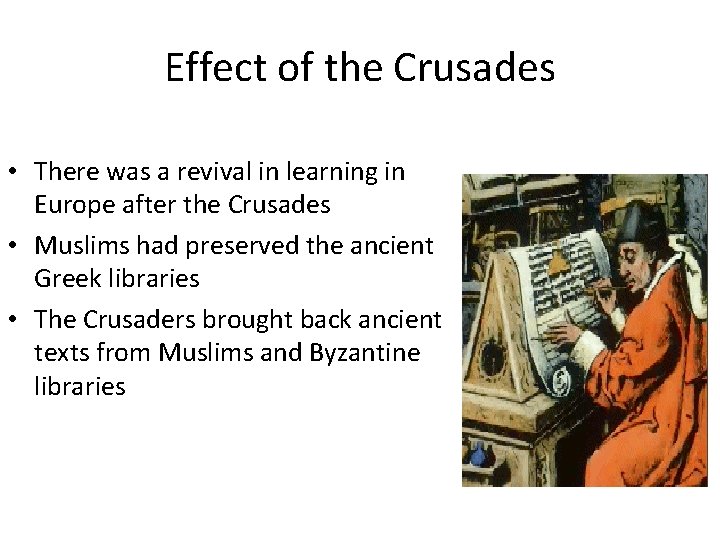
Effect of the Crusades • There was a revival in learning in Europe after the Crusades • Muslims had preserved the ancient Greek libraries • The Crusaders brought back ancient texts from Muslims and Byzantine libraries
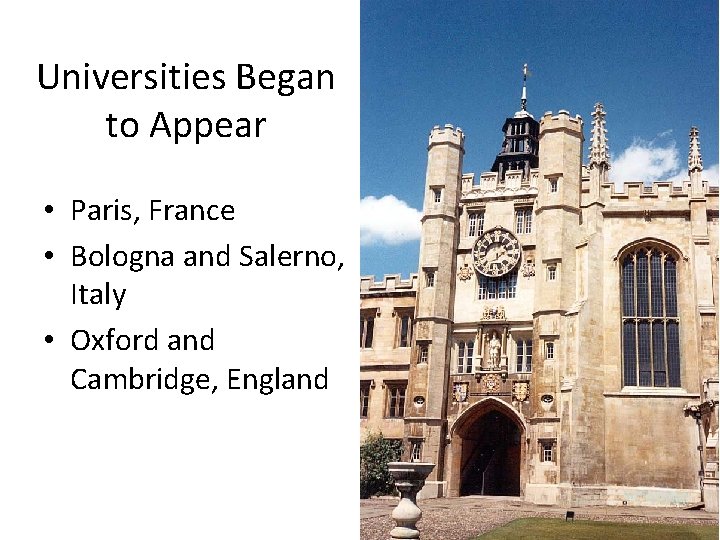
Universities Began to Appear • Paris, France • Bologna and Salerno, Italy • Oxford and Cambridge, England
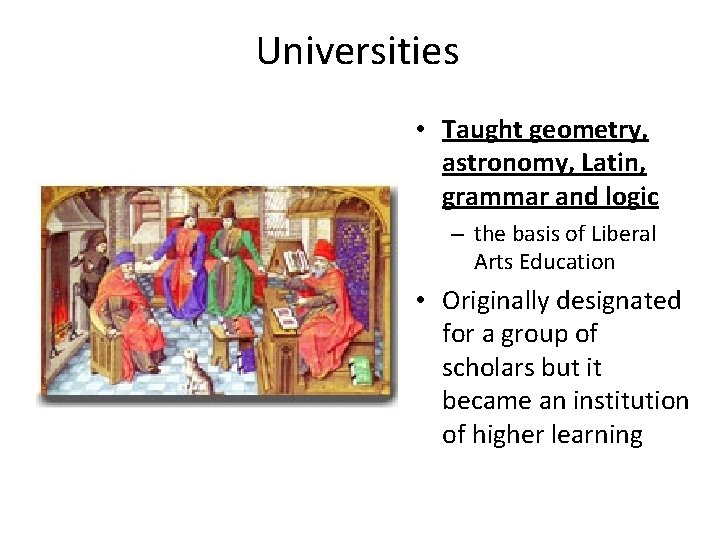
Universities • Taught geometry, astronomy, Latin, grammar and logic – the basis of Liberal Arts Education • Originally designated for a group of scholars but it became an institution of higher learning
Aquinas and Medieval Philosophy • Christian scholars were excited by Greek writings • Thomas Aquinas was an Italian friar, priest, and a philosopher • Thomas Aquinas wrote Summa Theologica after studying the works of Aristotle – Aristotle’s work was compatible with Christian doctrines, and God gave man the power to reason. • His writings influenced political thought in North American colonies – Aquinas believed in “natural law” and that people have the right to overthrow an unjust ruler.
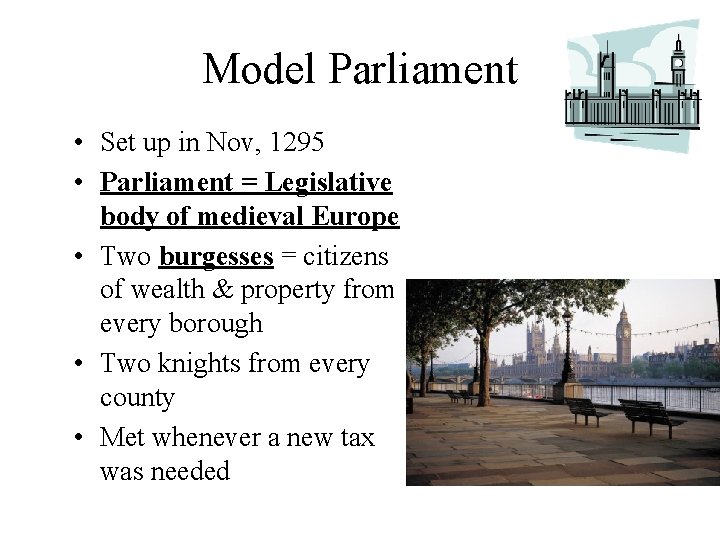
Model Parliament • Set up in Nov, 1295 • Parliament = Legislative body of medieval Europe • Two burgesses = citizens of wealth & property from every borough • Two knights from every county • Met whenever a new tax was needed
Role-Play Activity! • We will be reenacting Medieval Europe’s population using role play • Pope, Monarch, Nobles, Knights, Peasants • You will draw a role randomly • You must participate in whatever role you are given
- Slides: 36