
Warmup Complete the PreLearning Concept Check MAKE SURE


- Slides: 43
Warm-up • Complete the Pre-Learning Concept Check MAKE SURE YOU EXPLAIN!!! When you are done –Get a whiteboard and marker
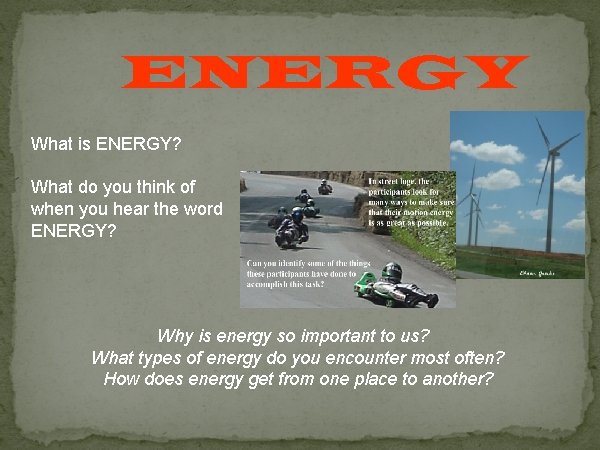
ENERGY What is ENERGY? What do you think of when you hear the word ENERGY? Why is energy so important to us? What types of energy do you encounter most often? How does energy get from one place to another?
ENERGY defined … Energy is a term that is used often, yet is very difficult to define. Energy is typically defined by the CHANGE that is caused when energy changes form or moves from one object to another object. The concept of energy flow is one of the most fundamental ideas in all of science.
Review of Energy Forms
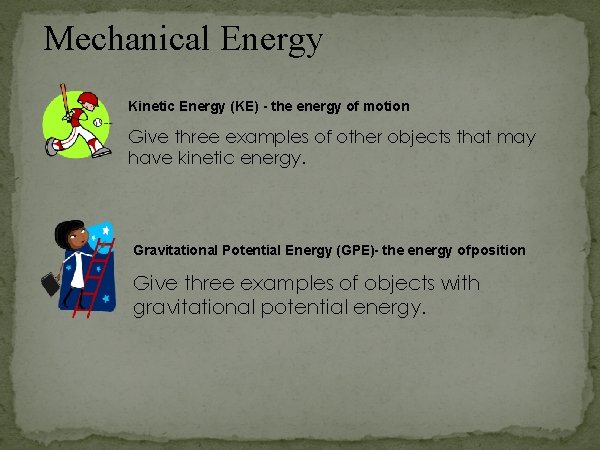
Mechanical Energy Kinetic Energy (KE) - the energy of motion. Give three examples of other objects that may have kinetic energy. Gravitational Potential Energy (GPE)- the energy of position Give three examples of objects with gravitational potential energy.
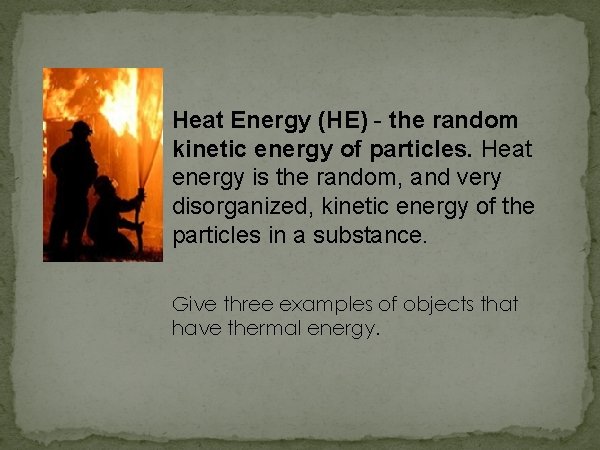
Heat Energy (HE) - the random kinetic energy of particles. Heat energy is the random, and very disorganized, kinetic energy of the particles in a substance. Give three examples of objects that have thermal energy.
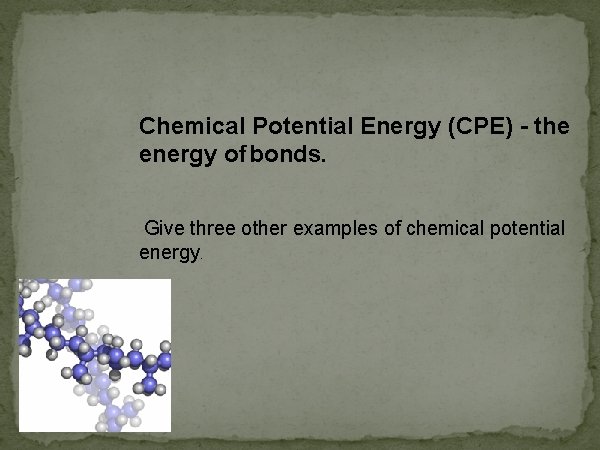
Chemical Potential Energy (CPE) - the energy of bonds. Give three other examples of chemical potential energy.
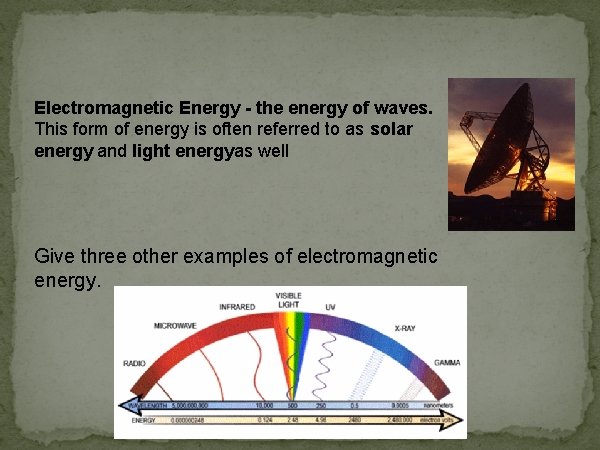
Electromagnetic Energy - the energy of waves. This form of energy is often referred to as solar energy and light energyas well Give three other examples of electromagnetic energy.
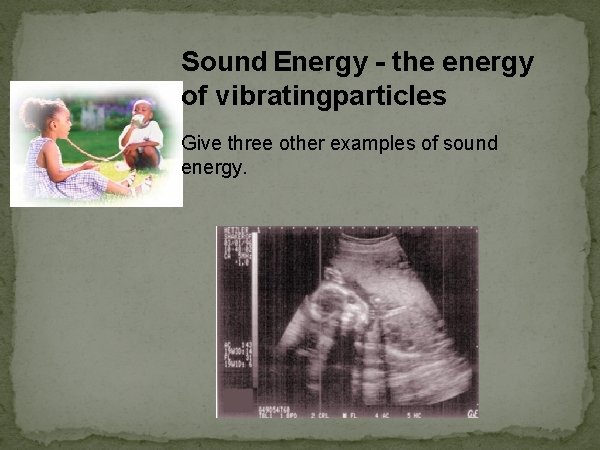
Sound Energy - the energy of vibratingparticles Give three other examples of sound energy.
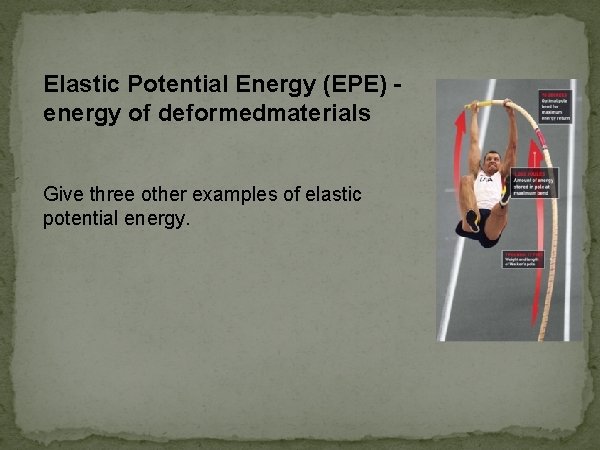
Elastic Potential Energy (EPE) energy of deformedmaterials Give three other examples of elastic potential energy.
Energy Foldable Name of Energy Type Definition Example Picture
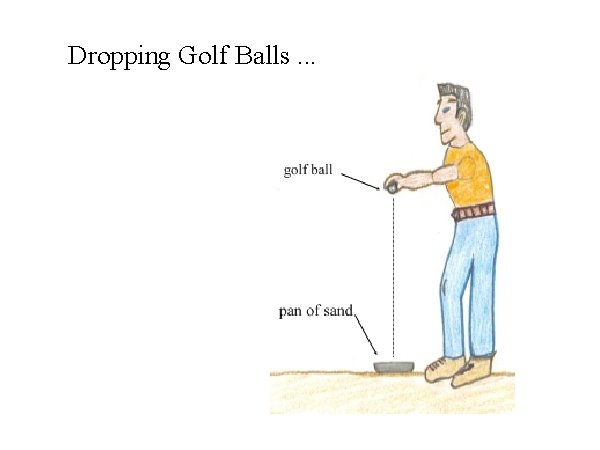
Dropping Golf Balls. . . You will drop the golf ball from four different heights looking for evidence of energy by a change that is produced.
Goals/Objective To determine how the varying heights of a golf ball affects the golf balls’ gravitational potential energy as well as its kinetic energy when it is released.
Hypothesis If a golf ball is dropped at varying heights, then its change to the sands surface on impact will be directly proportional to the height at which the ball is dropped. (A ball dropped at a low height will produce less of a crater than a ball dropped at a higher height. )
Material A golf ball A gallon of sand An 8 X 11 metal pan with 2 inch sides
Investigation Reflection: Question #1: Does the golf ball have energy while it is sitting on the top of the sand? (Assume that the sand represents the ground) Pick up the golf ball and hold it about 25 cm above the pan. Question #2: What type of energy does the golf ball have while the ball is being held at a height of 25 cm above the pan? Question #3: How did the golf ball get its energy? Where did this energy come from? Release the ball and discuss the crater produced by the golf ball.
Repeat the process from 50 cm, 75 cm, and 100 cm (1 m). Discuss why the craters are larger as the height increases; what we see is a greater CHANGE. Drop each trial’s ball in a different spot in the sand so that they can be compared in the end. Question #4: Which trial created the most change in the sand (the largest crater)? Introduce a hollow practice golf ball into the investigation. Repeat the same process as was done with the solid golf ball. Question #5: What variable was changed in this part of the investigation? What effect did this change have on the crater in the sand? Question #6: Did the hollow ball and the solid ball impact the sand with the same speed? In other words, did gravity speed them up both golf balls at the same rate? Question #7: What can you conclude from our investigation?
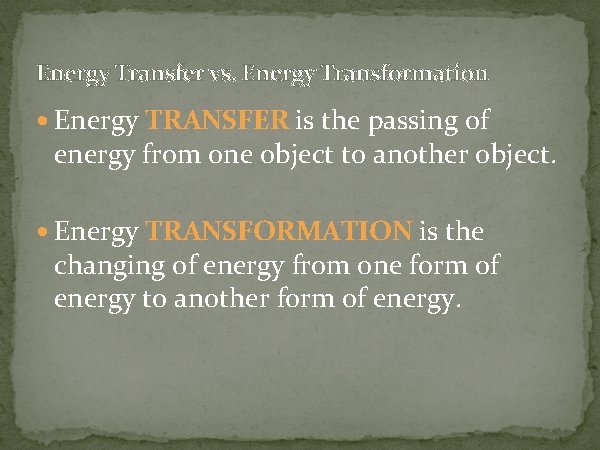
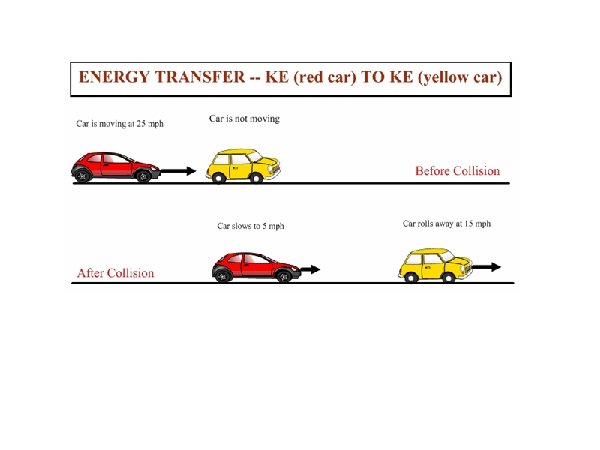
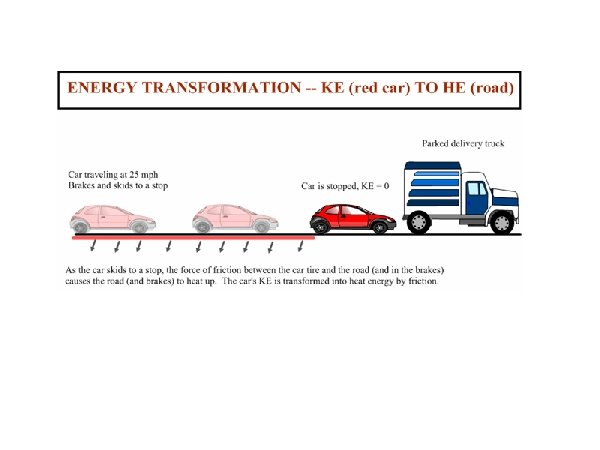
Energy Transfer vs. Energy Transformation Energy TRANSFER is the passing of energy from one object to another object. Energy TRANSFORMATION is the changing of energy from one form of energy to another form of energy.
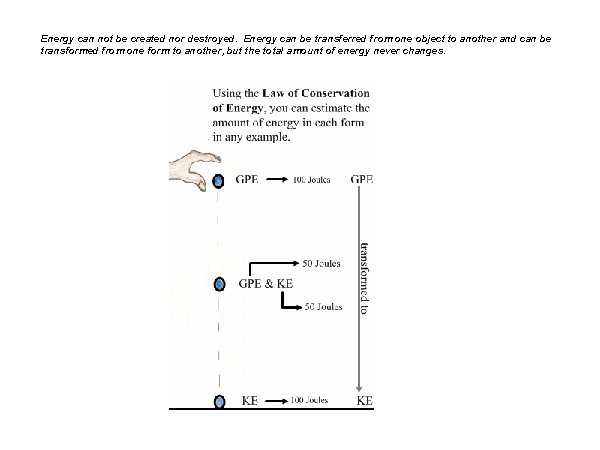
Energy can not be created nor destroyed. Energy can be transferred from one object to another and can be transformed from one form to another, but the total amount of energy never changes.
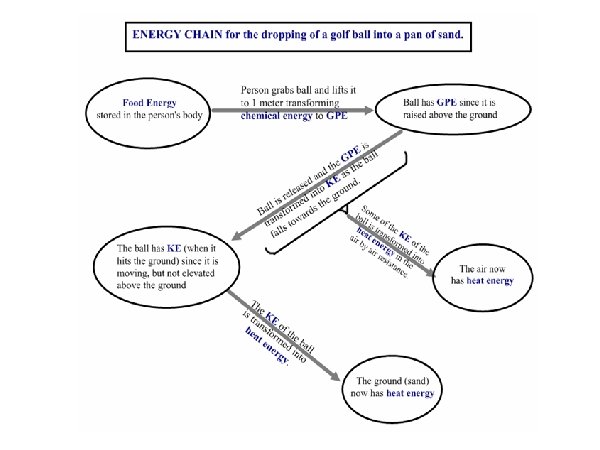
Energy Chains Energy chains are graphical representations of the flow of energy in a system. They typically contain words, phrases, and images.
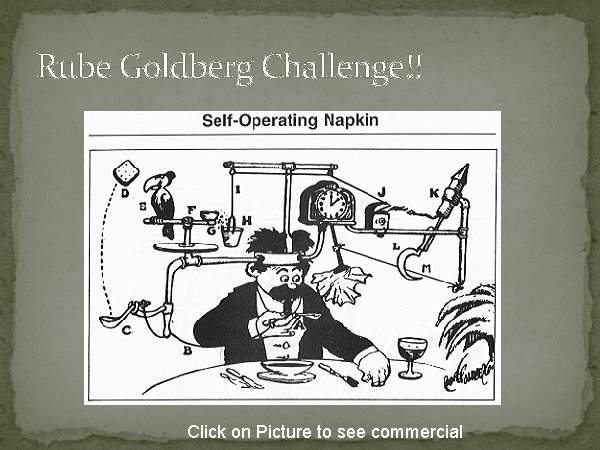
Rube Goldberg Challenge!! Click on Picture to see commercial
Rube Goldberg challenge Get in gum drop groups You will have 15 min to design your own Rube Goldberg invention with the materials that your group is given. Once the invention is designed I would like you show me your design and then drawl the design in you warm up journal Then I would like you to complete a DETAILED energy chain of your invention. Be creative and have fun!!
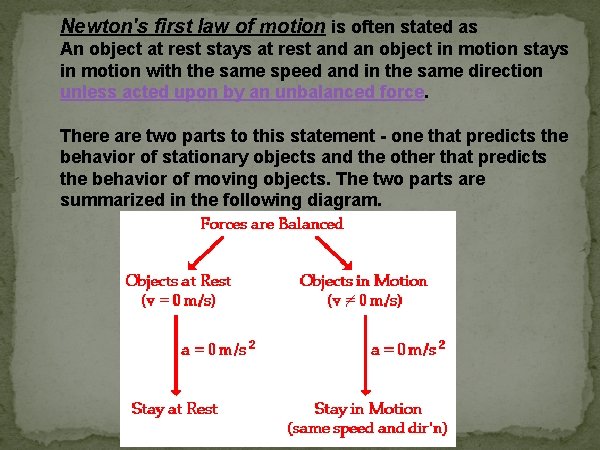
Newton's first law of motion is often stated as An object at rest stays at rest and an object in motion stays in motion with the same speed and in the same direction unless acted upon by an unbalanced force. There are two parts to this statement - one that predicts the behavior of stationary objects and the other that predicts the behavior of moving objects. The two parts are summarized in the following diagram.
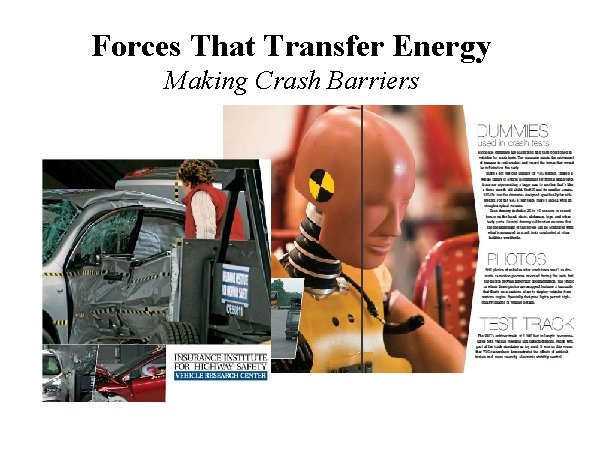
Forces That Transfer Energy Making Crash Barriers
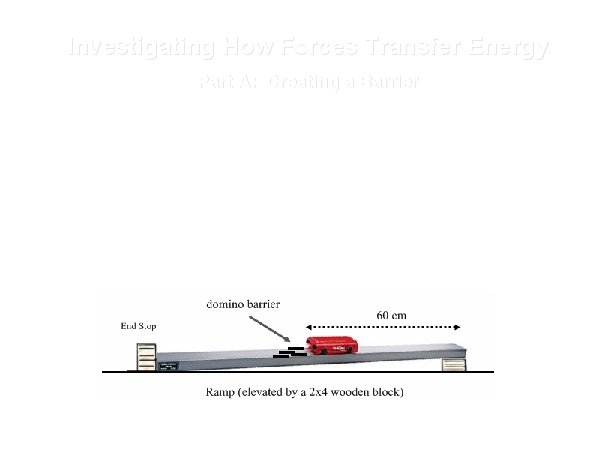
Investigating How Forces Transfer Energy Part A: Creating a Barrier Focus Question: What barrier design will stop the car in the shortest distance? Your task is to create a stopping barrier out of dominoes that will stop the car in the shortest distance possible.
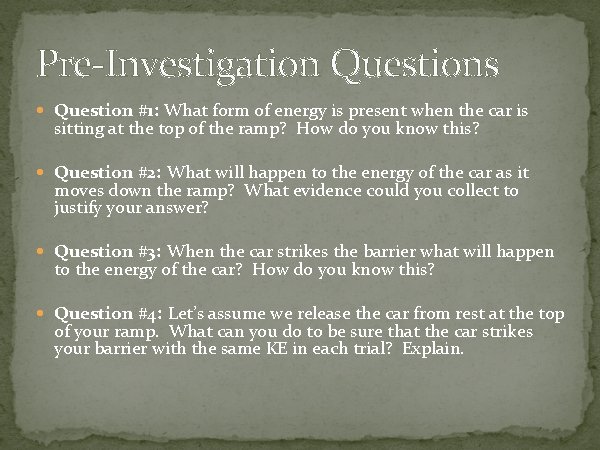
Pre-Investigation Questions Question #1: What form of energy is present when the car is sitting at the top of the ramp? How do you know this? Question #2: What will happen to the energy of the car as it moves down the ramp? What evidence could you collect to justify your answer? Question #3: When the car strikes the barrier what will happen to the energy of the car? How do you know this? Question #4: Let’s assume we release the car from rest at the top of your ramp. What can you do to be sure that the car strikes your barrier with the same KE in each trial? Explain.
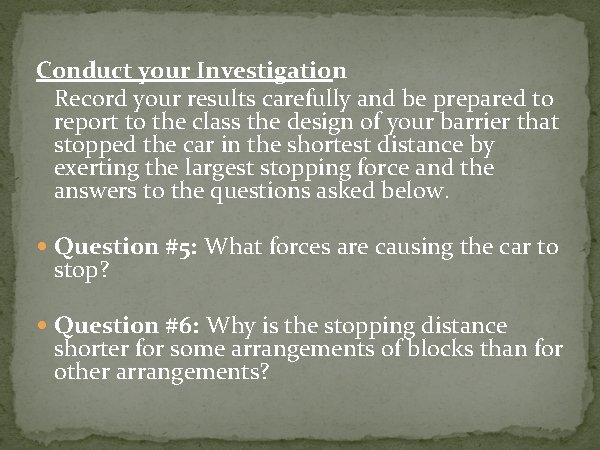
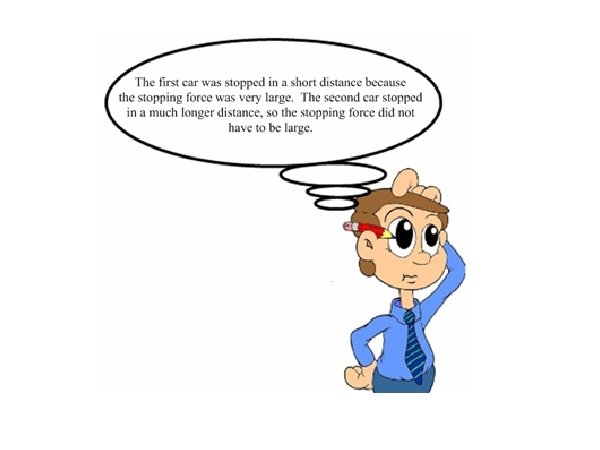
Conduct your Investigation Record your results carefully and be prepared to report to the class the design of your barrier that stopped the car in the shortest distance by exerting the largest stopping force and the answers to the questions asked below. Question #5: What forces are causing the car to stop? Question #6: Why is the stopping distance shorter for some arrangements of blocks than for other arrangements?
Stopping Distances:
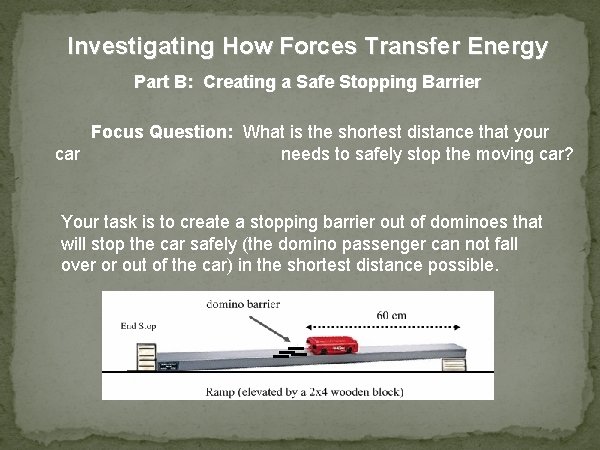
Investigating How Forces Transfer Energy Part B: Creating a Safe Stopping Barrier Focus Question: What is the shortest distance that your car needs to safely stop the moving car? Your task is to create a stopping barrier out of dominoes that will stop the car safely (the domino passenger can not fall over or out of the car) in the shortest distance possible.
Stopping Distances:
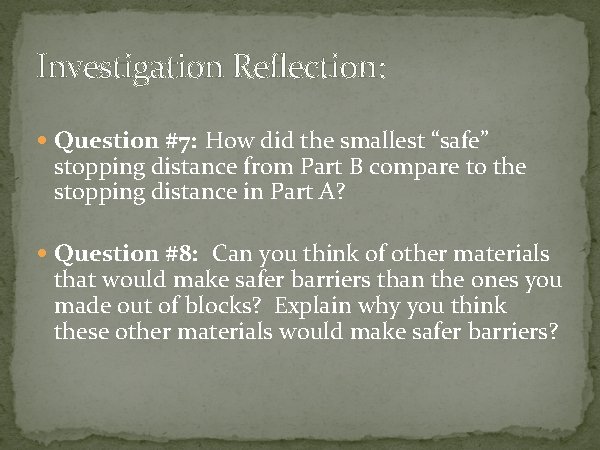
Investigation Reflection: Question #7: How did the smallest “safe” stopping distance from Part B compare to the stopping distance in Part A? Question #8: Can you think of other materials that would make safer barriers than the ones you made out of blocks? Explain why you think these other materials would make safer barriers?
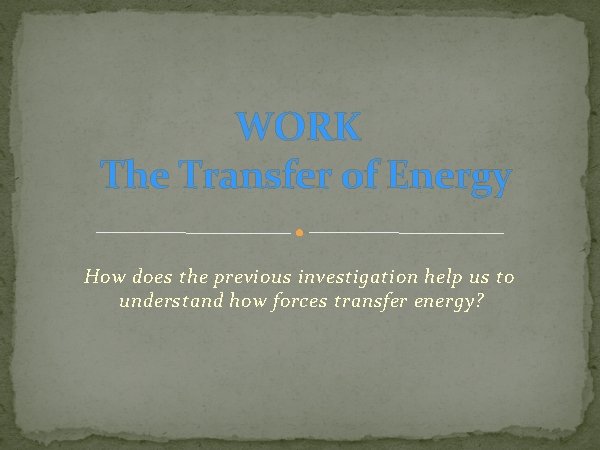
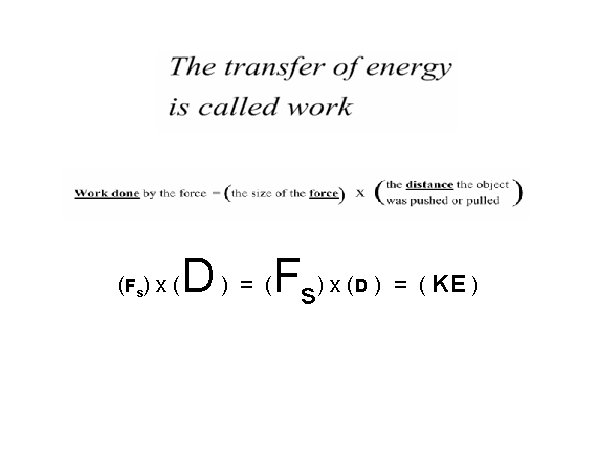
WORK The Transfer of Energy How does the previous investigation help us to understand how forces transfer energy?
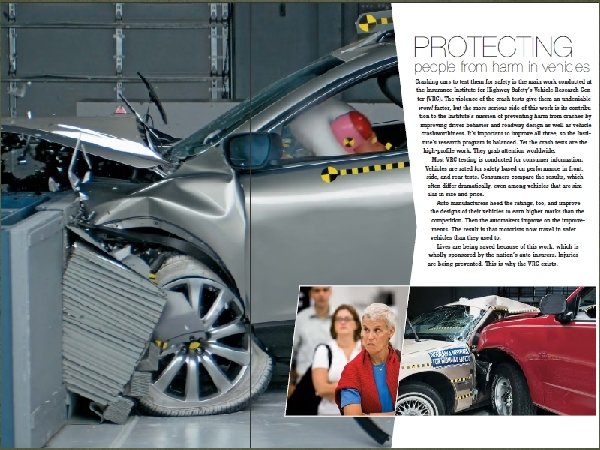
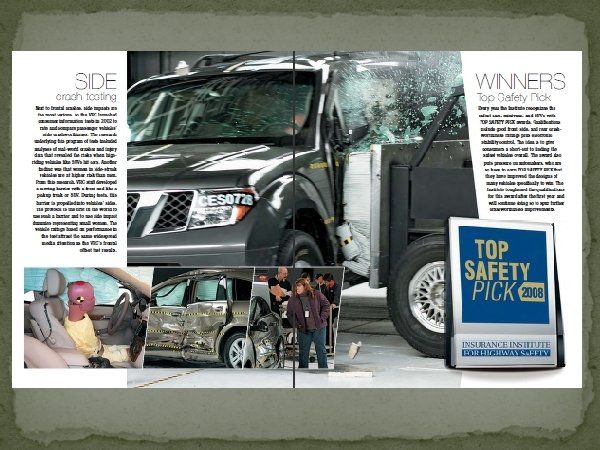
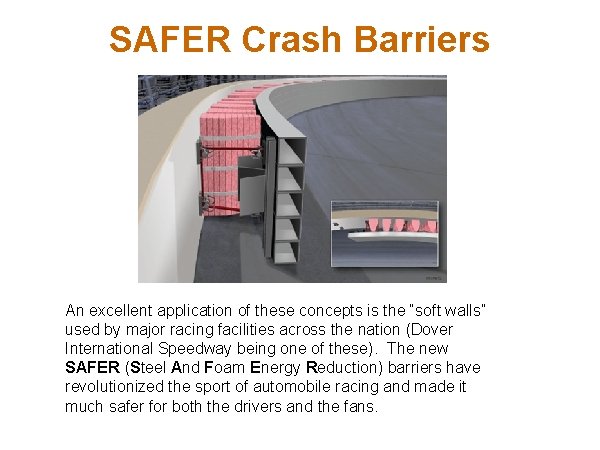
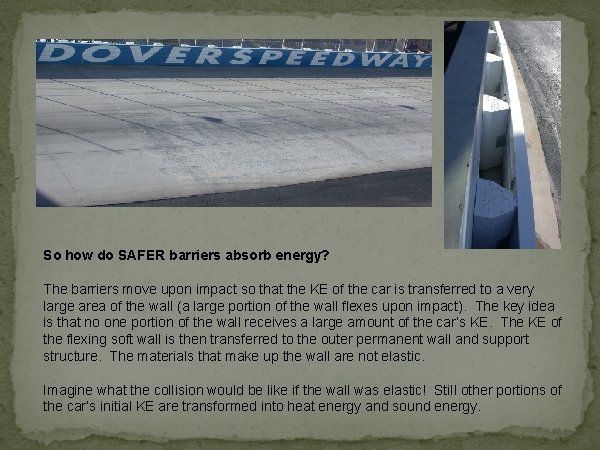
SAFER Crash Barriers An excellent application of these concepts is the “soft walls” used by major racing facilities across the nation (Dover International Speedway being one of these). The new SAFER (Steel And Foam Energy Reduction) barriers have revolutionized the sport of automobile racing and made it much safer for both the drivers and the fans.
So how do SAFER barriers absorb energy? The barriers move upon impact so that the KE of the car is transferred to a very large area of the wall (a large portion of the wall flexes upon impact). The key idea is that no one portion of the wall receives a large amount of the car’s KE. The KE of the flexing soft wall is then transferred to the outer permanent wall and support structure. The materials that make up the wall are not elastic. Imagine what the collision would be like if the wall was elastic! Still other portions of the car’s initial KE are transformed into heat energy and sound energy.