
WarmUp 1 What is a tissue 2 The



- Slides: 26
Warm-Up 1. What is a tissue? 2. The study of tissues is called ______. 3. What are the 4 main types of tissues? (See the intro to Chapter 4 in textbook)
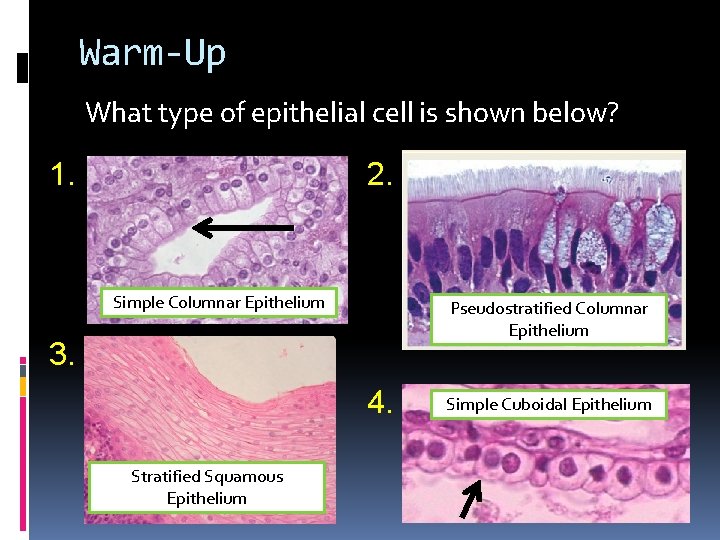
Warm-Up What type of epithelial cell is shown below? 1. 2. Simple Columnar Epithelium Pseudostratified Columnar Epithelium 3. 4. Stratified Squamous Epithelium Simple Cuboidal Epithelium
Chapter 4 TISSUE: THE LIVING FABRIC
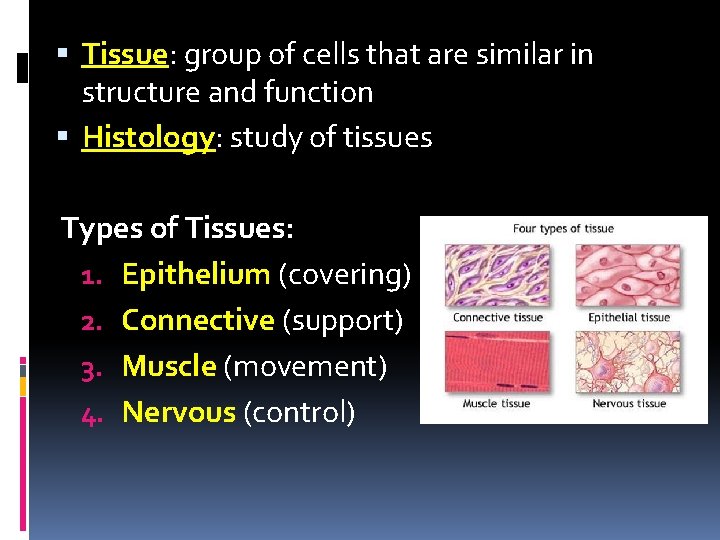
Tissue: group of cells that are similar in structure and function Histology: study of tissues Types of Tissues: 1. Epithelium (covering) 2. Connective (support) 3. Muscle (movement) 4. Nervous (control)
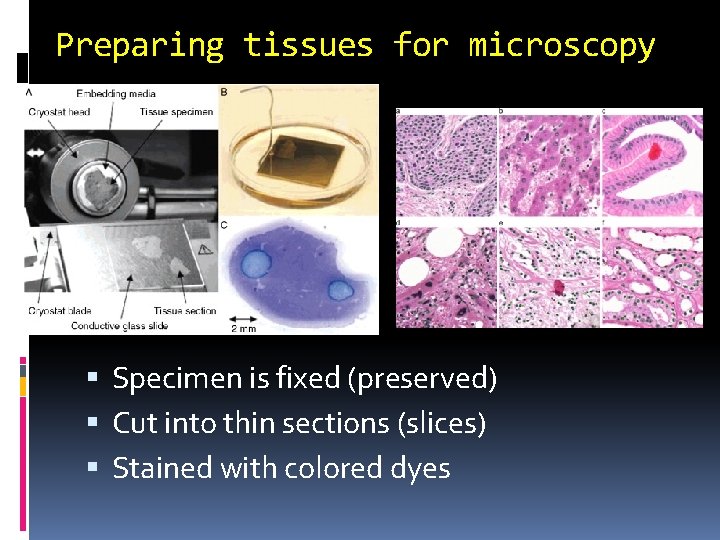
Preparing tissues for microscopy Specimen is fixed (preserved) Cut into thin sections (slices) Stained with colored dyes
Part I: Epithelial Tissue
Epithelial Tissue “epithe” = laid on, covering Structure: 1. Covering and lining epithelium 2. Glandular epithelium Function: Protection Absorption Filtration Secretion
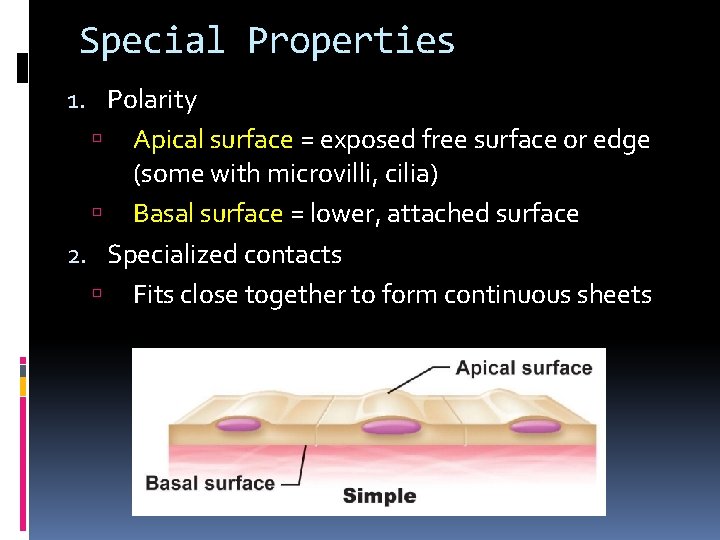
Special Properties 1. Polarity Apical surface = exposed free surface or edge (some with microvilli, cilia) Basal surface = lower, attached surface 2. Specialized contacts Fits close together to form continuous sheets
Special Properties 3. Supported by connective tissue Rests on basement membrane 4. No blood supply (avascular) Rely on diffusion and underlying connective tissue for food/O 2 5. Regeneration – Replace lost cells
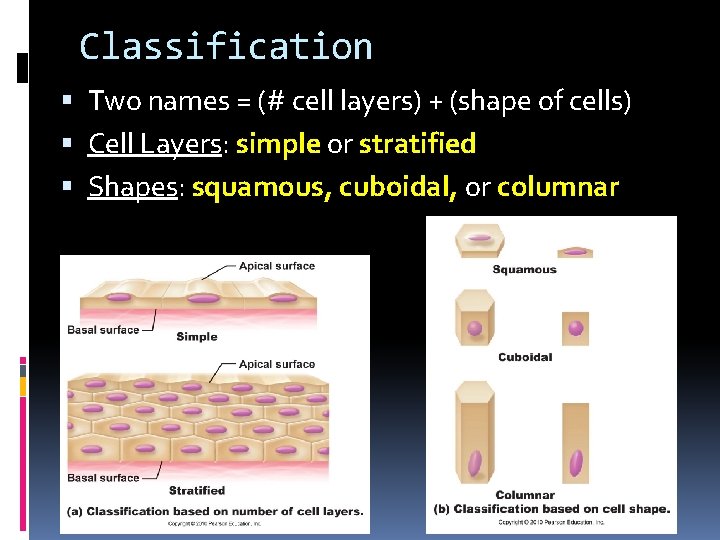
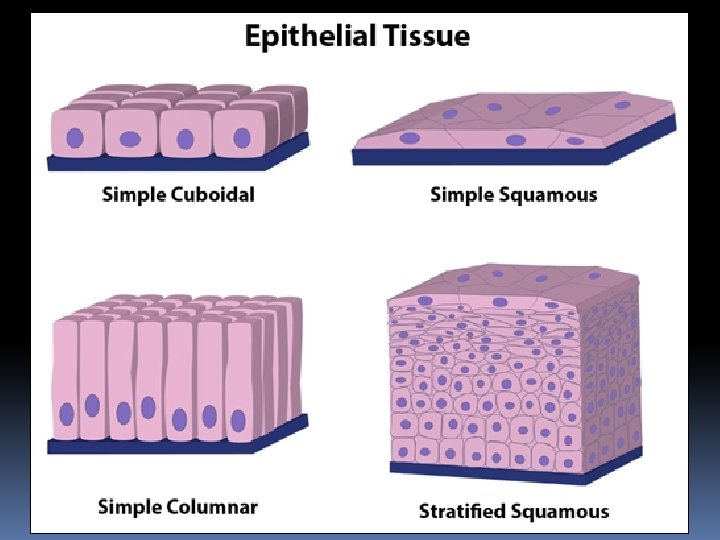
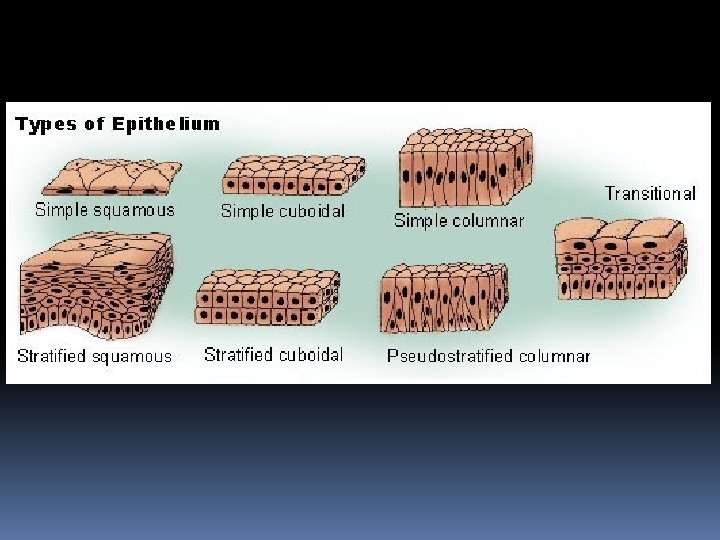
Classification Two names = (# cell layers) + (shape of cells) Cell Layers: simple or stratified Shapes: squamous, cuboidal, or columnar
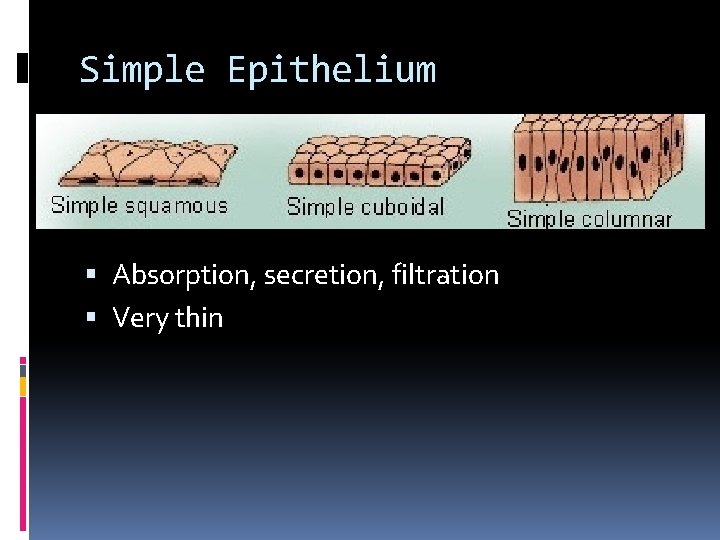
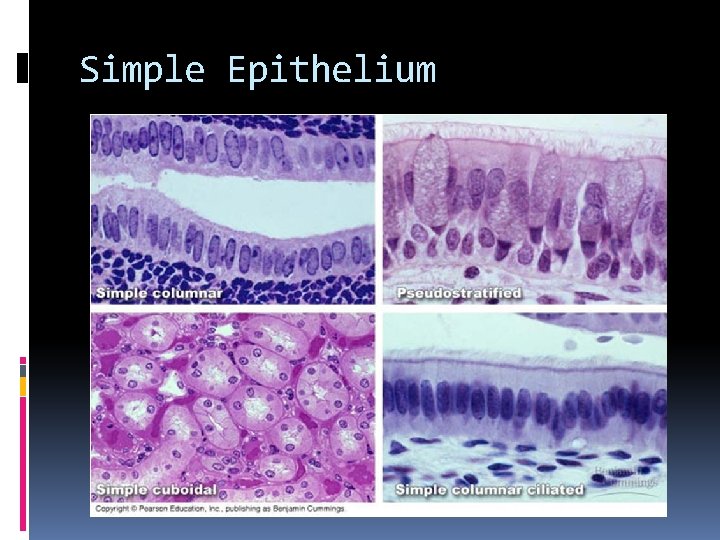
Simple Epithelium Absorption, secretion, filtration Very thin
Simple Epithelium
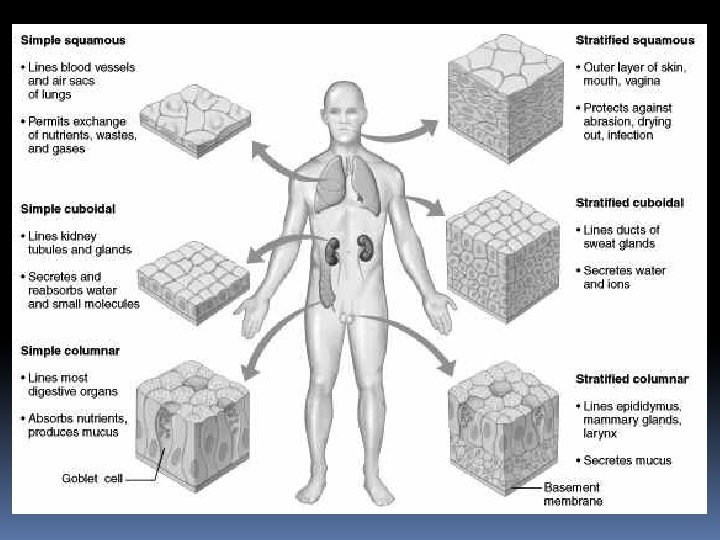
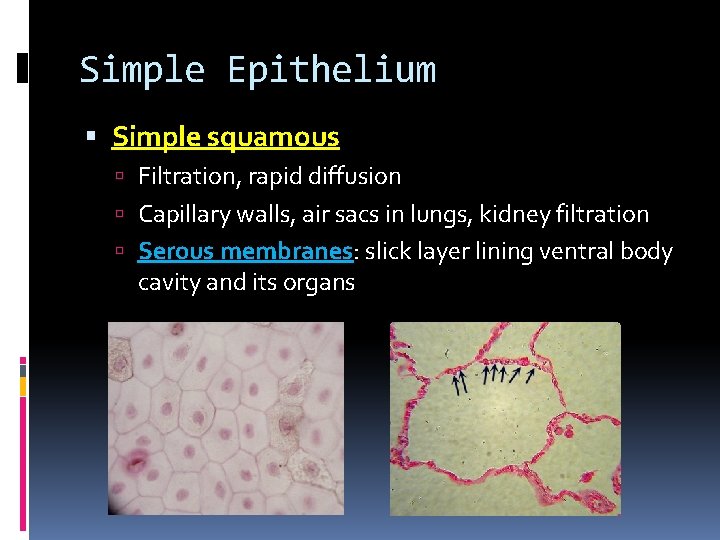
Simple Epithelium Simple squamous Filtration, rapid diffusion Capillary walls, air sacs in lungs, kidney filtration Serous membranes: slick layer lining ventral body cavity and its organs
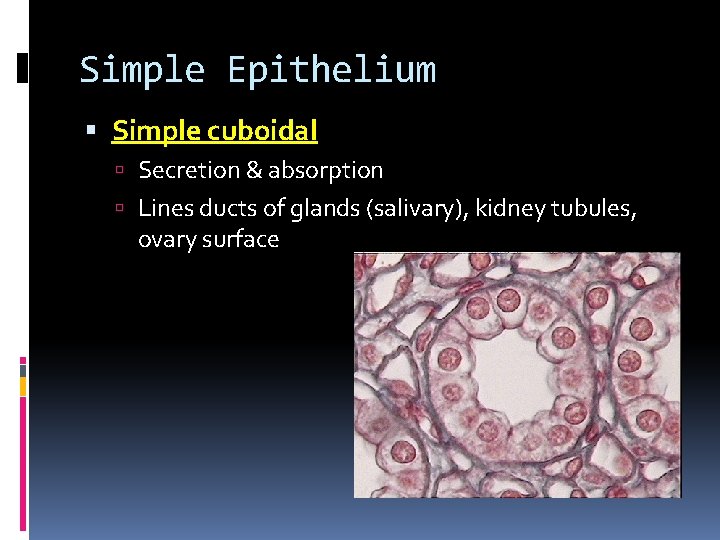
Simple Epithelium Simple cuboidal Secretion & absorption Lines ducts of glands (salivary), kidney tubules, ovary surface
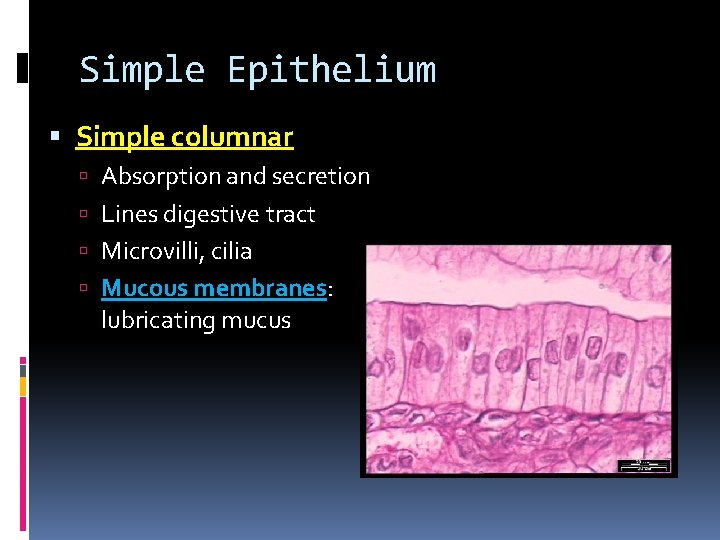
Simple Epithelium Simple columnar Absorption and secretion Lines digestive tract Microvilli, cilia Mucous membranes: lubricating mucus
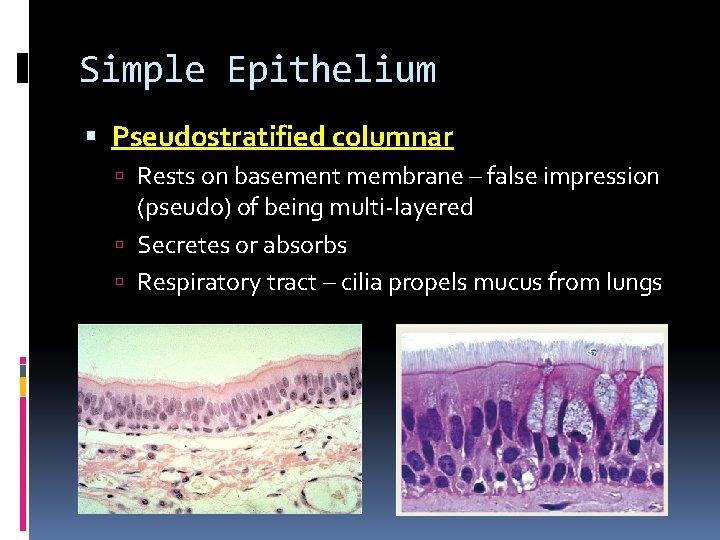
Simple Epithelium Pseudostratified columnar Rests on basement membrane – false impression (pseudo) of being multi-layered Secretes or absorbs Respiratory tract – cilia propels mucus from lungs
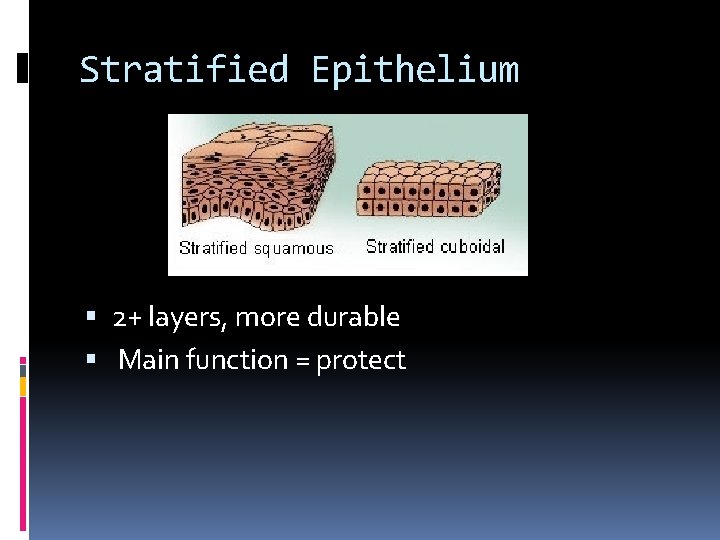
Stratified Epithelium 2+ layers, more durable Main function = protect
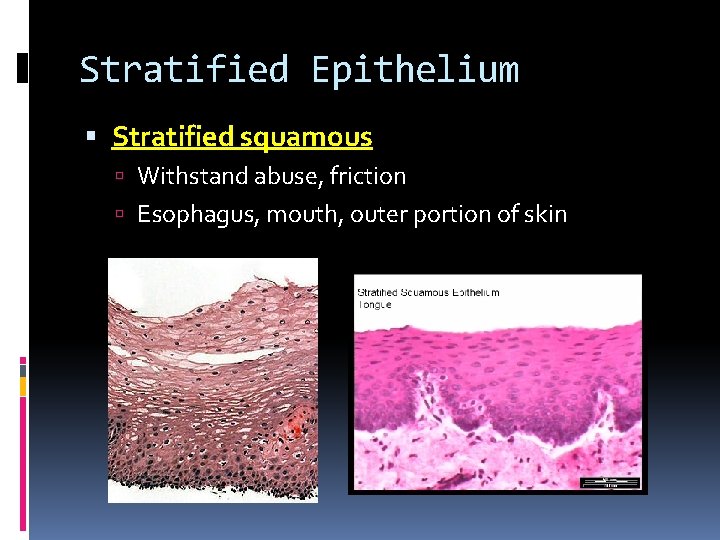
Stratified Epithelium Stratified squamous Withstand abuse, friction Esophagus, mouth, outer portion of skin
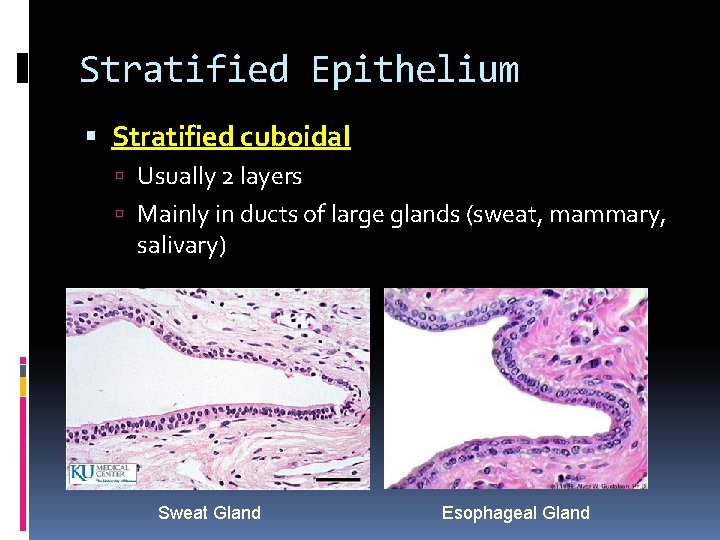
Stratified Epithelium Stratified cuboidal Usually 2 layers Mainly in ducts of large glands (sweat, mammary, salivary) Sweat Gland Esophageal Gland
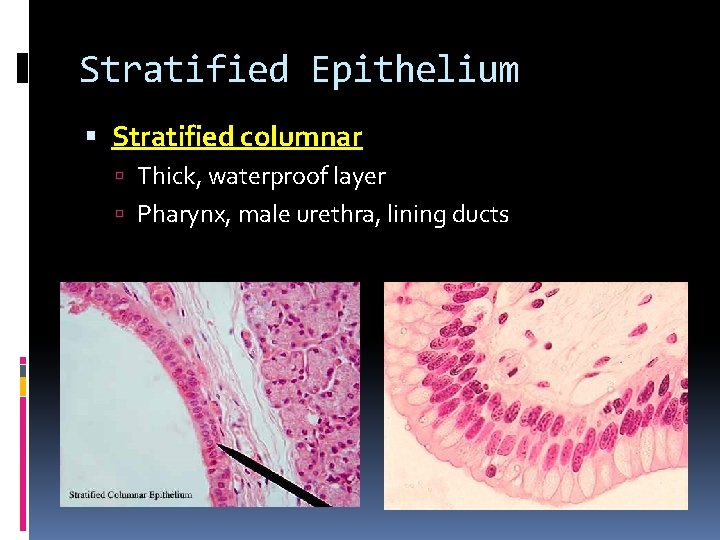
Stratified Epithelium Stratified columnar Thick, waterproof layer Pharynx, male urethra, lining ducts
Transitional Epithelium Able to change shape (cuboidal squamous) Lining of hollow urinary organs (bladder, urethra) Stretches when filled with urine
Glandular Epithelium Gland: make and secrete a particular product 2 Types: Endocrine gland: produce hormones secreted into tissue fluid or bloodstream Exocrine gland: secrete products into ducts onto body surfaces or body cavities Eg. mucous, sweat, oil, saliva, bile
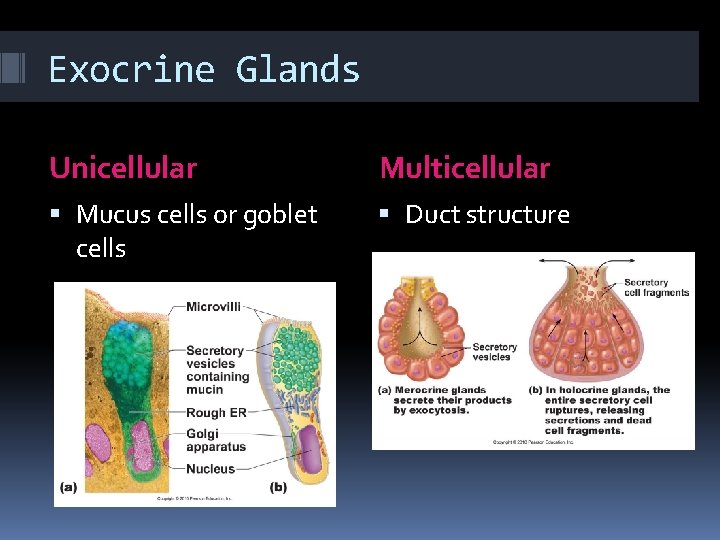
Exocrine Glands Unicellular Multicellular Mucus cells or goblet cells Duct structure