
WarmUp 1 Contrast adaptive radiation vs convergent evolution



- Slides: 28
Warm-Up 1. Contrast adaptive radiation vs. convergent evolution? Give an example of each. 2. What is the correct sequence from the most comprehensive to least comprehensive taxon? 3. In a population of 500 rabbits, 320 are homozygous dominant for brown coat color (BB), 160 are heterozygous (Bb), and 20 are homozygous white (bb). a. What are the frequencies of the alleles (B and b)? b. What are the frequencies of the different genotypes (BB, Bb, and bb)?
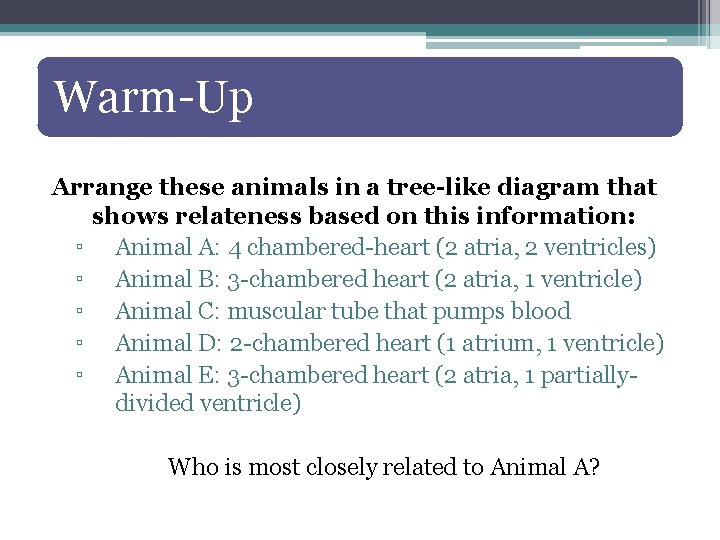
Warm-Up Arrange these animals in a tree-like diagram that shows relateness based on this information: ▫ Animal A: 4 chambered-heart (2 atria, 2 ventricles) ▫ Animal B: 3 -chambered heart (2 atria, 1 ventricle) ▫ Animal C: muscular tube that pumps blood ▫ Animal D: 2 -chambered heart (1 atrium, 1 ventricle) ▫ Animal E: 3 -chambered heart (2 atria, 1 partiallydivided ventricle) Who is most closely related to Animal A?
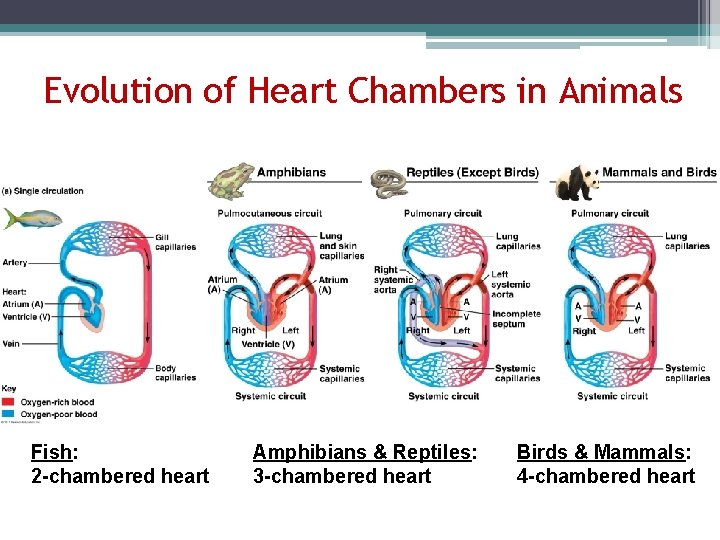
Evolution of Heart Chambers in Animals Fish: 2 -chambered heart Amphibians & Reptiles: 3 -chambered heart Birds & Mammals: 4 -chambered heart
Chapter 20 Phylogeny
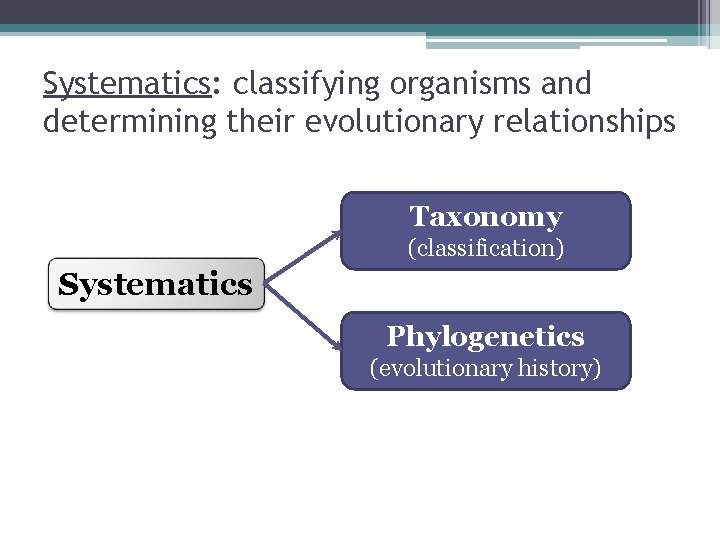
Systematics: classifying organisms and determining their evolutionary relationships Taxonomy (classification) Systematics Phylogenetics (evolutionary history)
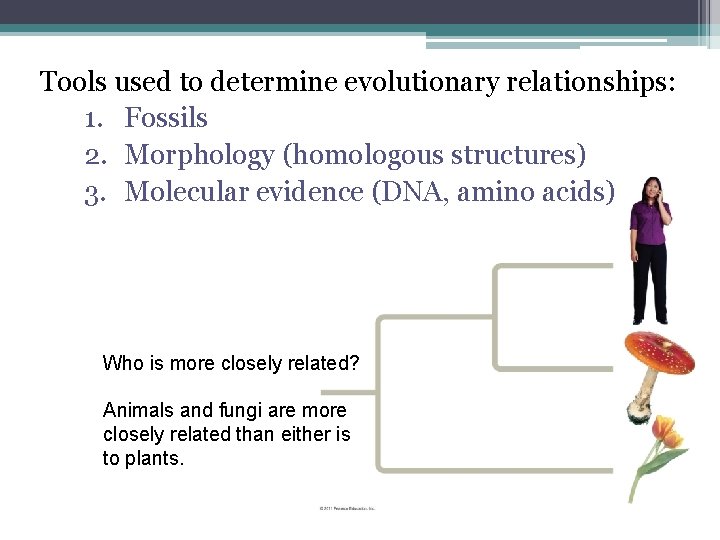
Tools used to determine evolutionary relationships: 1. Fossils 2. Morphology (homologous structures) 3. Molecular evidence (DNA, amino acids) Who is more closely related? Animals and fungi are more closely related than either is to plants.
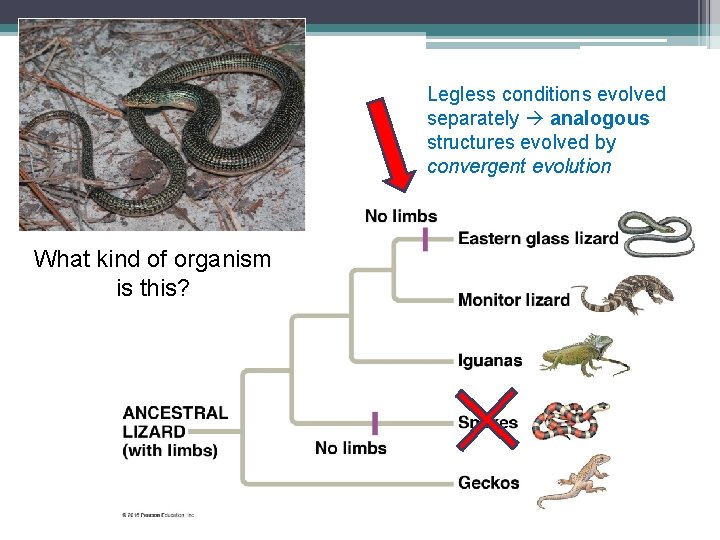
Legless conditions evolved separately analogous structures evolved by convergent evolution What kind of organism is this?
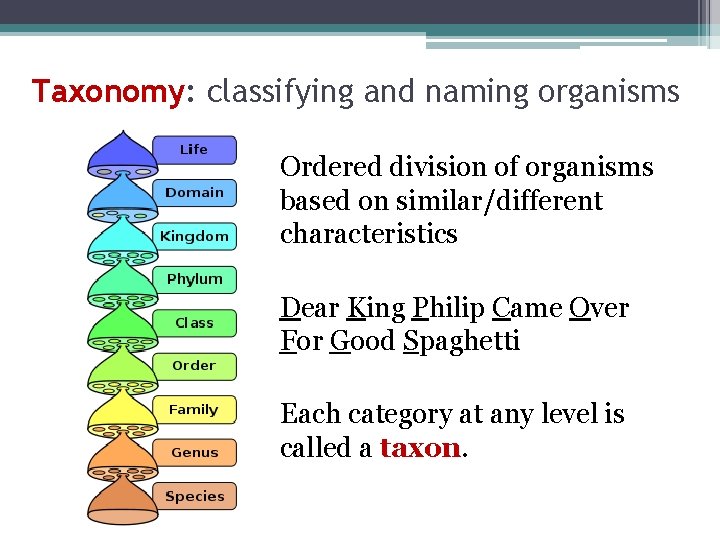
Taxonomy: classifying and naming organisms Ordered division of organisms based on similar/different characteristics Dear King Philip Came Over For Good Spaghetti Each category at any level is called a taxon.
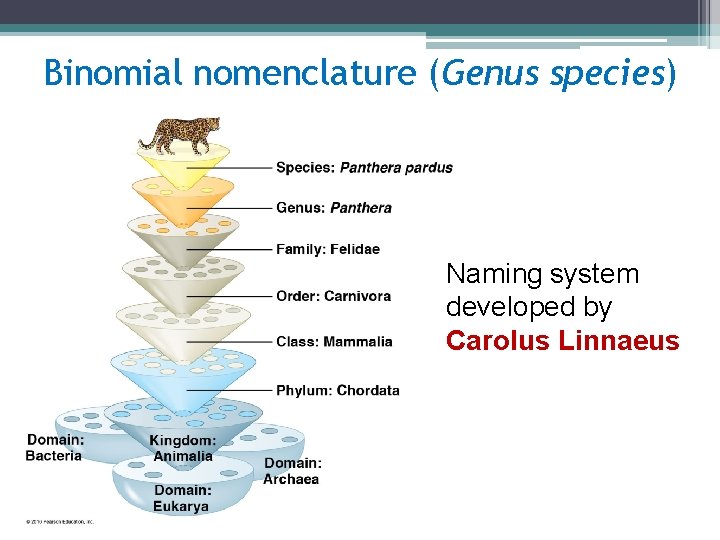
Binomial nomenclature (Genus species) Naming system developed by Carolus Linnaeus
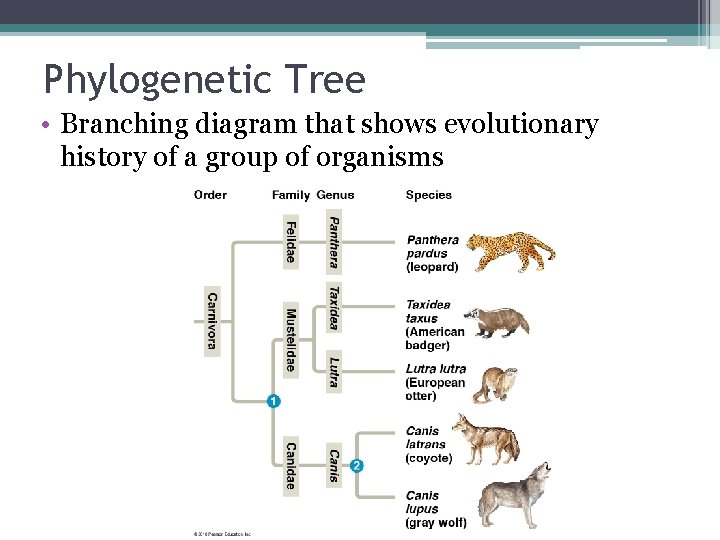
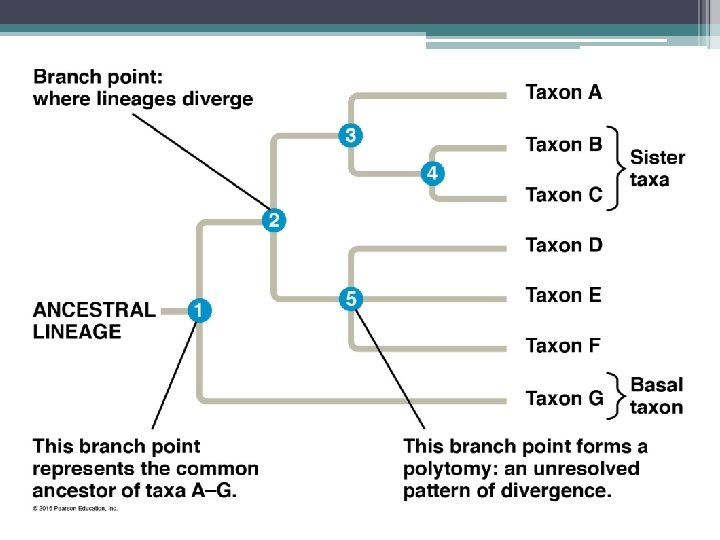
Phylogenetic Tree • Branching diagram that shows evolutionary history of a group of organisms
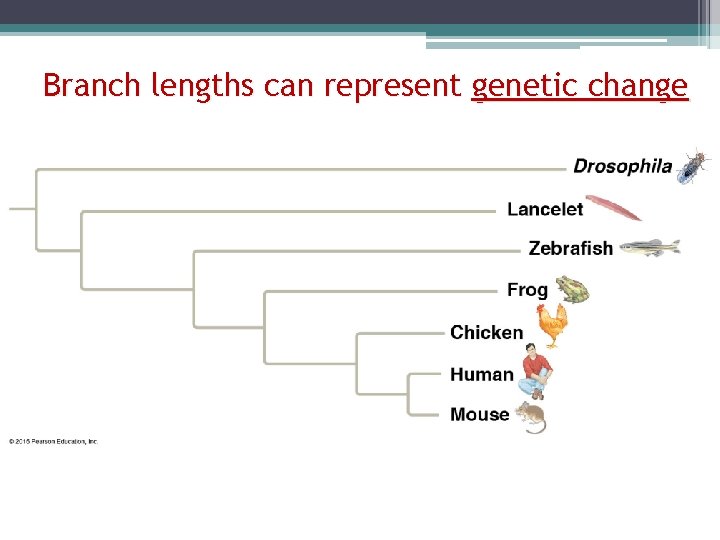
Branch lengths can represent genetic change
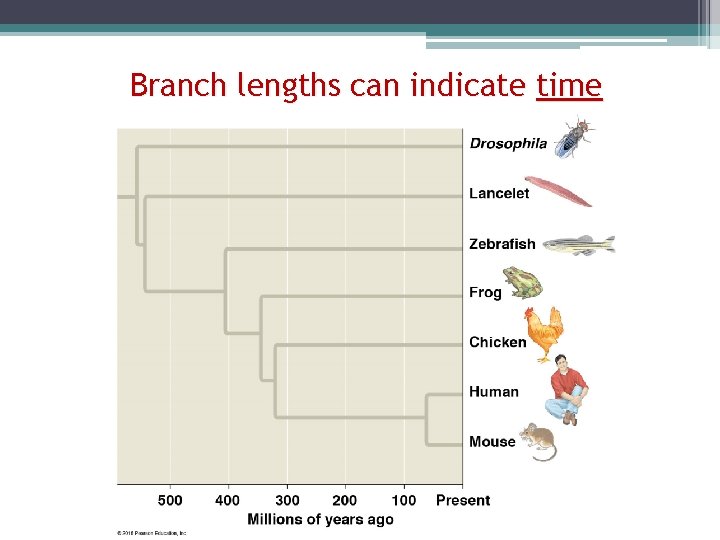
Branch lengths can indicate time
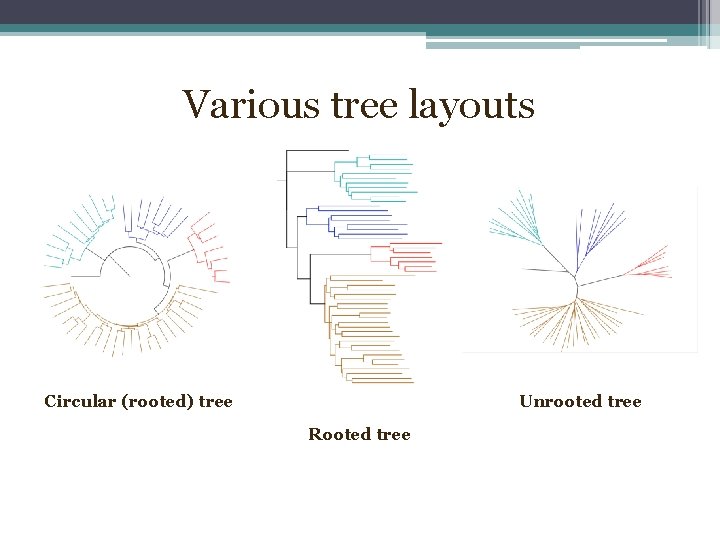
Various tree layouts Circular (rooted) tree Unrooted tree Rooted tree
Constructing Phylogenetic Trees • Divergent vs. Convergent Evolution • Sorting homology from analogy
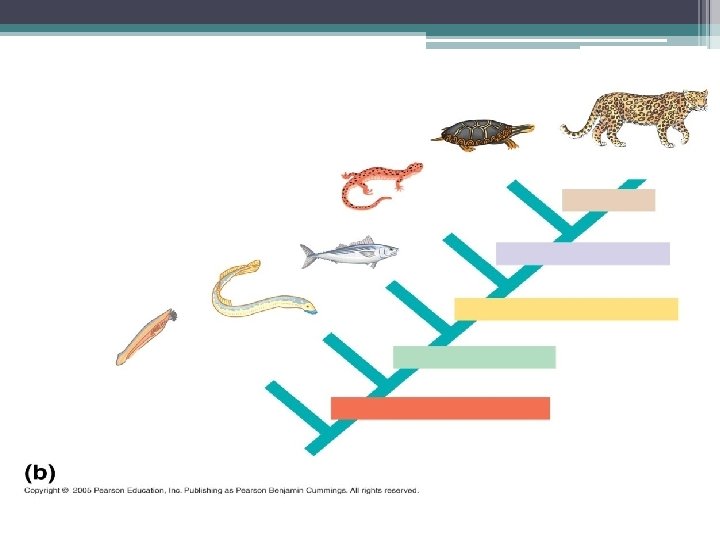
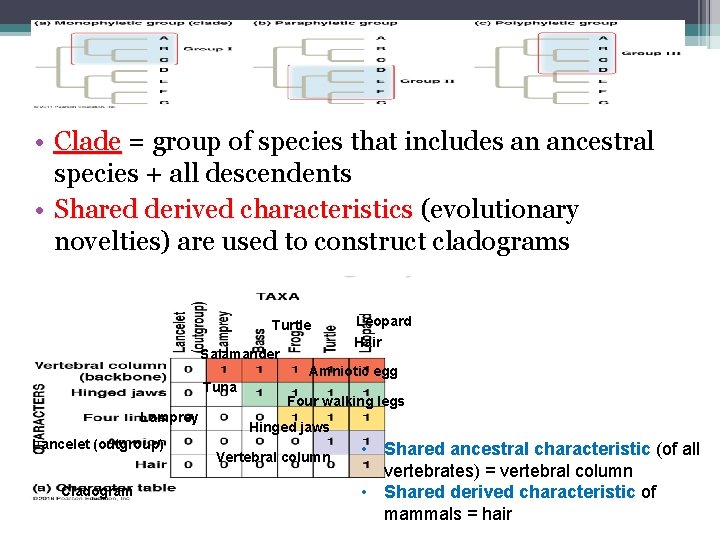
• Clade = group of species that includes an ancestral species + all descendents • Shared derived characteristics (evolutionary novelties) are used to construct cladograms Turtle Leopard Hair Salamander Amniotic egg Tuna Lamprey Lancelet (outgroup) Cladogram Four walking legs Hinged jaws Vertebral column • Shared ancestral characteristic (of all vertebrates) = vertebral column • Shared derived characteristic of mammals = hair
Taxa Lungs tail jaws nostrils feathers Duck + + + owl + + + Parrot + + + Snake - + - dog + + -
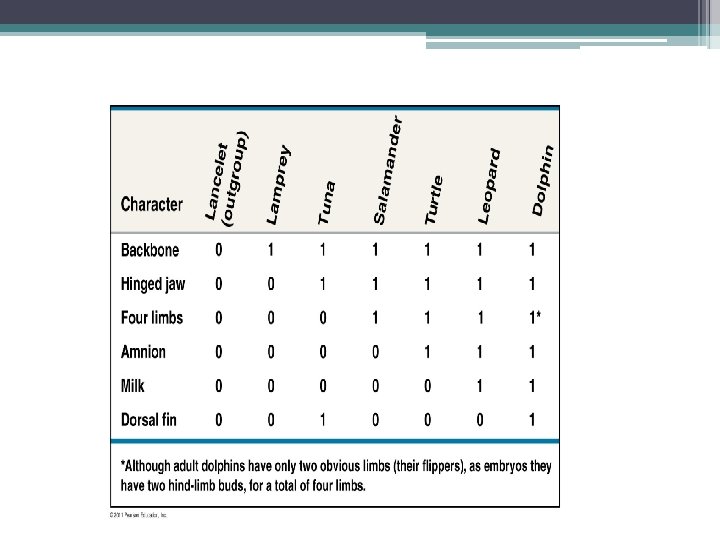
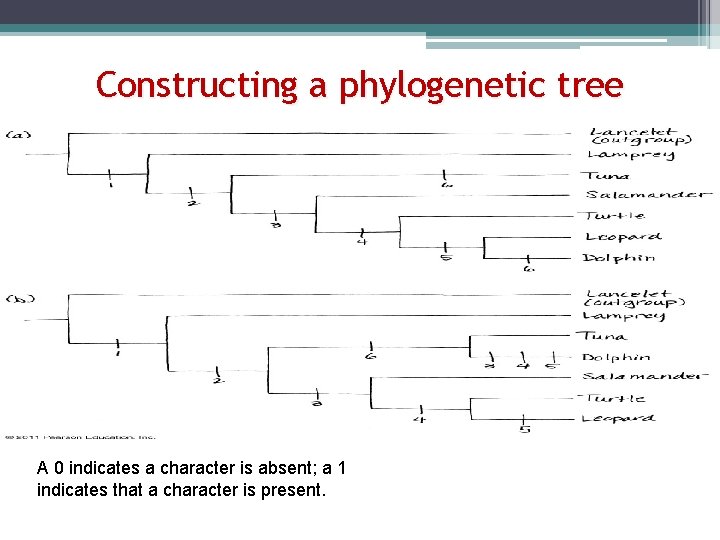
Constructing a phylogenetic tree A 0 indicates a character is absent; a 1 indicates that a character is present.
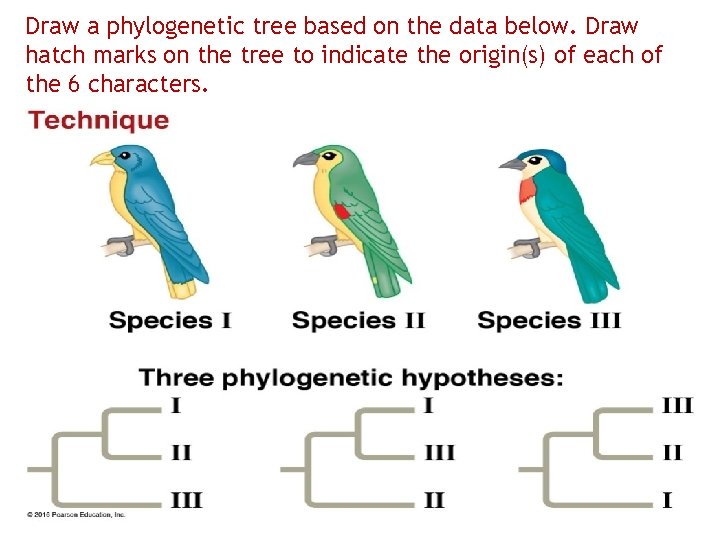
Draw a phylogenetic tree based on the data below. Draw hatch marks on the tree to indicate the origin(s) of each of the 6 characters.
Answer:
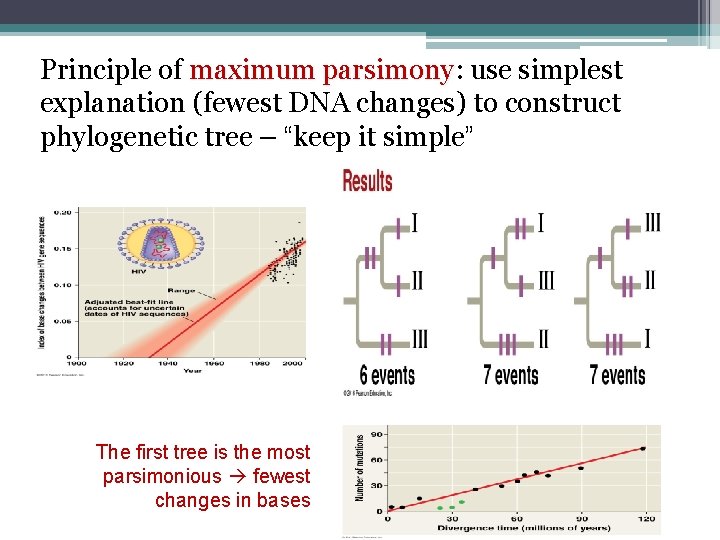
Principle of maximum parsimony: parsimony use simplest explanation (fewest DNA changes) to construct phylogenetic tree – “keep it simple” The first tree is the most parsimonious fewest changes in bases
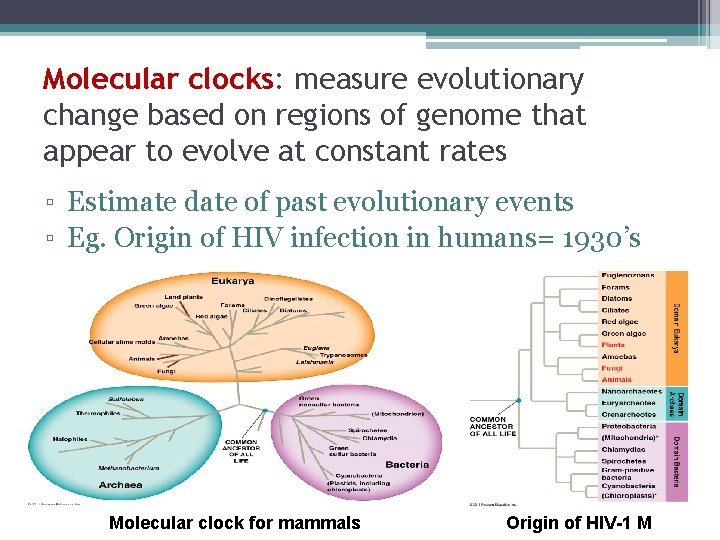
Molecular clocks: measure evolutionary change based on regions of genome that appear to evolve at constant rates ▫ Estimate date of past evolutionary events ▫ Eg. Origin of HIV infection in humans= 1930’s Molecular clock for mammals Origin of HIV-1 M
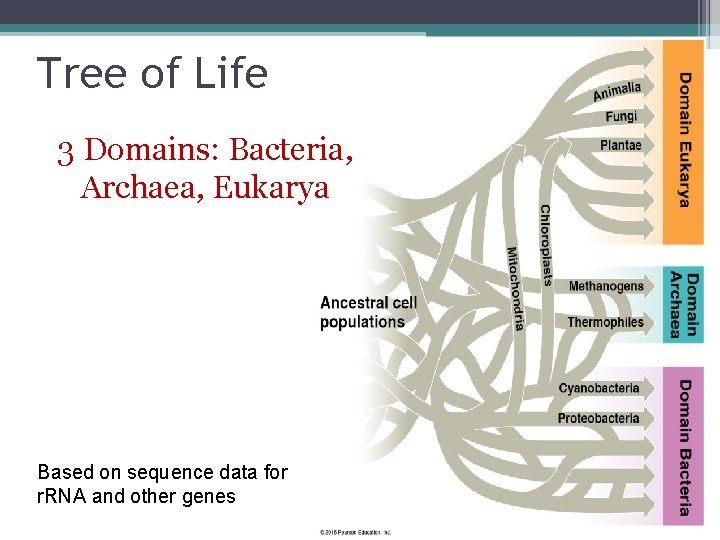
Tree of Life 3 Domains: Bacteria, Archaea, Eukarya Based on sequence data for r. RNA and other genes
Common Ancestry of All Life Forms Elements conserved across all 3 domains: 1. DNA and RNA are carriers of genetic info 2. Universal genetic code (codons amino acids) 3. Conserved metabolic pathways
Conserved elements in Eukaryotes: Eukaryotes 1. 2. 3. 4. Cytoskeleton Membrane-bound organelles Linear chromosomes Endomembrane systems (including nuclear envelope)
Horizontal Gene Transfer • Movement of genes between different domains • Exchange of transposable elements, plasmids, viral infections, fusion of organisms • Trees are complex! • Phylogenetic trees are hypotheses subject to change based on available data