
Warm Up What is the rock cycle Use


- Slides: 26
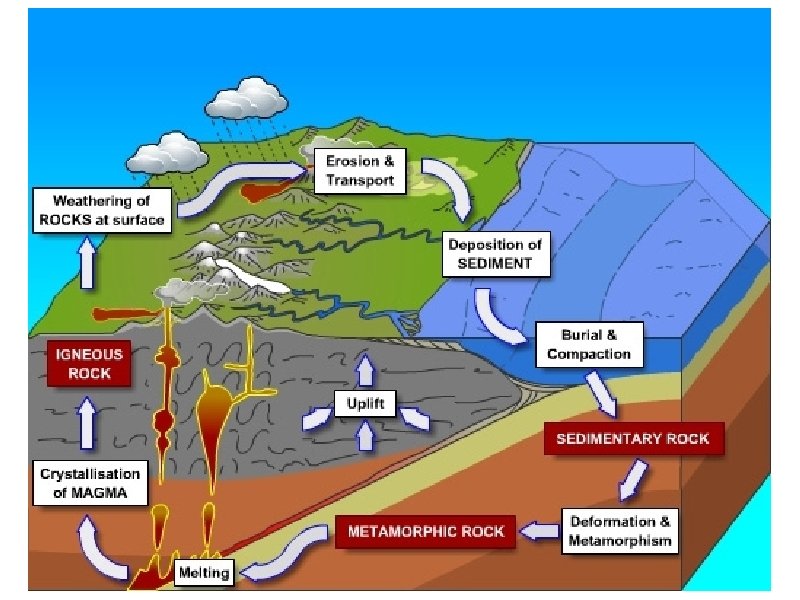
Warm Up What is the “rock cycle”? Use examples of the various rock types in your description. Even if you don’t know the answer, give it your best guess.
Warm up Get out your foldables and review what you know about IGNEOUS ROCKS. How are Igneous Rocks formed? What are the two categories of Igneous Rocks? How are they different? Do you know of any other types of rocks? What are they called?
Rocks
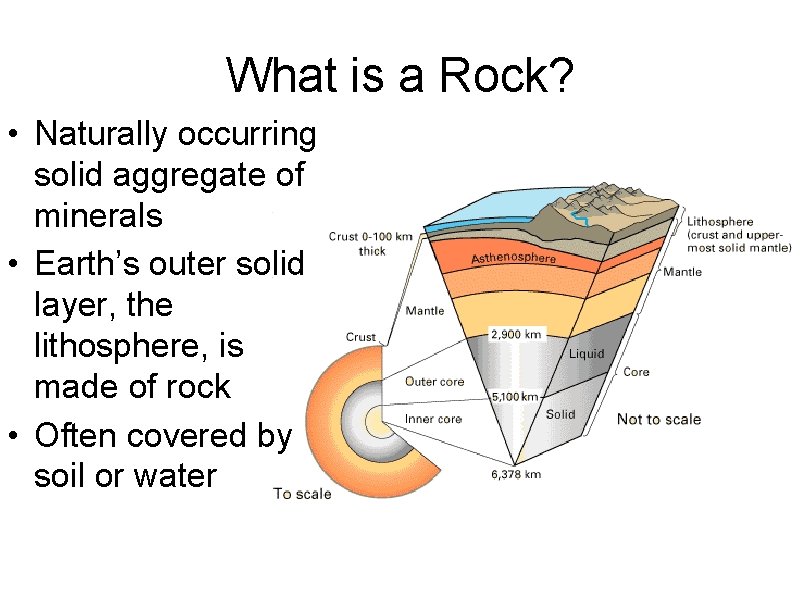
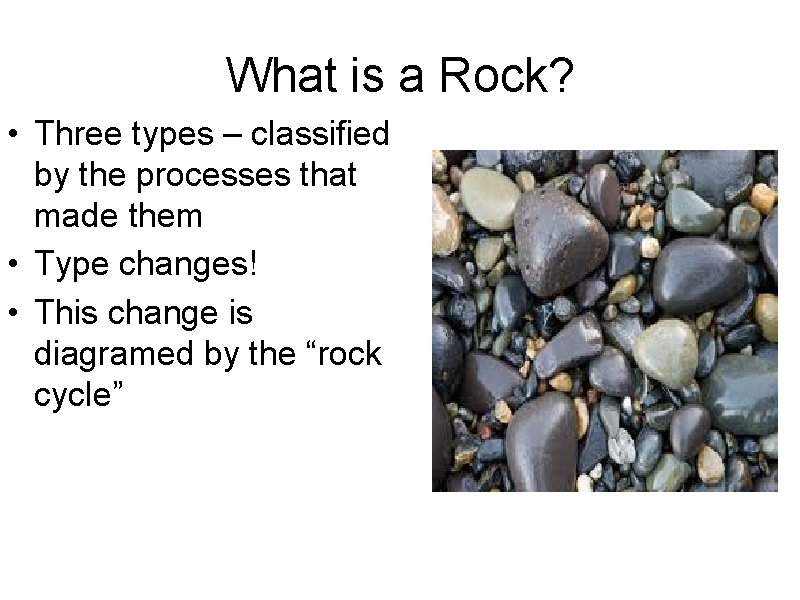
What is a Rock? • Naturally occurring solid aggregate of minerals • Earth’s outer solid layer, the lithosphere, is made of rock • Often covered by soil or water
What is a Rock? • Three types – classified by the processes that made them • Type changes! • This change is diagramed by the “rock cycle”
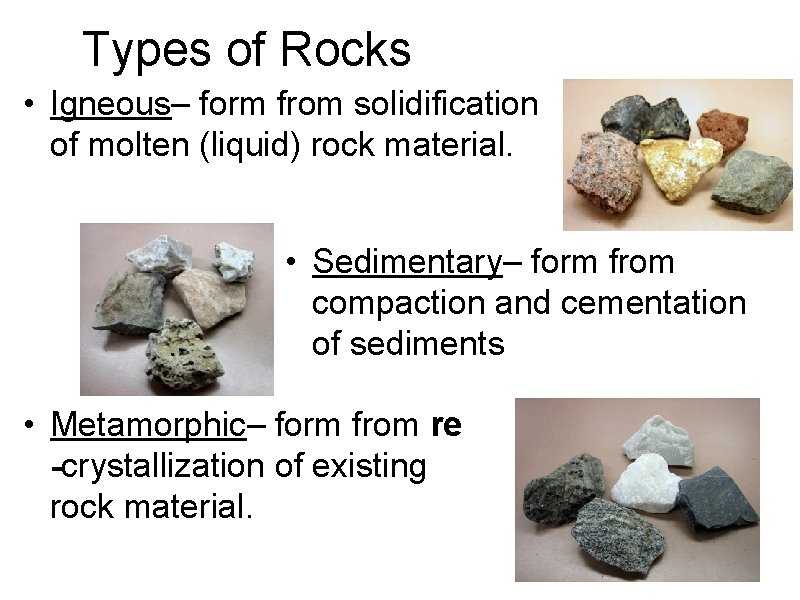
Types of Rocks • Igneous– form from solidification of molten (liquid) rock material. • Sedimentary– form from compaction and cementation of sediments • Metamorphic– form from re -crystallization of existing rock material.
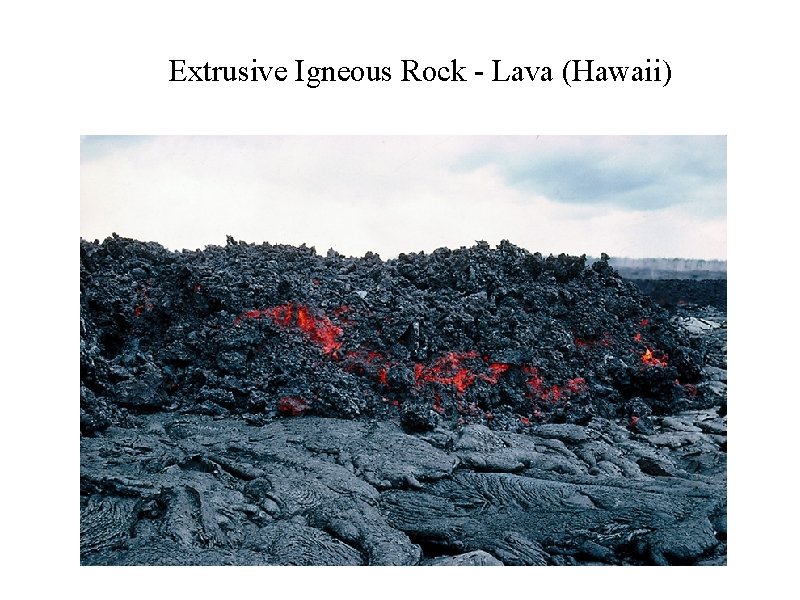
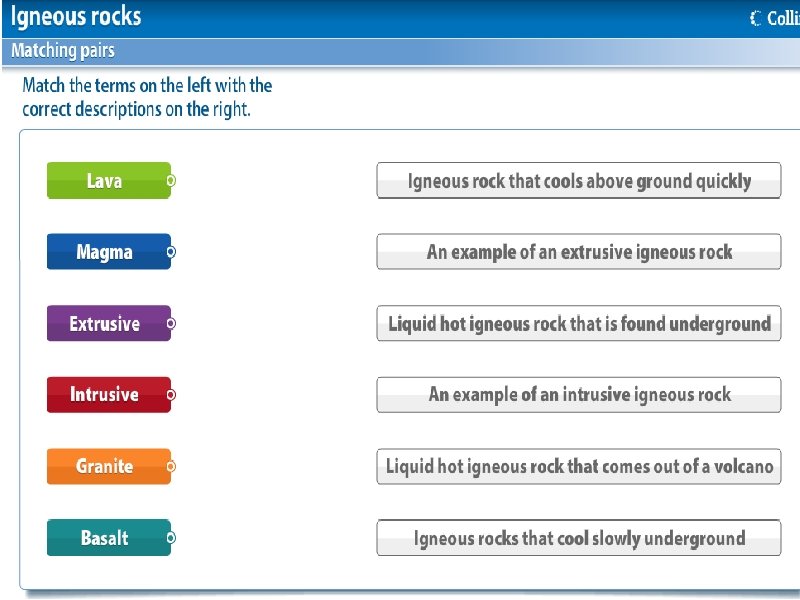
Igneous Rocks formed by solidification from a melt Lava- Magma that reaches the surface (extrusive) What would cause a rock to melt!? ! Magma- molten rock beneath the Earth’s surface (intrusive)
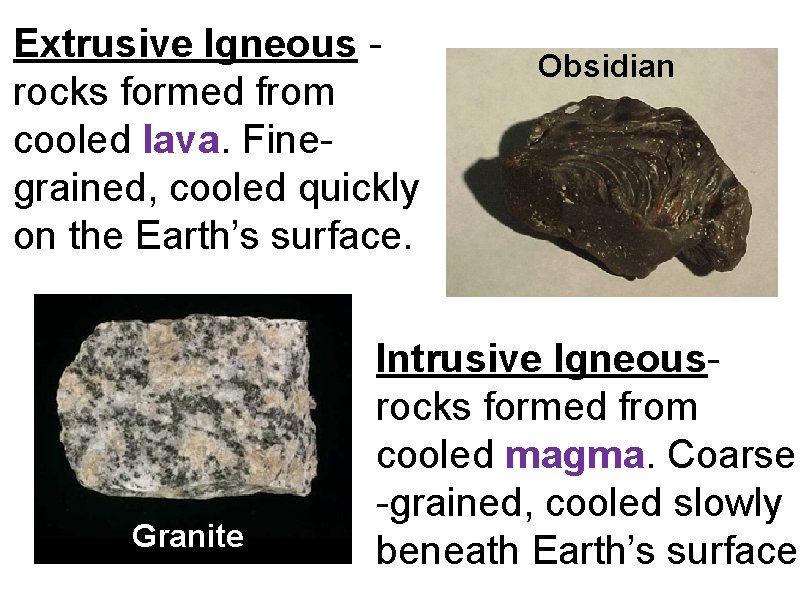
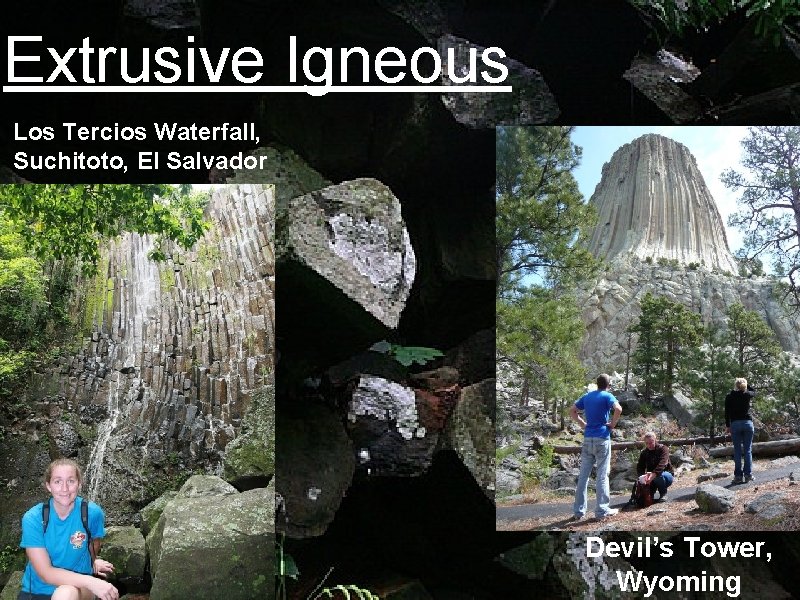
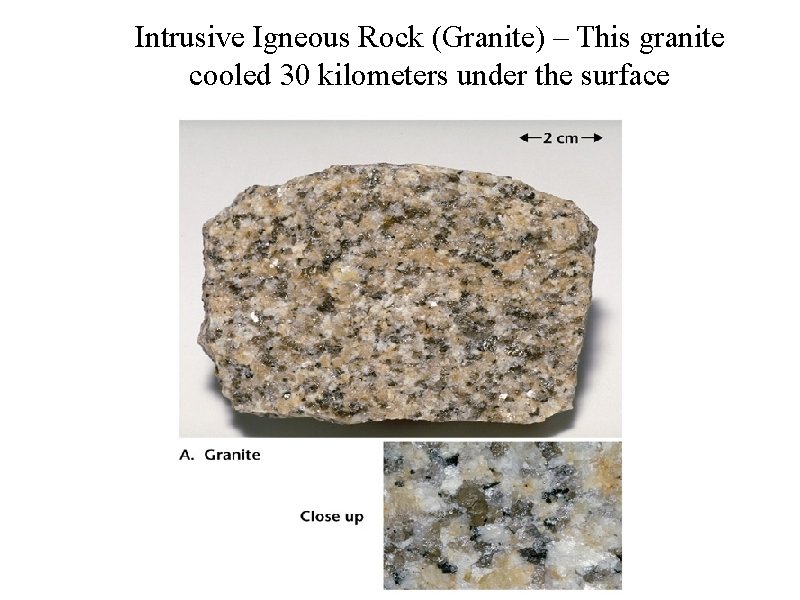
Extrusive Igneous rocks formed from cooled lava. Finegrained, cooled quickly on the Earth’s surface. Granite Obsidian Intrusive Igneousrocks formed from cooled magma. Coarse -grained, cooled slowly beneath Earth’s surface.
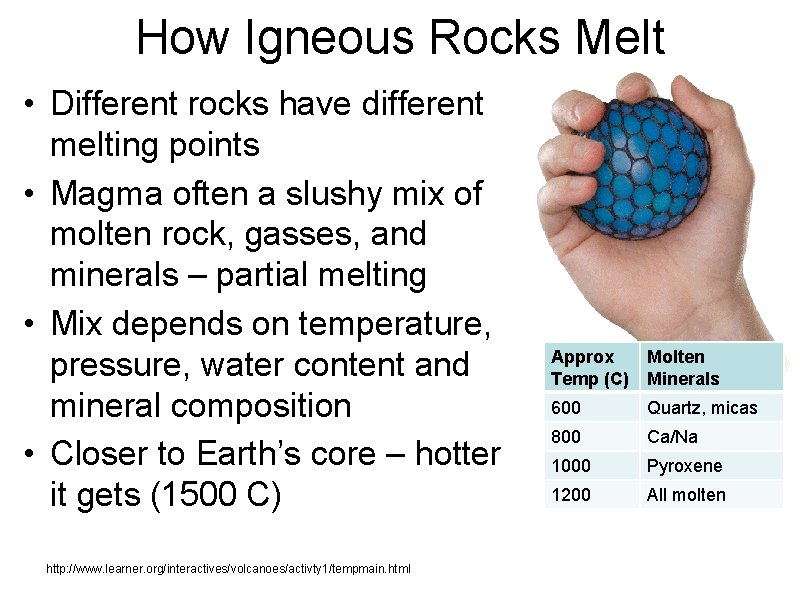
How Igneous Rocks Melt • Different rocks have different melting points • Magma often a slushy mix of molten rock, gasses, and minerals – partial melting • Mix depends on temperature, pressure, water content and mineral composition • Closer to Earth’s core – hotter it gets (1500 C) http: //www. learner. org/interactives/volcanoes/activty 1/tempmain. html Approx Temp (C) Molten Minerals 600 Quartz, micas 800 Ca/Na 1000 Pyroxene 1200 All molten
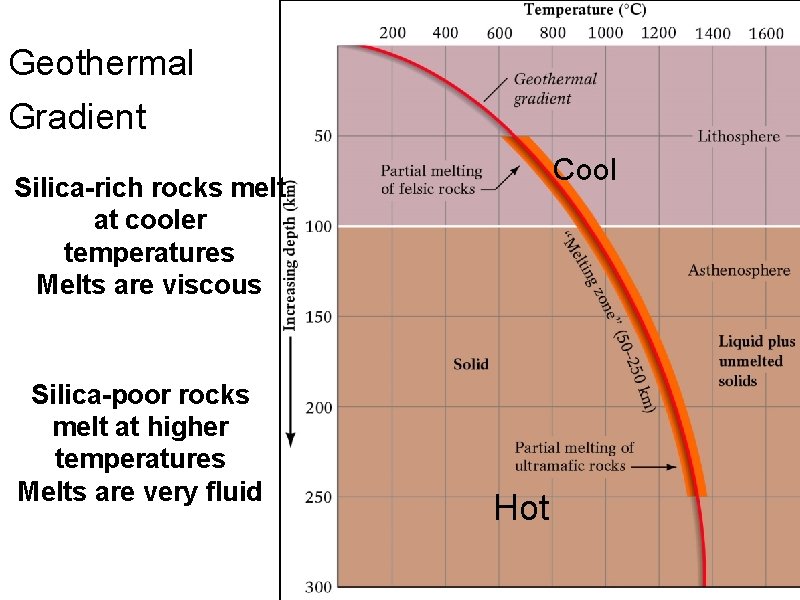
Geothermal Gradient Cool Silica-rich rocks melt at cooler temperatures Melts are viscous Silica-poor rocks melt at higher temperatures Melts are very fluid Hot
Extrusive Igneous Rock - Lava (Hawaii)
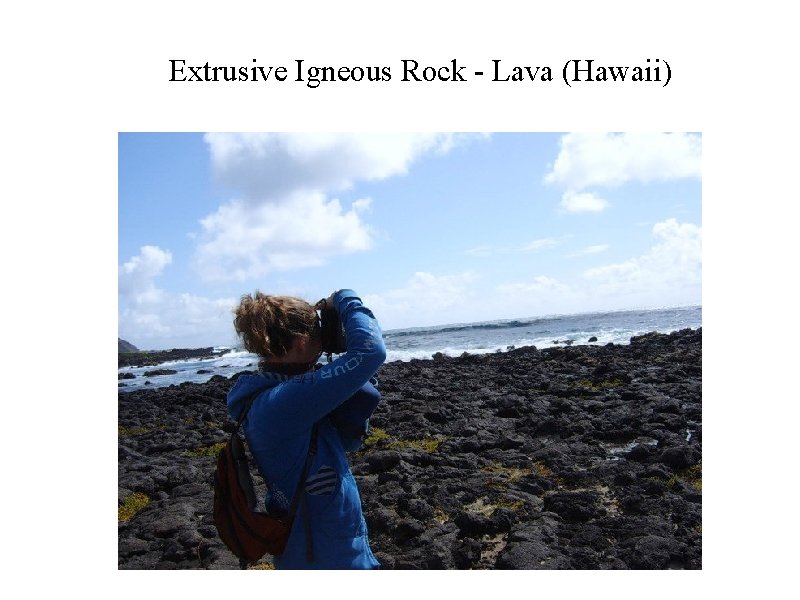
Extrusive Igneous Rock - Lava (Hawaii)
Extrusive Igneous Los Tercios Waterfall, Suchitoto, El Salvador Devil’s Tower, Wyoming
Intrusive Igneous Rock (Granite) – This granite cooled 30 kilometers under the surface
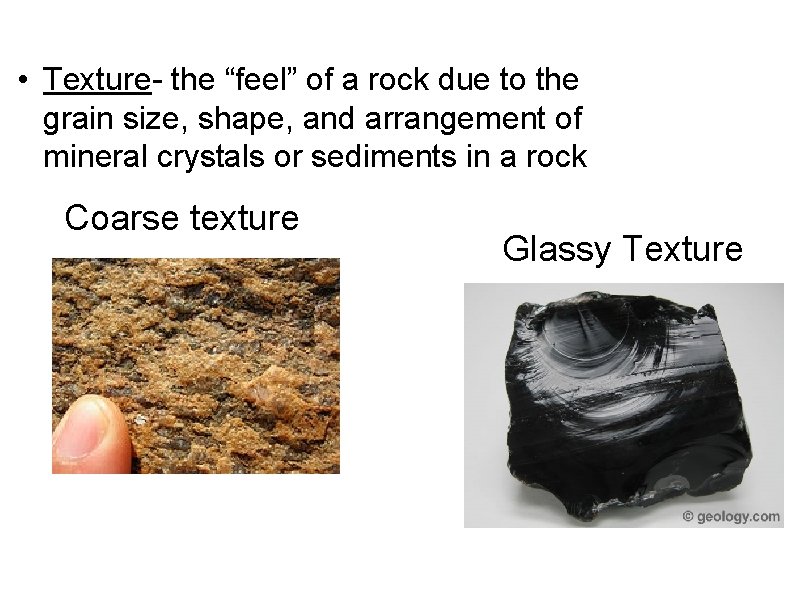
• Texture- the “feel” of a rock due to the grain size, shape, and arrangement of mineral crystals or sediments in a rock Coarse texture Glassy Texture
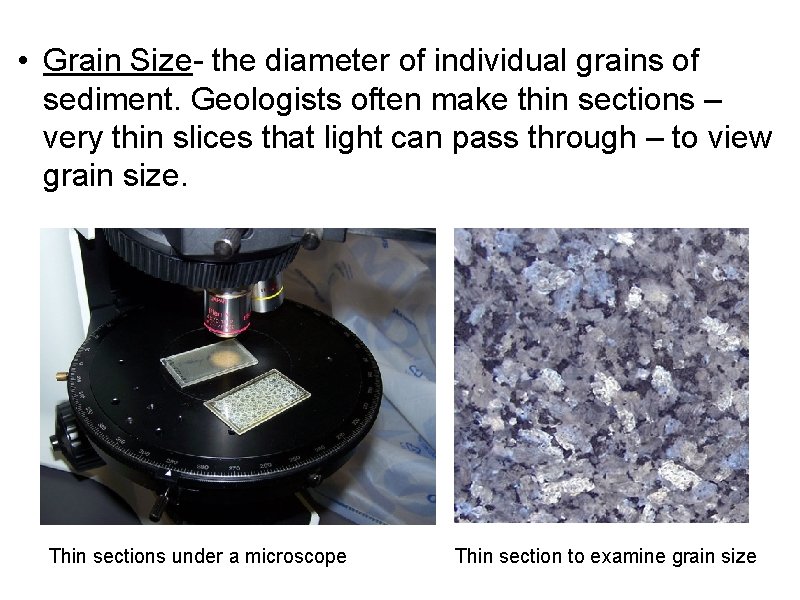
• Grain Size- the diameter of individual grains of sediment. Geologists often make thin sections – very thin slices that light can pass through – to view grain size. Thin sections under a microscope Thin section to examine grain size
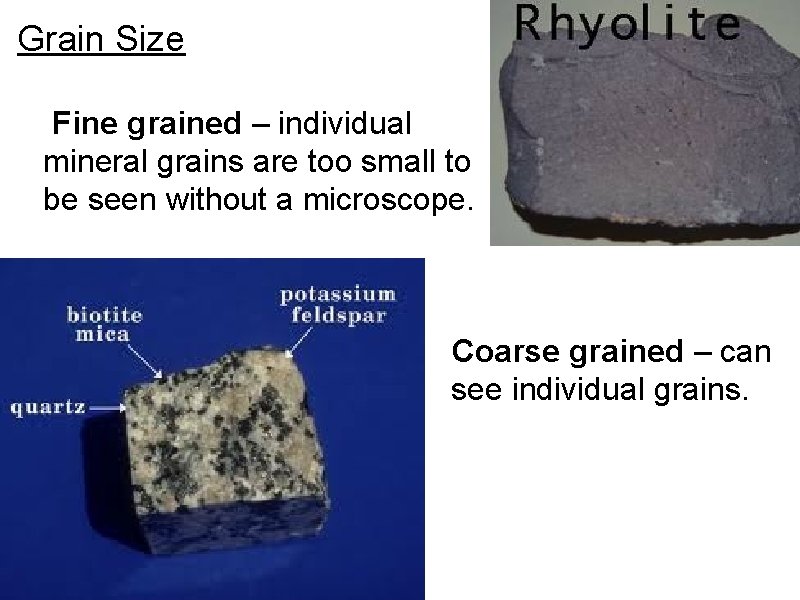
Grain Size Fine grained – individual mineral grains are too small to be seen without a microscope. Coarse grained – can see individual grains.
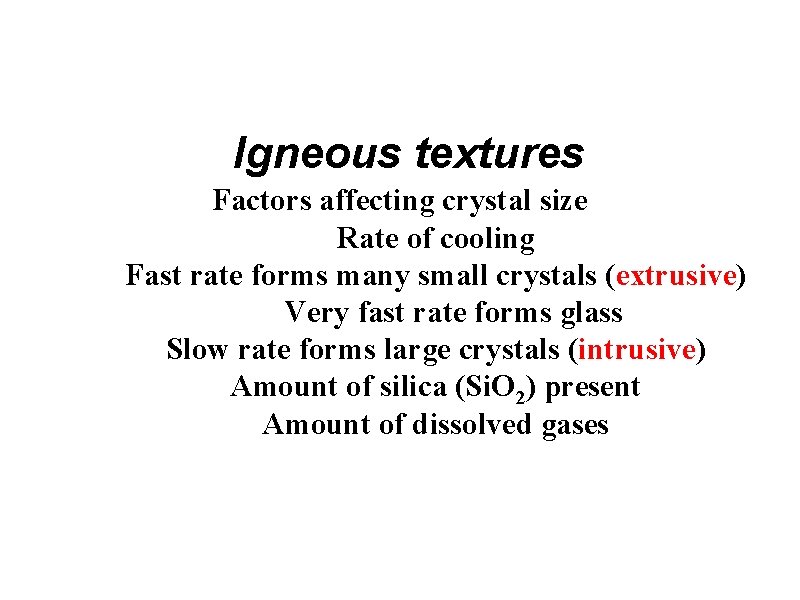
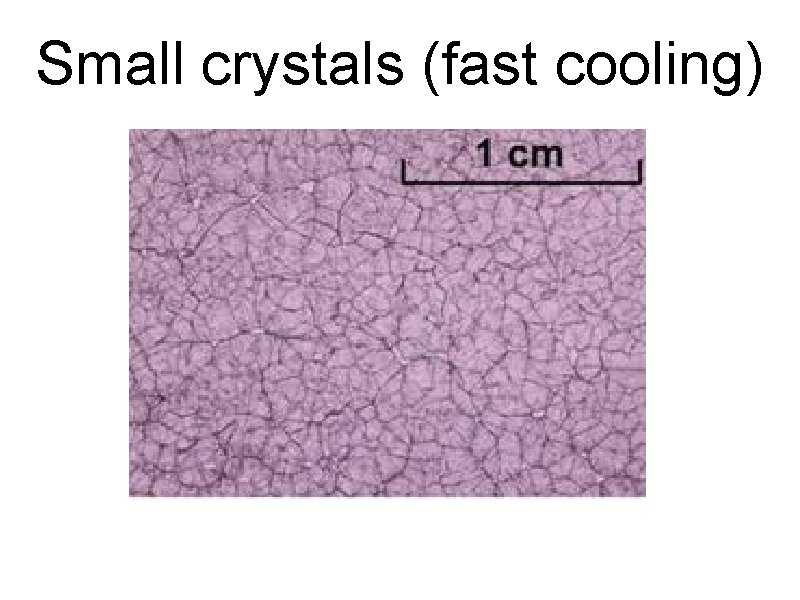
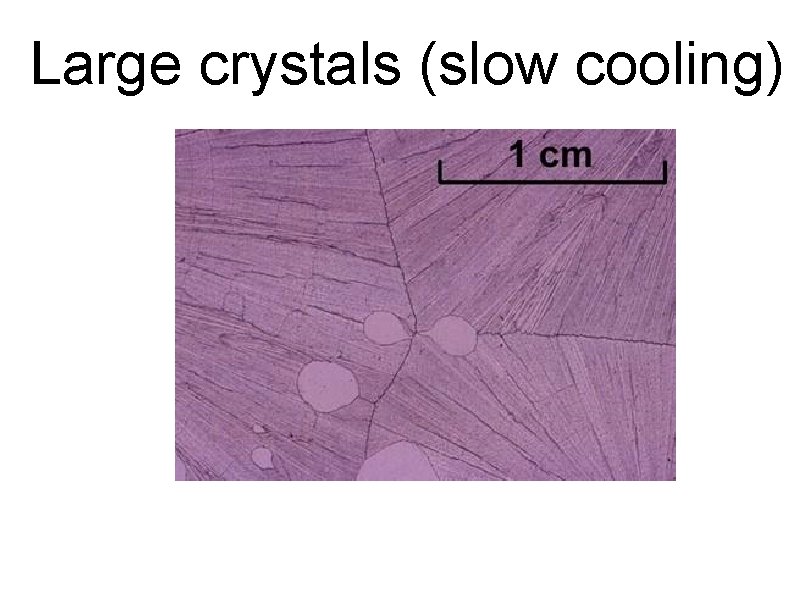
Igneous textures Factors affecting crystal size Rate of cooling Fast rate forms many small crystals (extrusive) Very fast rate forms glass Slow rate forms large crystals (intrusive) Amount of silica (Si. O 2) present Amount of dissolved gases
Small crystals (fast cooling)
Large crystals (slow cooling)
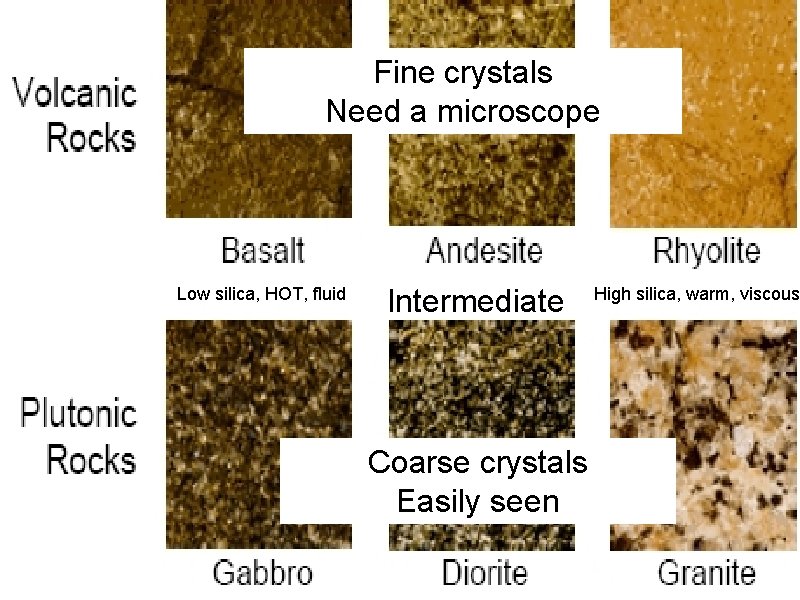
Fine crystals Need a microscope Low silica, HOT, fluid Intermediate Coarse crystals Easily seen High silica, warm, viscous
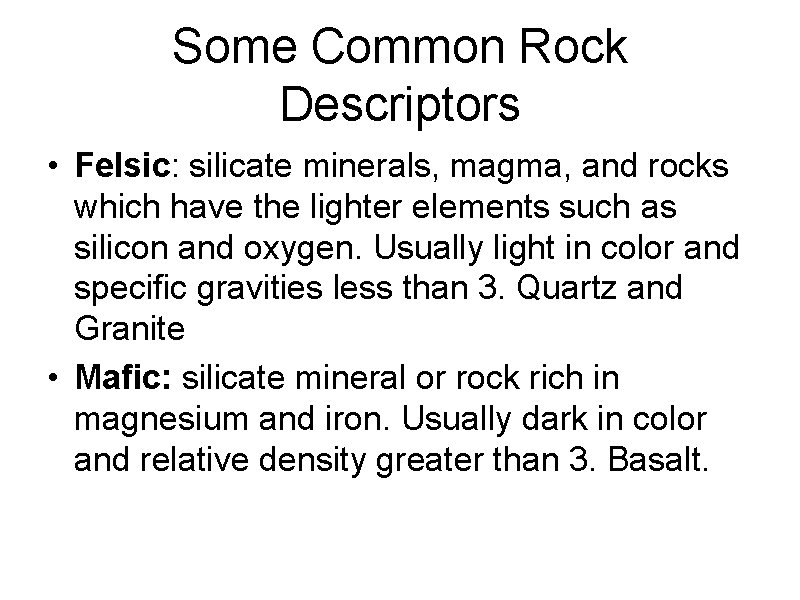
Some Common Rock Descriptors • Felsic: silicate minerals, magma, and rocks which have the lighter elements such as silicon and oxygen. Usually light in color and specific gravities less than 3. Quartz and Granite • Mafic: silicate mineral or rock rich in magnesium and iron. Usually dark in color and relative density greater than 3. Basalt.
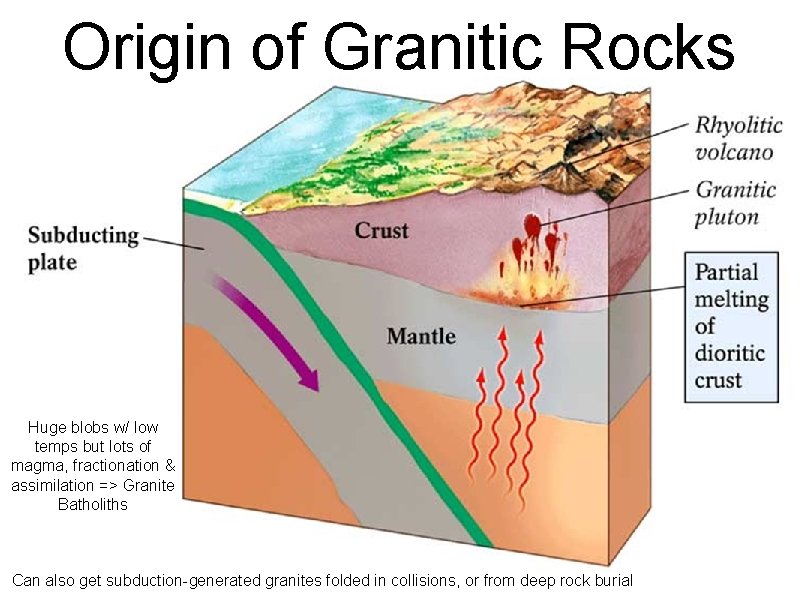
Origin of Granitic Rocks Huge blobs w/ low temps but lots of magma, fractionation & assimilation => Granite Batholiths Can also get subduction-generated granites folded in collisions, or from deep rock burial
Warm up 10/11/16 Get out your homework! (pg. 144 #1 -8) Warm up on your warm up sheet: Draw the Rock Cycle Announcements Bring Skittles to class by Thursday Quiz on Friday Honors Only- Bring composition notebooks to class tomorrow!