
Warm Up What is chemistry What are the

- Slides: 128
Warm Up What is chemistry? What are the subdivisions of chemistry? What careers can you pursue with Chemistry? Pick up the orange sheet. This is your new best friend Grab a computer, Barron’s book, etc. to take notes today! I will give you Husky Help time to finish your notes (and look at my ppt online)
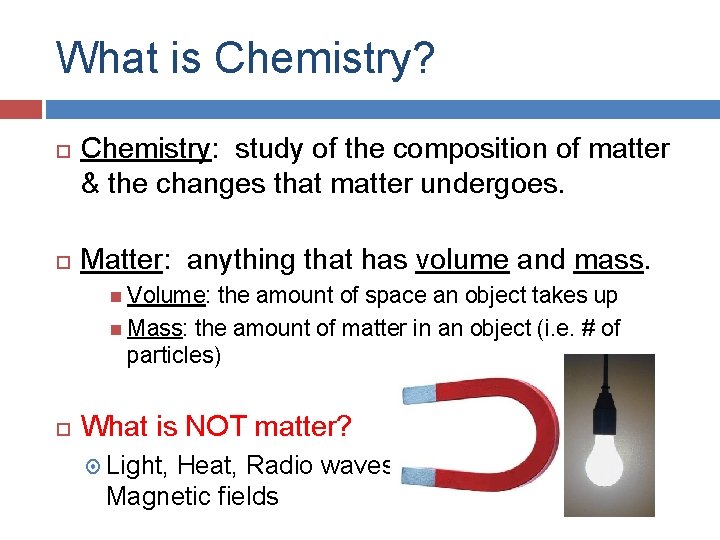
What is Chemistry? Chemistry: study of the composition of matter & the changes that matter undergoes. Matter: anything that has volume and mass. Volume: the amount of space an object takes up Mass: the amount of matter in an object (i. e. # of particles) What is NOT matter? Light, Heat, Radio waves, Magnetic fields
Subdisciplines of Chemistry Organic Chemistry Inorganic Chemistry Biochemistry Analytical Chemistry Physical Chemistry
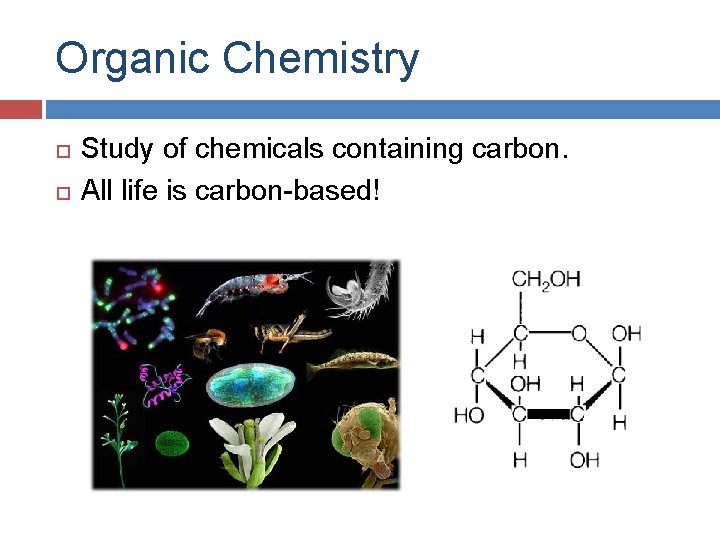
Organic Chemistry Study of chemicals containing carbon. All life is carbon-based!
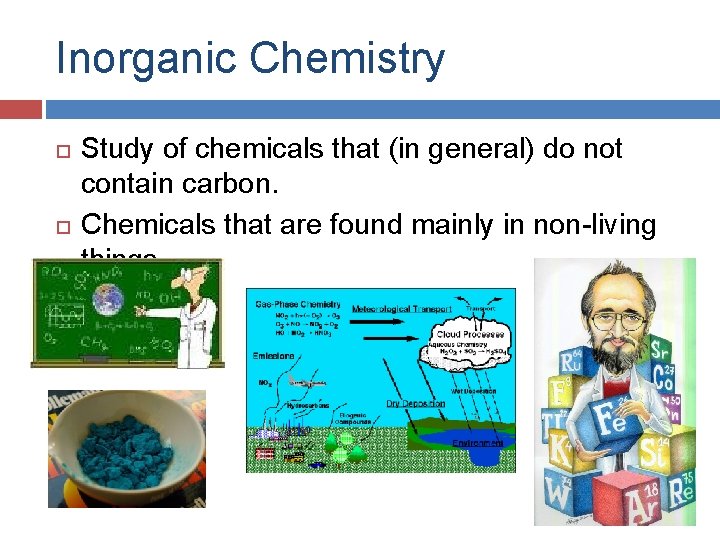
Inorganic Chemistry Study of chemicals that (in general) do not contain carbon. Chemicals that are found mainly in non-living things.
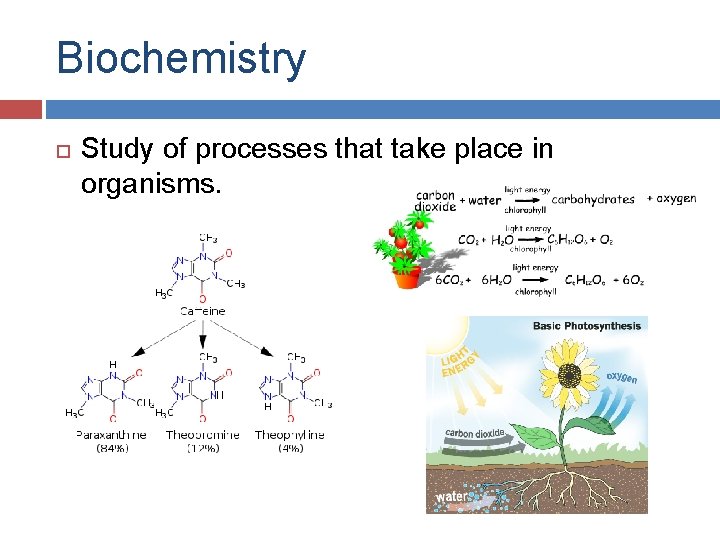
Biochemistry Study of processes that take place in organisms.
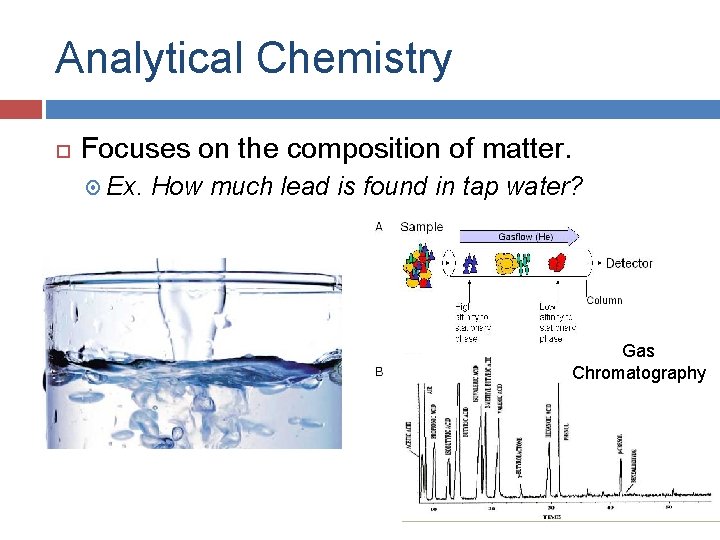
Analytical Chemistry Focuses on the composition of matter. Ex. How much lead is found in tap water? Gas Chromatography
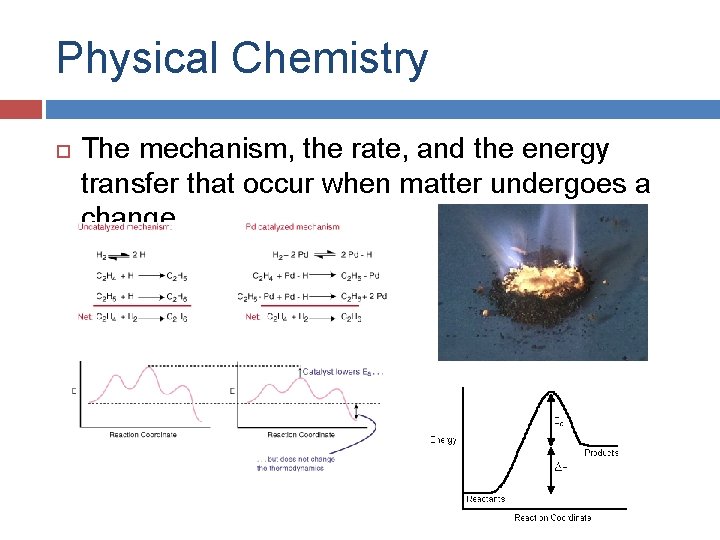
Physical Chemistry The mechanism, the rate, and the energy transfer that occur when matter undergoes a change.
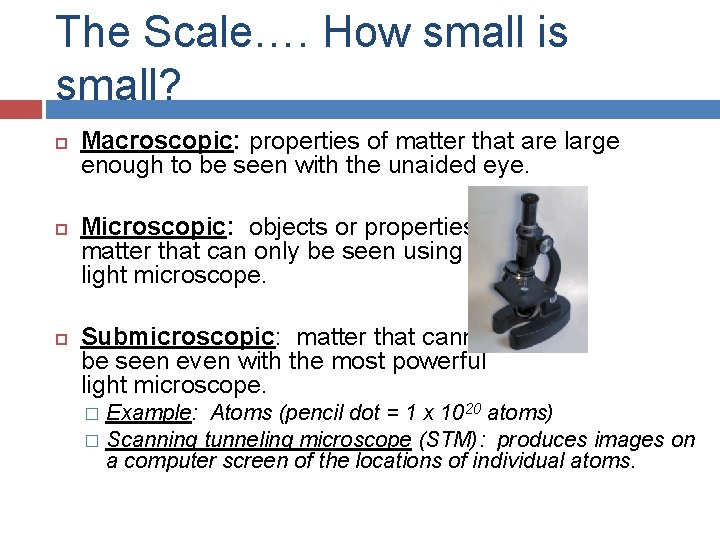
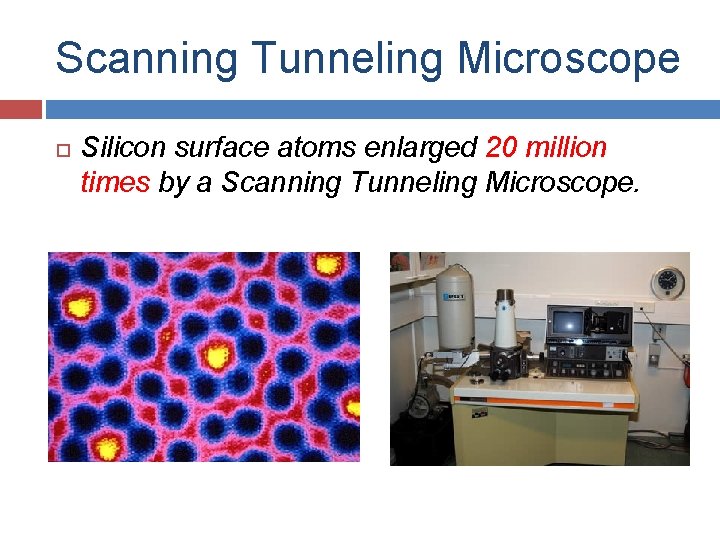
The Scale…. How small is small? Macroscopic: properties of matter that are large enough to be seen with the unaided eye. Microscopic: objects or properties of matter that can only be seen using a light microscope. Submicroscopic: matter that cannot be seen even with the most powerful light microscope. Example: Atoms (pencil dot = 1 x 10²⁰ atoms) � Scanning tunneling microscope (STM): produces images on a computer screen of the locations of individual atoms. �
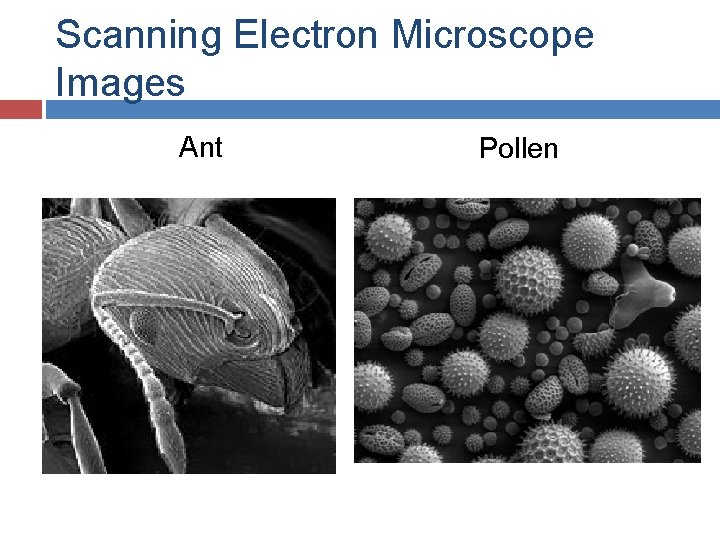
Scanning Electron Microscope Images Ant Pollen
Scanning Tunneling Microscope Silicon surface atoms enlarged 20 million times by a Scanning Tunneling Microscope.
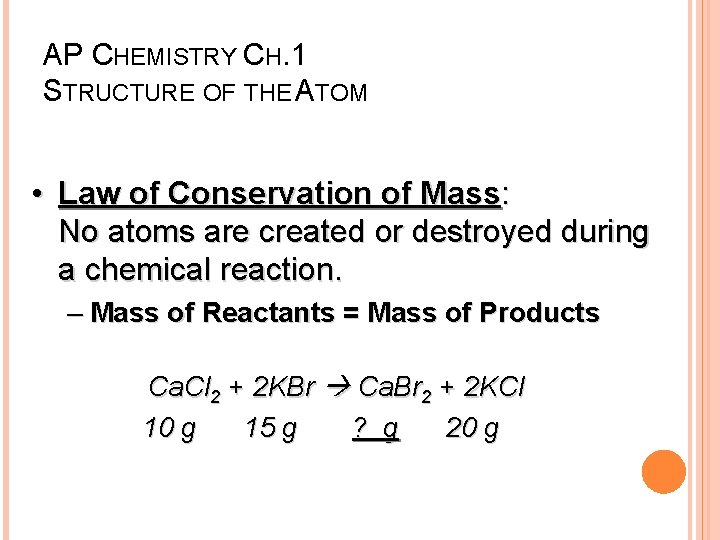
AP CHEMISTRY CH. 1 STRUCTURE OF THE ATOM • Law of Conservation of Mass: No atoms are created or destroyed during a chemical reaction. – Mass of Reactants = Mass of Products Ca. Cl 2 + 2 KBr Ca. Br 2 + 2 KCl 10 g 15 g ? g 20 g
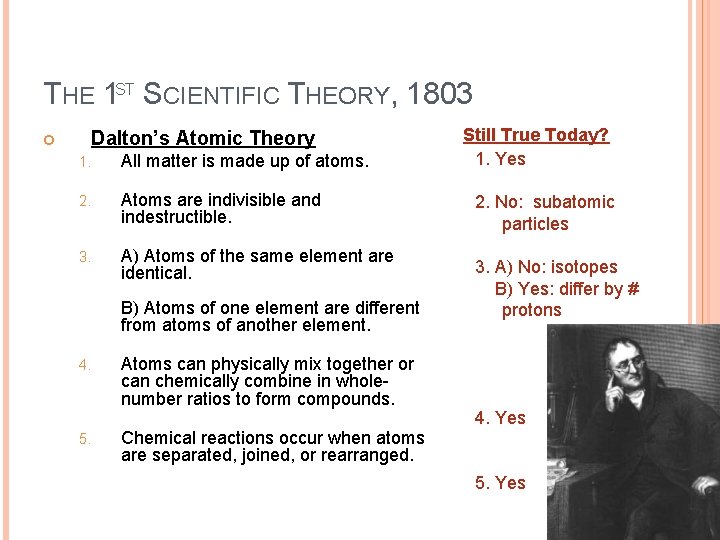
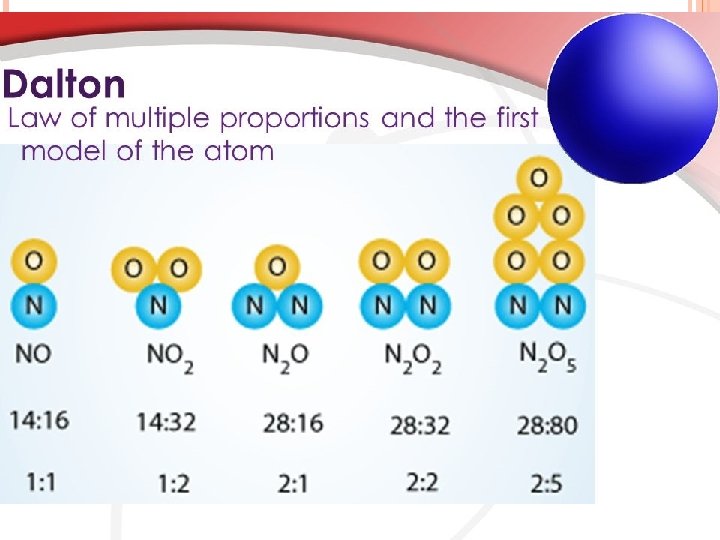
THE 1 ST SCIENTIFIC THEORY, 1803 Dalton’s Atomic Theory 1. All matter is made up of atoms. 2. Atoms are indivisible and indestructible. 3. A) Atoms of the same element are identical. B) Atoms of one element are different from atoms of another element. 4. 5. Atoms can physically mix together or can chemically combine in wholenumber ratios to form compounds. Chemical reactions occur when atoms are separated, joined, or rearranged. Still True Today? 1. Yes 2. No: subatomic particles 3. A) No: isotopes B) Yes: differ by # protons 4. Yes 5. Yes
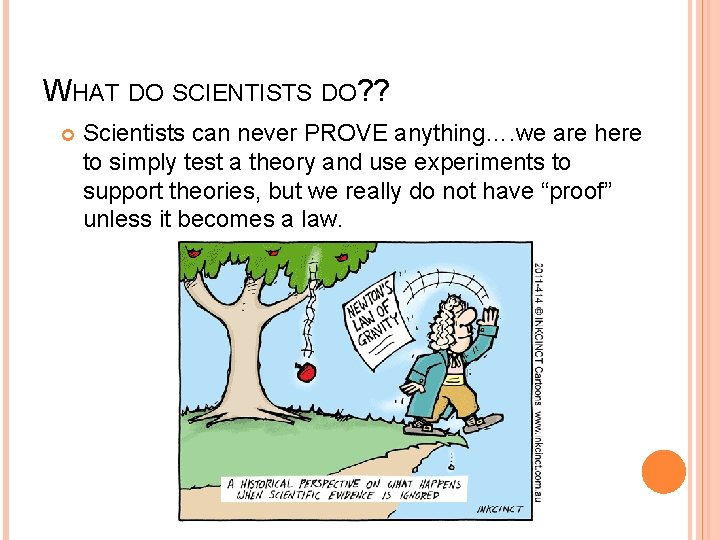
WHAT DO SCIENTISTS DO? ? Scientists can never PROVE anything…. we are here to simply test a theory and use experiments to support theories, but we really do not have “proof” unless it becomes a law.
CATHODE RAY TUBE Faraday showed that electric current could cause reactions to occur! What we thought were molecules actually helped us show electrons in an atom! Negatively charged molecules according to Sir William Crookes JJ Thomson took this over to confirm about electrons having a negative charge
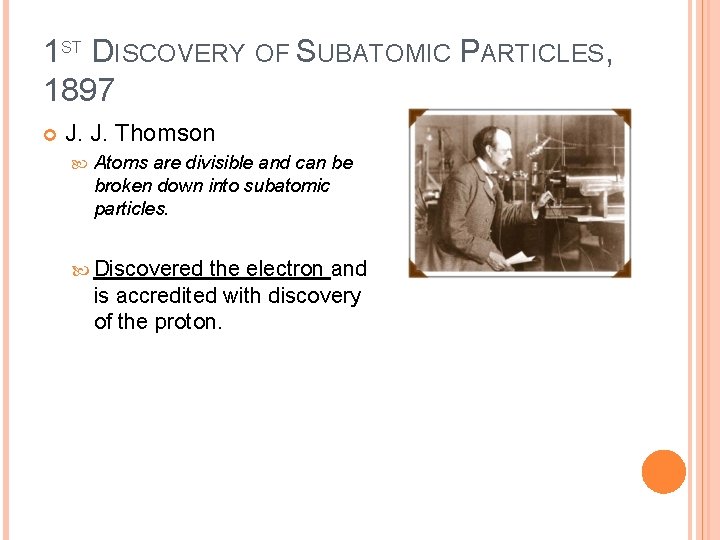
1 ST DISCOVERY OF SUBATOMIC PARTICLES, 1897 J. J. Thomson Atoms are divisible and can be broken down into subatomic particles. Discovered the electron and is accredited with discovery of the proton.
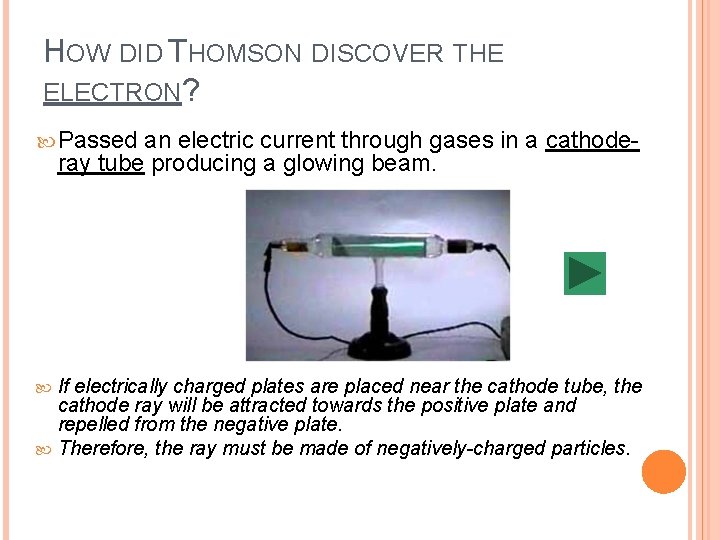
HOW DID THOMSON DISCOVER THE ELECTRON? Passed an electric current through gases in a cathoderay tube producing a glowing beam. If electrically charged plates are placed near the cathode tube, the cathode ray will be attracted towards the positive plate and repelled from the negative plate. Therefore, the ray must be made of negatively-charged particles.
UNDERSTANDING THE CHARGE OF AN ELECTRON…. Using the cathode ray tube with the combination of JJ Thomson and Millikan, we know the charge of the electron can be calculated: Charge= -1. 60 x 10 -19 coulomb (we will see this term Coulomb later) Mass = 9. 11 x 10 -28 gram Plum Pudding Model (electrons were like plums in pudding; electrons in a sea of positive charges)
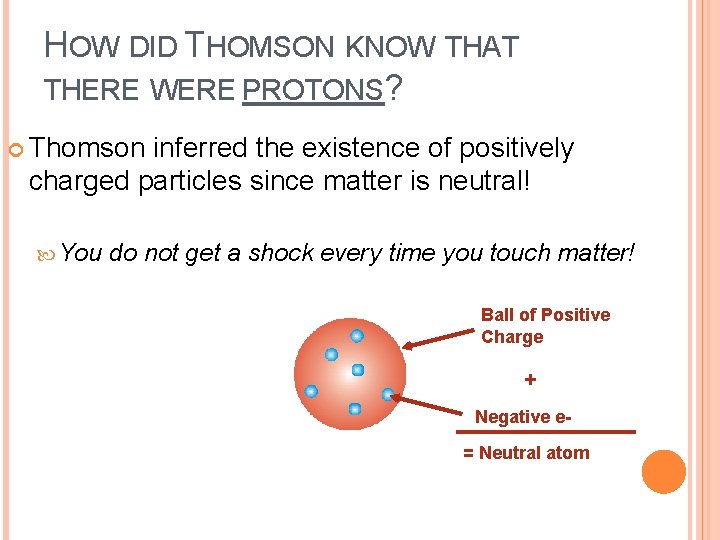
HOW DID THOMSON KNOW THAT THERE WERE PROTONS? Thomson inferred the existence of positively charged particles since matter is neutral! You do not get a shock every time you touch matter! Ball of Positive Charge + Negative e= Neutral atom
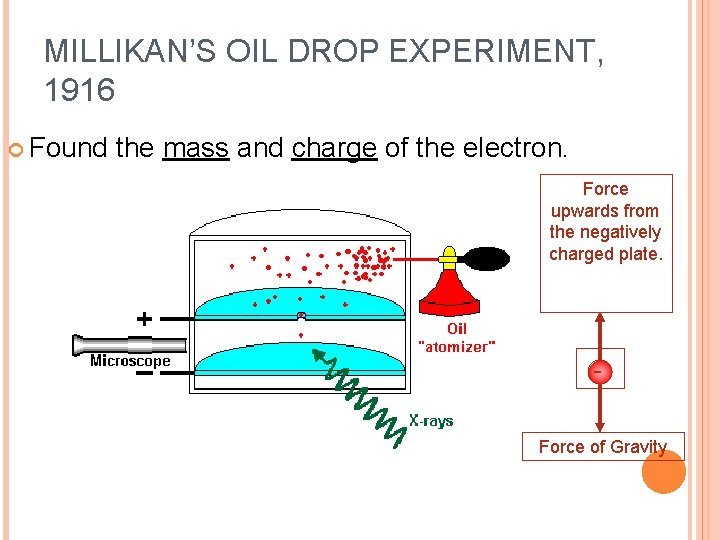
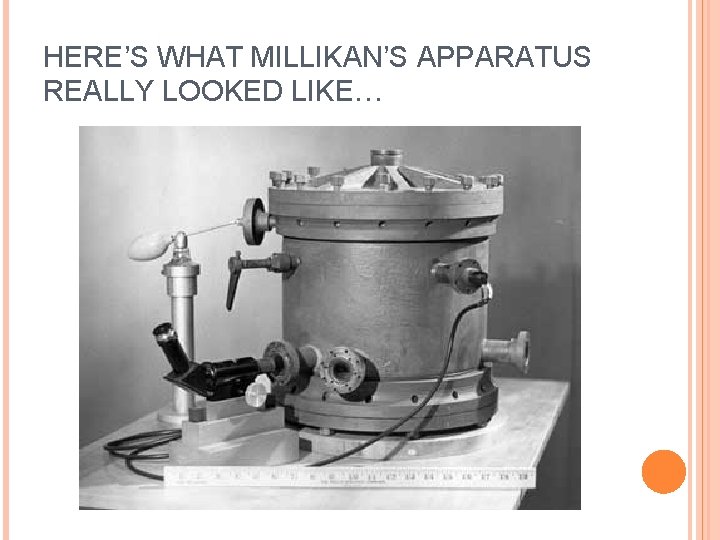
MILLIKAN’S OIL DROP EXPERIMENT, 1916 Found the mass and charge of the electron. Force upwards from the negatively charged plate. Force of Gravity
HERE’S WHAT MILLIKAN’S APPARATUS REALLY LOOKED LIKE…
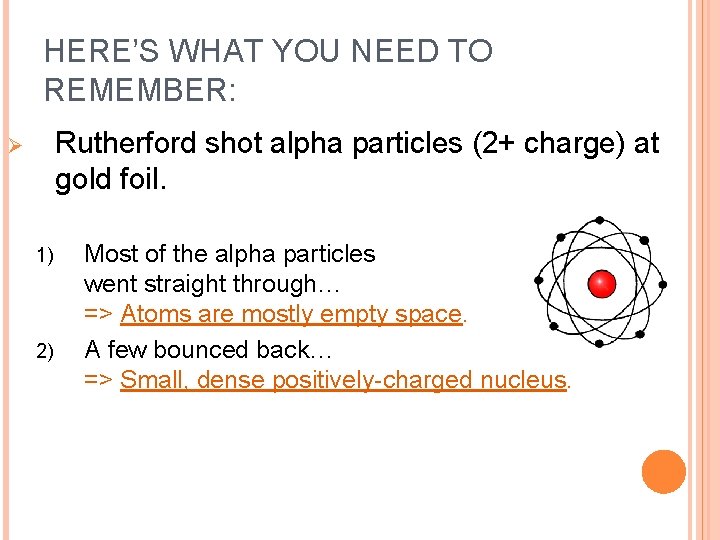
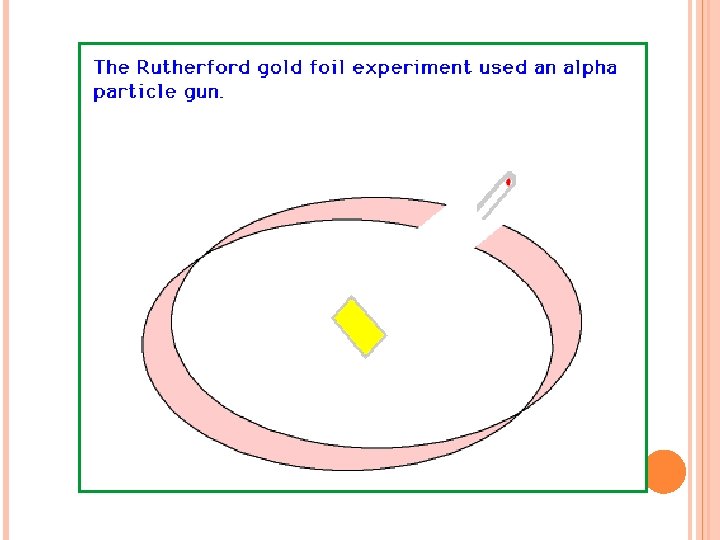
CREATING OUR ATOMIC MODEL Through nuclear radiation, Rutherford identified alpha and beta particles. Created the Gold Foil experiment that led to a nucleus having a positive charge
HERE’S WHAT YOU NEED TO REMEMBER: Rutherford shot alpha particles (2+ charge) at gold foil. Ø 1) 2) Most of the alpha particles went straight through… => Atoms are mostly empty space. A few bounced back… => Small, dense positively-charged nucleus.
CHADWICK, 1932 Discovered the neutron. Isotopes: Atoms of an element that are chemically alike but differ in mass. Same number of protons and electrons, different number of neutrons! Ex. Carbon-14 and Carbon-12
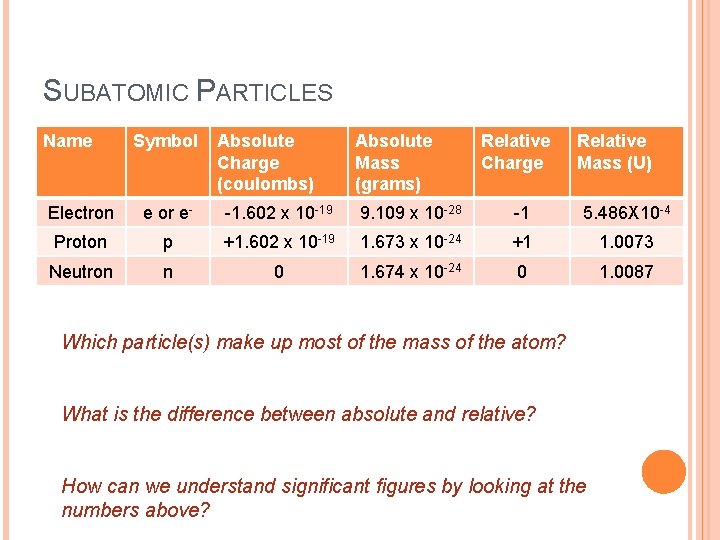
SUBATOMIC PARTICLES Name Symbol Absolute Charge (coulombs) Absolute Mass (grams) Relative Charge Relative Mass (U) Electron e or e- -1. 602 x 10 -19 9. 109 x 10 -28 -1 5. 486 X 10 -4 Proton p +1. 602 x 10 -19 1. 673 x 10 -24 +1 1. 0073 Neutron n 0 1. 674 x 10 -24 0 1. 0087 Which particle(s) make up most of the mass of the atom? What is the difference between absolute and relative? How can we understand significant figures by looking at the numbers above?
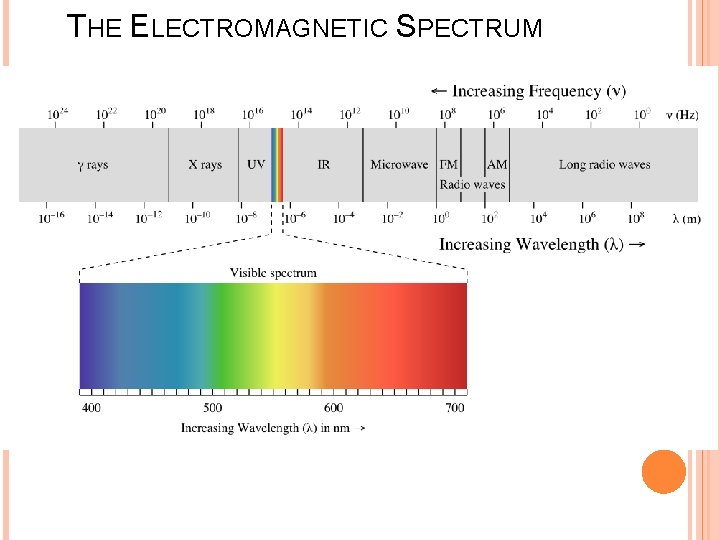
SO AS THESE CHEMISTS WERE WORKING… Physicists were studying light and matter. Discovered each element that has been discovered emitted some sort of color when electricity has been added These colors had distinct lines and were able to measure the wavelength of these lines, led to mathematical relationship with wavelength and visible light, later infared, and then UV…led to the full development of our Electromagnetic Spectrum.
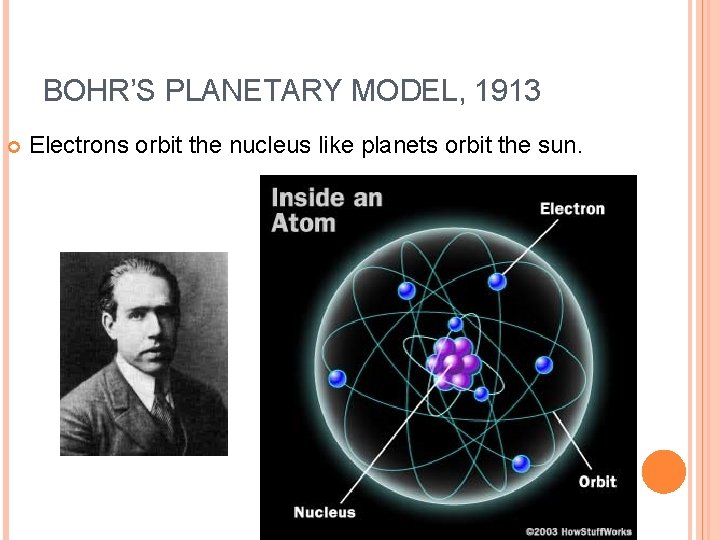
BOHR’S PLANETARY MODEL, 1913 Electrons orbit the nucleus like planets orbit the sun.
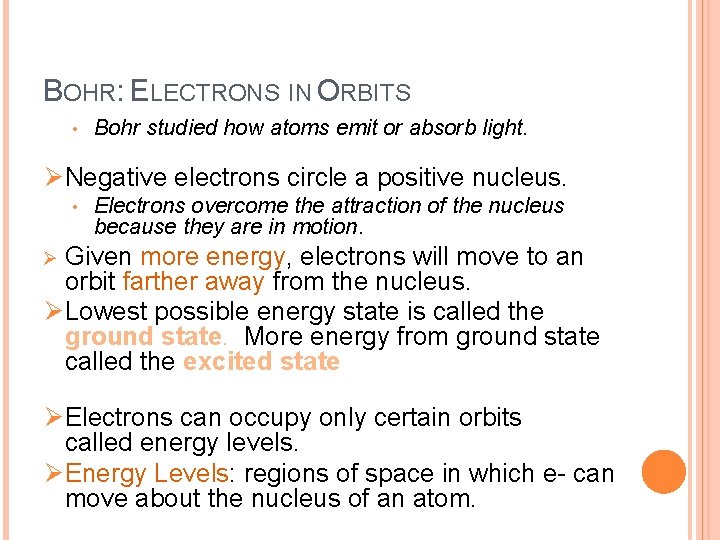
BOHR: ELECTRONS IN ORBITS • Bohr studied how atoms emit or absorb light. ØNegative electrons circle a positive nucleus. • Electrons overcome the attraction of the nucleus because they are in motion. Given more energy, electrons will move to an orbit farther away from the nucleus. ØLowest possible energy state is called the ground state. More energy from ground state called the excited state Ø ØElectrons can occupy only certain orbits called energy levels. ØEnergy Levels: regions of space in which e- can move about the nucleus of an atom.
THE ELECTRON: WAVE – PARTICLE DUALITY Graphic: www. lab-initio. com
THE DILEMMA OF THE ATOM Electrons outside the nucleus are attracted to the protons in the nucleus Charged particles moving in curved paths lose energy What keeps the atom from collapsing?
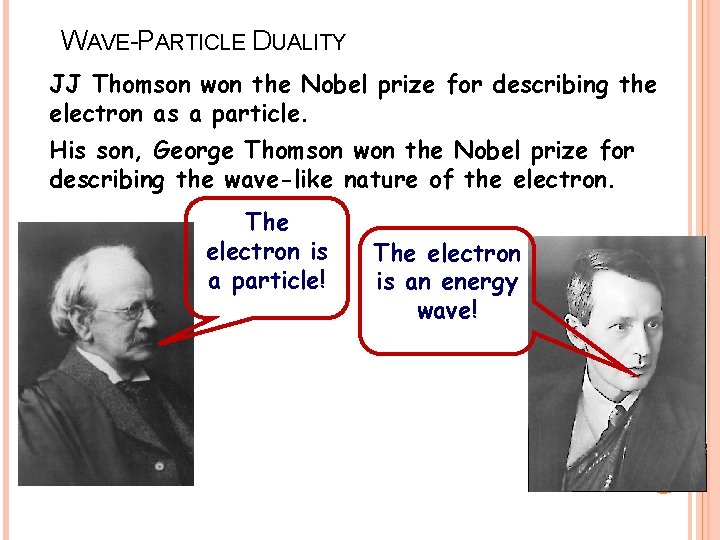
WAVE-PARTICLE DUALITY JJ Thomson won the Nobel prize for describing the electron as a particle. His son, George Thomson won the Nobel prize for describing the wave-like nature of the electron. The electron is a particle! The electron is an energy wave!
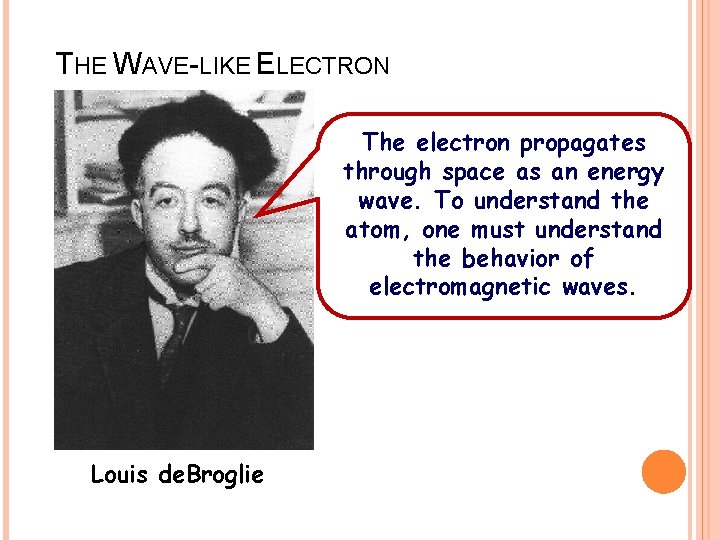
THE WAVE-LIKE ELECTRON The electron propagates through space as an energy wave. To understand the atom, one must understand the behavior of electromagnetic waves. Louis de. Broglie
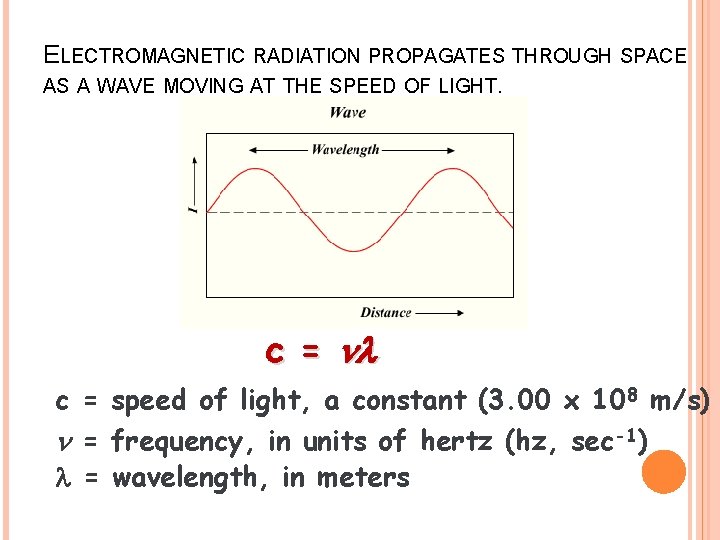
ELECTROMAGNETIC RADIATION PROPAGATES THROUGH SPACE AS A WAVE MOVING AT THE SPEED OF LIGHT. c = speed of light, a constant (3. 00 x 108 m/s) = frequency, in units of hertz (hz, sec-1) = wavelength, in meters
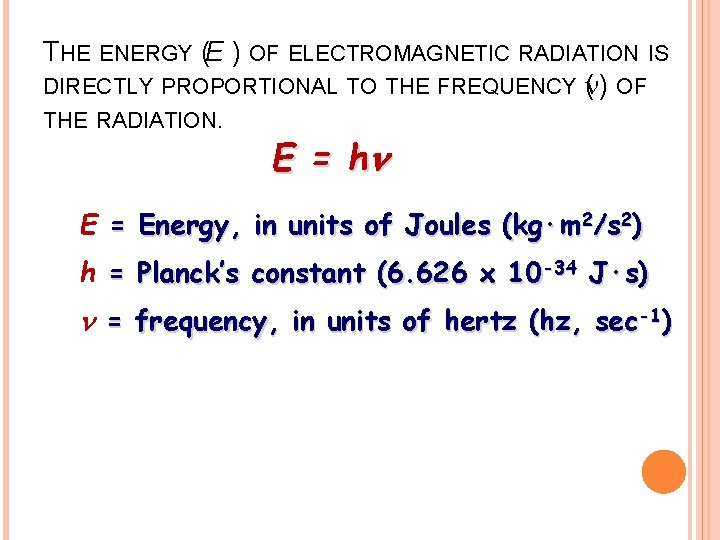
THE ENERGY (E ) OF ELECTROMAGNETIC RADIATION IS DIRECTLY PROPORTIONAL TO THE FREQUENCY ( ) OF THE RADIATION. E = h E = Energy, in units of Joules (kg·m 2/s 2) h = Planck’s constant (6. 626 x 10 -34 J·s) = frequency, in units of hertz (hz, sec-1)
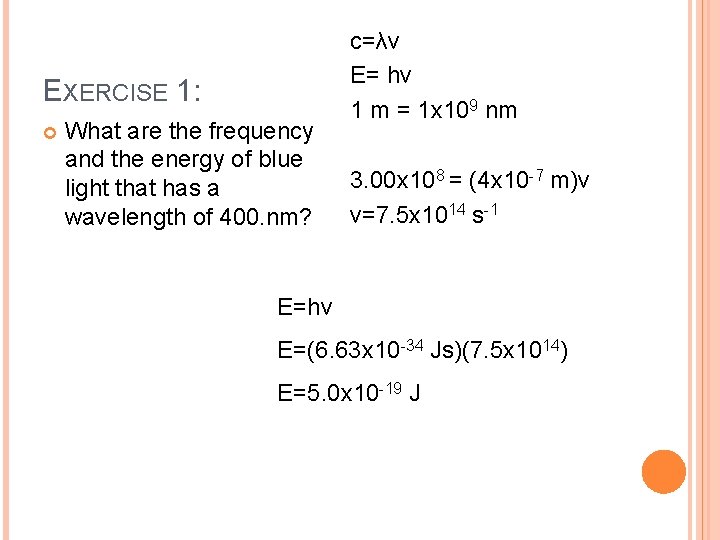
EXERCISE 1: What are the frequency and the energy of blue light that has a wavelength of 400. nm? c=λv E= hv 1 m = 1 x 10⁹ nm 3. 00 x 108 = (4 x 10 -7 m)v v=7. 5 x 10¹⁴ s-1 E=hv E=(6. 63 x 10 -34 Js)(7. 5 x 10¹⁴) E=5. 0 x 10 -19 J
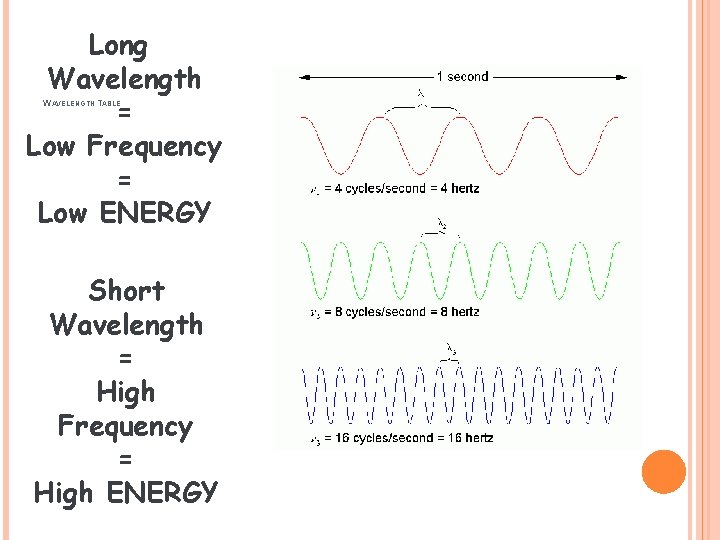
Long Wavelength = Low Frequency = Low ENERGY WAVELENGTH TABLE Short Wavelength = High Frequency = High ENERGY
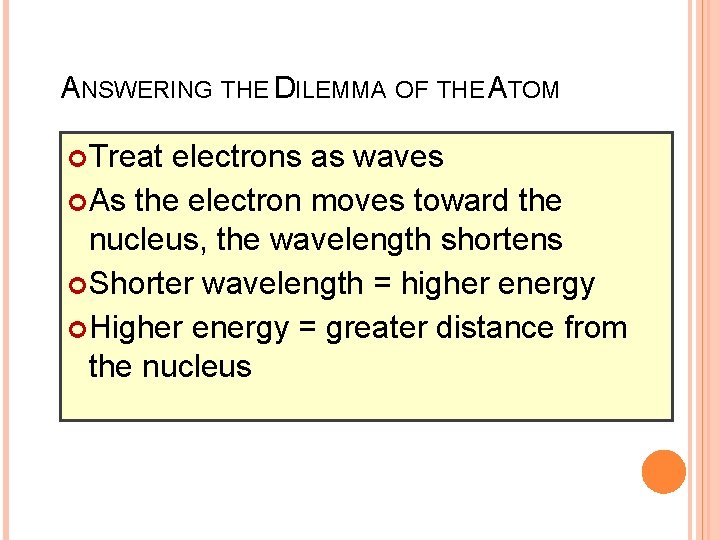
ANSWERING THE DILEMMA OF THE ATOM Treat electrons as waves As the electron moves toward the nucleus, the wavelength shortens Shorter wavelength = higher energy Higher energy = greater distance from the nucleus
THE ELECTROMAGNETIC SPECTRUM
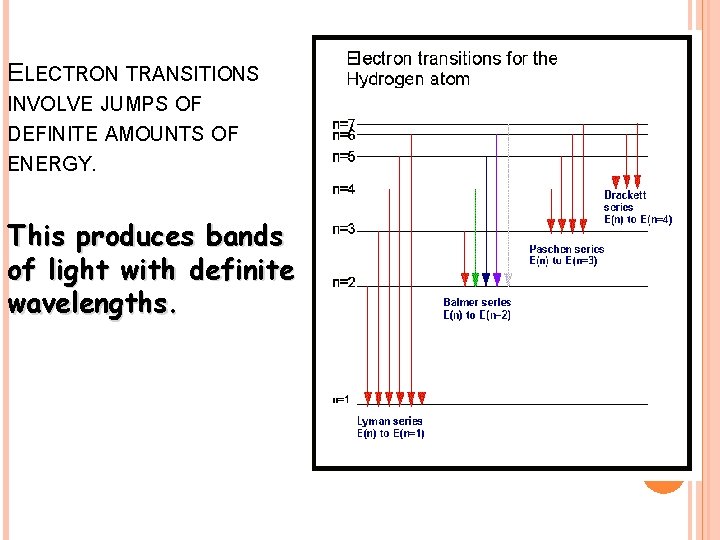
ELECTRON TRANSITIONS INVOLVE JUMPS OF DEFINITE AMOUNTS OF ENERGY. This produces bands of light with definite wavelengths.
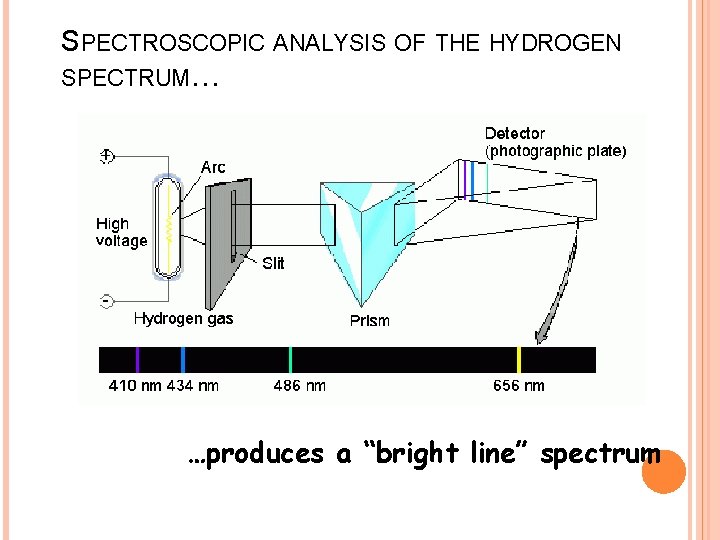
SPECTROSCOPIC ANALYSIS OF THE HYDROGEN SPECTRUM… …produces a “bright line” spectrum
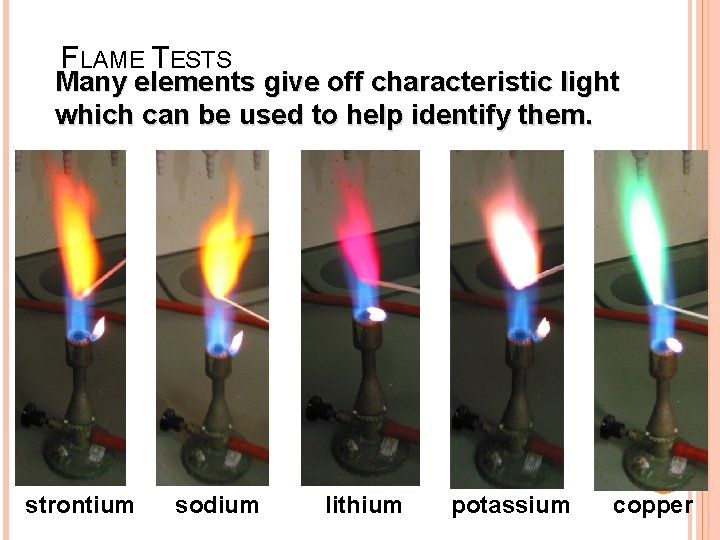
FLAME TESTS Many elements give off characteristic light which can be used to help identify them. strontium sodium lithium potassium copper
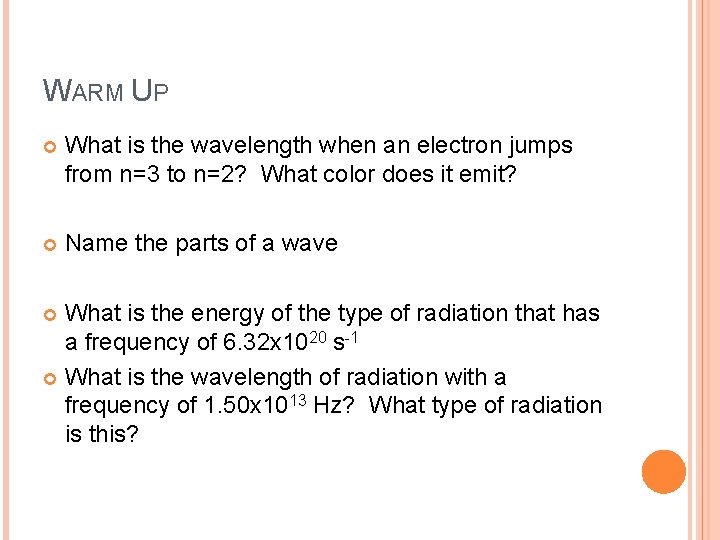
WARM UP What is the wavelength when an electron jumps from n=3 to n=2? What color does it emit? Name the parts of a wave What is the energy of the type of radiation that has a frequency of 6. 32 x 1020 s-1 What is the wavelength of radiation with a frequency of 1. 50 x 1013 Hz? What type of radiation is this?
Electron Orbitals Cartoon courtesy of lab-initio. com
Quantum Mechanical Model of the Atom Mathematical laws can identify the regions outside of the nucleus where electrons are most likely to be found. These laws are beyond the scope of this class…
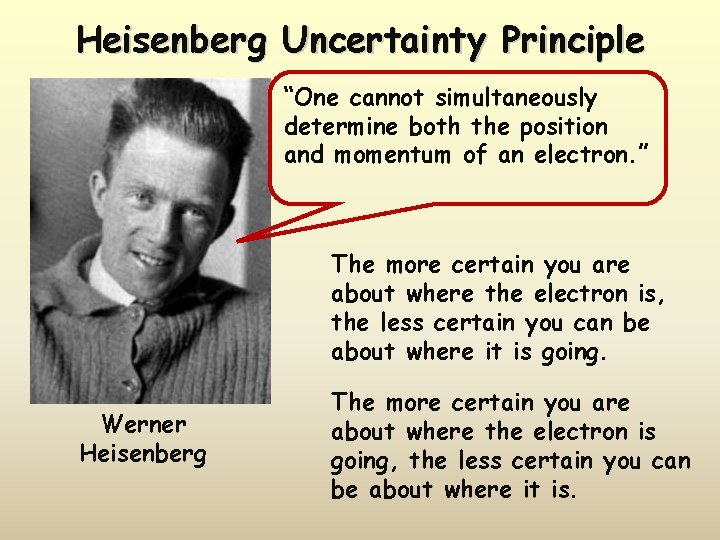
Heisenberg Uncertainty Principle “One cannot simultaneously determine both the position and momentum of an electron. ” The more certain you are about where the electron is, the less certain you can be about where it is going. Werner Heisenberg The more certain you are about where the electron is going, the less certain you can be about where it is.
Quantum Numbers Each electron in an atom has a unique set of 4 quantum numbers which describe it. v Principal quantum number v Angular momentum quantum number v Magnetic quantum number v Spin quantum number
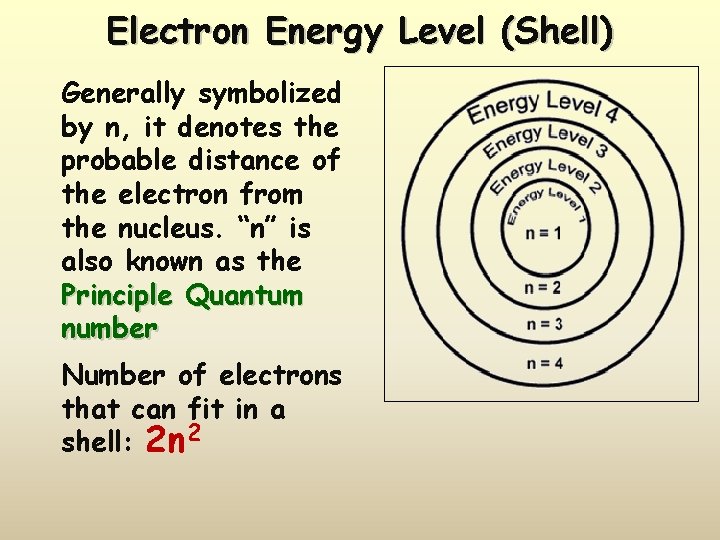
Electron Energy Level (Shell) Generally symbolized by n, it denotes the probable distance of the electron from the nucleus. “n” is also known as the Principle Quantum number Number of electrons that can fit in a shell: 2 n 2
Electron Orbitals An orbital is a region within an energy level where there is a probability of finding an electron. Orbital shapes are defined as the surface that contains 90% of the total electron probability. The angular momentum quantum number, generally symbolized by l, denotes the orbital (subshell) in which the electron is located.
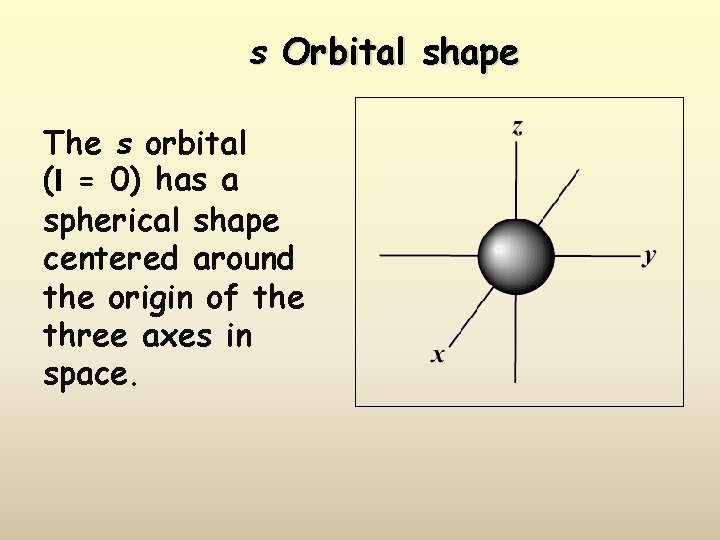
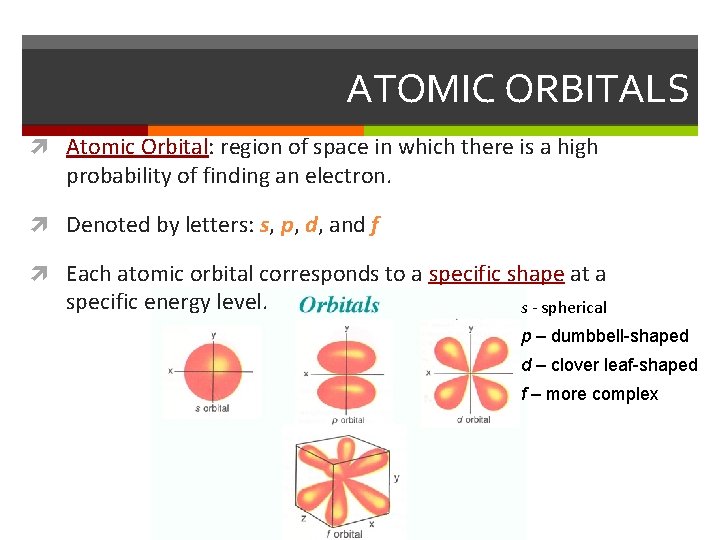
s Orbital shape The s orbital (l = 0) has a spherical shape centered around the origin of the three axes in space.
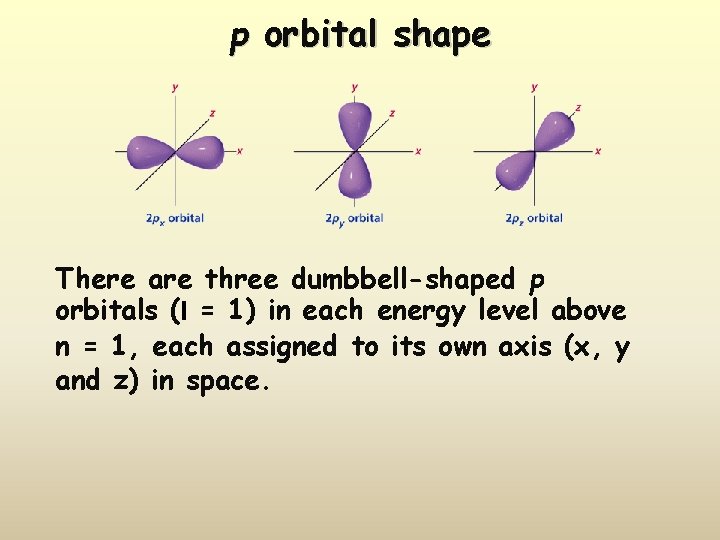
p orbital shape There are three dumbbell-shaped p orbitals (l = 1) in each energy level above n = 1, each assigned to its own axis (x, y and z) in space.
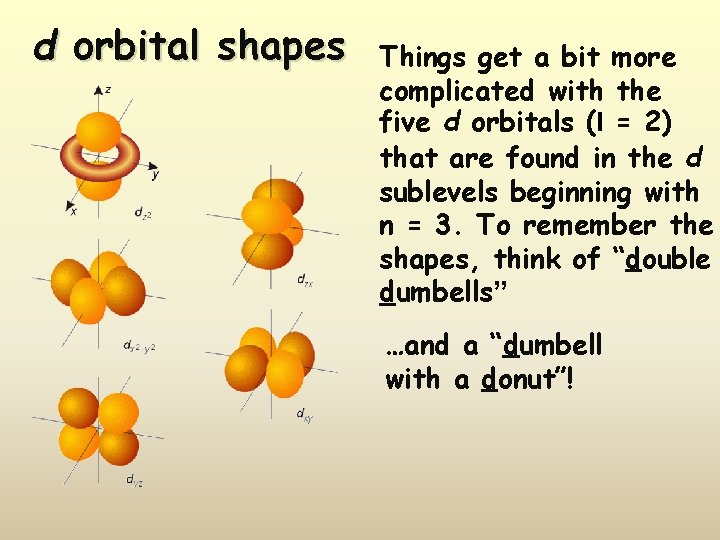
d orbital shapes Things get a bit more complicated with the five d orbitals (l = 2) that are found in the d sublevels beginning with n = 3. To remember the shapes, think of “double dumbells” …and a “dumbell with a donut”!
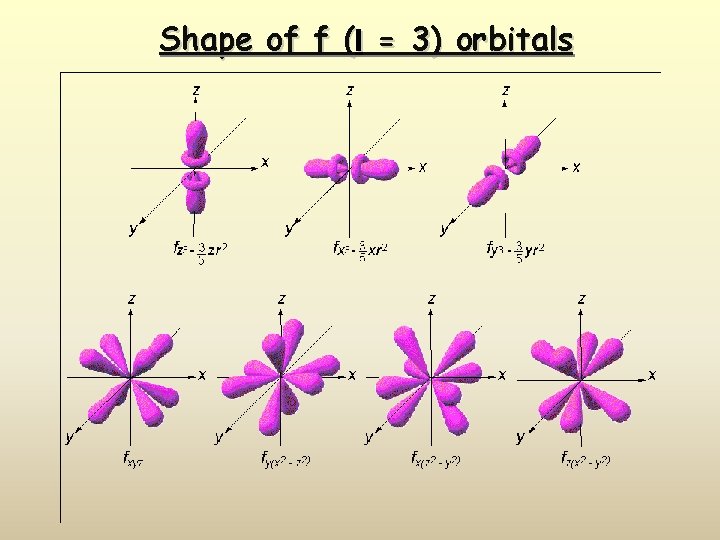
Shape of f (l = 3) orbitals
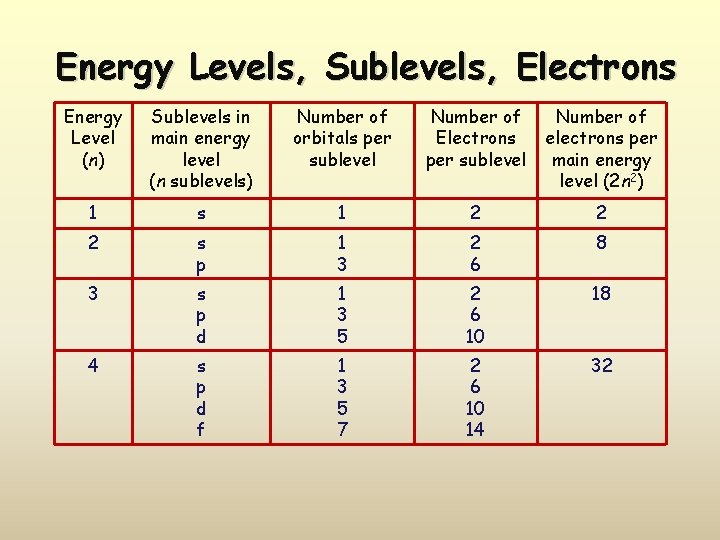
Energy Levels, Sublevels, Electrons Energy Level (n) Sublevels in main energy level (n sublevels) Number of orbitals per sublevel Number of Electrons per sublevel Number of electrons per main energy level (2 n 2) 1 s 1 2 2 2 s p 1 3 2 6 8 3 s p d 1 3 5 2 6 10 18 4 s p d f 1 3 5 7 2 6 10 14 32
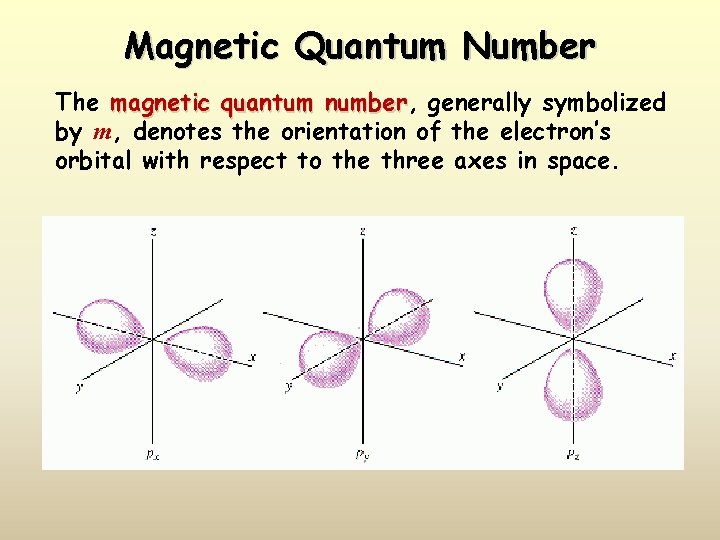
Magnetic Quantum Number The magnetic quantum number, number generally symbolized by m, denotes the orientation of the electron’s orbital with respect to the three axes in space.
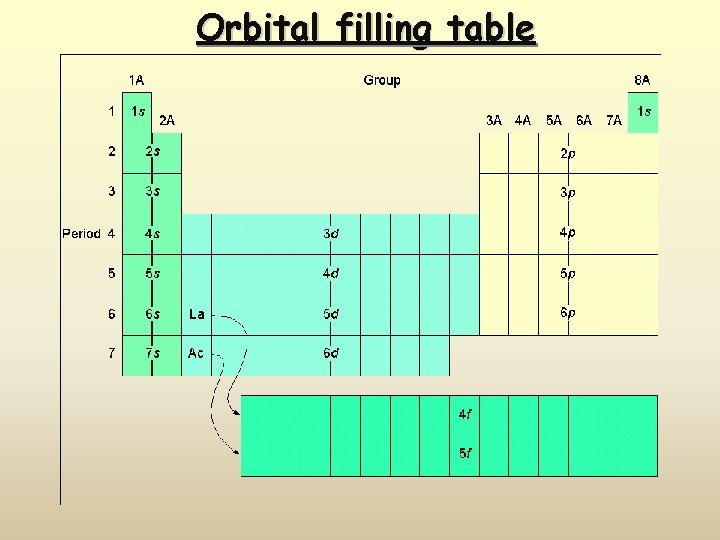
Orbital filling table
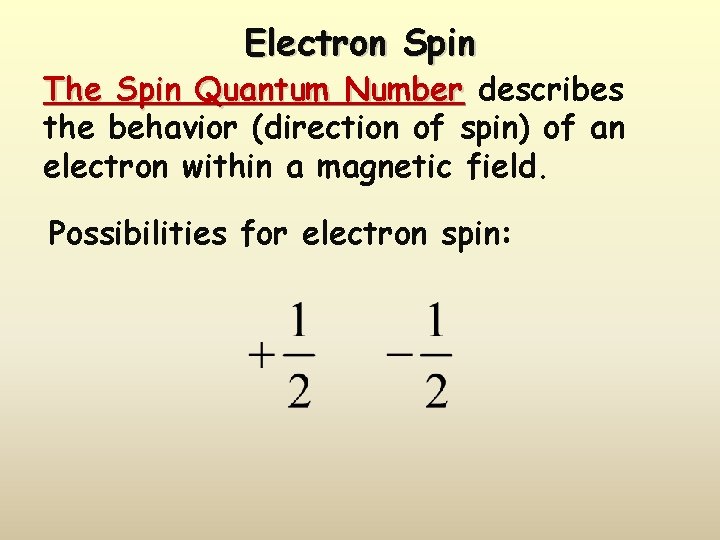
Electron Spin The Spin Quantum Number describes the behavior (direction of spin) of an electron within a magnetic field. Possibilities for electron spin:
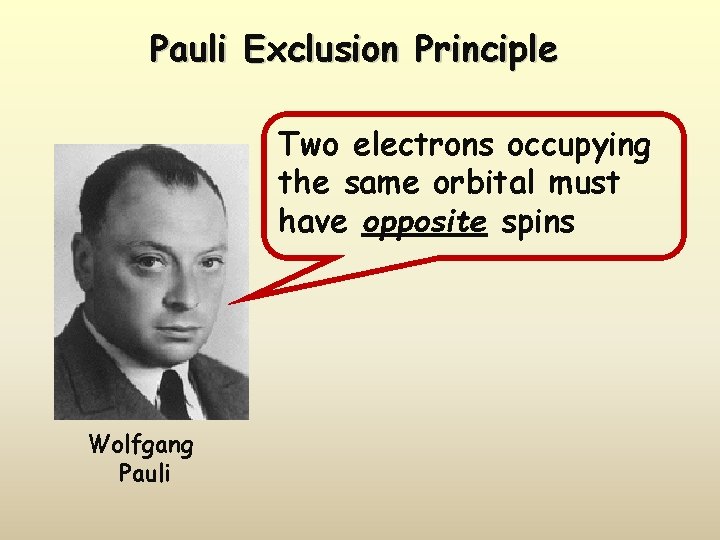
Pauli Exclusion Principle Two electrons occupying the same orbital must have opposite spins Wolfgang Pauli
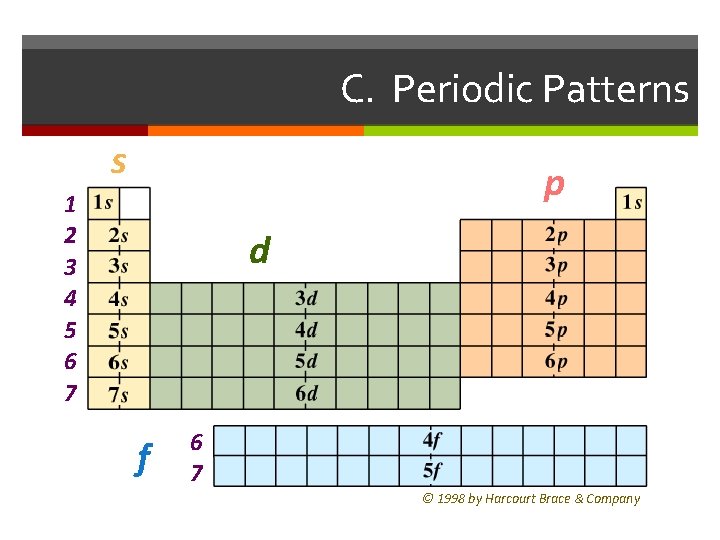
C. Periodic Patterns s p 1 2 3 4 5 6 7 d f 6 7 © 1998 by Harcourt Brace & Company
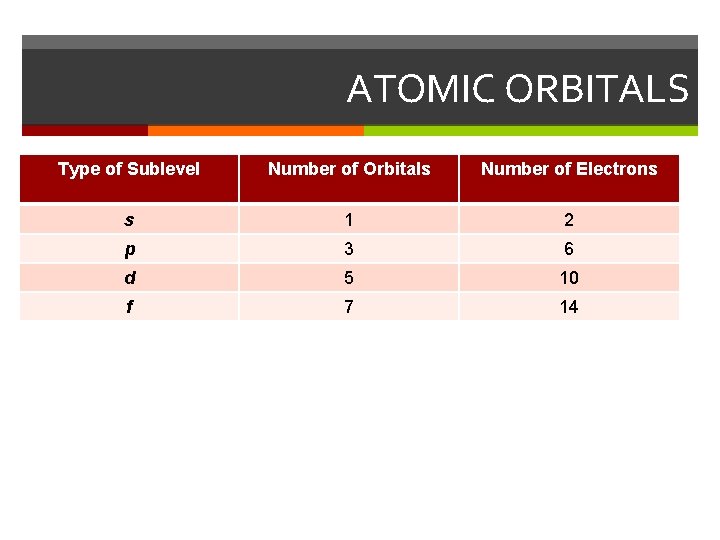
ATOMIC ORBITALS Atomic Orbital: region of space in which there is a high probability of finding an electron. Denoted by letters: s, p, d, and f Each atomic orbital corresponds to a specific shape at a specific energy level. s - spherical p – dumbbell-shaped d – clover leaf-shaped f – more complex
ATOMIC ORBITALS Type of Sublevel Number of Orbitals Number of Electrons s 1 2 p 3 6 d 5 10 f 7 14
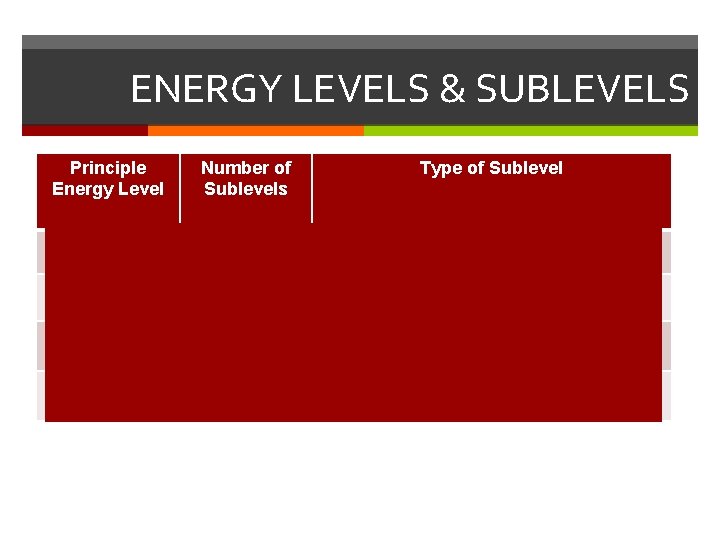
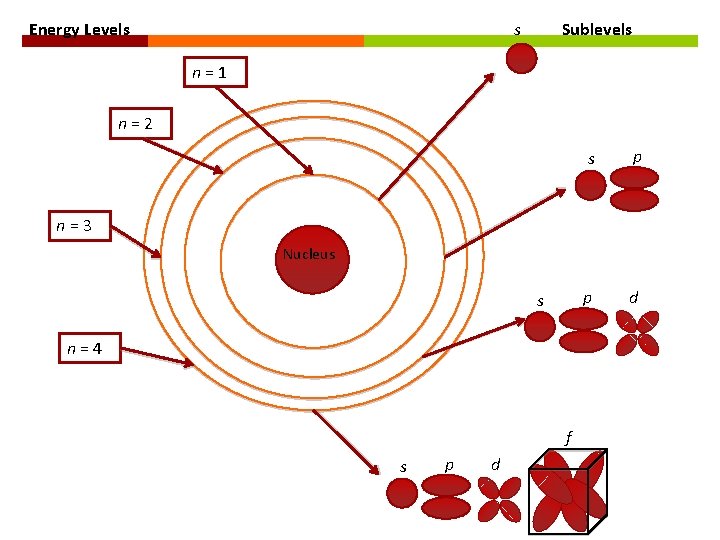
ENERGY LEVELS & SUBLEVELS Principle Energy Level Number of Sublevels Type of Sublevel n=1 1 1 s (1 orbital) n=2 2 2 s (1 orbital), 2 p (3 orbitals) n=3 3 3 s (1 orbital), 3 p (3 orbitals), 3 d (5 orbitals) n=4 4 4 s (1 orbital), 4 p (3 orbitals), 4 d (5 orbitals), 4 f (7 orbitals)
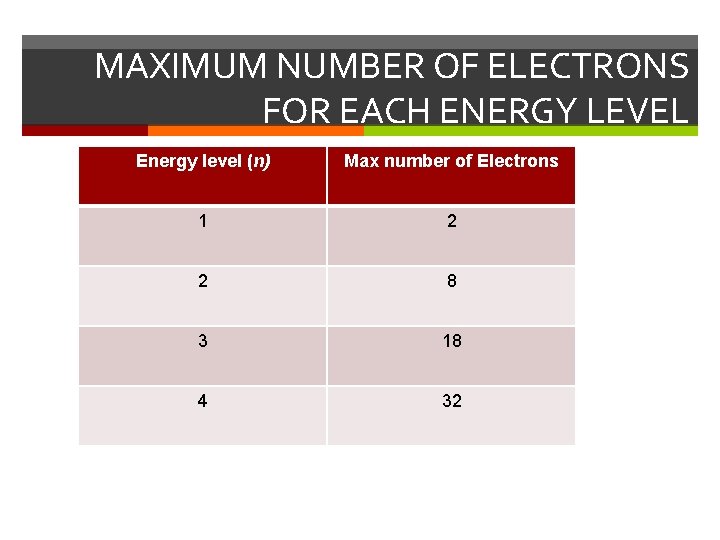
MAXIMUM NUMBER OF ELECTRONS FOR EACH ENERGY LEVEL Energy level (n) Max number of Electrons 1 2 2 8 3 18 4 32
Energy Levels s Sublevels n=1 n=2 s p p d n=3 Nucleus s n=4 f s p d
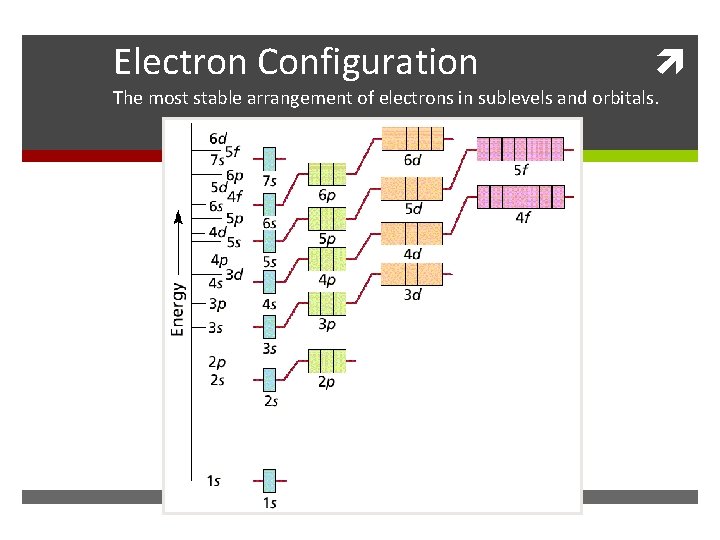
Electron Configuration The most stable arrangement of electrons in sublevels and orbitals.
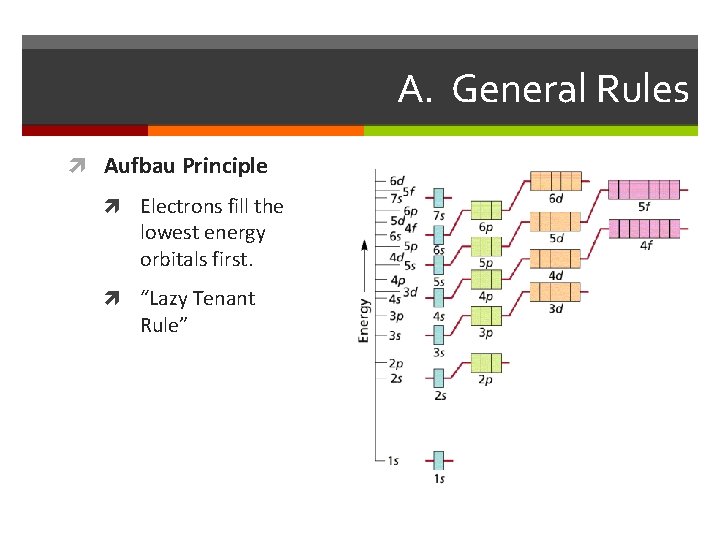
A. General Rules Aufbau Principle Electrons fill the lowest energy orbitals first. “Lazy Tenant Rule”
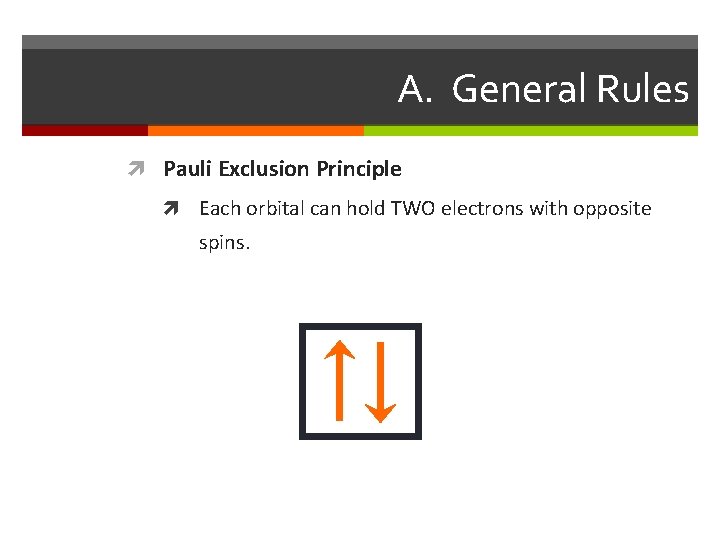
A. General Rules Pauli Exclusion Principle Each orbital can hold TWO electrons with opposite spins.
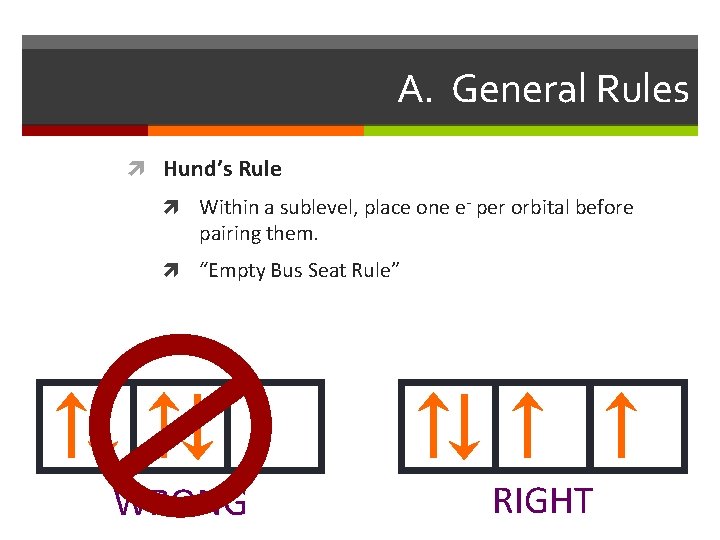
A. General Rules Hund’s Rule Within a sublevel, place one e- per orbital before pairing them. “Empty Bus Seat Rule” WRONG RIGHT
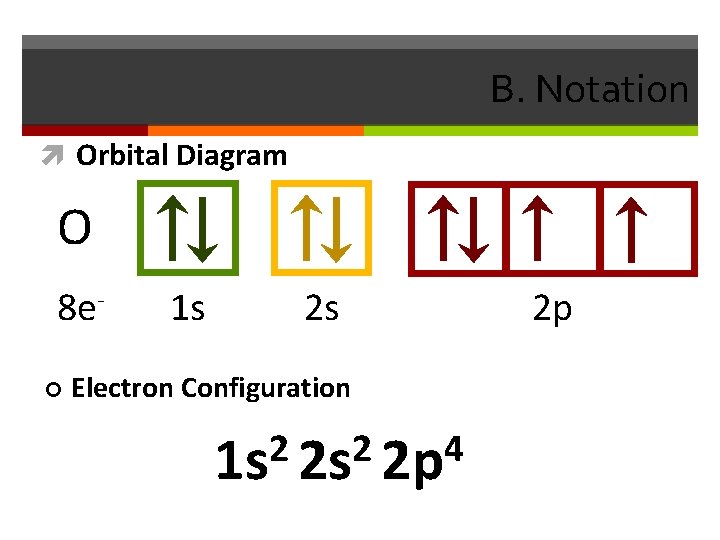
B. Notation Orbital Diagram O 8 e 1 s 2 s Electron Configuration 2 2 4 1 s 2 s 2 p 2 p
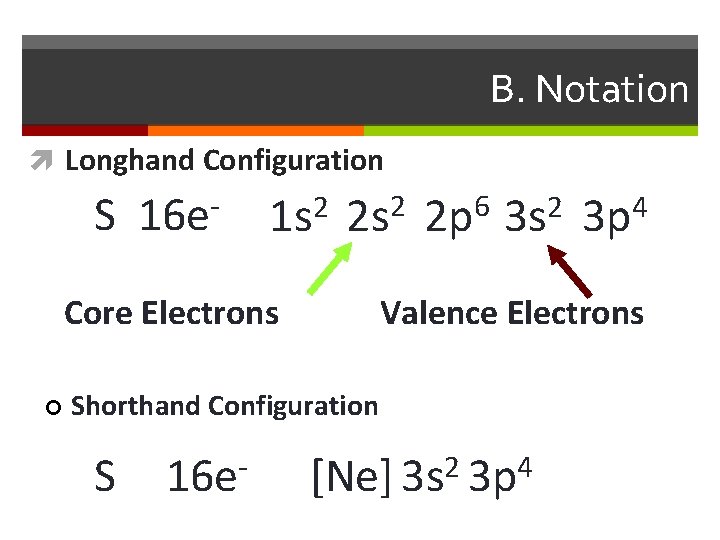
B. Notation Longhand Configuration S 16 e 1 s 2 2 p 6 3 s 2 3 p 4 Core Electrons Valence Electrons Shorthand Configuration S 16 e- [Ne] 3 s 2 3 p 4
C. Periodic Patterns Period # energy level (subtract for d & f) A/B Group # total # of valence e Valence electrons are electrons in the outermost energy level. Determines the chemical and physical properties of an element. Column within sublevel block # of e- in sublevel
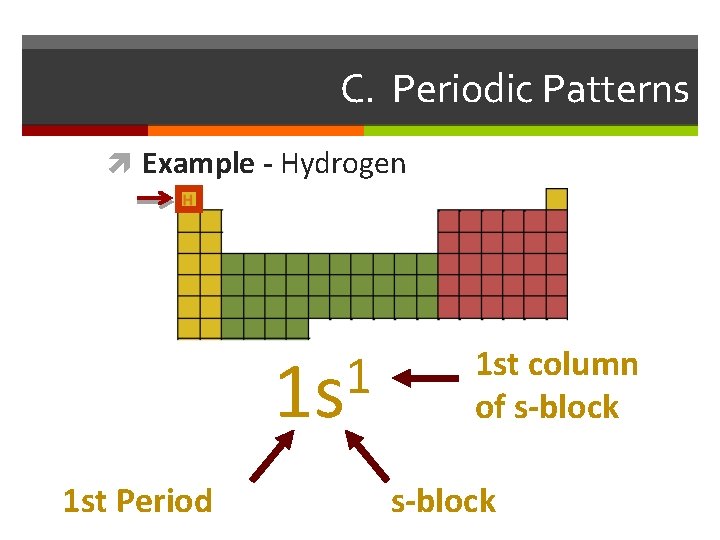
C. Periodic Patterns Example - Hydrogen 1 1 s 1 st Period 1 st column of s-block
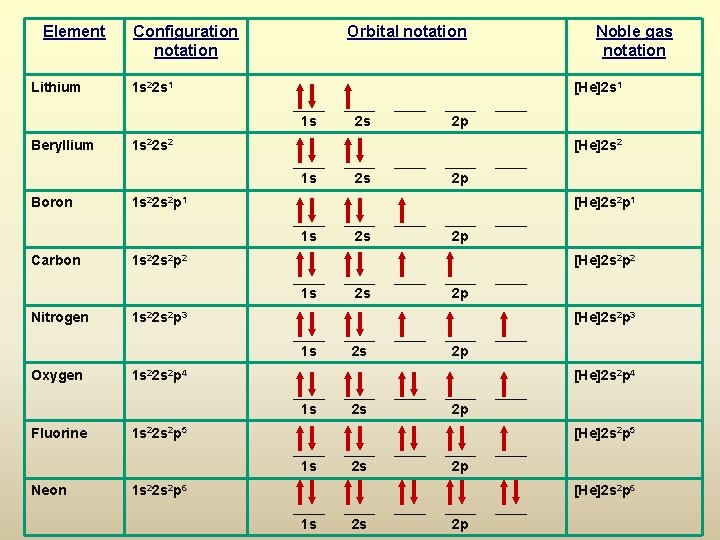
Element Lithium Configuration notation Orbital notation 1 s 22 s 1 [He]2 s 1 ____ 1 s Beryllium ____ 2 p ____ 2 s ____ 2 p ____ [He]2 s 2 p 2 ____ 2 s ____ 2 p ____ 1 s 22 s 2 p 3 [He]2 s 2 p 3 ____ 2 s ____ 2 p ____ 1 s 22 s 2 p 4 [He]2 s 2 p 4 ____ 2 s ____ 2 p ____ 1 s 22 s 2 p 5 [He]2 s 2 p 5 ____ 1 s Neon ____ 2 s 1 s 22 s 2 p 2 ____ 1 s Fluorine ____ [He]2 s 2 p 1 ____ 1 s Oxygen ____ 2 p 1 s 22 s 2 p 1 ____ 1 s Nitrogen ____ [He]2 s 2 ____ 1 s Carbon ____ 2 s 1 s 22 s 2 ____ 1 s Boron Noble gas notation ____ 2 s ____ 2 p ____ 1 s 22 s 2 p 6 [He]2 s 2 p 6 ____ 1 s ____ 2 s ____ 2 p ____
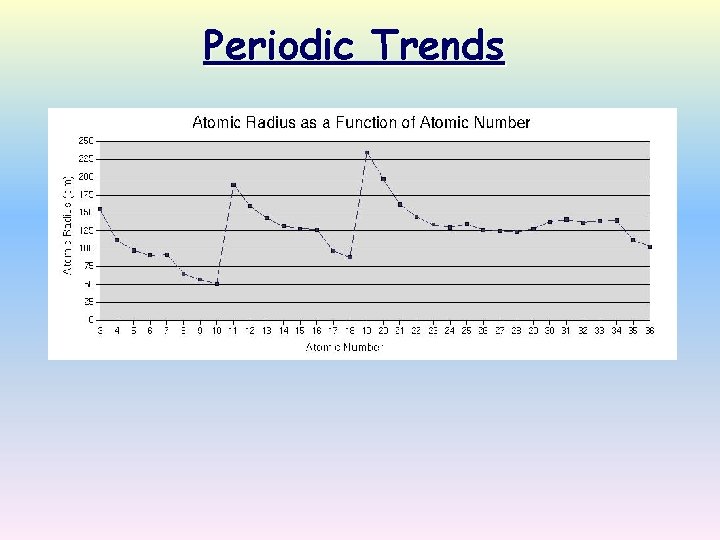
Periodic Trends
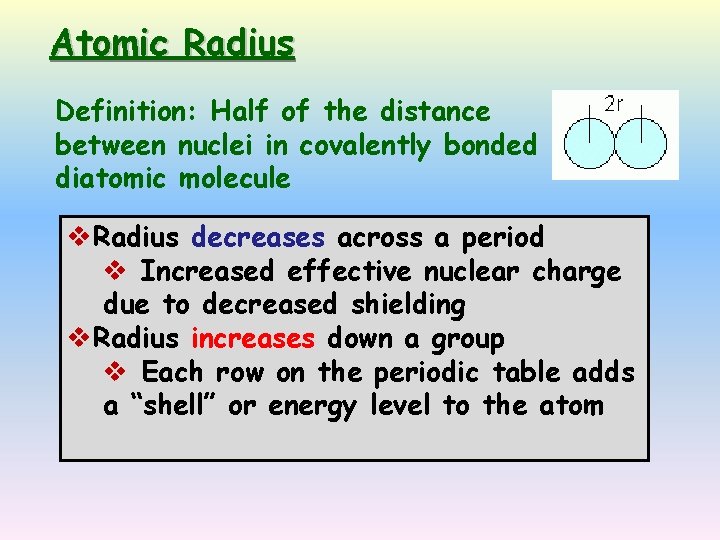
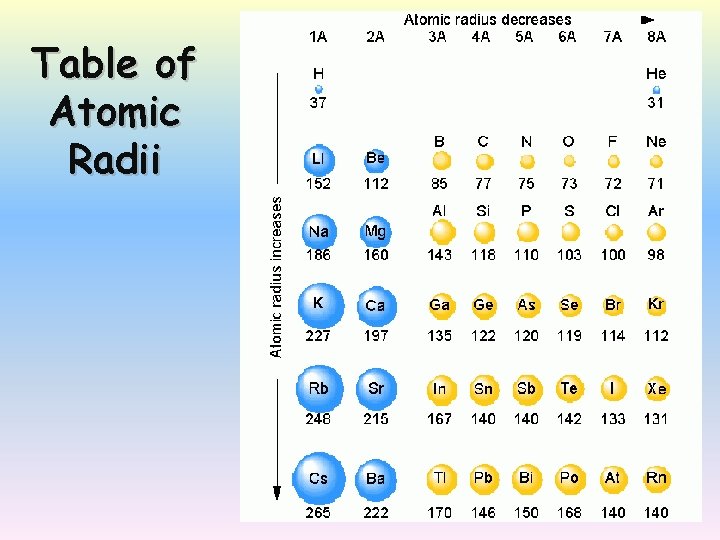
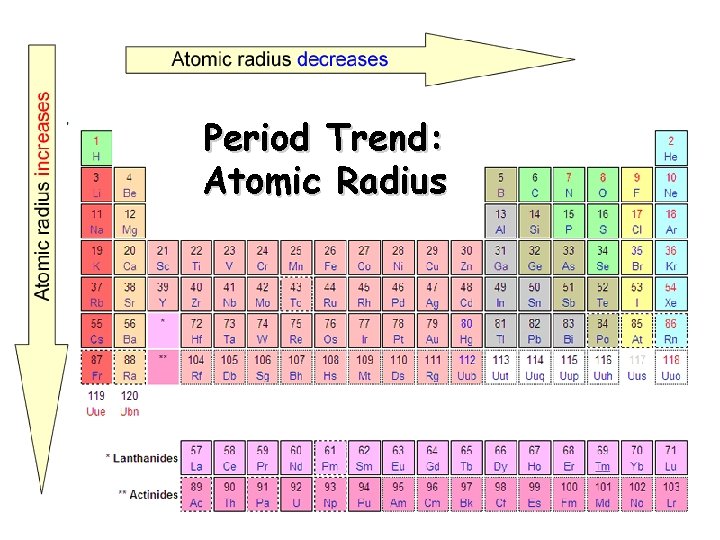
Atomic Radius Definition: Half of the distance between nuclei in covalently bonded diatomic molecule v. Radius decreases across a period v Increased effective nuclear charge due to decreased shielding v. Radius increases down a group v Each row on the periodic table adds a “shell” or energy level to the atom
Table of Atomic Radii
Period Trend: Atomic Radius
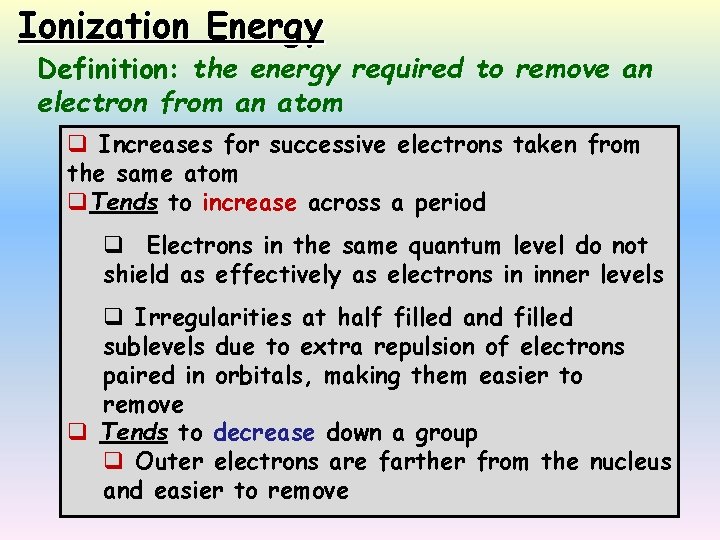
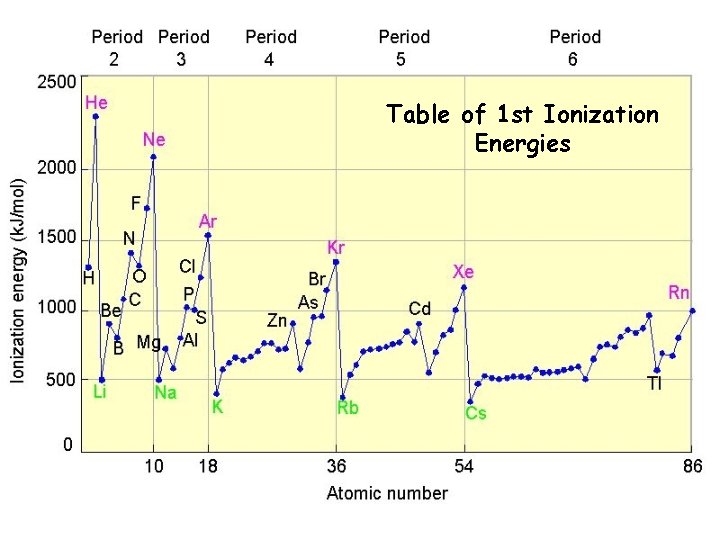
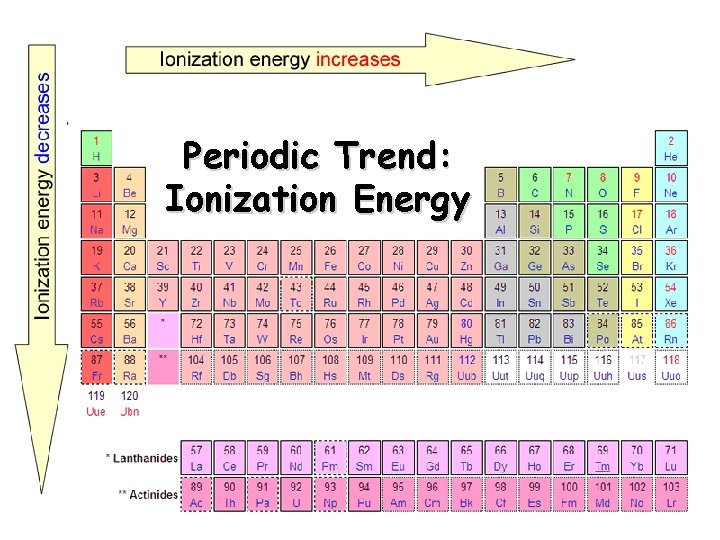
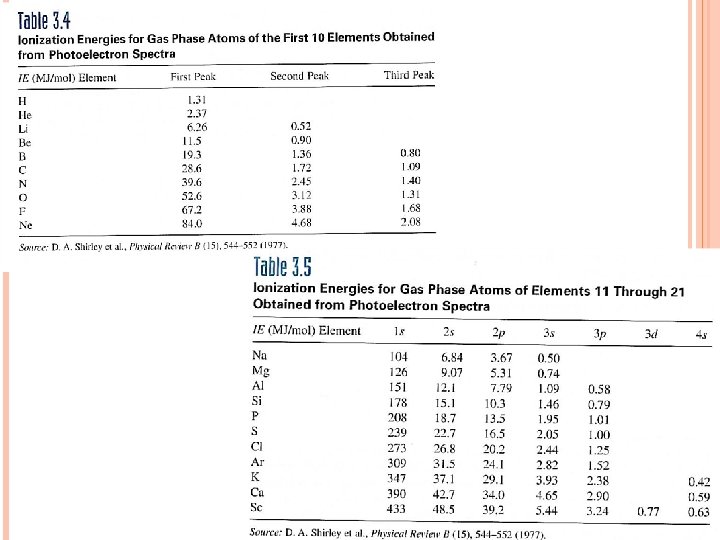
Ionization Energy Definition: the energy required to remove an electron from an atom q Increases for successive electrons taken from the same atom q. Tends to increase across a period q Electrons in the same quantum level do not shield as effectively as electrons in inner levels q Irregularities at half filled and filled sublevels due to extra repulsion of electrons paired in orbitals, making them easier to remove q Tends to decrease down a group q Outer electrons are farther from the nucleus and easier to remove
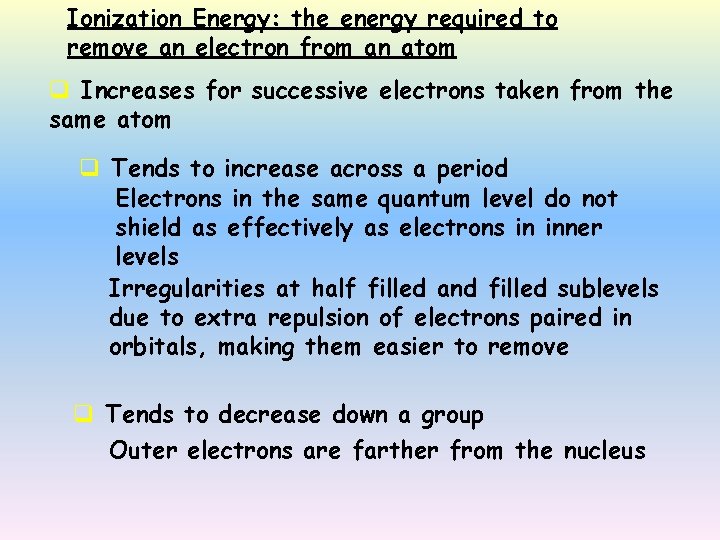
Ionization Energy: the energy required to remove an electron from an atom q Increases for successive electrons taken from the same atom q Tends to increase across a period Electrons in the same quantum level do not shield as effectively as electrons in inner levels Irregularities at half filled and filled sublevels due to extra repulsion of electrons paired in orbitals, making them easier to remove q Tends to decrease down a group Outer electrons are farther from the nucleus
Table of 1 st Ionization Energies
Periodic Trend: Ionization Energy
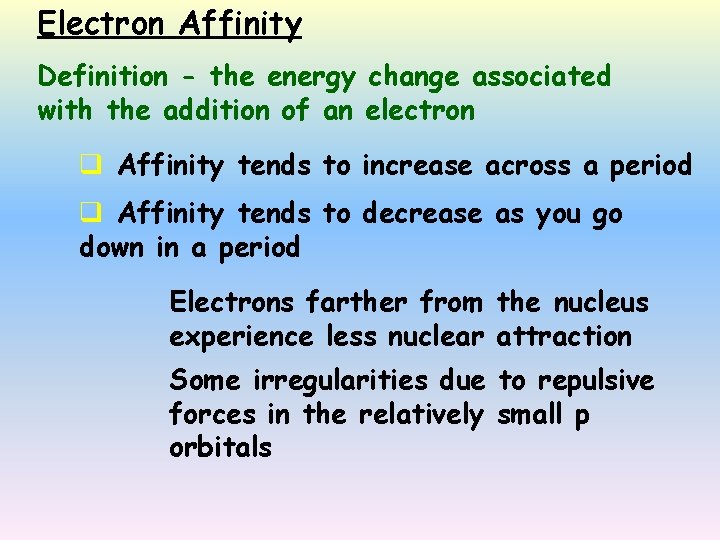
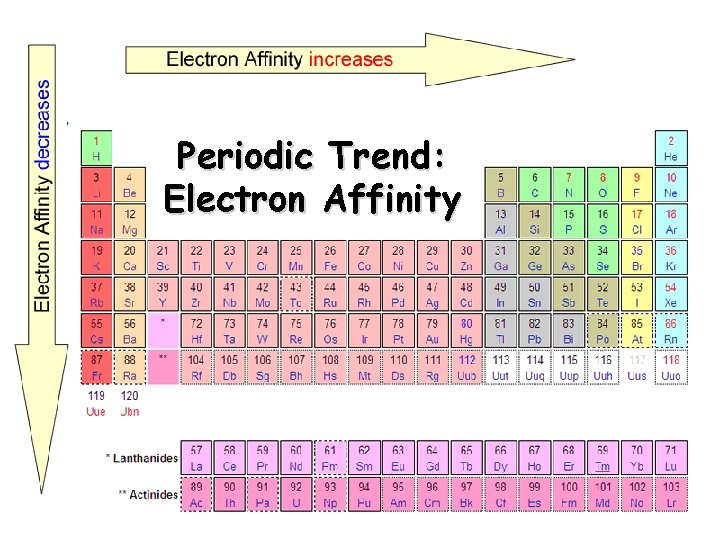
Electron Affinity Definition - the energy change associated with the addition of an electron q Affinity tends to increase across a period q Affinity tends to decrease as you go down in a period Electrons farther from the nucleus experience less nuclear attraction Some irregularities due to repulsive forces in the relatively small p orbitals
Periodic Trend: Electron Affinity
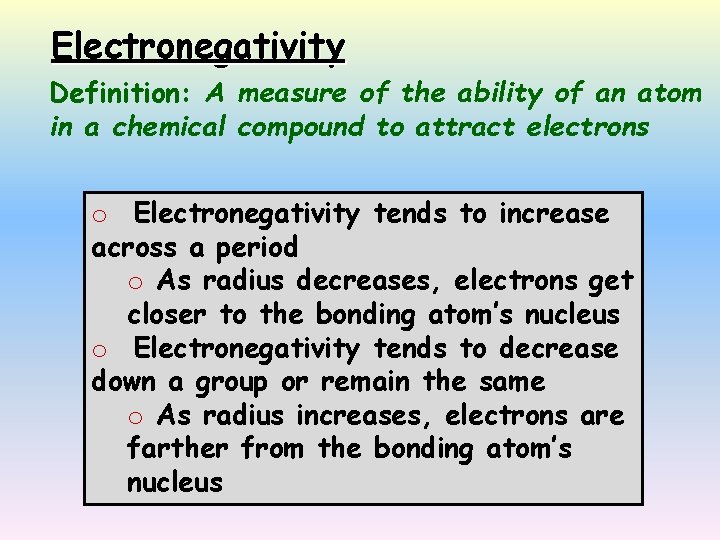
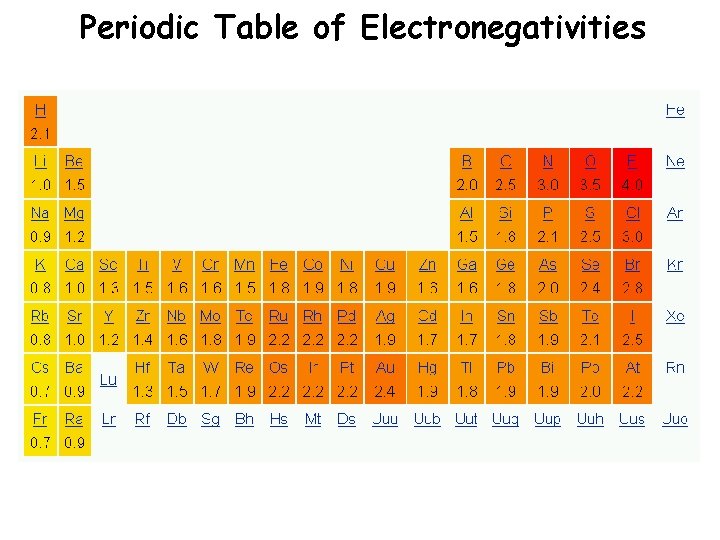
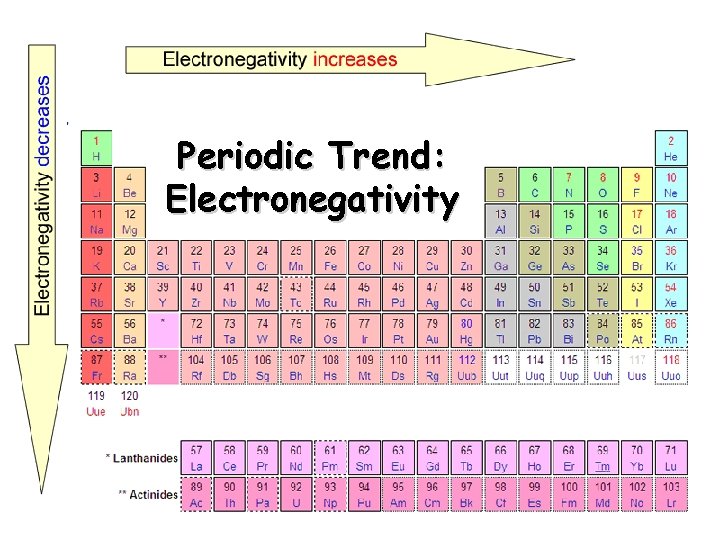
Electronegativity Definition: A measure of the ability of an atom in a chemical compound to attract electrons o Electronegativity tends to increase across a period o As radius decreases, electrons get closer to the bonding atom’s nucleus o Electronegativity tends to decrease down a group or remain the same o As radius increases, electrons are farther from the bonding atom’s nucleus
Periodic Table of Electronegativities
Periodic Trend: Electronegativity
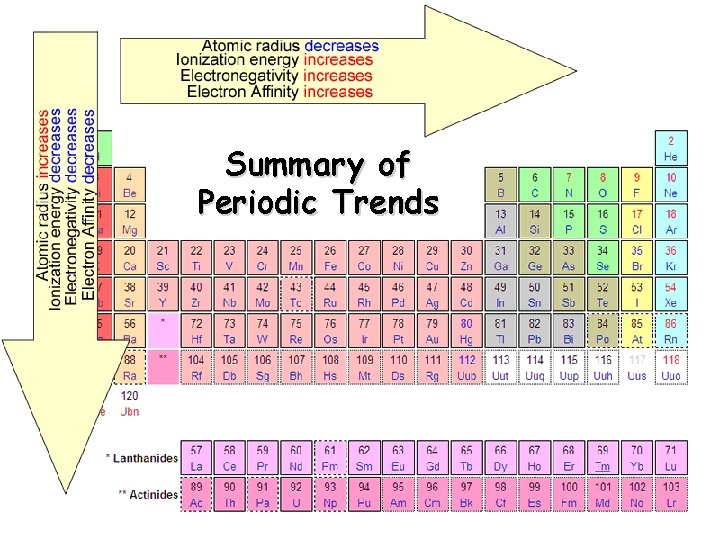
Summary of Periodic Trends
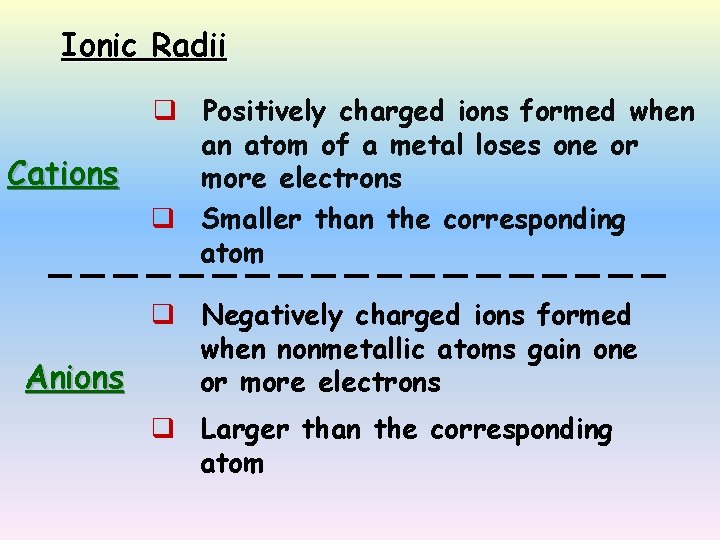
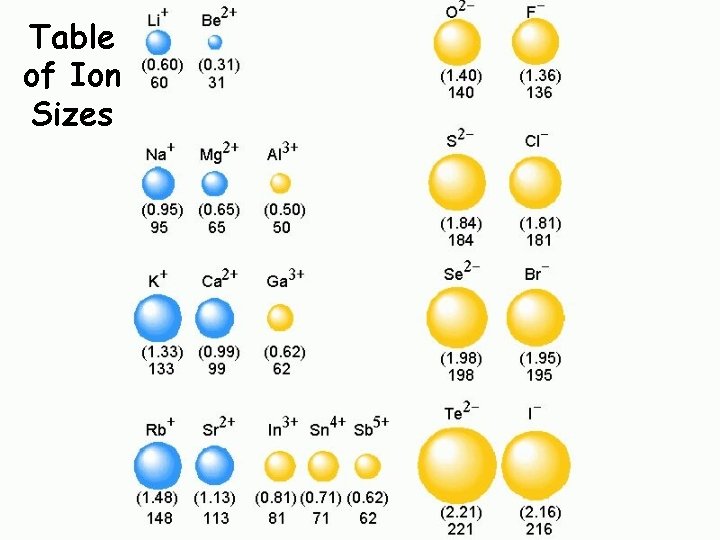
Ionic Radii Cations q Positively charged ions formed when an atom of a metal loses one or more electrons q Smaller than the corresponding atom q Negatively charged ions formed when nonmetallic atoms gain one Anions or more electrons q Larger than the corresponding atom
Table of Ion Sizes
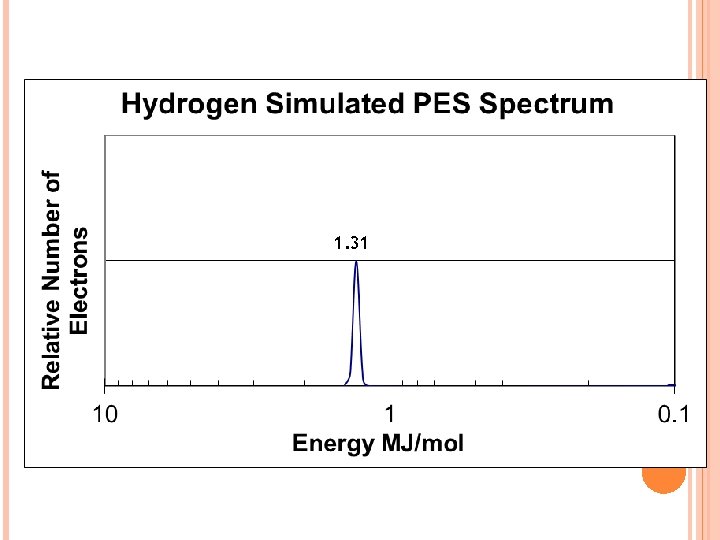
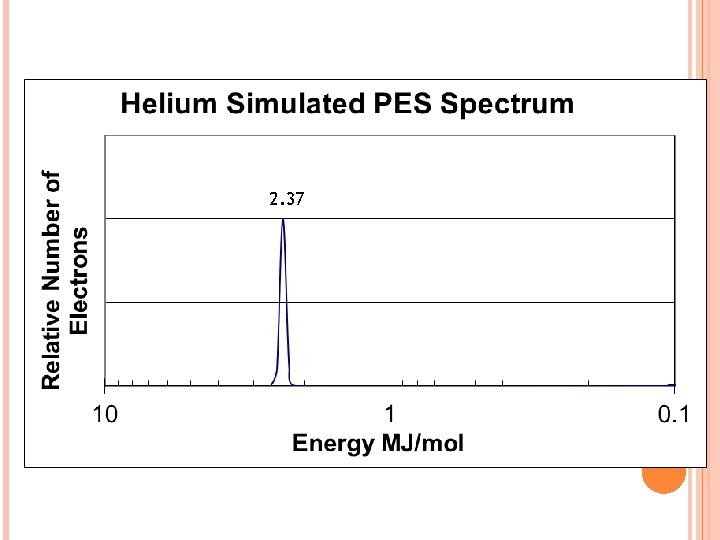
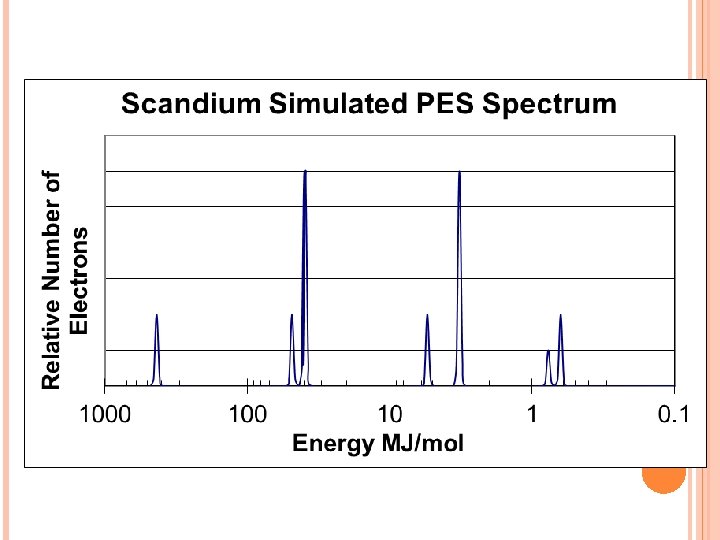
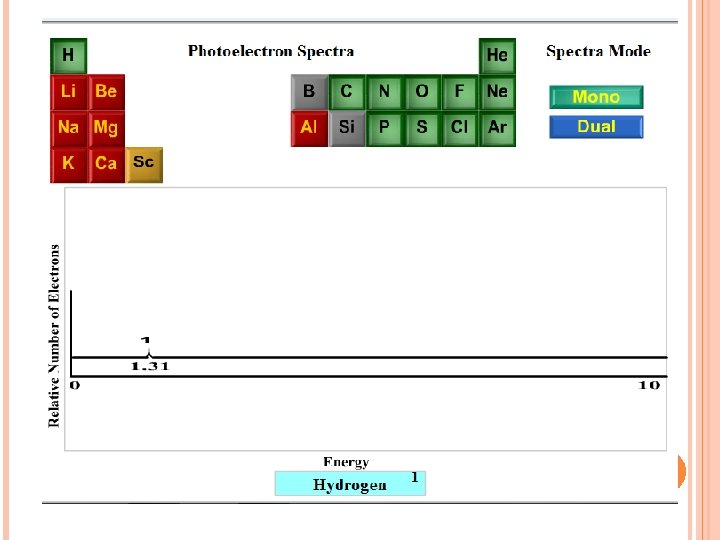
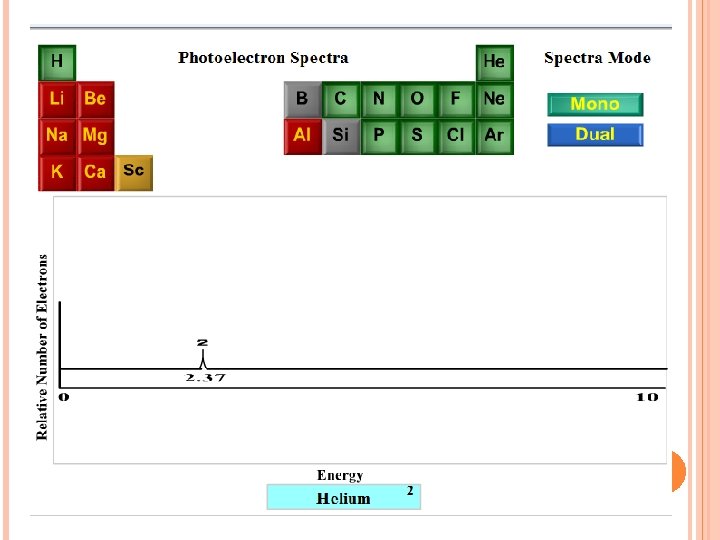
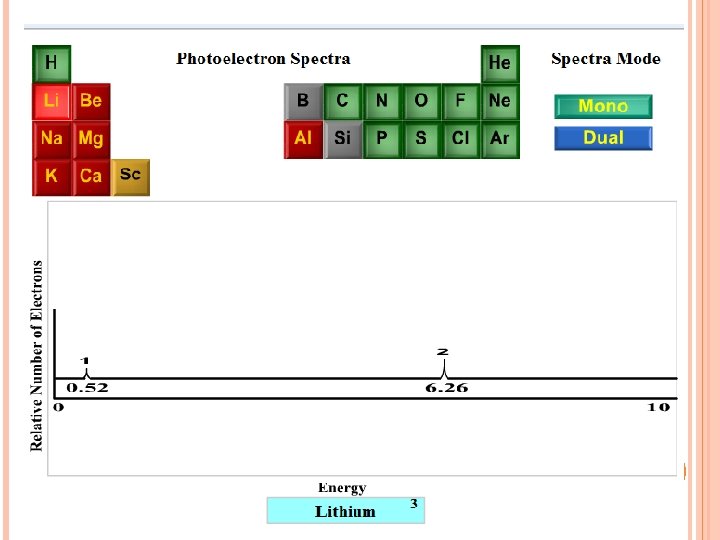
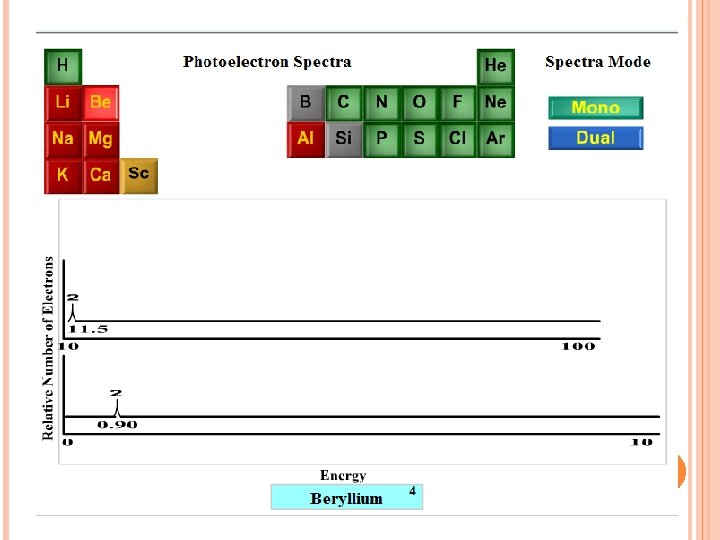
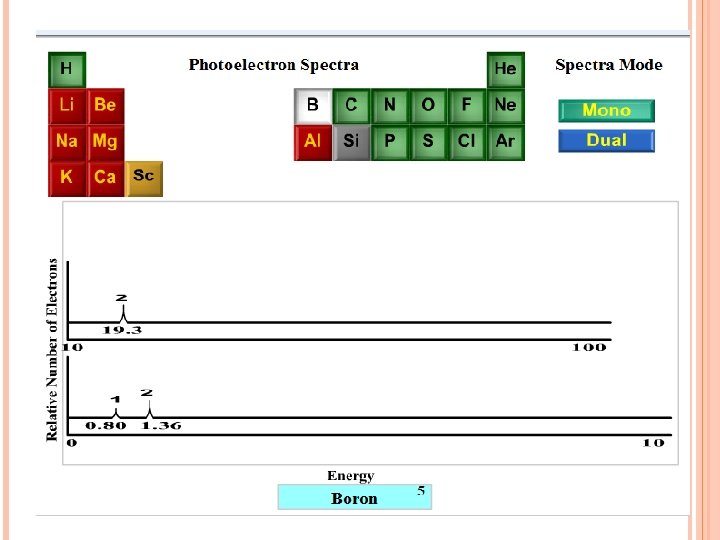
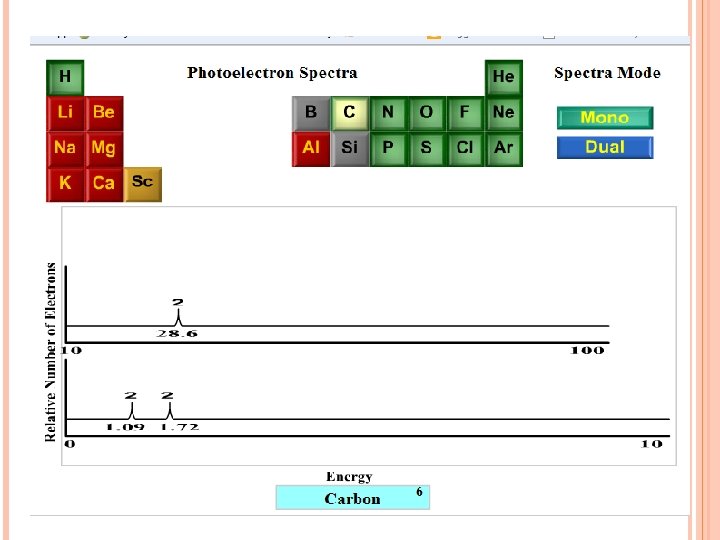
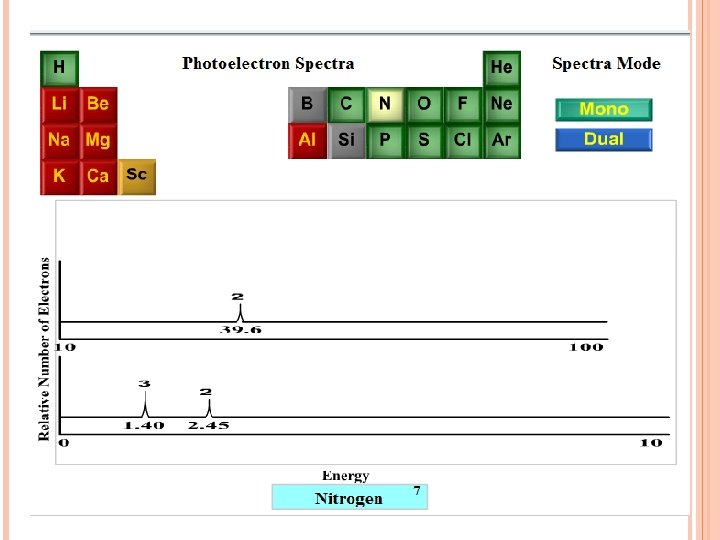
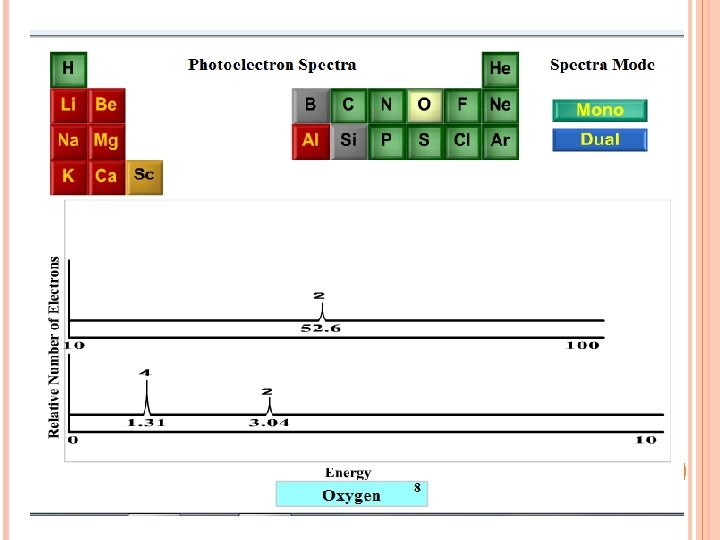
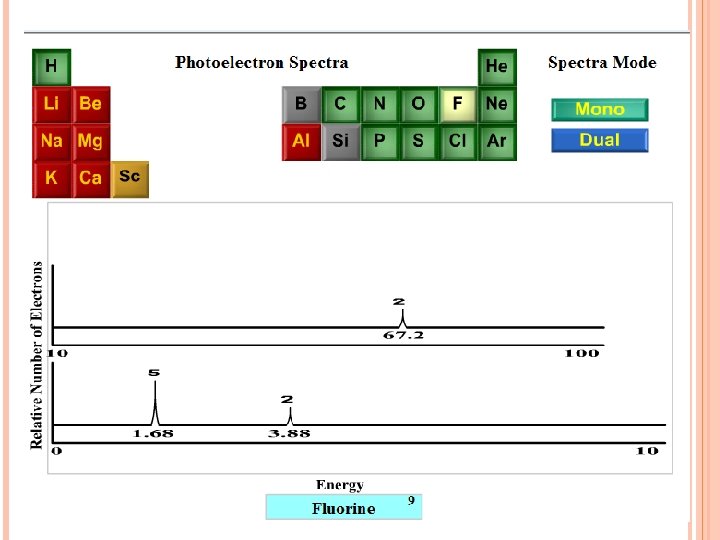
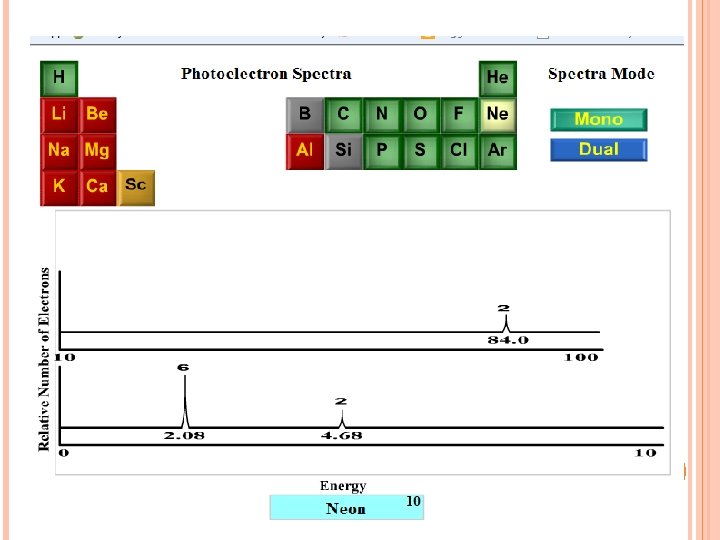
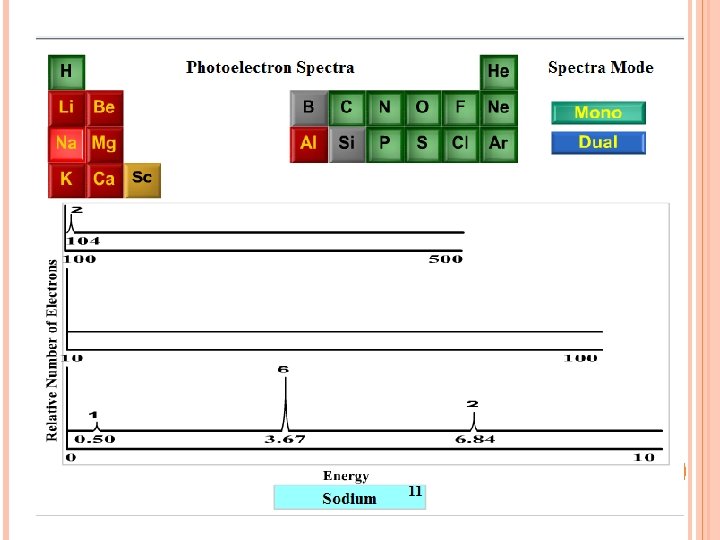
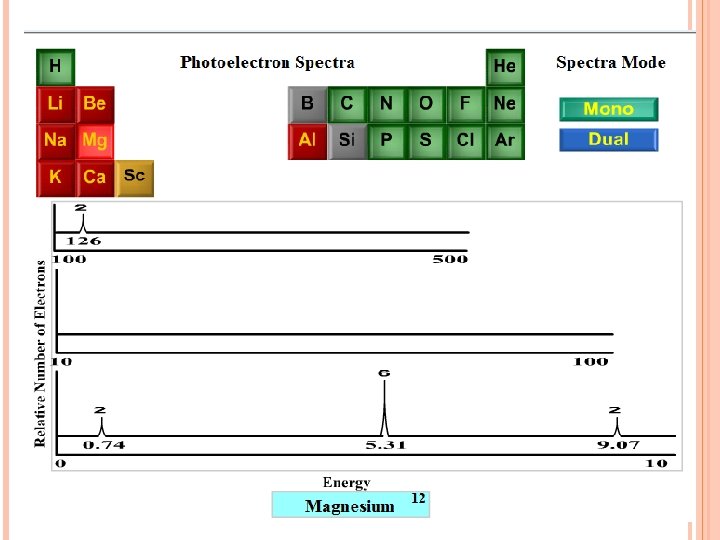
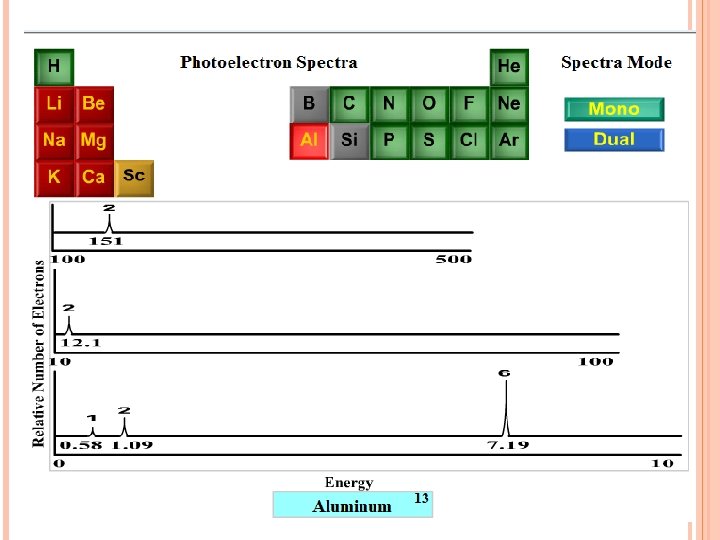
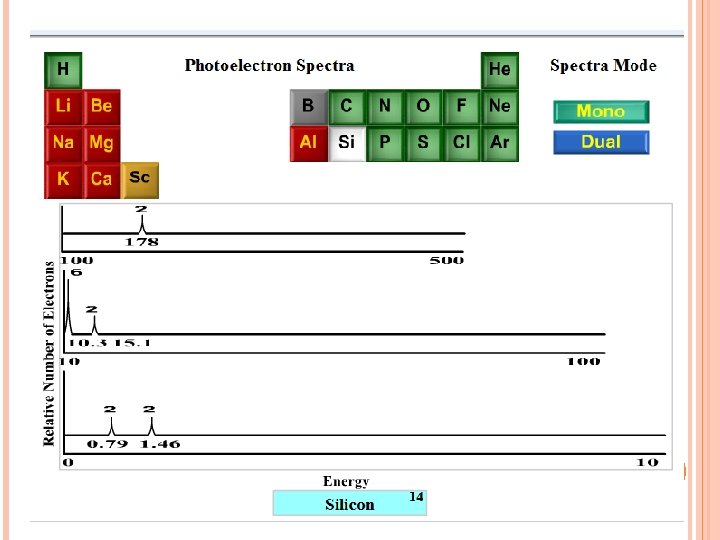
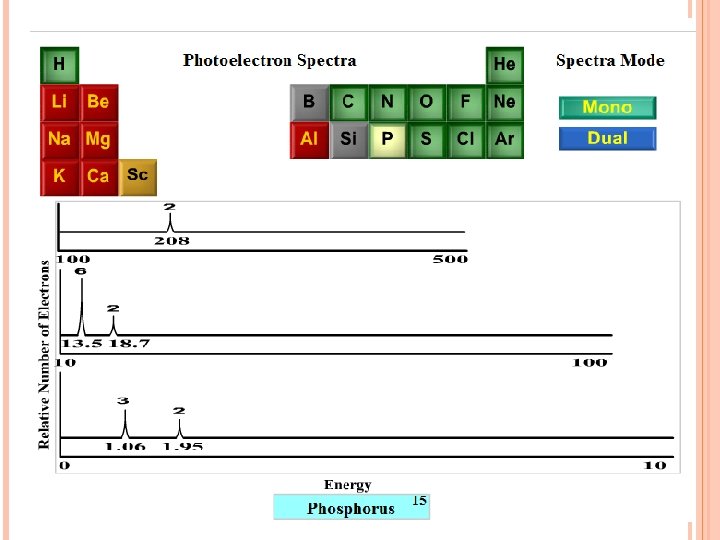
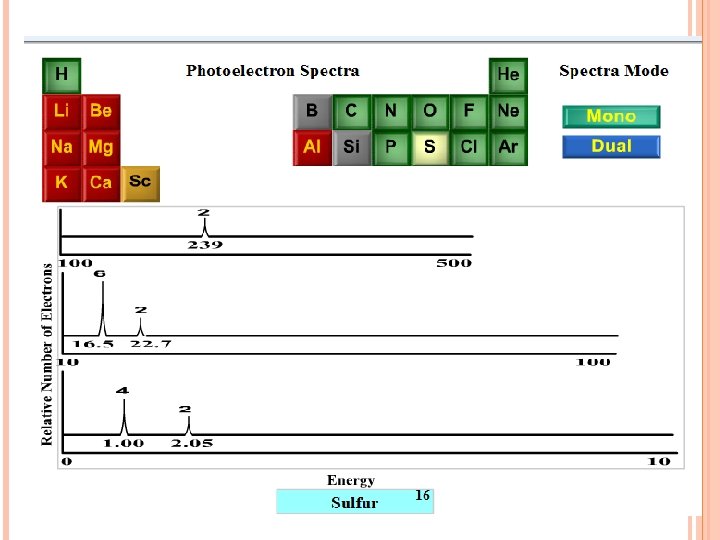
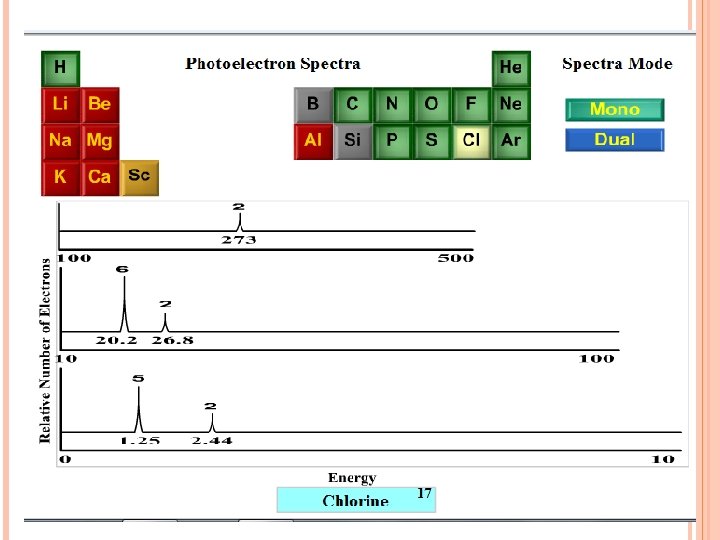
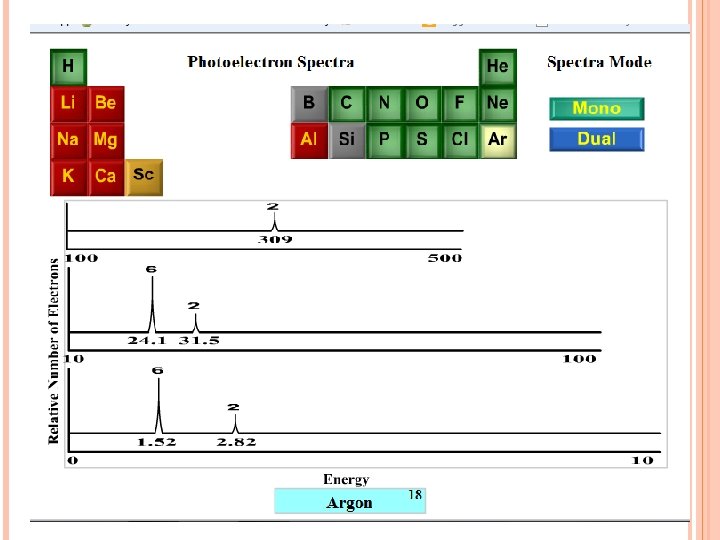
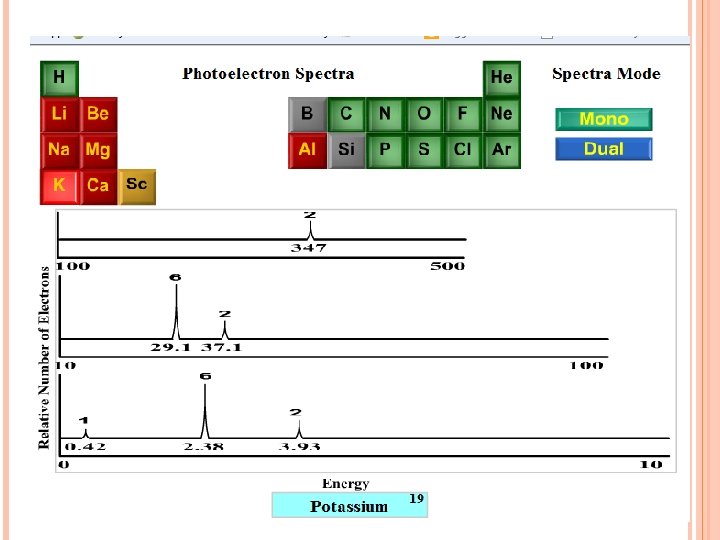
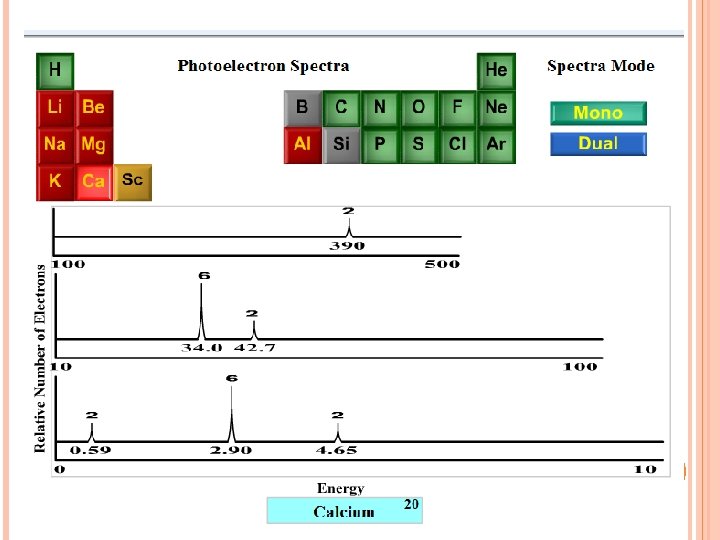
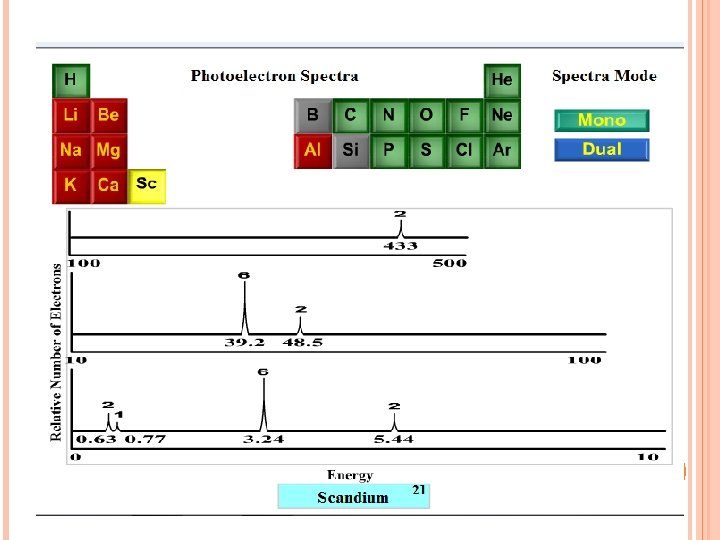
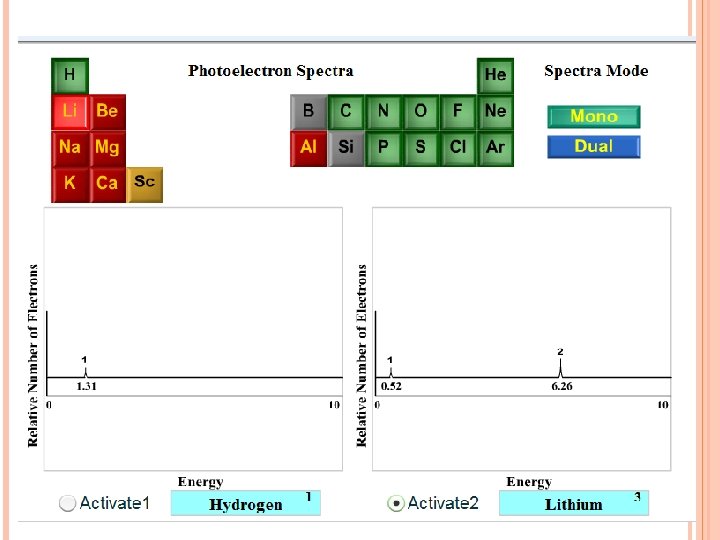
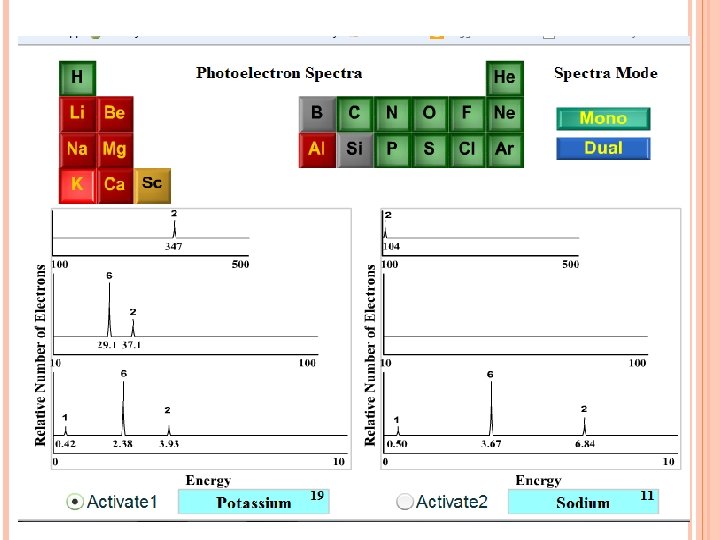
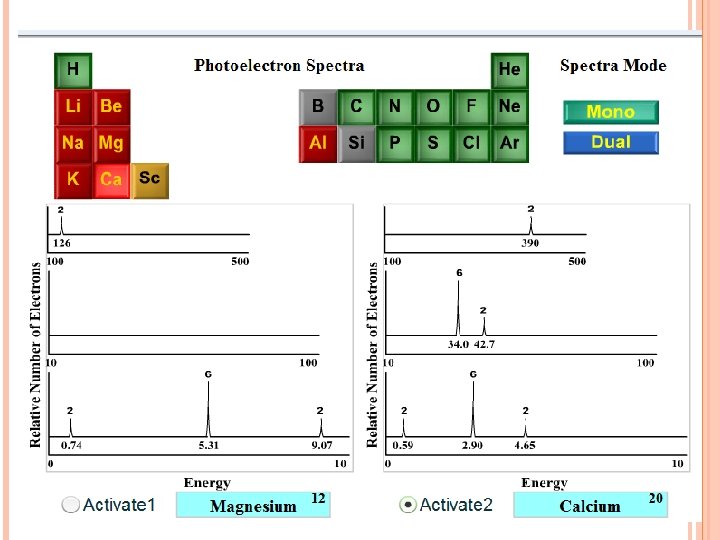
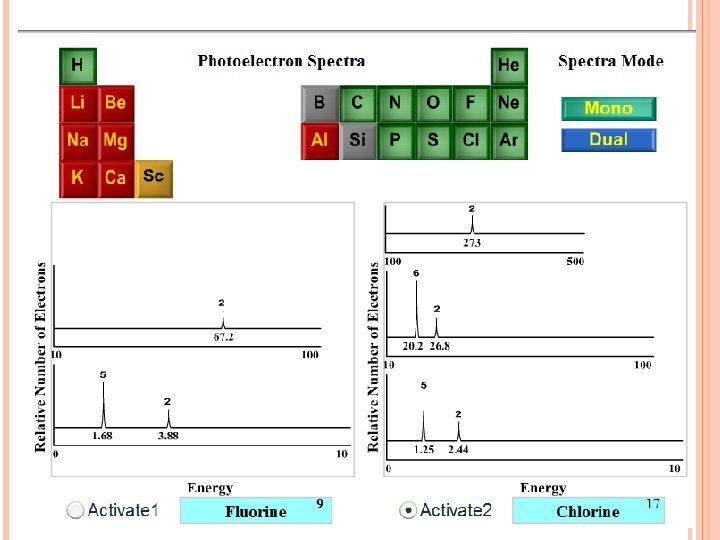
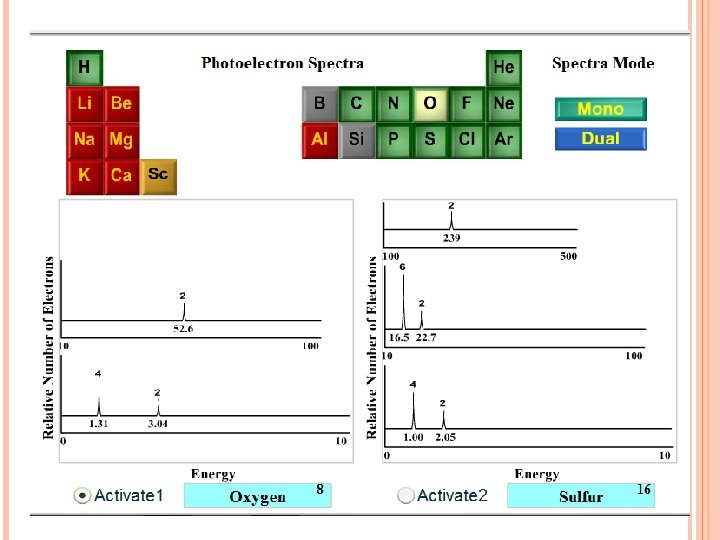
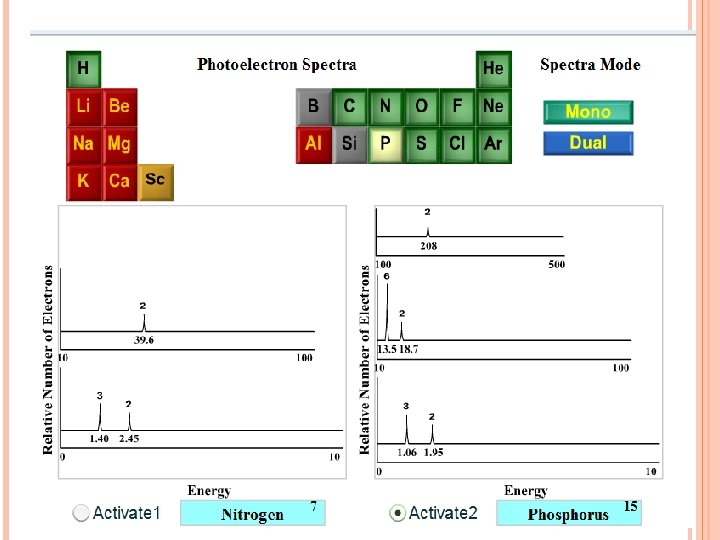
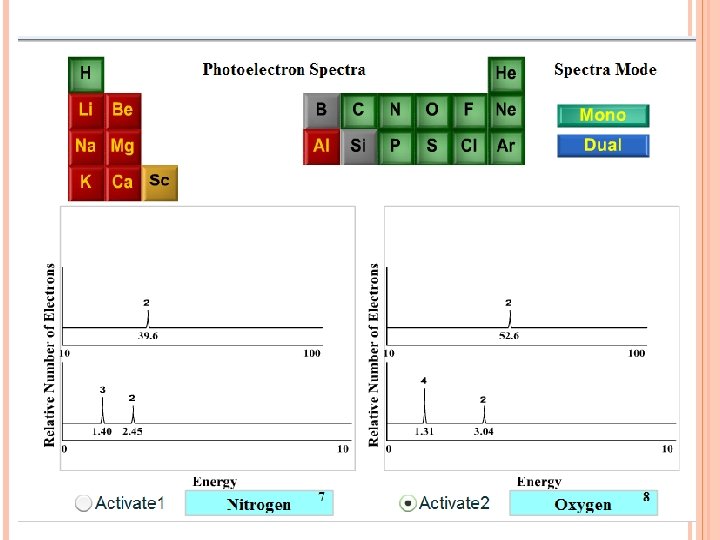
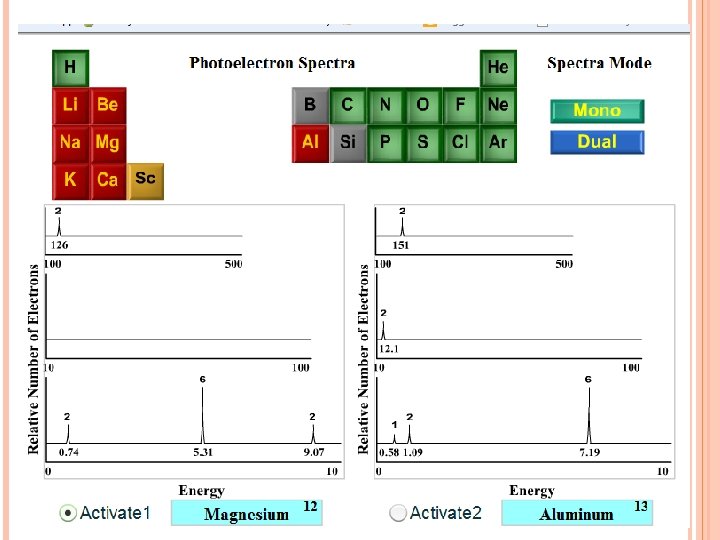
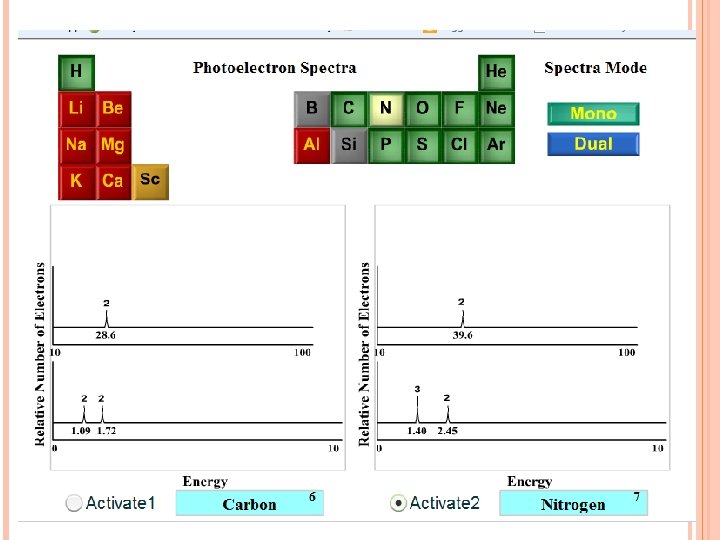
PHOTOELECTRON SPECTROSCOPY XPS/UPS -- PES
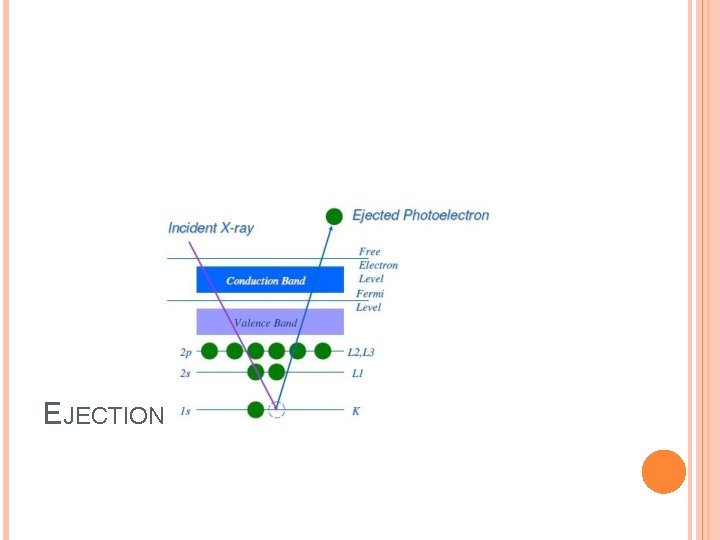
EJECTION OF A PHOTOELECTRON
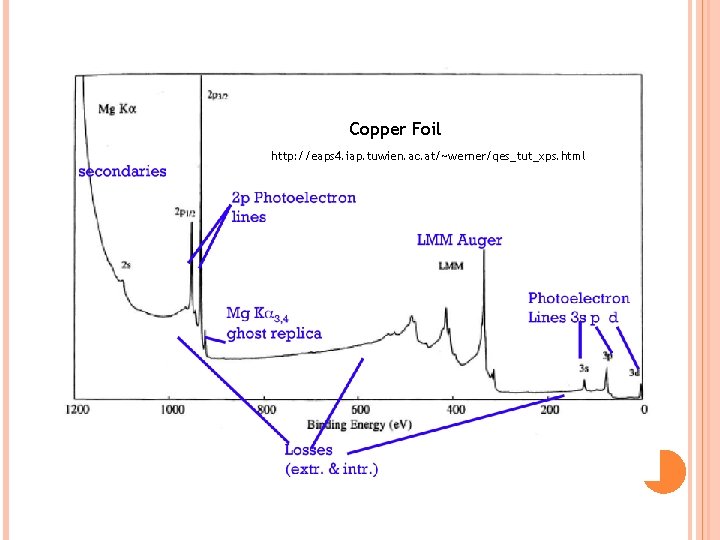
Copper Foil http: //eaps 4. iap. tuwien. ac. at/~werner/qes_tut_xps. html
1. 31
2. 37
Comparison of some PES Plots