
Warm Up What is an epidemic Warm Up
- Slides: 24
Warm Up • What is an epidemic?
Warm Up • What is an epidemic? • An epidemic is a widespread occurrence of an infectious disease in a community at a particular time. • Example: flu • Synonyms: outbreak, plague, pandemic
Warm Up • What are some synonyms for an epidemic?
Warm Up • What are some synonyms for an epidemic? • Examples: • Outbreak • Plague • Pandemic • Disease • Viruses
Warm Up • What was the belief and concern expressed for the plague based on document 1?
Warm Up • What was the belief and concern expressed for the plague based on document 1? • Beliefs: • Clean streets would prevent the plague from coming • Those left behind behaviors of either cutting themselves off from the public or drinking a great deal. • Carrying bunches of flowers, herbs or spices to feel healthy and to stop the smell of dead/dying bodies • Concerns: • Brother leaving brothers and husbands leaving wives. • The amount of dying bodies and the smell left behind • Morning not able to count the amount of corpses in the streets • Huge trenches to deal with all the dead bodies
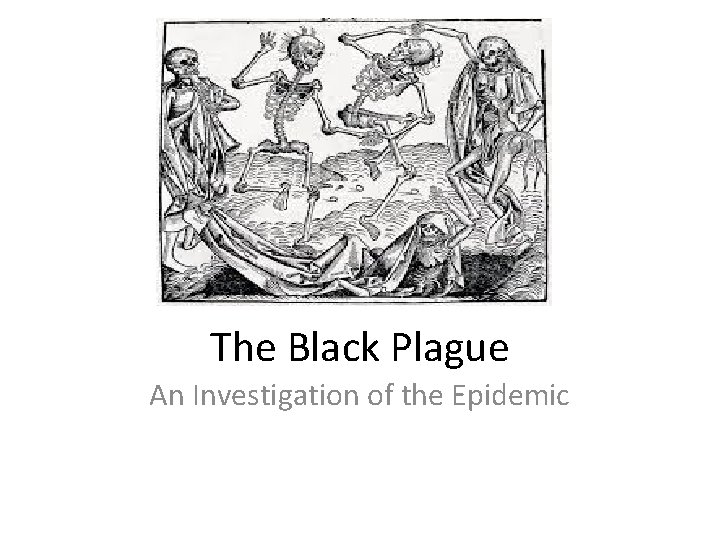
The Black Plague An Investigation of the Epidemic
Learning Target • I can analyze and make inferences about how an epidemic impacts a society • Success Criteria • Analyze historical background information about the Black plague • Analyze documents • Make inferences to answer question
Key Vocabulary • • Lords Serfs Manors Middle Ages Black Plague Epidemic Migrate
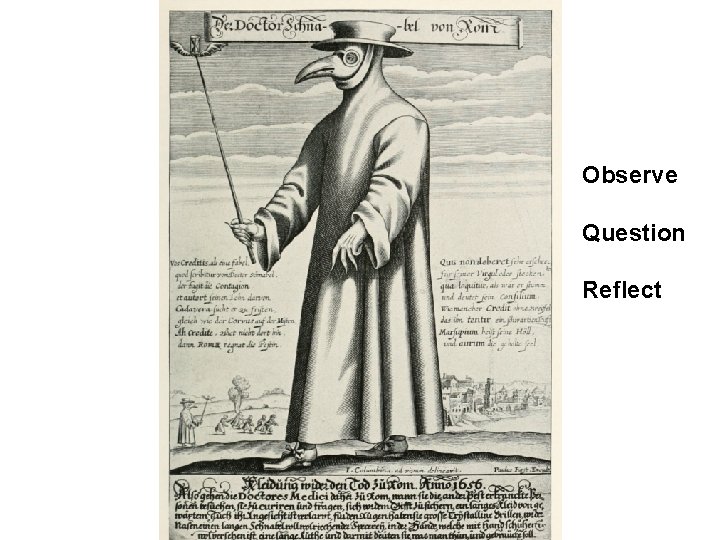
Observe Question Reflect
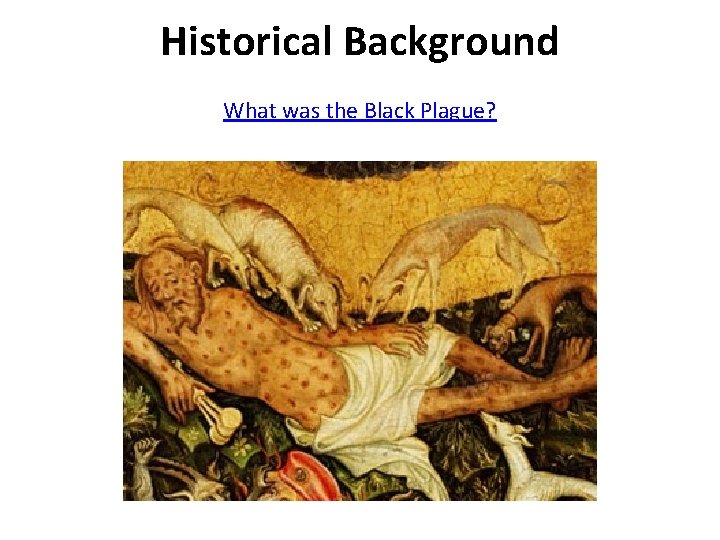
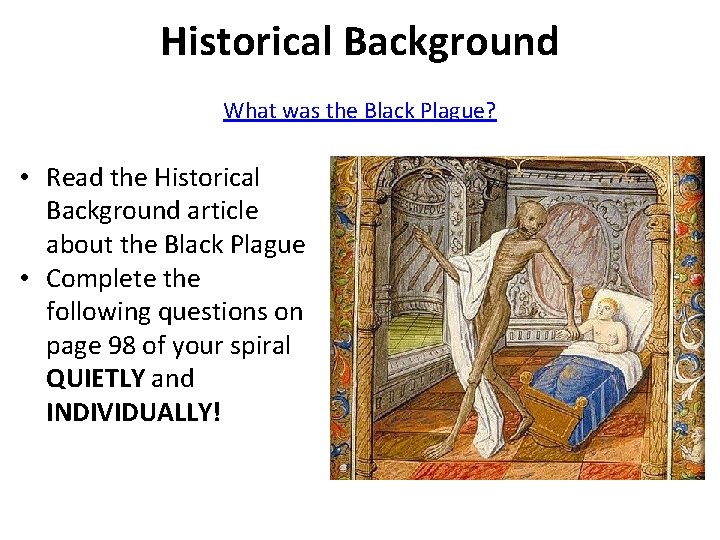
Historical Background What was the Black Plague?
Historical Background What was the Black Plague? • Read the Historical Background article about the Black Plague • Complete the following questions on page 98 of your spiral QUIETLY and INDIVIDUALLY!
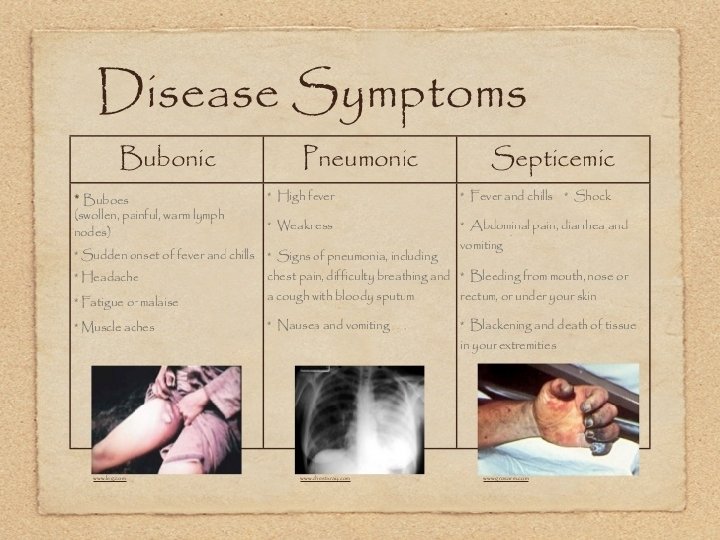
Historical Background Essay During the fourteenth century, Europe was living through a deadly epidemic known as the Great Plague. Probably originating in Asia in 1330, the Black Death spread through the land sea trading routes of the time. Contact from these trade routes reached North Africa, Europe and the Middle East. Known by names such as the Great Plague, the Black Death and the Black Plague the disease that tore through Europe is now more commonly known as the bubonic plague. The plague's rapid transmission can be traced to a small bacterium, Yersina pestis, that usually infected the black rat. Infected fleas, however, transmitted the disease to humans initially. Eventually humans spread the disease as well, through infected saliva. Once people became infected, the symptoms of the disease were painful and difficult, and many died. Symptoms included swollen nodes in the groin, severe headache and severe pneumonia. The disease became known as the black plague because of the dark blood clots that appeared under the skin. The overall effects of the plague devastated Europe. The population decreased as much as 33% in 20 years, affecting agricultural production, family structure and economics.
Historical Background Questions Completed on page 98 of your spiral 1. Why do you think the plague spread to rapidly throughout Europe? 2. What areas of medieval life probably faced the most impact as a result of this plague? 3. What were the likely effects of a die-off of about one third of a total population in a 10 -year period upon the economic life and structure in medieval times? 4. What were the likely effects of a die-off of about one third of a total population in a 10 -year period upon the family life and structure in medieval times? 5. What were the likely effects of a die-off of about one third of a total population in a 10 -year period upon the population growth or decline in medieval times?
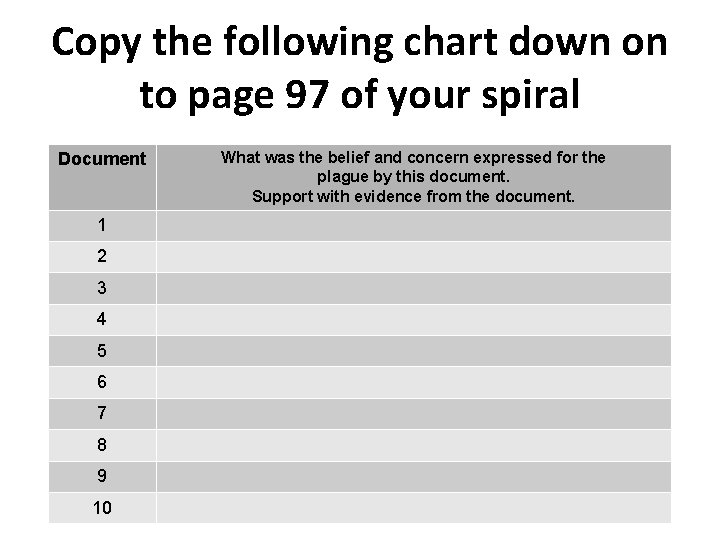
Copy the following chart down on to page 97 of your spiral Document 1 2 3 4 5 6 7 8 9 10 What was the belief and concern expressed for the plague by this document. Support with evidence from the document.
Task to be completed on page 97 With your elbow partner, you are going to investigate the previous discussion questions further through an activity using documents from the fourteenth through the eighteenth centuries. 1. Look through documents 1 -10 and at the various responses to the outbreaks of plague in the fourteenth and fifteenth centuries. 2. For each document, what was the belief and concern expressed for the plague. Support with evidence from the document.
Key Words for this Assignment Doc 2: Doc 6: Doc 7: Doc 8: Doc 9: avarice= greed plunder= steal miasmas= smell injurious= likely to cause damage sentient= feel pestilence= fatal disease
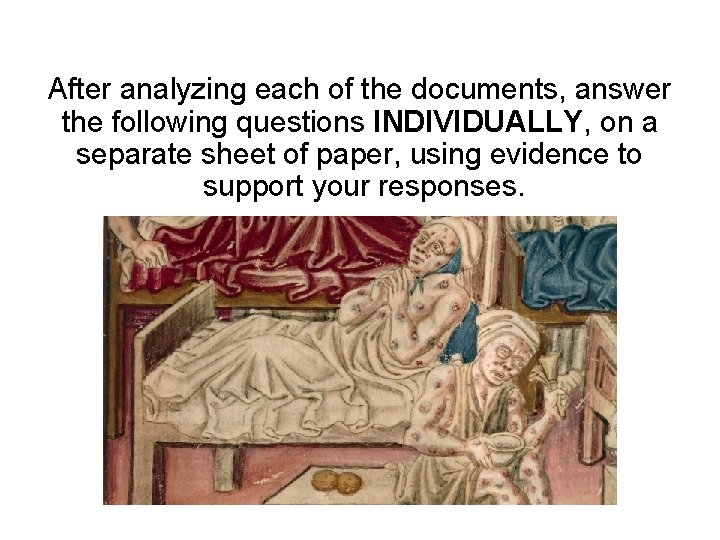
After analyzing each of the documents, answer the following questions INDIVIDUALLY, on a separate sheet of paper, using evidence to support your responses.
1. Do you believe the pope's fear of losing power was justified? Why or why not? 2. Which 3 documents or reactions to the plague seemed most interesting to you? Support your answer with evidence from the document on why. 3. Which 3 reactions seemed the most unrealistic or outrageous? Support your answer with evidence from the document on why. 4. Do you understand the concept of a scapegoat? Support your answer with evidence from the document on what your definition. 5. What would a modern Black Plague do to society today? Questions 5 and 6 are the same as earlier in the day, appling to current times. 6. What are the likely effects of a die-off of about one third of a total population in a 10 -year period upon the economic life and structure in current times? 7. What would be the effects on family life and structure in current times? 8. What would be the effects on the role of religion, religious tolerance and the rise or fall of secularism? 9. If you lived through and survived a catastrophe like the Black Plague, would it strengthen or weaken your religious faith? 10. What about your belief in the power and utility of the scientific method? 11. What modern epidemics or plagues have we seen today?
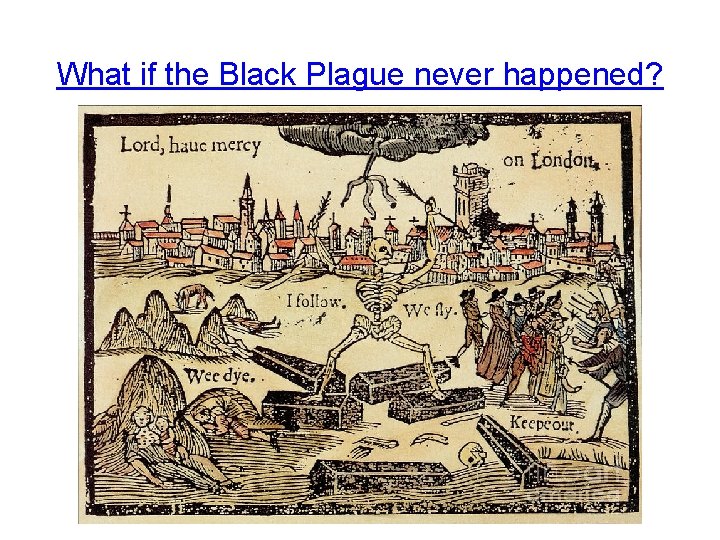
What if the Black Plague never happened?
Additional Middle Ages Facts The bread eaten by people of the Middle Ages was gritty from the millstones used to grind the grain. This caused the people's teeth wear down quickly. Peasants were not allowed to hunt on the lord's land. Punishment for killing a deer was sometimes death. Medicine was very primitive at the time. Sometimes doctors would "bleed" people by putting leeches on their skin. People mostly drank ale or wine. The water was bad and would make them sick. Marriages were often arranged, especially for nobles. Noble girls often married at 12 years old and boys at 14.
The Black Plague Newspaper On the outlined sheet of paper from the teacher, you are going to be creating a newspaper describing the arrival of the plague on your city and exactly what is happening to the people around you. You will need to have the following requirements within your newspaper: Title Catchy Headline 1 Article about life in the city during the Black Plague 1 Advertisement for a Plague Doctor 1 Advertisement for a Priest This will be due at the end of the period on Friday!
Processing On the opposite side of your sheet of paper, answer the following question: Based on what you have learned, was the black plague a curse or a blessing? Remember how we write here at Stuart when answering prompts