
Warm Up pg 20 in your notebook 1
Warm Up pg 20 in your notebook 1. Discuss a success and challenge you’ve had this week 2. Name all 7 habits (look at my door or in book) 3. What do you think habit 1 means?
Agenda • 3 activities for exit ticket and progress report -pg 21, acting, worksheet
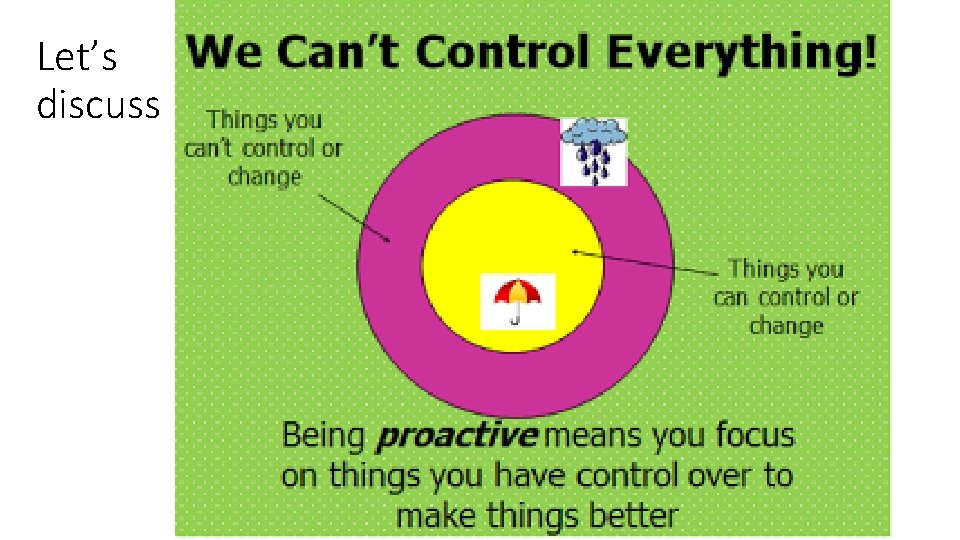
Let’s discuss
Habit 1 videos Watch and be ready to compare PROACTIVE with REACTIVE https: //www. youtube. com/watch? v=e. EUFs. Lt. J-G 4 https: //www. youtube. com/watch? v=o 3 Gu 0 d. Pc 8 TA
On whiteboard…split up into REACTIVE vs PROACTIVE • Give adjectives or characteristics • Each member needs to write 1 -2 • Then we’ll share out
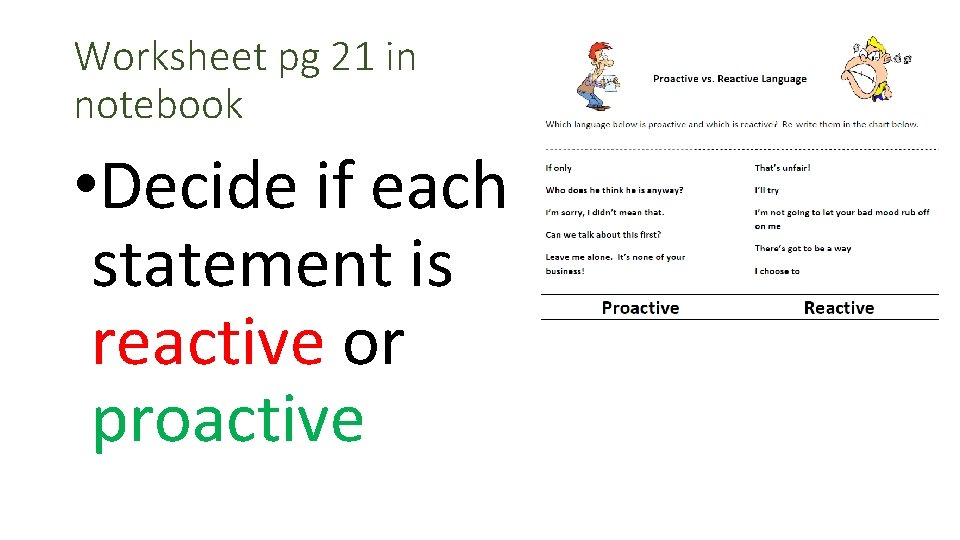
Worksheet pg 21 in notebook • Decide if each statement is reactive or proactive
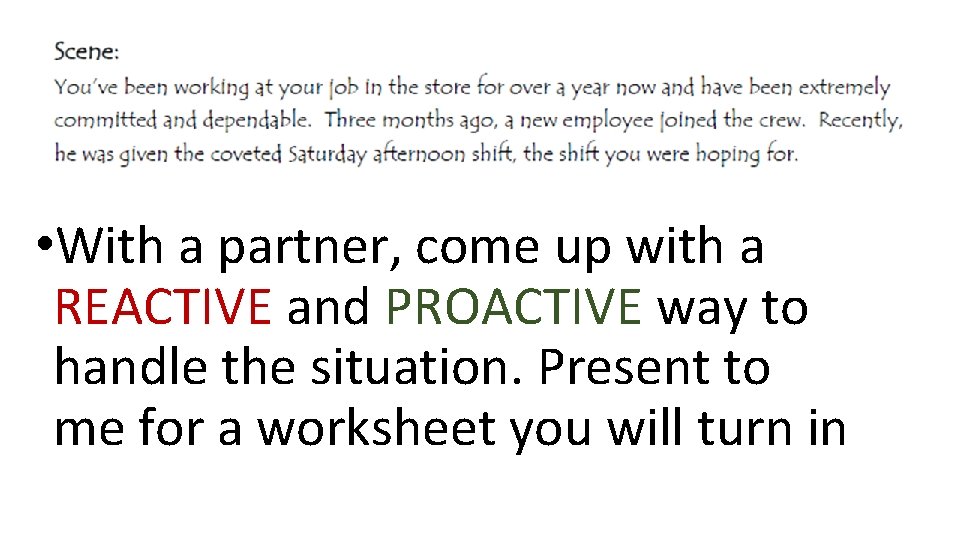
• With a partner, come up with a REACTIVE and PROACTIVE way to handle the situation. Present to me for a worksheet you will turn in
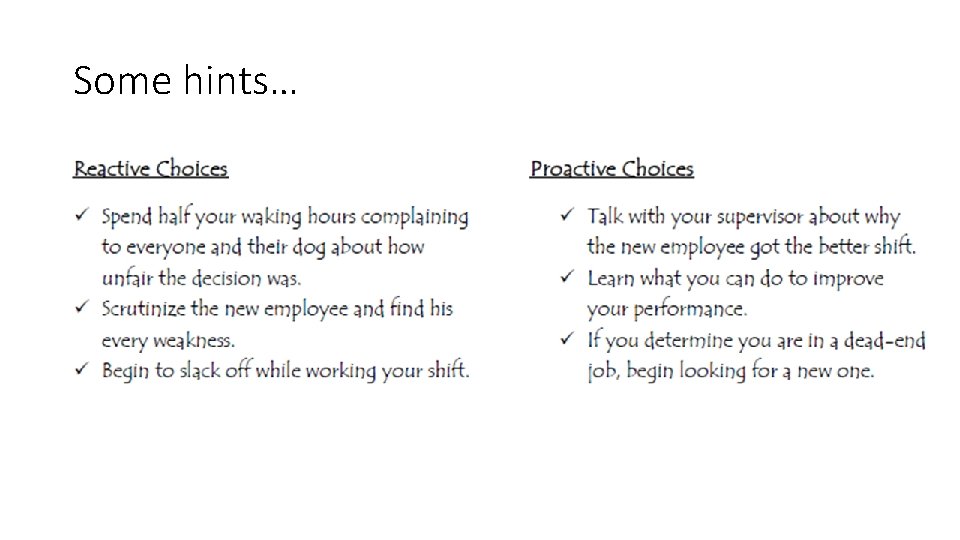
Some hints…
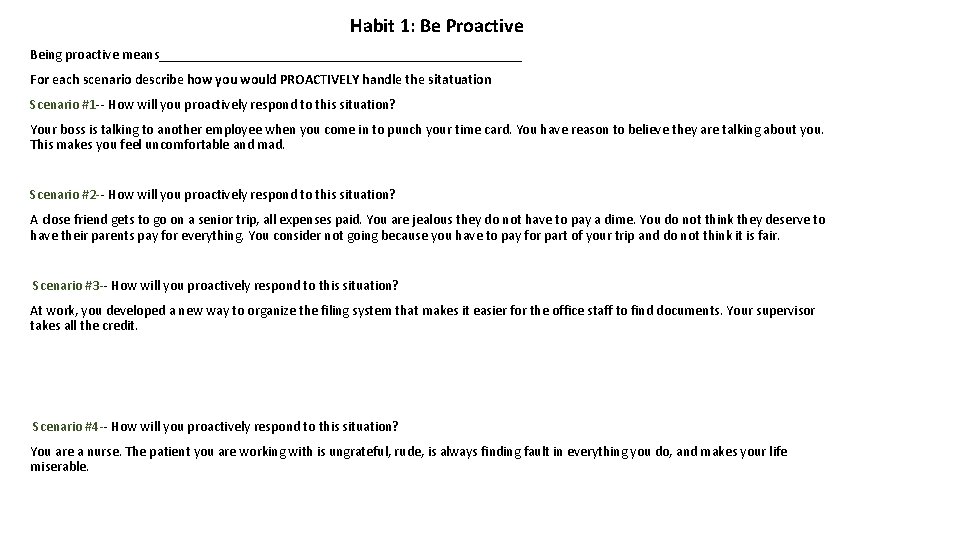
Habit 1: Be Proactive Being proactive means__________________________ For each scenario describe how you would PROACTIVELY handle the sitatuation Scenario #1 -- How will you proactively respond to this situation? Your boss is talking to another employee when you come in to punch your time card. You have reason to believe they are talking about you. This makes you feel uncomfortable and mad. Scenario #2 -- How will you proactively respond to this situation? A close friend gets to go on a senior trip, all expenses paid. You are jealous they do not have to pay a dime. You do not think they deserve to have their parents pay for everything. You consider not going because you have to pay for part of your trip and do not think it is fair. Scenario #3 -- How will you proactively respond to this situation? At work, you developed a new way to organize the filing system that makes it easier for the office staff to find documents. Your supervisor takes all the credit. Scenario #4 -- How will you proactively respond to this situation? You are a nurse. The patient you are working with is ungrateful, rude, is always finding fault in everything you do, and makes your life miserable.
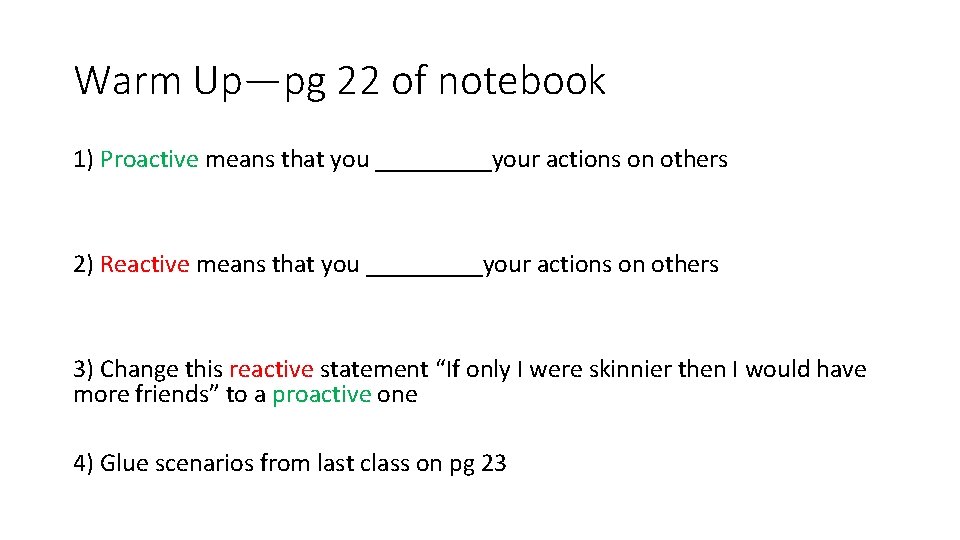
Warm Up—pg 22 of notebook 1) Proactive means that you _____your actions on others 2) Reactive means that you _____your actions on others 3) Change this reactive statement “If only I were skinnier then I would have more friends” to a proactive one 4) Glue scenarios from last class on pg 23
Agenda • 4 activities for exit ticket • outside demo and writing 10 scenarios, visual, stool game
Team Activity • Grab a bottle out of recycling and fill in half way with water • This works better is the bottles are half full so empty half of a bottle of soda into cup • Label soda “Reactive” and water labeled “Proactive. ” • 2 in your group are going to be in charge of reactive • 2 in your group are going to be in charge of proactive • I am going to read some statement. You decide which bottle to shake: “Reactive” or “Proactive. ”
• Your sister ruins your favorite shirt and you storm into her room screaming at her. • Your best friend says something that hurts your feelings and you decide he must be having a bad day, so you blow it off. • Somebody cuts you off in traffic, so you flip him off. • Your dad makes a really ridiculous comment in front of your friends, so you yell at him and tell him to leave you alone. • Your parents won’t let you take the car—again. You stomp off and slam the door to your room. • Your little sister keeps asking you to read to her and you don’t want to, but you decide to do it anyway. • You feel like you’re being scheduled for too many long shifts at work but instead of complaining to your co-workers, you talk to your manager. • Someone offers you drugs and you say no. • Your mom says, “We need to talk, ” and you say, “Not now, ” because you know it’s going to end up in a fight.
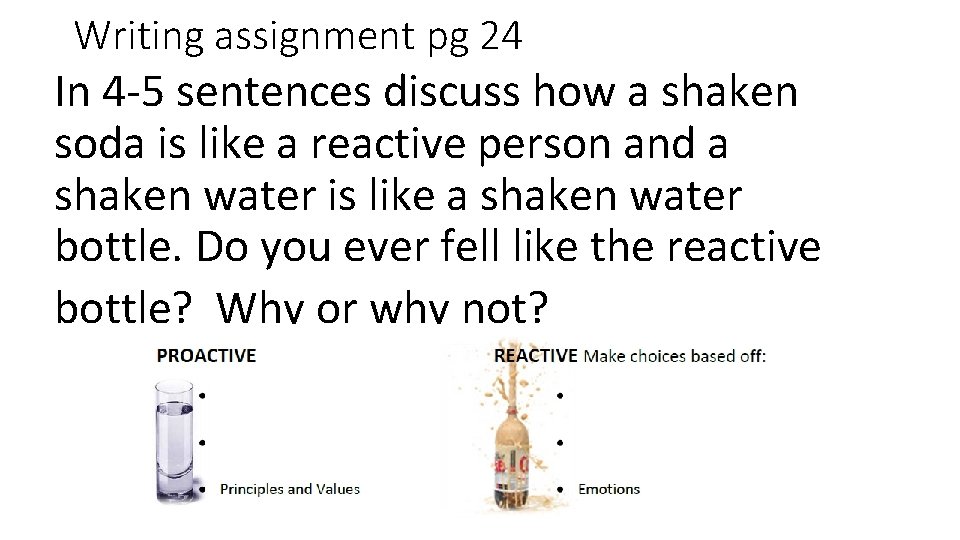
Writing assignment pg 24 In 4 -5 sentences discuss how a shaken soda is like a reactive person and a shaken water is like a shaken water bottle. Do you ever fell like the reactive bottle? Why or why not?
Reactive people are like this bottle of soda. The soda gets shaken up and eventually will explode. Proactive people are more like the water bottle. They think before they respond and you can shake them up all you want, but nothing happens.
You have 10 situations • With a partner, discuss how you will react proactively to each scenario
From these SITUATIONS, react PROACTIVELY! Pg 25 1. While driving someone cuts you off. 2. Your parents won’t let you go to the party Friday night. 3. Your date stands you up. 4. Your mom makes you dinner. 5. Your teacher gave you a “C” on a paper you worked really hard on. 6. Your boyfriend breaks up with you for a trivial reason. 7. Your supervisor won’t let you take the holiday off, even though you have put in a lot of overtime lately. 8. Your church group leaders asks you volunteer early on Saturday morning. 9. You babysit for your neighbor and clean her whole house, and she doesn’t even pay you the going rate. 10. In front of your whole team, your coach tells you that you lost the game for them.
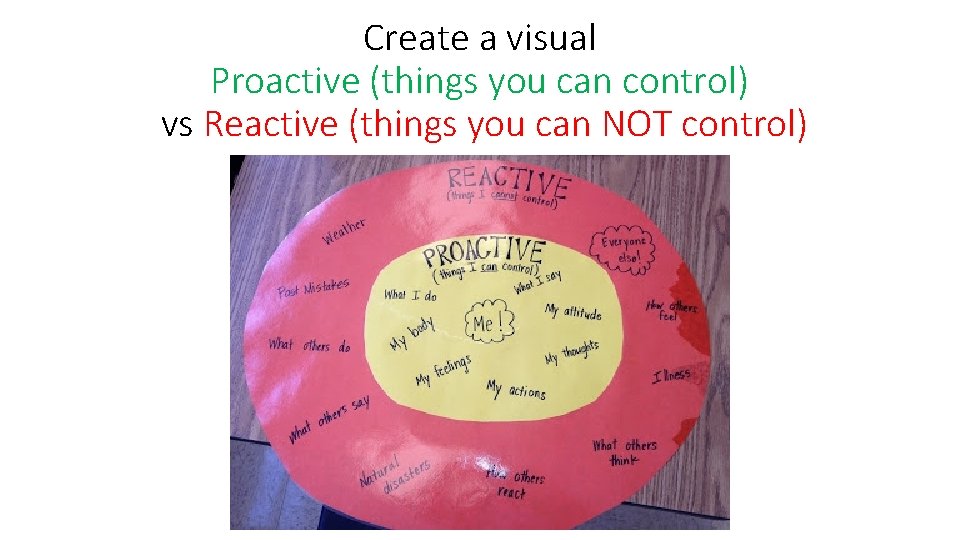
Create a visual Proactive (things you can control) vs Reactive (things you can NOT control)
Stool Game • Each person pick a number 1 -4 • Person must write answer on team paper and put on stool • 2 pts if get to stool first correct, 1 pt for everyone else who gets it correct • The stool is never in the same place
Person 1 Habit 1: 'Be Proactive' means what? A Take responsibility for your own life B Think everyone can win C Become an active pro athlete D Renew yourself regularly
Person 2 What's the opposite of being proactive? A Being inactive B Being reactive C Being active D None of the above
Person 3 Which is an example of REACTIVE (opposite to proactive)? A "It's just the way I am. " B"Decisions are based on possibility. " C"I'm the driver of my own life. " D"I am the force. "
Person 4 • Your best friend says something that hurts your feelings. • How would you handle this PROACTIVELY?
Person 1 • Change this REACTIVE statement “I got an F in that class because the teacher doesn’t like me” to a PROACTIVE one
Person 2 • Change this REACTIVE statement “I hate my boss he always gives the good shifts to other people” to a PROACTIVE one
Person 3 • Change this REACTIVE statement “My mom is always on my case when it’s not even my fault” to a PROACTIVE one
Person 4 • Change this REACTIVE statement “Ooo she’s making me mad the way she is looking at me” to a PROACTIVE one
Warm Up pg 26 1) What have you personally learned about habit 1 that you will apply to your life? 2) It takes ___days to change a habit
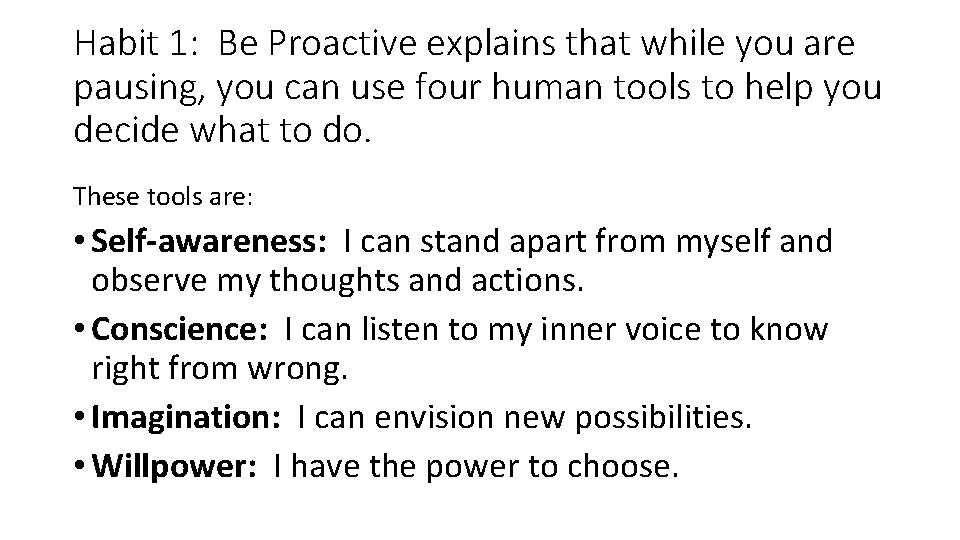
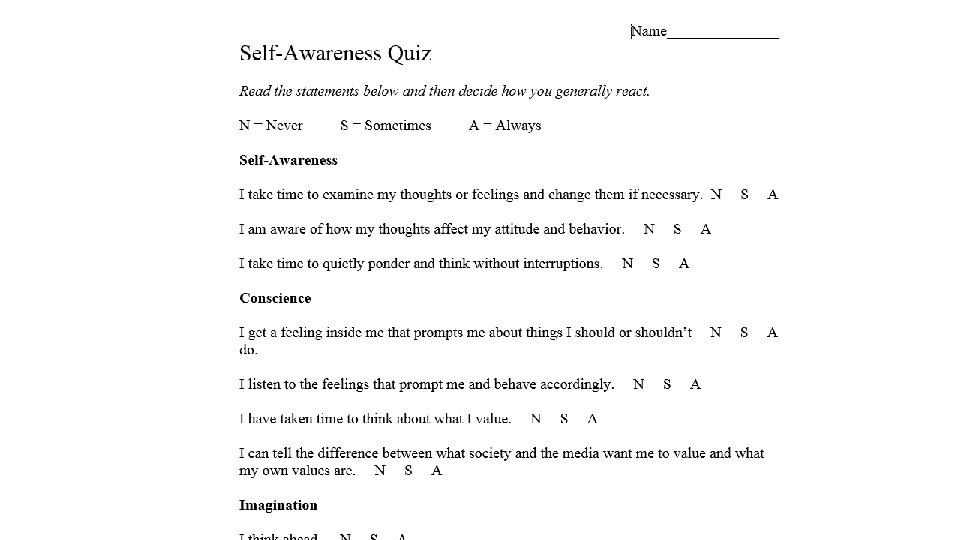
Habit 1: Be Proactive explains that while you are pausing, you can use four human tools to help you decide what to do. These tools are: • Self-awareness: I can stand apart from myself and observe my thoughts and actions. • Conscience: I can listen to my inner voice to know right from wrong. • Imagination: I can envision new possibilities. • Willpower: I have the power to choose.
Work on Habit 1 performance task
- Slides: 31