
Warm Up n Complete Edpuzzle on pedigrees n

- Slides: 25
Warm Up n Complete Edpuzzle on pedigrees n If you haven’t completed Edpuzzle from yesterday do so now n You will have 10 minutes before we start the notes
Karyotypes What are they? ? How do we use them?
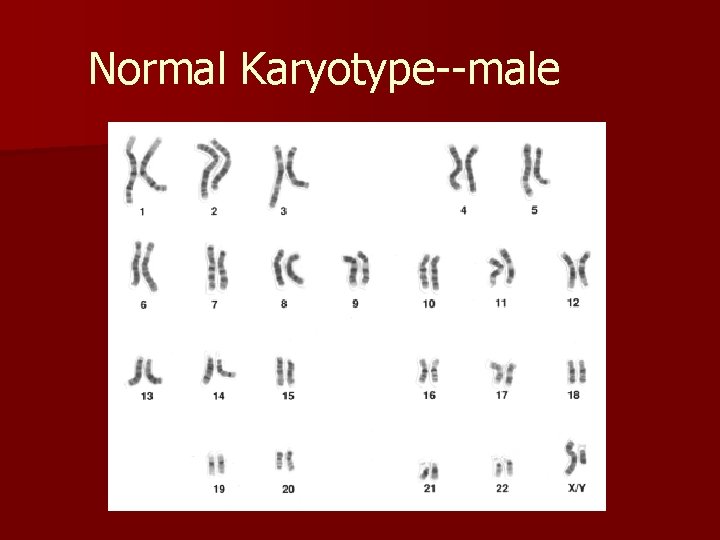
Normal Karyotype--male
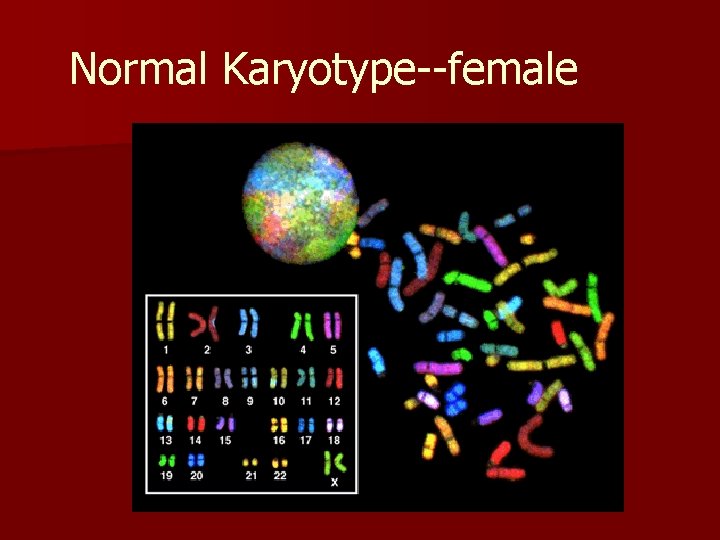
Normal Karyotype--female
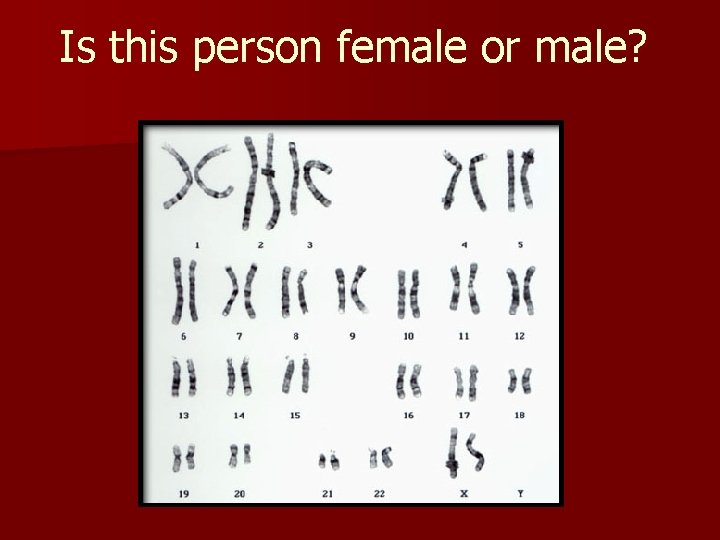
Is this person female or male?
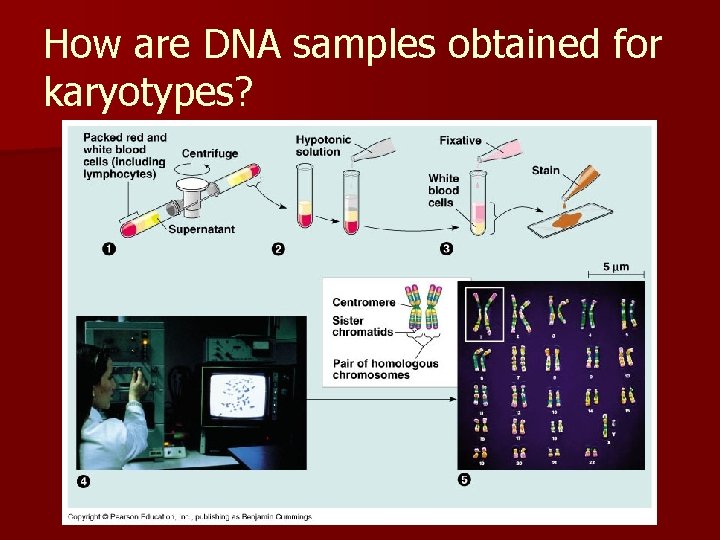
How are DNA samples obtained for karyotypes?
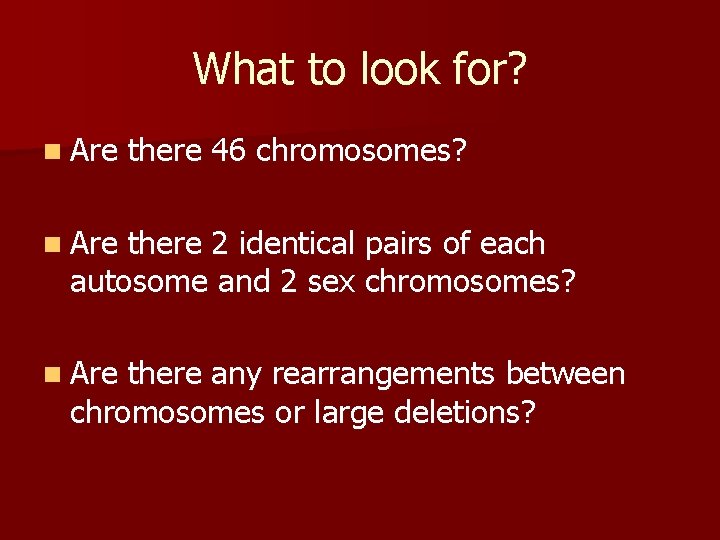
What to look for? n Are there 46 chromosomes? n Are there 2 identical pairs of each autosome and 2 sex chromosomes? n Are there any rearrangements between chromosomes or large deletions?
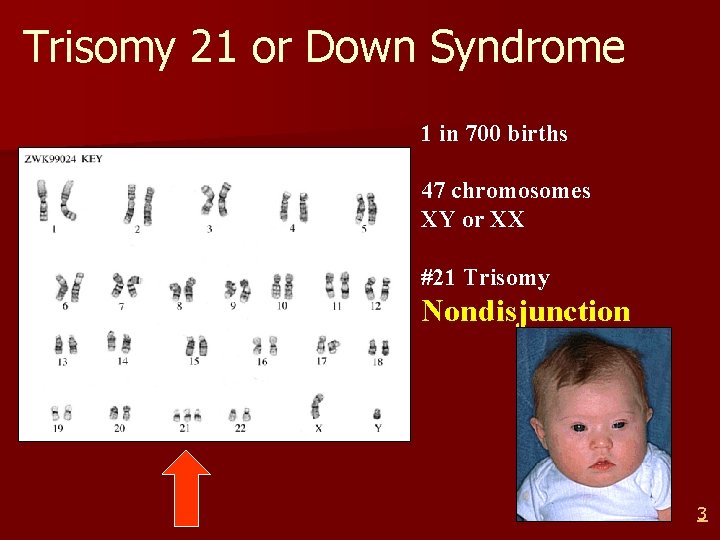
Trisomy 21 or Down Syndrome 1 in 700 births 47 chromosomes XY or XX #21 Trisomy Nondisjunction 3
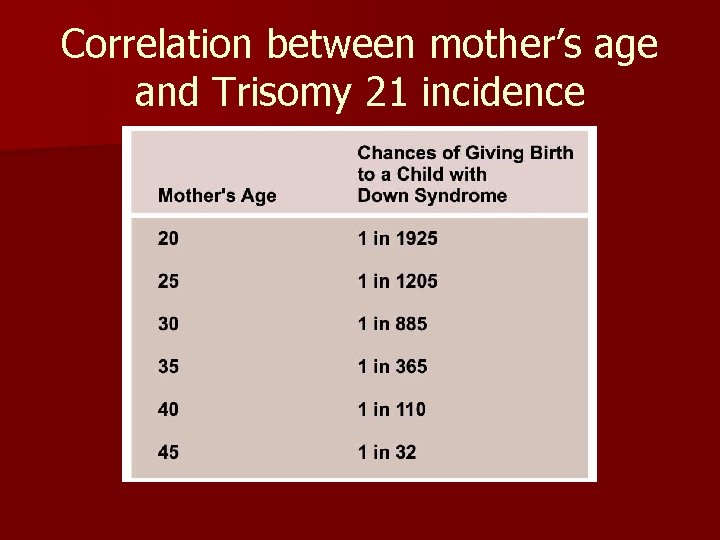
Correlation between mother’s age and Trisomy 21 incidence
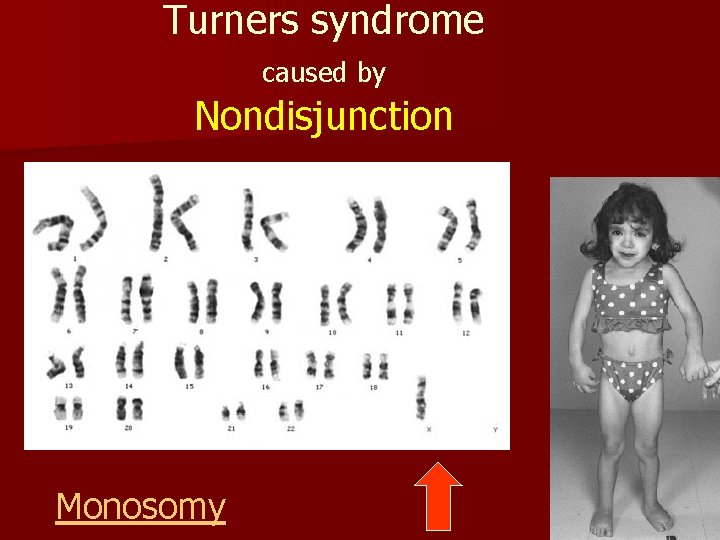
Turners syndrome caused by Nondisjunction Monosomy
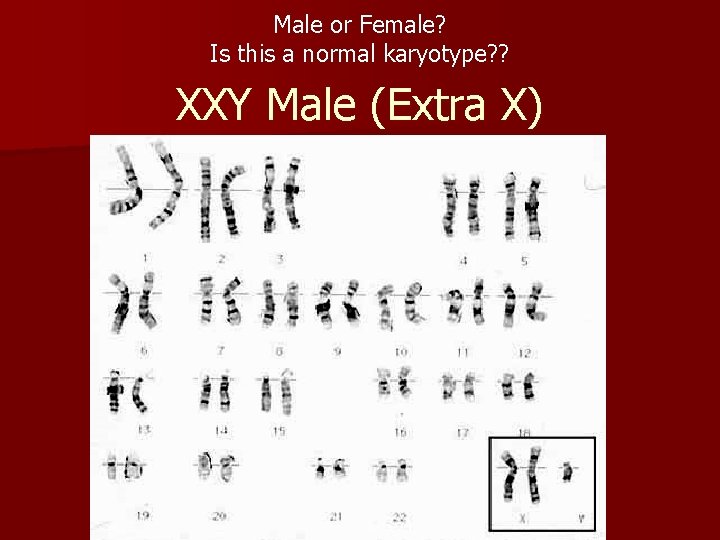
Male or Female? Is this a normal karyotype? ? XXY Male (Extra X)
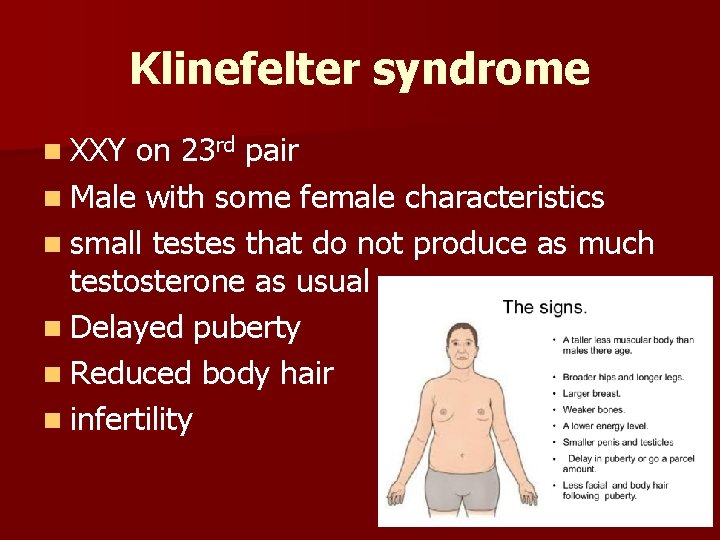
Klinefelter syndrome n XXY on 23 rd pair n Male with some female characteristics n small testes that do not produce as much testosterone as usual n Delayed puberty n Reduced body hair n infertility
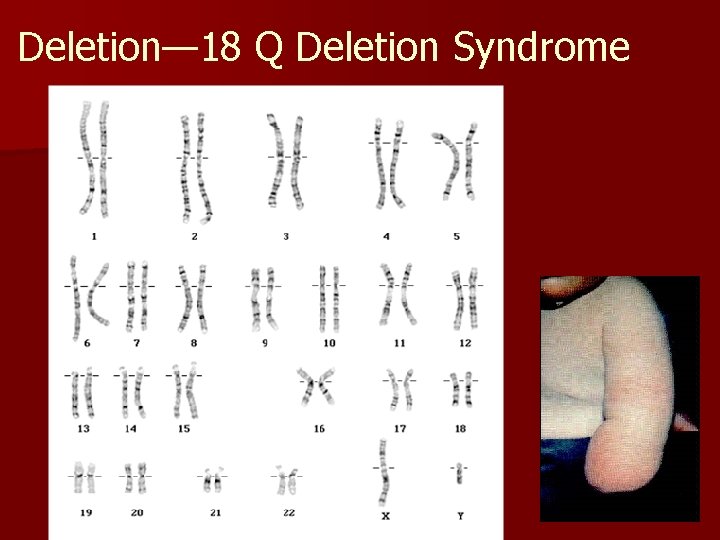
Deletion— 18 Q Deletion Syndrome
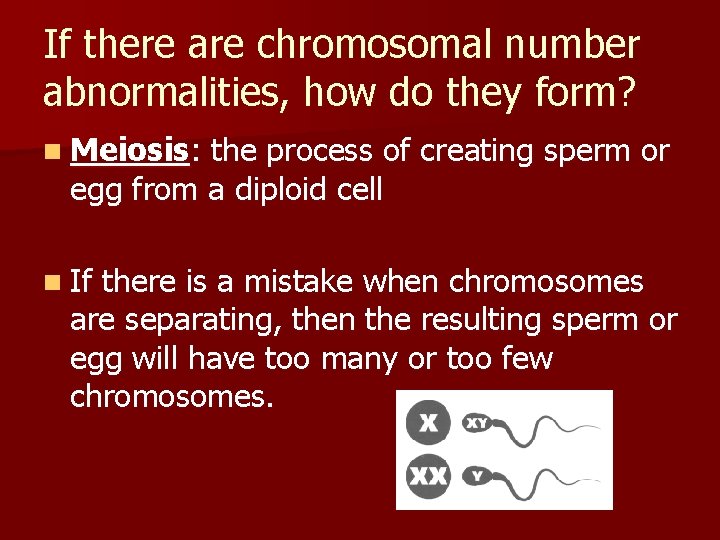
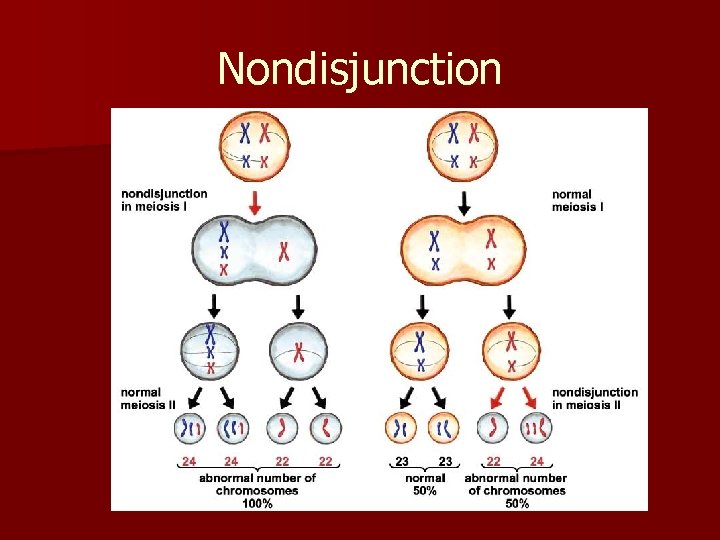
If there are chromosomal number abnormalities, how do they form? n Meiosis: the process of creating sperm or egg from a diploid cell n If there is a mistake when chromosomes are separating, then the resulting sperm or egg will have too many or too few chromosomes.
Nondisjunction
What we can’t see n Individual DNA strands or genes n The number of genes in any given area of a chromosome. n The presence or location of small mutations. (Scientists cannot predict diseases caused by small mutations within genes.
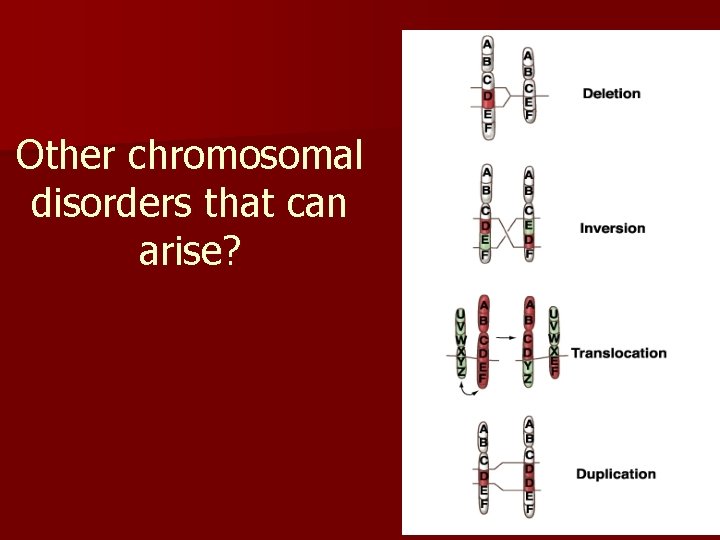
Other chromosomal disorders that can arise?
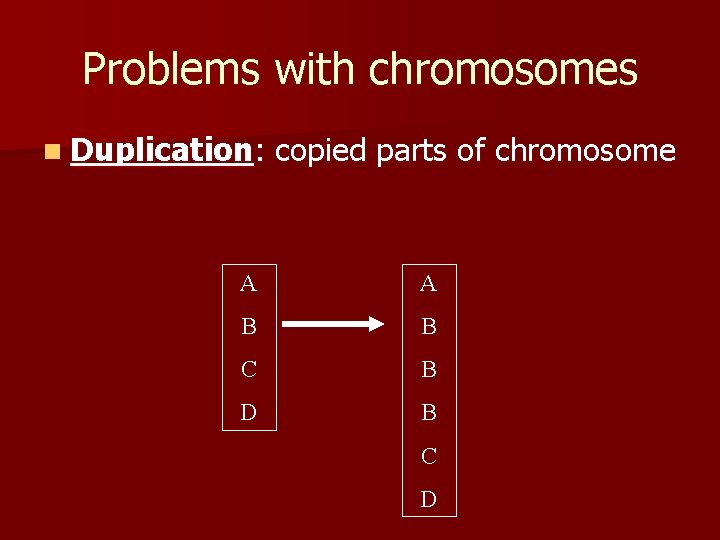
Problems with chromosomes n Duplication: copied parts of chromosome A A B B C B D B C D
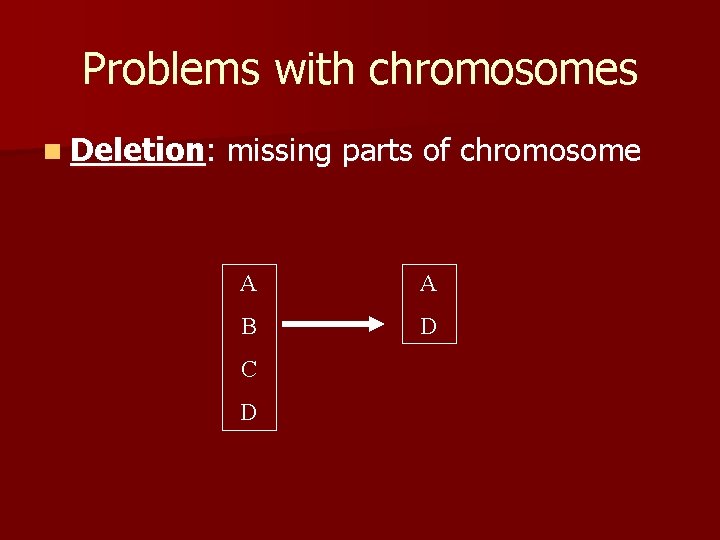
Problems with chromosomes n Deletion: missing parts of chromosome A A B D C D
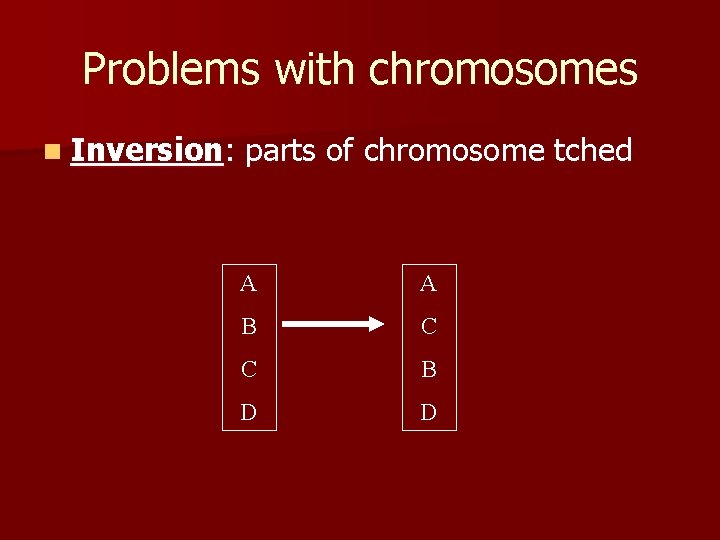
Problems with chromosomes n Inversion: parts of chromosome tched A A B C C B D D
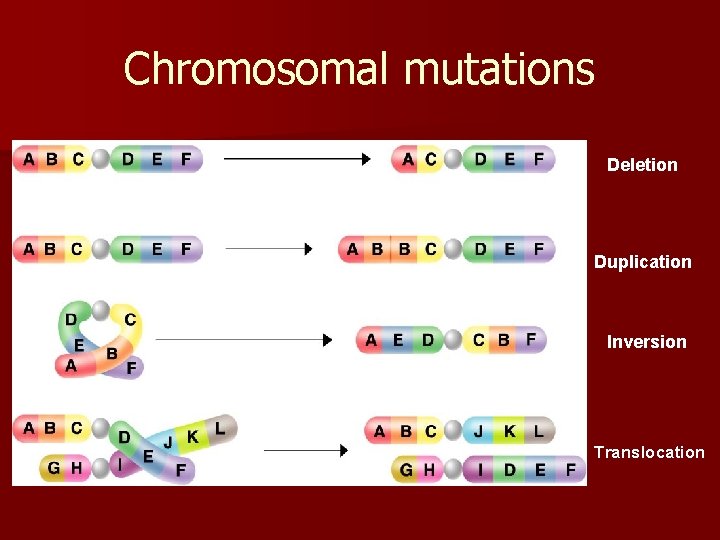
Chromosomal mutations Deletion Duplication Inversion Translocation
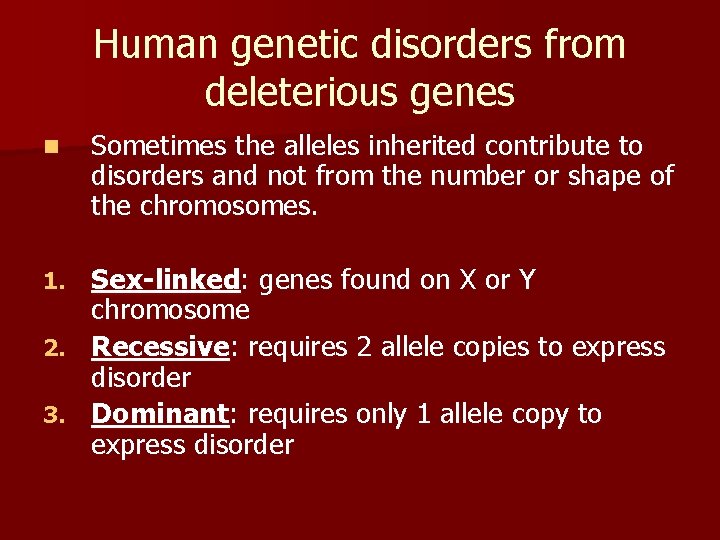
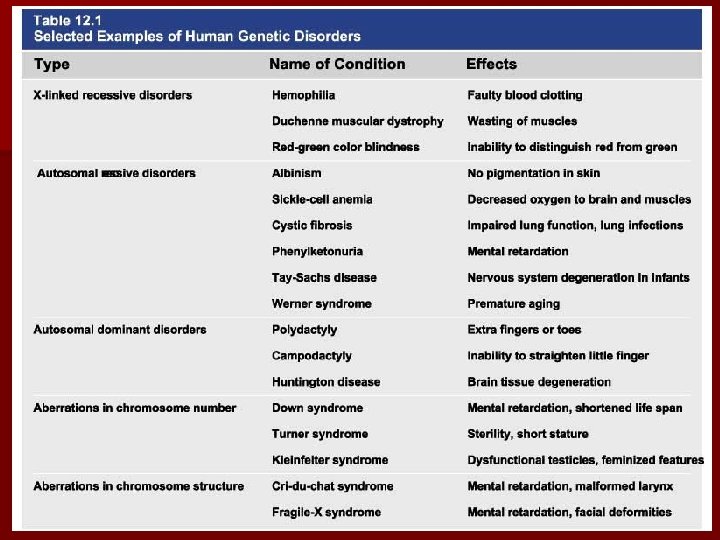
Human genetic disorders from deleterious genes n Sometimes the alleles inherited contribute to disorders and not from the number or shape of the chromosomes. Sex-linked: genes found on X or Y chromosome 2. Recessive: requires 2 allele copies to express disorder 3. Dominant: requires only 1 allele copy to express disorder 1.
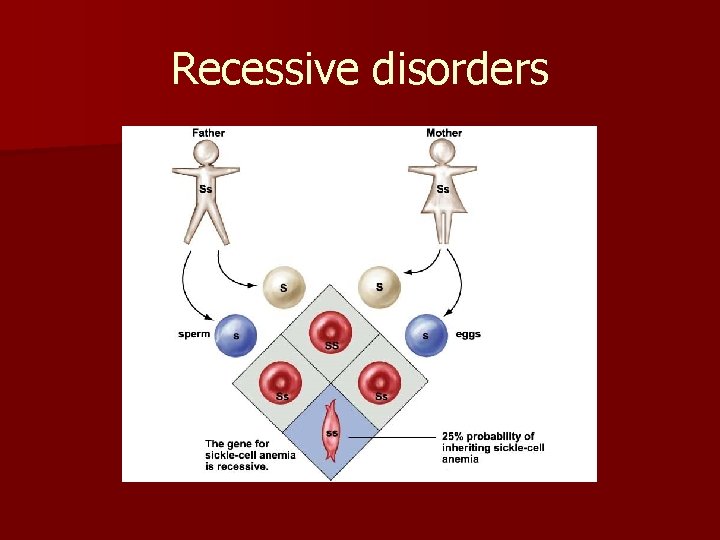
Recessive disorders
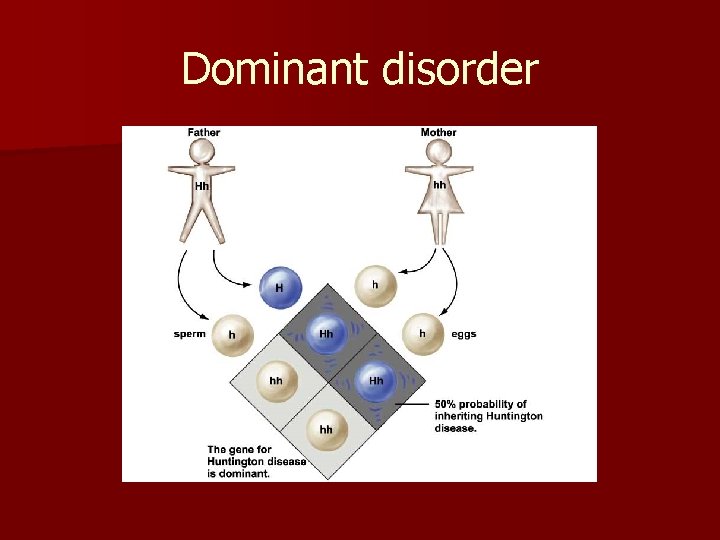
Dominant disorder