
Warm Up How does precipitation affect infiltration What
- Slides: 21
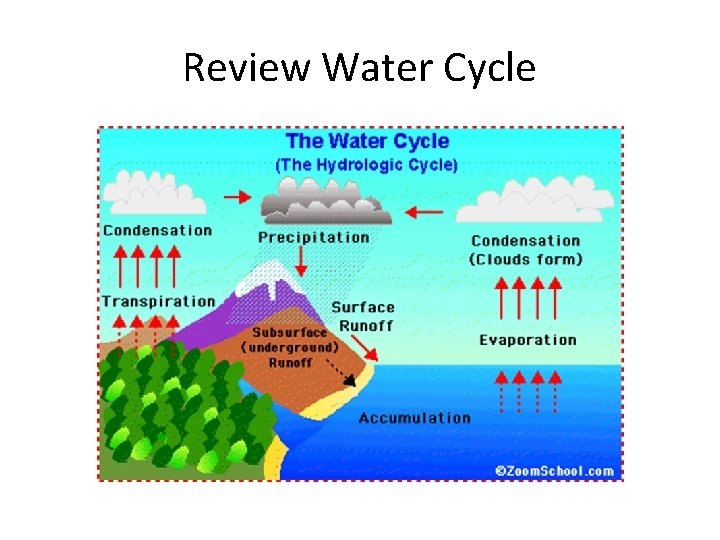
Warm Up • How does precipitation affect infiltration? • What is accumulation? • What does “cycle” mean when describing the water cycle? • Where is most of the water on Earth located? What kind of water is it? • What is another name for the water cycle? • Is there a difference between transpiration and evaporation? If so, what is it?
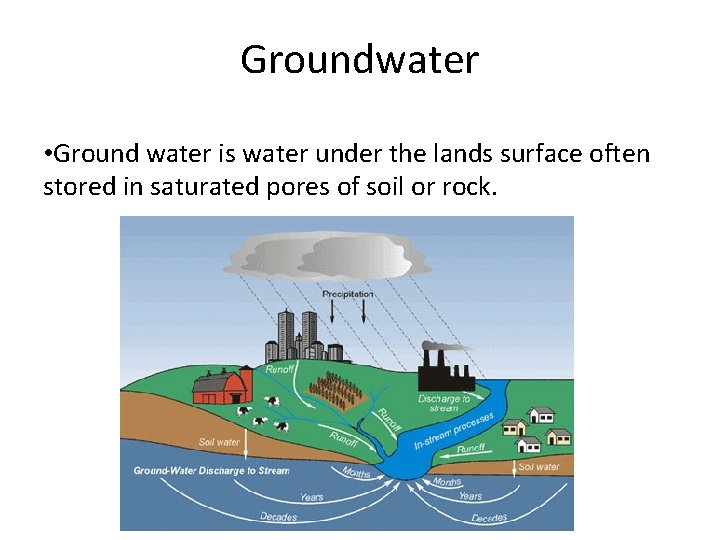
Groundwater • Ground water is water under the lands surface often stored in saturated pores of soil or rock.
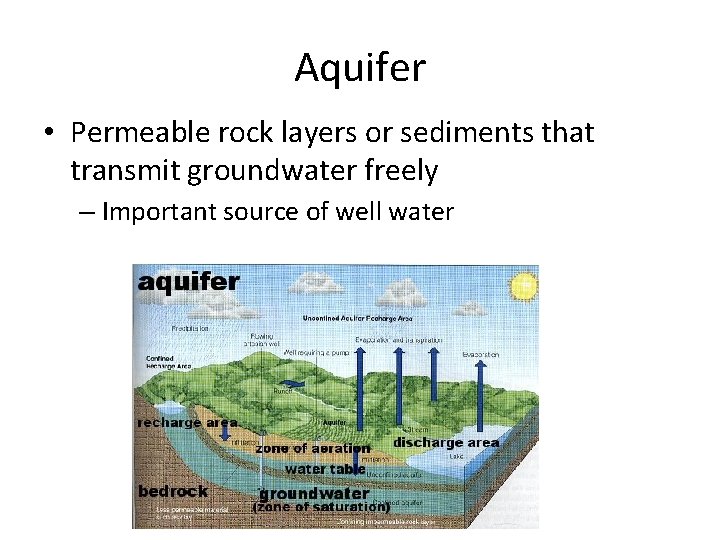
Aquifer • Permeable rock layers or sediments that transmit groundwater freely – Important source of well water
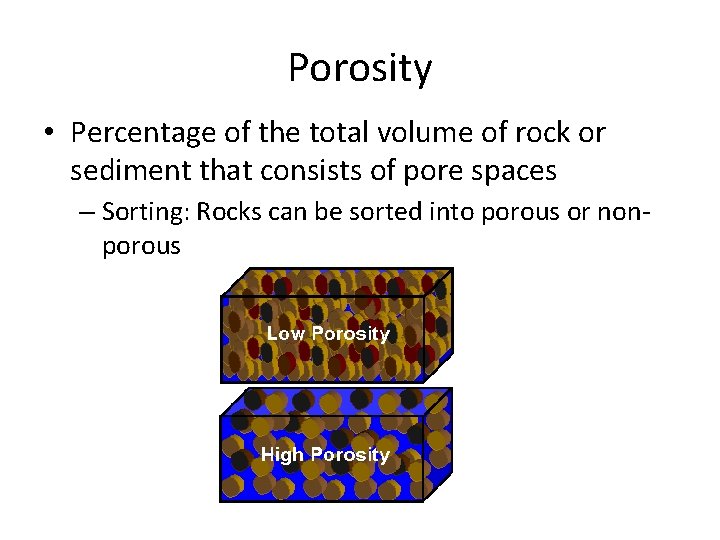
Porosity • Percentage of the total volume of rock or sediment that consists of pore spaces – Sorting: Rocks can be sorted into porous or nonporous
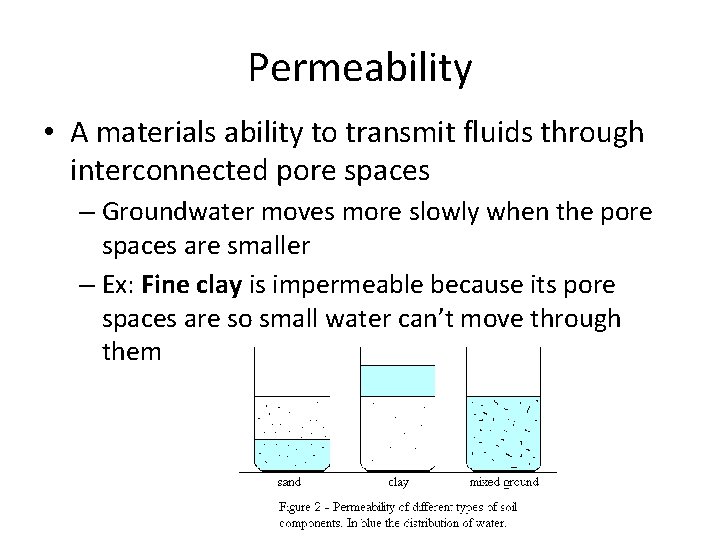
Permeability • A materials ability to transmit fluids through interconnected pore spaces – Groundwater moves more slowly when the pore spaces are smaller – Ex: Fine clay is impermeable because its pore spaces are so small water can’t move through them
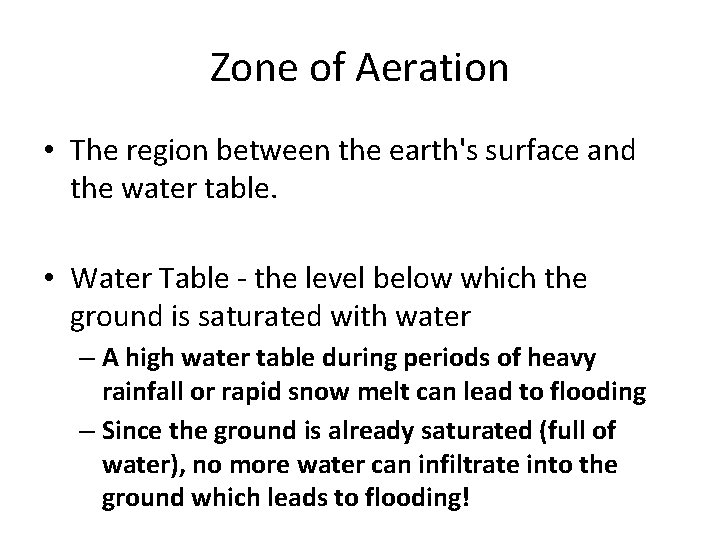
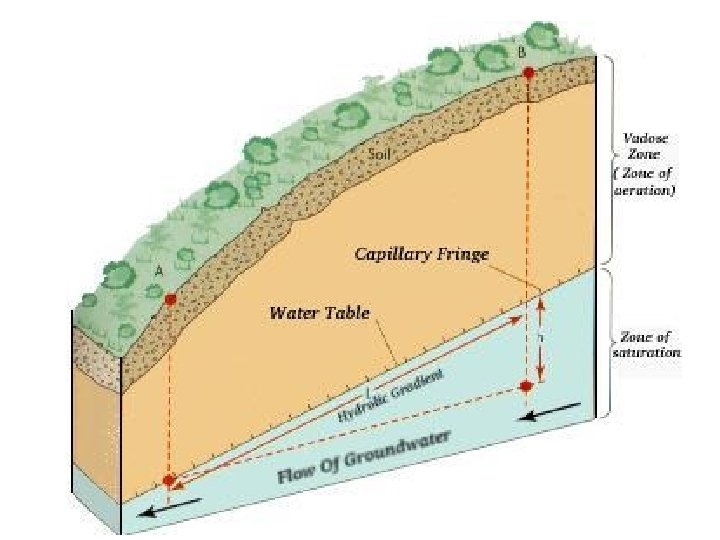
Zone of Aeration • The region between the earth's surface and the water table. • Water Table - the level below which the ground is saturated with water – A high water table during periods of heavy rainfall or rapid snow melt can lead to flooding – Since the ground is already saturated (full of water), no more water can infiltrate into the ground which leads to flooding!
Zone of Saturation: • Area where water fills all of the open spaces in sediment and rock – Groundwater is within this zone
Independent Activity (1 st) • Research the 1. Ogallala Aquifer AND 2. the San Joaquin Valley • Why did they over pump? • What happened as a result? • Note any other interesting facts or cool information that you find. • WRITE DOWN YOUR FINDINGS!! THIS WILL BE A PARTICIPATION GRADE!! • Don’t forget to answer the EQ……. .
Text-Based Questions 1. 2. 3. 4. 5. 6. 7. 8. 9. According to the article, what is subsistence? What are the causes? What language or phrases does the author use to let you infer about his/her stand on subsistence? Why did the author include the case studies? Paraphrase the “Role of Science” in relation to subsistence? What is the relationship between “mining groundwater” and “collapsing cavities”? What conclusions can you draw about the role of science to stop subsistence? Based on the text, what is the meaning of the word “overdraft”? List the possible sequence of events that cause a sinkhole to occur. After reading the entire article, why do you think the author chose the 8 images that are included with the article?
Warm Up • Complete an illustration that represents groundwater, zone of aeration, zone of saturation, and a water table. Be sure that your illustration has all parts correctly labeled. In your illustration, show where some of the ground is clay and where some of the ground is sand then label the porosity and permeability differences by saying for example: “High porosity” here or “low porosity” there.
Review Water Cycle
GROUNDWATER AND SURFACE WATER INTERACT THROUGH WELLS AND SPRINGS
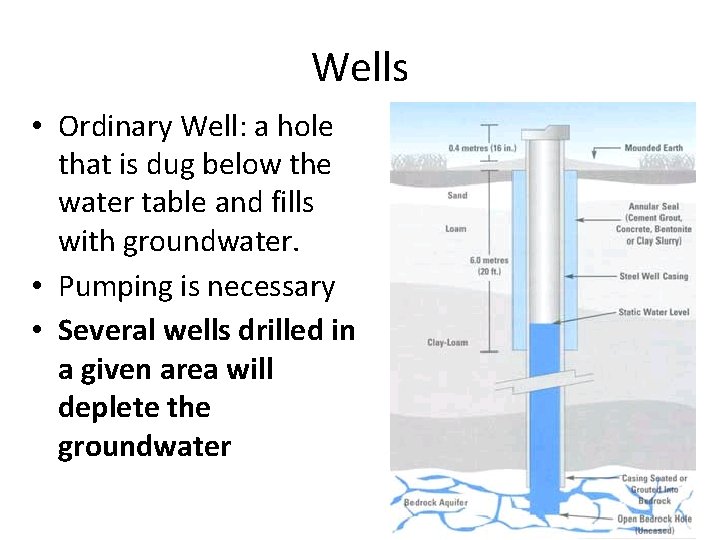
Wells • Ordinary Well: a hole that is dug below the water table and fills with groundwater. • Pumping is necessary • Several wells drilled in a given area will deplete the groundwater
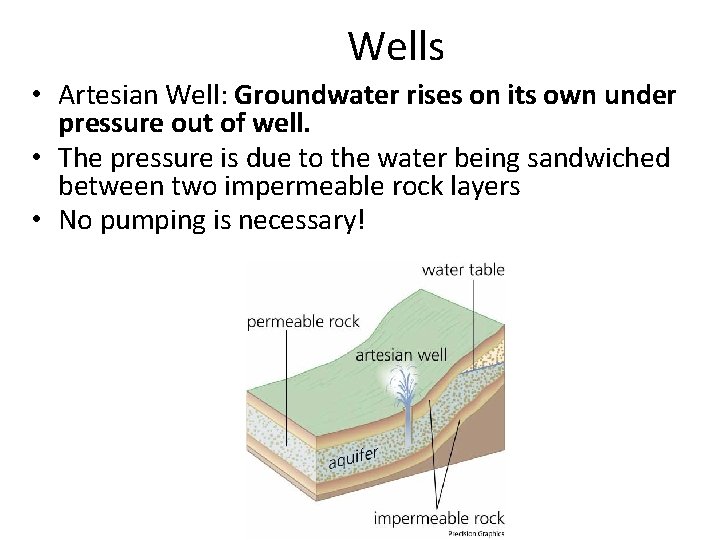
Wells • Artesian Well: Groundwater rises on its own under pressure out of well. • The pressure is due to the water being sandwiched between two impermeable rock layers • No pumping is necessary!
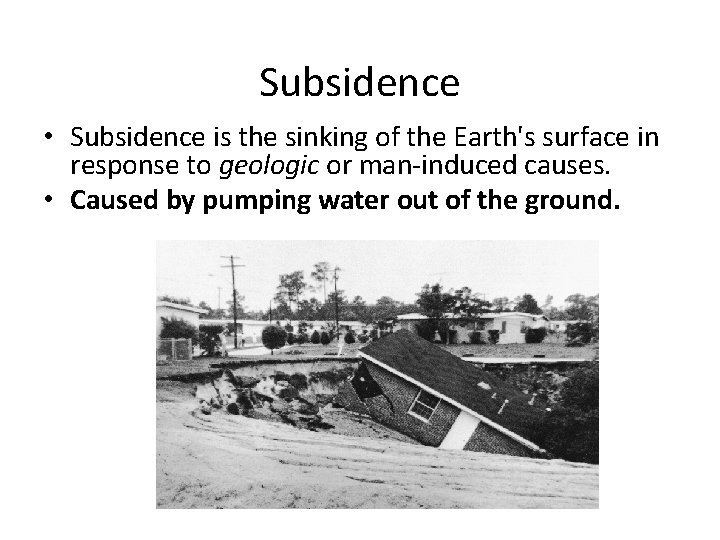
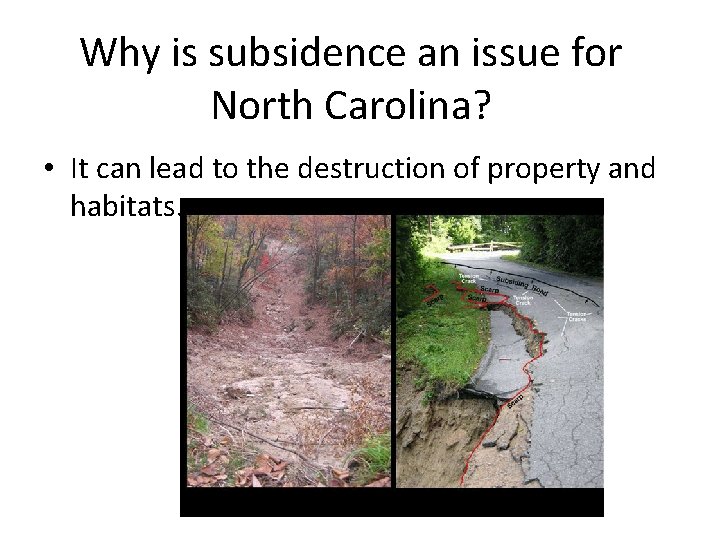
Subsidence • Subsidence is the sinking of the Earth's surface in response to geologic or man-induced causes. • Caused by pumping water out of the ground.
Why is subsidence an issue for North Carolina? • It can lead to the destruction of property and habitats.
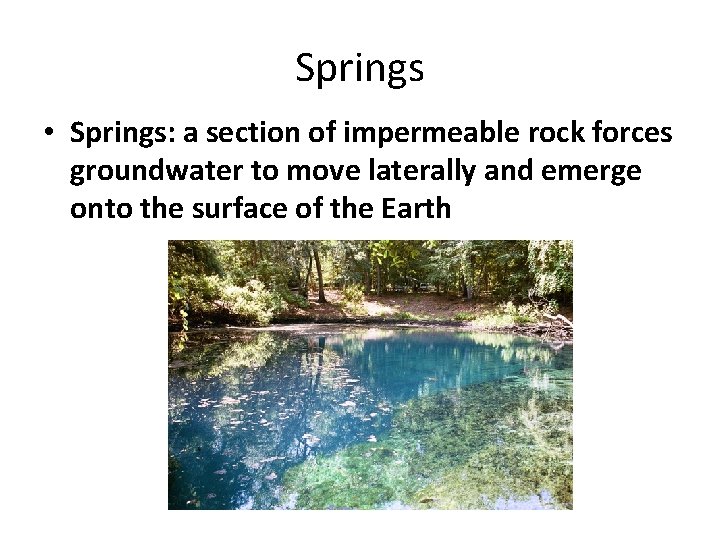
Springs • Springs: a section of impermeable rock forces groundwater to move laterally and emerge onto the surface of the Earth
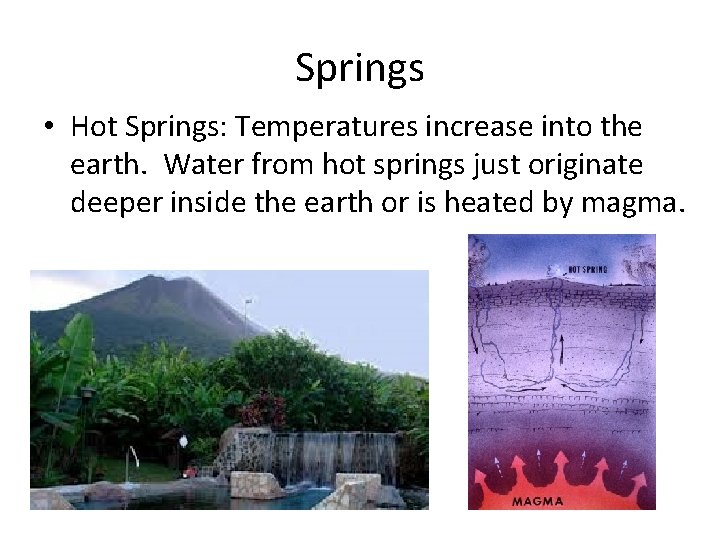
Springs • Hot Springs: Temperatures increase into the earth. Water from hot springs just originate deeper inside the earth or is heated by magma.
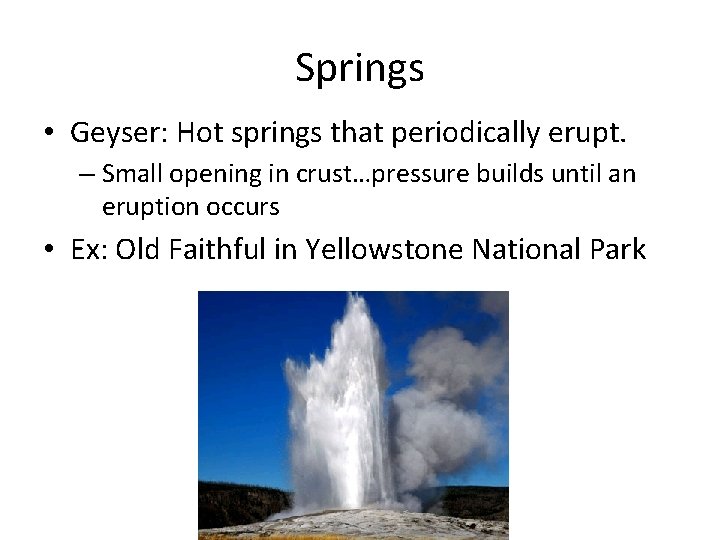
Springs • Geyser: Hot springs that periodically erupt. – Small opening in crust…pressure builds until an eruption occurs • Ex: Old Faithful in Yellowstone National Park
Groundwater Pollution • Ground water is renewable; yet limited • Ways groundwater can be polluted: – Fertilizers – Pesticides – Sewage systems – Industrial chemicals – Arsenic (naturally occurring, factories, mining, and preserving bodies)