
WARM UP Happy Wednesday 1 Get your binders
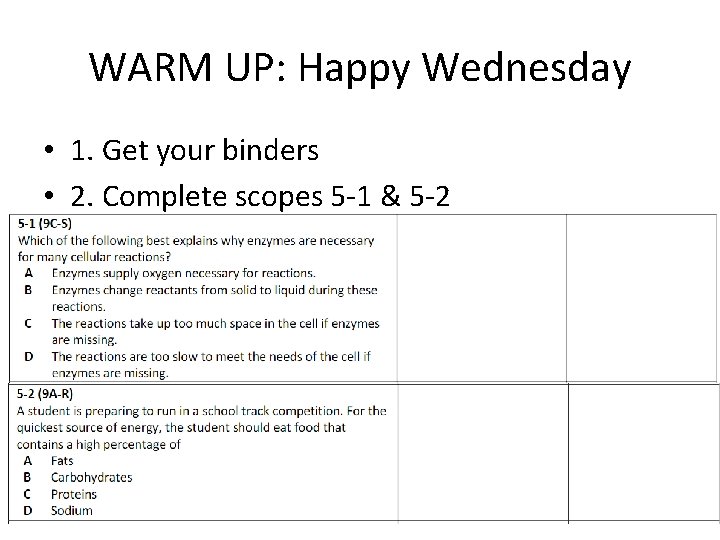
WARM UP: Happy Wednesday • 1. Get your binders • 2. Complete scopes 5 -1 & 5 -2
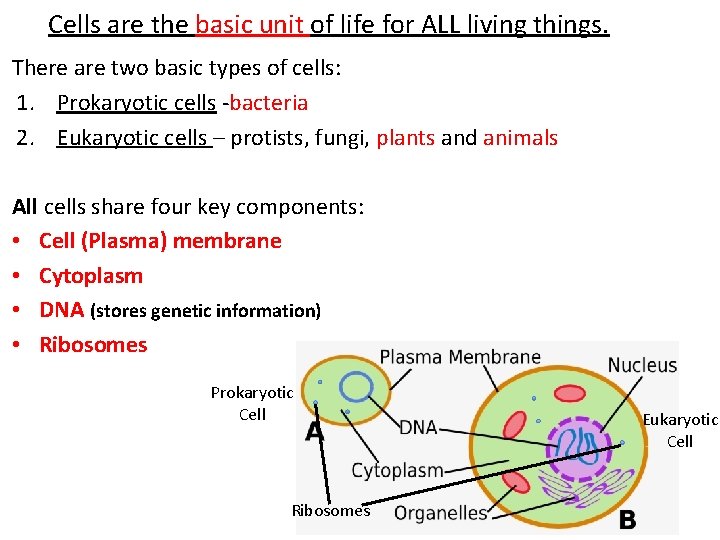
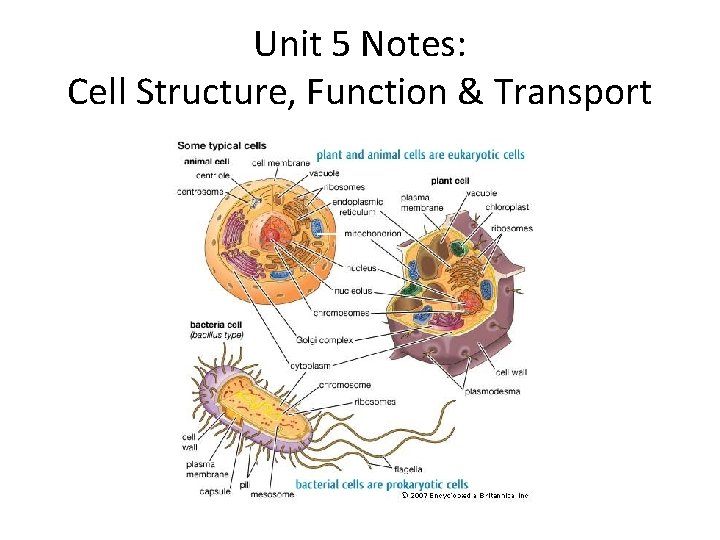
Cells are the basic unit of life for ALL living things. There are two basic types of cells: 1. Prokaryotic cells -bacteria 2. Eukaryotic cells – protists, fungi, plants and animals All cells share four key components: • Cell (Plasma) membrane • Cytoplasm • DNA (stores genetic information) • Ribosomes Prokaryotic Cell Ribosomes Eukaryotic Cell
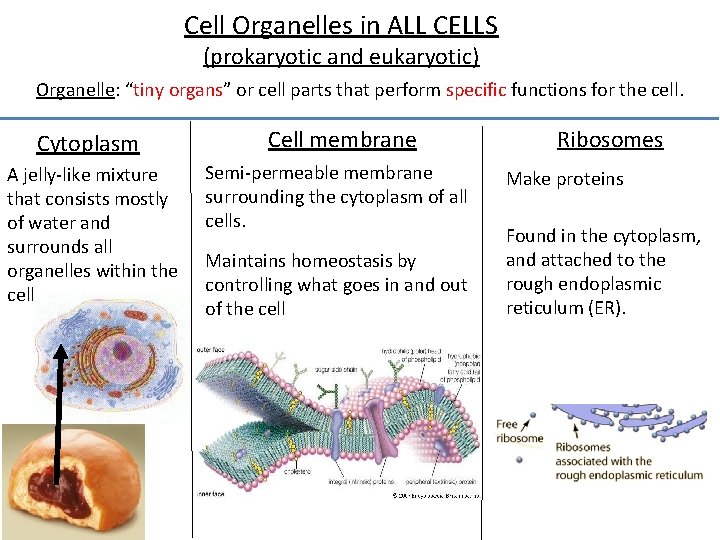
Cell Organelles in ALL CELLS (prokaryotic and eukaryotic) Organelle: “tiny organs” or cell parts that perform specific functions for the cell. Cytoplasm Cell membrane A jelly-like mixture that consists mostly of water and surrounds all organelles within the cell. Semi-permeable membrane surrounding the cytoplasm of all cells. Maintains homeostasis by controlling what goes in and out of the cell Ribosomes Make proteins Found in the cytoplasm, and attached to the rough endoplasmic reticulum (ER).
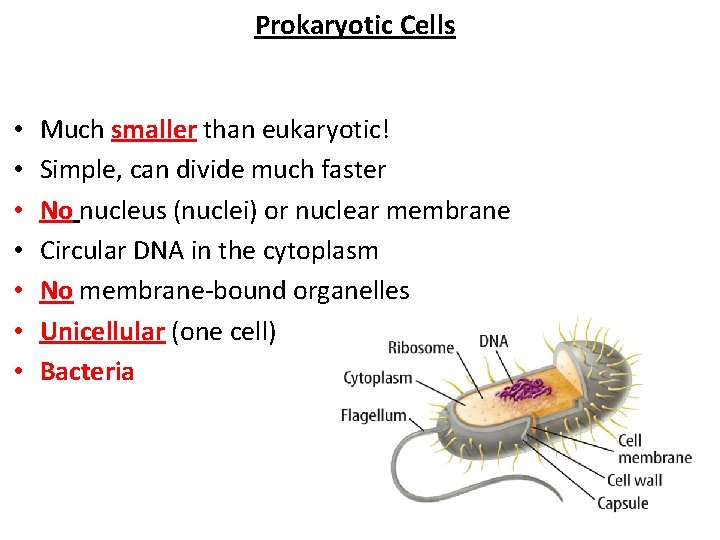
Prokaryotic Cells • • Much smaller than eukaryotic! Simple, can divide much faster No nucleus (nuclei) or nuclear membrane Circular DNA in the cytoplasm No membrane-bound organelles Unicellular (one cell) Bacteria
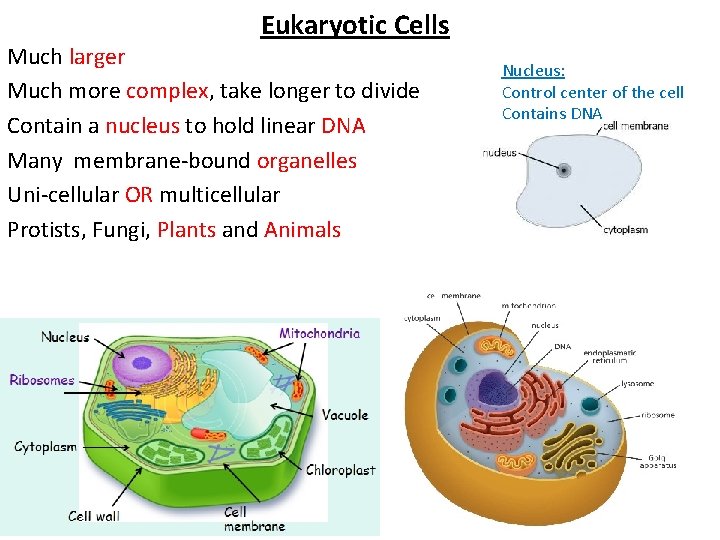
Eukaryotic Cells Much larger Much more complex, take longer to divide Contain a nucleus to hold linear DNA Many membrane-bound organelles Uni-cellular OR multicellular Protists, Fungi, Plants and Animals Nucleus: Control center of the cell Contains DNA
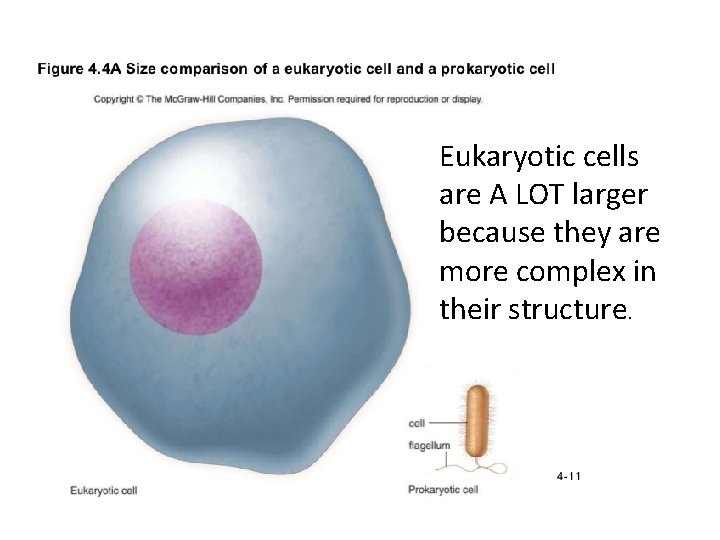
Eukaryotic cells are A LOT larger because they are more complex in their structure.
Video Amoeba Sisters Prokaryotic v. Eukaryotic • https: //youtu. be/Pxujitlv 8 wc • https: //youtu. be/URUJD 5 NEXC 8 – End at 1: 23 – Time allowing
Warm Up • 1. Get your binders, pull out your notes • 2. Pull out your scopes sheet and answer the following questions on the BOTTOM of the paper… 1. What FOUR things do all cells share in common? 2. What organisms are the ONLY types of prokaryotic cells? 3. List THREE ways that eukaryotic cells are different than prokaryotic cells.
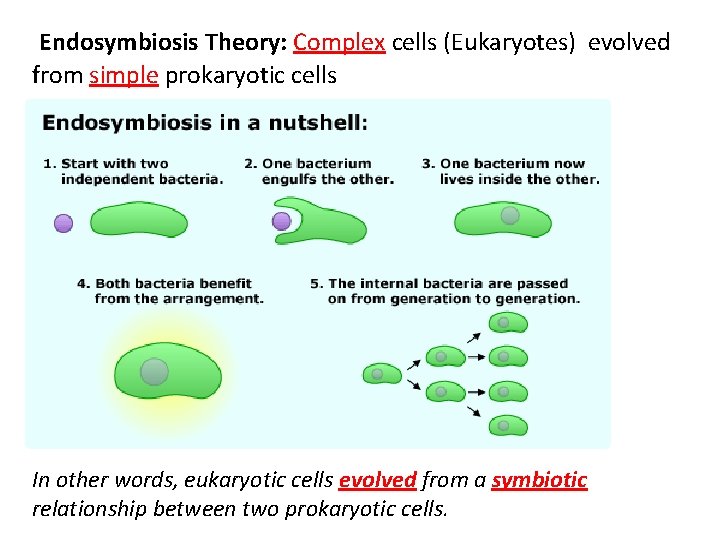
Endosymbiosis Theory: Complex cells (Eukaryotes) evolved from simple prokaryotic cells In other words, eukaryotic cells evolved from a symbiotic relationship between two prokaryotic cells.
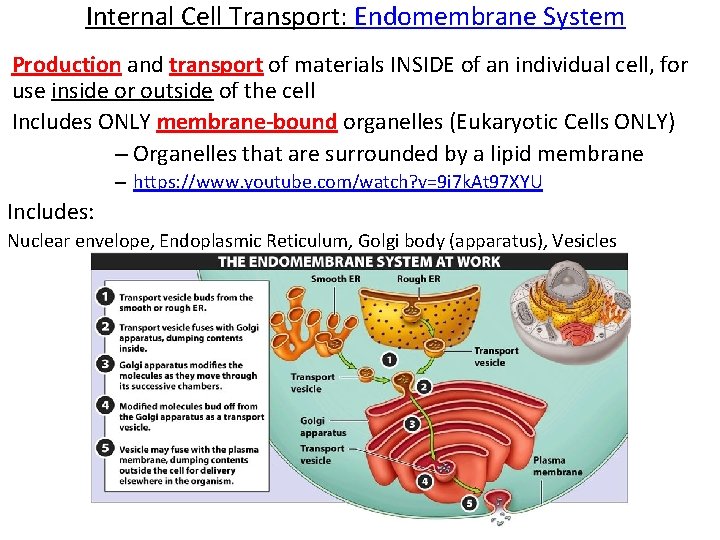
Internal Cell Transport: Endomembrane System Production and transport of materials INSIDE of an individual cell, for use inside or outside of the cell Includes ONLY membrane-bound organelles (Eukaryotic Cells ONLY) – Organelles that are surrounded by a lipid membrane – https: //www. youtube. com/watch? v=9 i 7 k. At 97 XYU Includes: Nuclear envelope, Endoplasmic Reticulum, Golgi body (apparatus), Vesicles
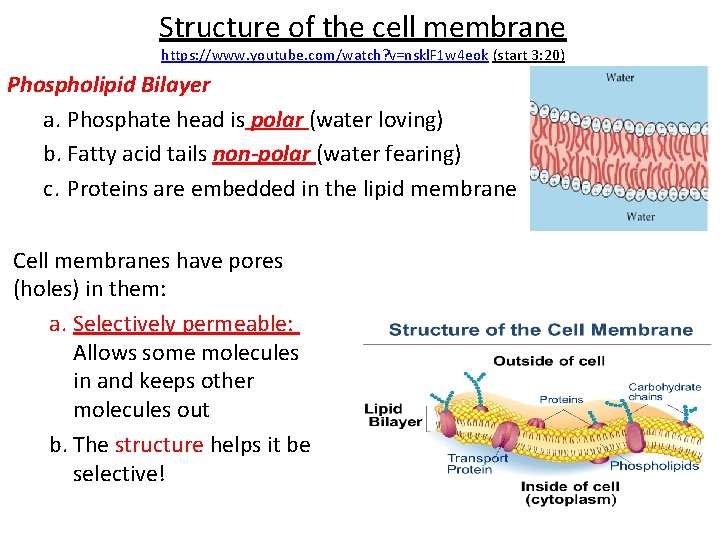
Structure of the cell membrane https: //www. youtube. com/watch? v=nskl. F 1 w 4 eok (start 3: 20) Phospholipid Bilayer a. Phosphate head is polar (water loving) b. Fatty acid tails non-polar (water fearing) c. Proteins are embedded in the lipid membrane Cell membranes have pores (holes) in them: a. Selectively permeable: Allows some molecules in and keeps other molecules out b. The structure helps it be selective!
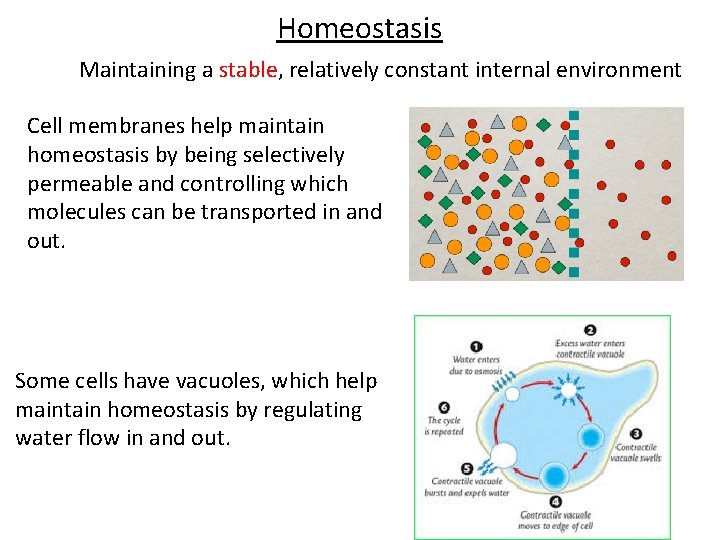
Homeostasis Maintaining a stable, relatively constant internal environment Cell membranes help maintain homeostasis by being selectively permeable and controlling which molecules can be transported in and out. Some cells have vacuoles, which help maintain homeostasis by regulating water flow in and out.
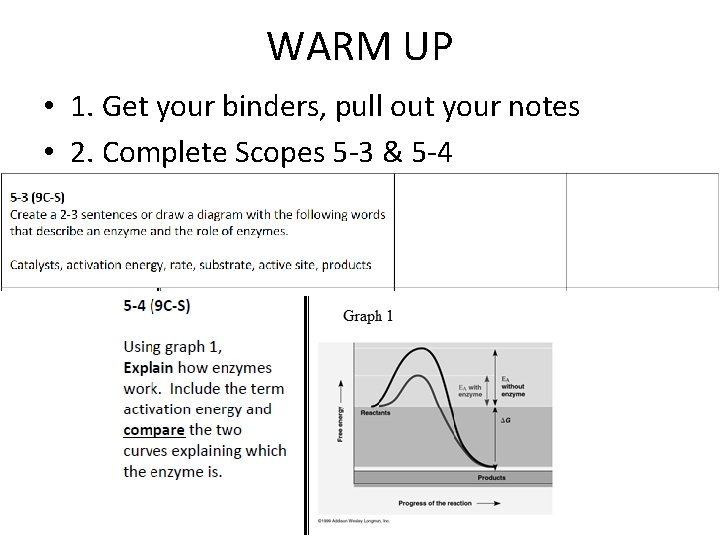
WARM UP • 1. Get your binders, pull out your notes • 2. Complete Scopes 5 -3 & 5 -4
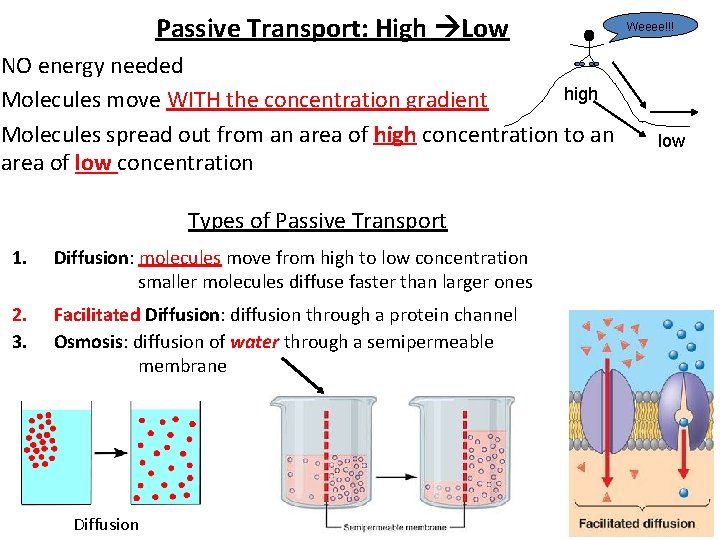
Passive Transport: High Low NO energy needed high Molecules move WITH the concentration gradient Molecules spread out from an area of high concentration to an area of low concentration Types of Passive Transport 1. Diffusion: molecules move from high to low concentration smaller molecules diffuse faster than larger ones 2. 3. Facilitated Diffusion: diffusion through a protein channel Osmosis: diffusion of water through a semipermeable membrane Diffusion Weeee!!! low
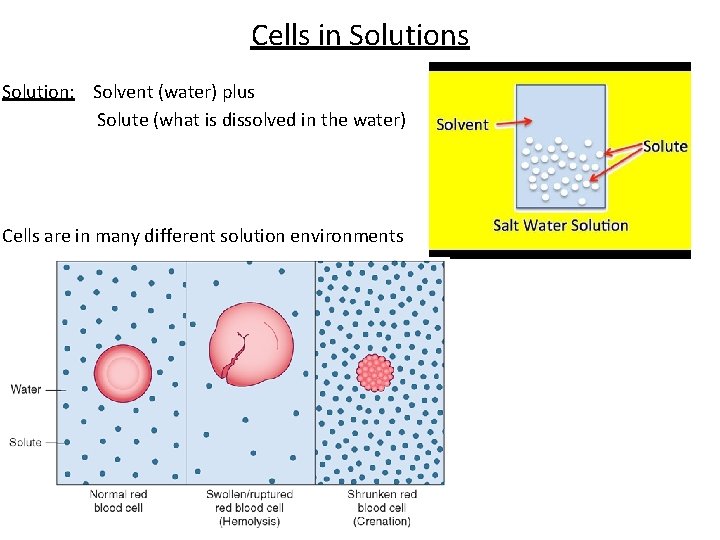
Cells in Solutions Solution: Solvent (water) plus Solute (what is dissolved in the water) Cells are in many different solution environments
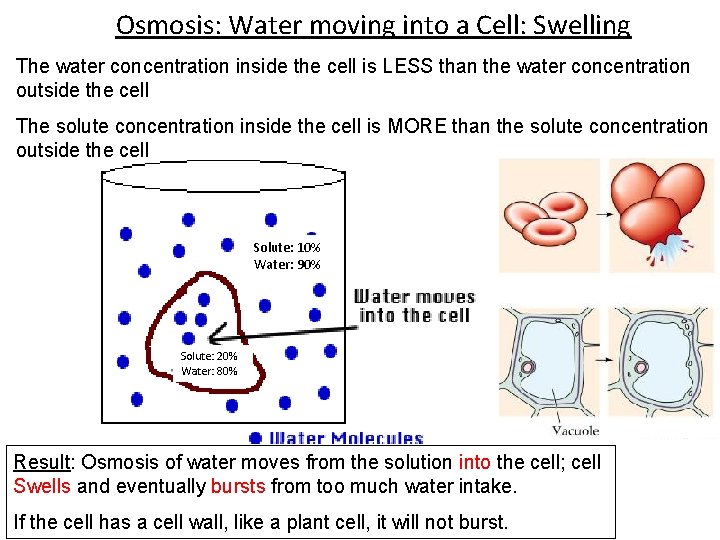
Osmosis: Water moving into a Cell: Swelling The water concentration inside the cell is LESS than the water concentration outside the cell The solute concentration inside the cell is MORE than the solute concentration outside the cell Solute: 10% Water: 90% Solute: 20% Water: 80% Result: Osmosis of water moves from the solution into the cell; cell Swells and eventually bursts from too much water intake. If the cell has a cell wall, like a plant cell, it will not burst.
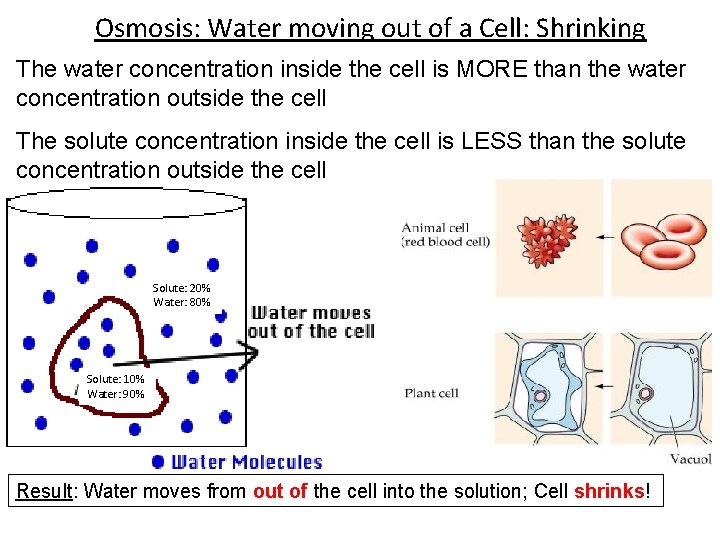
Osmosis: Water moving out of a Cell: Shrinking The water concentration inside the cell is MORE than the water concentration outside the cell The solute concentration inside the cell is LESS than the solute concentration outside the cell Solute: 20% Water: 80% Solute: 10% Water: 90% Result: Water moves from out of the cell into the solution; Cell shrinks!
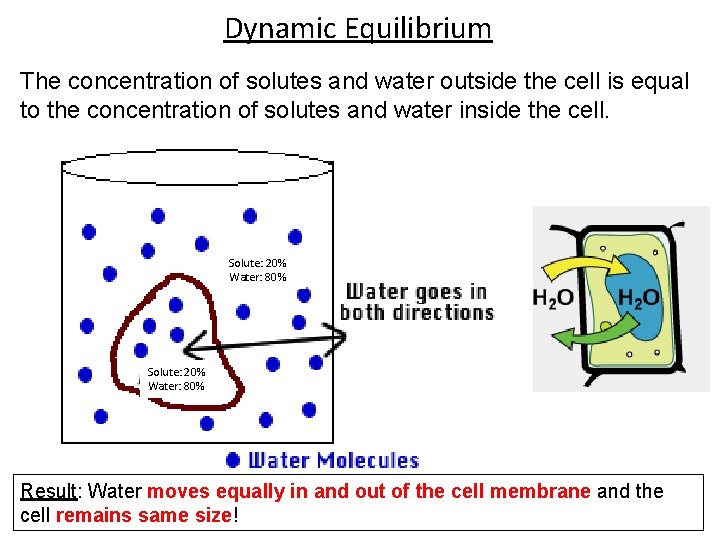
Dynamic Equilibrium The concentration of solutes and water outside the cell is equal to the concentration of solutes and water inside the cell. Solute: 20% Water: 80% Result: Water moves equally in and out of the cell membrane and the cell remains same size!
Osmosis Videos • Amoeba Sisters Video (Osmosis) Start to 3: 00, 3: 50 -6: 00 (blood cells and fish cells), 7: 39 -8: 21 (slug cells) https: //youtu. be/Ia. Z 8 Mt. F 3 C 6 M • Paramecium Https: //www. youtube. com/watch? v=Ks 2 h 2 ZSg. PZ 0 • Diffusion https: //www. youtube. com/watch? v=c_IYK 8 sy 0 QA
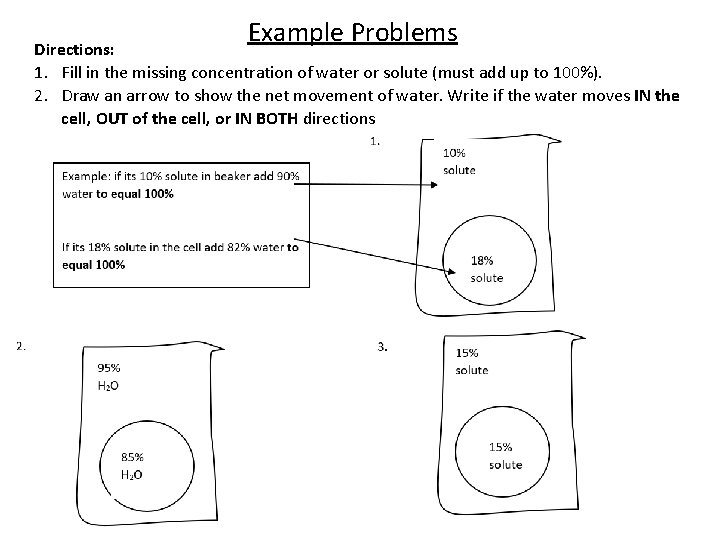
Example Problems Directions: 1. Fill in the missing concentration of water or solute (must add up to 100%). 2. Draw an arrow to show the net movement of water. Write if the water moves IN the cell, OUT of the cell, or IN BOTH directions
Happy Friday! LAB day Warm Up: Think about the terms/questions below. Be ready to discuss each. • Osmosis – What causes a cell to shrink? – What causes a cell to swell? – Describe water movement if the shape of the cell remained the same? • Diffusion • Semi-permeable • Passive Transport
Happy Thursday! Warm Up: SCOPES 5 -5
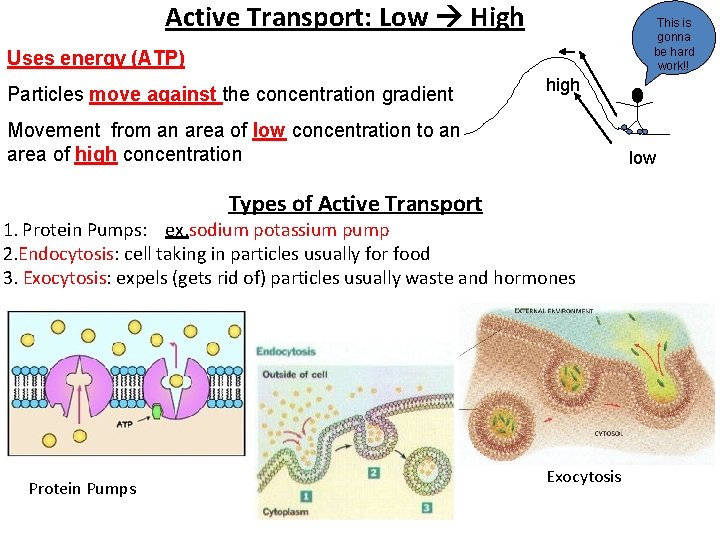
Active Transport: Low High This is gonna be hard work!! Uses energy (ATP) Particles move against the concentration gradient high Movement from an area of low concentration to an area of high concentration low Types of Active Transport 1. Protein Pumps: ex. sodium potassium pump 2. Endocytosis: cell taking in particles usually for food 3. Exocytosis: expels (gets rid of) particles usually waste and hormones Protein Pumps Exocytosis
• Cell transport Amoeba Sisters https: //youtu. be/Ptmlvtei 8 hw • Start 0: 56 – 7: 27
Unit 5 Notes: Cell Structure, Function & Transport
- Slides: 25