
Warm up 21 Plate boundary movements and their
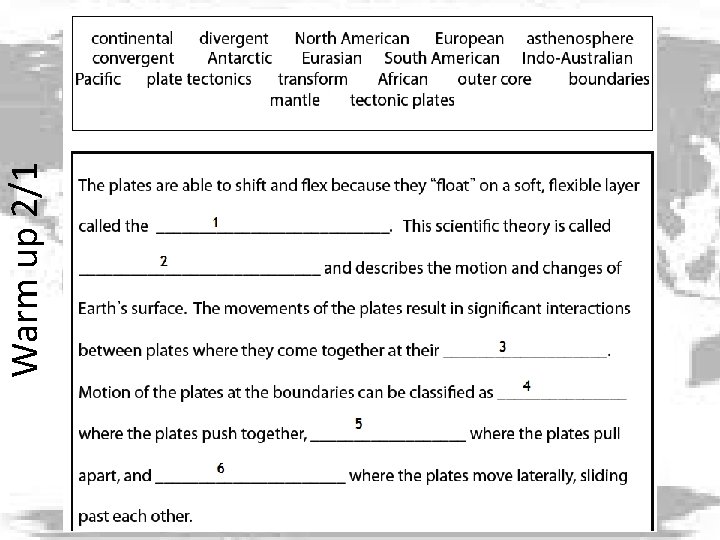
Warm up 2/1
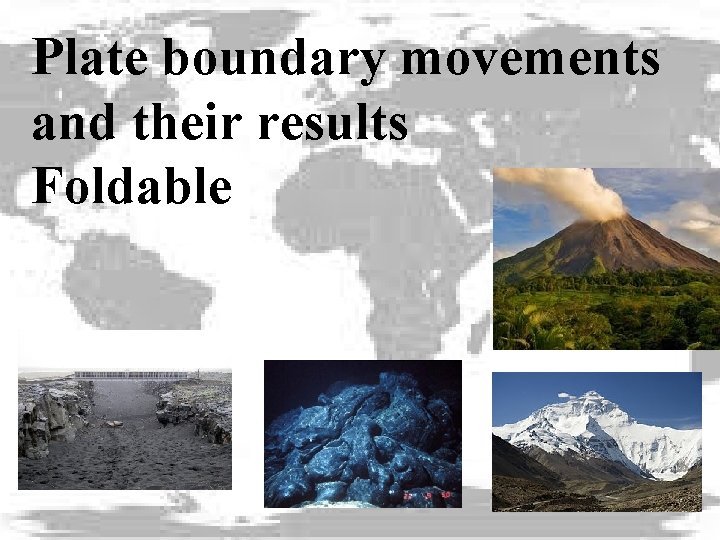
Plate boundary movements and their results Foldable
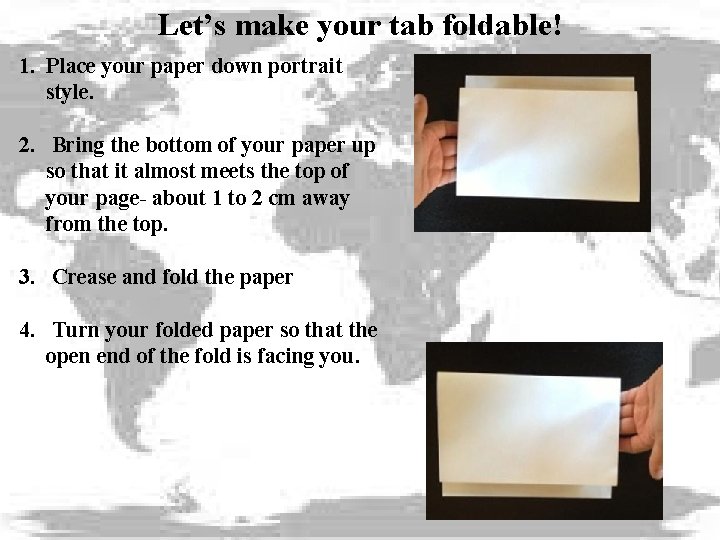
Let’s make your tab foldable! 1. Place your paper down portrait style. 2. Bring the bottom of your paper up so that it almost meets the top of your page- about 1 to 2 cm away from the top. 3. Crease and fold the paper 4. Turn your folded paper so that the open end of the fold is facing you.
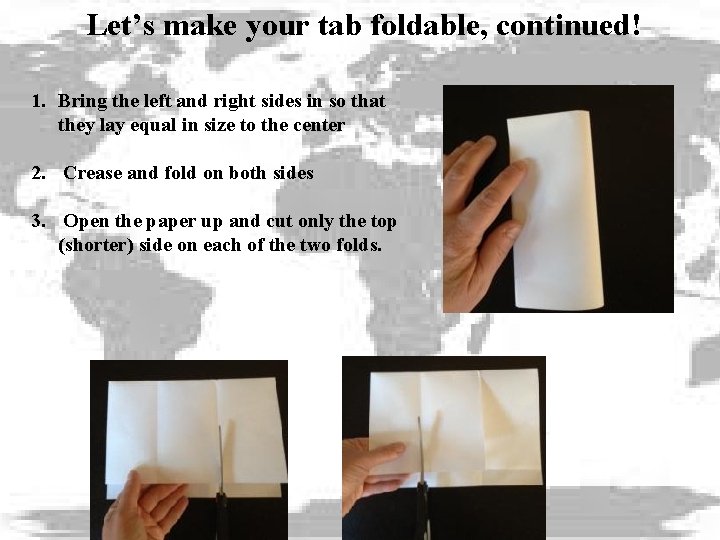
Let’s make your tab foldable, continued! 1. Bring the left and right sides in so that they lay equal in size to the center 2. Crease and fold on both sides 3. Open the paper up and cut only the top (shorter) side on each of the two folds.
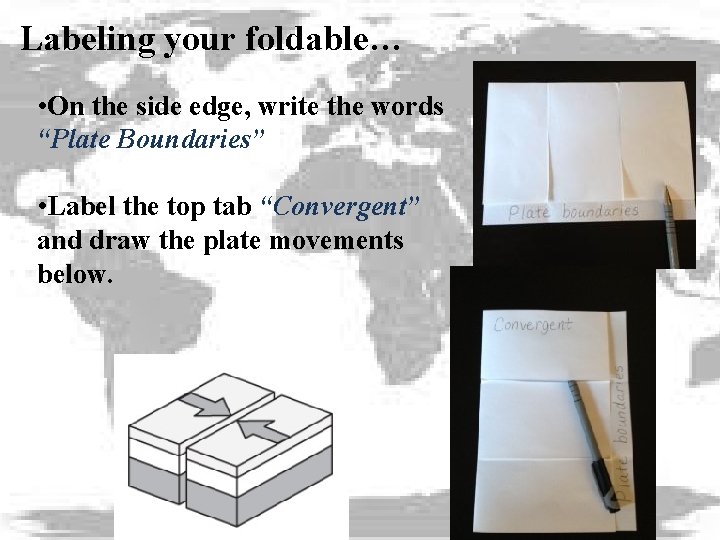
Labeling your foldable… • On the side edge, write the words “Plate Boundaries” • Label the top tab “Convergent” and draw the plate movements below.
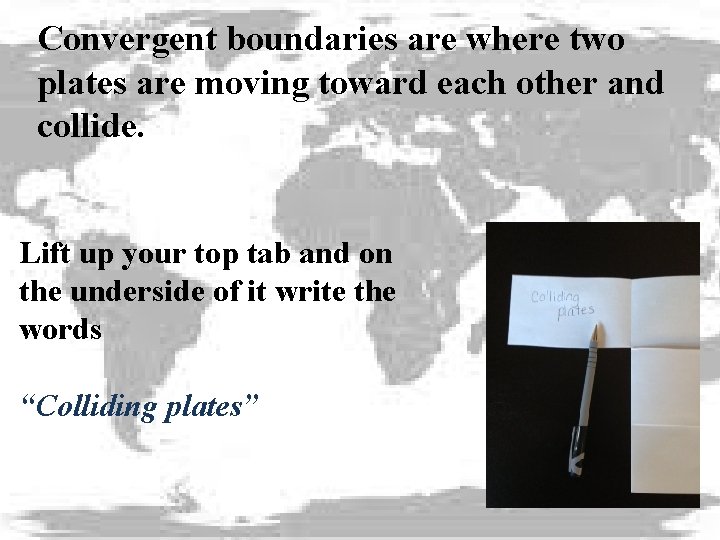
Convergent boundaries are where two plates are moving toward each other and collide. Lift up your top tab and on the underside of it write the words “Colliding plates”
Please watch this video. https: //www. youtube. com/watch? v=Y 0 e. Wn. OZp. Sp. Q
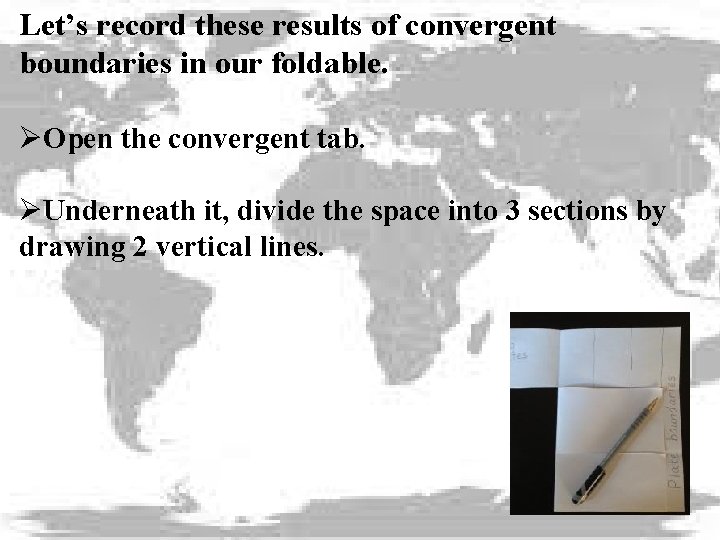
Let’s record these results of convergent boundaries in our foldable. ØOpen the convergent tab. ØUnderneath it, divide the space into 3 sections by drawing 2 vertical lines.
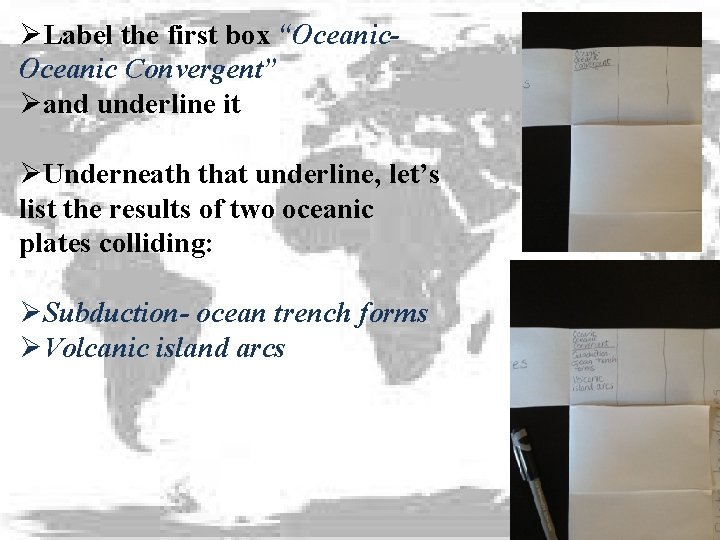
ØLabel the first box “Oceanic Convergent” Øand underline it ØUnderneath that underline, let’s list the results of two oceanic plates colliding: ØSubduction- ocean trench forms ØVolcanic island arcs
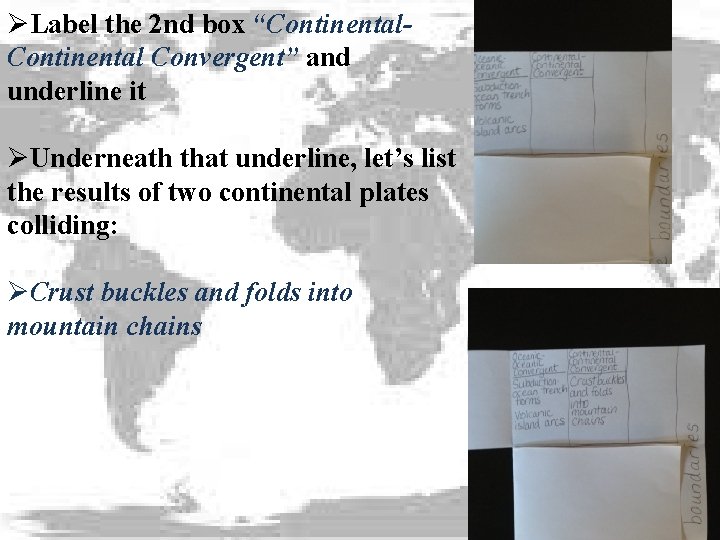
ØLabel the 2 nd box “Continental Convergent” and underline it ØUnderneath that underline, let’s list the results of two continental plates colliding: ØCrust buckles and folds into mountain chains
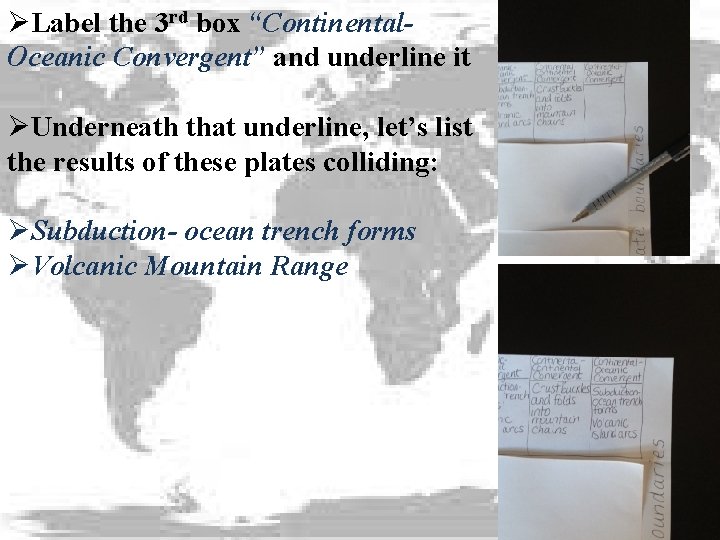
ØLabel the 3 rd box “Continental. Oceanic Convergent” and underline it ØUnderneath that underline, let’s list the results of these plates colliding: ØSubduction- ocean trench forms ØVolcanic Mountain Range
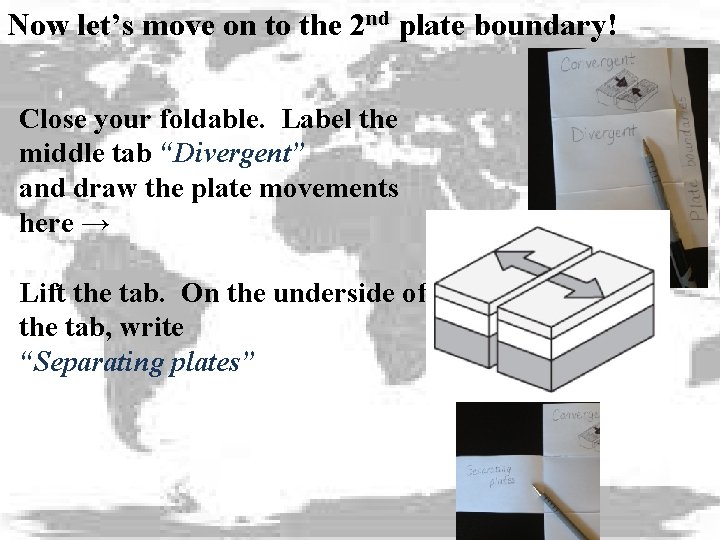
Now let’s move on to the 2 nd plate boundary! Close your foldable. Label the middle tab “Divergent” and draw the plate movements here → Lift the tab. On the underside of the tab, write “Separating plates”
Please watch this video. https: //drive. google. com/file/d/0 B 4 Lwe 5 h. D 2 x 7 r. OWt. HZFV 1 Qml. WTz. Q/view? usp= sharing
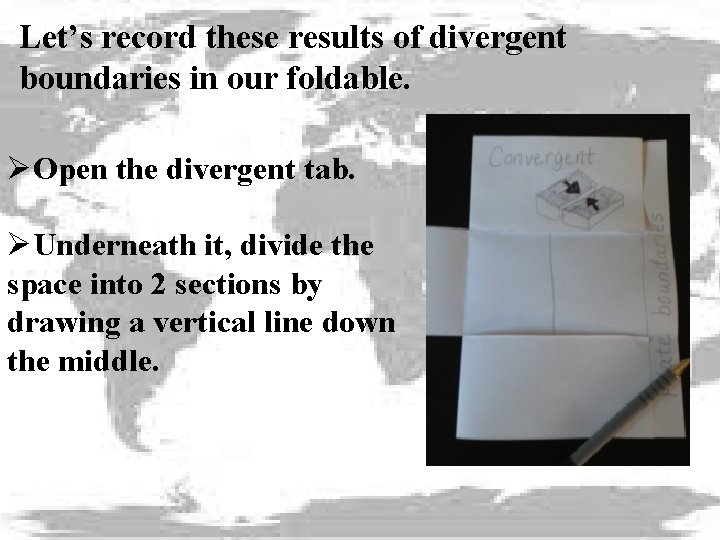
Let’s record these results of divergent boundaries in our foldable. ØOpen the divergent tab. ØUnderneath it, divide the space into 2 sections by drawing a vertical line down the middle.
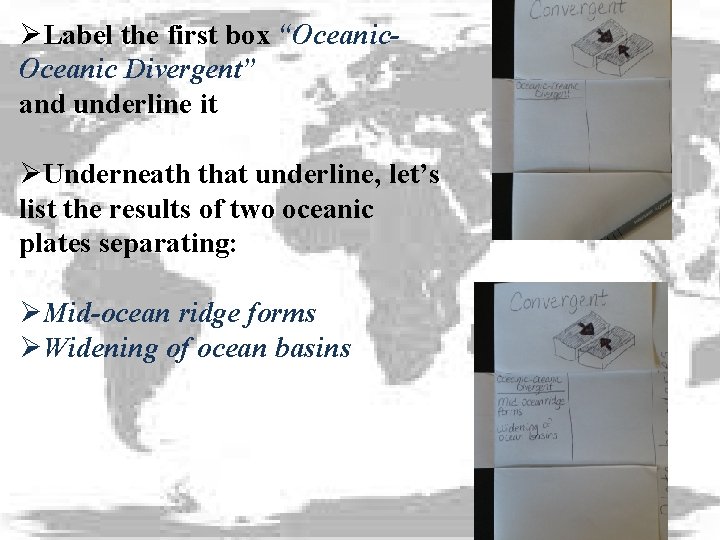
ØLabel the first box “Oceanic Divergent” and underline it ØUnderneath that underline, let’s list the results of two oceanic plates separating: ØMid-ocean ridge forms ØWidening of ocean basins
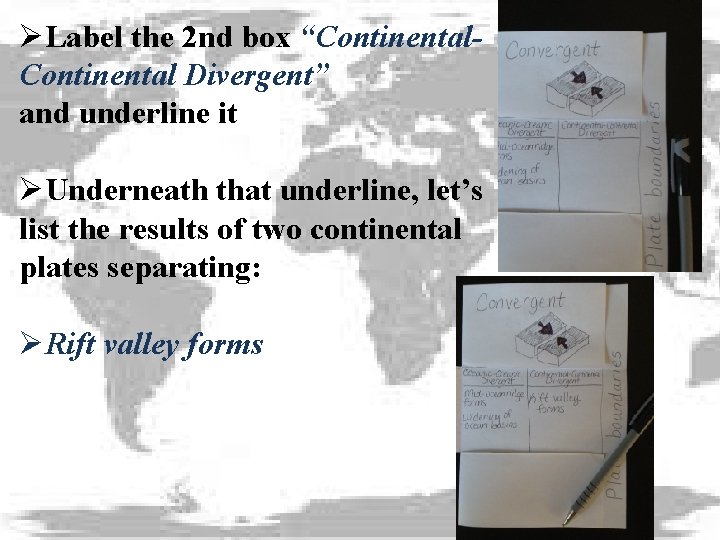
ØLabel the 2 nd box “Continental Divergent” and underline it ØUnderneath that underline, let’s list the results of two continental plates separating: ØRift valley forms
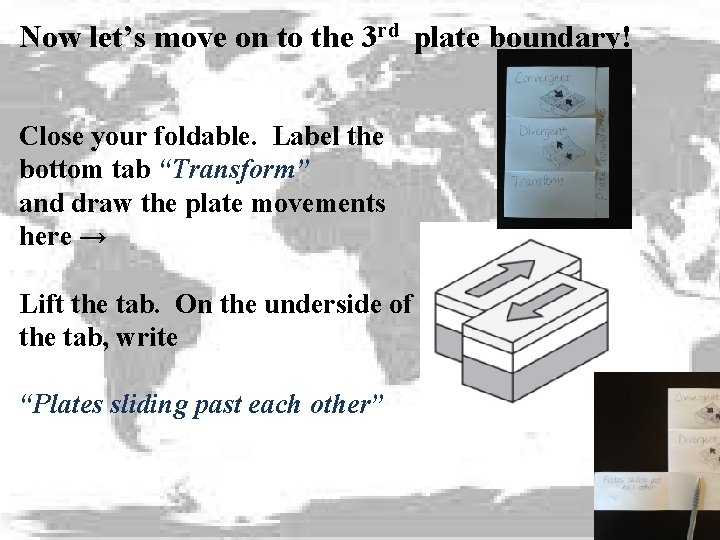
Now let’s move on to the 3 rd plate boundary! Close your foldable. Label the bottom tab “Transform” and draw the plate movements here → Lift the tab. On the underside of the tab, write “Plates sliding past each other”
Please watch this video. https: //drive. google. com/file/d/0 B 4 Lwe 5 h. D 2 x 7 r. YS 1 Zd. EVp. TXFPZk. U/view? usp=sh aring
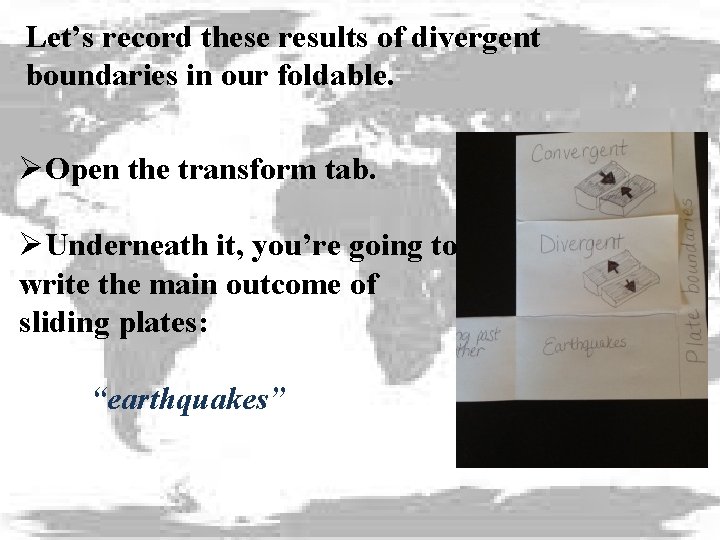
Let’s record these results of divergent boundaries in our foldable. ØOpen the transform tab. ØUnderneath it, you’re going to write the main outcome of sliding plates: “earthquakes”
- Slides: 19