
Warm Up 1 Simplify then write in standard


- Slides: 16
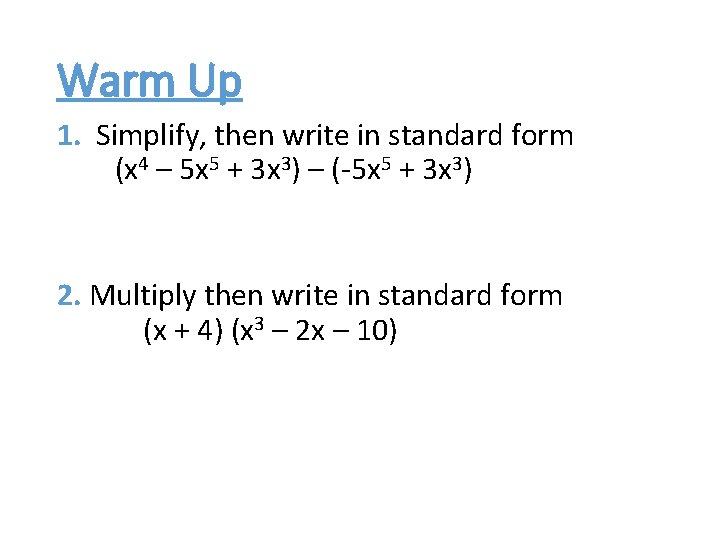
Warm Up 1. Simplify, then write in standard form (x 4 – 5 x 5 + 3 x 3) – (-5 x 5 + 3 x 3) 2. Multiply then write in standard form (x + 4) (x 3 – 2 x – 10)
15. 3 Dividing Polynomials with Synthetic Division
Why do it? • We are learning how to divide polynomials so that at some point we can use this tool to help solve polynomial equations!
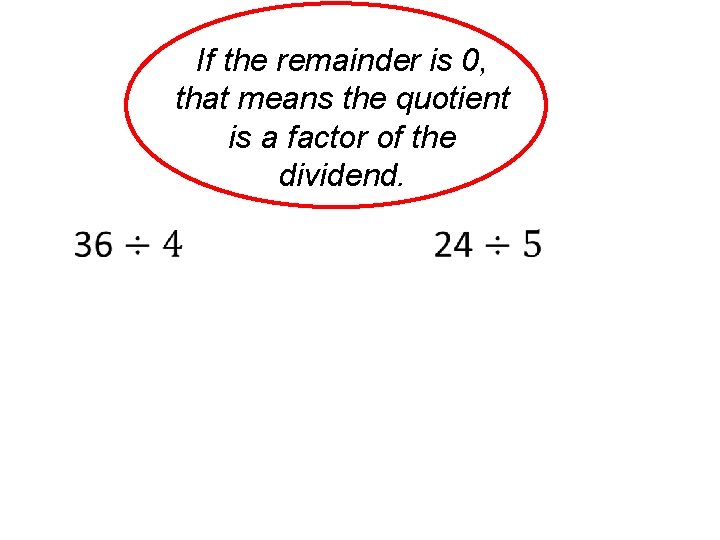
You are probably familiar with long division.
If the remainder is 0, that means the quotient is a factor of the dividend.
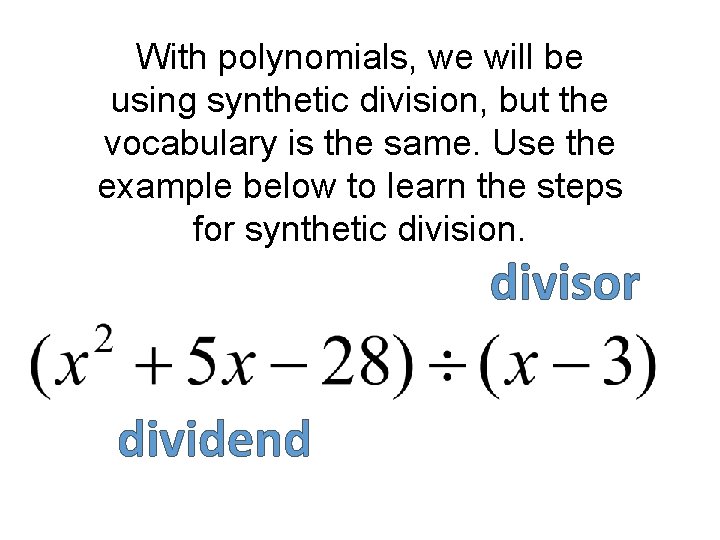
With polynomials, we will be using synthetic division, but the vocabulary is the same. Use the example below to learn the steps for synthetic division. divisor dividend
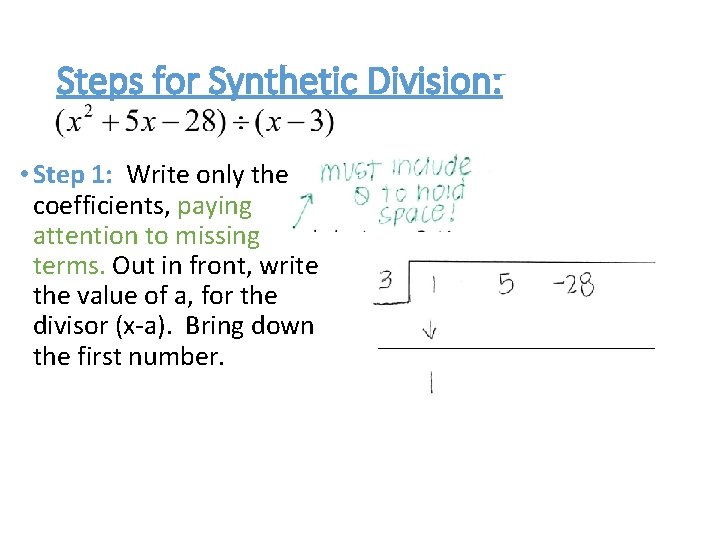
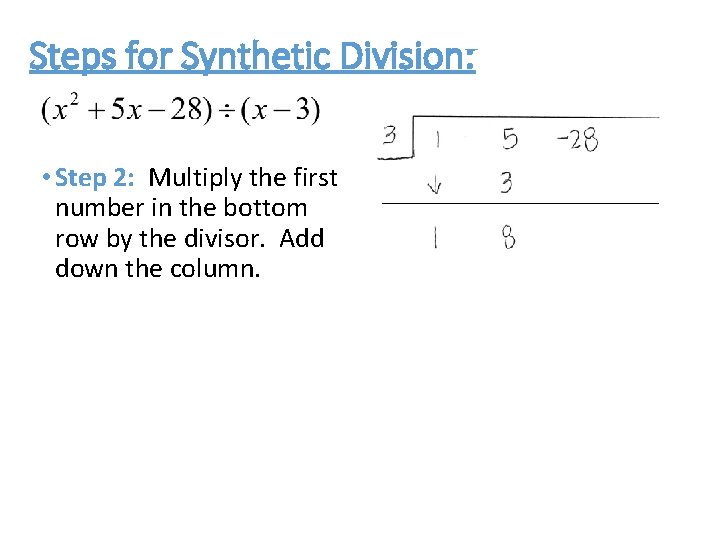
Steps for Synthetic Division: • Step 1: Write only the coefficients, paying attention to missing terms. Out in front, write the value of a, for the divisor (x-a). Bring down the first number.
Steps for Synthetic Division: • Step 2: Multiply the first number in the bottom row by the divisor. Add down the column.
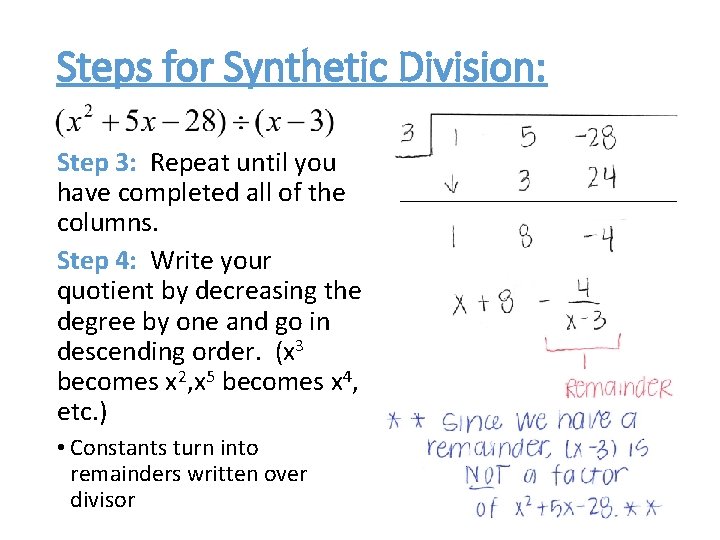
Steps for Synthetic Division: Step 3: Repeat until you have completed all of the columns. Step 4: Write your quotient by decreasing the degree by one and go in descending order. (x 3 becomes x 2, x 5 becomes x 4, etc. ) • Constants turn into remainders written over divisor
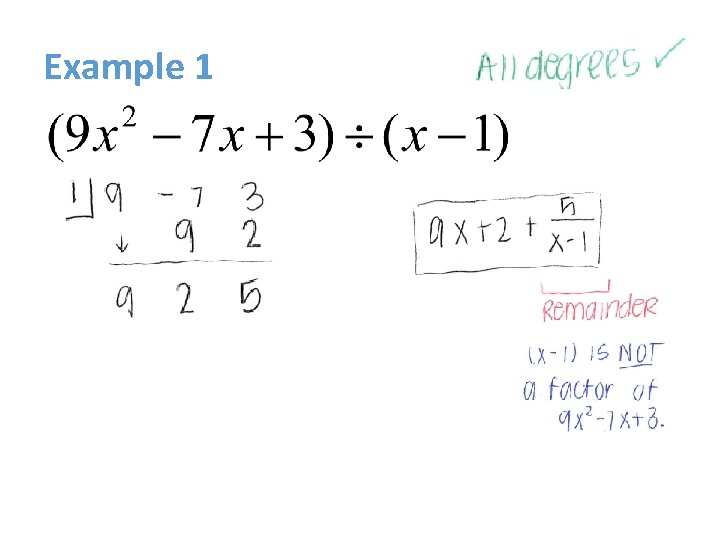
Example 1
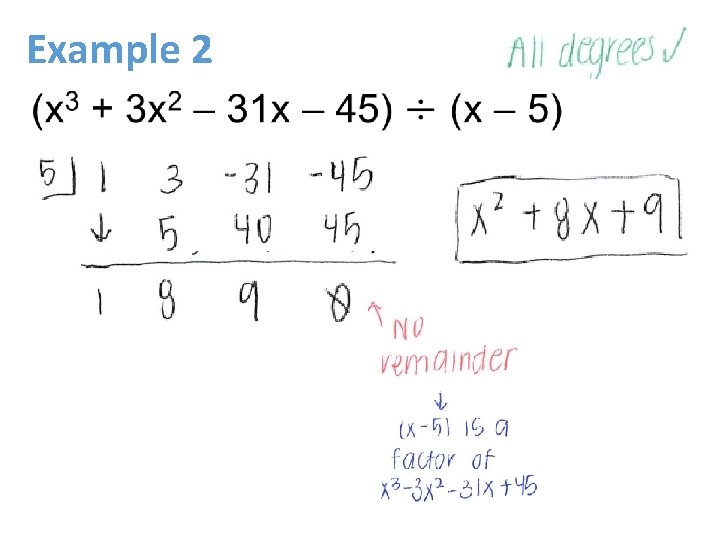
Example 2
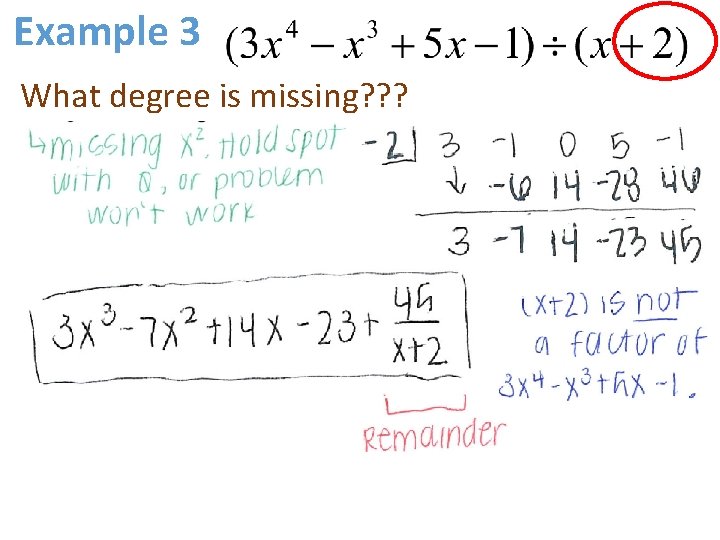
Example 3 What degree is missing? ? ?
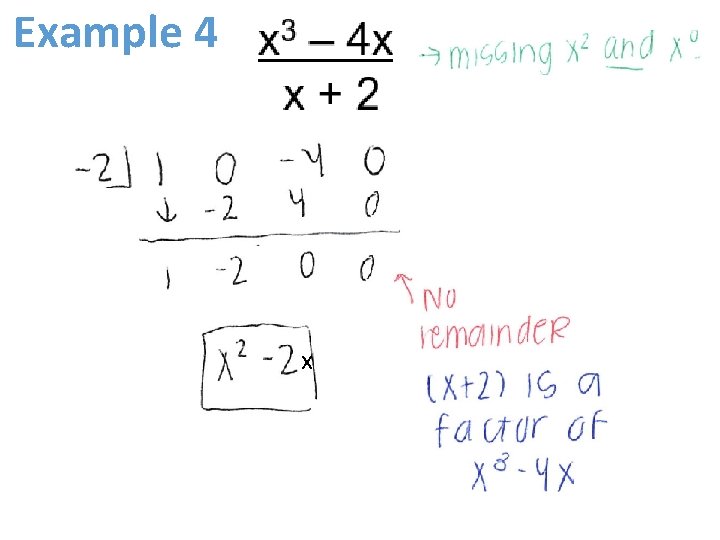
Example 4 x
Homework 15. 3 Worksheet Next page in packet