Warm up 1 Rotate P4 4 180 2
- Slides: 13
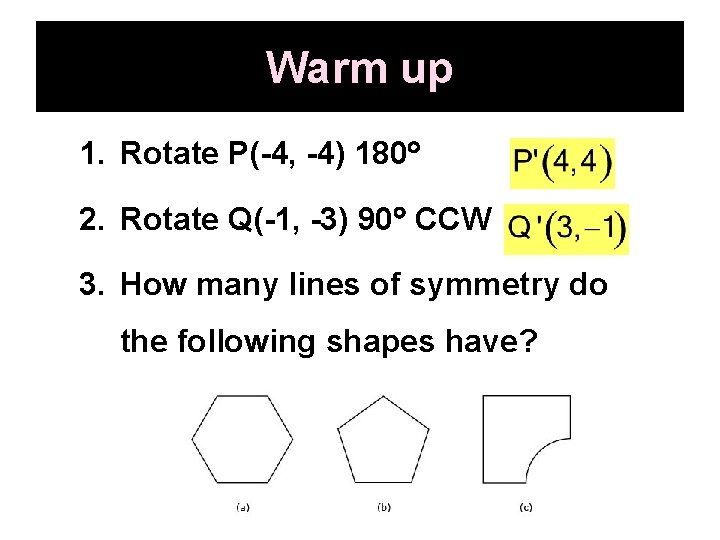
Warm up 1. Rotate P(-4, -4) 180 2. Rotate Q(-1, -3) 90 CCW 3. How many lines of symmetry do the following shapes have?
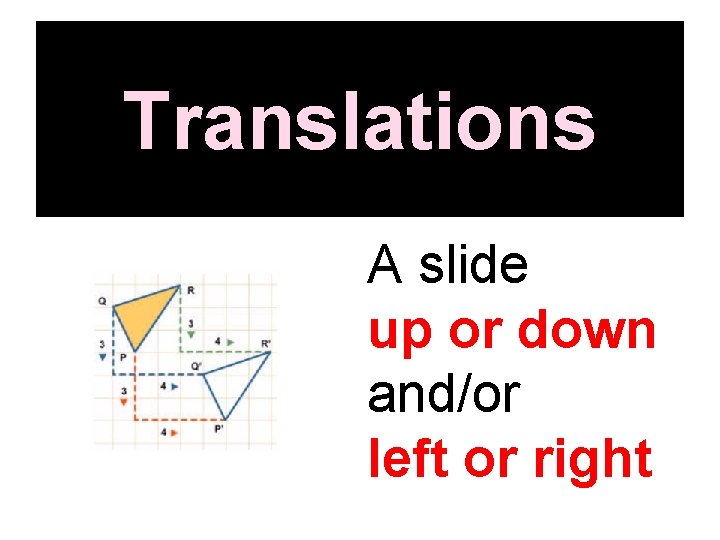
Translations A slide up or down and/or left or right
Coordinate Notation Translating left or right Translating up or down • To translate left, we subtract from our x-value. • To translate right, we add to our x-value. • To translate up, we add to our y-value. • To translate down, we subtract from our y-value. Ex: (x+5, y) or (x-3, y) Ex: (x, y+7) or (x, y-2)
Translate the following points and write the rule for each. 1. Translate A(3, 5) to the left 5. 2. Translate B(-1, 2) up 4. 3. Translate C(0, 2) down 6. 4. Translate D(1, 1) to the right 3 AND up 4.
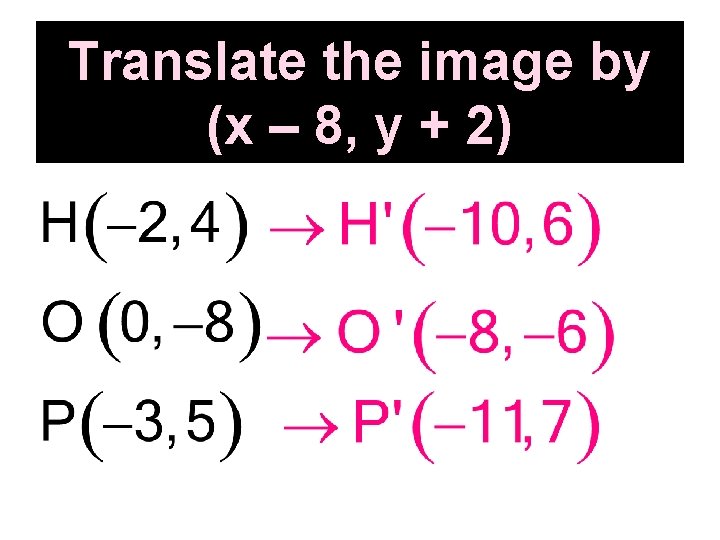
Translate the image by (x – 8, y + 2)
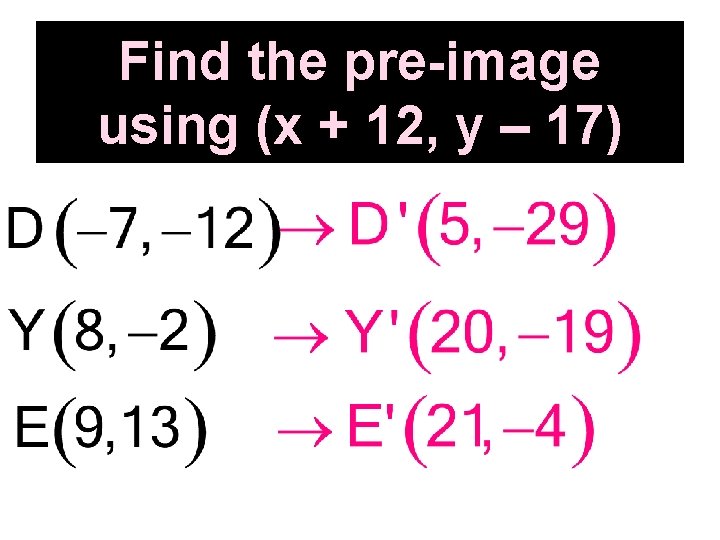
Find the pre-image using (x + 12, y – 17)
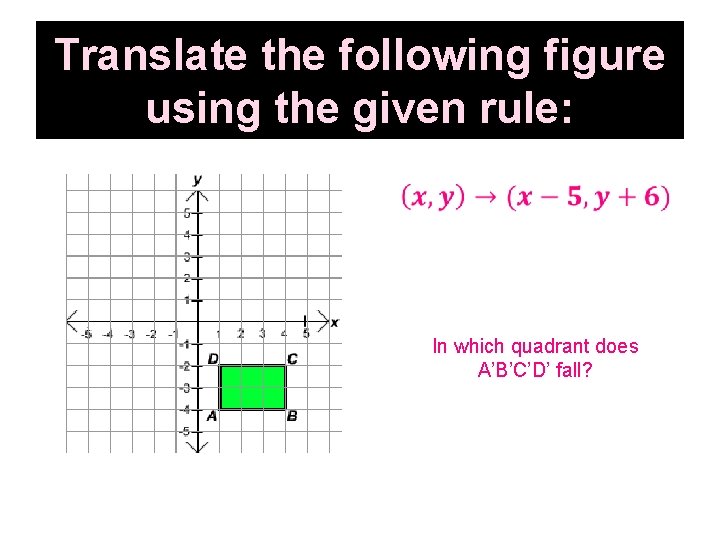
Translate the following figure using the given rule: In which quadrant does A’B’C’D’ fall?
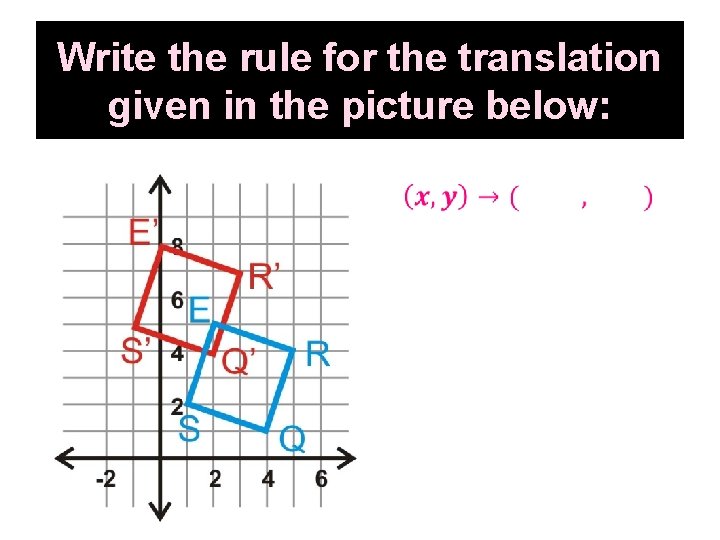
Write the rule for the translation given in the picture below:
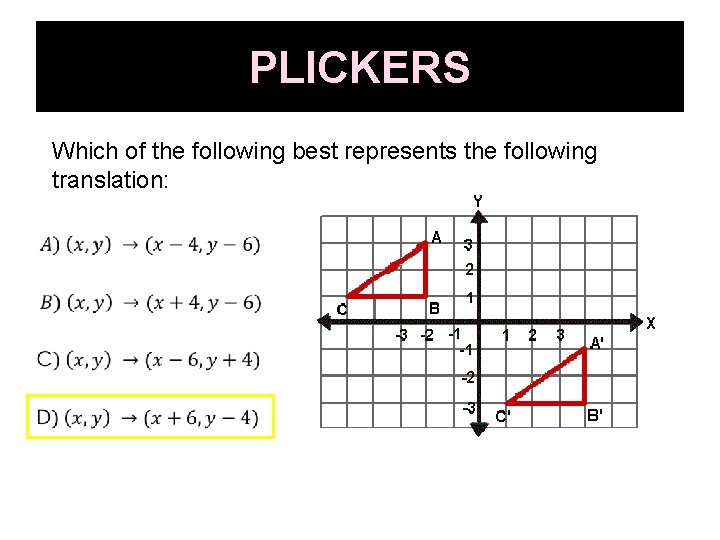
PLICKERS Which of the following best represents the following translation:
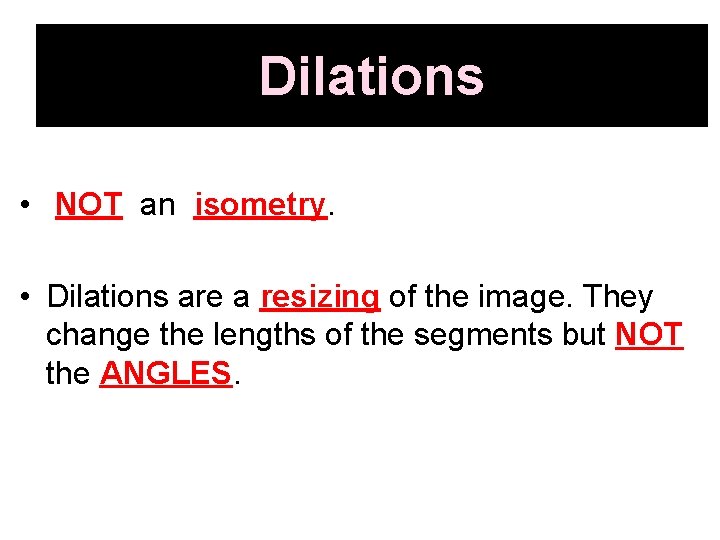
Dilations • NOT an isometry. • Dilations are a resizing of the image. They change the lengths of the segments but NOT the ANGLES.
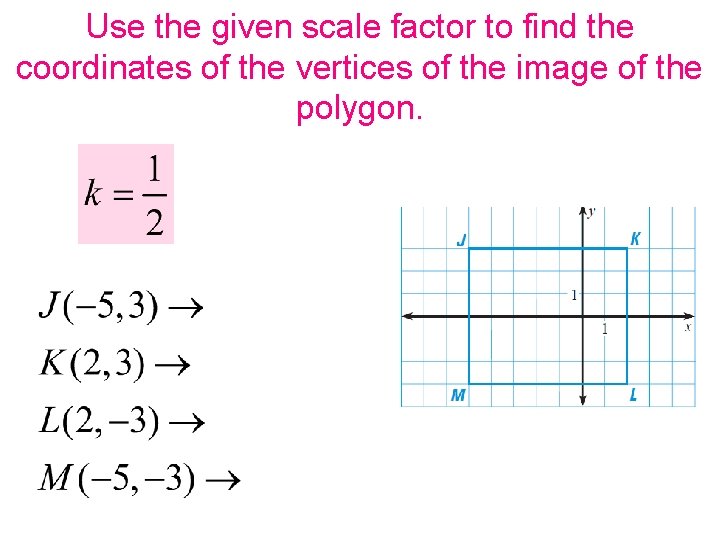
Use the given scale factor to find the coordinates of the vertices of the image of the polygon.
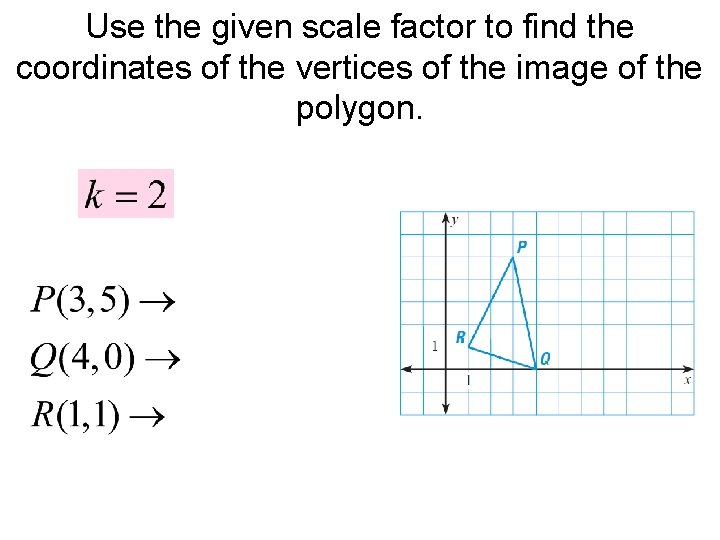
Use the given scale factor to find the coordinates of the vertices of the image of the polygon.
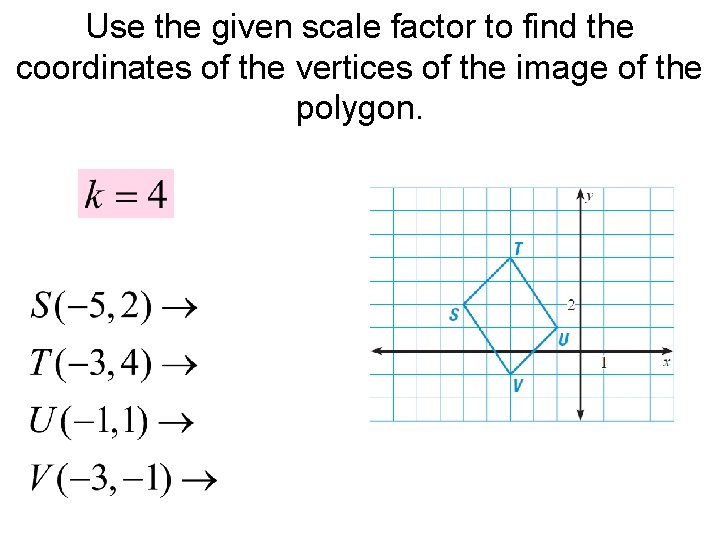
Use the given scale factor to find the coordinates of the vertices of the image of the polygon.