
WARD MANAGEMENT AND NURSING ADMINISTRATION DR AMIT PRASAD




- Slides: 27
WARD MANAGEMENT AND NURSING ADMINISTRATION DR. AMIT PRASAD, CMO(SG)
DEFINITION • Nurse
NURSING • Nursing is a dynamic, therapeutic and educative process in meeting the health needs of the society. • It is an art which involves the whole patient body, mind and spirit, promotes his physical, mental and spiritual health by reaching and by stressing health education to the patient his family and community for restoration and preservation of health.
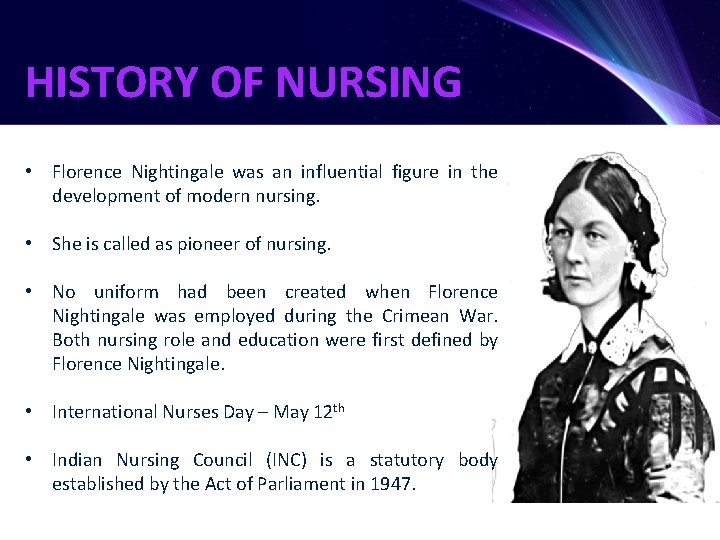
HISTORY OF NURSING • Florence Nightingale was an influential figure in the development of modern nursing. • She is called as pioneer of nursing. • No uniform had been created when Florence Nightingale was employed during the Crimean War. Both nursing role and education were first defined by Florence Nightingale. • International Nurses Day – May 12 th • Indian Nursing Council (INC) is a statutory body established by the Act of Parliament in 1947.
ROLES & FUNCTIONS OF NURSE • • • CARE GIVER DECISION MAKER COMMUNICATOR MANAGER OF CARE PATIENT ADVOCATOR TEACHER
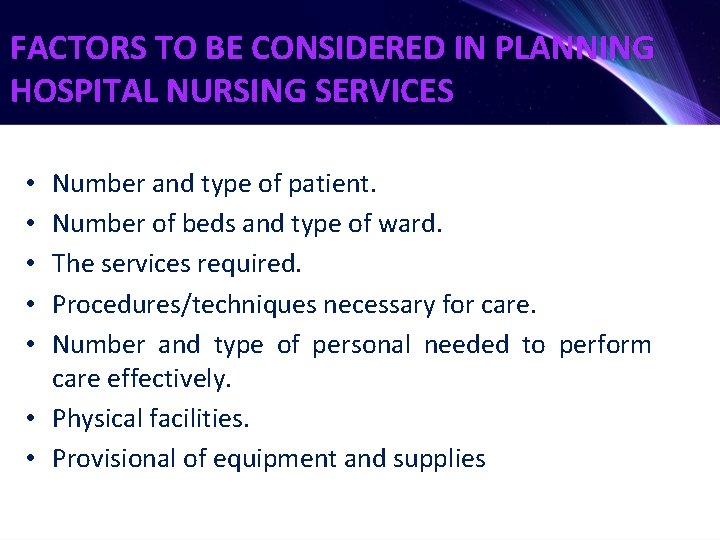
FACTORS TO BE CONSIDERED IN PLANNING HOSPITAL NURSING SERVICES Number and type of patient. Number of beds and type of ward. The services required. Procedures/techniques necessary for care. Number and type of personal needed to perform care effectively. • Physical facilities. • Provisional of equipment and supplies • • •
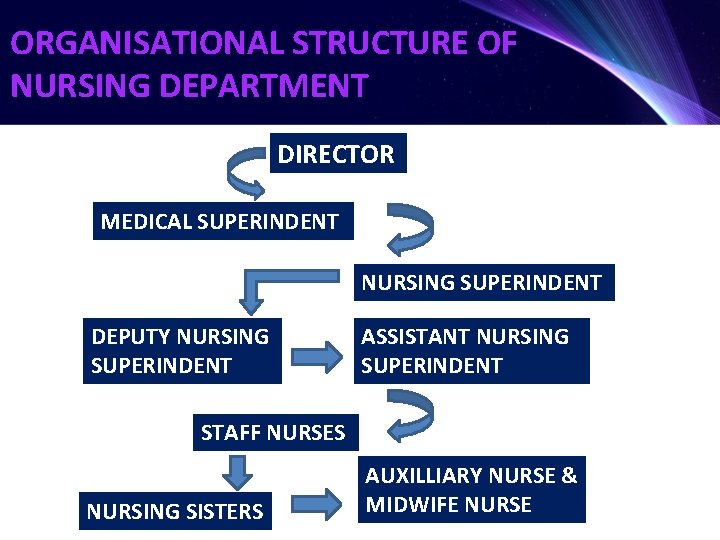
ORGANISATIONAL STRUCTURE OF NURSING DEPARTMENT DIRECTOR MEDICAL SUPERINDENT NURSING SUPERINDENT DEPUTY NURSING SUPERINDENT ASSISTANT NURSING SUPERINDENT STAFF NURSES NURSING SISTERS AUXILLIARY NURSE & MIDWIFE NURSE
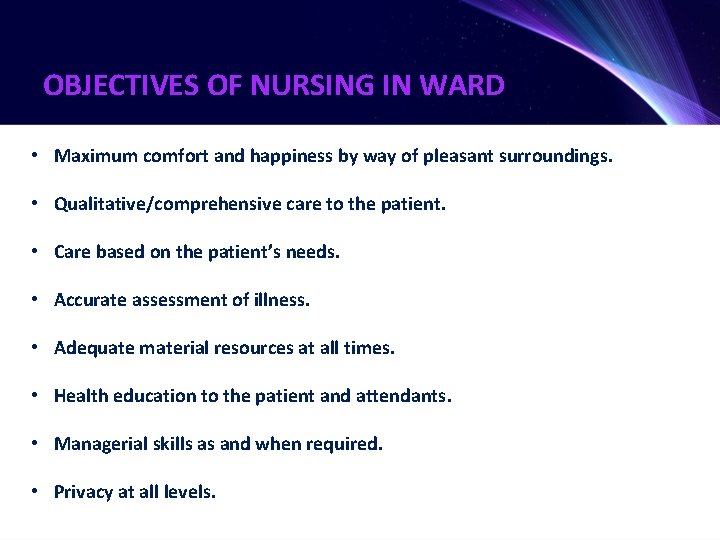
OBJECTIVES OF NURSING IN WARD • Maximum comfort and happiness by way of pleasant surroundings. • Qualitative/comprehensive care to the patient. • Care based on the patient’s needs. • Accurate assessment of illness. • Adequate material resources at all times. • Health education to the patient and attendants. • Managerial skills as and when required. • Privacy at all levels.
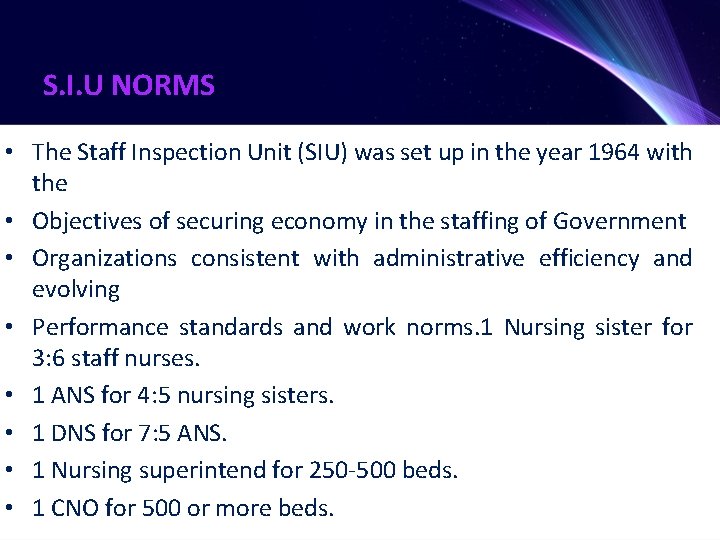
S. I. U NORMS • The Staff Inspection Unit (SIU) was set up in the year 1964 with the • Objectives of securing economy in the staffing of Government • Organizations consistent with administrative efficiency and evolving • Performance standards and work norms. 1 Nursing sister for 3: 6 staff nurses. • 1 ANS for 4: 5 nursing sisters. • 1 DNS for 7: 5 ANS. • 1 Nursing superintend for 250 -500 beds. • 1 CNO for 500 or more beds.
NURSING REGISTERS • Administrative records: Organogram, job description, procedure manual • Personnel records: personal files, records • Patient related records: patients records send to Medical director, Leave record, duty roster, meeting minutes, budget etc. . • Miscellaneous: circular, round book, formats etc. .
ESSENTIAL NURSING TRAININGS • Orientation training • Training on BLS & ACLS • Training on soft skills (communication skills, team building etc…) • HMIS / IT Awareness training • Trainings on quality standards • Training on fire fighting • Training on bio medical waste management
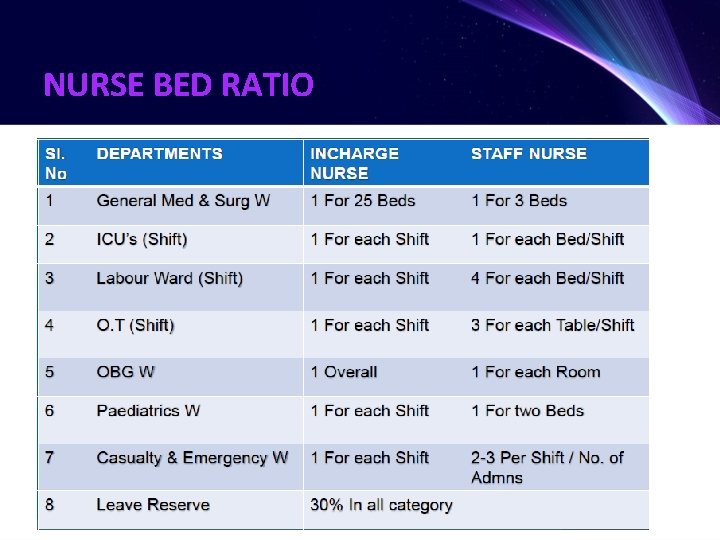
NURSE BED RATIO
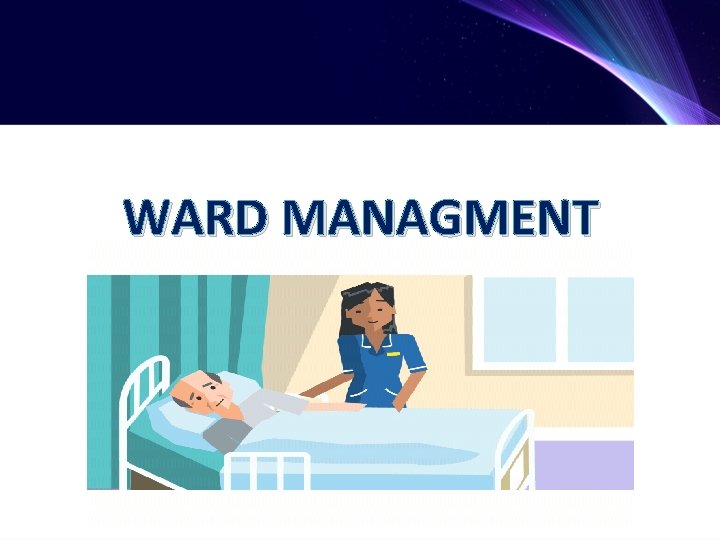
WARD MANAGMENT
COMPONENTS OF WARD MANAGEMENT • Management of Patient care • Personnel management • Management of Supply and equipment • Management of Environment cleanliness
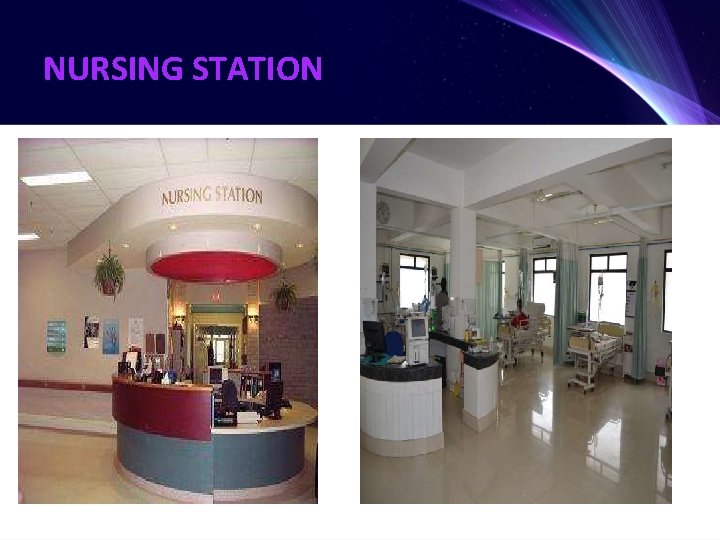
NURSING STATION
MANAGEMENT OF PATIENT CARE 1. ADMISSION AND ORIENTATION OF THE CLIENT 2. ASSESSMENT OF CLIENT’S NEEDS & CARE 3. PROGRESSIVE CLIENT CARE 4. PRIORITY NURSING CARE 5. PLANNING THE TIME SCHEDULES & WORK SCHEDULES 6. WARD ROUNDS 7. RECORDS AND REPORTS 8. MANAGEMENT OF EMERGENCIES 9. CLIENT TEACHING 10. APPRAISAL OF NURSING SERVICE
1. ADMISSION AND ORIENTATION OF THE CLIENT • Hospital • Routines of Hospital • Rules and Regulations • Personnel Working • Ward Equipment • Ward Procedures
2. ASSESMENT OF CLIENT’S NEEDS & CARE To Establish patent airway To Check for adequate circulation To support of activities of daily living Psychological support and spiritual needs • Continuous monitoring of client • •
3. PROGRESSIVE CLIENT CARE • Organizing client care units according to client needs for • Medical and nursing care. • a. Intensive care Units • b. Intermediate care Unit • c. Self care Units
5. PLANNING THE TIME SCHEDULES & WORK SCHEDULES • To provide adequate Nursing care each day • To provide best possible experience for each personnel • To promote good relationship and satisfaction 6. WARD ROUNDS
7. RECORDS AND REPORTS • • 24 Hours Report Census Report Birth & Death Report Anecdotal Report
8. Management of Emergencies 9. Client Teaching 10. Appraisal of Nursing Service
MANAGEMENT OF THE PERSONNEL 1. Orientation of the new personnel 2. Supervision of the personnel & delegation of authority 3. Establishment of IPR 4. Evaluation of the personnel 5. Staff conferences 6. Staff development Programme 7. Health, Safety & Welfare of the personnel
MANAGEMENT OF SUPPLIES & EQUIPMENT 1. Inadequate supply of materials 2. Equipment may be out of order 3. Supplies & Equipment may be in accessible 4. Equipment is inconveniently located
KEEPING AN ADEQUATE SUPPLY AT HAND • Standard for quantity of each item • System for replacing broken equipment • Regular inventories • Intelligent ordering
MANAGEMENT OF ENVIRONMENT 1. Adequate Lighting 2. Prevention of Noise 3. Elimination of unpleasant odors (Bad Smell) 4. Dust control 5. Safe water supply 6. Safe disposal of waste 7. Freedom from insects 8. Provision of adequate privacy 9. Prevention of cross infection 10. Control of visitors