
War before 1914 War was often a quick
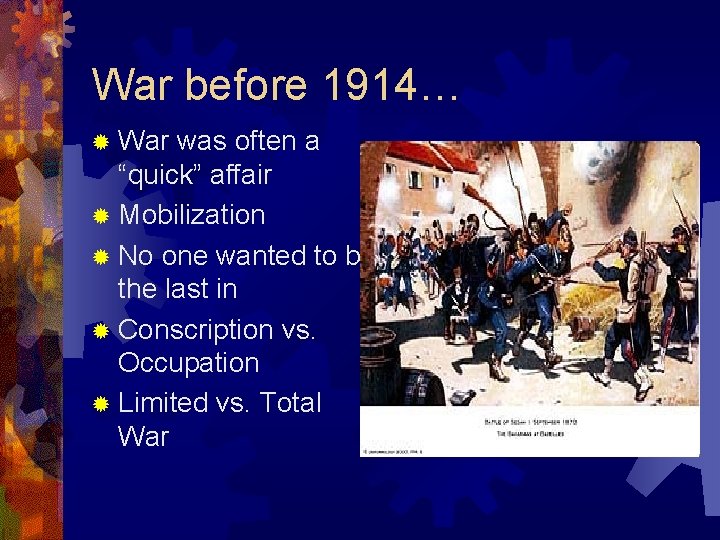
War before 1914… ® War was often a “quick” affair ® Mobilization ® No one wanted to be the last in ® Conscription vs. Occupation ® Limited vs. Total War
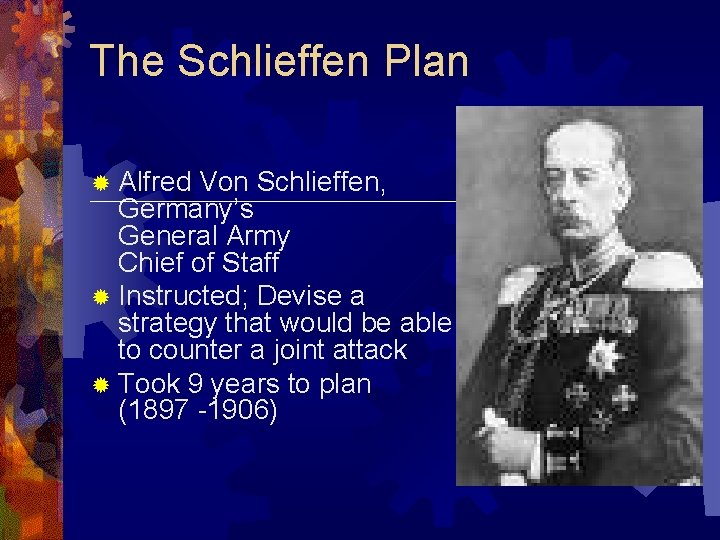
The Schlieffen Plan ® Alfred Von Schlieffen, Germany’s General Army Chief of Staff ® Instructed; Devise a strategy that would be able to counter a joint attack ® Took 9 years to plan (1897 -1906)
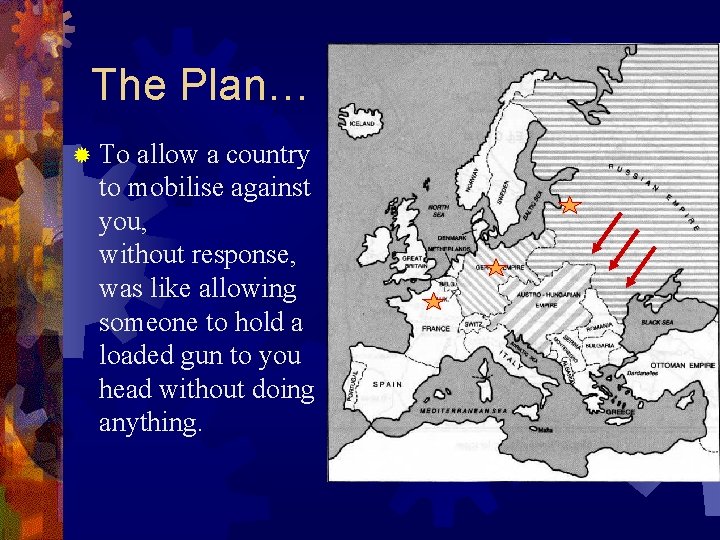
The Plan… ® To allow a country to mobilise against you, without response, was like allowing someone to hold a loaded gun to you head without doing anything.
The Schlieffen Plan ® Germany’s ® Based plan for mobilisation on 3 ideas: War = Germany vs. France AND Russia France was weak (1870 -10 wks) Russia was strong, but slow (6 weeks) ® Also, to be considered; Belgium & Britian
A Huge Hammer Blow to Paris ® Was seen as the best option ® 90% of German army ® Quick, decisive ® Result? Paris Germany
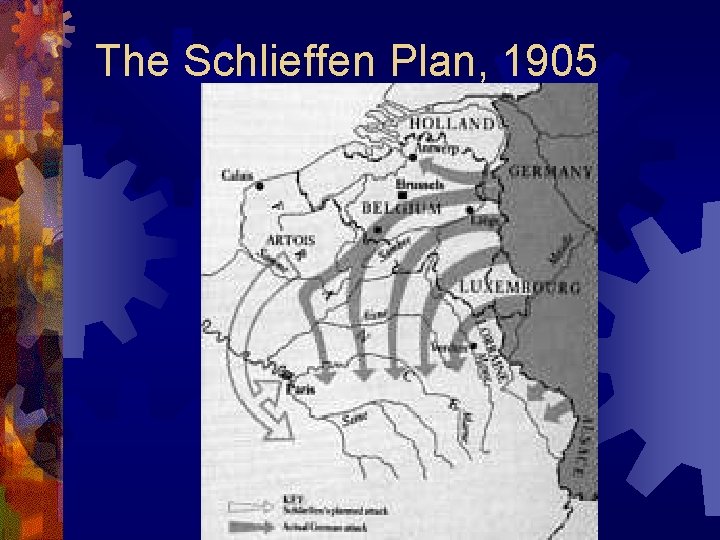
The Schlieffen Plan, 1905
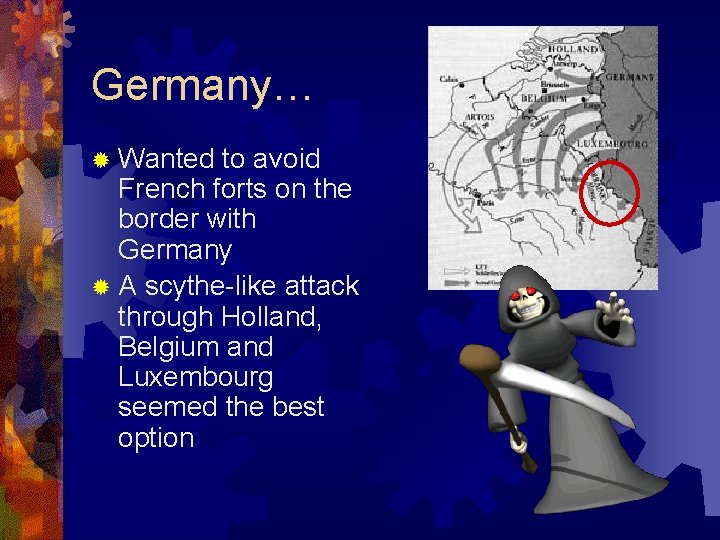
Germany… ® Wanted to avoid French forts on the border with Germany ® A scythe-like attack through Holland, Belgium and Luxembourg seemed the best option
Predict the Problems… ® Russia had… ® France wasn’t…
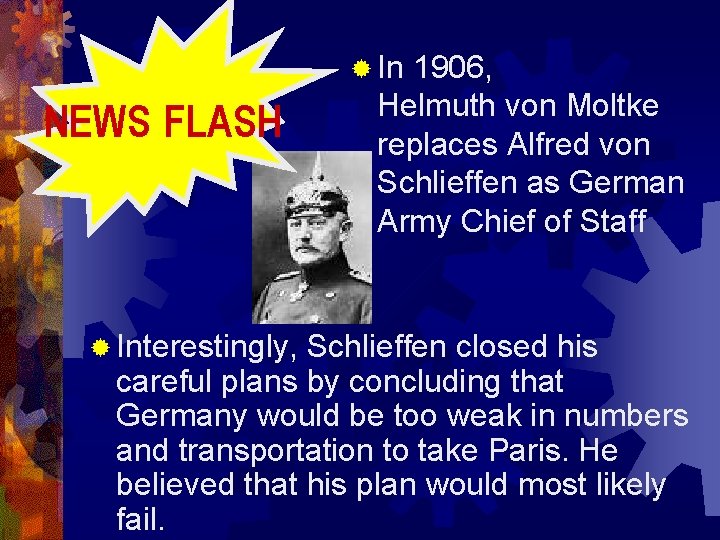
® In NEWS FLASH ® Interestingly, 1906, Helmuth von Moltke replaces Alfred von Schlieffen as German Army Chief of Staff Schlieffen closed his careful plans by concluding that Germany would be too weak in numbers and transportation to take Paris. He believed that his plan would most likely fail.
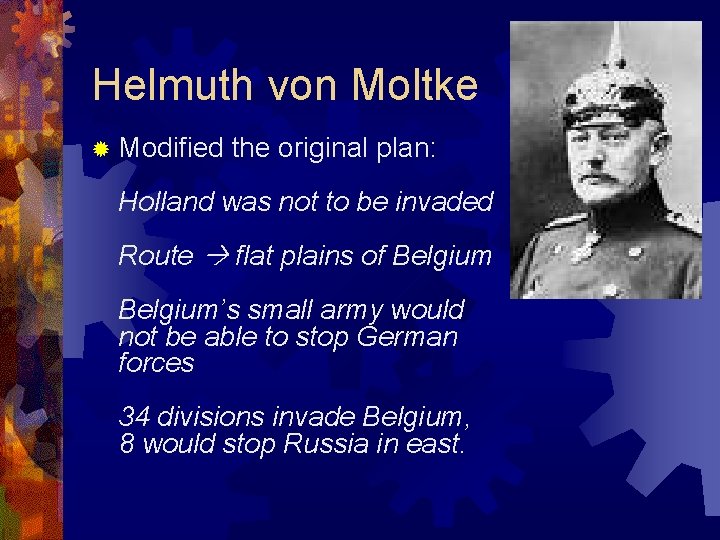
Helmuth von Moltke ® Modified the original plan: Holland was not to be invaded Route flat plains of Belgium’s small army would not be able to stop German forces 34 divisions invade Belgium, 8 would stop Russia in east.
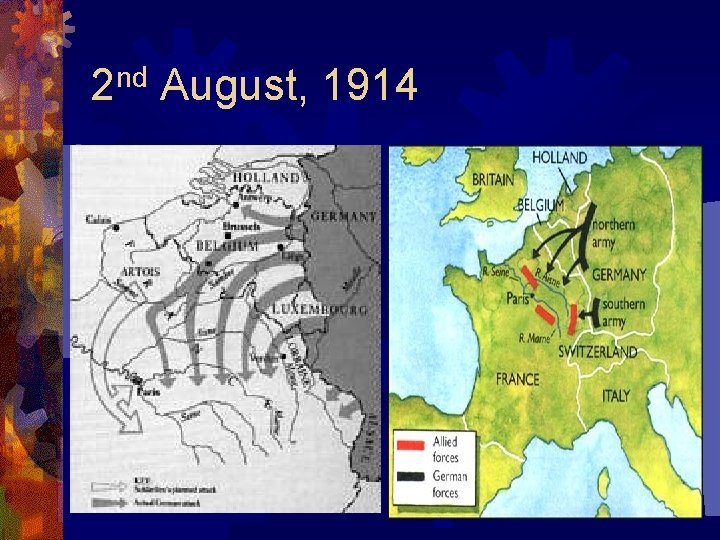
nd 2 August, 1914
The Assumptions of von Moltke ® Russia would take _ weeks to mobilise ® France would be easily defeated in _ weeks ® Belgium would _______ any German attack ® _____ would remain neutral.
In Reality… ® 2 nd August 1914, German army invaded Luxembourg and Belgium according to plan. ® Germans were held up by the Belgium Army ® Belgium army was backed by the British Expeditionary Force (BEF) ® Russia moblised in 10 DAYS
Cause = Effect ® Because Russia moblised quickly… ® Because Belgium resisted invasion… ® Because the BEF arrived quickly…
Other points of Interest ® Theory #1: Germany dropped some bombs on Nuremburg to have a reason to blame & attack France ® Theory #2: Train timetables were the deciding factor in the German and Russian mobilisation. Once they started, they couldn’t be stopped! ® Theory #3: Every country took YEARS to plan their attack – it was too much effort to modify it! When crisis arose – there was no back up plan – it was “do or die. ” On August 1 st Kaiser Wilhelm tried to pause the German mobilisation but since 11, 000 trains were on the move – he was told he couldn’t!
Was the Schlieffen Plan a Success? ® NO Why did it Fail? ® Reason 1 ® Reason 2 ® Reason 3 ® Other Possibilities…
As a Result… ® Across France there was a _____mile “Front. ” ® Neither side could gain a decisive advantage. This is called a _______. ® After this occurred, the winter was coming and the soldiers were forced to _____ ___. They formed _______.
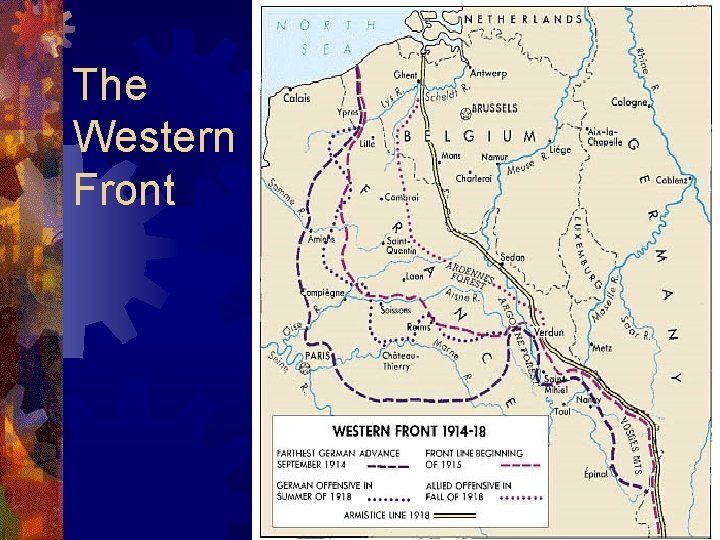
The Western Front

The End… …For Now
- Slides: 20