
WAR ART The Blitz Tower Bridge London A
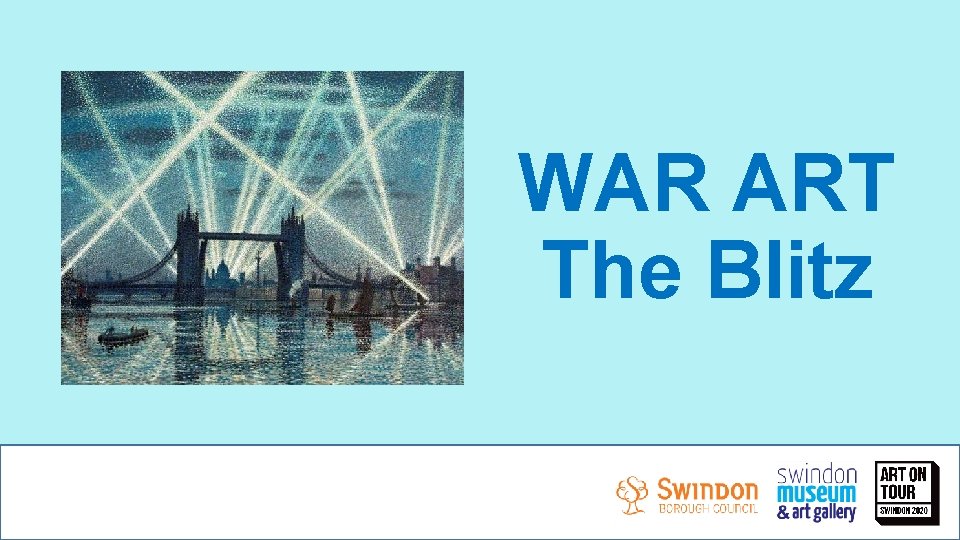
WAR ART The Blitz

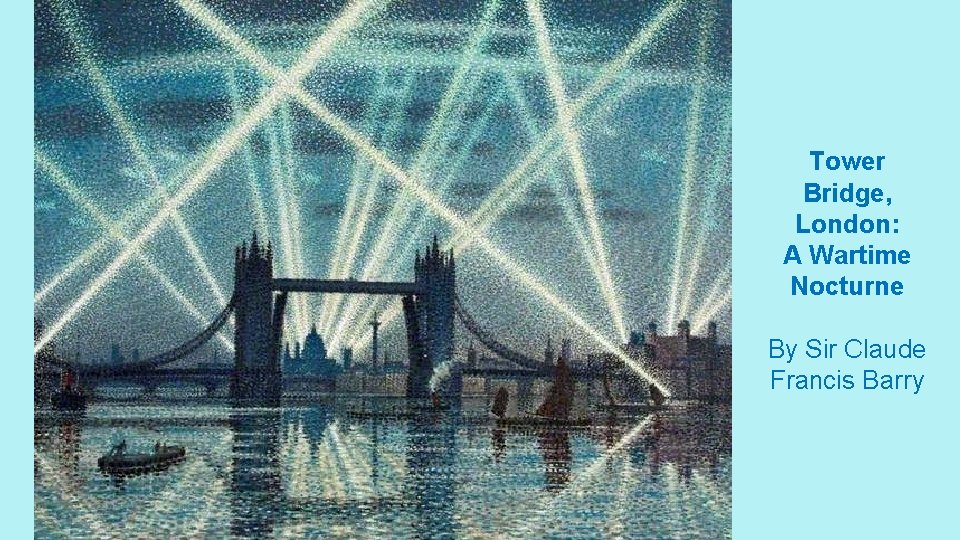
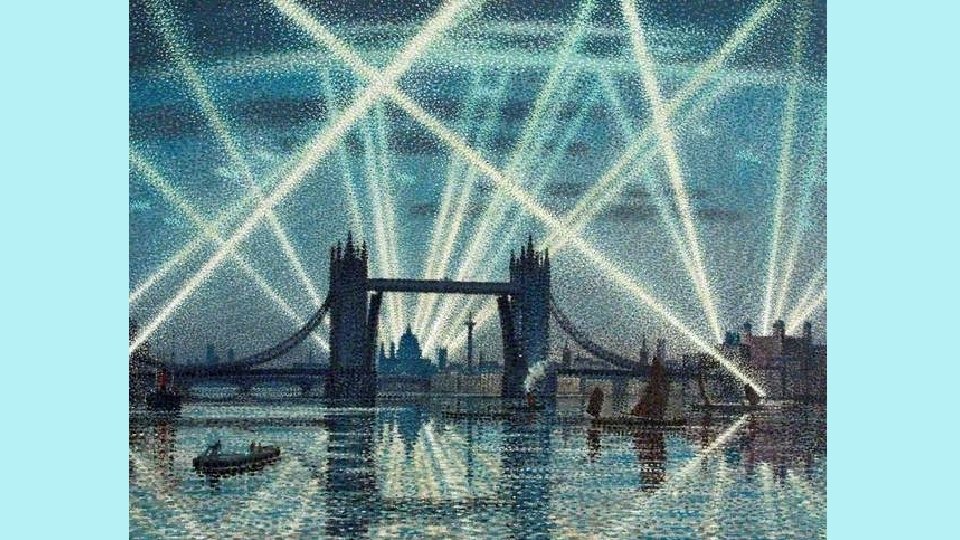
Tower Bridge, London: A Wartime Nocturne By Sir Claude Francis Barry
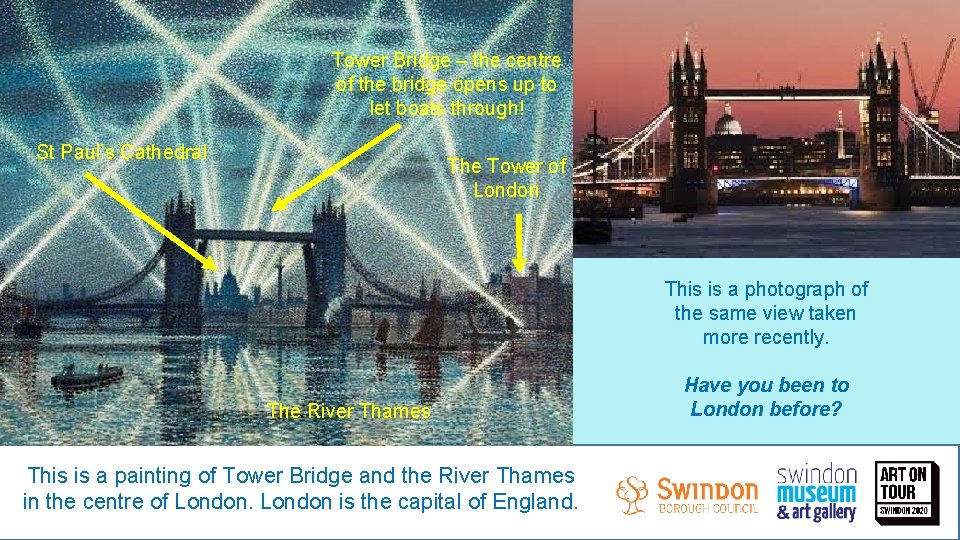
Tower Bridge – the centre of the bridge opens up to let boats through! St Paul’s Cathedral The Tower of London This is a photograph of the same view taken more recently. The River Thames This is a painting of Tower Bridge and the River Thames in the centre of London is the capital of England. Have you been to London before?
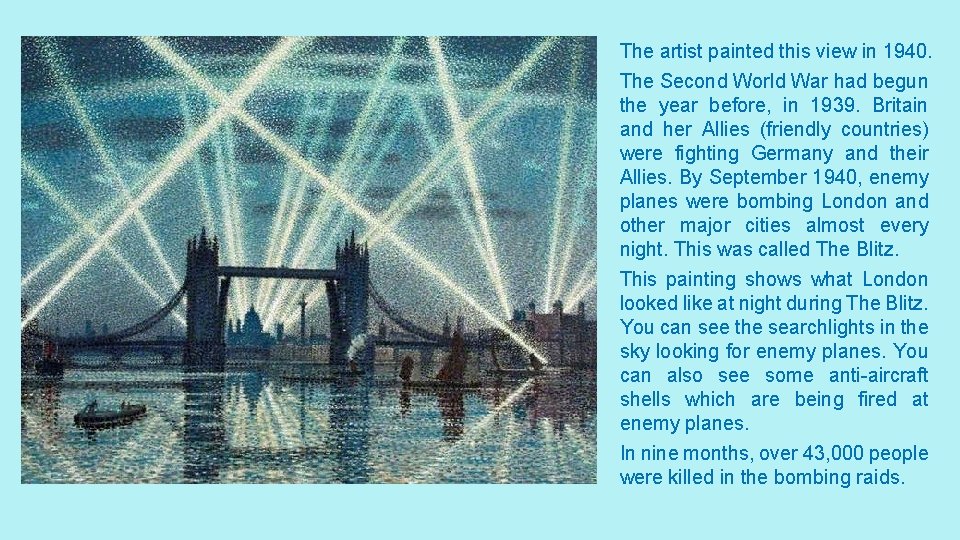
The artist painted this view in 1940. The Second World War had begun the year before, in 1939. Britain and her Allies (friendly countries) were fighting Germany and their Allies. By September 1940, enemy planes were bombing London and other major cities almost every night. This was called The Blitz. This painting shows what London looked like at night during The Blitz. You can see the searchlights in the sky looking for enemy planes. You can also see some anti-aircraft shells which are being fired at enemy planes. In nine months, over 43, 000 people were killed in the bombing raids.
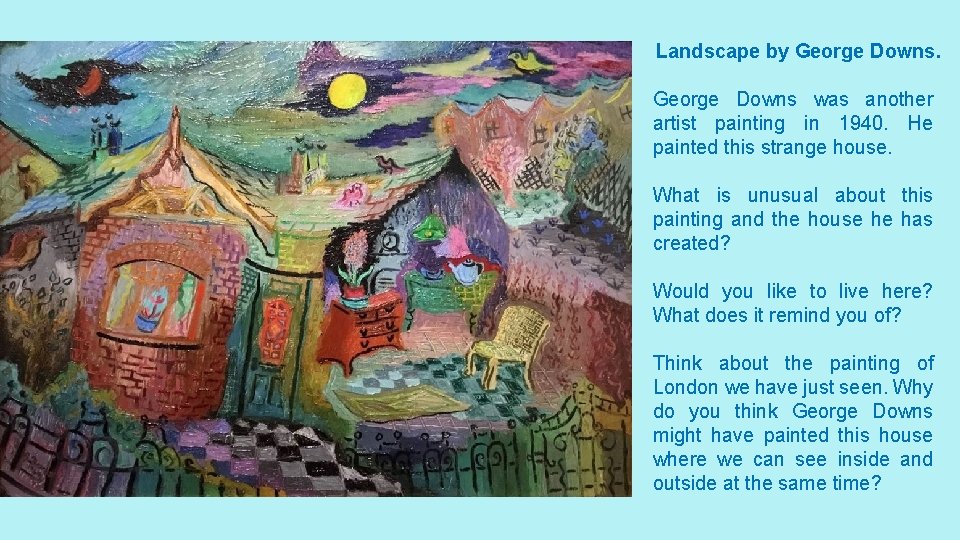
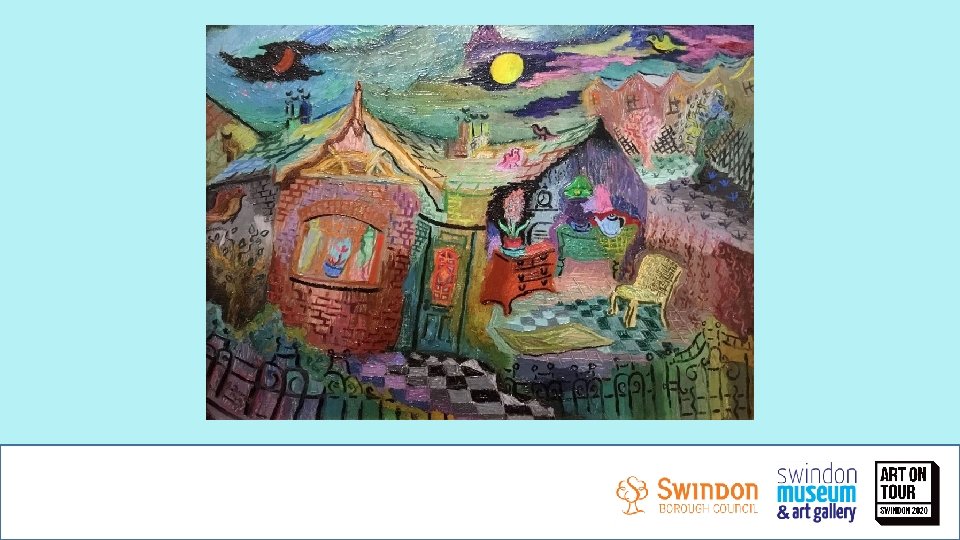
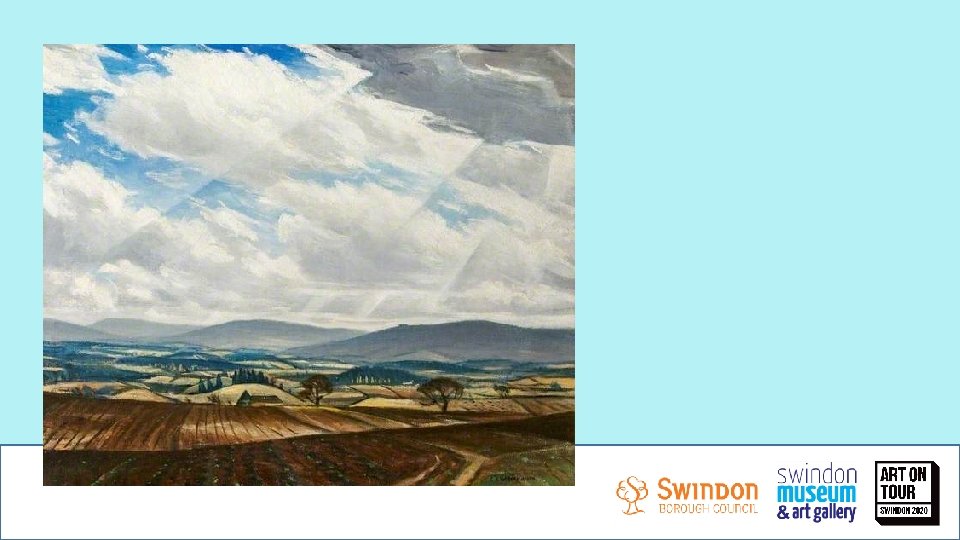
Landscape by George Downs was another artist painting in 1940. He painted this strange house. What is unusual about this painting and the house he has created? Would you like to live here? What does it remind you of? Think about the painting of London we have just seen. Why do you think George Downs might have painted this house where we can see inside and outside at the same time?
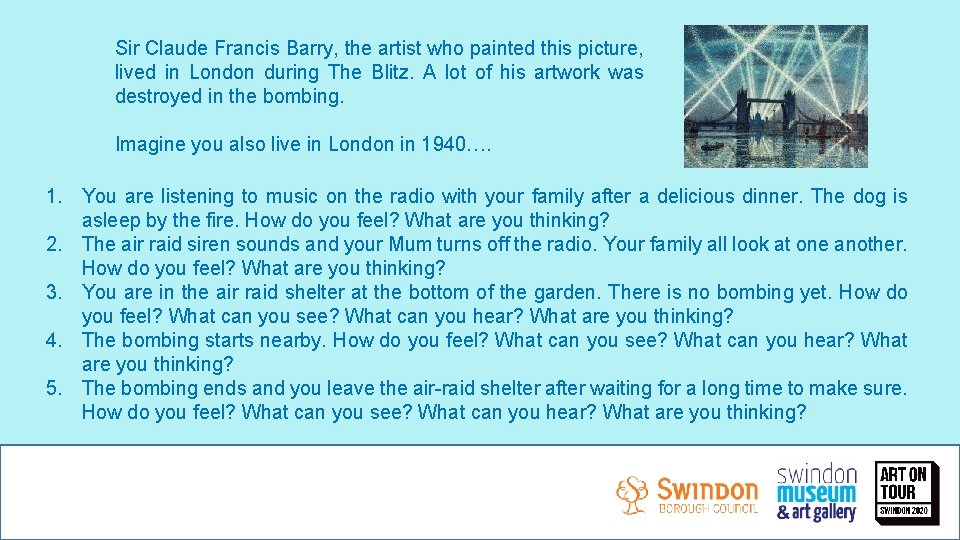
Sir Claude Francis Barry, the artist who painted this picture, lived in London during The Blitz. A lot of his artwork was destroyed in the bombing. Imagine you also live in London in 1940…. 1. You are listening to music on the radio with your family after a delicious dinner. The dog is asleep by the fire. How do you feel? What are you thinking? 2. The air raid siren sounds and your Mum turns off the radio. Your family all look at one another. How do you feel? What are you thinking? 3. You are in the air raid shelter at the bottom of the garden. There is no bombing yet. How do you feel? What can you see? What can you hear? What are you thinking? 4. The bombing starts nearby. How do you feel? What can you see? What can you hear? What are you thinking? 5. The bombing ends and you leave the air-raid shelter after waiting for a long time to make sure. How do you feel? What can you see? What can you hear? What are you thinking?
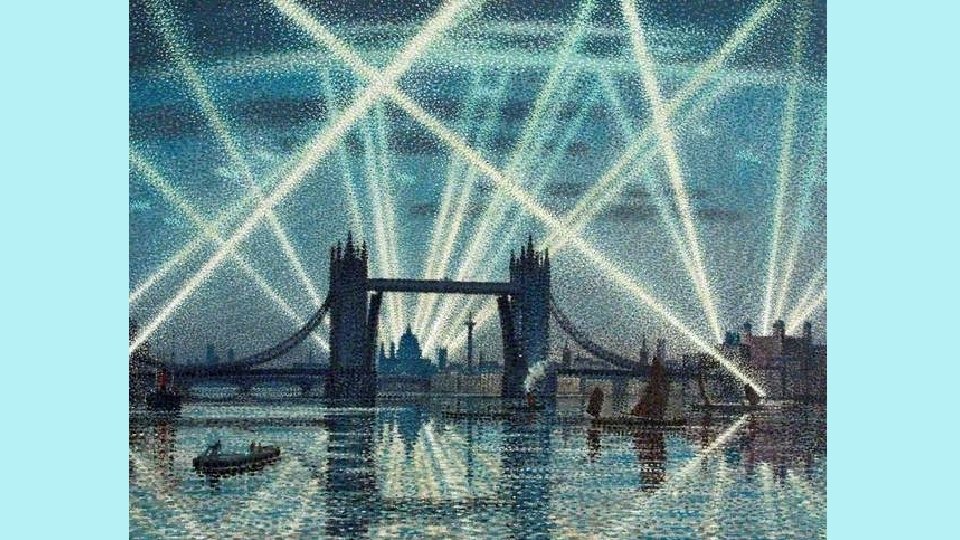
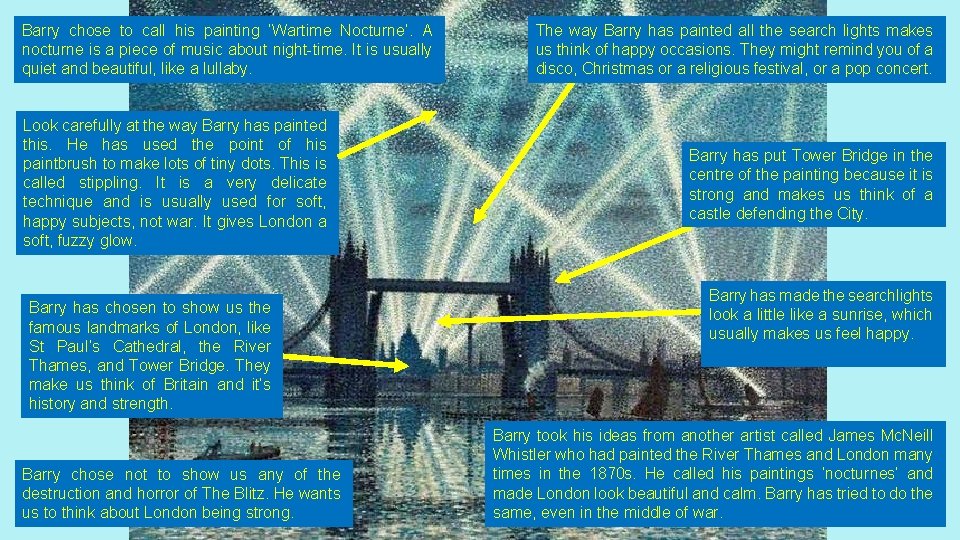
Barry chose to call his painting ‘Wartime Nocturne’. A nocturne is a piece of music about night-time. It is usually quiet and beautiful, like a lullaby. Look carefully at the way Barry has painted this. He has used the point of his paintbrush to make lots of tiny dots. This is called stippling. It is a very delicate technique and is usually used for soft, happy subjects, not war. It gives London a soft, fuzzy glow. Barry has chosen to show us the famous landmarks of London, like St Paul’s Cathedral, the River Thames, and Tower Bridge. They make us think of Britain and it’s history and strength. Barry chose not to show us any of the destruction and horror of The Blitz. He wants us to think about London being strong. The way Barry has painted all the search lights makes us think of happy occasions. They might remind you of a disco, Christmas or a religious festival, or a pop concert. Barry has put Tower Bridge in the centre of the painting because it is strong and makes us think of a castle defending the City. Barry has made the searchlights look a little like a sunrise, which usually makes us feel happy. Barry took his ideas from another artist called James Mc. Neill Whistler who had painted the River Thames and London many times in the 1870 s. He called his paintings ‘nocturnes’ and made London look beautiful and calm. Barry has tried to do the same, even in the middle of war.




- Slides: 19