
WALT compose a calligram What do you notice
- Slides: 33
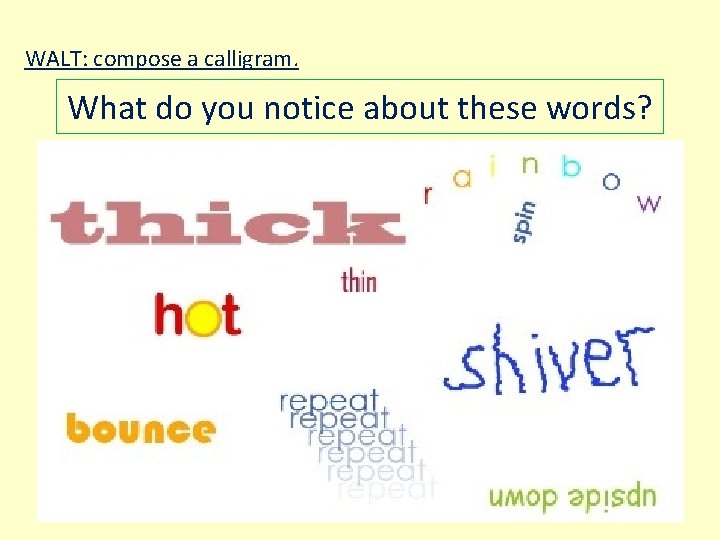
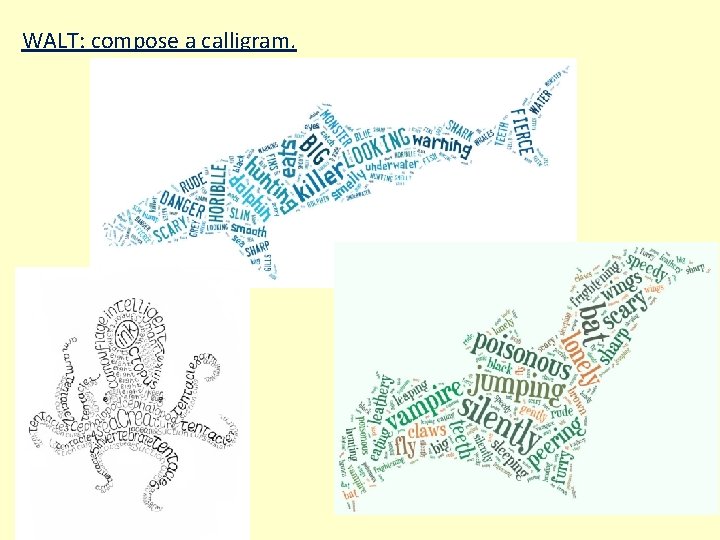
WALT: compose a calligram. What do you notice about these words?
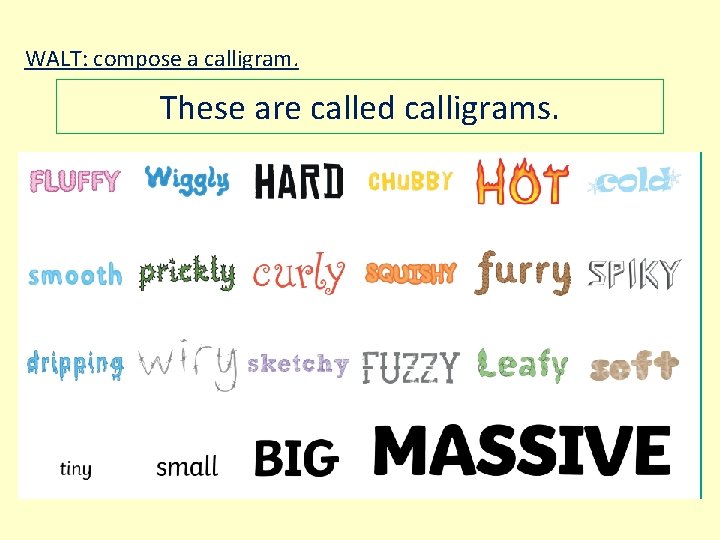
WALT: compose a calligram. These are called calligrams.
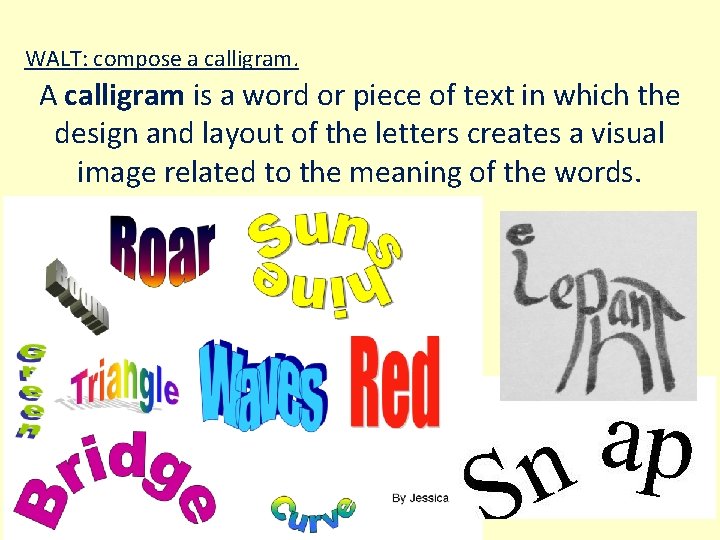
WALT: compose a calligram. A calligram is a word or piece of text in which the design and layout of the letters creates a visual image related to the meaning of the words. themselves.
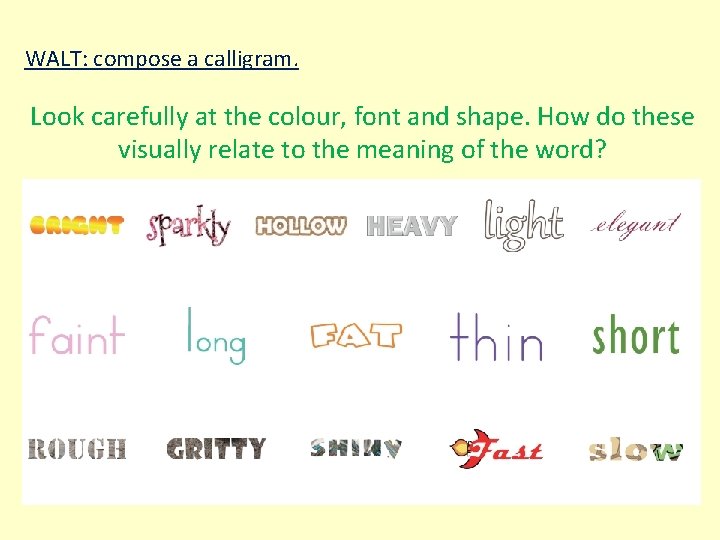
WALT: compose a calligram. Look carefully at the colour, font and shape. How do these visually relate to the meaning of the word?
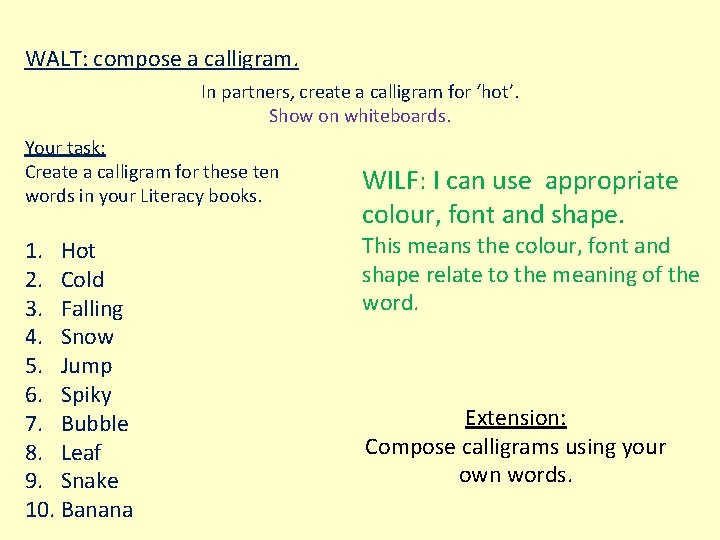
WALT: compose a calligram. In partners, create a calligram for ‘hot’. Show on whiteboards. Your task: Create a calligram for these ten words in your Literacy books. 1. Hot 2. Cold 3. Falling 4. Snow 5. Jump 6. Spiky 7. Bubble 8. Leaf 9. Snake 10. Banana WILF: I can use appropriate colour, font and shape. This means the colour, font and shape relate to the meaning of the word. Extension: Compose calligrams using your own words.
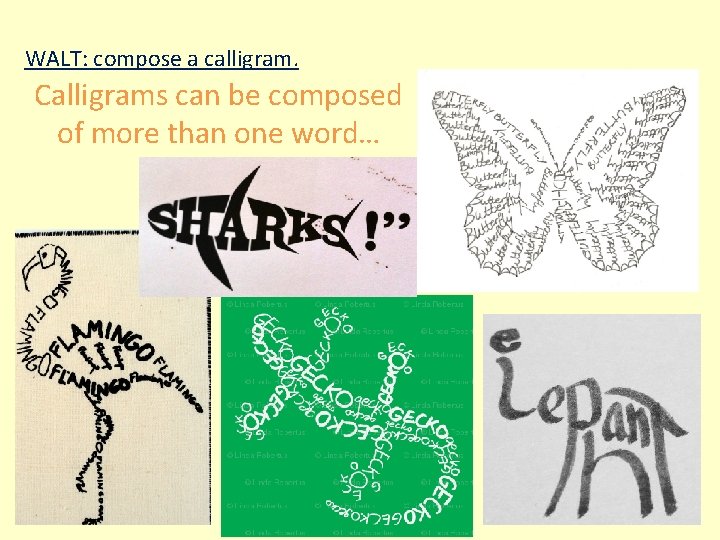
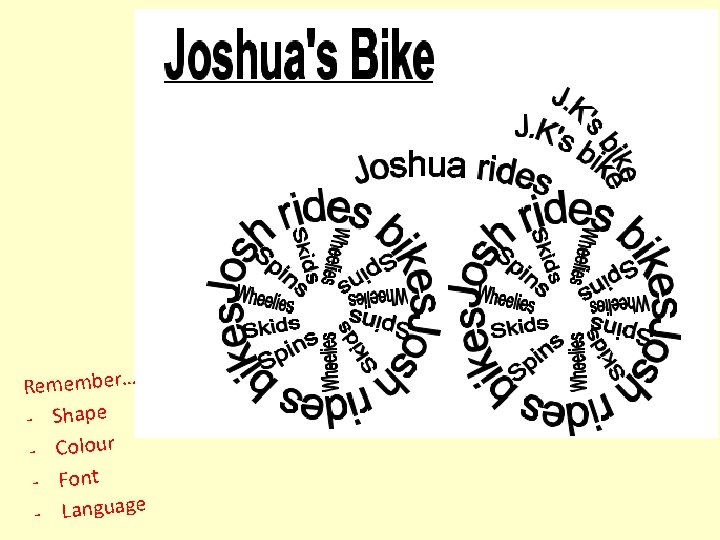
WALT: compose a calligram. Calligrams can be composed of more than one word…
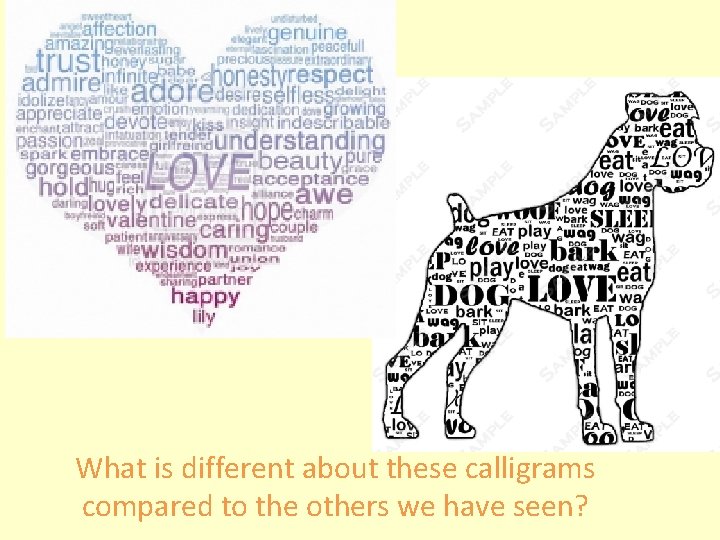
What is different about these calligrams compared to the others we have seen?
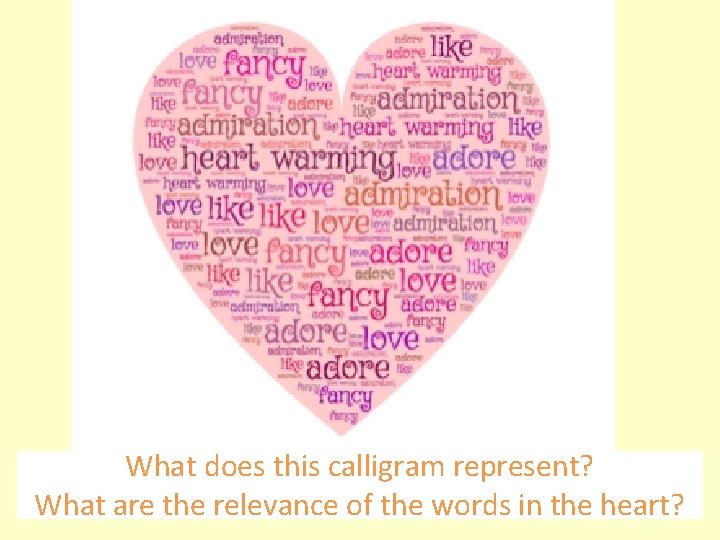
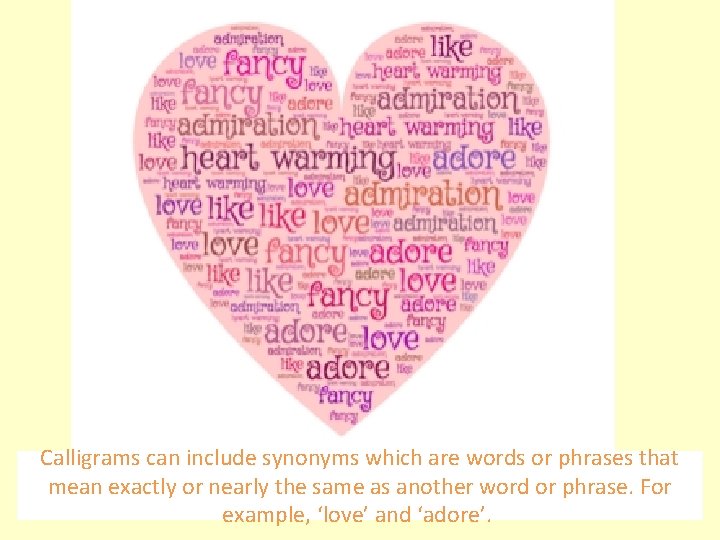
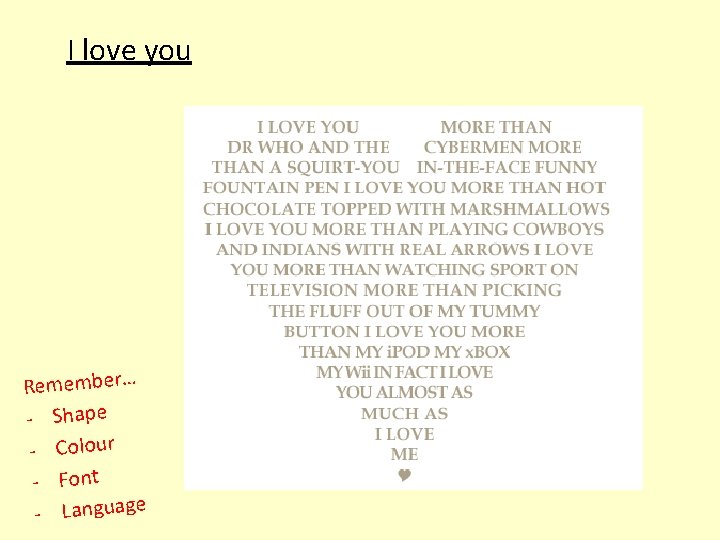
What does this calligram represent? What are the relevance of the words in the heart?
Calligrams can include synonyms which are words or phrases that mean exactly or nearly the same as another word or phrase. For example, ‘love’ and ‘adore’.
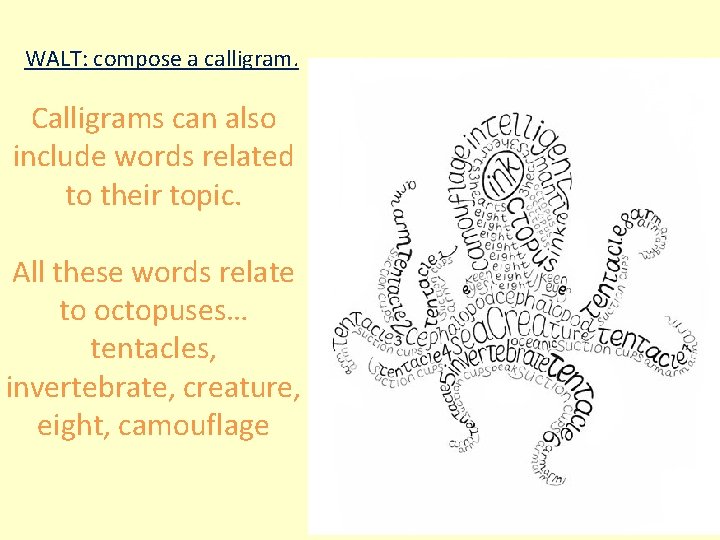
WALT: compose a calligram. Calligrams can also include words related to their topic. All these words relate to octopuses… tentacles, invertebrate, creature, eight, camouflage
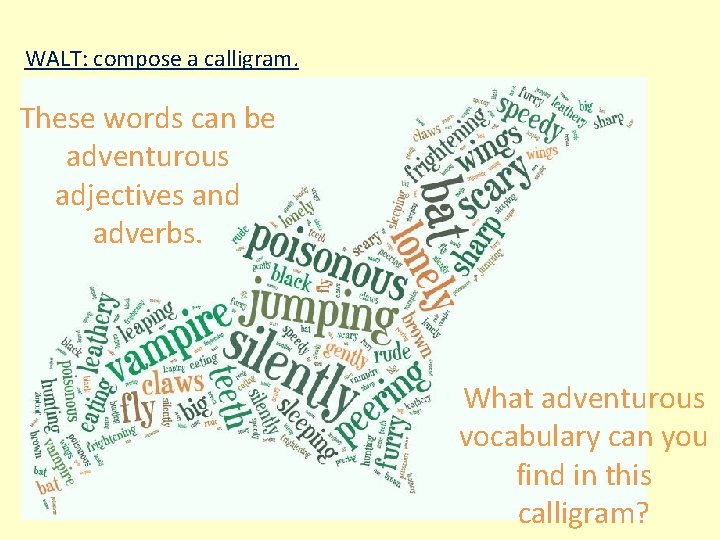
WALT: compose a calligram. These words can be adventurous adjectives and adverbs. What adventurous vocabulary can you find in this calligram?
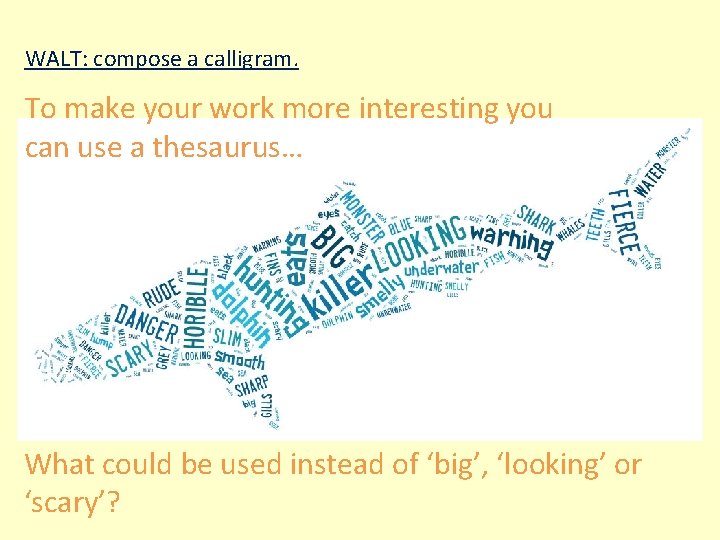
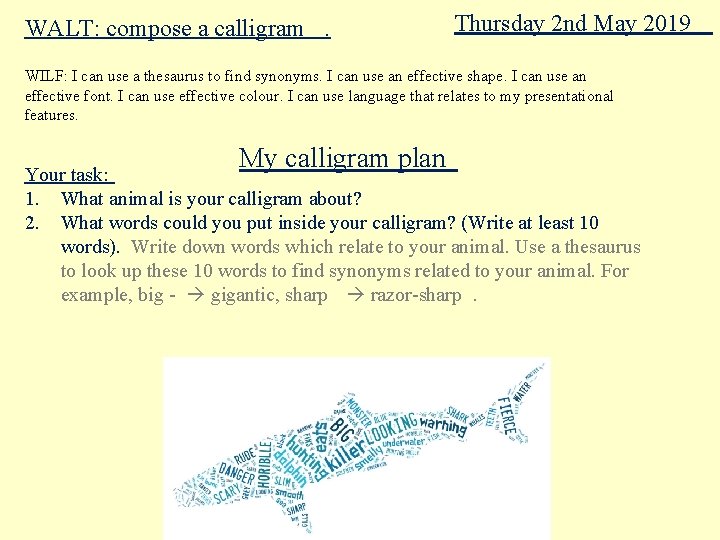
WALT: compose a calligram. To make your work more interesting you can use a thesaurus… What could be used instead of ‘big’, ‘looking’ or ‘scary’?
WALT: compose a calligram. Thursday 2 nd May 2019 WILF: I can use a thesaurus to find synonyms. I can use an effective shape. I can use an effective font. I can use effective colour. I can use language that relates to my presentational features. My calligram plan Your task: 1. What animal is your calligram about? 2. What words could you put inside your calligram? (Write at least 10 words). Write down words which relate to your animal. Use a thesaurus to look up these 10 words to find synonyms related to your animal. For example, big - gigantic, sharp razor-sharp.
WALT: compose a calligram.
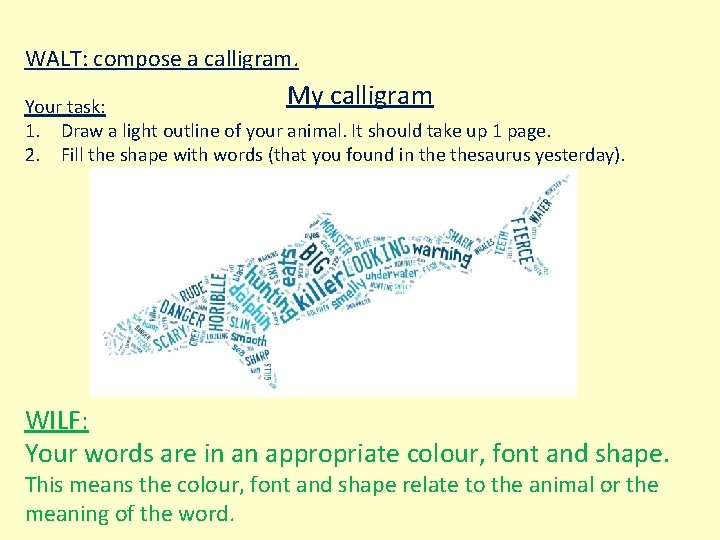
WALT: compose a calligram. My calligram Your task: 1. Draw a light outline of your animal. It should take up 1 page. 2. Fill the shape with words (that you found in thesaurus yesterday). WILF: Your words are in an appropriate colour, font and shape. This means the colour, font and shape relate to the animal or the meaning of the word.
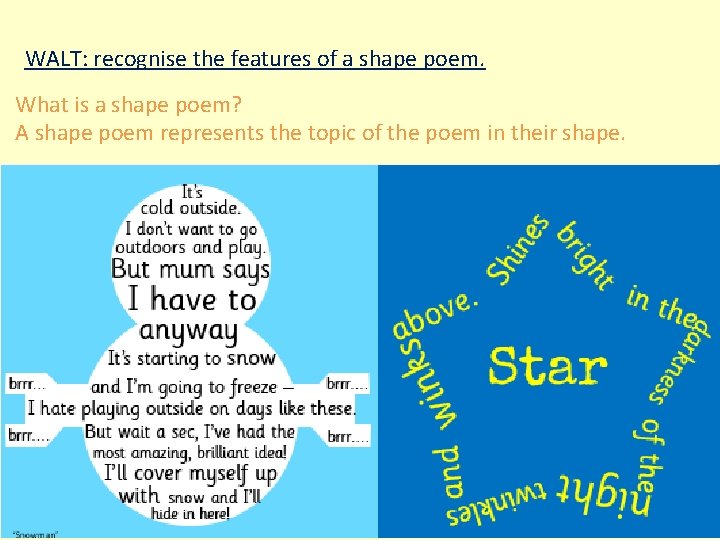
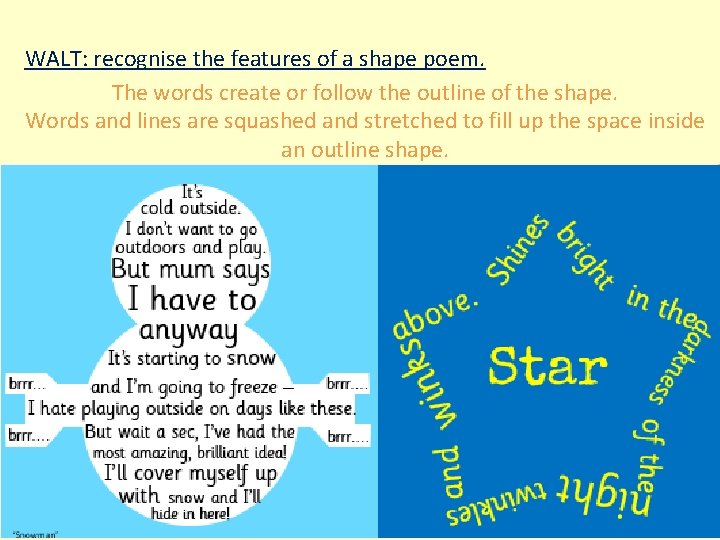
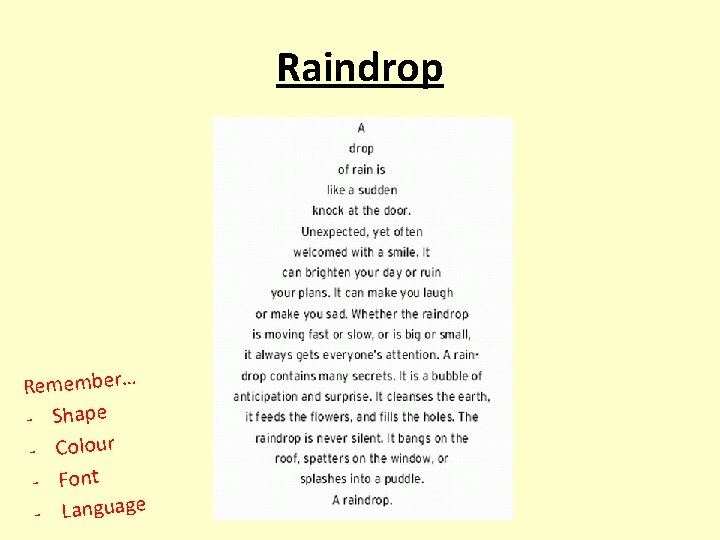
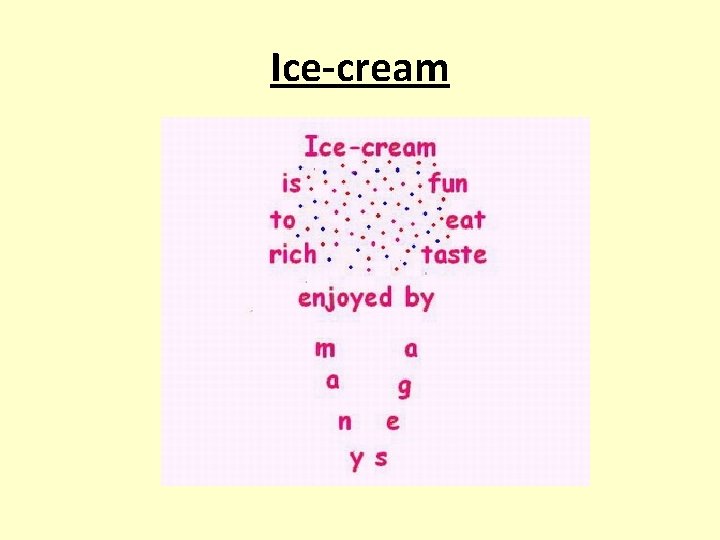
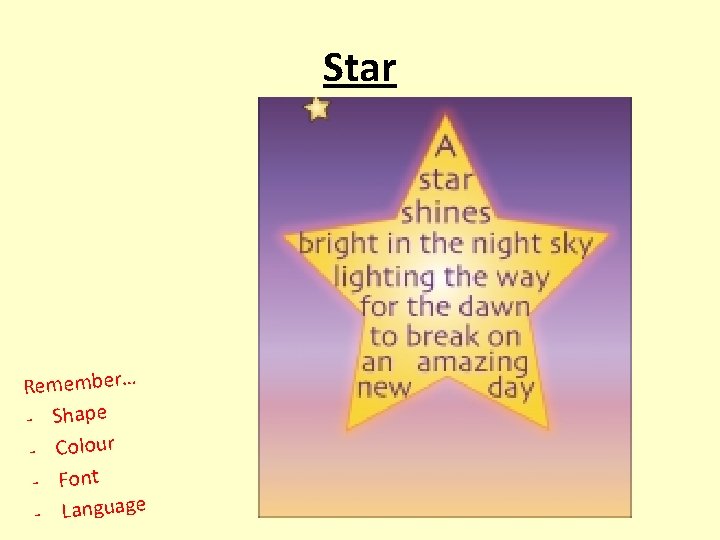
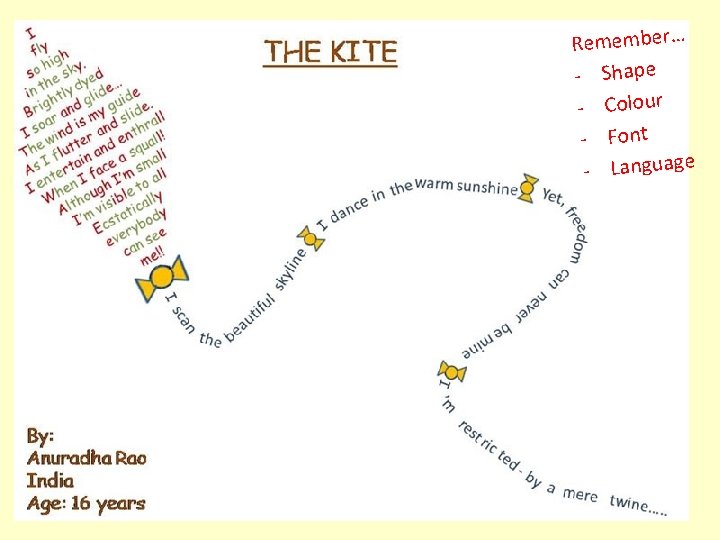
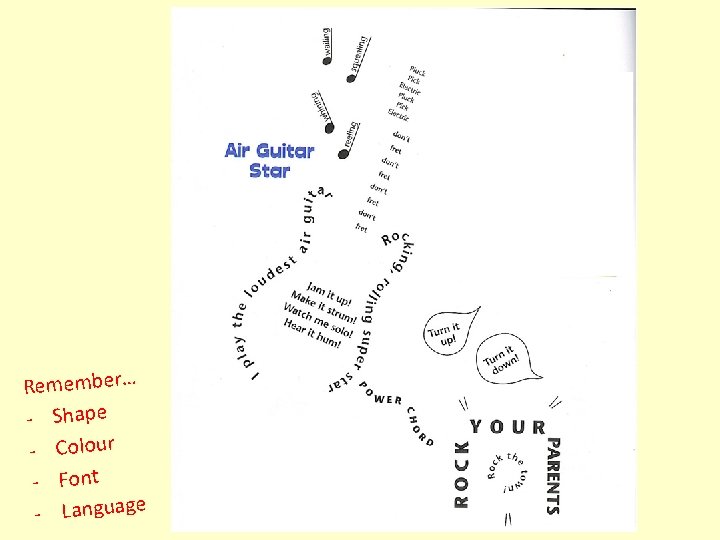
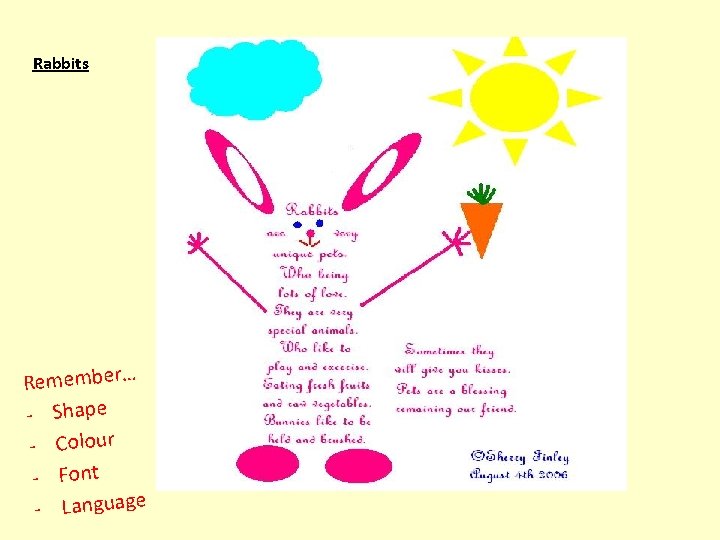
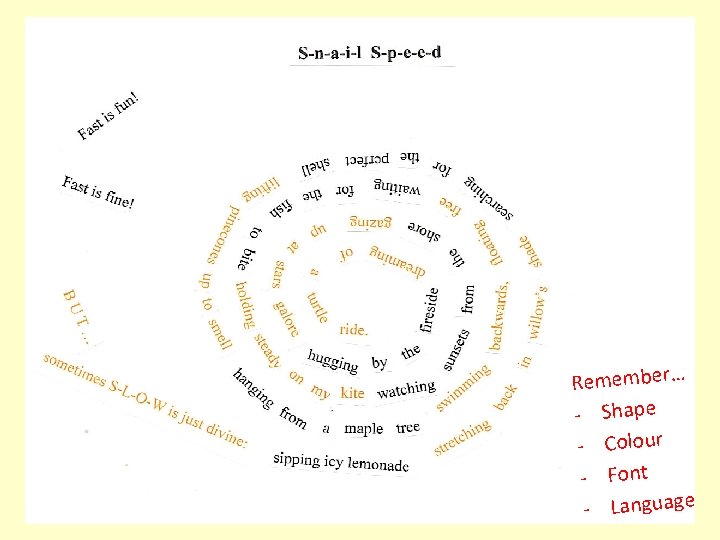
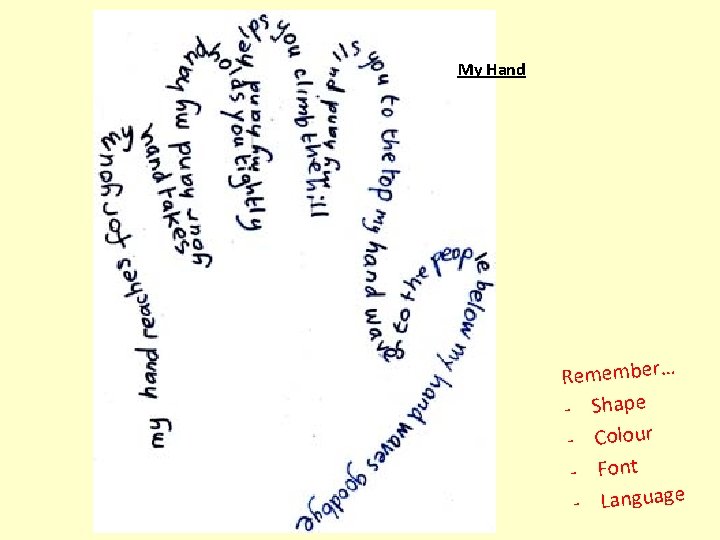
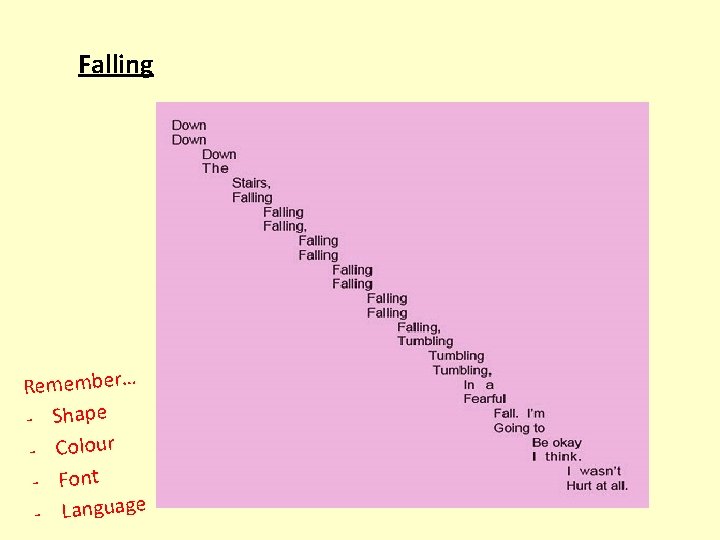
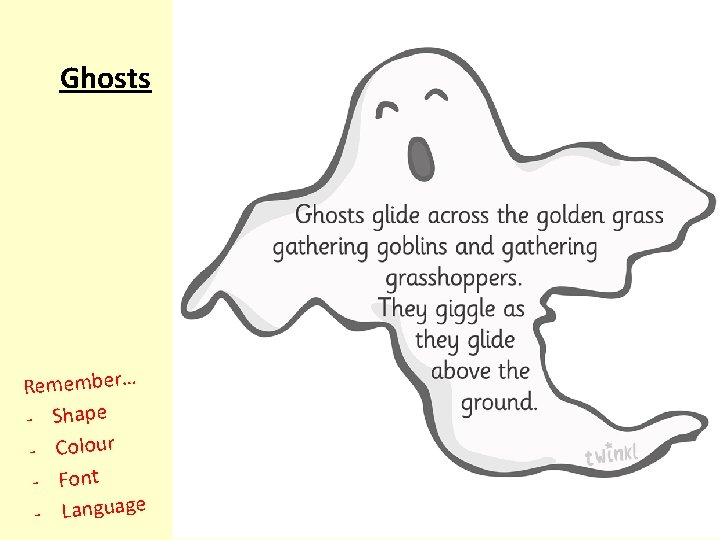
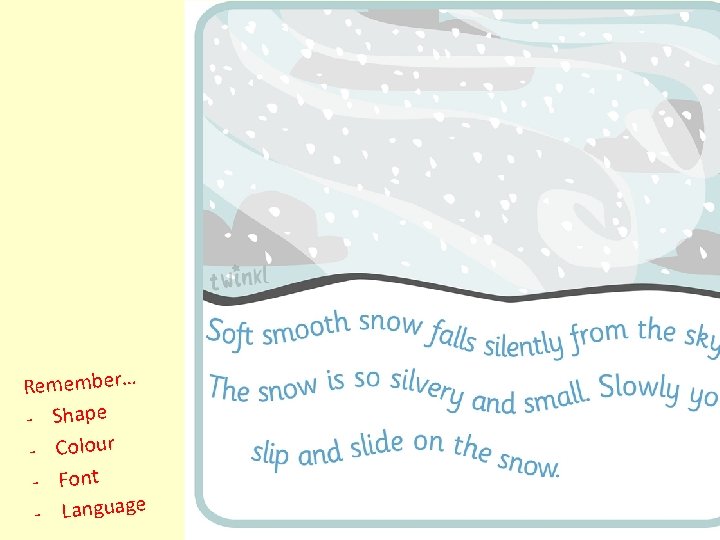
WALT: recognise the features of a shape poem. What is a shape poem? A shape poem represents the topic of the poem in their shape.
WALT: recognise the features of a shape poem. The words create or follow the outline of the shape. Words and lines are squashed and stretched to fill up the space inside an outline shape.
Remember… - Shape - Colour - Font - Language
I love you Remember… - Shape - Colour - Font - Language
Raindrop Remember… - Shape - Colour - Font - Language
Ice-cream
Star Remember… - Shape - Colour - Font - Language
Remember… - Shape - Colour - Font - Language
Remember… - Shape - Colour - Font - Language
Rabbits Remember… - Shape - Colour - Font - Language
Remember… - Shape - Colour - Font - Language
My Hand Remember… - Shape - Colour - Font - Language
Falling Remember… - Shape - Colour - Font - Language
Ghosts Remember… - Shape - Colour - Font - Language
Remember… - Shape - Colour - Font - Language
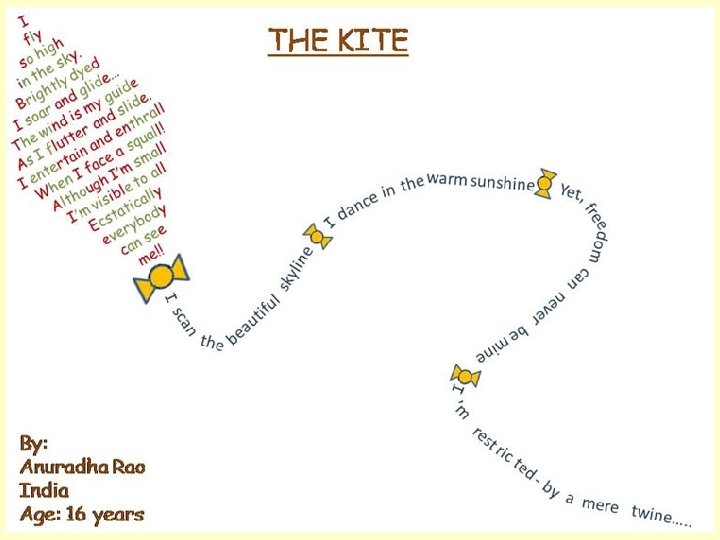
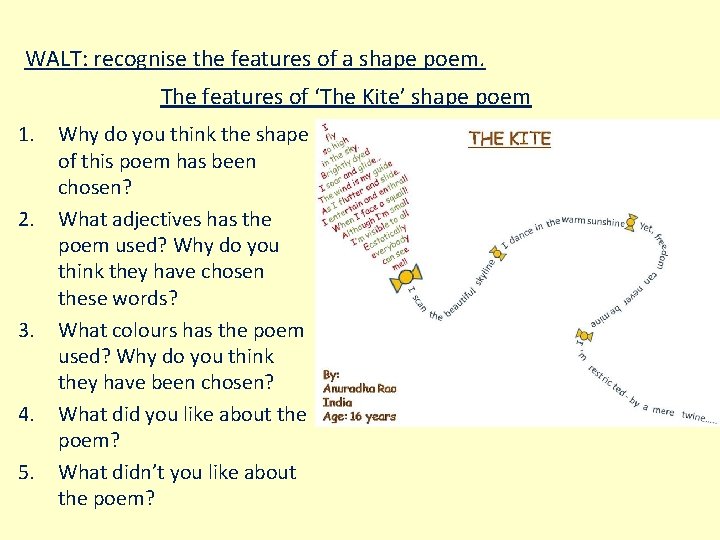
WALT: recognise the features of a shape poem. The features of ‘The Kite’ shape poem 1. 2. 3. 4. 5. Why do you think the shape of this poem has been chosen? What adjectives has the poem used? Why do you think they have chosen these words? What colours has the poem used? Why do you think they have been chosen? What did you like about the poem? What didn’t you like about the poem?
WALT: explain what I like and dislike about a poem and say why. What are the features of shape poems? You have 15 minutes to prepare a presentation on the shape poem on your table. They need to speak about: Why the shape of the poem is effective (1 person) Why the colour has been chosen (1 person) Choice of words and their impact (2 people) Why the font has been chosen (1 person) Other features that they have enjoyed (2 people)