
Wall Framing in Construction Whats in this presentation
- Slides: 24
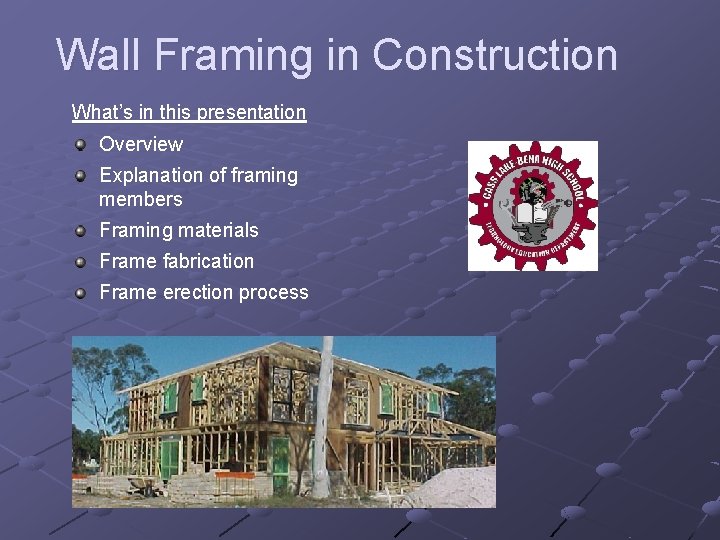
Wall Framing in Construction What’s in this presentation Overview Explanation of framing members Framing materials Frame fabrication Frame erection process
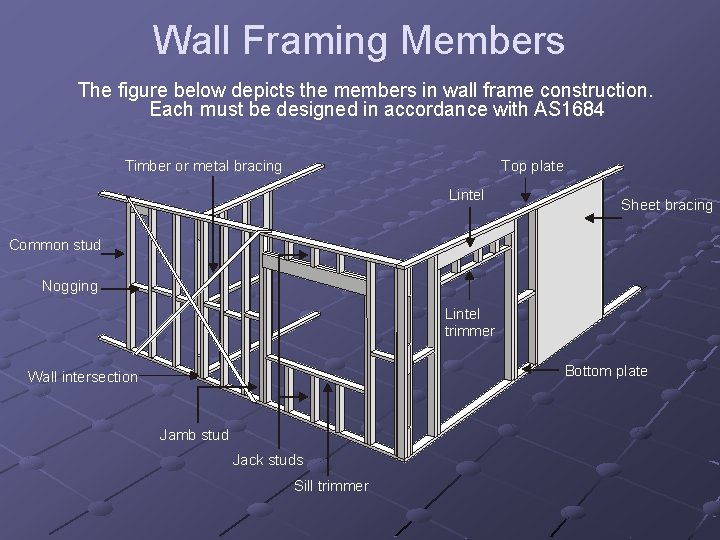
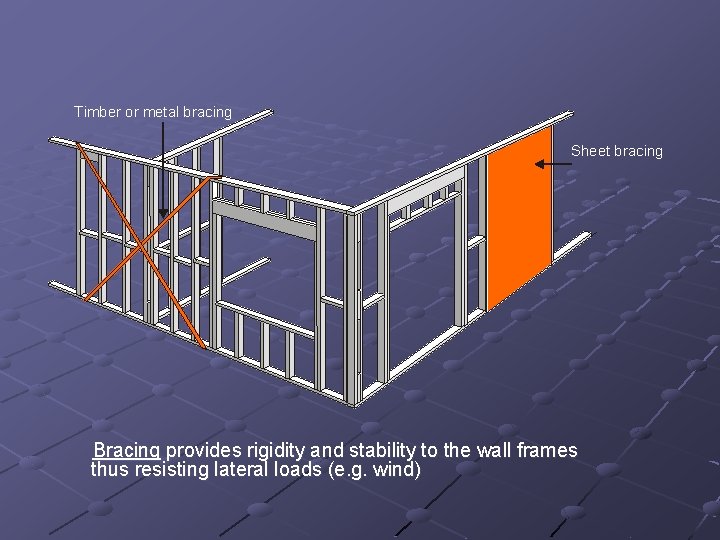
Wall Framing Members The figure below depicts the members in wall frame construction. Each must be designed in accordance with AS 1684 Timber or metal bracing Top plate Lintel Sheet bracing Common stud Nogging Lintel trimmer Bottom plate Wall intersection Jamb stud Jack studs Sill trimmer
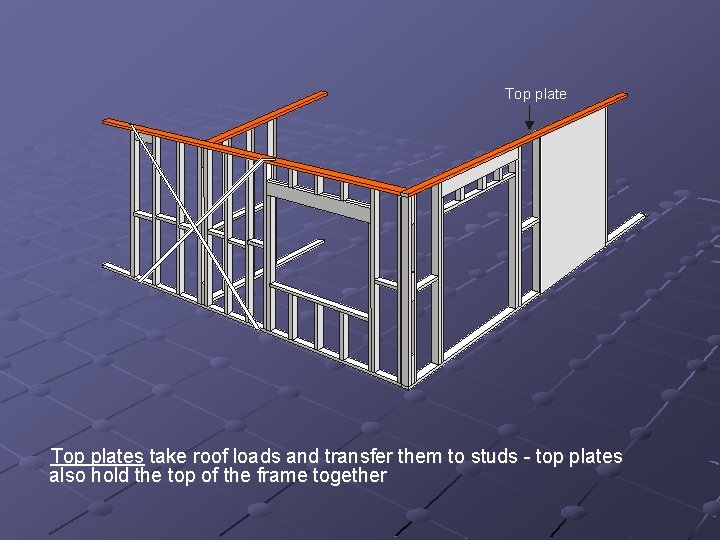
Top plates take roof loads and transfer them to studs - top plates also hold the top of the frame together
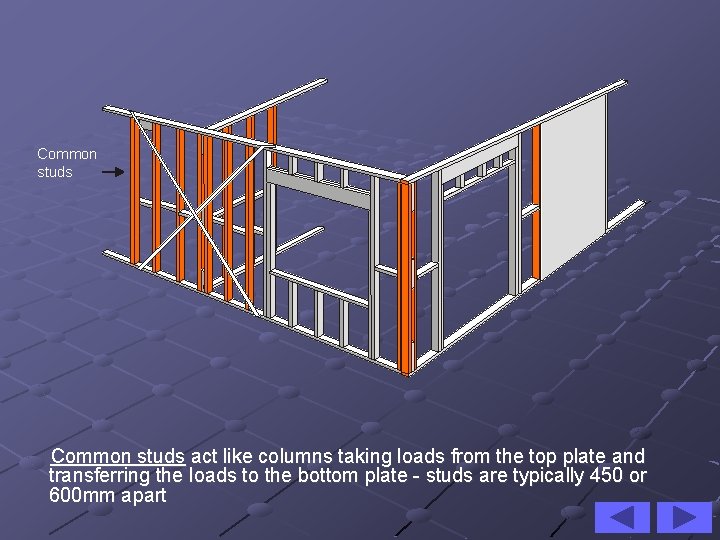
Common studs act like columns taking loads from the top plate and transferring the loads to the bottom plate - studs are typically 450 or 600 mm apart
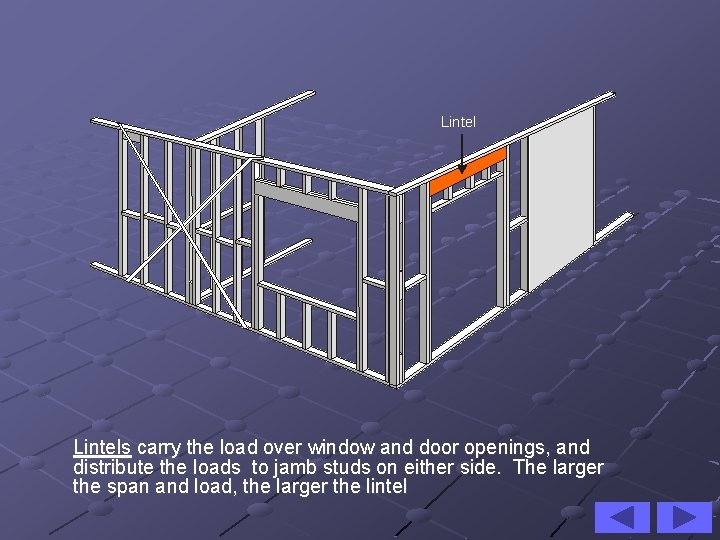
Lintels carry the load over window and door openings, and distribute the loads to jamb studs on either side. The larger the span and load, the larger the lintel
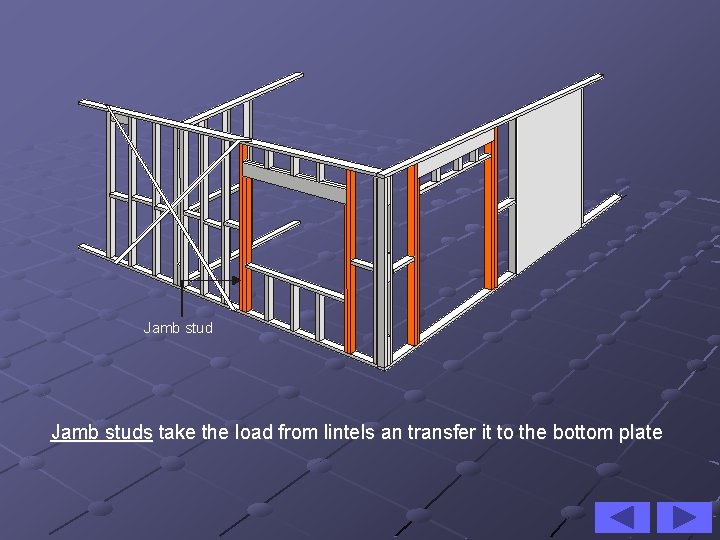
Jamb studs take the load from lintels an transfer it to the bottom plate
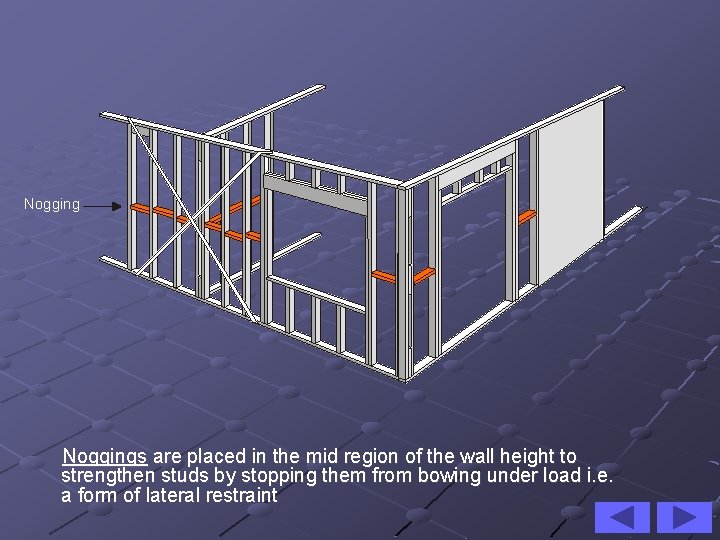
Noggings are placed in the mid region of the wall height to strengthen studs by stopping them from bowing under load i. e. a form of lateral restraint
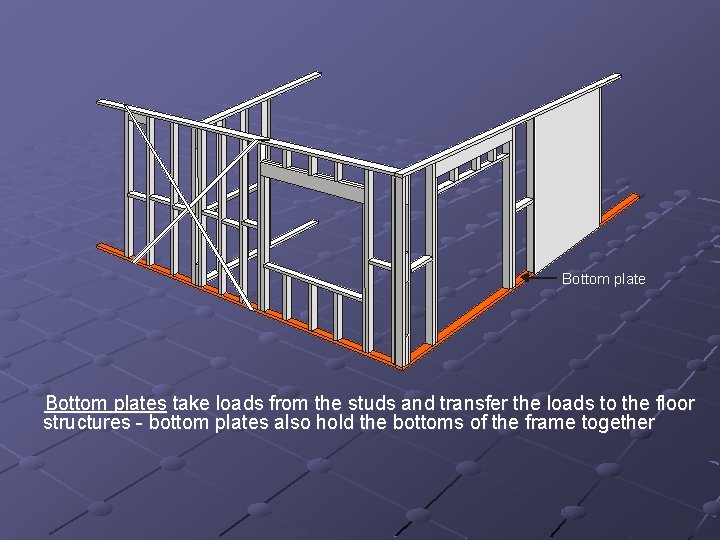
Bottom plates take loads from the studs and transfer the loads to the floor structures - bottom plates also hold the bottoms of the frame together
Timber or metal bracing Sheet bracing Bracing provides rigidity and stability to the wall frames thus resisting lateral loads (e. g. wind)
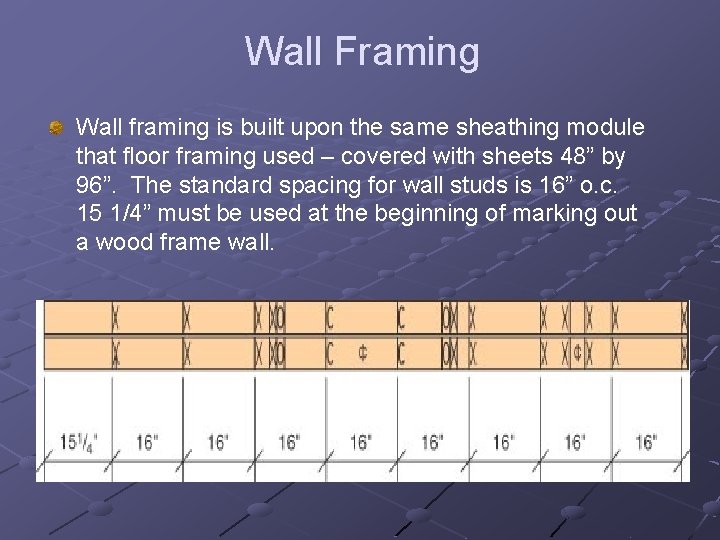
Wall Framing Wall framing is built upon the same sheathing module that floor framing used – covered with sheets 48” by 96”. The standard spacing for wall studs is 16” o. c. 15 1/4” must be used at the beginning of marking out a wood frame wall.
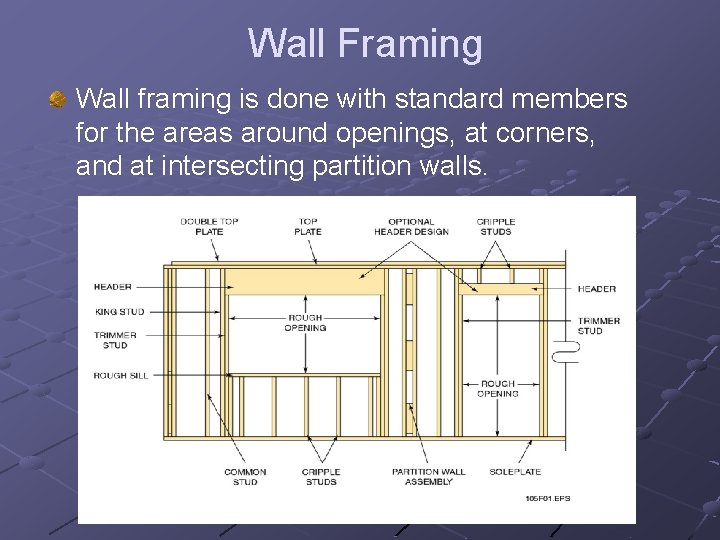
Wall Framing Wall framing is done with standard members for the areas around openings, at corners, and at intersecting partition walls.
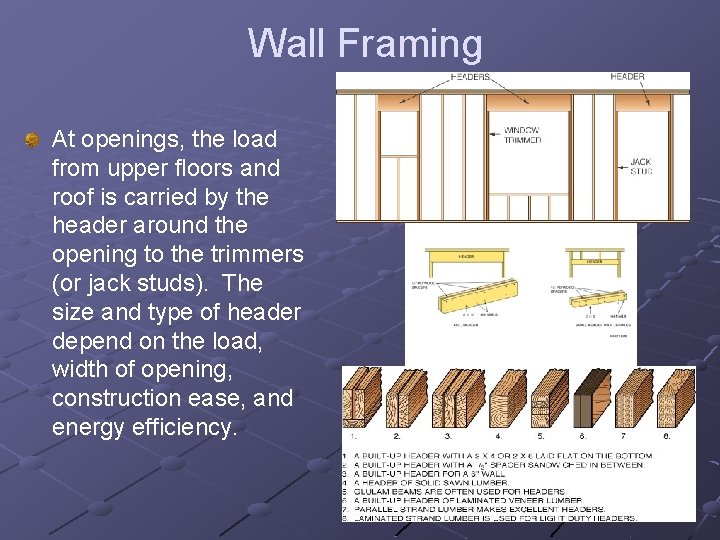
Wall Framing At openings, the load from upper floors and roof is carried by the header around the opening to the trimmers (or jack studs). The size and type of header depend on the load, width of opening, construction ease, and energy efficiency.
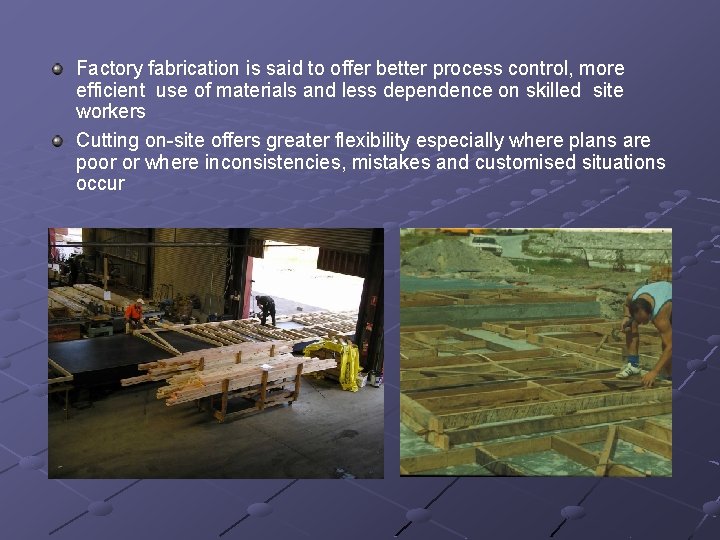
Factory fabrication is said to offer better process control, more efficient use of materials and less dependence on skilled site workers Cutting on-site offers greater flexibility especially where plans are poor or where inconsistencies, mistakes and customised situations occur
Frame Erection Process Irrespective of the method of fabrication, erection usually involves carpentry teams of 2 -4 people Nail guns are used extensively for fast assembly and connection of frames Electric saws and drills are commonly used, and even chain saws where rough cutting is appropriate Equipment may be run off portable generators if mains power isn’t available Scaffolding may be required subject to occupational health and safety legislation The process is described step by step (as follows)
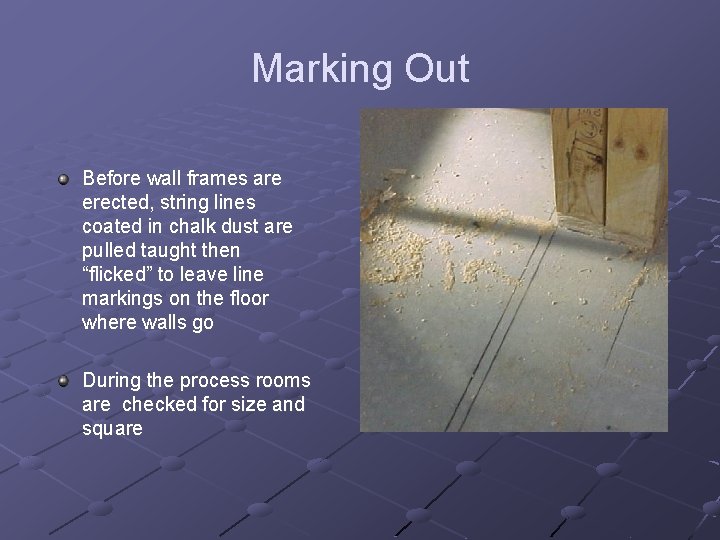
Marking Out Before wall frames are erected, string lines coated in chalk dust are pulled taught then “flicked” to leave line markings on the floor where walls go During the process rooms are checked for size and square
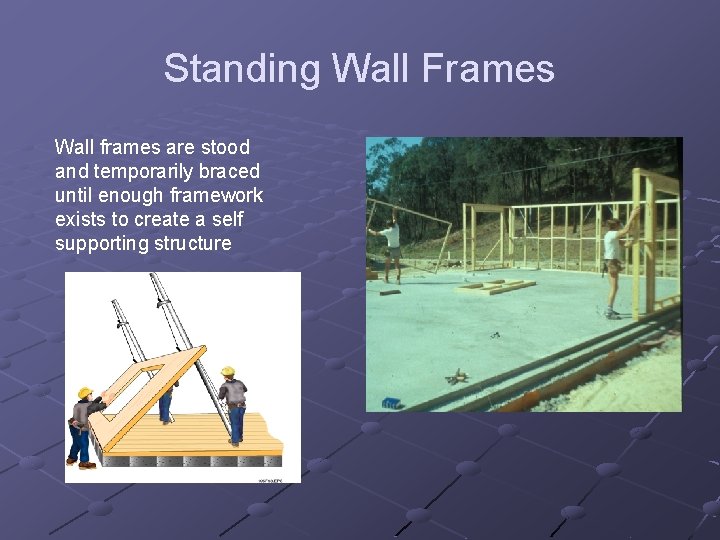
Standing Wall Frames Wall frames are stood and temporarily braced until enough framework exists to create a self supporting structure
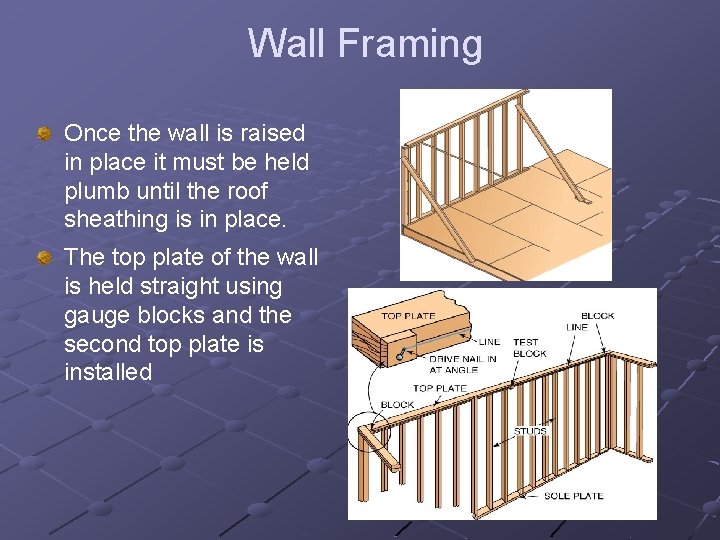
Wall Framing Once the wall is raised in place it must be held plumb until the roof sheathing is in place. The top plate of the wall is held straight using gauge blocks and the second top plate is installed
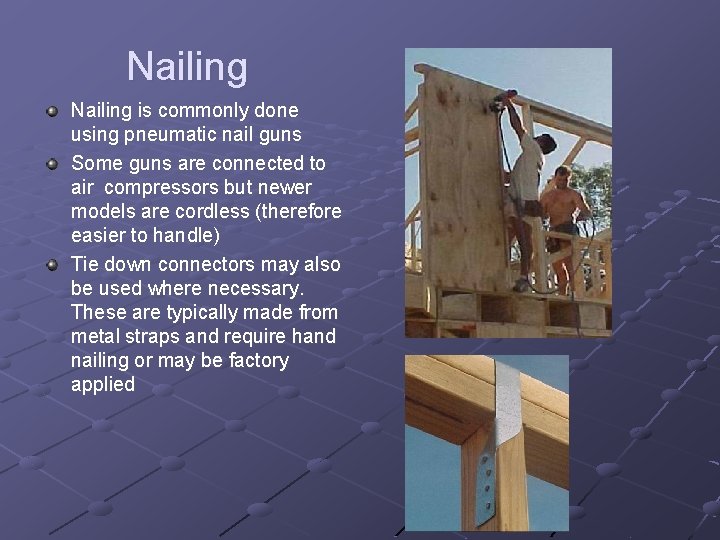
Nailing is commonly done using pneumatic nail guns Some guns are connected to air compressors but newer models are cordless (therefore easier to handle) Tie down connectors may also be used where necessary. These are typically made from metal straps and require hand nailing or may be factory applied
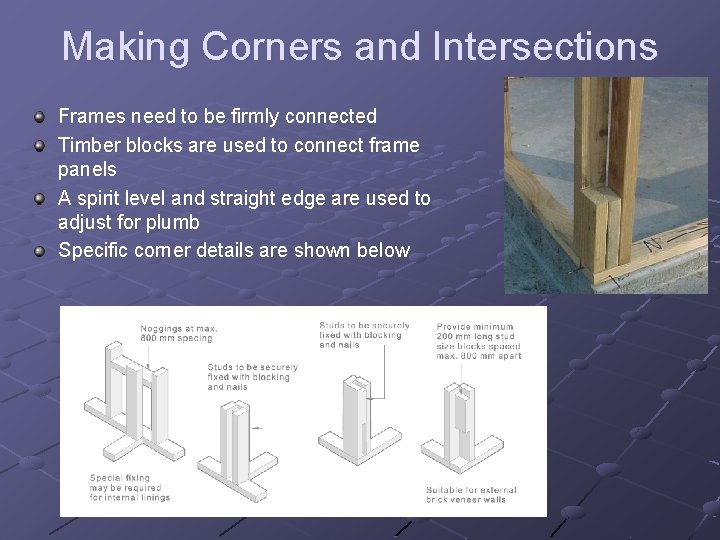
Making Corners and Intersections Frames need to be firmly connected Timber blocks are used to connect frame panels A spirit level and straight edge are used to adjust for plumb Specific corner details are shown below
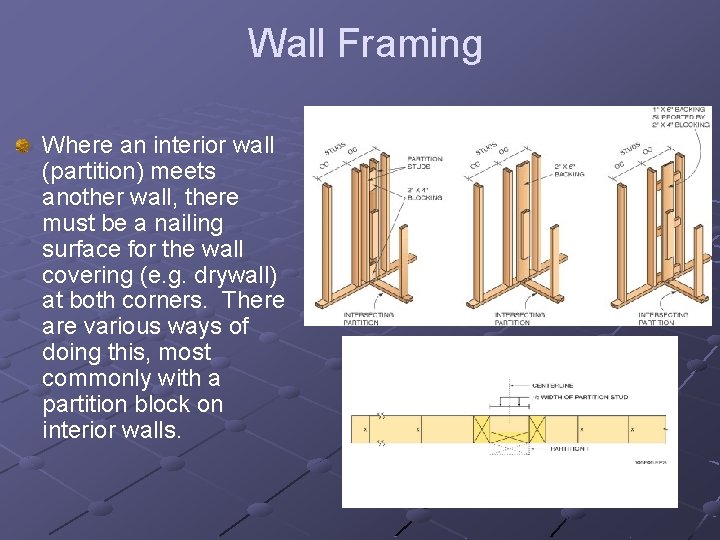
Wall Framing Where an interior wall (partition) meets another wall, there must be a nailing surface for the wall covering (e. g. drywall) at both corners. There are various ways of doing this, most commonly with a partition block on interior walls.
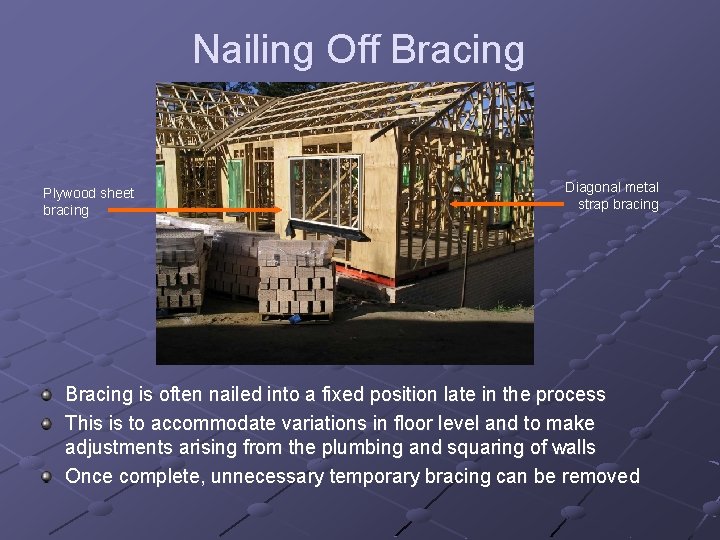
Nailing Off Bracing Plywood sheet bracing Diagonal metal strap bracing Bracing is often nailed into a fixed position late in the process This is to accommodate variations in floor level and to make adjustments arising from the plumbing and squaring of walls Once complete, unnecessary temporary bracing can be removed
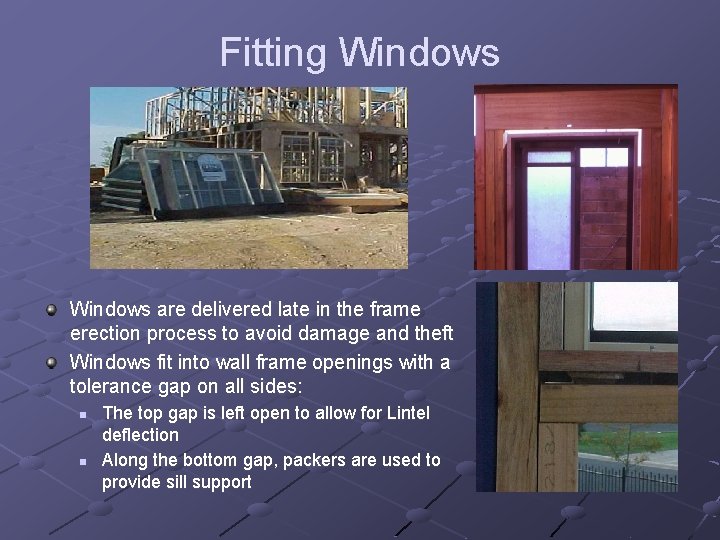
Fitting Windows are delivered late in the frame erection process to avoid damage and theft Windows fit into wall frame openings with a tolerance gap on all sides: n n The top gap is left open to allow for Lintel deflection Along the bottom gap, packers are used to provide sill support
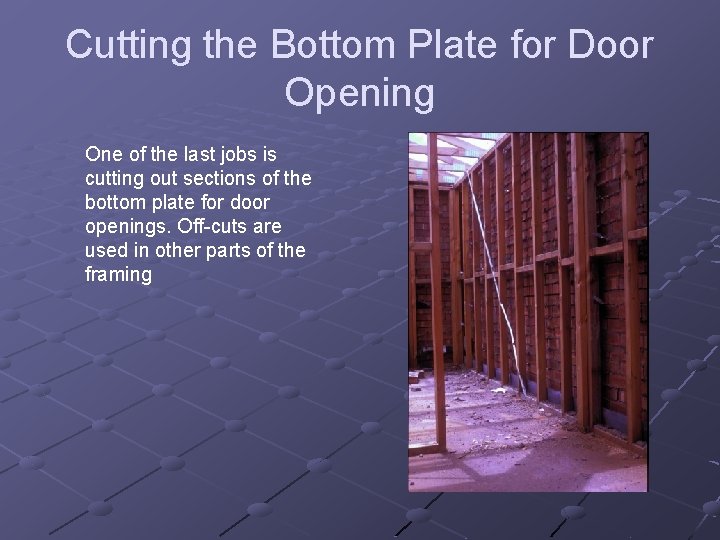
Cutting the Bottom Plate for Door Opening One of the last jobs is cutting out sections of the bottom plate for door openings. Off-cuts are used in other parts of the framing
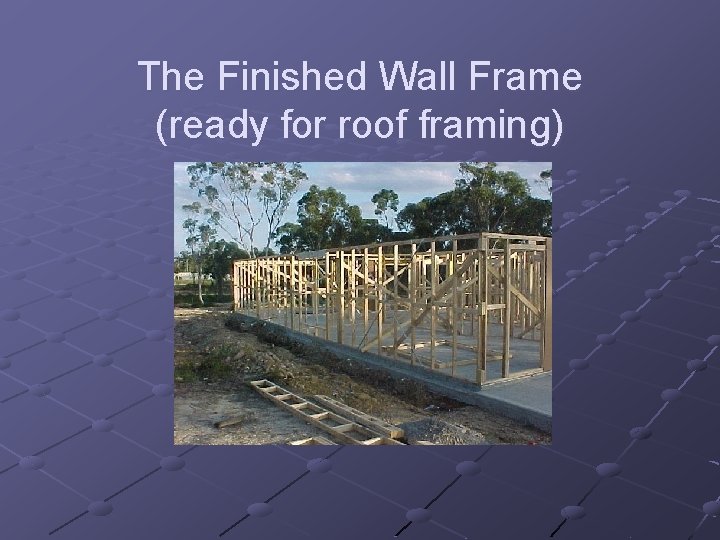
The Finished Wall Frame (ready for roof framing)