
Walking through the coding process Qualitative data can
- Slides: 8
Walking through the coding process
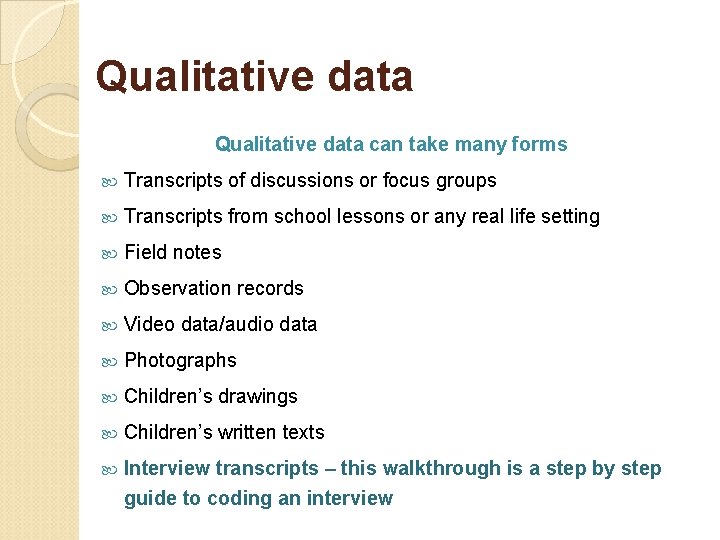
Qualitative data can take many forms Transcripts of discussions or focus groups Transcripts from school lessons or any real life setting Field notes Observation records Video data/audio data Photographs Children’s drawings Children’s written texts Interview transcripts – this walkthrough is a step by step guide to coding an interview
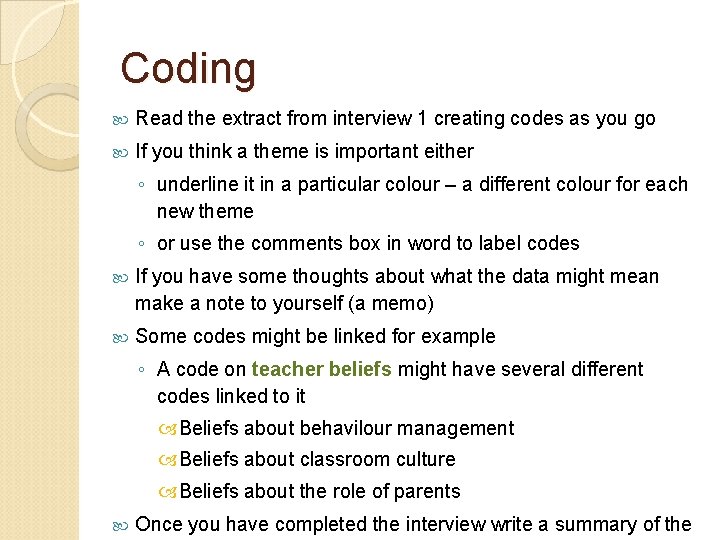
Coding Read the extract from interview 1 creating codes as you go If you think a theme is important either ◦ underline it in a particular colour – a different colour for each new theme ◦ or use the comments box in word to label codes If you have some thoughts about what the data might mean make a note to yourself (a memo) Some codes might be linked for example ◦ A code on teacher beliefs might have several different codes linked to it Beliefs about behavilour management Beliefs about classroom culture Beliefs about the role of parents Once you have completed the interview write a summary of the
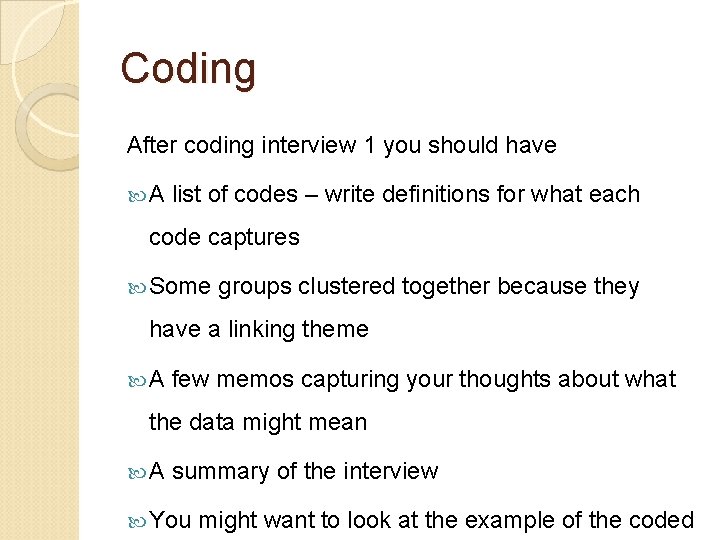
Coding After coding interview 1 you should have A list of codes – write definitions for what each code captures Some groups clustered together because they have a linking theme A few memos capturing your thoughts about what the data might mean A summary of the interview You might want to look at the example of the coded
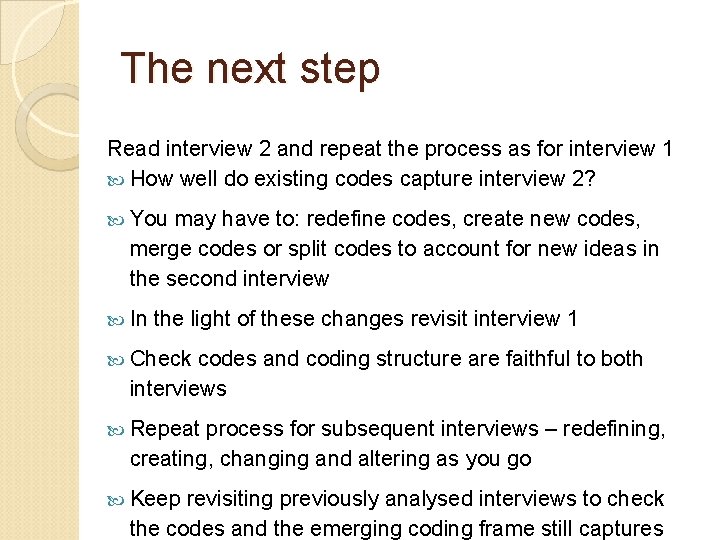
The next step Read interview 2 and repeat the process as for interview 1 How well do existing codes capture interview 2? You may have to: redefine codes, create new codes, merge codes or split codes to account for new ideas in the second interview In the light of these changes revisit interview 1 Check codes and coding structure are faithful to both interviews Repeat process for subsequent interviews – redefining, creating, changing and altering as you go Keep revisiting previously analysed interviews to check the codes and the emerging coding frame still captures
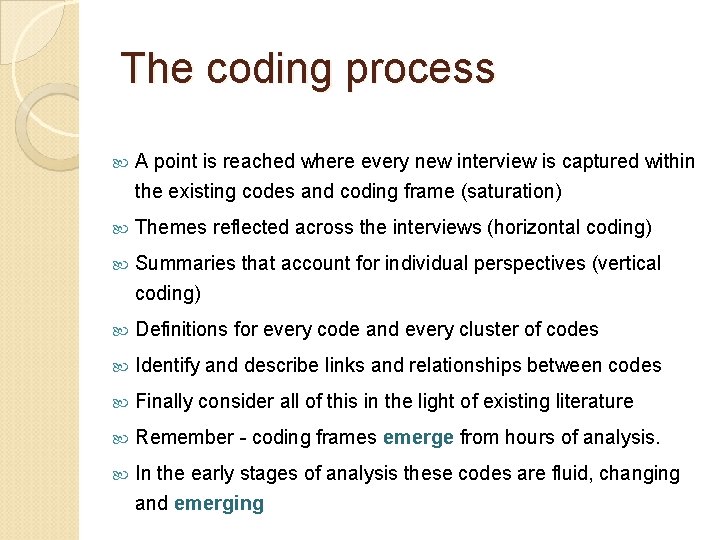
The coding process A point is reached where every new interview is captured within the existing codes and coding frame (saturation) Themes reflected across the interviews (horizontal coding) Summaries that account for individual perspectives (vertical coding) Definitions for every code and every cluster of codes Identify and describe links and relationships between codes Finally consider all of this in the light of existing literature Remember - coding frames emerge from hours of analysis. In the early stages of analysis these codes are fluid, changing and emerging
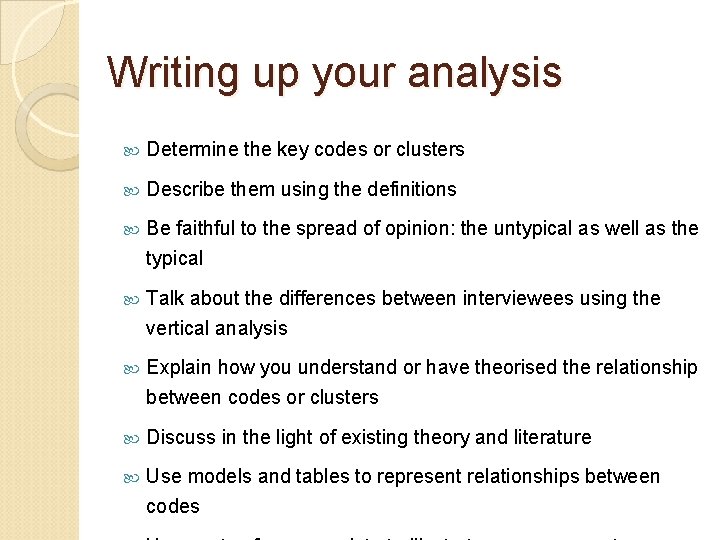
Writing up your analysis Determine the key codes or clusters Describe them using the definitions Be faithful to the spread of opinion: the untypical as well as the typical Talk about the differences between interviewees using the vertical analysis Explain how you understand or have theorised the relationship between codes or clusters Discuss in the light of existing theory and literature Use models and tables to represent relationships between codes
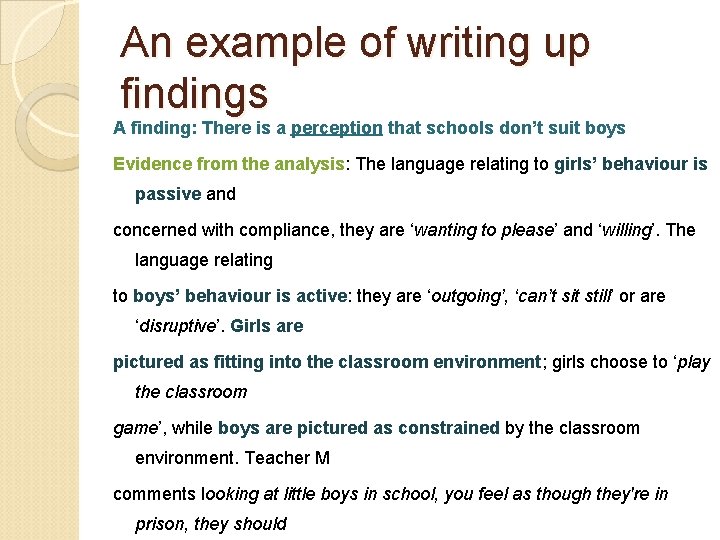
An example of writing up findings A finding: There is a perception that schools don’t suit boys Evidence from the analysis: The language relating to girls’ behaviour is passive and concerned with compliance, they are ‘wanting to please’ and ‘willing’. The language relating to boys’ behaviour is active: they are ‘outgoing’, ‘can’t sit still’ or are ‘disruptive’. Girls are pictured as fitting into the classroom environment; girls choose to ‘play the classroom game’, while boys are pictured as constrained by the classroom environment. Teacher M comments looking at little boys in school, you feel as though they're in prison, they should