
WALKING IN SRI LANKA 1 A walk on
- Slides: 16
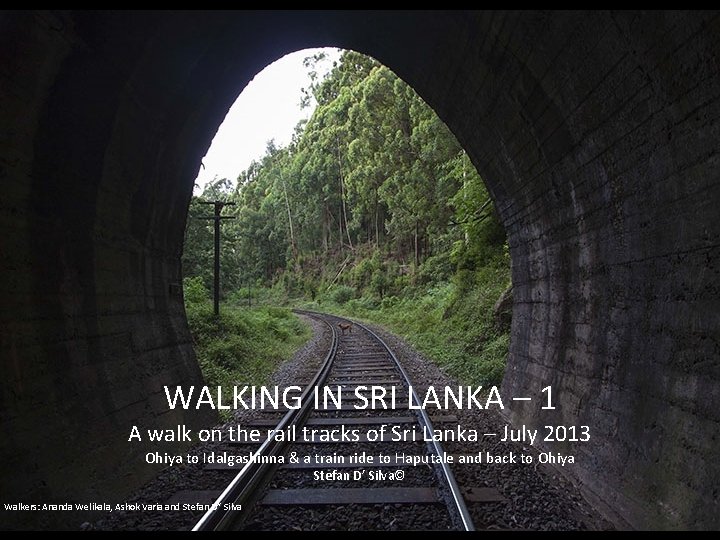
WALKING IN SRI LANKA – 1 A walk on the rail tracks of Sri Lanka – July 2013 Ohiya to Idalgashinna & a train ride to Haputale and back to Ohiya Stefan D’ Silva© Walkers: Ananda Welikala, Ashok Varia and Stefan D” Silva
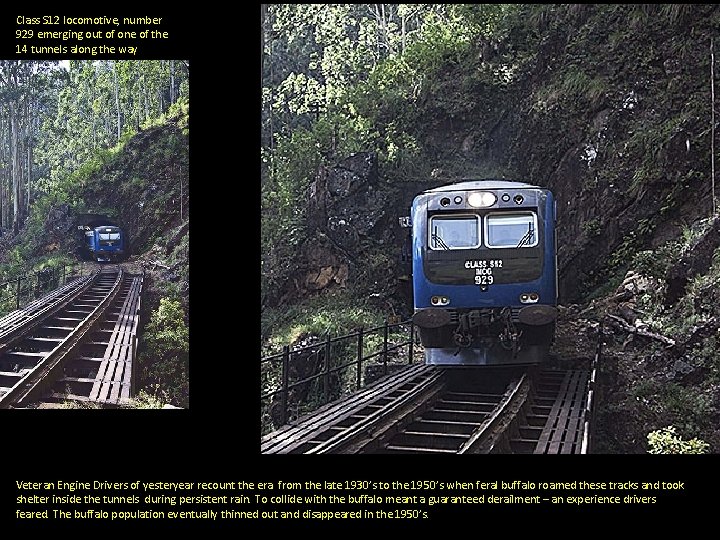
Class S 12 locomotive, number 929 emerging out of one of the 14 tunnels along the way Veteran Engine Drivers of yesteryear recount the era from the late 1930’s to the 1950’s when feral buffalo roamed these tracks and took shelter inside the tunnels during persistent rain. To collide with the buffalo meant a guaranteed derailment – an experience drivers feared. The buffalo population eventually thinned out and disappeared in the 1950’s.
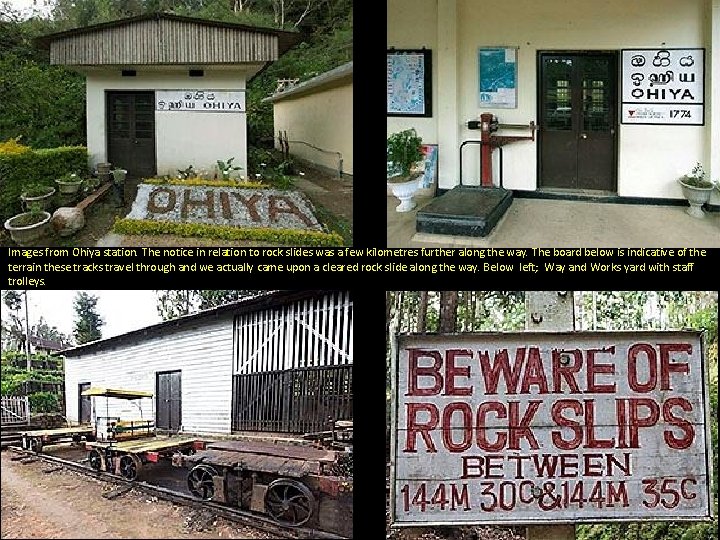
Images from Ohiya station. The notice in relation to rock slides was a few kilometres further along the way. The board below is indicative of the terrain these tracks travel through and we actually came upon a cleared rock slide along the way. Below left; Way and Works yard with staff trolleys.
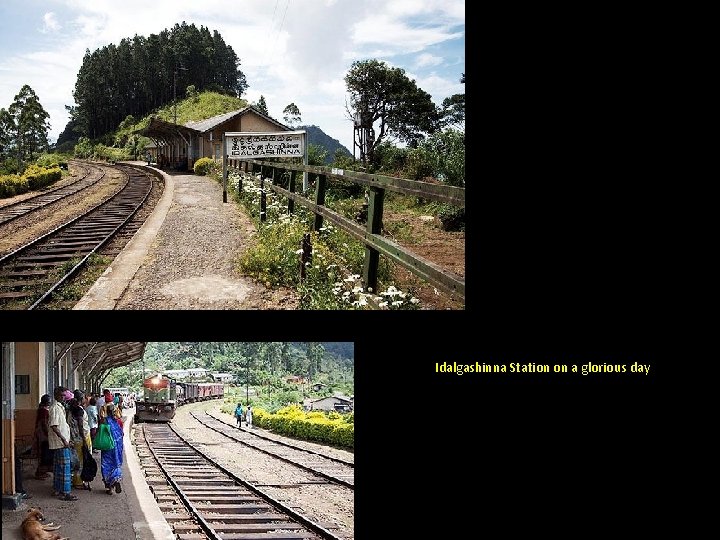
Idalgashinna Station on a glorious day
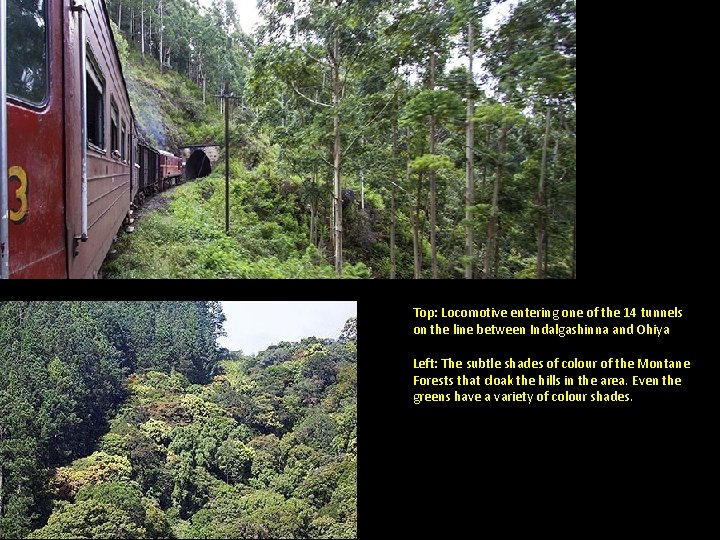
Top: Locomotive entering one of the 14 tunnels on the line between Indalgashinna and Ohiya Left: The subtle shades of colour of the Montane Forests that cloak the hills in the area. Even the greens have a variety of colour shades.
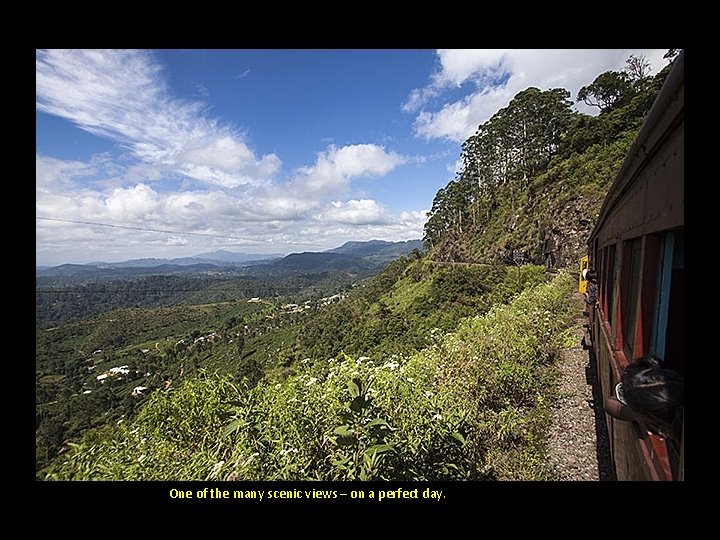
One of the many scenic views – on a perfect day.
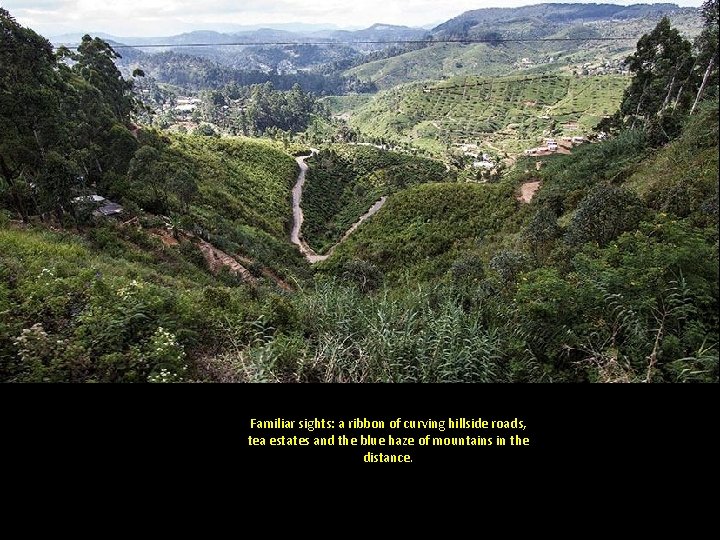
Familiar sights: a ribbon of curving hillside roads, tea estates and the blue haze of mountains in the distance.
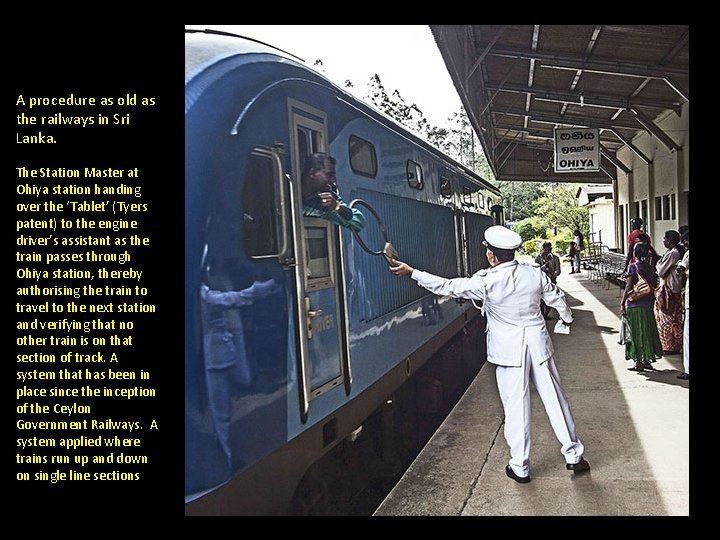
A procedure as old as the railways in Sri Lanka. The Station Master at Ohiya station handing over the ‘Tablet’ (Tyers patent) to the engine driver’s assistant as the train passes through Ohiya station, thereby authorising the train to travel to the next station and verifying that no other train is on that section of track. A system that has been in place since the inception of the Ceylon Government Railways. A system applied where trains run up and down on single line sections
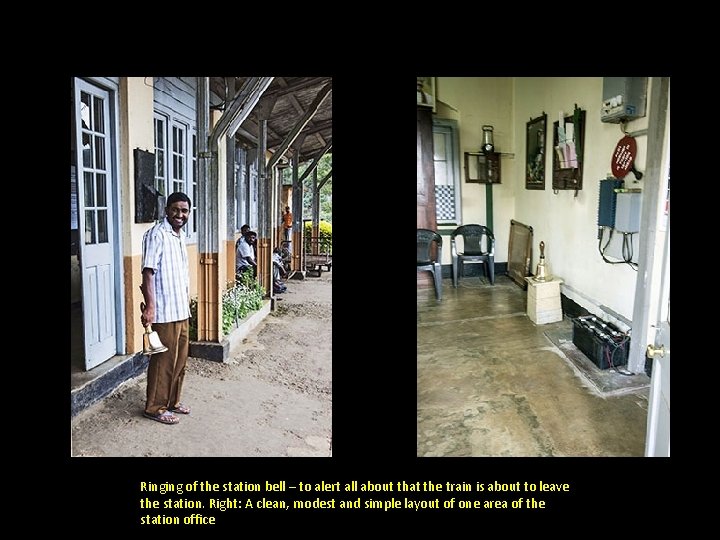
Ringing of the station bell – to alert all about that the train is about to leave the station. Right: A clean, modest and simple layout of one area of the station office
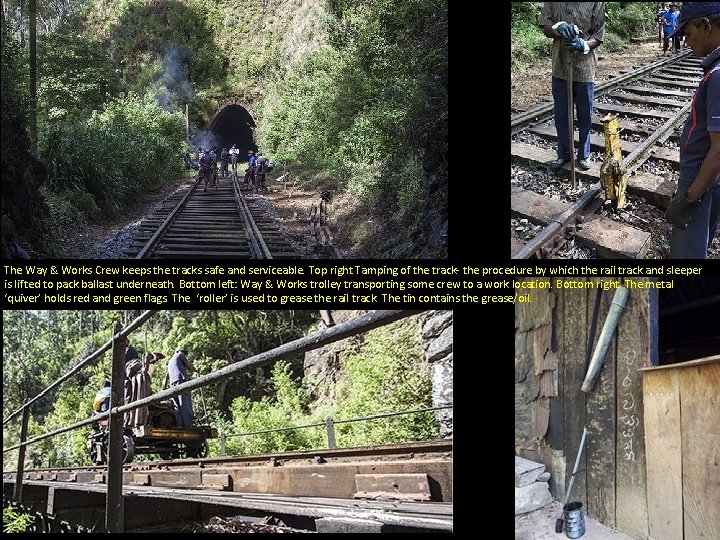
The Way & Works Crew keeps the tracks safe and serviceable. Top right Tamping of the track- the procedure by which the rail track and sleeper is lifted to pack ballast underneath. Bottom left: Way & Works trolley transporting some crew to a work location. Bottom right. The metal ‘quiver’ holds red and green flags. The ‘roller’ is used to grease the rail track. The tin contains the grease/oil.
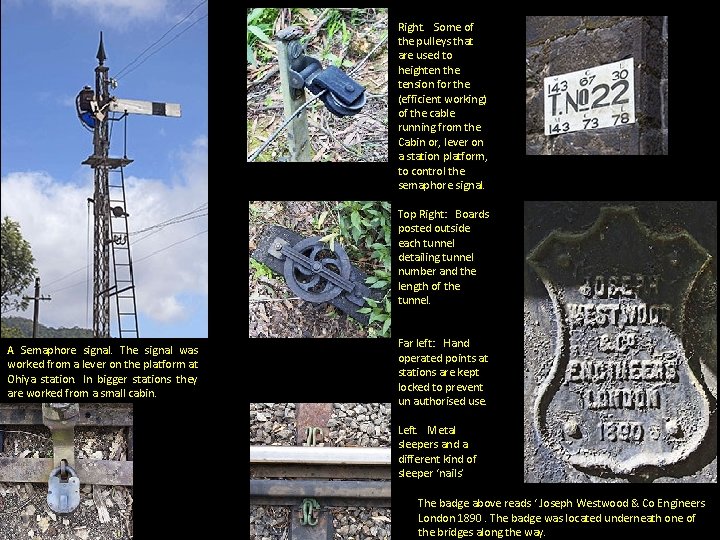
Right. Some of the pulleys that are used to heighten the tension for the (efficient working) of the cable running from the Cabin or, lever on a station platform, to control the semaphore signal. Top Right: Boards posted outside each tunnel detailing tunnel number and the length of the tunnel. A Semaphore signal. The signal was worked from a lever on the platform at Ohiya station. In bigger stations they are worked from a small cabin. Far left: Hand operated points at stations are kept locked to prevent un authorised use. Left. Metal sleepers and a different kind of sleeper ‘nails’ The badge above reads ‘ Joseph Westwood & Co Engineers London 1890. The badge was located underneath one of the bridges along the way.
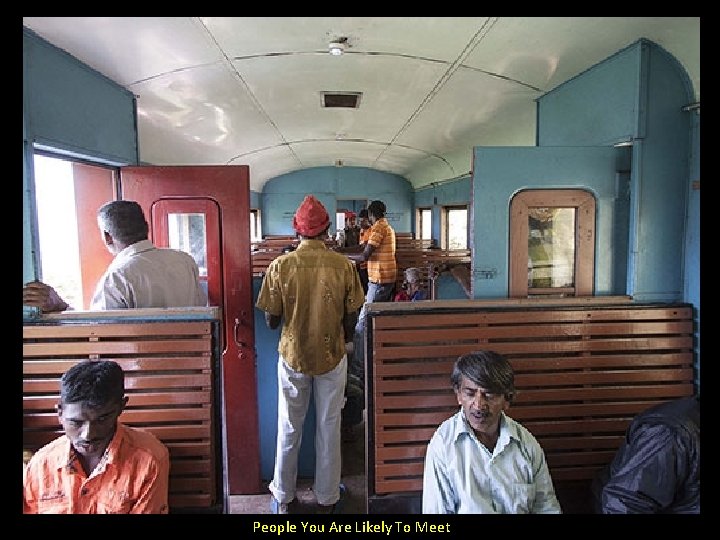
People You Are Likely To Meet
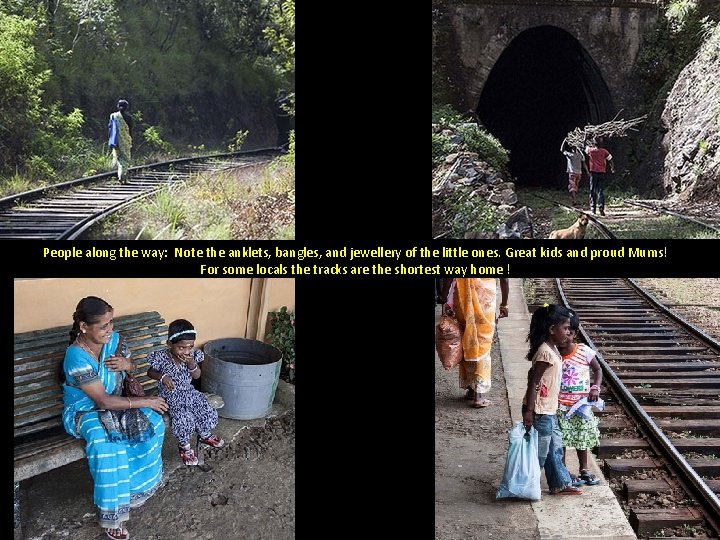
People along the way: Note the anklets, bangles, and jewellery of the little ones. Great kids and proud Mums! For some locals the tracks are the shortest way home !
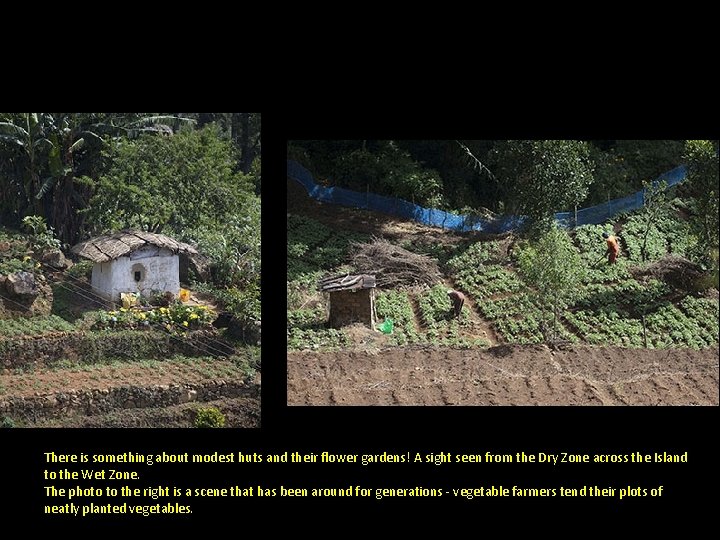
There is something about modest huts and their flower gardens! A sight seen from the Dry Zone across the Island to the Wet Zone. The photo to the right is a scene that has been around for generations - vegetable farmers tend their plots of neatly planted vegetables.
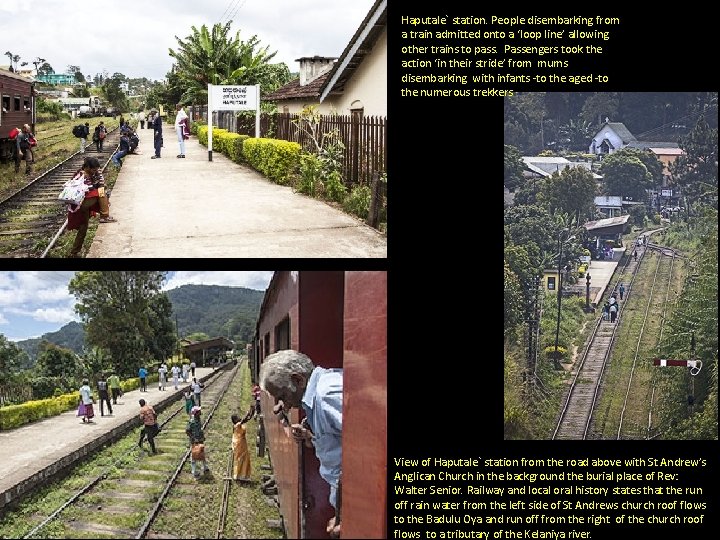
Haputale` station. People disembarking from a train admitted onto a ‘loop line’ allowing other trains to pass. Passengers took the action ‘in their stride’ from mums disembarking with infants -to the aged -to the numerous trekkers View of Haputale` station from the road above with St Andrew’s Anglican Church in the background the burial place of Rev: Walter Senior. Railway and local oral history states that the run off rain water from the left side of St Andrews church roof flows to the Badulu Oya and run off from the right of the church roof flows to a tributary of the Kelaniya river.
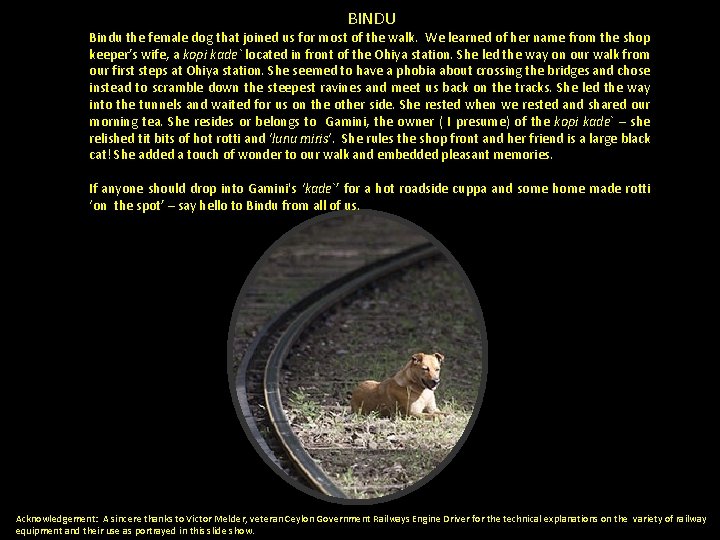
BINDU Bindu the female dog that joined us for most of the walk. We learned of her name from the shop keeper’s wife, a kopi kade` located in front of the Ohiya station. She led the way on our walk from our first steps at Ohiya station. She seemed to have a phobia about crossing the bridges and chose instead to scramble down the steepest ravines and meet us back on the tracks. She led the way into the tunnels and waited for us on the other side. She rested when we rested and shared our morning tea. She resides or belongs to Gamini, the owner ( I presume) of the kopi kade` – she relished tit bits of hot rotti and ‘lunu miris’. She rules the shop front and her friend is a large black cat! She added a touch of wonder to our walk and embedded pleasant memories. If anyone should drop into Gamini's ‘kade`’ for a hot roadside cuppa and some home made rotti ‘on the spot’ – say hello to Bindu from all of us. Acknowledgement: A sincere thanks to Victor Melder, veteran Ceylon Government Railways Engine Driver for the technical explanations on the variety of railway equipment and their use as portrayed in this slide show.