
Wakefield Accelerator Process Laser radiation pressure displaces electrons
- Slides: 33
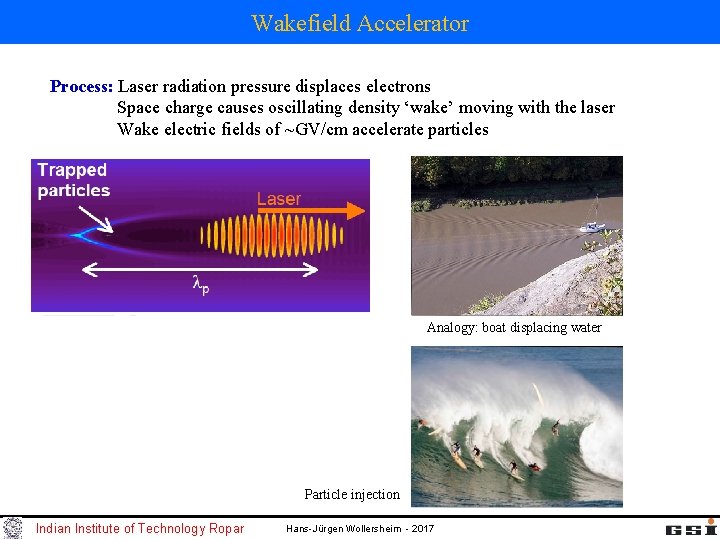
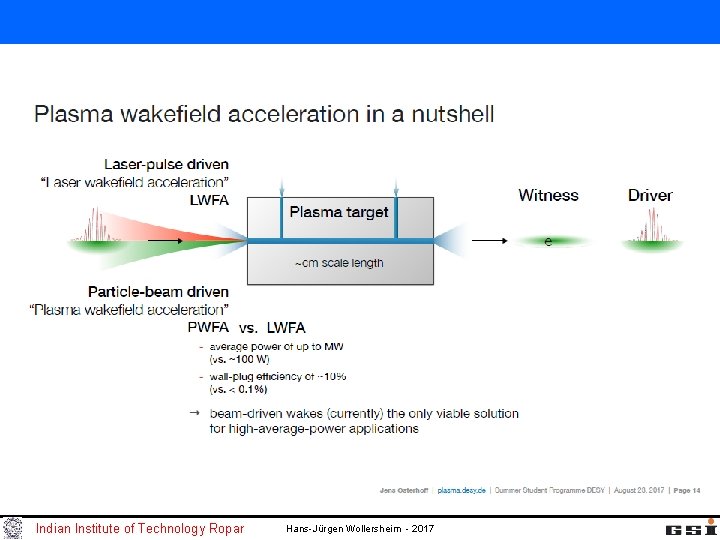
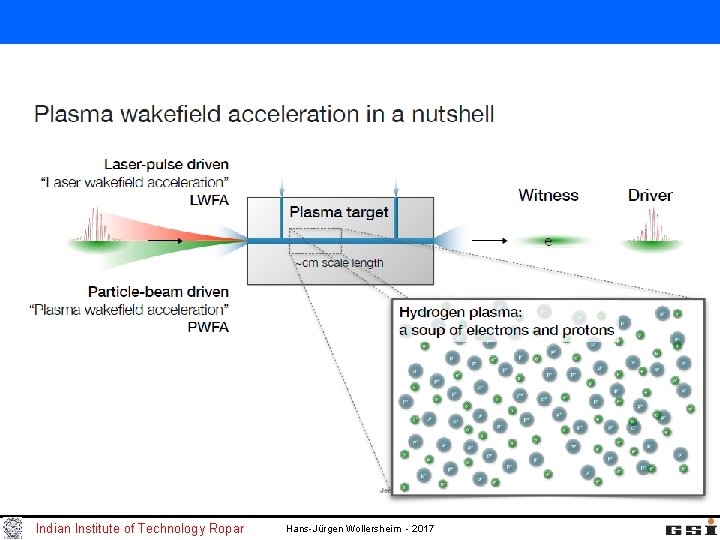
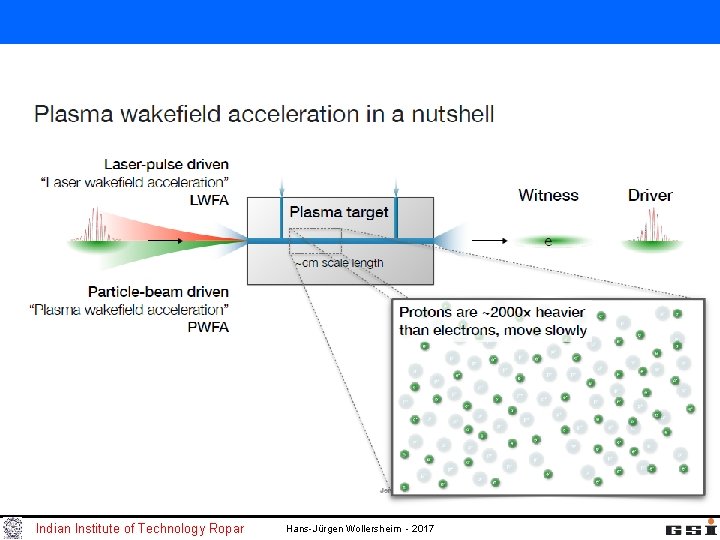
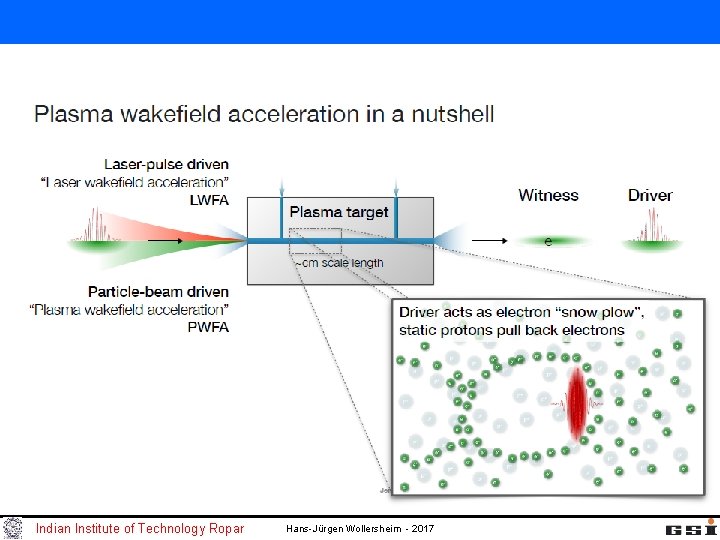
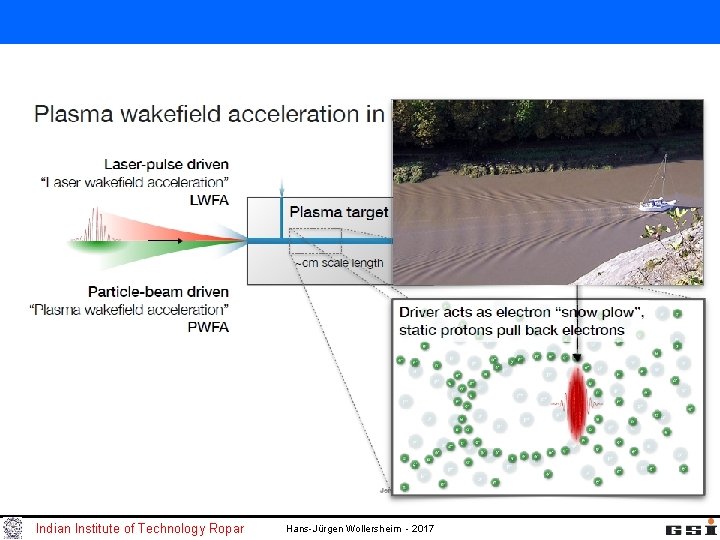
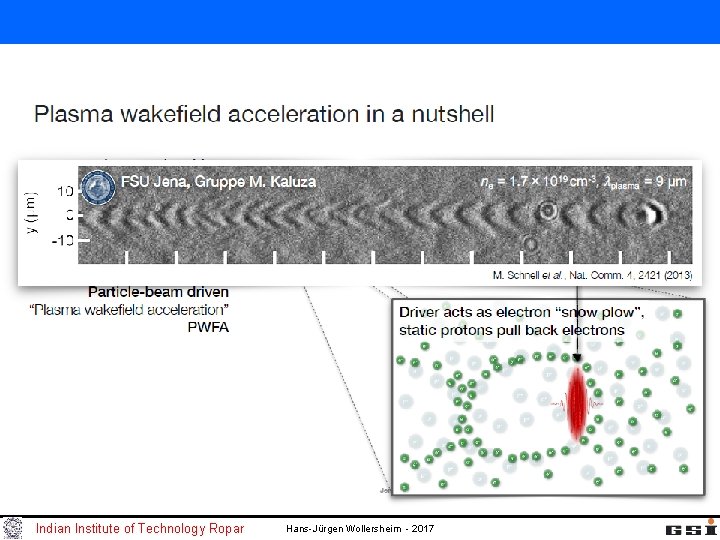
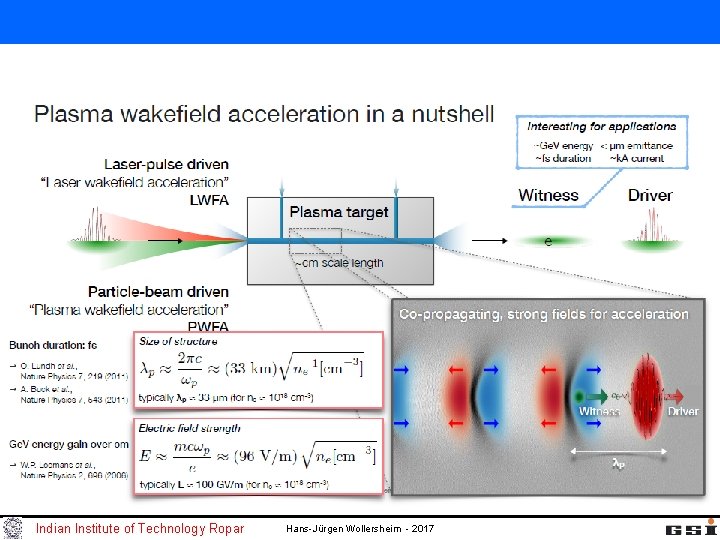
Wakefield Accelerator Process: Laser radiation pressure displaces electrons Space charge causes oscillating density ‘wake’ moving with the laser Wake electric fields of ~GV/cm accelerate particles Analogy: boat displacing water Particle injection Indian Institute of Technology Ropar Hans-Jürgen Wollersheim - 2017
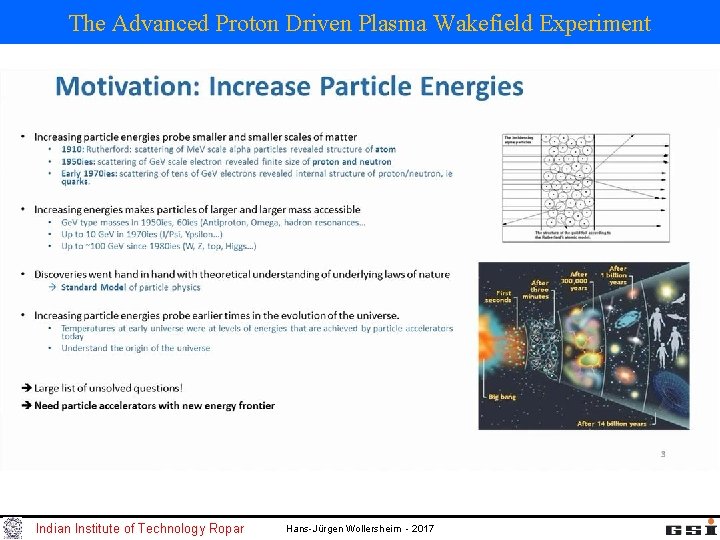
The Advanced Proton Driven Plasma Wakefield Experiment Indian Institute of Technology Ropar Hans-Jürgen Wollersheim - 2017
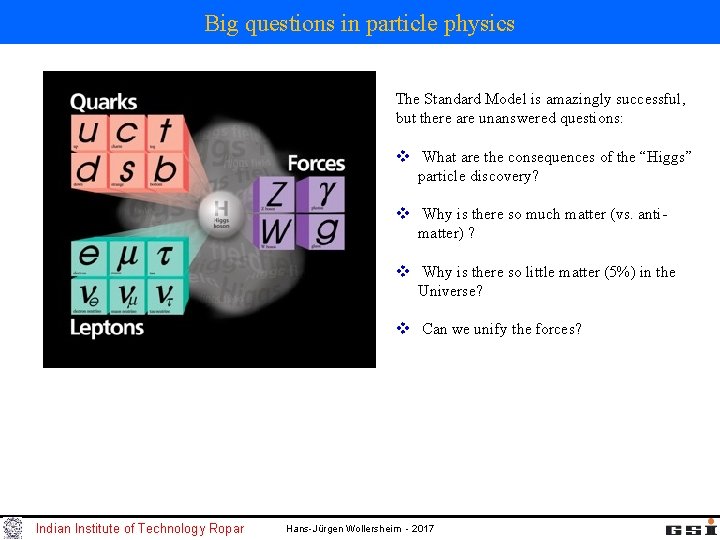
Big questions in particle physics The Standard Model is amazingly successful, but there are unanswered questions: v What are the consequences of the “Higgs” particle discovery? v Why is there so much matter (vs. antimatter) ? v Why is there so little matter (5%) in the Universe? v Can we unify the forces? Indian Institute of Technology Ropar Hans-Jürgen Wollersheim - 2017
Indian Institute of Technology Ropar Hans-Jürgen Wollersheim - 2017
Indian Institute of Technology Ropar Hans-Jürgen Wollersheim - 2017
Indian Institute of Technology Ropar Hans-Jürgen Wollersheim - 2017
Indian Institute of Technology Ropar Hans-Jürgen Wollersheim - 2017
Indian Institute of Technology Ropar Hans-Jürgen Wollersheim - 2017
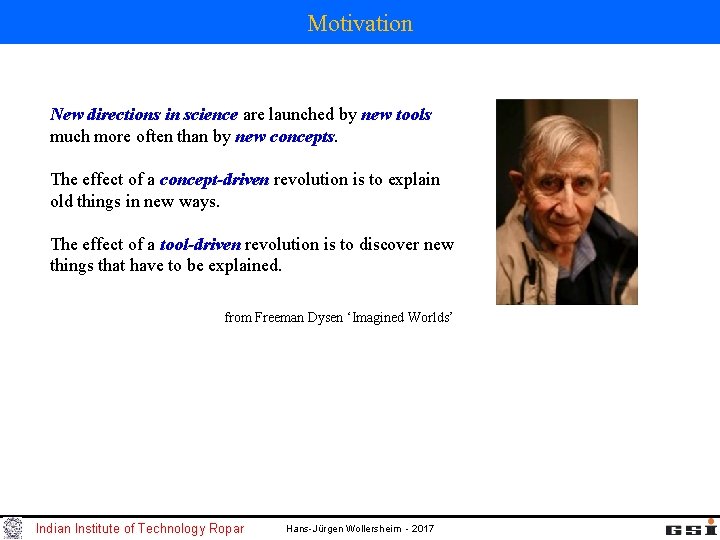
Motivation New directions in science are launched by new tools much more often than by new concepts. The effect of a concept-driven revolution is to explain old things in new ways. The effect of a tool-driven revolution is to discover new things that have to be explained. from Freeman Dysen ‘Imagined Worlds’ Indian Institute of Technology Ropar Hans-Jürgen Wollersheim - 2017
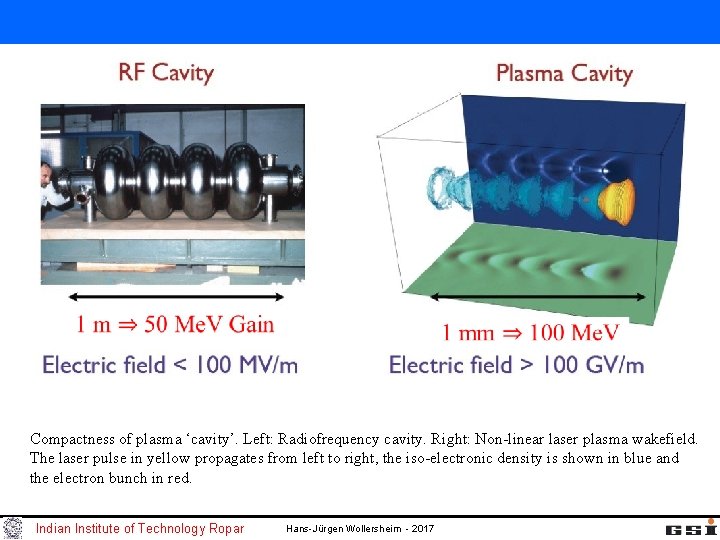
Compactness of plasma ‘cavity’. Left: Radiofrequency cavity. Right: Non-linear laser plasma wakefield. The laser pulse in yellow propagates from left to right, the iso-electronic density is shown in blue and the electron bunch in red. Indian Institute of Technology Ropar Hans-Jürgen Wollersheim - 2017
Indian Institute of Technology Ropar Hans-Jürgen Wollersheim - 2017
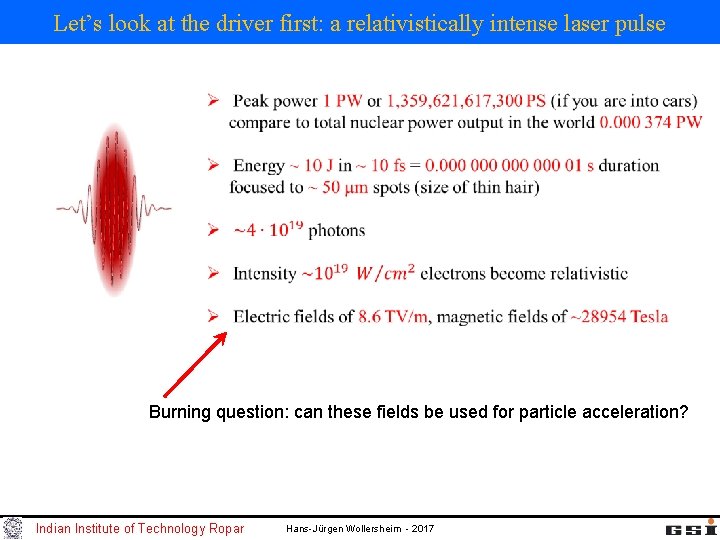
Let’s look at the driver first: a relativistically intense laser pulse Burning question: can these fields be used for particle acceleration? Indian Institute of Technology Ropar Hans-Jürgen Wollersheim - 2017
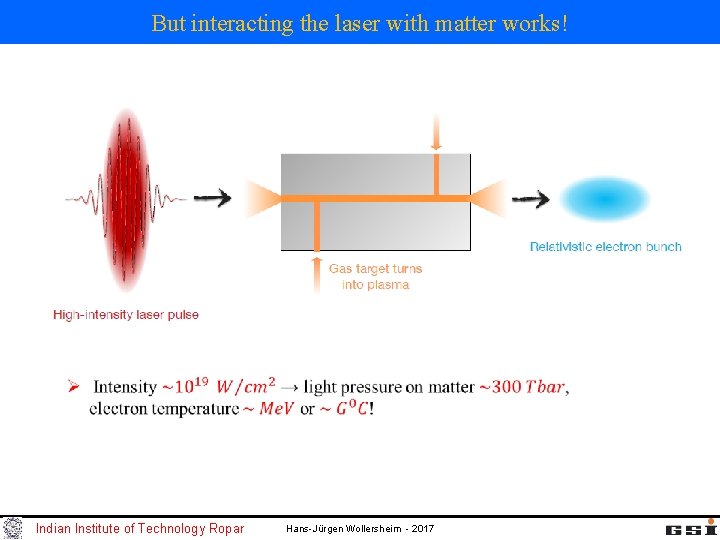
But interacting the laser with matter works! Indian Institute of Technology Ropar Hans-Jürgen Wollersheim - 2017
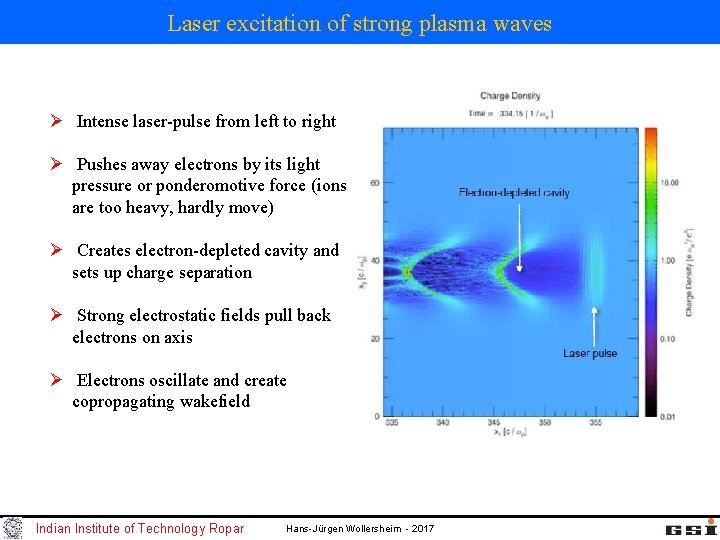
Laser excitation of strong plasma waves Ø Intense laser-pulse from left to right Ø Pushes away electrons by its light pressure or ponderomotive force (ions are too heavy, hardly move) Ø Creates electron-depleted cavity and sets up charge separation Ø Strong electrostatic fields pull back electrons on axis Ø Electrons oscillate and create copropagating wakefield Indian Institute of Technology Ropar Hans-Jürgen Wollersheim - 2017
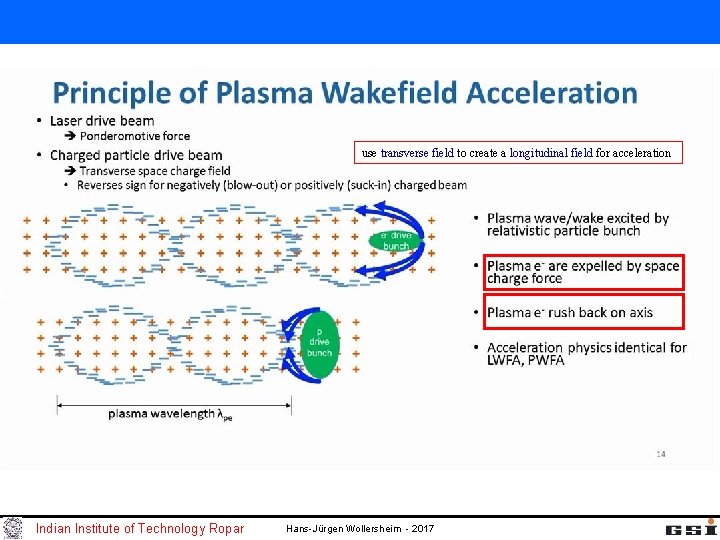
use transverse field to create a longitudinal field for acceleration Indian Institute of Technology Ropar Hans-Jürgen Wollersheim - 2017
Indian Institute of Technology Ropar Hans-Jürgen Wollersheim - 2017
Indian Institute of Technology Ropar Hans-Jürgen Wollersheim - 2017
Indian Institute of Technology Ropar Hans-Jürgen Wollersheim - 2017
Indian Institute of Technology Ropar Hans-Jürgen Wollersheim - 2017
Indian Institute of Technology Ropar Hans-Jürgen Wollersheim - 2017
Indian Institute of Technology Ropar Hans-Jürgen Wollersheim - 2017
Indian Institute of Technology Ropar Hans-Jürgen Wollersheim - 2017
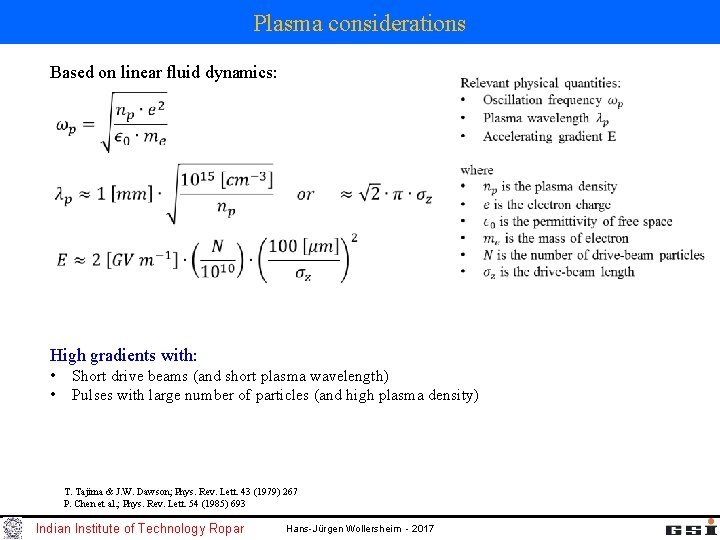
Plasma considerations Based on linear fluid dynamics: High gradients with: • • Short drive beams (and short plasma wavelength) Pulses with large number of particles (and high plasma density) T. Tajima & J. W. Dawson; Phys. Rev. Lett. 43 (1979) 267 P. Chen et al. ; Phys. Rev. Lett. 54 (1985) 693 Indian Institute of Technology Ropar Hans-Jürgen Wollersheim - 2017
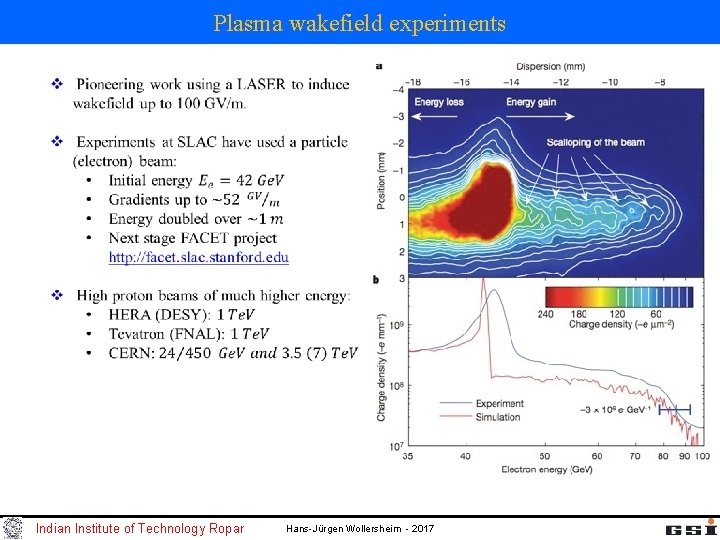
Plasma wakefield experiments Indian Institute of Technology Ropar Hans-Jürgen Wollersheim - 2017
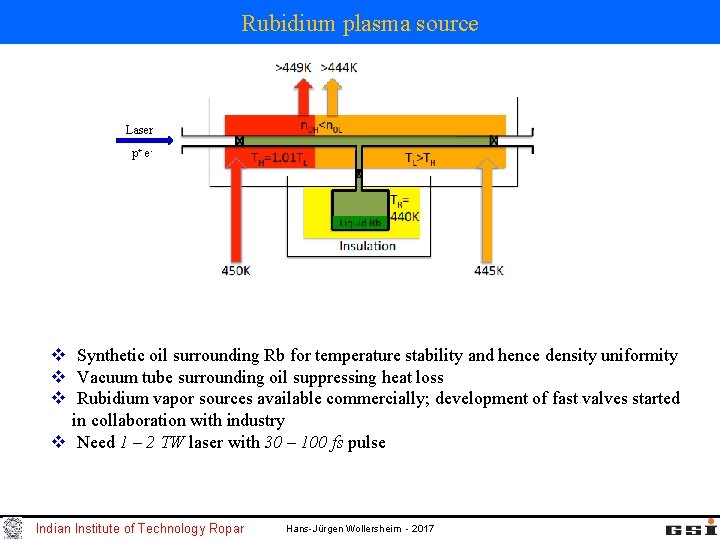
Rubidium plasma source Laser p+ e- v Synthetic oil surrounding Rb for temperature stability and hence density uniformity v Vacuum tube surrounding oil suppressing heat loss v Rubidium vapor sources available commercially; development of fast valves started in collaboration with industry v Need 1 – 2 TW laser with 30 – 100 fs pulse Indian Institute of Technology Ropar Hans-Jürgen Wollersheim - 2017
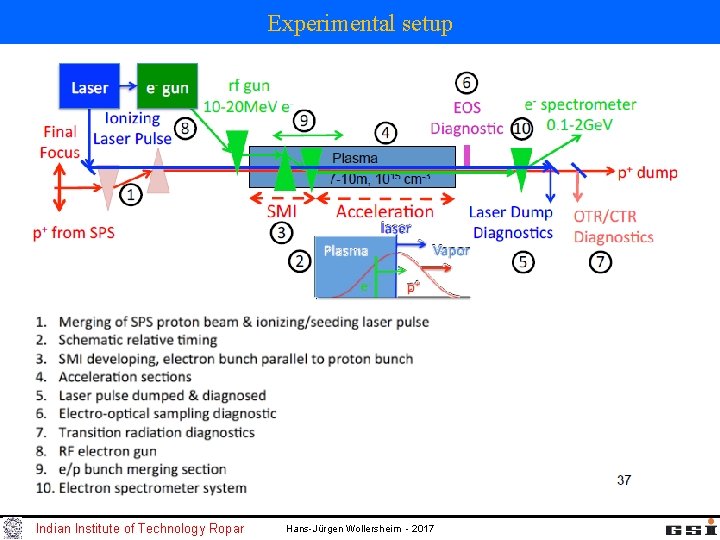
Experimental setup Indian Institute of Technology Ropar Hans-Jürgen Wollersheim - 2017
Indian Institute of Technology Ropar Hans-Jürgen Wollersheim - 2017
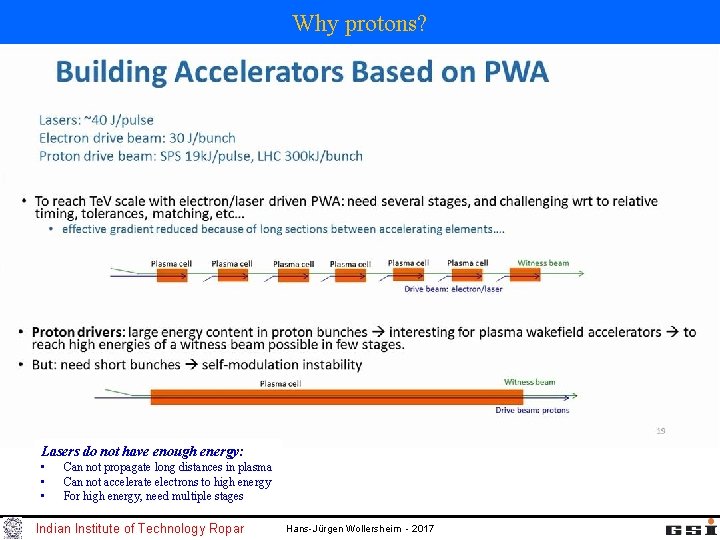
Why protons? Lasers do not have enough energy: • • • Can not propagate long distances in plasma Can not accelerate electrons to high energy For high energy, need multiple stages Indian Institute of Technology Ropar Hans-Jürgen Wollersheim - 2017
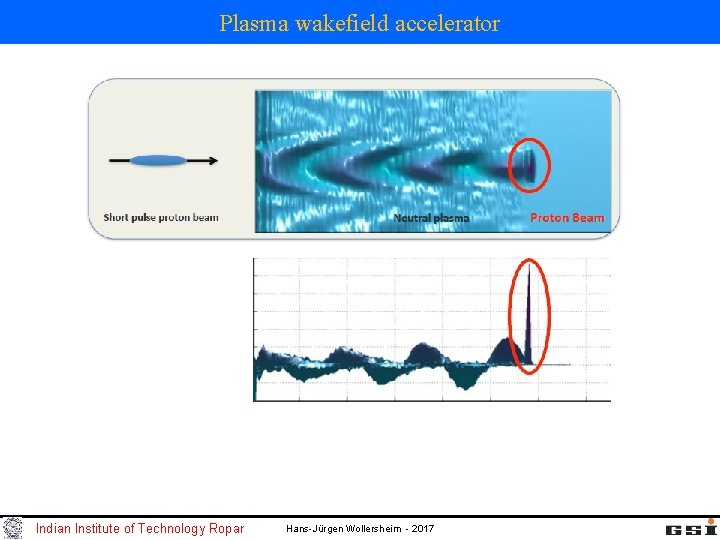
Plasma wakefield accelerator Indian Institute of Technology Ropar Hans-Jürgen Wollersheim - 2017
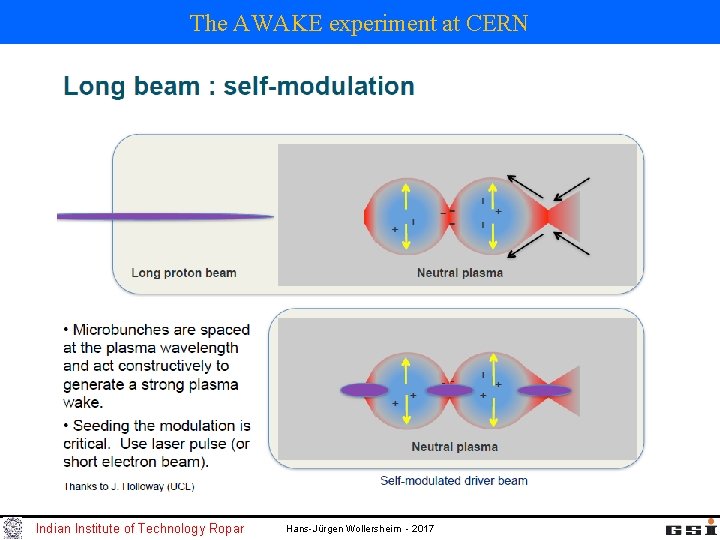
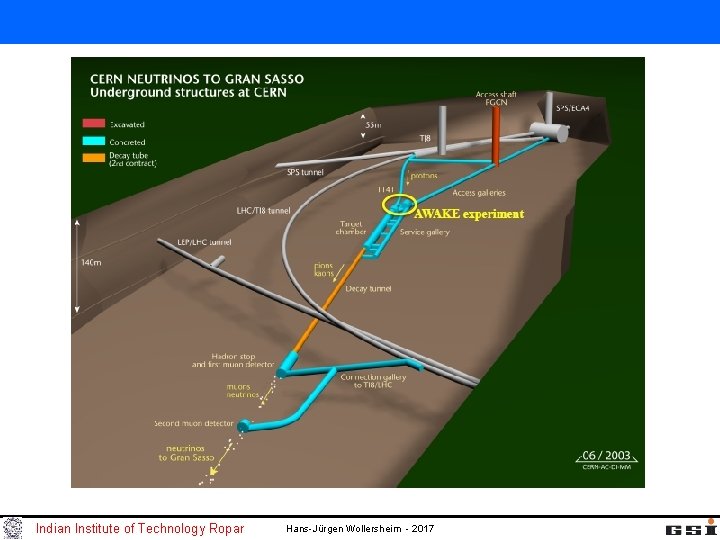
The AWAKE experiment at CERN Indian Institute of Technology Ropar Hans-Jürgen Wollersheim - 2017
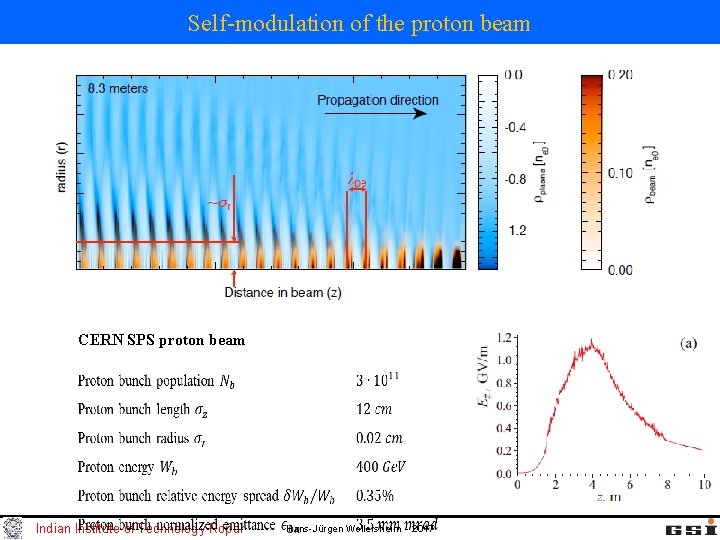
Self-modulation of the proton beam CERN SPS proton beam Indian Institute of Technology Ropar Hans-Jürgen Wollersheim - 2017
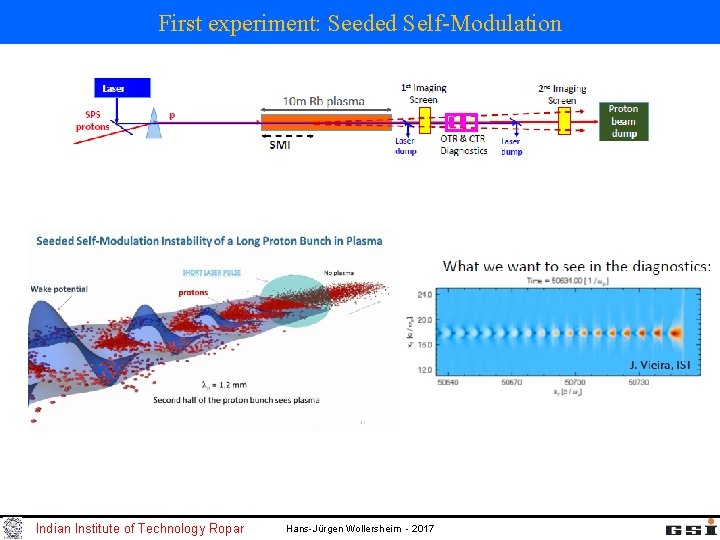
First experiment: Seeded Self-Modulation Indian Institute of Technology Ropar Hans-Jürgen Wollersheim - 2017
Indian Institute of Technology Ropar Hans-Jürgen Wollersheim - 2017