
Wake Up Your Team Is On Fire Why



- Slides: 56
Wake Up! Your Team Is On Fire Why Your Real Problems Are Cultural and How To Change Them 3. 11. 2010 > GDC 2010
Goals • • • State of the nation Systems thinking Real-world practices Case studies Your homework 3. 11. 2010 > GDC 2010
Where Are We Now? 3. 11. 2010 > GDC 2010
3. 11. 2010 > GDC 2010
3. 11. 2010 > GDC 2010
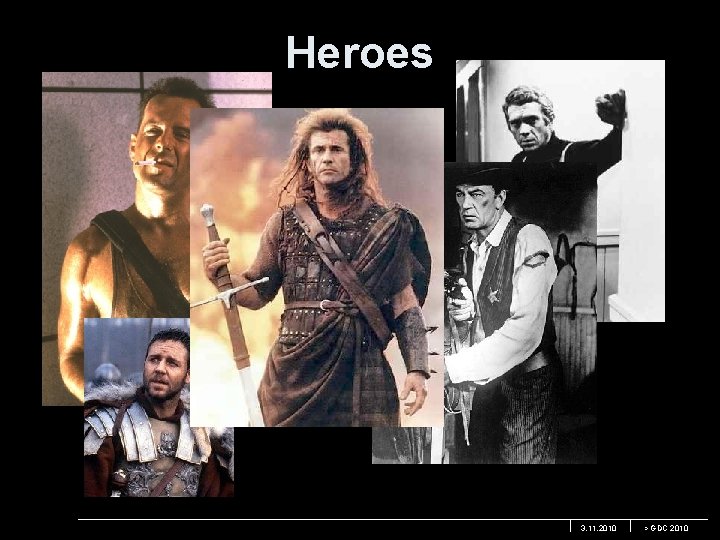
Heroes 3. 11. 2010 > GDC 2010
Imaginary vs. Real 3. 11. 2010 > GDC 2010
External vs. Internal 3. 11. 2010 > GDC 2010
Immediate vs. Long Term 3. 11. 2010 > GDC 2010
Cancer 3. 11. 2010 > GDC 2010
calmly reflect your team needs you Why Your Real Problems Are Cultural and How To Change Them 3. 11. 2010 > GDC 2010
Systems Thinking 3. 11. 2010 > GDC 2010
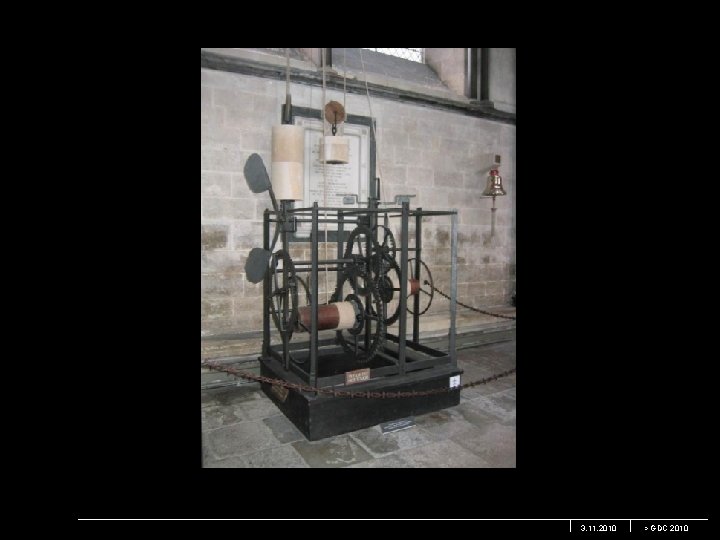
Reductionism 3. 11. 2010 > GDC 2010
3. 11. 2010 > GDC 2010
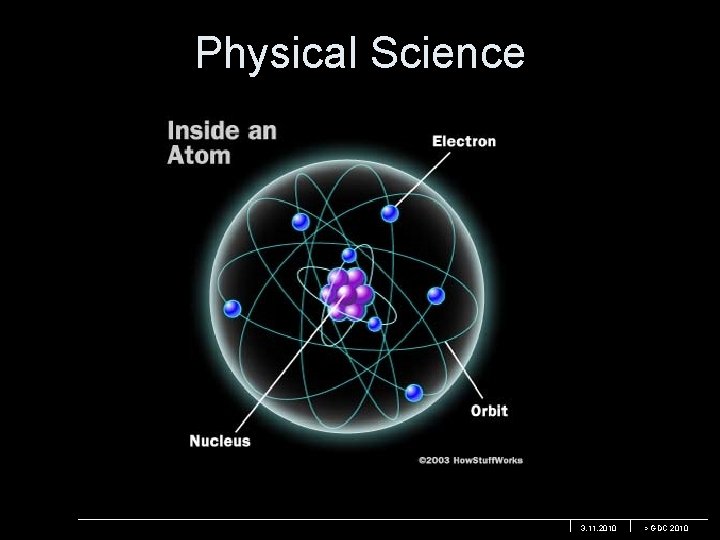
Physical Science 3. 11. 2010 > GDC 2010
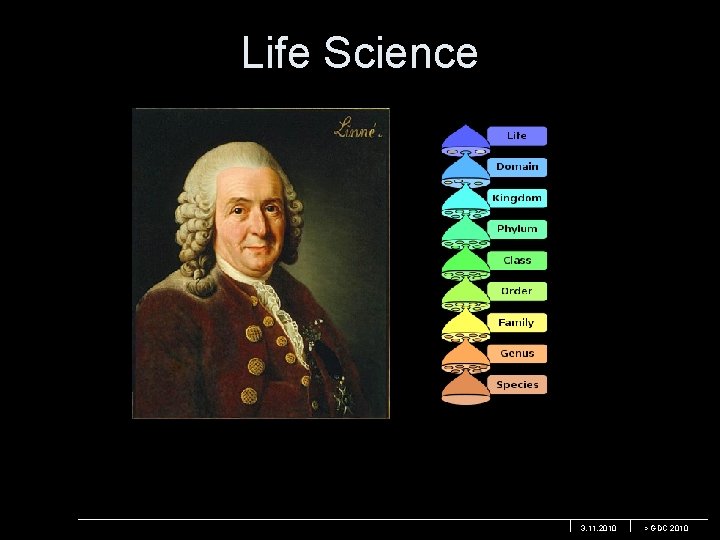
Life Science 3. 11. 2010 > GDC 2010
Language 3. 11. 2010 > GDC 2010
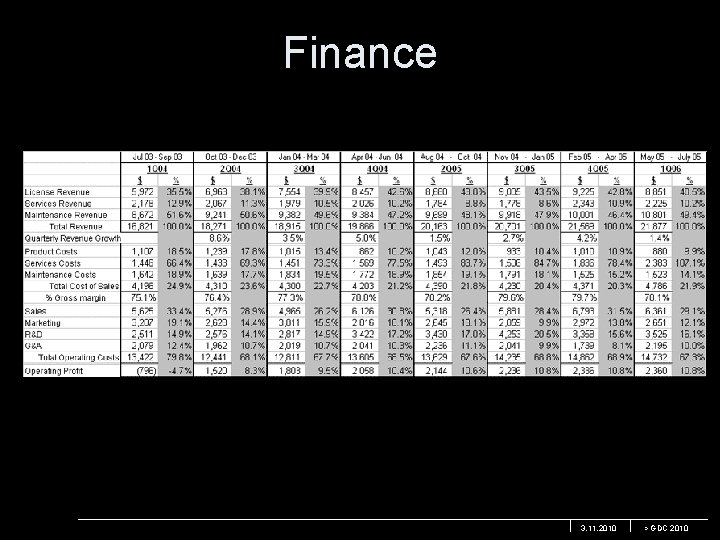
Finance 3. 11. 2010 > GDC 2010
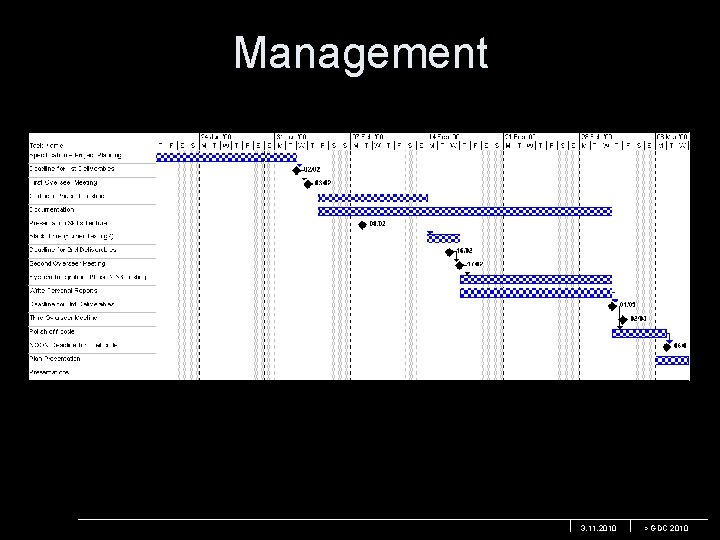
Management 3. 11. 2010 > GDC 2010
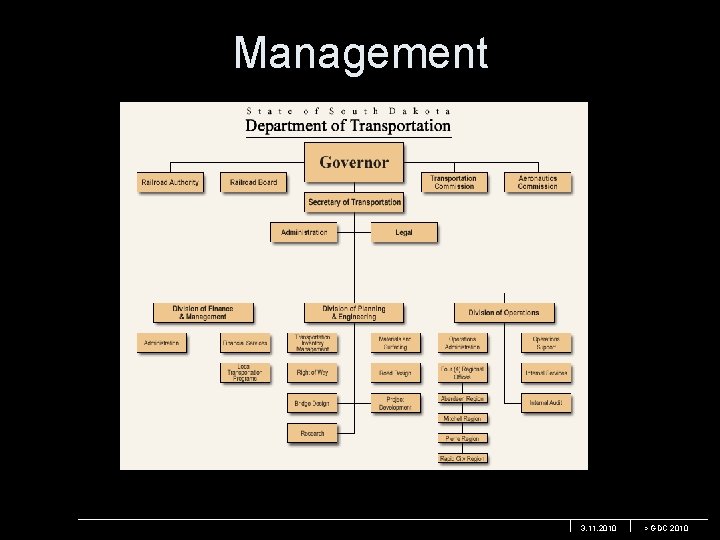
Management 3. 11. 2010 > GDC 2010
3. 11. 2010 > GDC 2010
The fundamental nature of the universe lies in interconnectedness more than individual pieces. 3. 11. 2010 > GDC 2010
Feedback Loops 3. 11. 2010 > GDC 2010
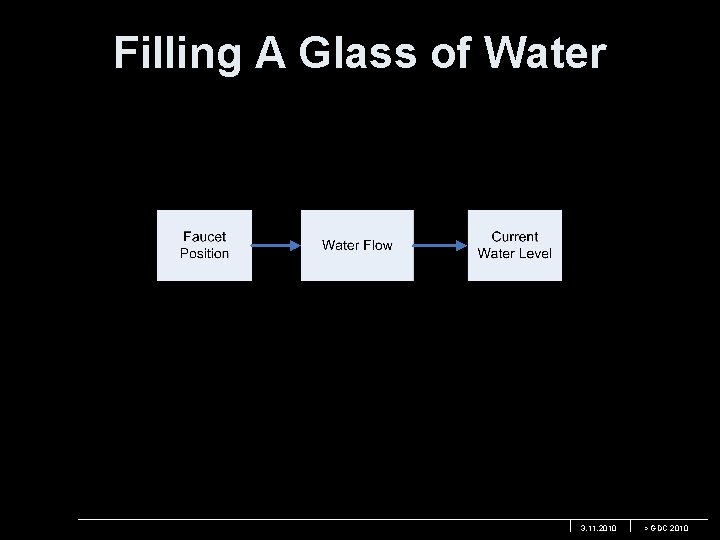
Filling A Glass of Water 3. 11. 2010 > GDC 2010
From the systems perspective, the human actor is part of the feedback process, not standing apart from it. 3. 11. 2010 > GDC 2010
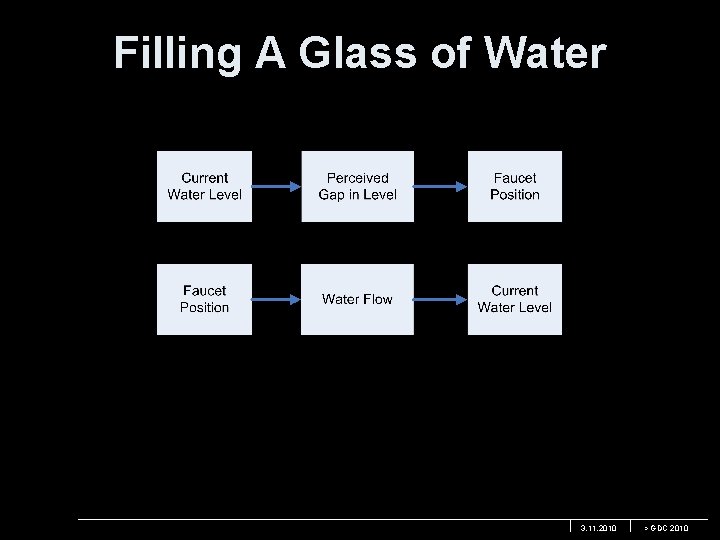
Filling A Glass of Water 3. 11. 2010 > GDC 2010
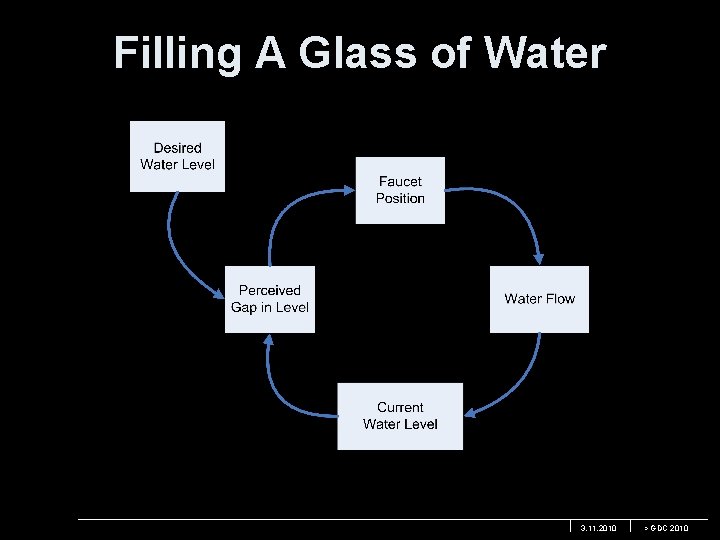
Filling A Glass of Water 3. 11. 2010 > GDC 2010
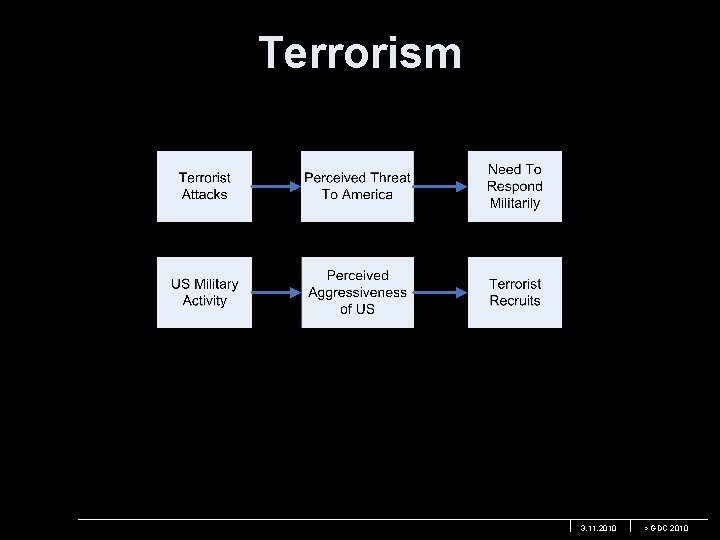
Terrorism 3. 11. 2010 > GDC 2010
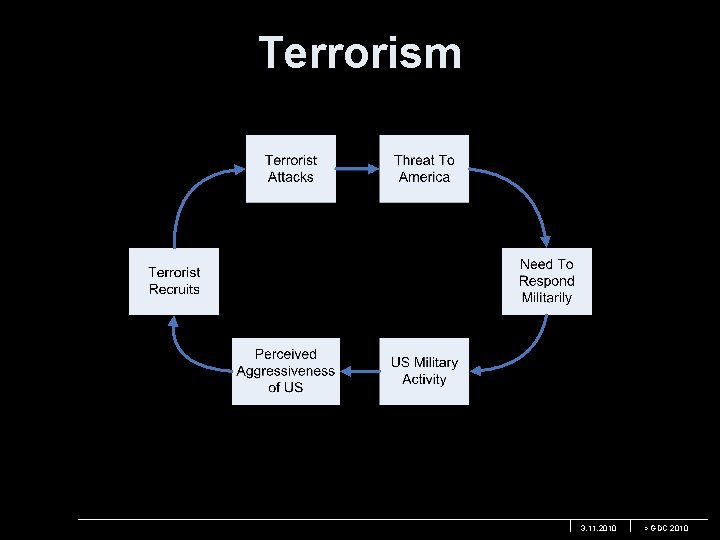
Terrorism 3. 11. 2010 > GDC 2010
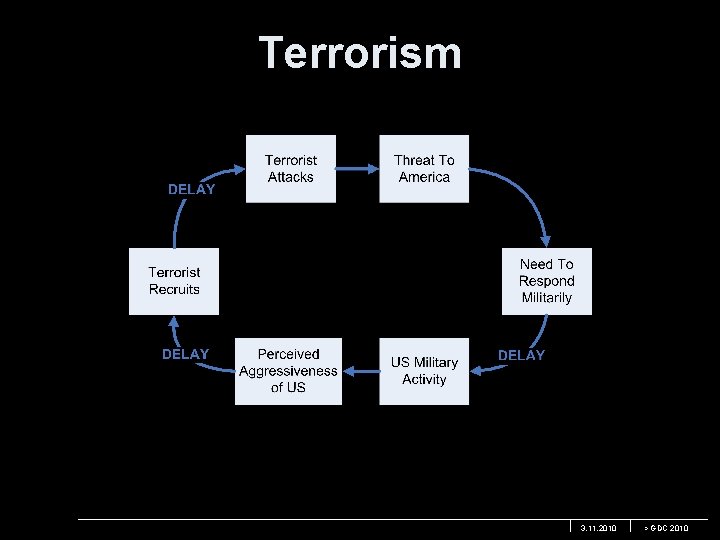
Terrorism 3. 11. 2010 > GDC 2010
Familiar Examples 3. 11. 2010 > GDC 2010
Crunch 3. 11. 2010 > GDC 2010
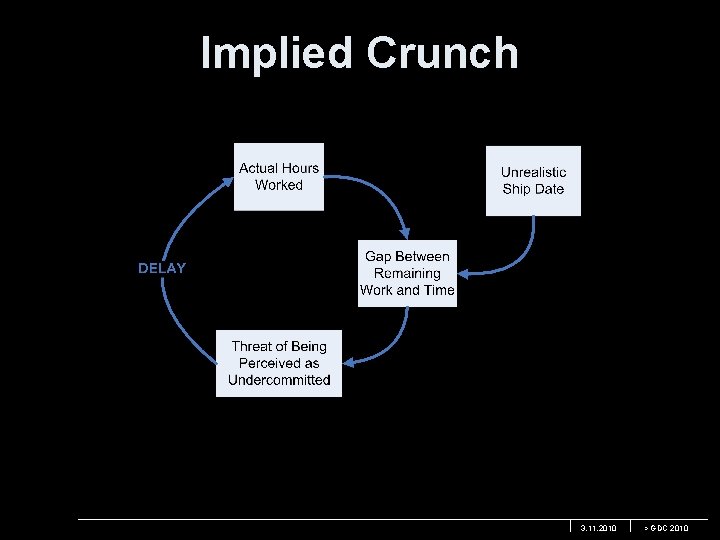
Implied Crunch 3. 11. 2010 > GDC 2010
What Game Are We Making? 3. 11. 2010 > GDC 2010
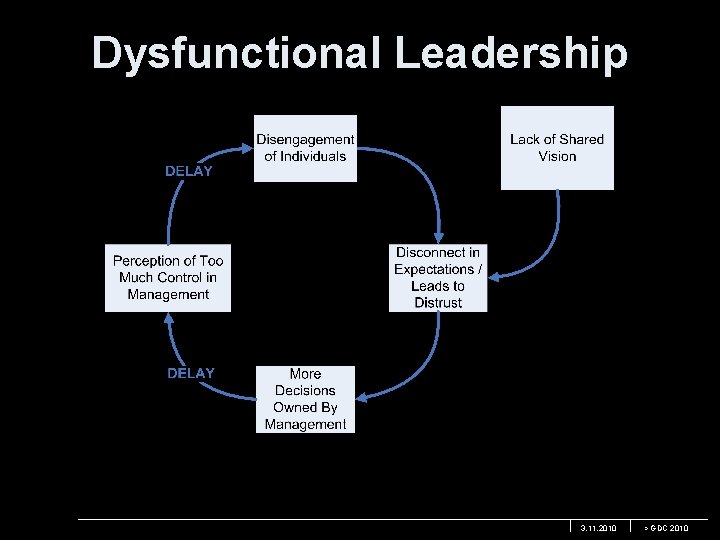
Dysfunctional Leadership 3. 11. 2010 > GDC 2010
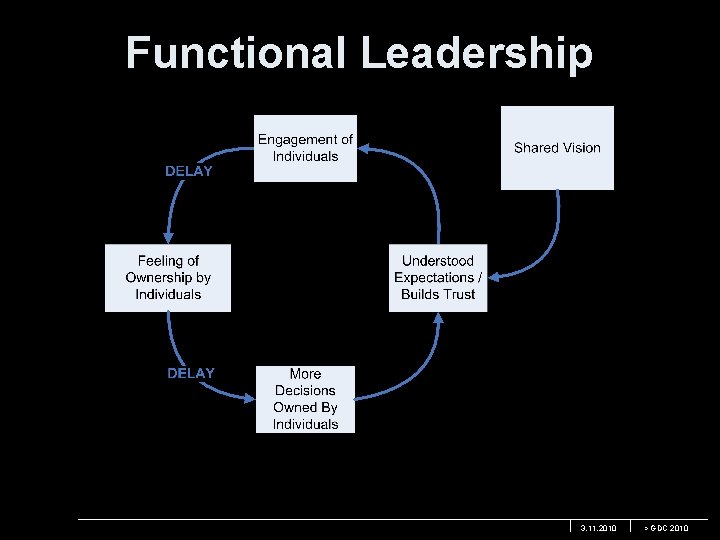
Functional Leadership 3. 11. 2010 > GDC 2010
Real-World Practices 3. 11. 2010 > GDC 2010
3. 11. 2010 > GDC 2010
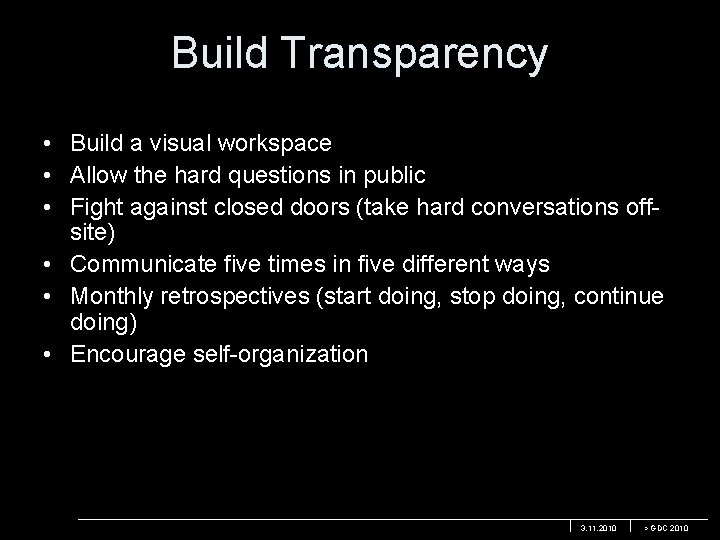
Build Transparency • Build a visual workspace • Allow the hard questions in public • Fight against closed doors (take hard conversations offsite) • Communicate five times in five different ways • Monthly retrospectives (start doing, stop doing, continue doing) • Encourage self-organization 3. 11. 2010 > GDC 2010
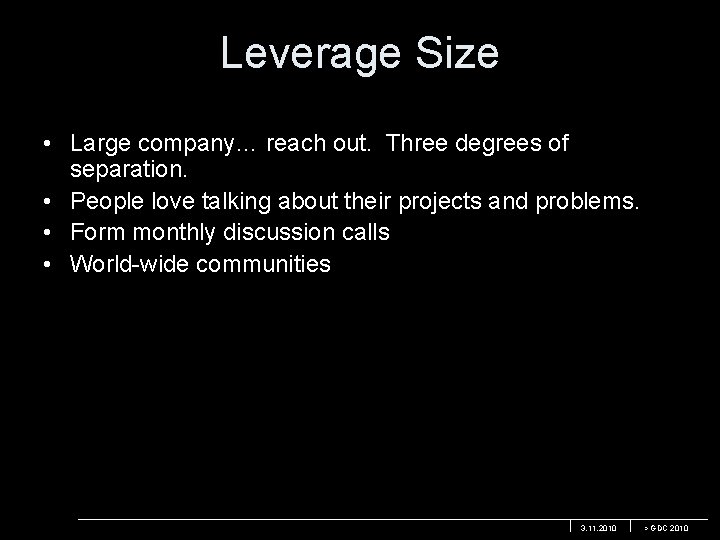
Leverage Size • Large company… reach out. Three degrees of separation. • People love talking about their projects and problems. • Form monthly discussion calls • World-wide communities 3. 11. 2010 > GDC 2010
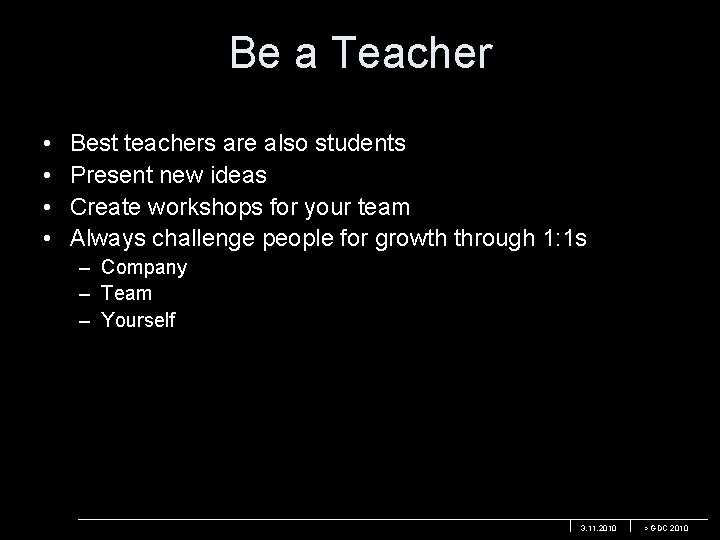
Be a Teacher • • Best teachers are also students Present new ideas Create workshops for your team Always challenge people for growth through 1: 1 s – Company – Team – Yourself 3. 11. 2010 > GDC 2010
3. 11. 2010 > GDC 2010
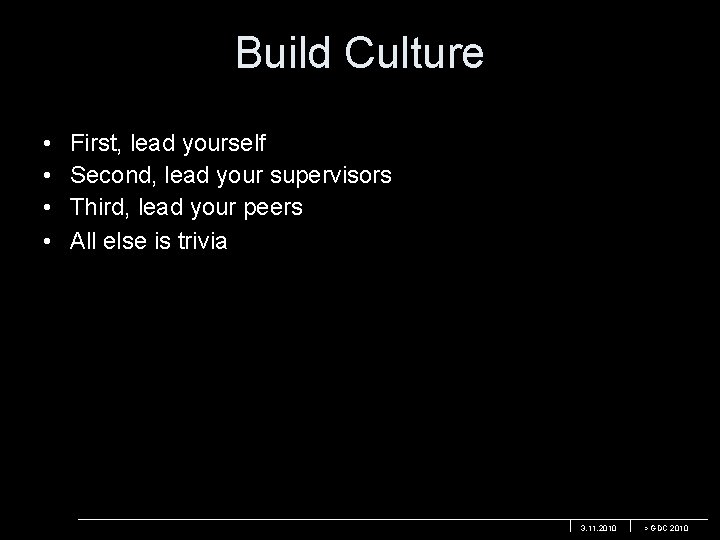
Build Culture • • First, lead yourself Second, lead your supervisors Third, lead your peers All else is trivia 3. 11. 2010 > GDC 2010
Real-World Case Studies 3. 11. 2010 > GDC 2010
1: 1 s and As and Os • Cultural issue – Disconnected expectations – Lack of shared vision • Proposed cultural change – Every person having a 1: 1 every two weeks – Every person has a living achievements and objectives document – Make this a top priority for the team – But how? Everyone thinks I’m being “corporate” 3. 11. 2010 > GDC 2010
1: 1 s and As and Os • • Culture from all levels pushed back (studio, leads, etc…) Understand that most have never experienced this Never a “good time”… just do it Begin teaching my leads – they learn how to run a valuable 1: 1 by experiencing it from me • Grow outward from that core 3. 11. 2010 > GDC 2010
1: 1 s and As and Os • Result – New communication pathway for aligning vision, expectations and performance – Design team… 8 of 10 people initially requested to be moved off the team. By the end, all eight had retracted this ask. – Team transition results… 93% spoke highly of process and requested to go to a team that would implement it. – Leaders from team took the process and implemented it on their own on their next project. 3. 11. 2010 > GDC 2010
Technology Sharing • Cultural issue – Technology sharing is grinding metal – People are visibly depressed • Proposed cultural change – The city-state model is failing in some circumstances – Sometimes you just need to reevaluate who you are trying to share with – Empower the team by having them pick a new technology to share… no “let’s start over from scratch” – But how? It will never be allowed by management 3. 11. 2010 > GDC 2010
Technology Sharing • First solution – Ninja Weekend • Second solution – – I have learned from that experience… I am ninja Lead myself, my supervisors and my peers Go and see Slowly approach technology options 3. 11. 2010 > GDC 2010
Technology Sharing • Result (1 st) – Medal of Honor Airborne switched to Unreal (Epic) • Result (2 nd) – Mercenaries 3 has switched to Frostbite (DICE) • Overall productivity increased 3. 11. 2010 > GDC 2010
Agile and Lean • Cultural issues – – Uncommitted team Rampant micromanagement Command control bottlenecks Slow progress • Proposed cultural change – Bring Agile and Lean methods to the team – But how? Plenty of horror stories of it going wrong 3. 11. 2010 > GDC 2010
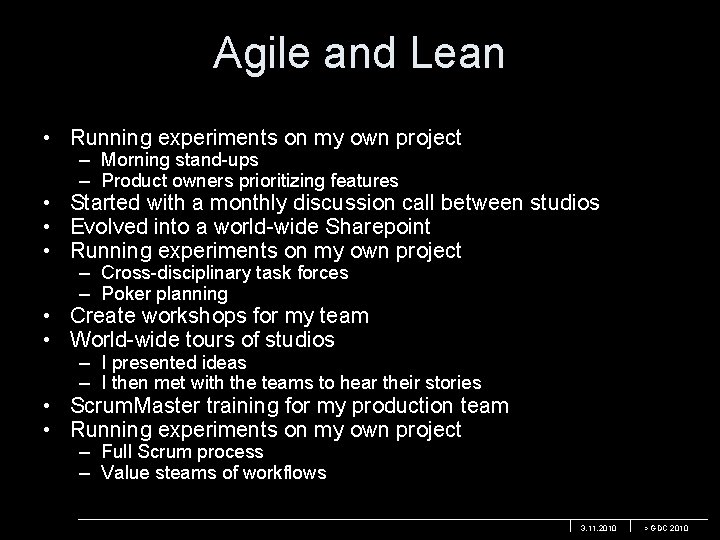
Agile and Lean • Running experiments on my own project – Morning stand-ups – Product owners prioritizing features • Started with a monthly discussion call between studios • Evolved into a world-wide Sharepoint • Running experiments on my own project – Cross-disciplinary task forces – Poker planning • Create workshops for my team • World-wide tours of studios – I presented ideas – I then met with the teams to hear their stories • Scrum. Master training for my production team • Running experiments on my own project – Full Scrum process – Value steams of workflows 3. 11. 2010 > GDC 2010
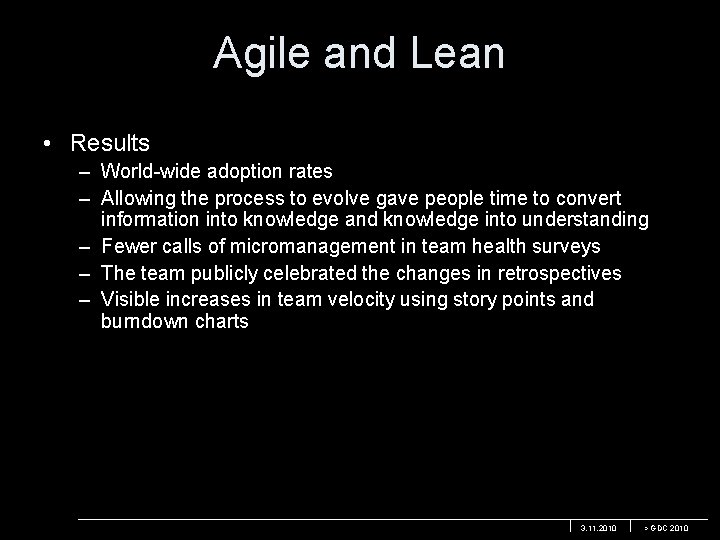
Agile and Lean • Results – World-wide adoption rates – Allowing the process to evolve gave people time to convert information into knowledge and knowledge into understanding – Fewer calls of micromanagement in team health surveys – The team publicly celebrated the changes in retrospectives – Visible increases in team velocity using story points and burndown charts 3. 11. 2010 > GDC 2010
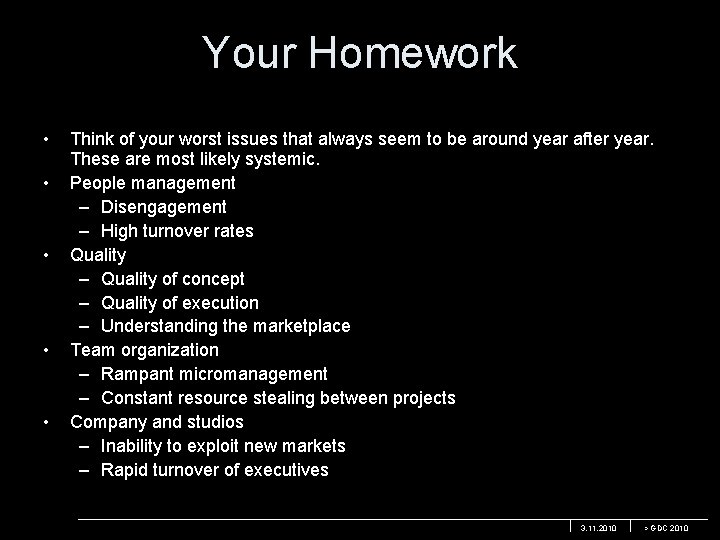
Your Homework • • • Think of your worst issues that always seem to be around year after year. These are most likely systemic. People management – Disengagement – High turnover rates Quality – Quality of concept – Quality of execution – Understanding the marketplace Team organization – Rampant micromanagement – Constant resource stealing between projects Company and studios – Inability to exploit new markets – Rapid turnover of executives 3. 11. 2010 > GDC 2010
Q&A 3. 11. 2010 > GDC 2010
References • • • One From Many: VISA and the Rise of Chaordic Organization – Hock The Birth of the Chaordic Age – Hock Systemantics: How Systems Work and Especially How They Fail – Gall Linked: How Everything Is Connected to Everything Else and What It Means - Barabasi The Fifth Discipline: The Art & Practice of the Learning Organization – Senge Emergence: The Connected Lives of Ants, Brains, Cities, and Software – Johnson Principles of Systems – Forrester Simplexity: Why Simple Things Become Complex – Kluger Complexity: Life at the Edge of Chaos – Lewin Managing Flow: A Process Theory on the Knowledge-Based Firm – Nonaka Mindwalk (film) en. wikipedia. org/wiki/Systems_Theory TO CONTACT: Michael Saladino - mikeyspeakeasy@yahoo. com 3. 11. 2010 > GDC 2010