
WAFER PROCESSING Preparing the Silicon 1 Processing raw
- Slides: 26
WAFER PROCESSING
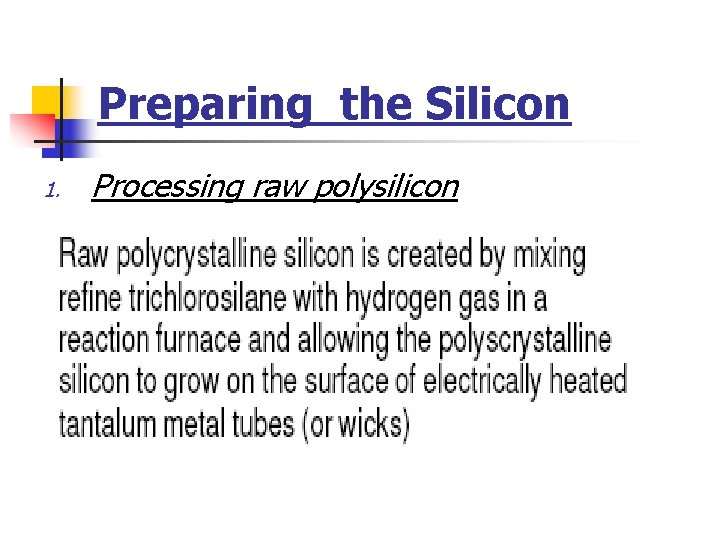
Preparing the Silicon 1. Processing raw polysilicon
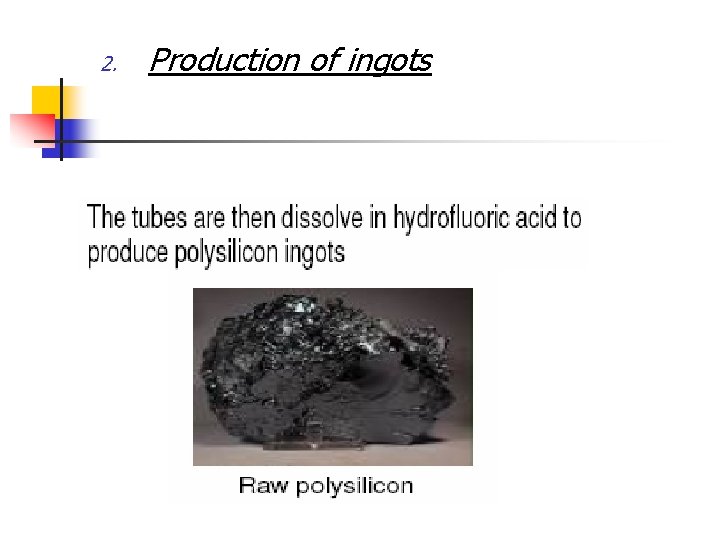
2. Production of ingots
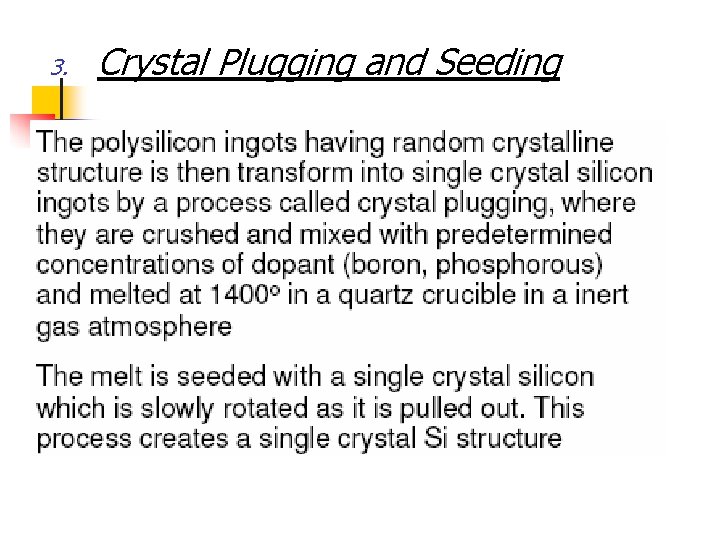
3. Crystal Plugging and Seeding
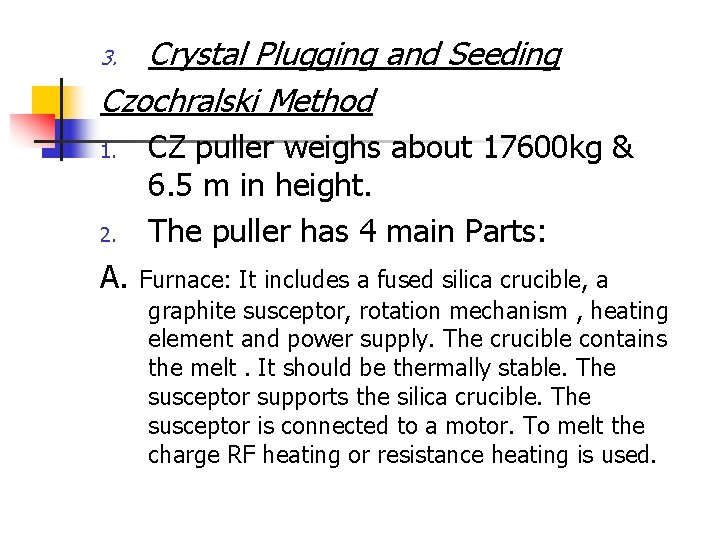
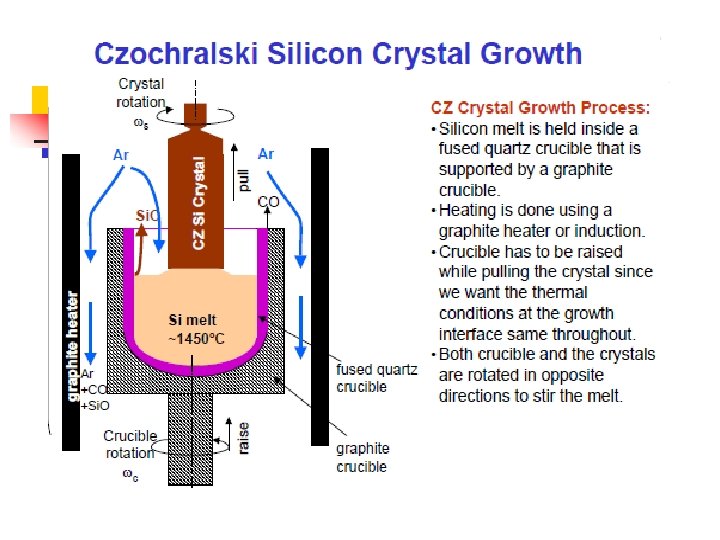
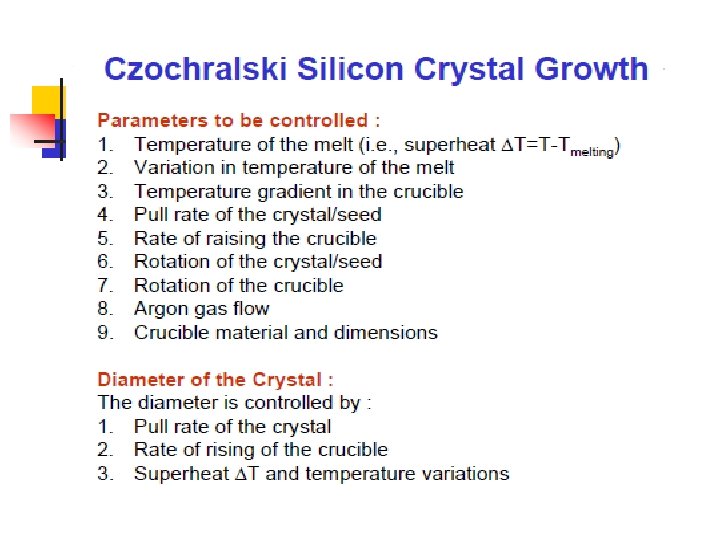
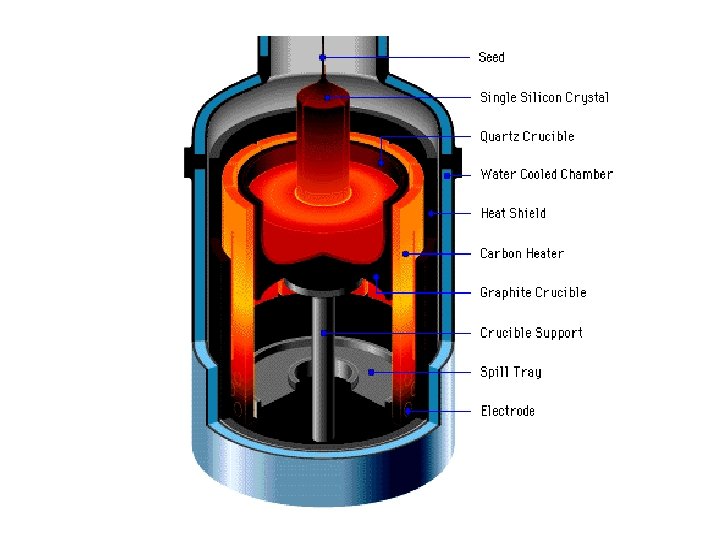
Crystal Plugging and Seeding Czochralski Method 3. 1. 2. A. CZ puller weighs about 17600 kg & 6. 5 m in height. The puller has 4 main Parts: Furnace: It includes a fused silica crucible, a graphite susceptor, rotation mechanism , heating element and power supply. The crucible contains the melt. It should be thermally stable. The susceptor supports the silica crucible. The susceptor is connected to a motor. To melt the charge RF heating or resistance heating is used.
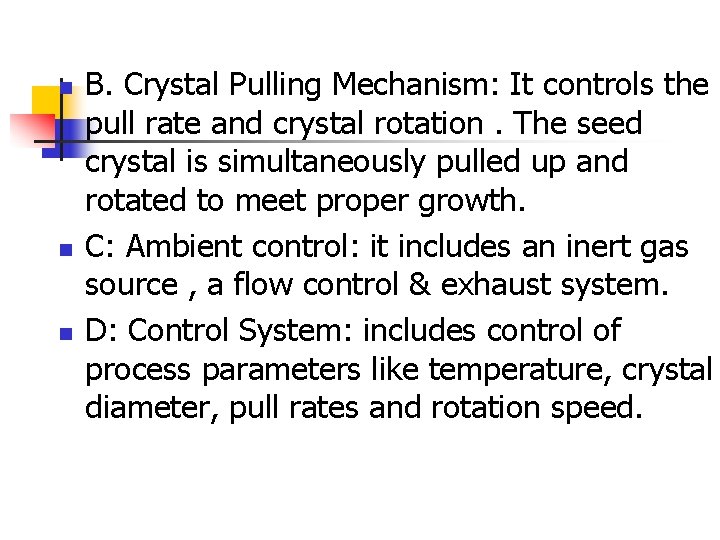
n n n B. Crystal Pulling Mechanism: It controls the pull rate and crystal rotation. The seed crystal is simultaneously pulled up and rotated to meet proper growth. C: Ambient control: it includes an inert gas source , a flow control & exhaust system. D: Control System: includes control of process parameters like temperature, crystal diameter, pull rates and rotation speed.
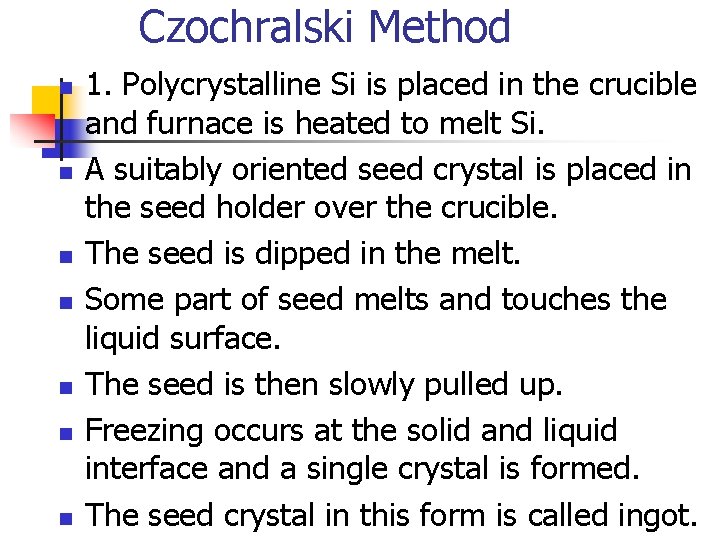
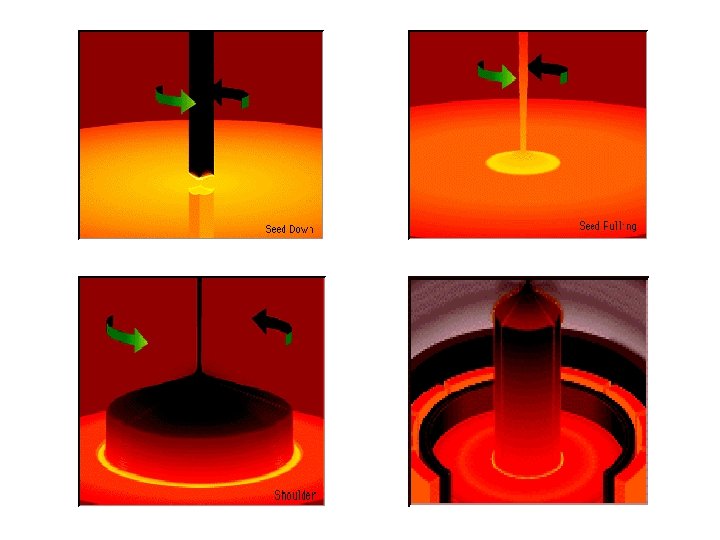
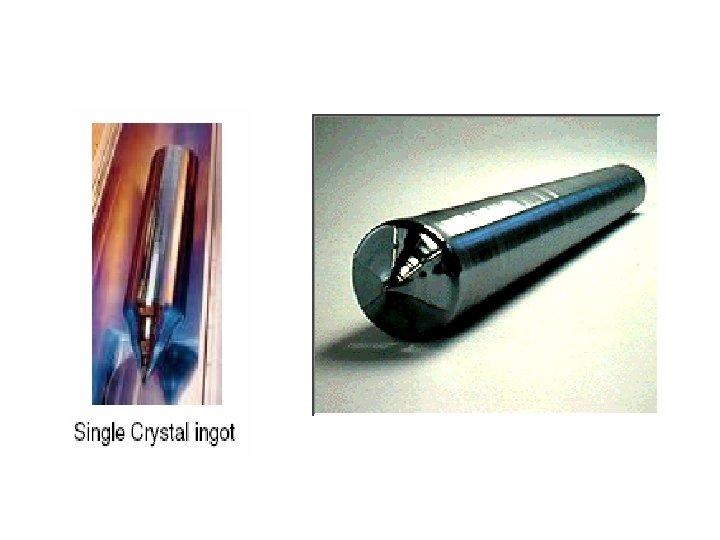
Czochralski Method n n n n 1. Polycrystalline Si is placed in the crucible and furnace is heated to melt Si. A suitably oriented seed crystal is placed in the seed holder over the crucible. The seed is dipped in the melt. Some part of seed melts and touches the liquid surface. The seed is then slowly pulled up. Freezing occurs at the solid and liquid interface and a single crystal is formed. The seed crystal in this form is called ingot.
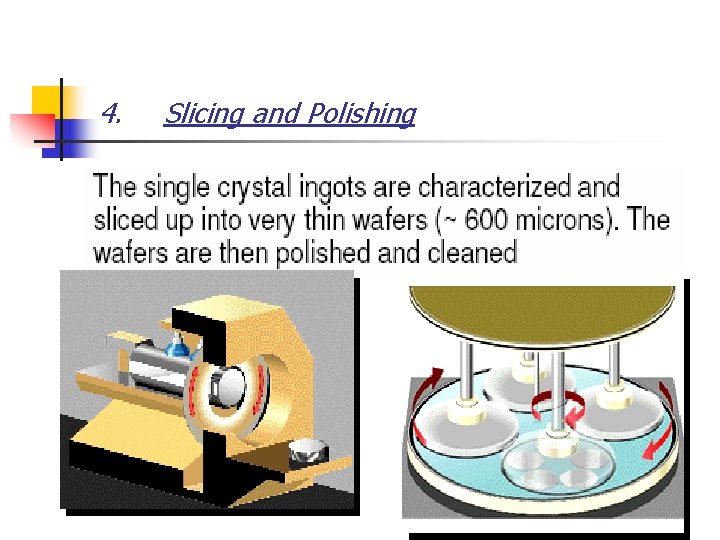
4. Slicing and Polishing
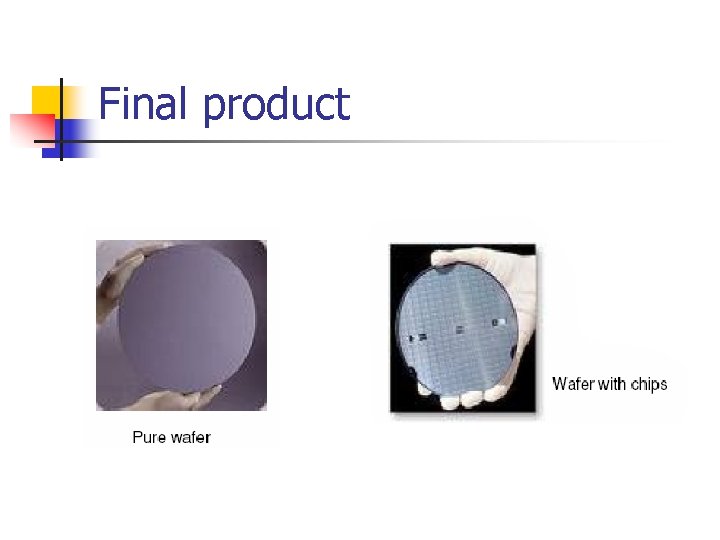
Final product
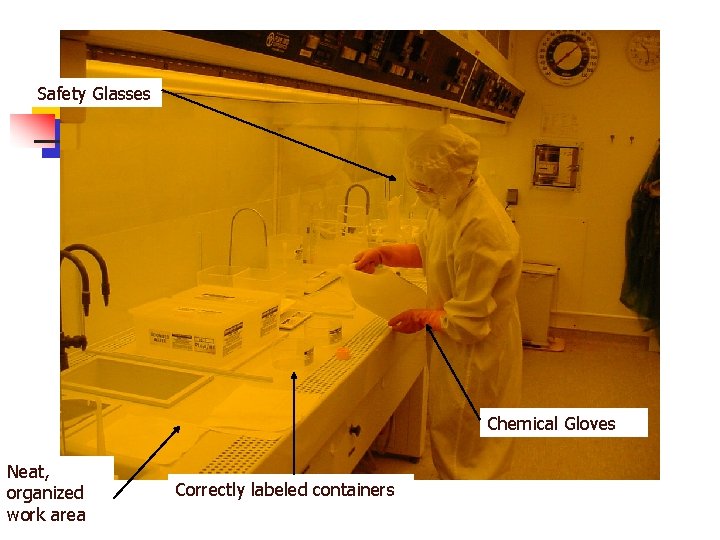
The first process to be done: Wafer Cleaning n n Wafers must be free of contamination at all stages of the fabrication process Cleaned in a strong acid and rinsed in DI water Safety glasses and chemical gloves are required for this step Once cleaned, wafers are ready for the next process
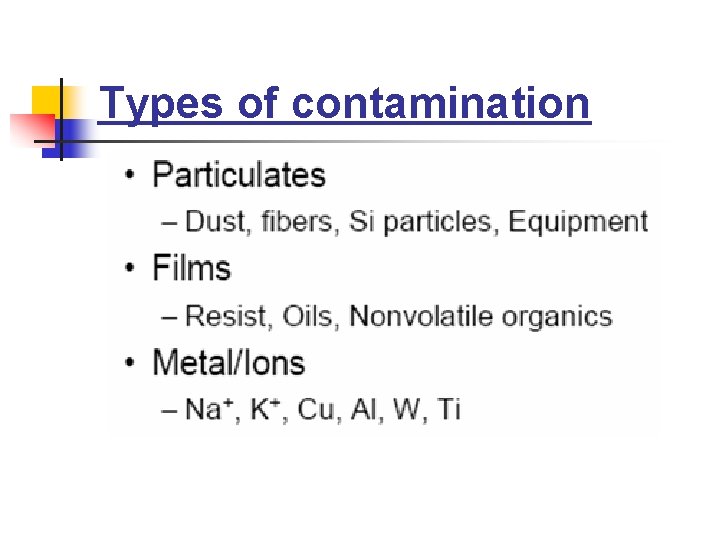
Types of contamination
Cleaning Critical n n Approximately 1/4 th of all processing steps are cleaning. Cleaning of wafers done to remove: • • n Organics Ionic species Particulate matter Oxide (native) Aqueous Clean: Series of chemical solutions, cleaning-before metal layer is deposited.
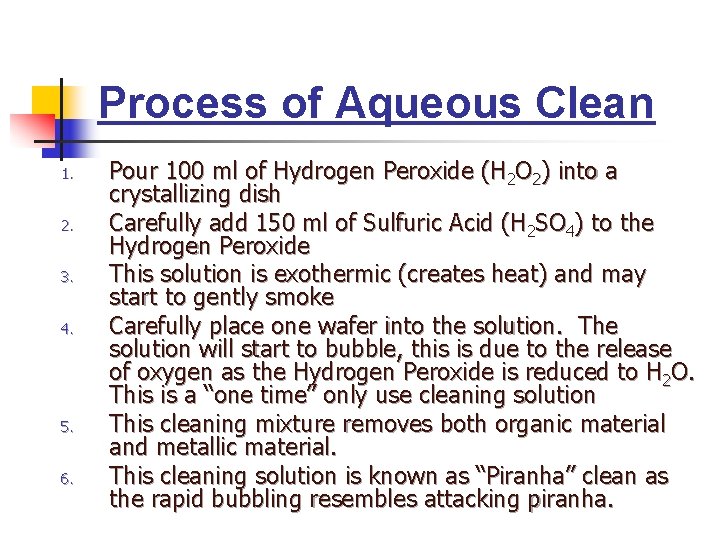
Process of Aqueous Clean 1. 2. 3. 4. 5. 6. Pour 100 ml of Hydrogen Peroxide (H 2 O 2) into a crystallizing dish Carefully add 150 ml of Sulfuric Acid (H 2 SO 4) to the Hydrogen Peroxide This solution is exothermic (creates heat) and may start to gently smoke Carefully place one wafer into the solution. The solution will start to bubble, this is due to the release of oxygen as the Hydrogen Peroxide is reduced to H 2 O. This is a “one time” only use cleaning solution This cleaning mixture removes both organic material and metallic material. This cleaning solution is known as “Piranha” clean as the rapid bubbling resembles attacking piranha.
Safety Glasses Chemical Gloves Neat, organized work area Correctly labeled containers
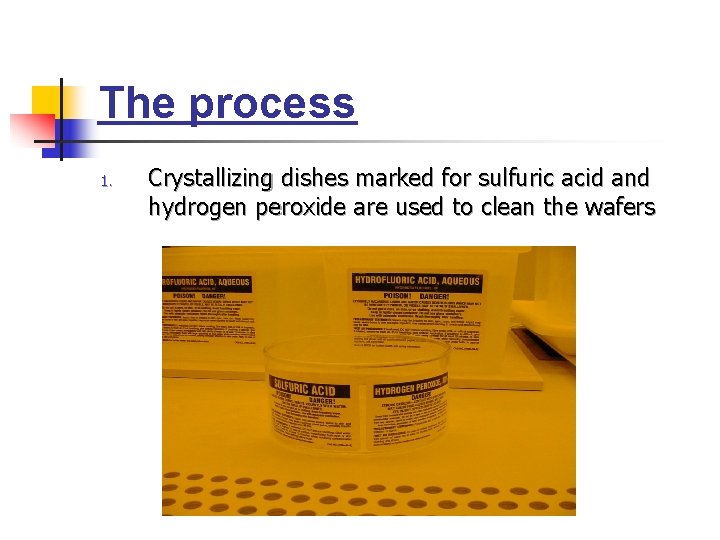
The process 1. Crystallizing dishes marked for sulfuric acid and hydrogen peroxide are used to clean the wafers
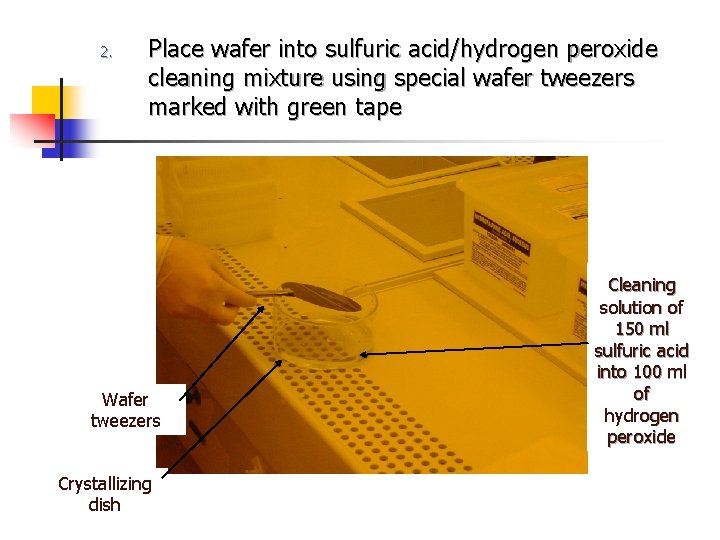
2. Place wafer into sulfuric acid/hydrogen peroxide cleaning mixture using special wafer tweezers marked with green tape Wafer tweezers Crystallizing dish Cleaning solution of 150 ml sulfuric acid into 100 ml of hydrogen peroxide
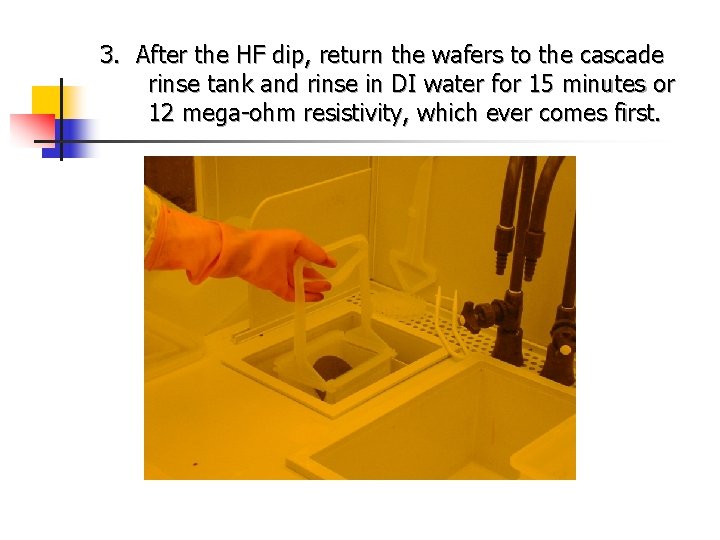
3. After the HF dip, return the wafers to the cascade rinse tank and rinse in DI water for 15 minutes or 12 mega-ohm resistivity, which ever comes first.
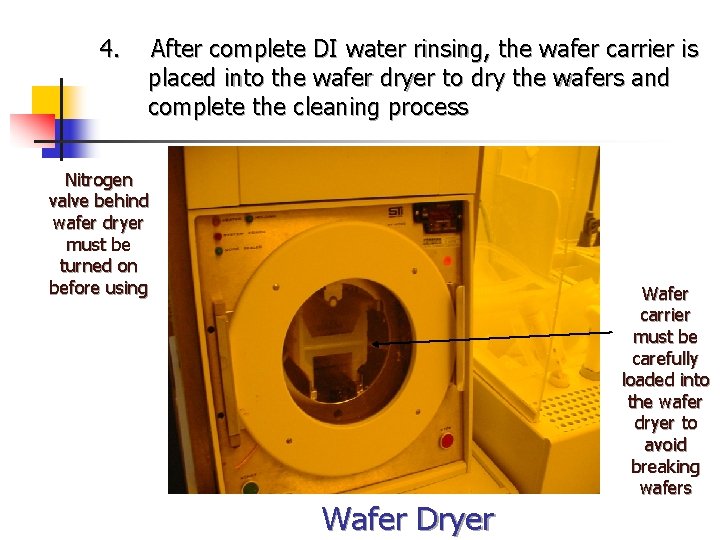
4. After complete DI water rinsing, the wafer carrier is placed into the wafer dryer to dry the wafers and complete the cleaning process Nitrogen valve behind wafer dryer must be turned on before using Wafer Dryer Wafer carrier must be carefully loaded into the wafer dryer to avoid breaking wafers
Wafer Cleaning Process Standards SC-1 • • • Standard Clean-1 H 2 O: H 2 O 2: NH 4 OH (5: 1: 1) Mixture heated to ~70 deg C. Thin oxide continually grown and then removed. Removes Si and particulates on the surface
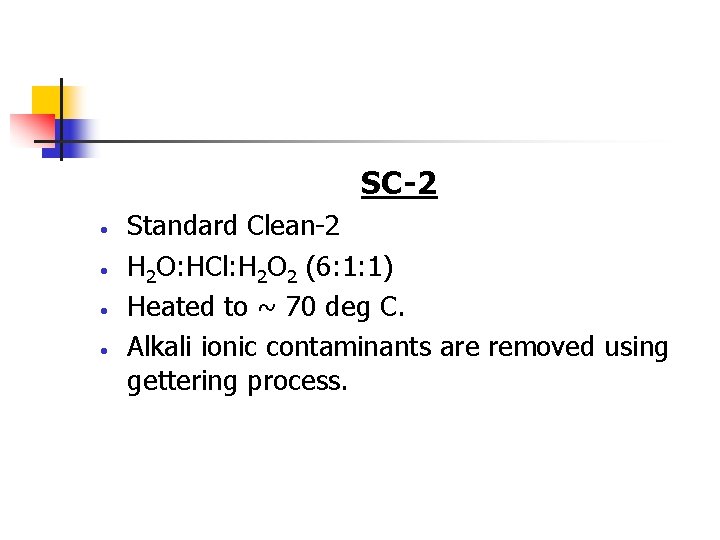
SC-2 • • Standard Clean-2 H 2 O: HCl: H 2 O 2 (6: 1: 1) Heated to ~ 70 deg C. Alkali ionic contaminants are removed using gettering process.
Wafer Cleaning completed successfully