
Waddells Signs Clinical Use and Interpretation LEALAH FREMUTH
- Slides: 19
Waddell’s Signs Clinical Use and Interpretation LEALAH FREMUTH CLINICAL EDUCATION II INSERVICE JUNE 25, 2015
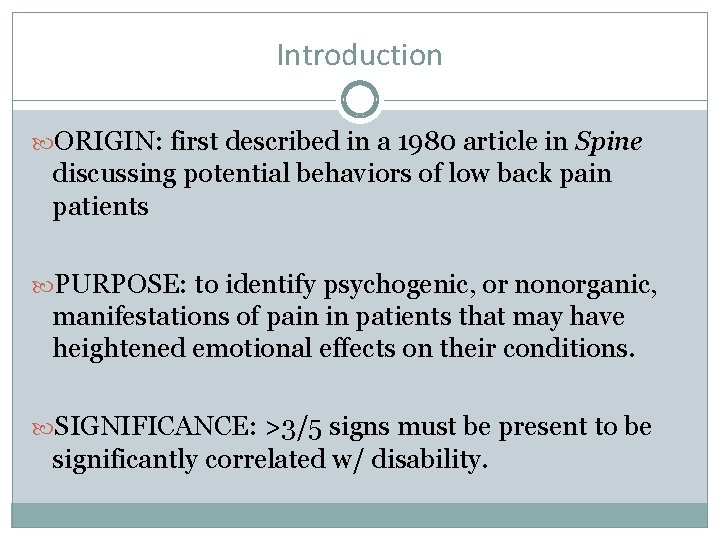
Introduction ORIGIN: first described in a 1980 article in Spine discussing potential behaviors of low back pain patients PURPOSE: to identify psychogenic, or nonorganic, manifestations of pain in patients that may have heightened emotional effects on their conditions. SIGNIFICANCE: >3/5 signs must be present to be significantly correlated w/ disability.
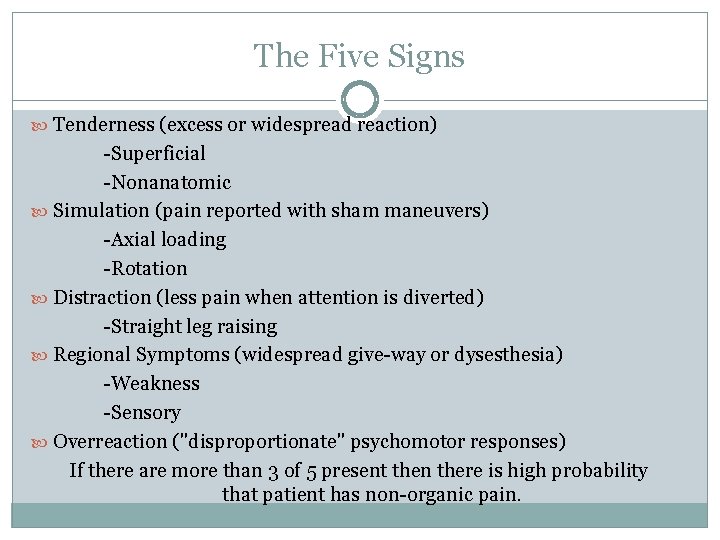
The Five Signs Tenderness (excess or widespread reaction) -Superficial -Nonanatomic Simulation (pain reported with sham maneuvers) -Axial loading -Rotation Distraction (less pain when attention is diverted) -Straight leg raising Regional Symptoms (widespread give-way or dysesthesia) -Weakness -Sensory Overreaction ("disproportionate" psychomotor responses) If there are more than 3 of 5 present then there is high probability that patient has non-organic pain.
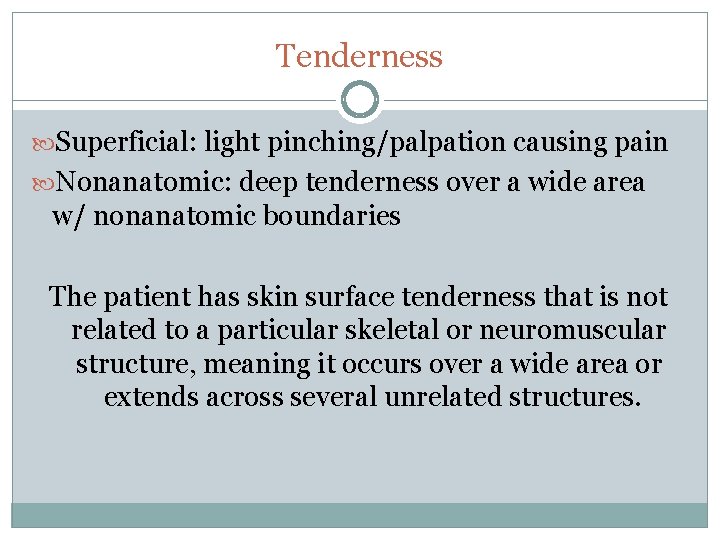
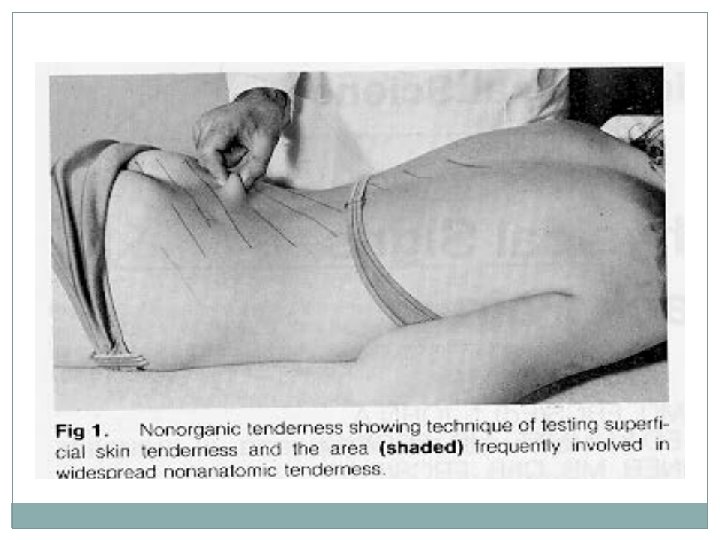
Tenderness Superficial: light pinching/palpation causing pain Nonanatomic: deep tenderness over a wide area w/ nonanatomic boundaries The patient has skin surface tenderness that is not related to a particular skeletal or neuromuscular structure, meaning it occurs over a wide area or extends across several unrelated structures.
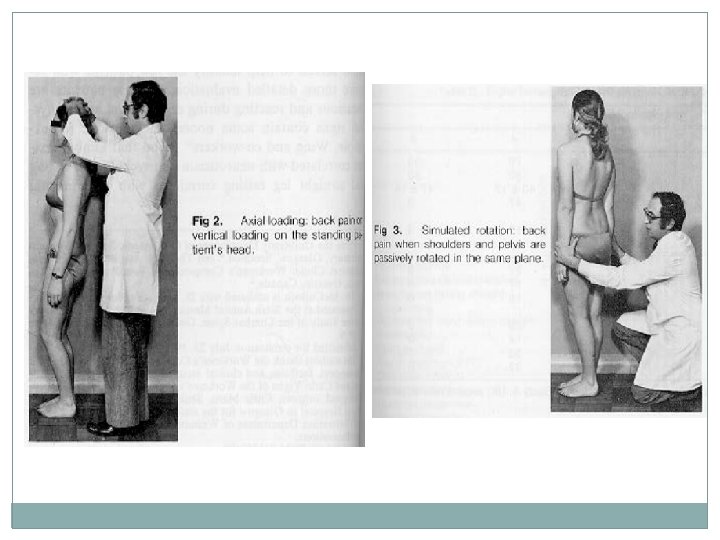
Simulation Axial loading: downward pressure on the head causing low back pain Rotation: Examiner holds shoulders and hips in same plane and rotates patient causing pain The patient complains of pain in the lower back when the examiner presses down on top of the head or rotates the shoulders and pelvis together on the same plane, neither of which should produce this type of pain.
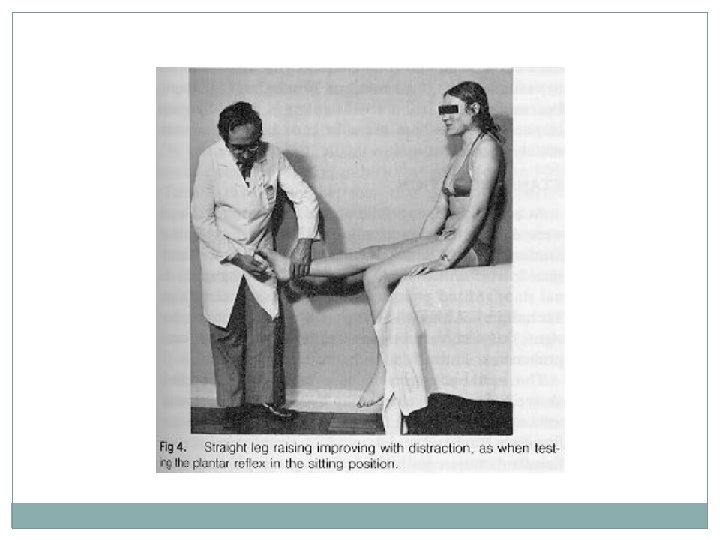
Distraction Straight leg raise when formally tested in supine pain, but Straightening the leg in sitting to check Babinski reflex does not The examiner does the same test twice, once while distracting the patient, and he/she only complains of pain in one test.
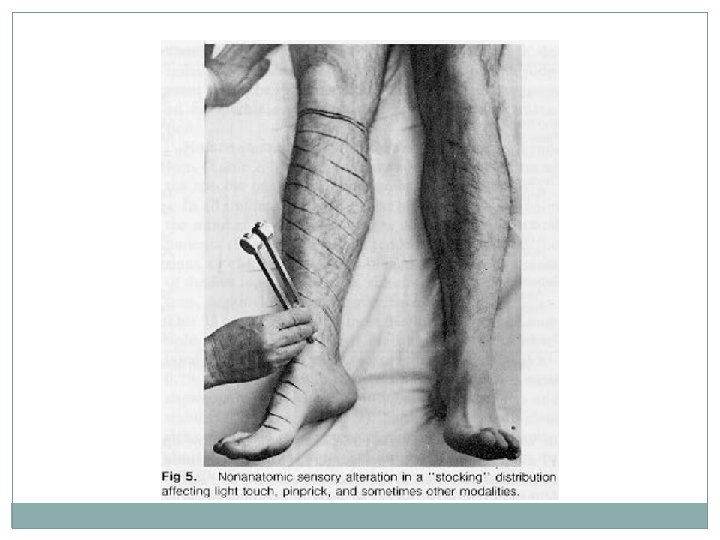
Regional Symptoms Weakness: multiple muscles not innervated by the same root Sensation: glove and stocking loss of sensation Sensory loss often described as encompassing an entire extremity or side of the body. Weakness that is non consistent and jerky. With either sensory deficits or weakness, the dysfunction is over a widespread area that cannot be explained based on anatomy or neurological patterns.
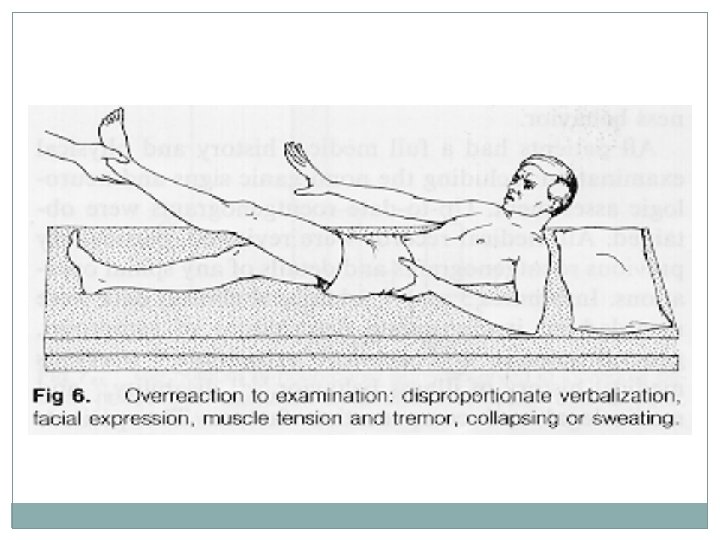
Overreaction Exaggerated painful response to a stimulus, that is not reproduced when the same stimulus is given later May include verbalization, facial expression, muscle tension and tremor. Presence of guarding, bracing, rubbing, grimacing, and sighing during a physical examination may also indicate overreaction.
Do Waddell’s signify malingering? Although Waddell's signs can detect a non-organic component to pain, they do not exclude an organic cause. A Waddell score of >3 is indicative only of symptom magnification. It does not signify malingering.
What do Waddell’s signs imply about return to work? Conflicting evidence: Bradish et al LBP (N=120) positive nonorganic signs test at initial assessment No correlation with work status between 12 and 18 months after injury Lancourt and Kettelhutin LBP (N=134) axial loading, simulated rotation, distraction, and a sensory regional disturbance BETTER predictors ankle and knee reflexes, motor loss, and sensory loss in a dermatomal pattern LESS predictive
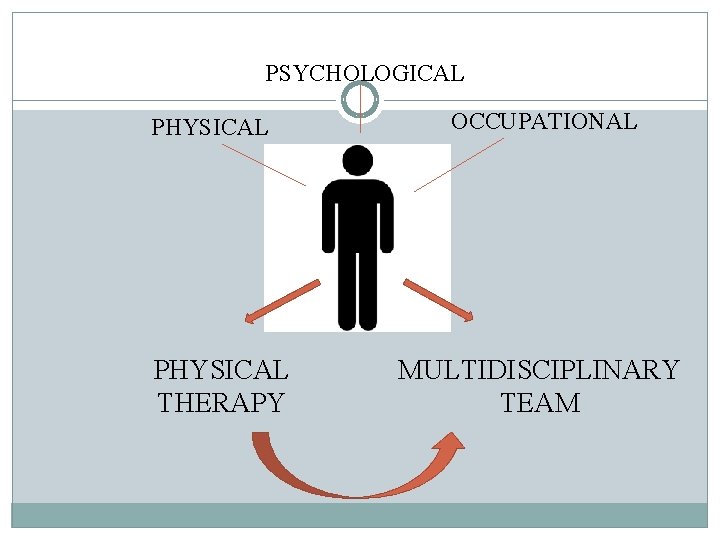
PSYCHOLOGICAL PHYSICAL THERAPY OCCUPATIONAL MULTIDISCIPLINARY TEAM
Considerations Both organic and nonorganic signs may be present in a patient with LBP. Therefore, the presence of nonorganic signs should not be equated with malingering or the presence of a psychological problem, but only with the need for further investigation. Waddell et al caution, however, that nonorganic signs should not be overinterpreted and used as substitutes for comprehensive psychological assessment. Instead, they should be used as part of an examination to identify patients who require more detailed testing. If nonorganic signs are found, therapist should take the psychological implications into account when communicating with and treating the patient.
Summary Waddell's signs = screening tool nonorganic signs may coexist with organic findings in addition to physical impairments. positive test = need for additional psychological assessment, NOT an indicator of malingering. physical therapy management for these patients should focus on treatment of illness behavior and on combating disability Help set the patient’s expectations and encourage them to be an active participant in their therapy
References http: //www. physther. org/content/77/3/306. full. pdf http: //www. physio-pedia. com/Waddells_Sign http: //www. nsrp. org/6 Presentations/RM/052312_Symptom_Magnificatio n. pdf http: //enniscentre. com/wpcontent/uploads/2012/07/Waddell-Signs. pdf