
W E I V E R S MCA

- Slides: 60
W E I V E R S MCA
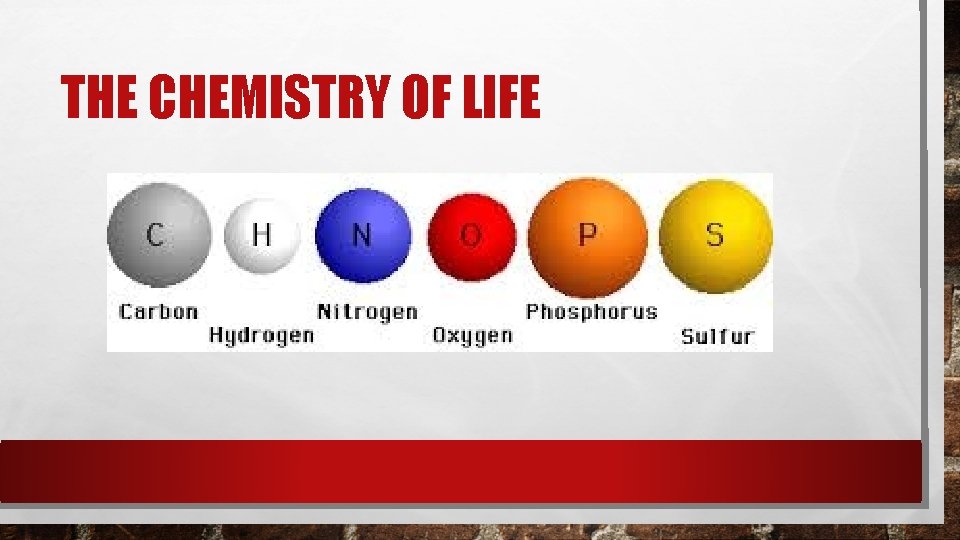
THE CHEMISTRY OF LIFE
MACROMOLECULES Many organic compounds in living cells are so large they are known as macromolecules – macro means giant. Most of these molecules are formed by a process known as polymerization – large compounds are build by joining smaller ones together.
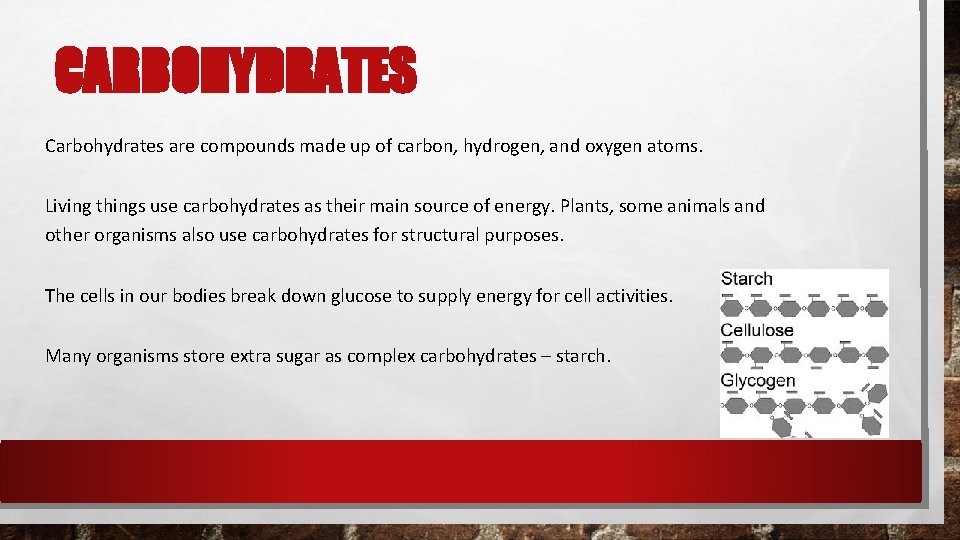
CARBOHYDRATES Carbohydrates are compounds made up of carbon, hydrogen, and oxygen atoms. Living things use carbohydrates as their main source of energy. Plants, some animals and other organisms also use carbohydrates for structural purposes. The cells in our bodies break down glucose to supply energy for cell activities. Many organisms store extra sugar as complex carbohydrates – starch.
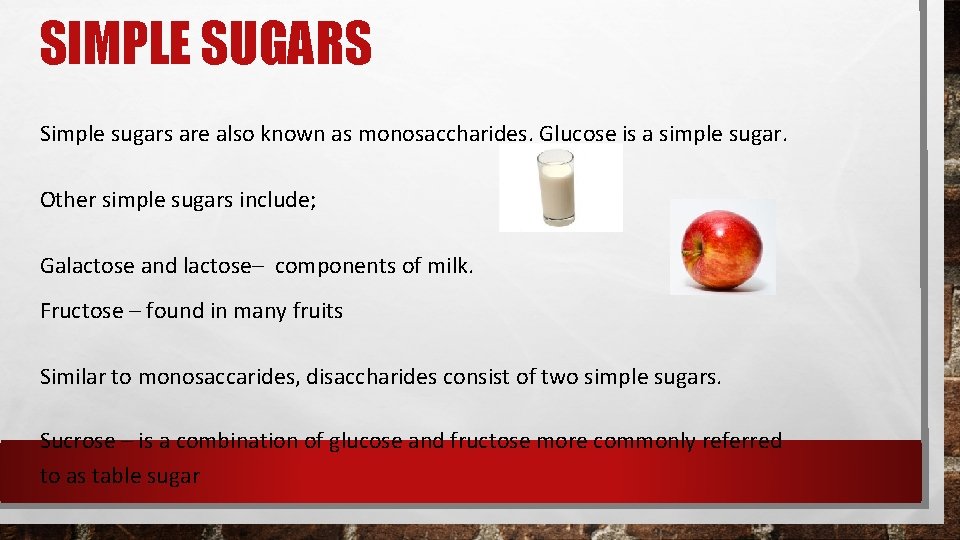
SIMPLE SUGARS Simple sugars are also known as monosaccharides. Glucose is a simple sugar. Other simple sugars include; Galactose and lactose– components of milk. Fructose – found in many fruits Similar to monosaccarides, disaccharides consist of two simple sugars. Sucrose – is a combination of glucose and fructose more commonly referred to as table sugar
COMPLEX CARBOHYDRATES The large macromolecules formed from monosaccharides are known as polysaccharides Many organisms (including humans) store excess sugars in a polysaccharide known as glycogen. When your blood sugar drops glycogen is broken down into glucose, which is then released into the blood from your liver.
LIPIDS Lipids are a large varied group of biological molecules that are generally not soluble in water. Lipids are made mostly from carbon and hydrogen atoms and are commonly split into 3 groups; Fats Oils Waxes Lipids can be used to store energy and some lipids are important parts of biological membranes and waterproof coverings. Steroids are lipids that are synthesized by the body. Many steroids act as important chemical messengers.
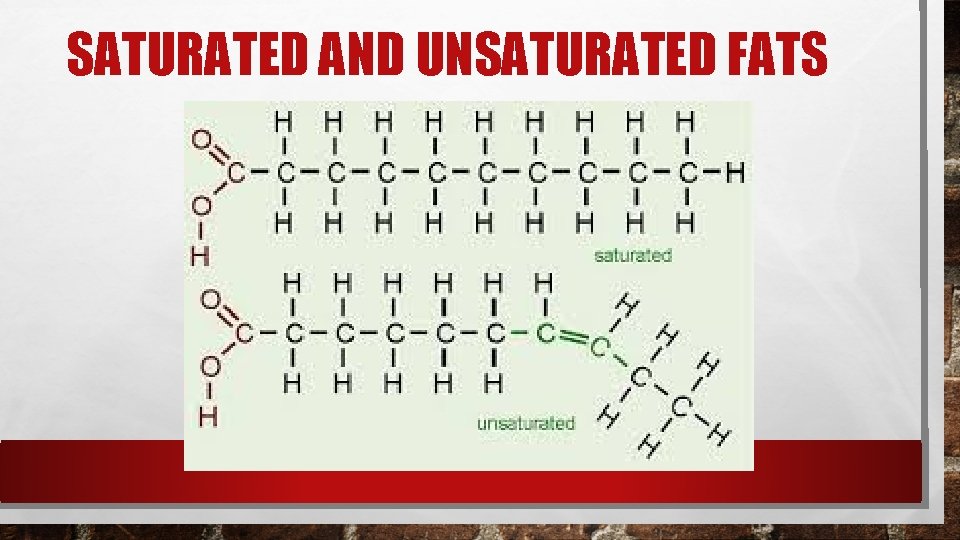
GLYCEROL AND FATTY ACIDS Many lipids are formed when a glycerol molecule combines with compounds called fatty acids. If each carbon atom in the lipids fatty acid tail is joined to another carbon atom by a single bond the lipid is said to be saturated. We say a lipid is saturated because the fatty acids contain the maximum possible number of hydrogen atoms. Saturated fats tend to be solid at room temperature.
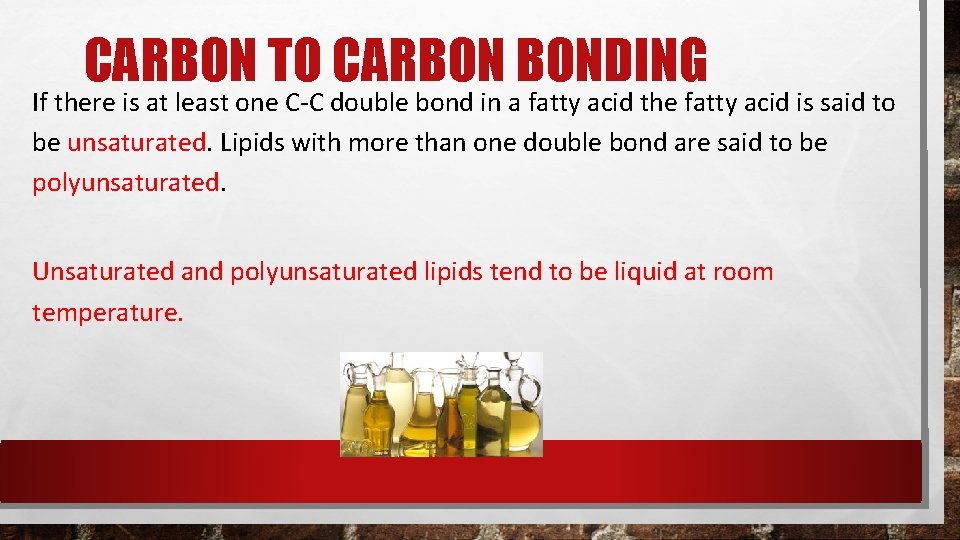
CARBON TO CARBON BONDING If there is at least one C-C double bond in a fatty acid the fatty acid is said to be unsaturated. Lipids with more than one double bond are said to be polyunsaturated. Unsaturated and polyunsaturated lipids tend to be liquid at room temperature.
SATURATED AND UNSATURATED FATS
PROTEINS Proteins are macromolecules that contain nitrogen as well as carbon, hydrogen, and oxygen. Proteins are polymers of molecules known as amino acids. Amino acids are compounds with an amino group (-nh 2) on one end a carboxyl group (-cooh) on the other end. In addition each amino acid also contains an r-group that distinguishes one amino acid from another.
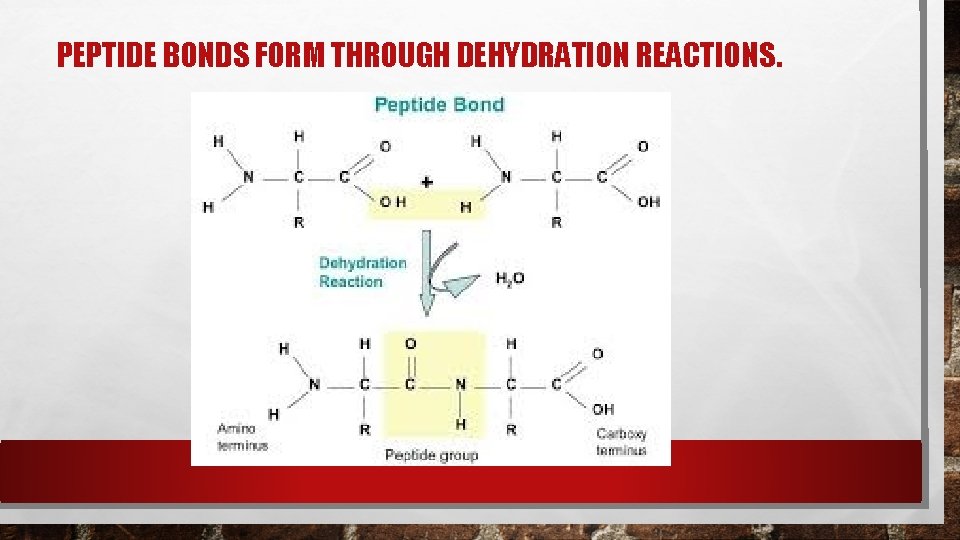
PEPTIDE BONDS Covalent bonds called peptide bonds link amino acids together to form a polypeptide. A molecule of h 2 o is released when the bond is formed. A protein is a functional molecule built from one or more polypeptides.
PEPTIDE BONDS FORM THROUGH DEHYDRATION REACTIONS.
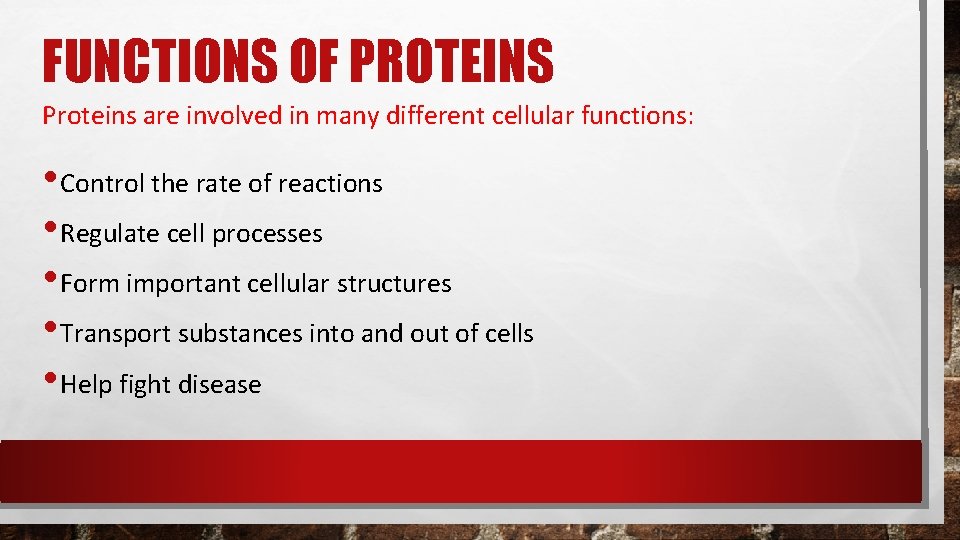
FUNCTIONS OF PROTEINS Proteins are involved in many different cellular functions: • Control the rate of reactions • Regulate cell processes • Form important cellular structures • Transport substances into and out of cells • Help fight disease
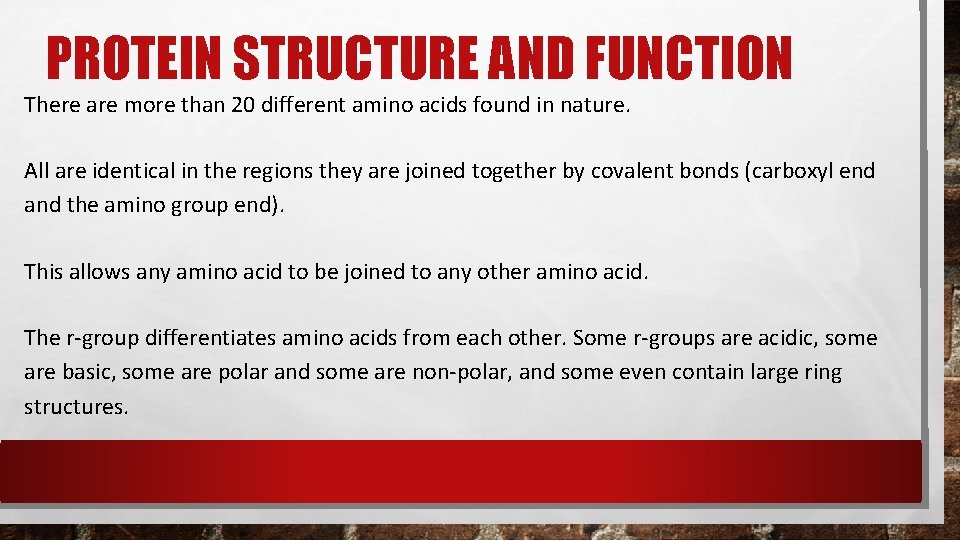
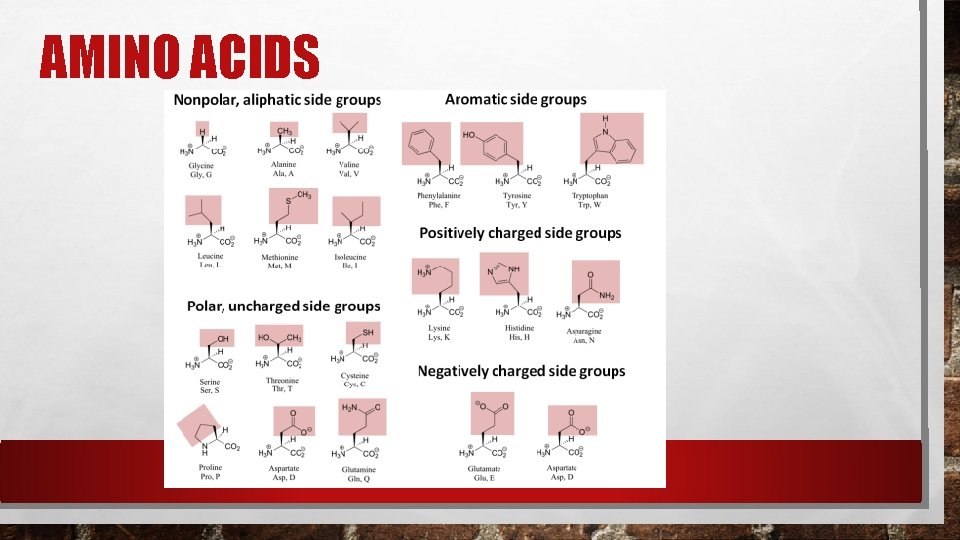
PROTEIN STRUCTURE AND FUNCTION There are more than 20 different amino acids found in nature. All are identical in the regions they are joined together by covalent bonds (carboxyl end and the amino group end). This allows any amino acid to be joined to any other amino acid. The r-group differentiates amino acids from each other. Some r-groups are acidic, some are basic, some are polar and some are non-polar, and some even contain large ring structures.
AMINO ACIDS
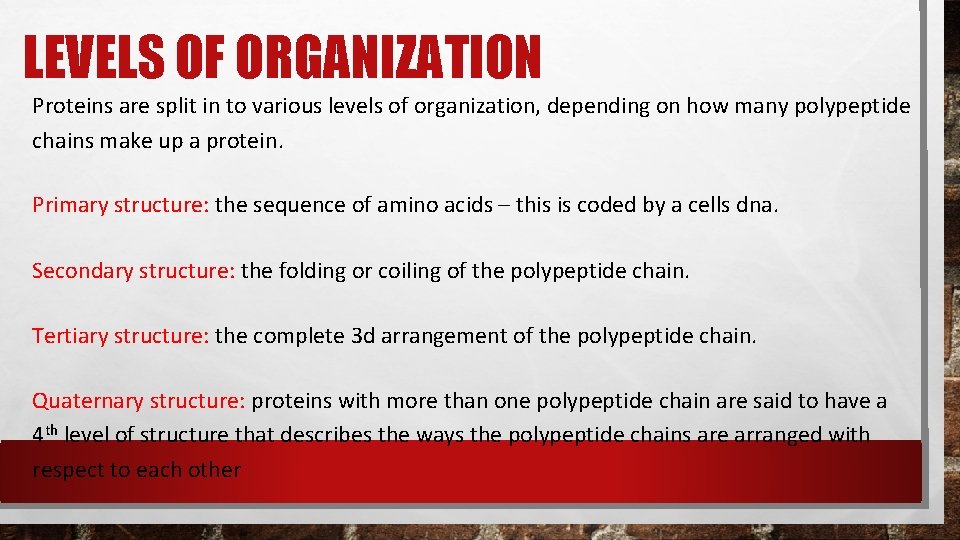
LEVELS OF ORGANIZATION Proteins are split in to various levels of organization, depending on how many polypeptide chains make up a protein. Primary structure: the sequence of amino acids – this is coded by a cells dna. Secondary structure: the folding or coiling of the polypeptide chain. Tertiary structure: the complete 3 d arrangement of the polypeptide chain. Quaternary structure: proteins with more than one polypeptide chain are said to have a 4 th level of structure that describes the ways the polypeptide chains are arranged with respect to each other
NUCLEIC ACIDS Nucleic acids are macromolecules that contain hydrogen, oxygen, nitrogen, carbon, and phosphorous. Nucleic acids are polymers assembled from monomers known as nucleotides. Nucleotides consist of 3 parts: a 5 -carbon sugar, a phosphate group (-po 4), and a nitrogenous base. Some nucleic acids contain the compound adenosine tri-phosphate (atp). This plays an important role in capturing and transferring energy within cells.
GENETICS AND HEREDITY Nucleic acids store and transmit heredity, or genetic information. There are two types of nucleic acid involved in the transfer and expression of genes – deoxyribose nucleic acid (dna) and ribonucleic acid (rna) Dna contains the sugar deoxyribose and rna contains the sugar ribose.
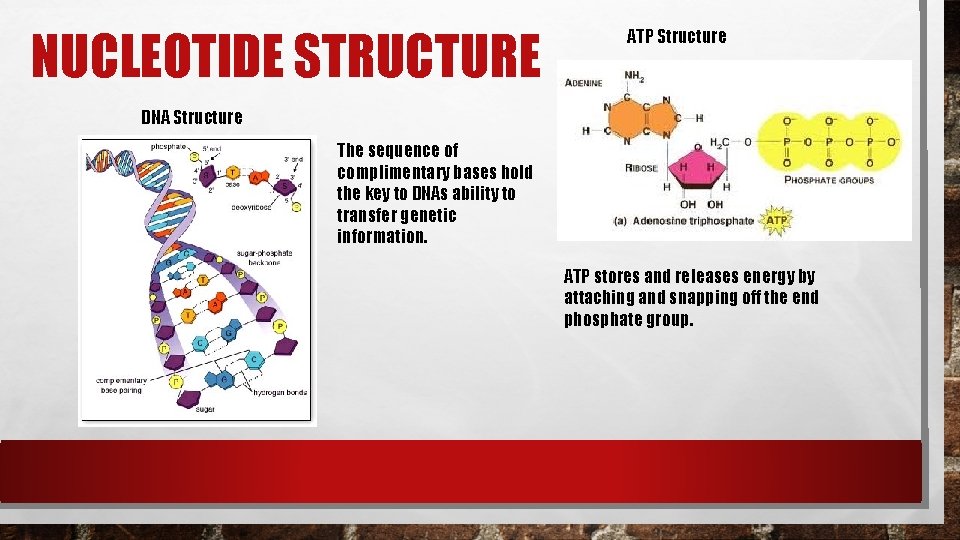
NUCLEOTIDE STRUCTURE ATP Structure DNA Structure The sequence of complimentary bases hold the key to DNAs ability to transfer genetic information. ATP stores and releases energy by attaching and snapping off the end phosphate group.
CELL BIOLOGY
7. 1 LIFE IS CELLULAR • Cell Theory – one of the unifying theories of science • All living things are made of cells • The cell is the basic unit of life – the smallest functional part that is actually considered alive. • New cells are produced from existing cells – cells reproduce by meiosis and mitosis
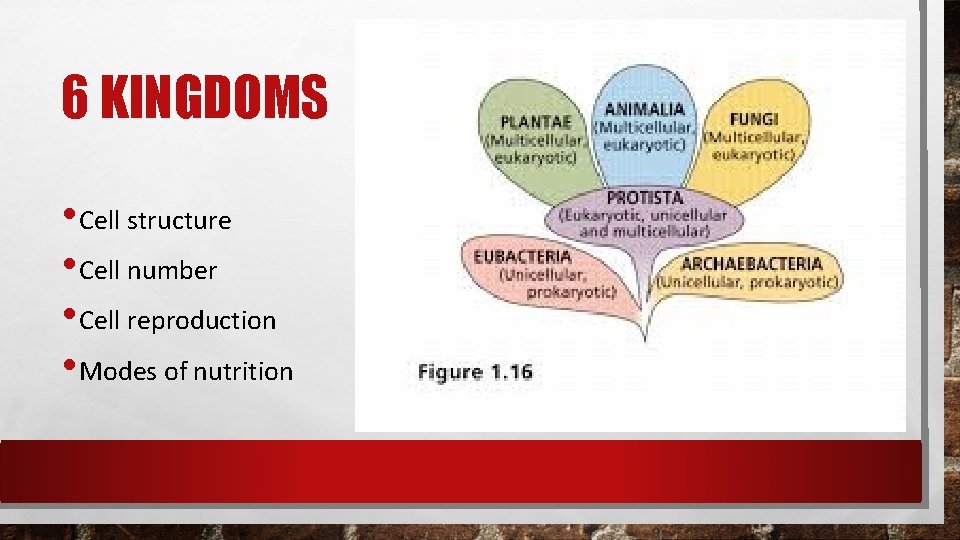
6 KINGDOMS • Cell structure • Cell number • Cell reproduction • Modes of nutrition
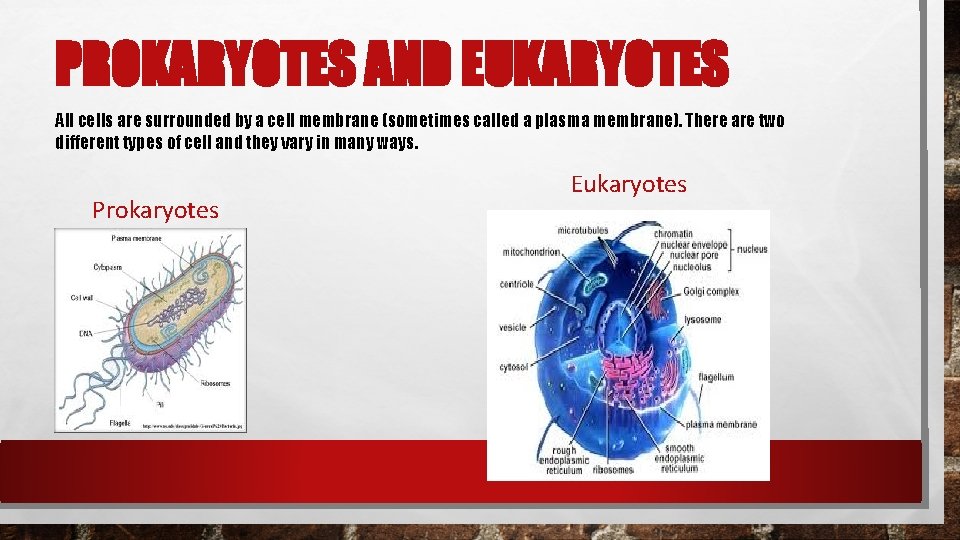
PROKARYOTES AND EUKARYOTES All cells are surrounded by a cell membrane (sometimes called a plasma membrane). There are two different types of cell and they vary in many ways. Prokaryotes Eukaryotes
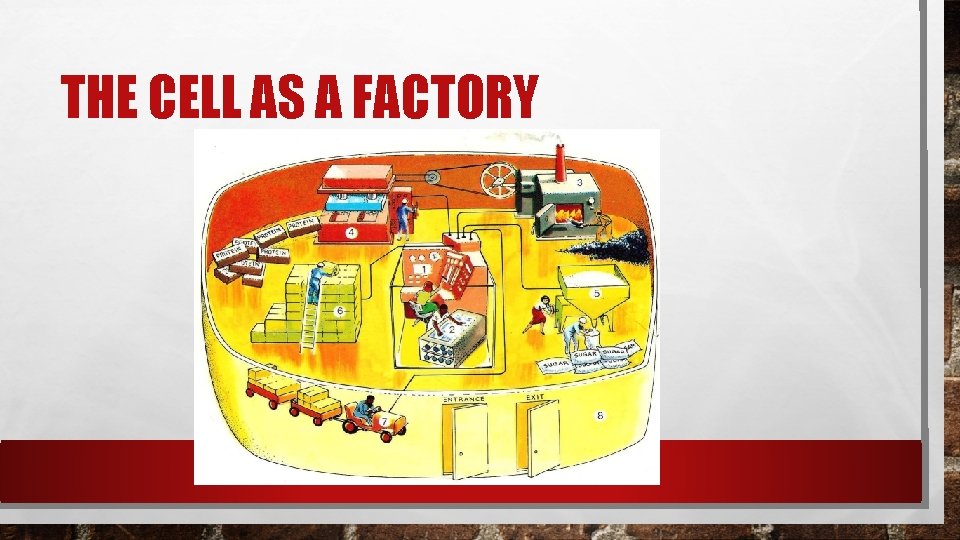
THE CELL AS A FACTORY
ORGANELLES AND STRUCTURES • Cell membrane • Nucleus • Endoplasmic reticulum • Golgi apparatus • Mitochondria • Chloroplasts • Lysosomes • Vacuoles • Ribosomes • Cytoskeleton • Cilia • Flagella
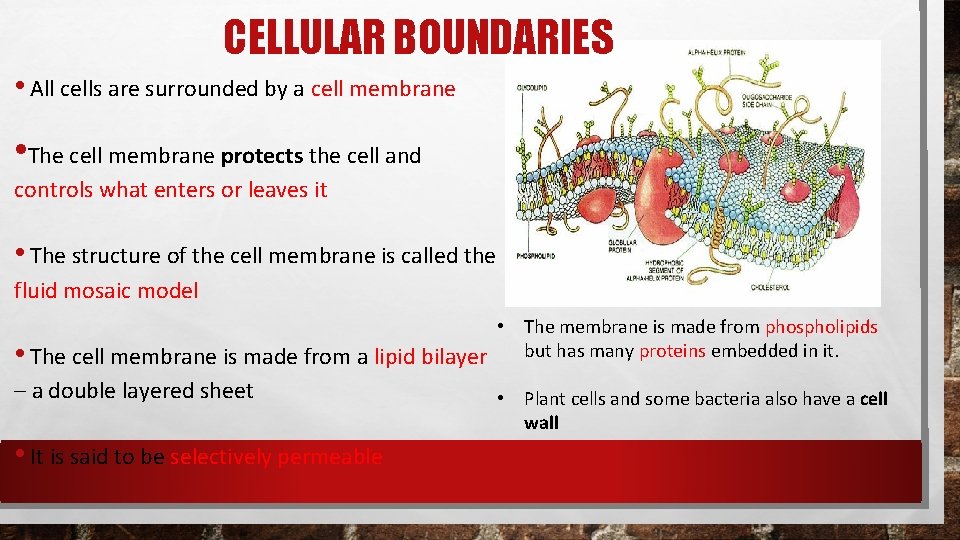
CELLULAR BOUNDARIES • All cells are surrounded by a cell membrane • The cell membrane protects the cell and controls what enters or leaves it • The structure of the cell membrane is called the fluid mosaic model • The membrane is made from phospholipids • The cell membrane is made from a lipid bilayer but has many proteins embedded in it. – a double layered sheet • It is said to be selectively permeable • Plant cells and some bacteria also have a cell wall
CELL TRANSPORT
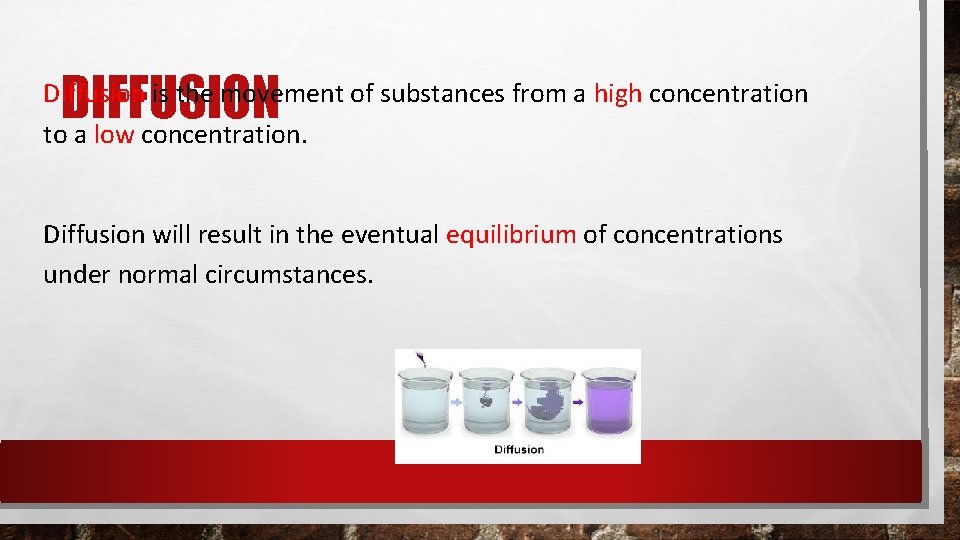
DIFFUSION Diffusion is the movement of substances from a high concentration to a low concentration. Diffusion will result in the eventual equilibrium of concentrations under normal circumstances.
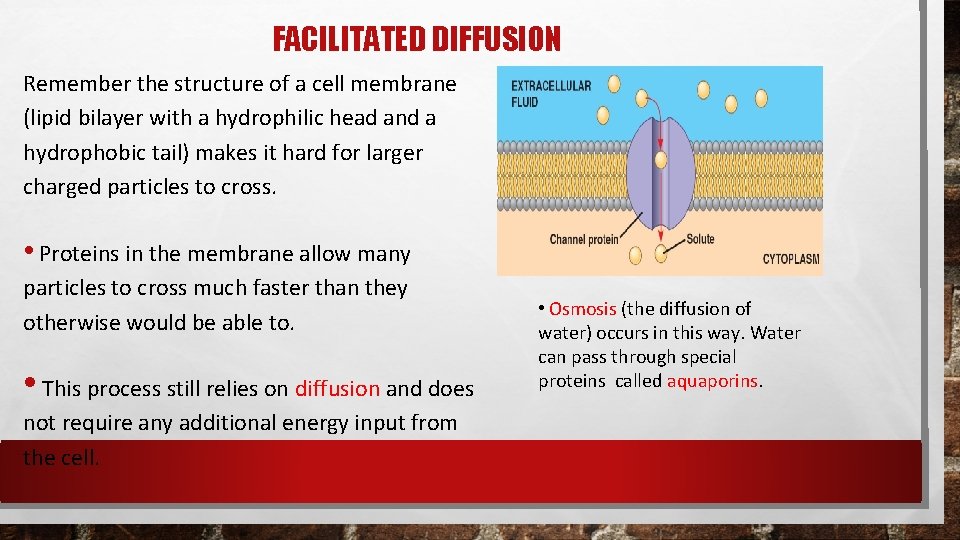
FACILITATED DIFFUSION Remember the structure of a cell membrane (lipid bilayer with a hydrophilic head and a hydrophobic tail) makes it hard for larger charged particles to cross. • Proteins in the membrane allow many particles to cross much faster than they otherwise would be able to. • This process still relies on diffusion and does not require any additional energy input from the cell. • Osmosis (the diffusion of water) occurs in this way. Water can pass through special proteins called aquaporins.
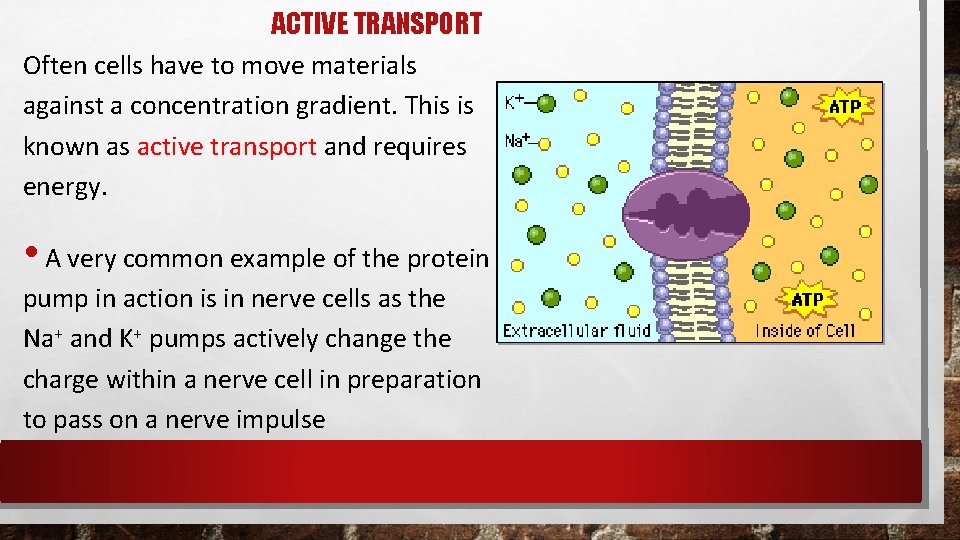
ACTIVE TRANSPORT Often cells have to move materials against a concentration gradient. This is known as active transport and requires energy. • A very common example of the protein pump in action is in nerve cells as the Na+ and K+ pumps actively change the charge within a nerve cell in preparation to pass on a nerve impulse
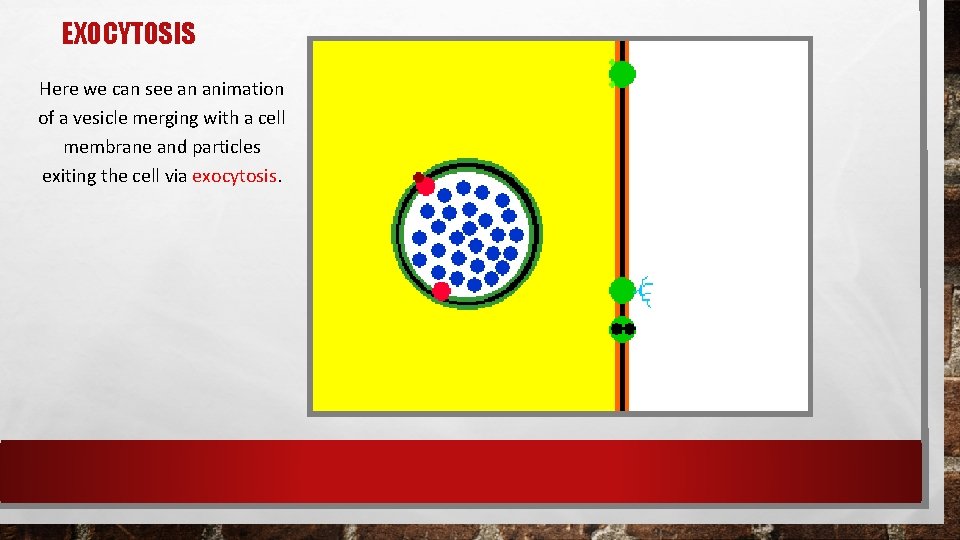
EXOCYTOSIS Here we can see an animation of a vesicle merging with a cell membrane and particles exiting the cell via exocytosis.
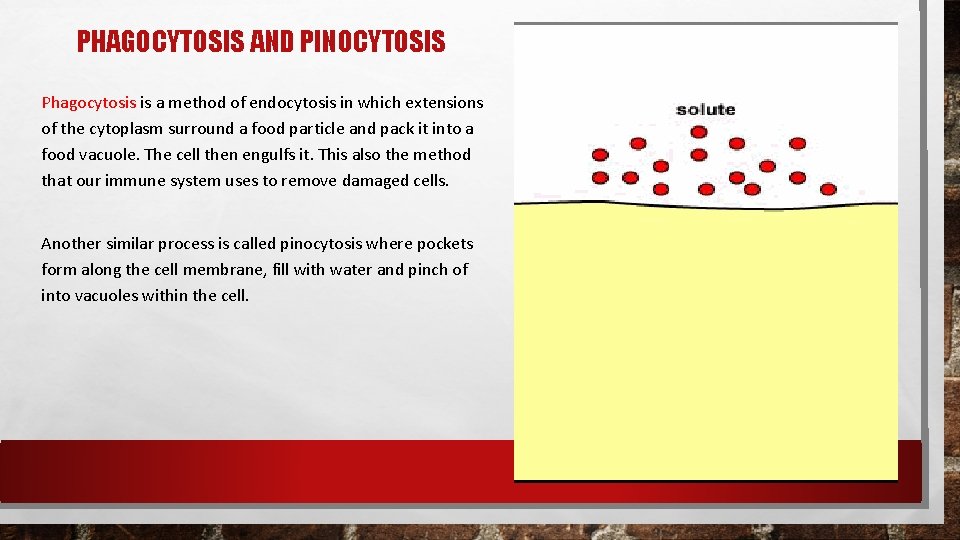
PHAGOCYTOSIS AND PINOCYTOSIS Phagocytosis is a method of endocytosis in which extensions of the cytoplasm surround a food particle and pack it into a food vacuole. The cell then engulfs it. This also the method that our immune system uses to remove damaged cells. Another similar process is called pinocytosis where pockets form along the cell membrane, fill with water and pinch of into vacuoles within the cell.
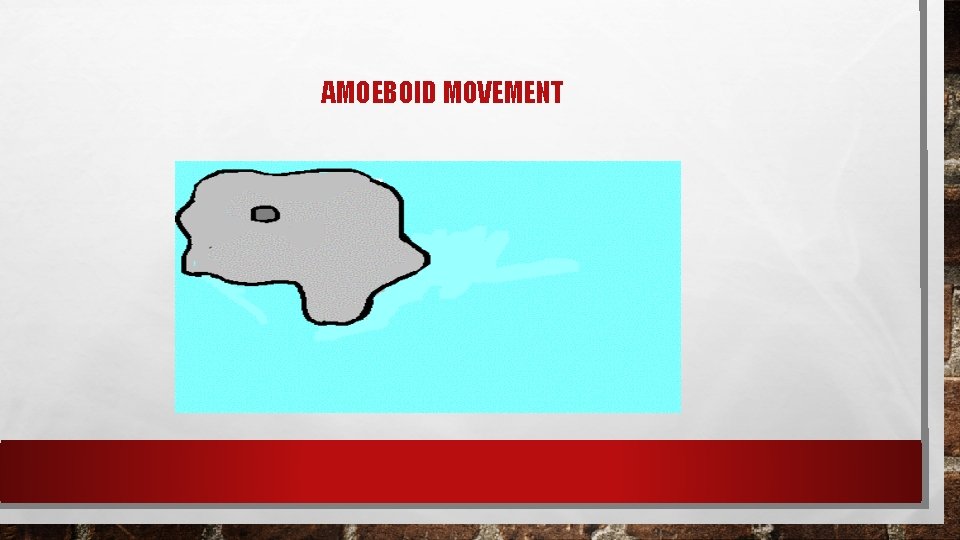
AMOEBOID MOVEMENT
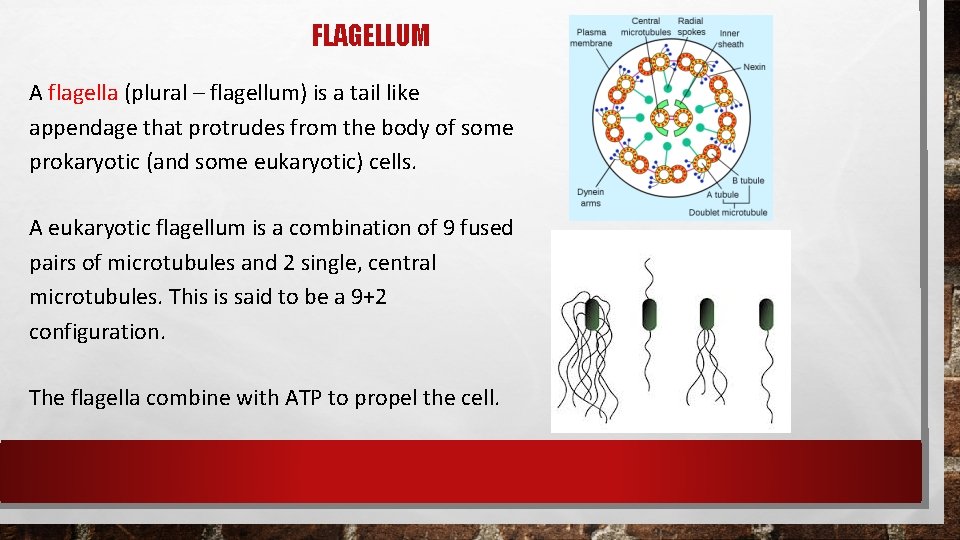
FLAGELLUM A flagella (plural – flagellum) is a tail like appendage that protrudes from the body of some prokaryotic (and some eukaryotic) cells. A eukaryotic flagellum is a combination of 9 fused pairs of microtubules and 2 single, central microtubules. This is said to be a 9+2 configuration. The flagella combine with ATP to propel the cell.
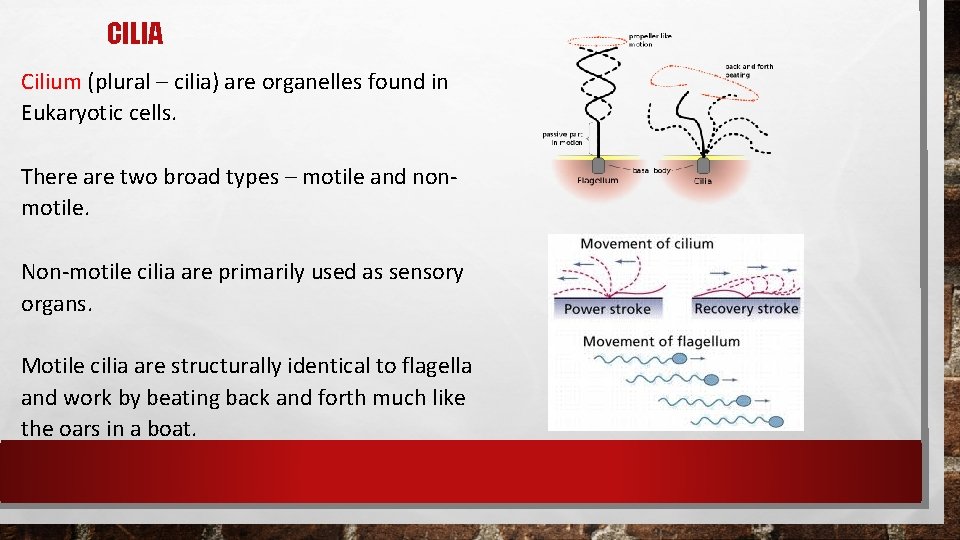
CILIA Cilium (plural – cilia) are organelles found in Eukaryotic cells. There are two broad types – motile and nonmotile. Non-motile cilia are primarily used as sensory organs. Motile cilia are structurally identical to flagella and work by beating back and forth much like the oars in a boat.
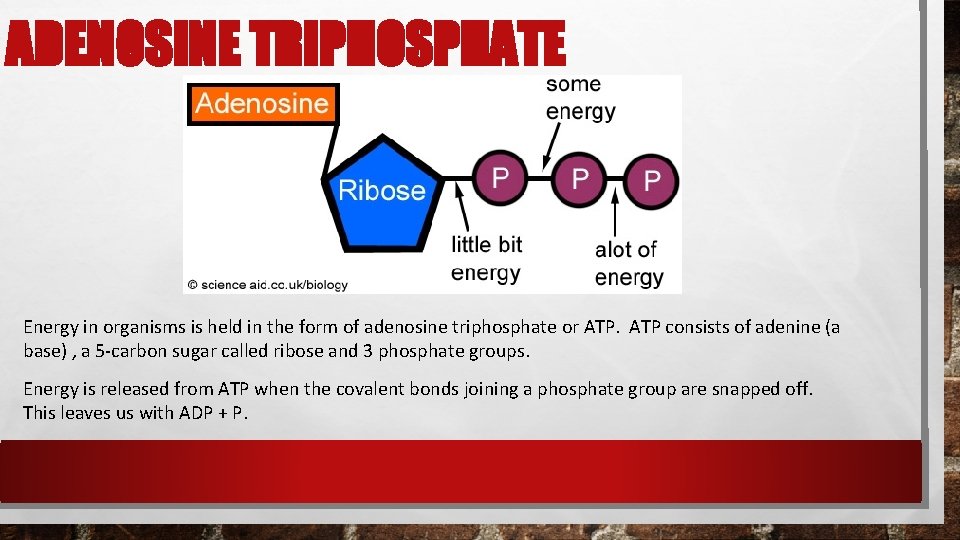
ADENOSINE TRIPHOSPHATE Energy in organisms is held in the form of adenosine triphosphate or ATP consists of adenine (a base) , a 5 -carbon sugar called ribose and 3 phosphate groups. Energy is released from ATP when the covalent bonds joining a phosphate group are snapped off. This leaves us with ADP + P.
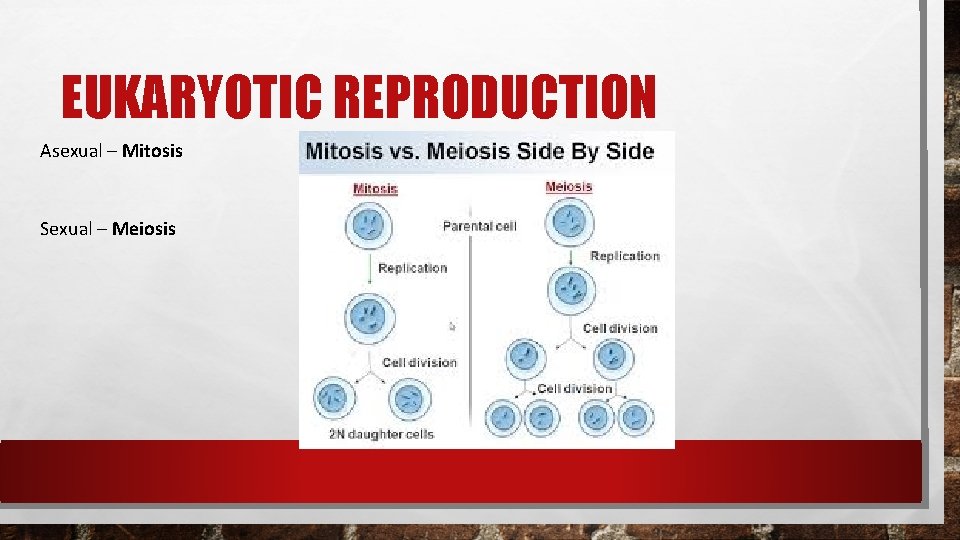
EUKARYOTIC REPRODUCTION Asexual – Mitosis Sexual – Meiosis
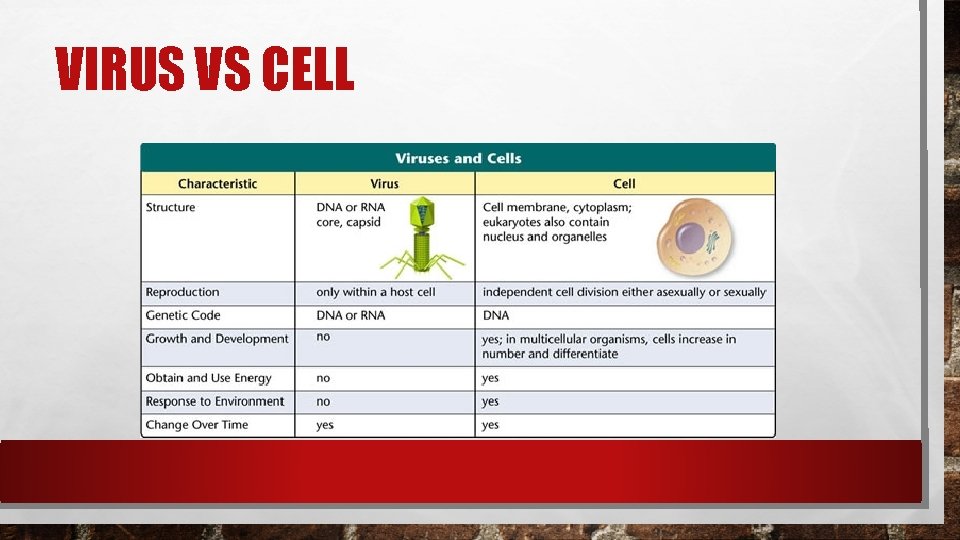
VIRUS VS CELL
PHOTOSYNTHESIS
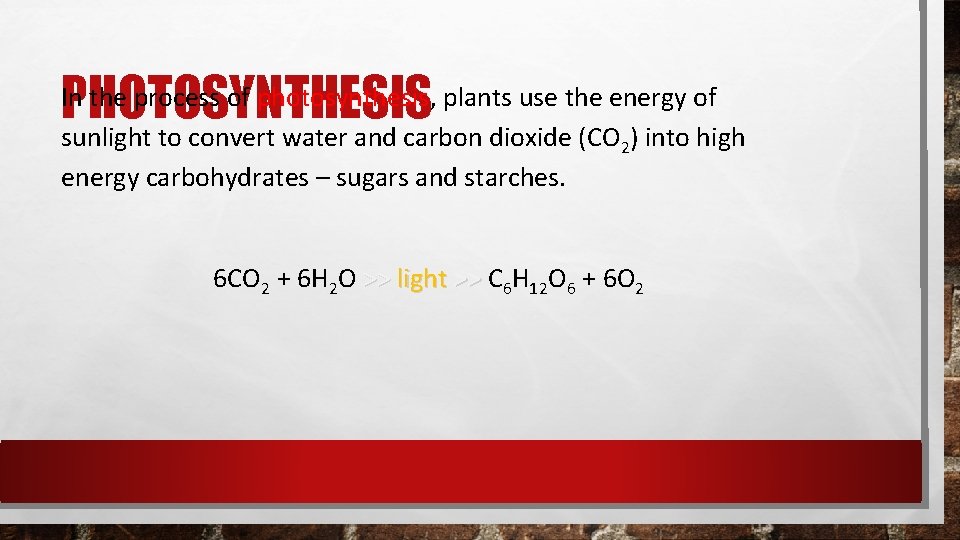
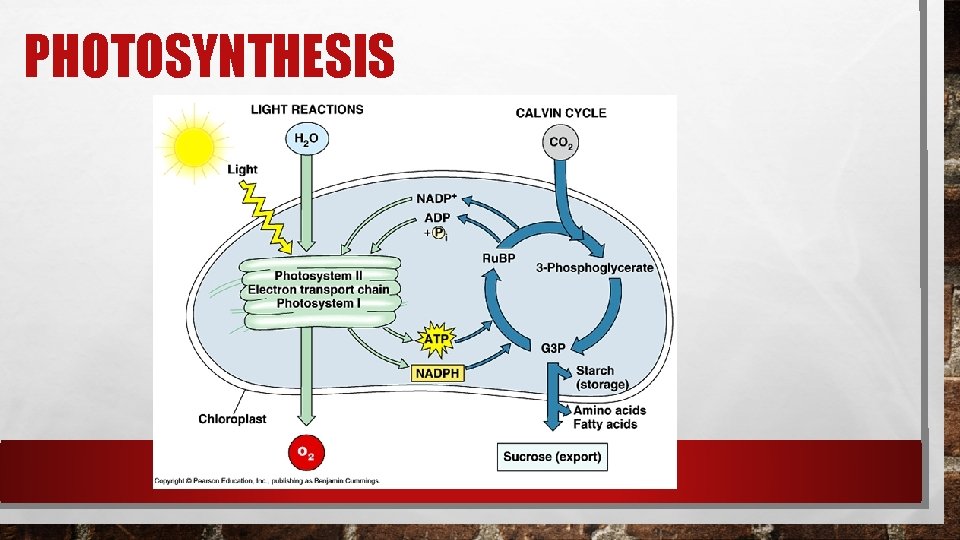
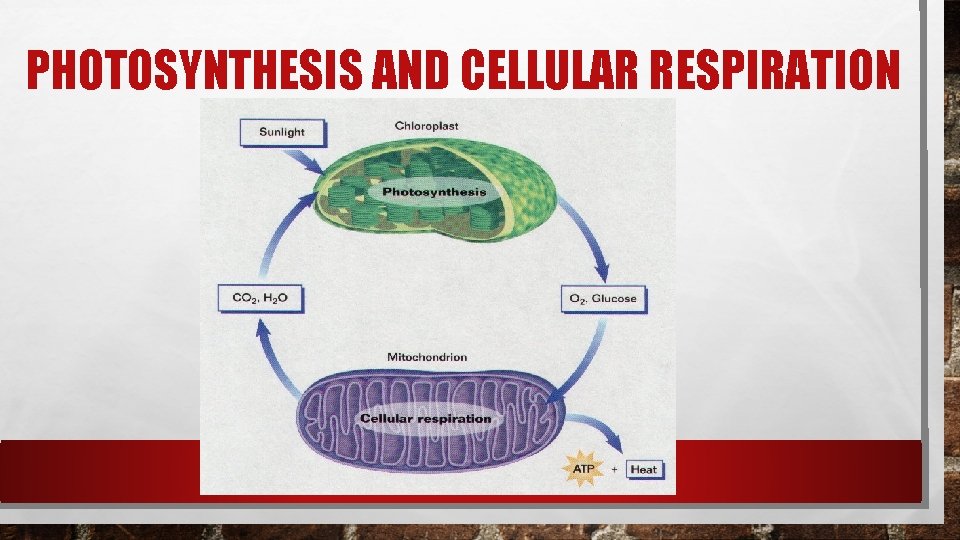
PHOTOSYNTHESIS In the process of photosynthesis, plants use the energy of sunlight to convert water and carbon dioxide (CO 2) into high energy carbohydrates – sugars and starches. 6 CO 2 + 6 H 2 O >> light >> C 6 H 12 O 6 + 6 O 2
PHOTOSYNTHESIS
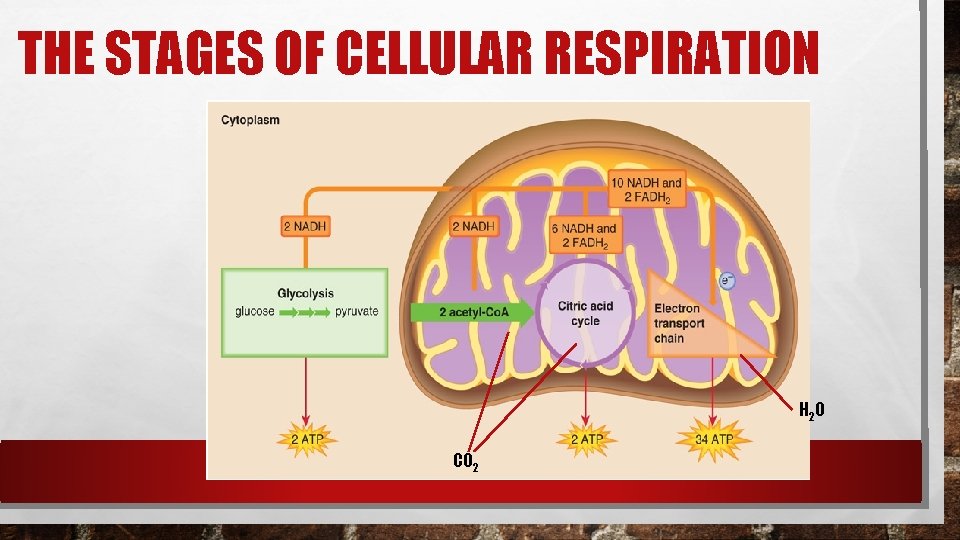
THE STAGES OF CELLULAR RESPIRATION H 2 O CO 2
PHOTOSYNTHESIS AND CELLULAR RESPIRATION
MOLECULAR BIOLOGY
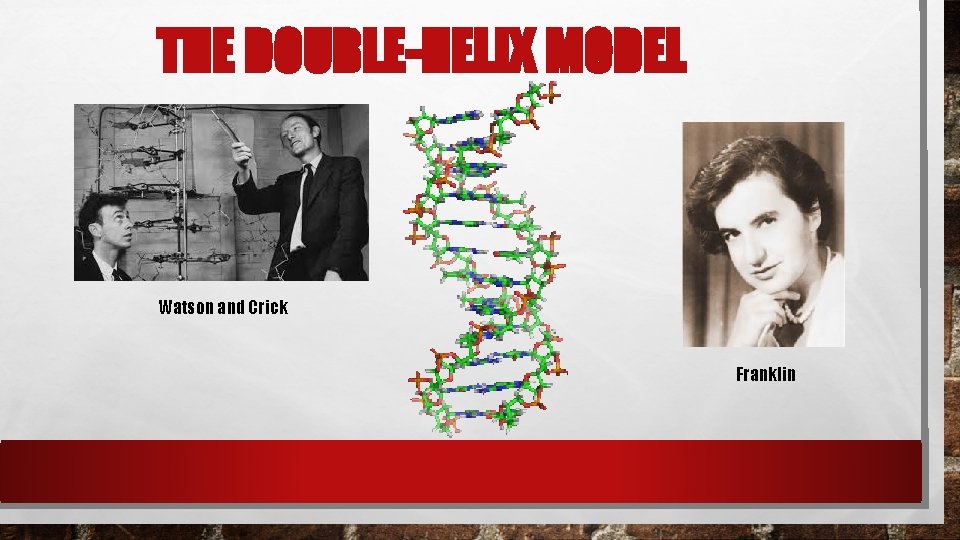
THE DOUBLE-HELIX MODEL Watson and Crick Franklin
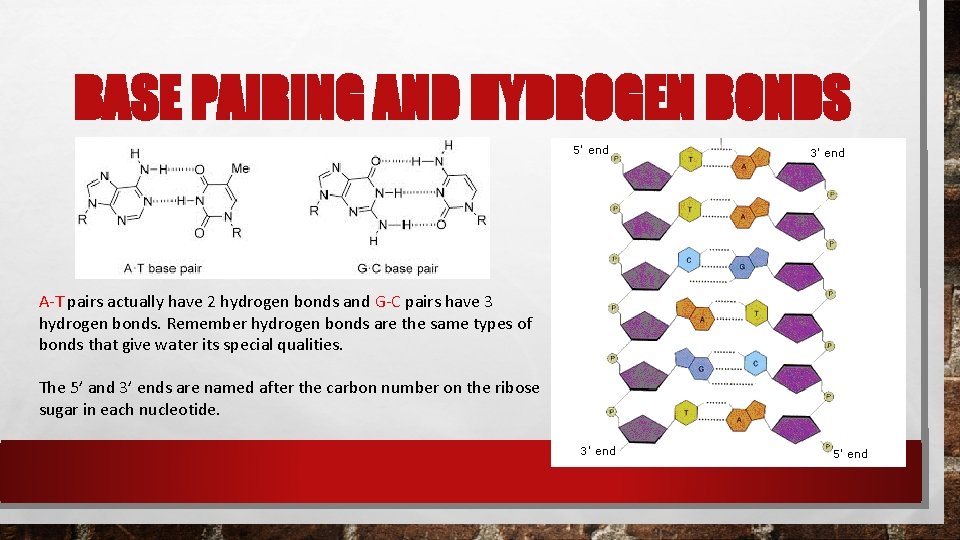
BASE PAIRING AND HYDROGEN BONDS A-T pairs actually have 2 hydrogen bonds and G-C pairs have 3 hydrogen bonds. Remember hydrogen bonds are the same types of bonds that give water its special qualities. The 5’ and 3’ ends are named after the carbon number on the ribose sugar in each nucleotide.
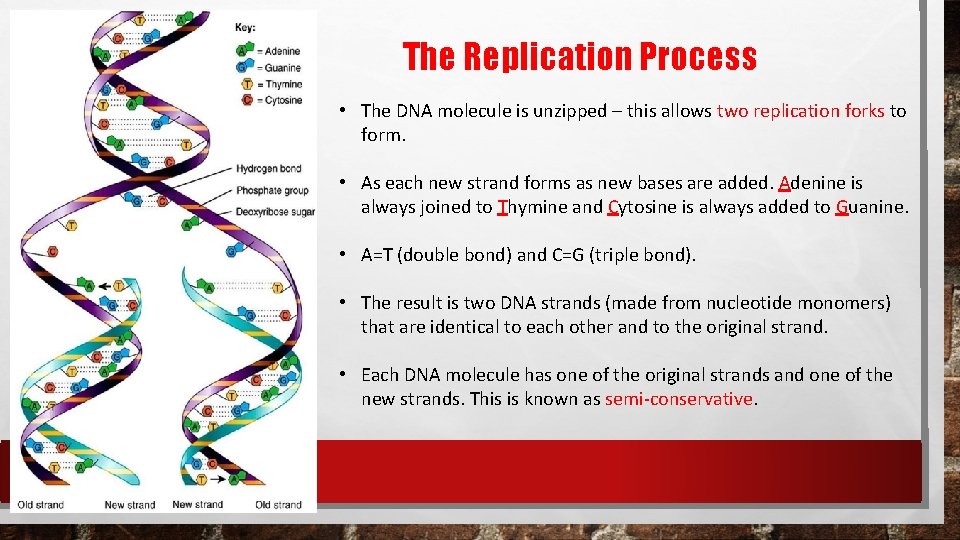
The Replication Process • The DNA molecule is unzipped – this allows two replication forks to form. • As each new strand forms as new bases are added. Adenine is always joined to Thymine and Cytosine is always added to Guanine. • A=T (double bond) and C=G (triple bond). • The result is two DNA strands (made from nucleotide monomers) that are identical to each other and to the original strand. • Each DNA molecule has one of the original strands and one of the new strands. This is known as semi-conservative.
RNA
CENTRAL DOGMA OF MOLECULAR BIOLOGY Information flow • DNA >>>> RNA >>>> Protein • Transcription • Translation • PROTEIN SYNTHESIS
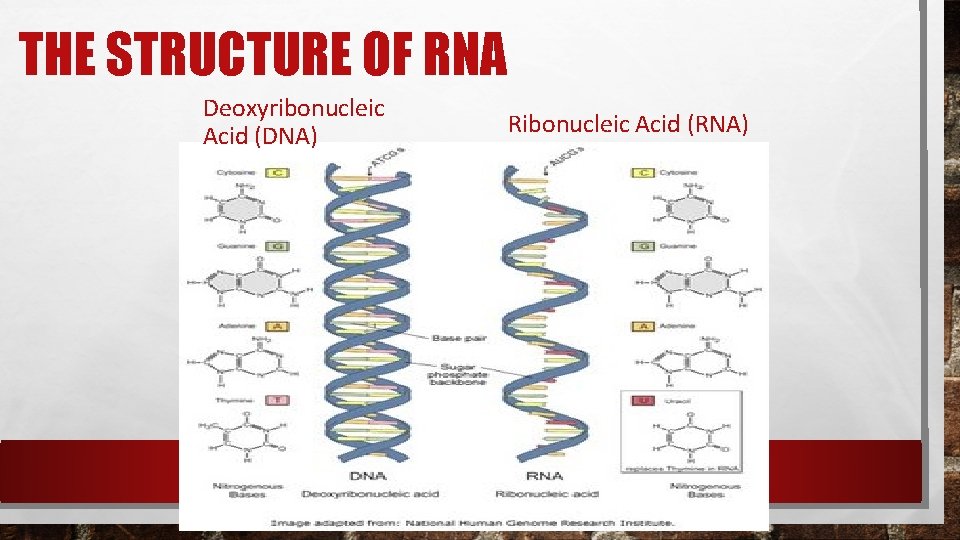
COMPARING DNA AND RNA Each nucleotide of DNA is made up of a 5 -carbon sugar, a phosphate group, and a nitrogenous base. This is also true for RNA. However there are 3 important differences between DNA and RNA; 1. 2. 3. The sugar in RNAis ribose instead of deoxyribose. RNAis generally single stranded and not double stranded like dna. RNA contains uracil instead of thymine (A-U instead of A-T). These chemical differences make it easy for enzymes in the cell to tell the difference between dna and rna.
THE STRUCTURE OF RNA Deoxyribonucleic Acid (DNA) Ribonucleic Acid (RNA)
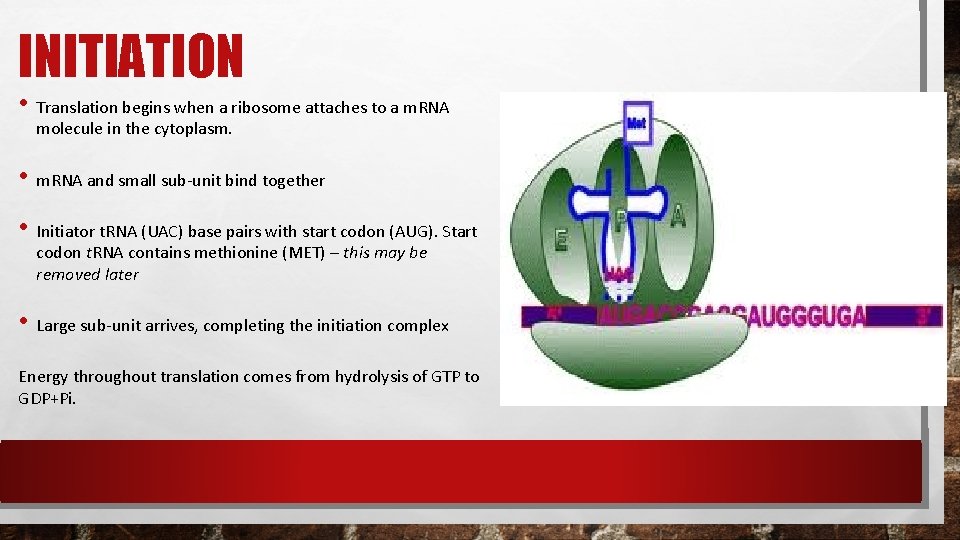
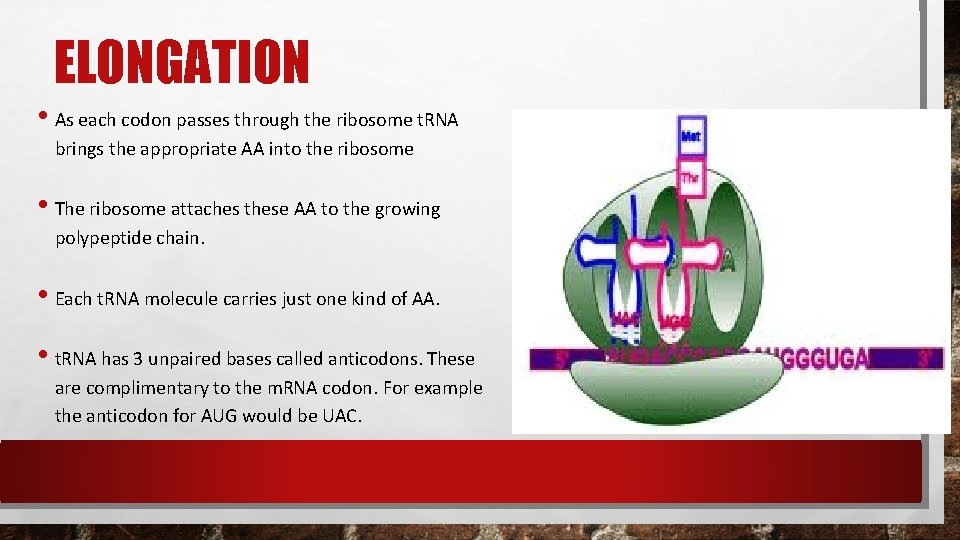
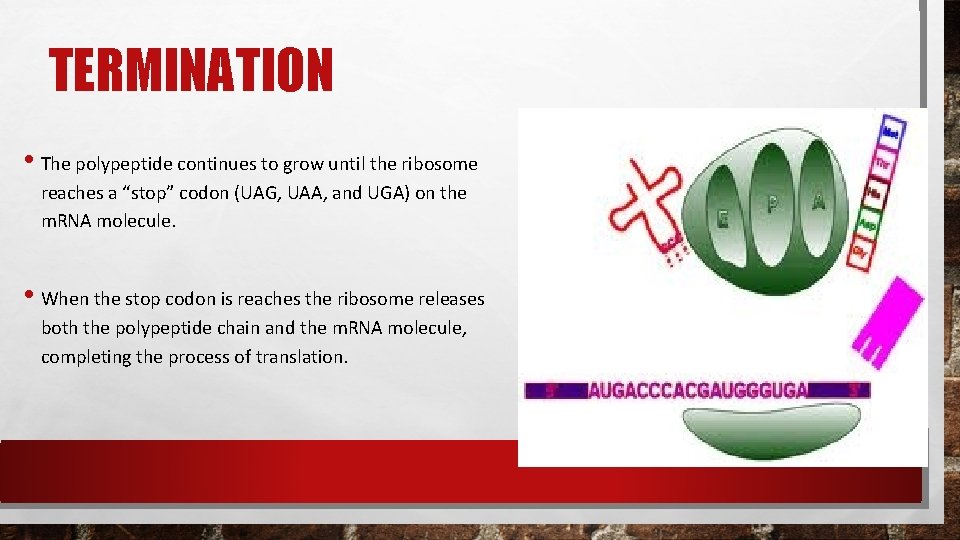
STEPS IN TRANSLATION Transcription is the process of making an mrna molecule from a DNA template. Transcription is not part of translation but it is critical to it. Transcription occurs in the nucleus (in eukaryotic cells). Translation is carried out by ribosomes after the m. RNA has been transported out of the nucleus in to the cytoplasm. Translation can often be split into 3 sections; initiation, elongation and termination.
INITIATION • Translation begins when a ribosome attaches to a m. RNA molecule in the cytoplasm. • m. RNA and small sub-unit bind together • Initiator t. RNA (UAC) base pairs with start codon (AUG). Start codon t. RNA contains methionine (MET) – this may be removed later • Large sub-unit arrives, completing the initiation complex Energy throughout translation comes from hydrolysis of GTP to GDP+Pi.
ELONGATION • As each codon passes through the ribosome t. RNA brings the appropriate AA into the ribosome • The ribosome attaches these AA to the growing polypeptide chain. • Each t. RNA molecule carries just one kind of AA. • t. RNA has 3 unpaired bases called anticodons. These are complimentary to the m. RNA codon. For example the anticodon for AUG would be UAC.
TERMINATION • The polypeptide continues to grow until the ribosome reaches a “stop” codon (UAG, UAA, and UGA) on the m. RNA molecule. • When the stop codon is reaches the ribosome releases both the polypeptide chain and the m. RNA molecule, completing the process of translation.
GENETICS
GENES AND ALLELES • An individuals characteristics are determined by factors that are passed from one parental generation to the next. • Today scientists term the factors that are passed from one parent to offspring genes. • The traits that are contained on genes have different versions called alleles.
SEGREGATION AND INDEPENDENT ASSORTMENT The principle of segregation states that two alleles for each trait separate during meiosis – after fertilization each cell will once again have two alleles for each trait. The principle of independent assortment states that genes on separate chromosomes sort independently during meiosis.
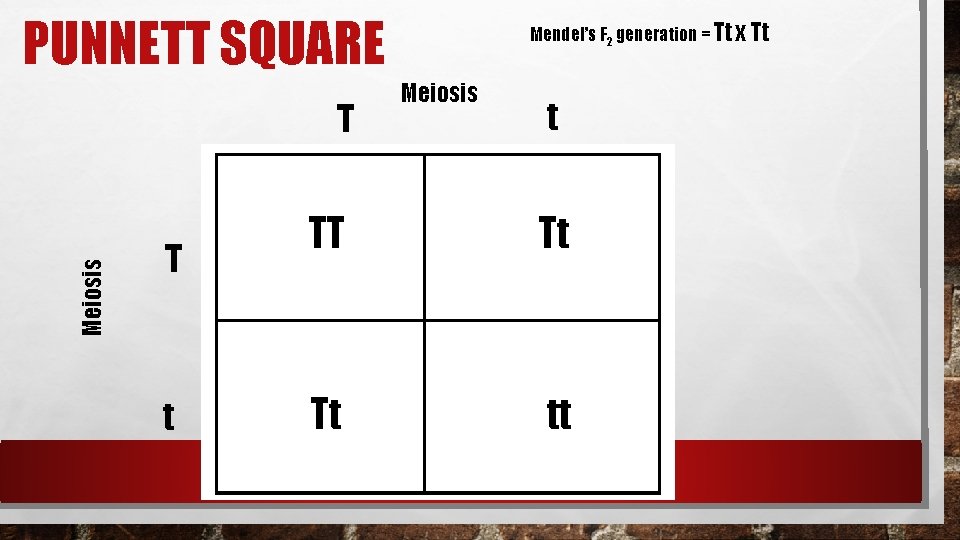
PUNNETT SQUARE Meiosis T T t Mendel’s F 2 generation = Tt x Tt Meiosis t TT Tt Tt tt